



Louis XVI Mahogany Console Serving Table With Original Brèche D’alep Marble Top – 18th Century
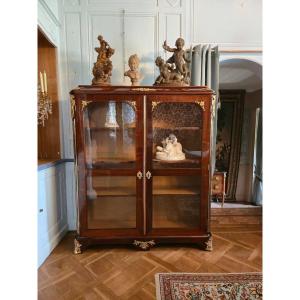
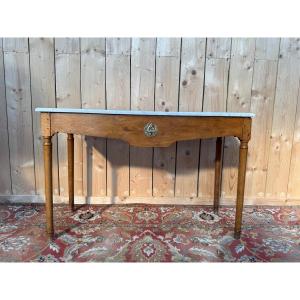
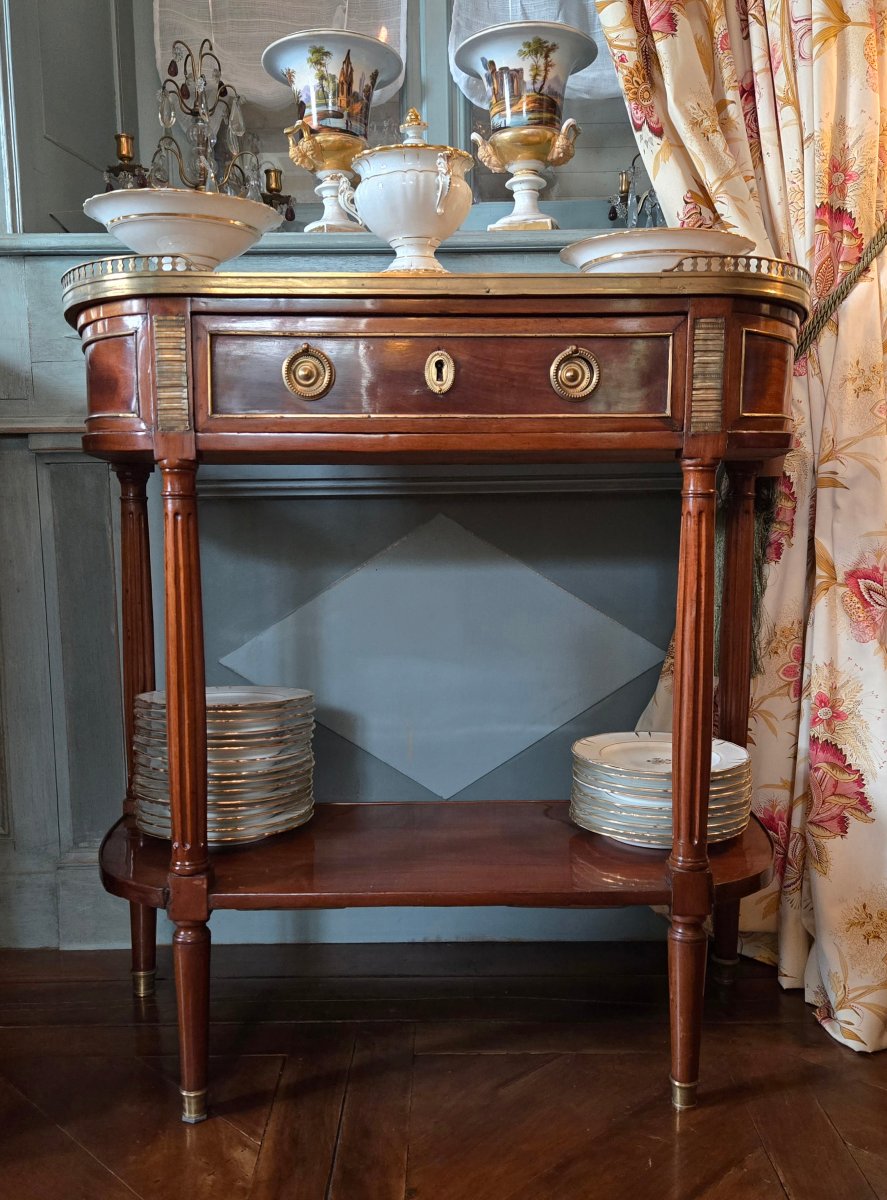
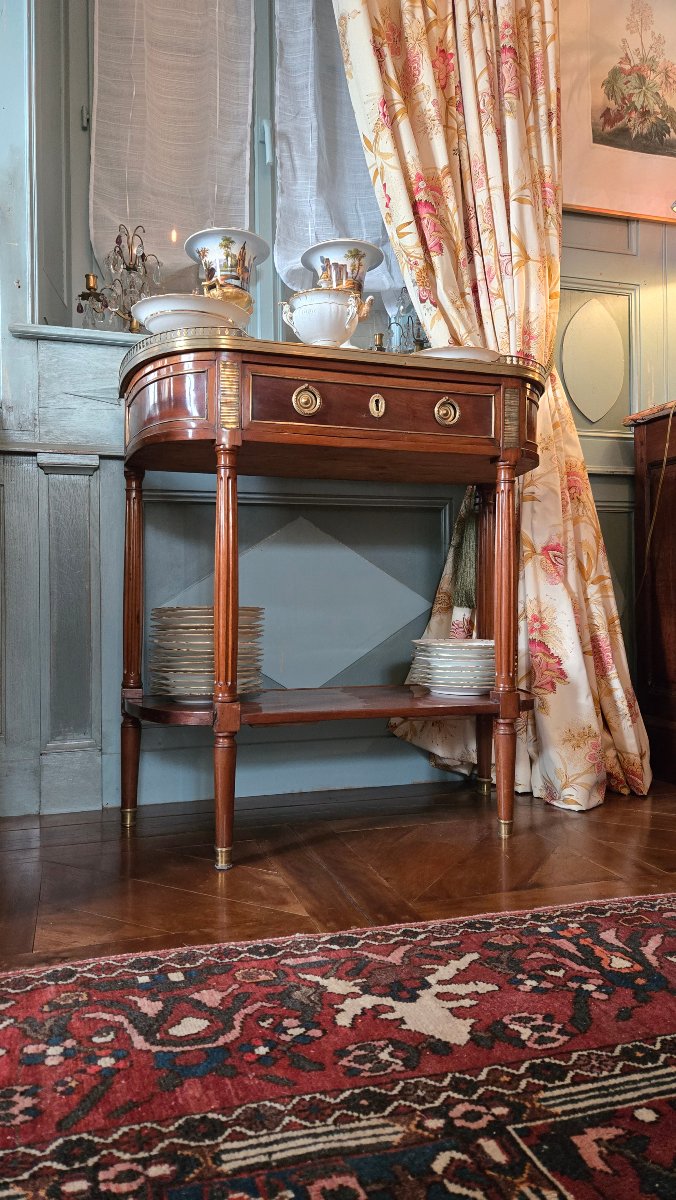
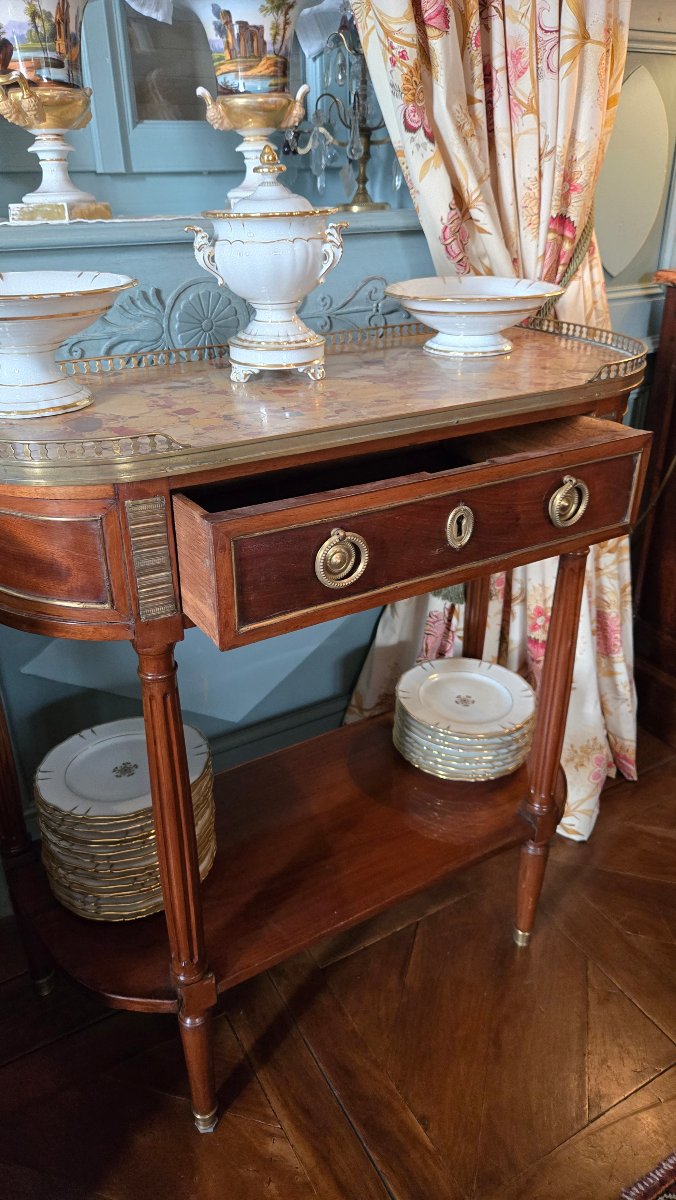
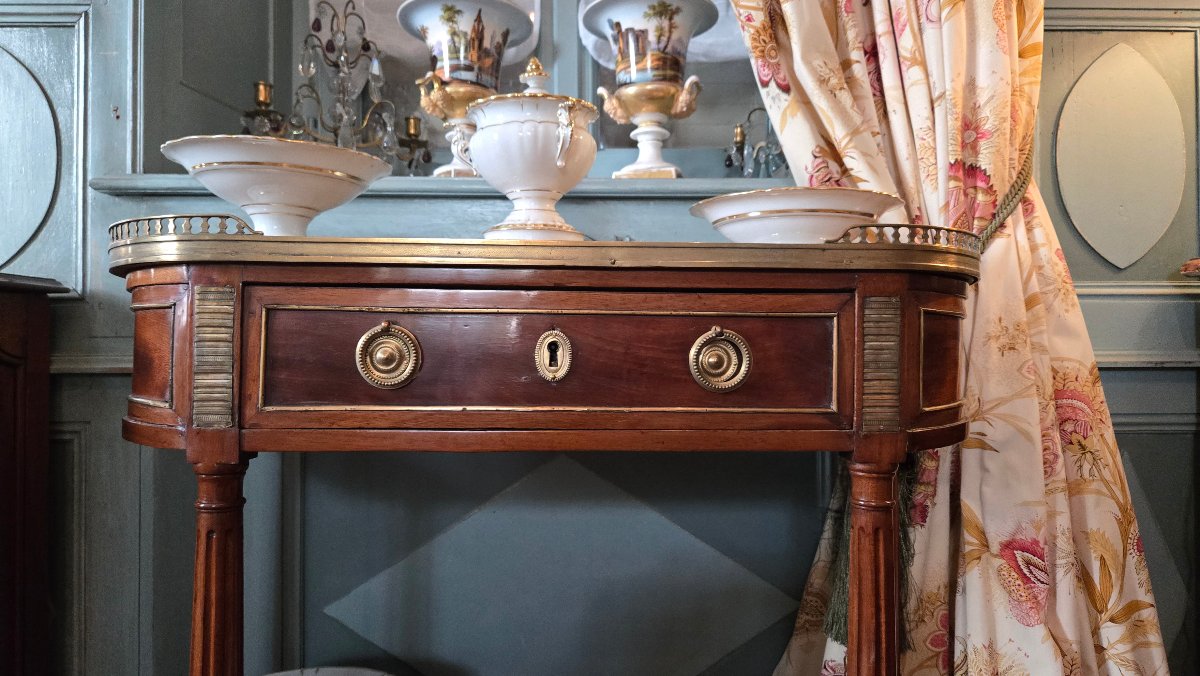
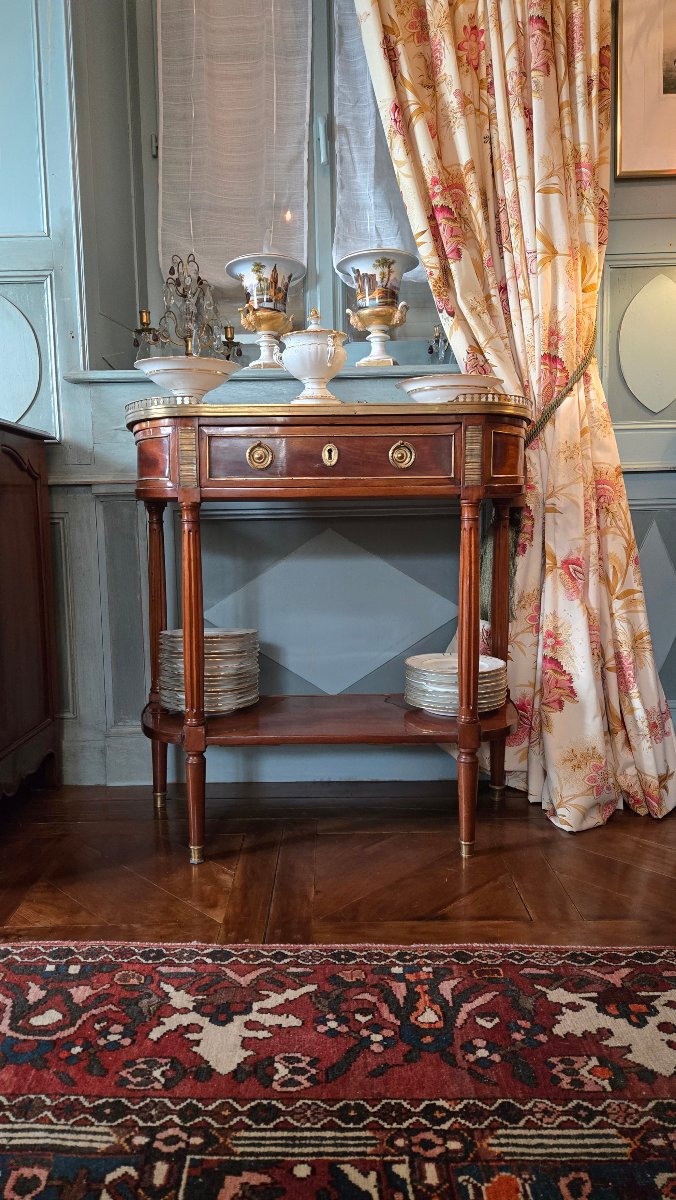
Elegant Louis XVI period console serving table, crafted from solid mahogany and mahogany veneer, retaining its original Brèche d’Alep marble top surrounded by a pierced bronze gallery.
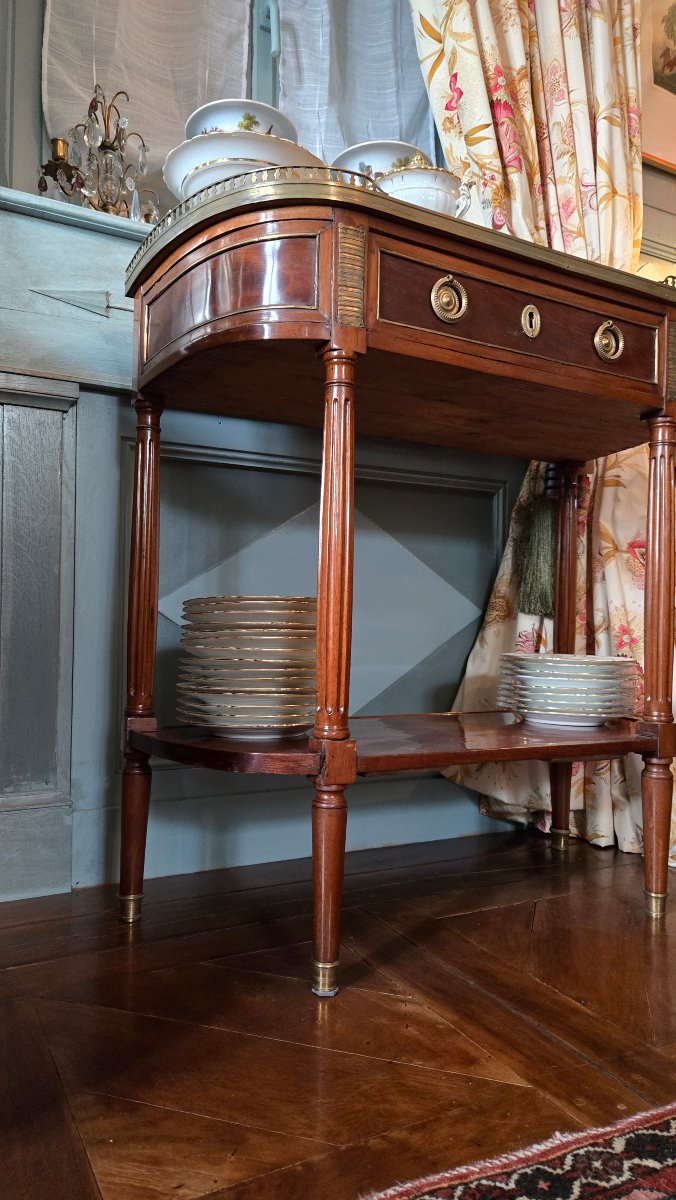
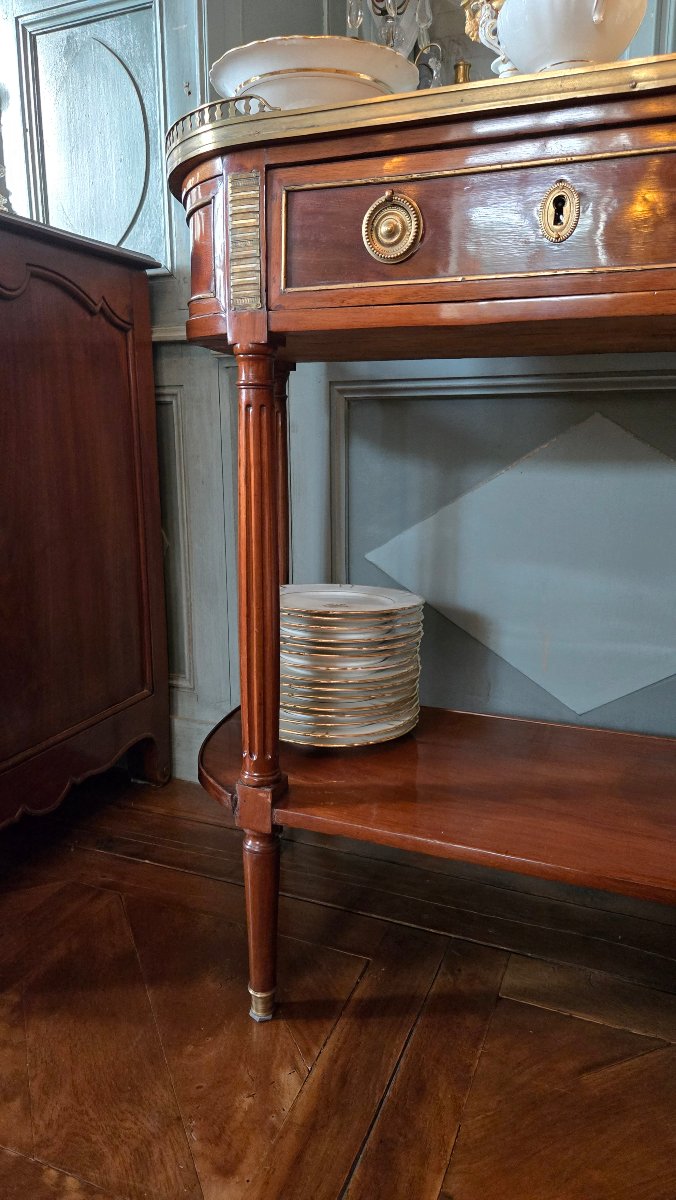
Beautifully proportioned, this refined piece features a demi-lune-inspired shape with a straight front and rounded sides. A large drawer is fitted into the front apron, while four classical columns support the structure and are joined by a lower shelf following the contours of the table.
Its architectural design perfectly illustrates the Neoclassical taste that developed in French decorative arts during the second half of the 18th century. Inspired by Greco-Roman architecture, the composition incorporates fluted columns, molded bases and capitals, and the geometric symmetry characteristic of the Louis XVI style.
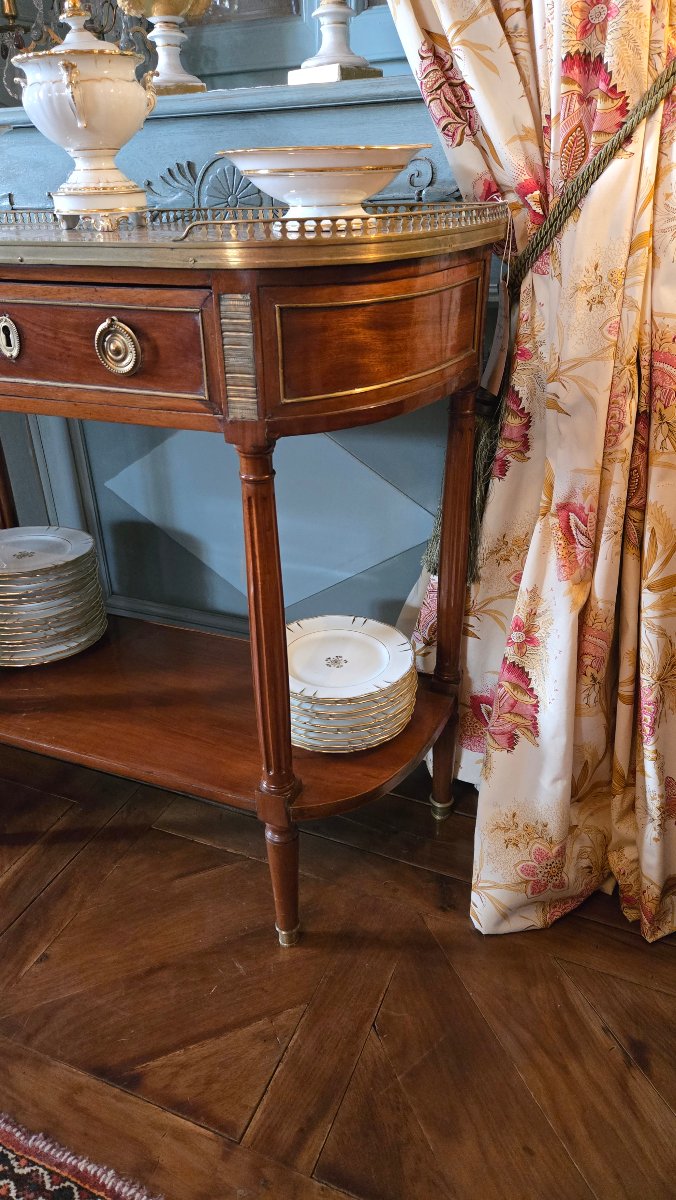
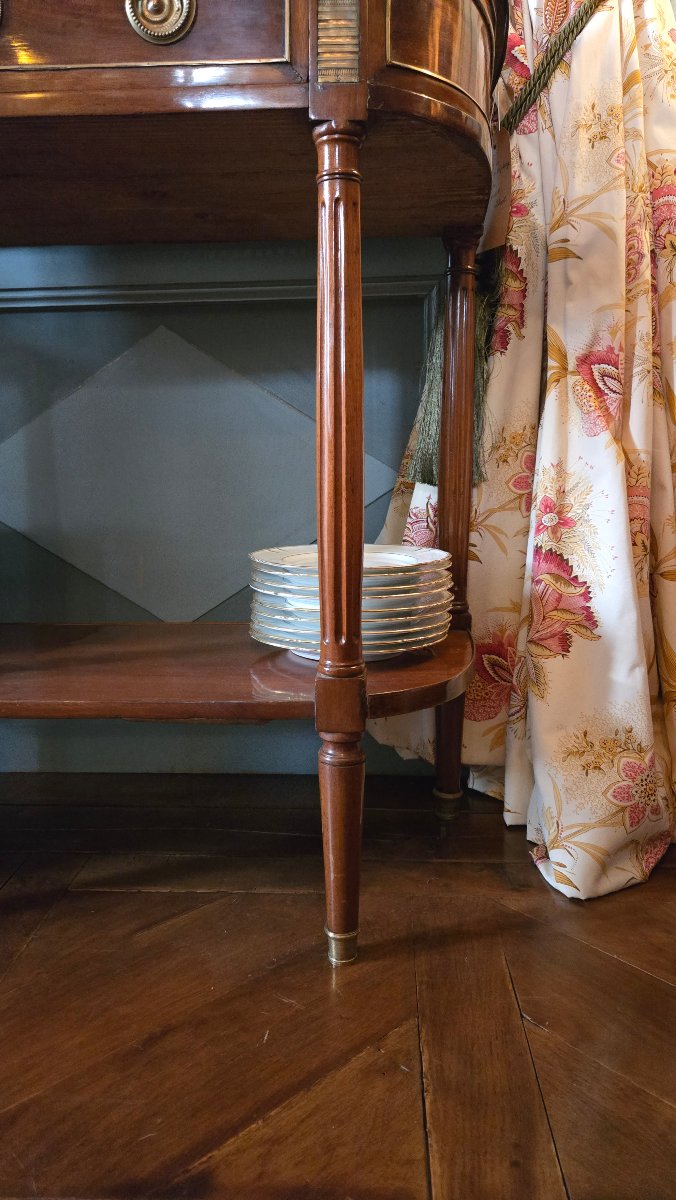
The four columns, turned from solid mahogany, feature subtly swelling shafts with deeply carved vertical fluting, terminating in rounded ends. Their simplified capitals and molded bases are accented by decorative rings. Below the lower shelf, the supports continue into tapered legs finished with bronze sabots.
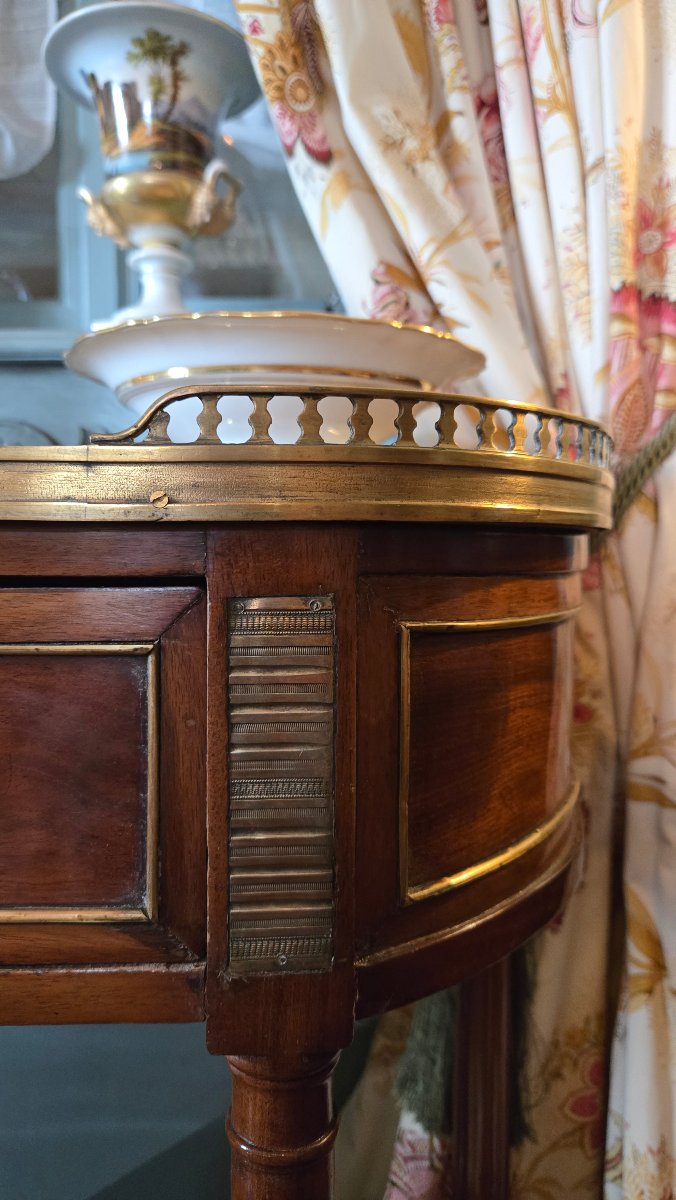
The front corner blocks are embellished with vertically ribbed bronze plaques, reinforcing the architectural character of the design.
The drawer front and curved side sections are veneered in mahogany, with recessed rectangular panels outlined by fine copper-alloy moldings that emphasize the elegant geometry of the piece.
The drawer retains its original bronze ring pulls mounted on decorative rosettes, together with its original bronze keyhole escutcheon. Only the lock itself was replaced at a later date.
Traditional 18th-Century Cabinetmaking
The quality of craftsmanship is equally evident in the internal construction.
The cabinetmaker employed several different woods according to their structural purpose: solid mahogany for the turned columns, oak for the drawer, and secondary softwoods for the concealed framework.
The curved sections of the apron are particularly interesting. They were constructed using a traditional technique resembling brickwork, with individual wooden segments laid horizontally in staggered courses.
These carefully assembled pieces form a solid curved foundation, subsequently shaped and covered with mahogany veneer. This construction demonstrates the technical skill required to achieve the table's elegant rounded sides.
The oak drawer features traditional dovetail joints and a bottom composed of several boards fitted into grooves, allowing for the natural movement of the wood.
Original Brèche d’Alep Marble Top
The console retains its original Brèche d’Alep marble top, displaying a remarkable combination of golden yellow, ochre, pink, reddish, and darker mineral fragments.
Despite its name, Brèche d’Alep marble was quarried in southern France, particularly around Aix-en-Provence. Highly prized during the 18th century, this richly colored brecciated stone was used in prestigious French interiors and on fine furniture by celebrated cabinetmakers, including Jean-François Leleu and Jean-Henri Riesener.
The marble has suffered breaks that were repaired in the past. Nevertheless, the preservation of the original top is particularly significant, as it remains an integral part of the table's original design and historical authenticity.
The marble is surrounded by its original pierced bronze gallery, which follows the outline of the table and provides an elegant decorative finishing touch.
Condition and Historical Interest
Combining the decorative elegance of a console table with the practical features of a serving table, this piece reflects the refined and functional furniture developed during the reign of Louis XVI.
Its drawer and lower shelf provide useful storage and display space, while its relatively shallow depth makes it particularly suitable for both traditional and contemporary interiors.
The console is in very good overall condition, retaining its old varnished finish, with minor wear consistent with age and use.
The original bronze mounts and gallery have been preserved. The marble has undergone historic repairs, and the drawer lock is a later replacement.
A beautifully proportioned example of French Louis XVI cabinetmaking, combining architectural elegance, fine craftsmanship, and a high degree of originality.
France, Louis XVI period, last quarter of the 18th century.
Dimensions:
Height: 33.86 in (86 cm)Width: 32.28 in (82 cm)Depth: 14.17 in (36 cm)
2 200 €
Period: 18th century
Style: Louis 16th, Directory
Condition: Good condition
Material: Mahogany
Reference (ID): 1845223
Availability: In stock
Print