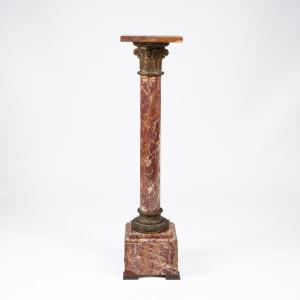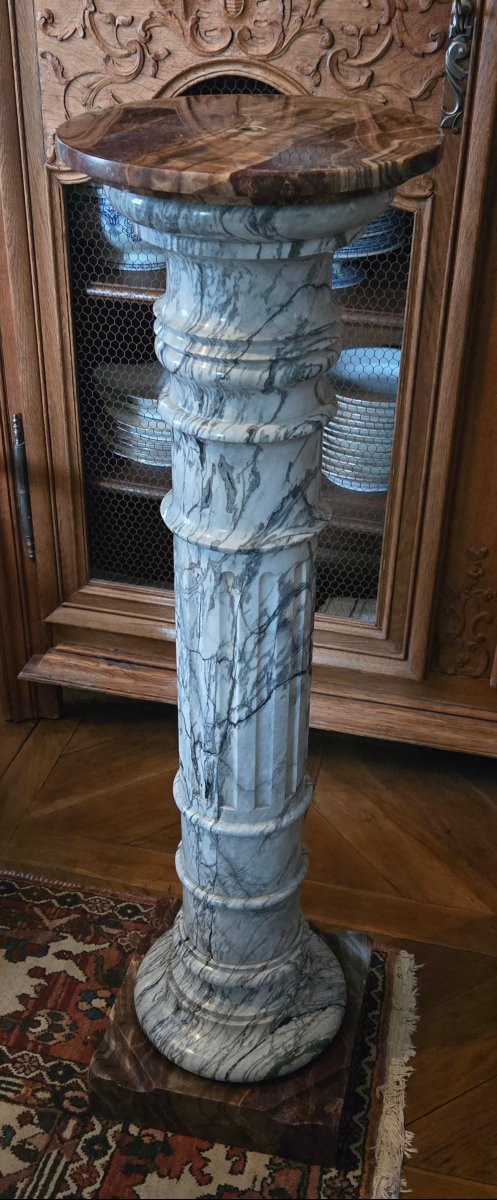
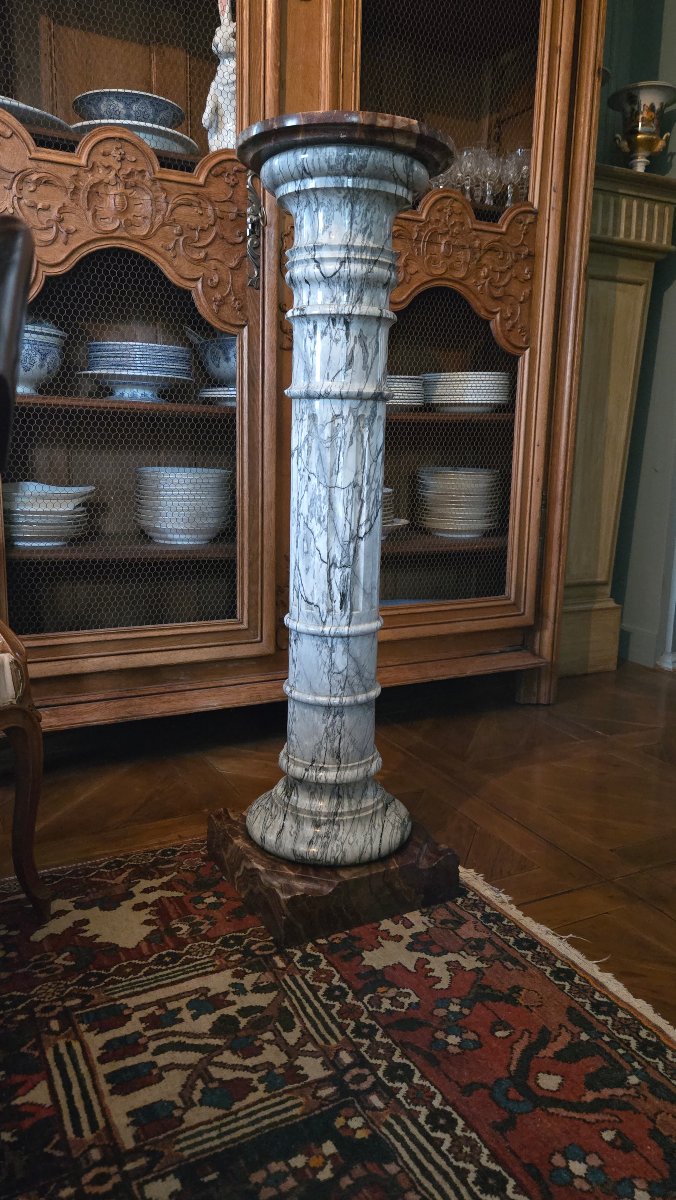
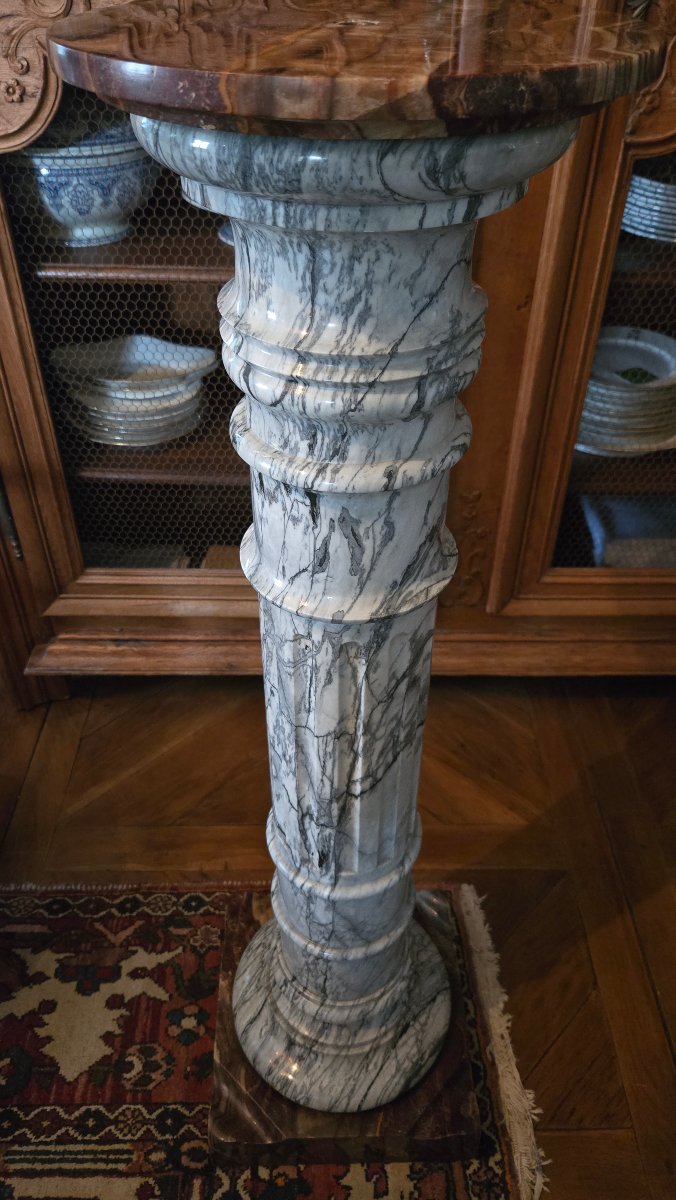
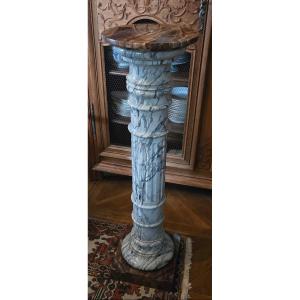


Display Column Made Of Bleu Fleuri Marble And Fleured Alabaster. Second Half Of The 19th Century
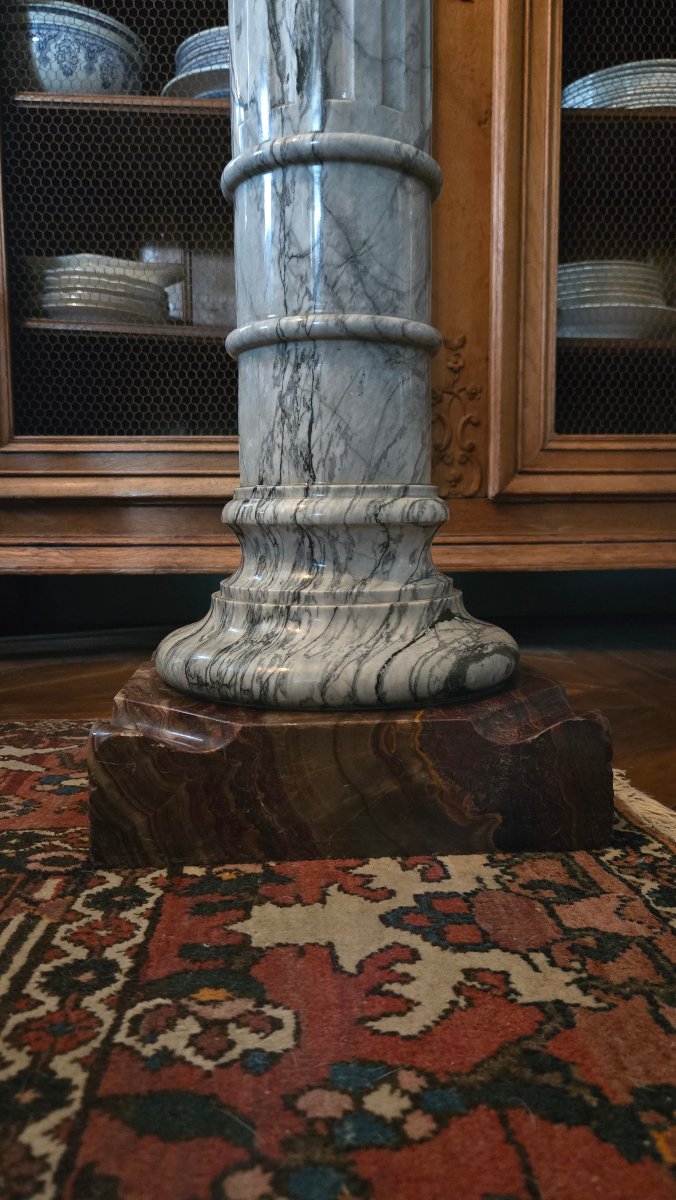
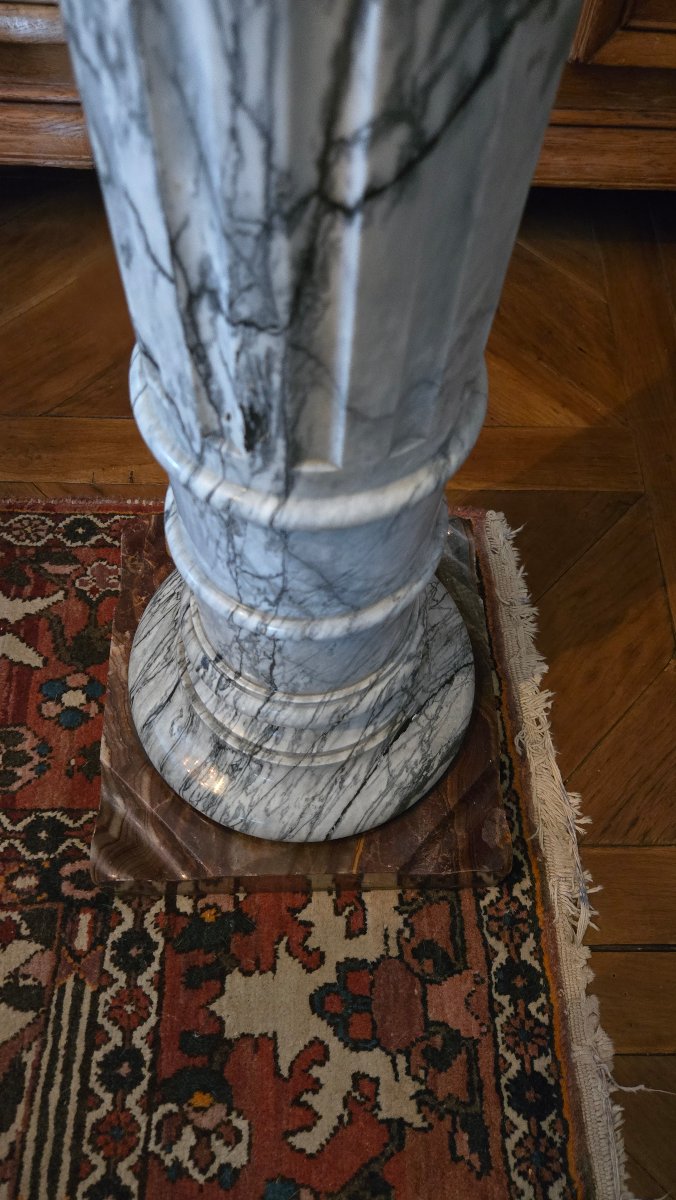
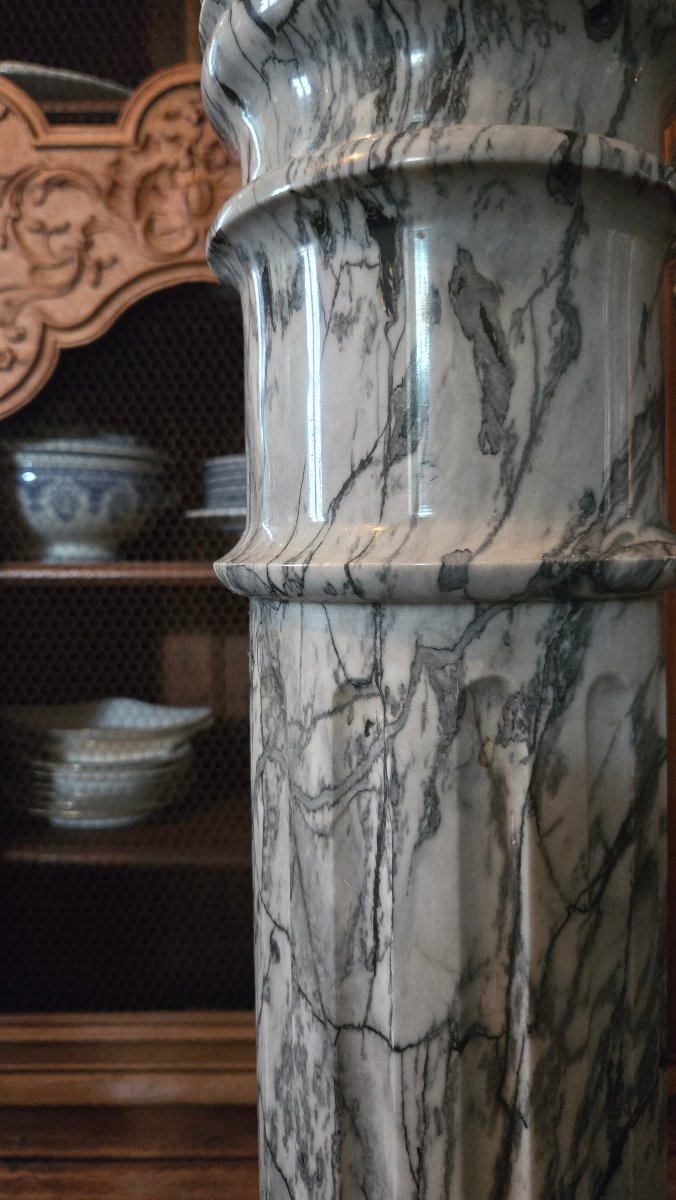
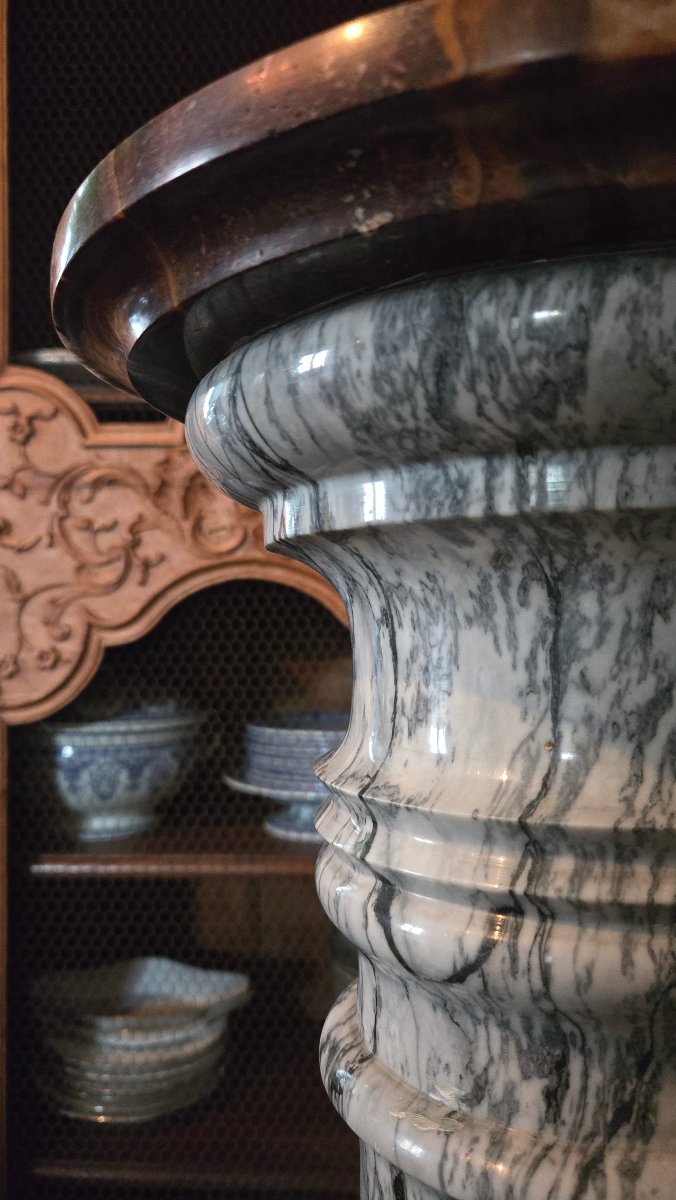
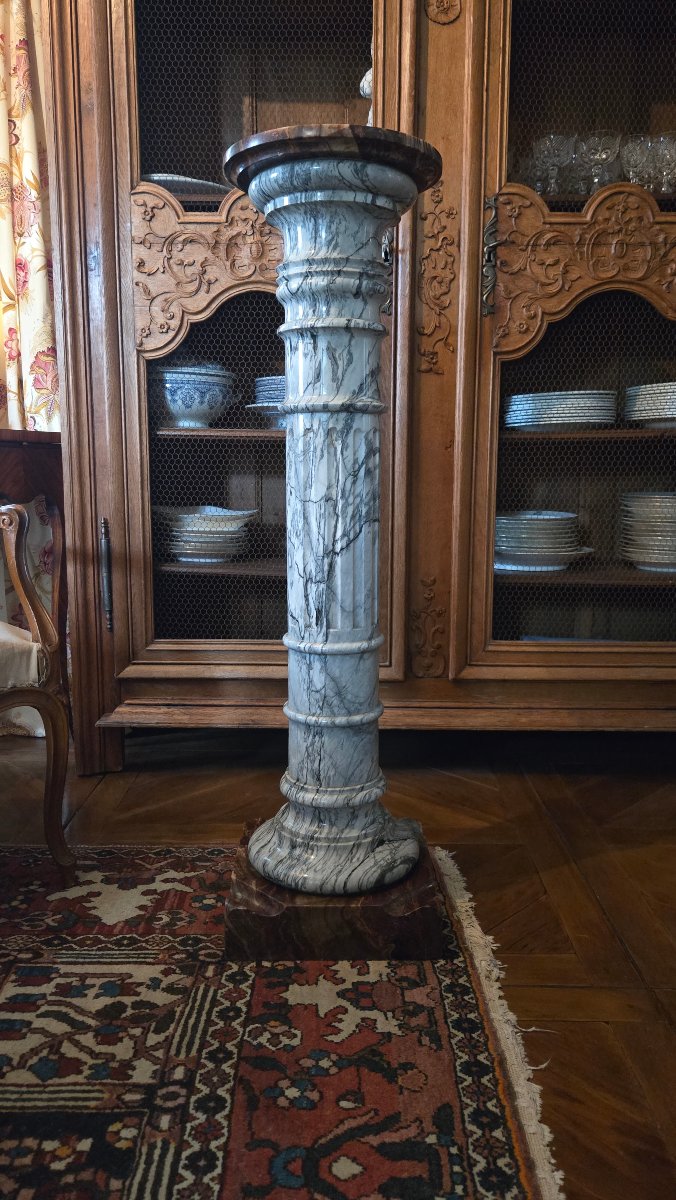
The cylindrical body is carved from Bleu Fleuri marble, also known as Bardiglio Fiorito, with a bluish-gray background crisscrossed by a dynamic network of dark gray to black veins. It is punctuated by molded bands, partially fluted in the central section, and features a succession of steps, grooves, and bulges in its upper portion.
Bleu Fleuri is a highly recrystallized, bluish-gray crystalline limestone, sometimes with a brecciated structure, whose elements are highlighted by dark veins. A variety related to Bleu Turquin, it is primarily quarried in the Seravezza region, near Carrara, Italy. Highly prized in the 19th century, it was used for fireplaces as well as for furniture, particularly pedestal tables and cabinet fronts. It can be found, for example, in Napoleon I’s bedroom at the Château de Compiègne, where it was used for the fireplace.
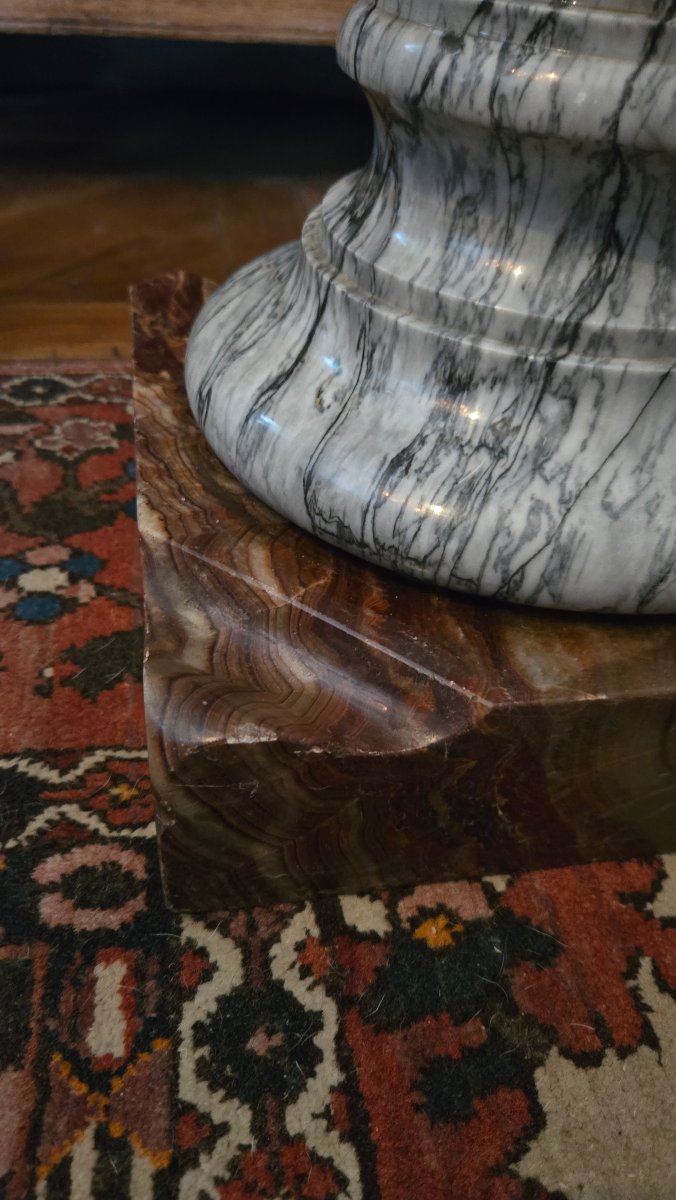
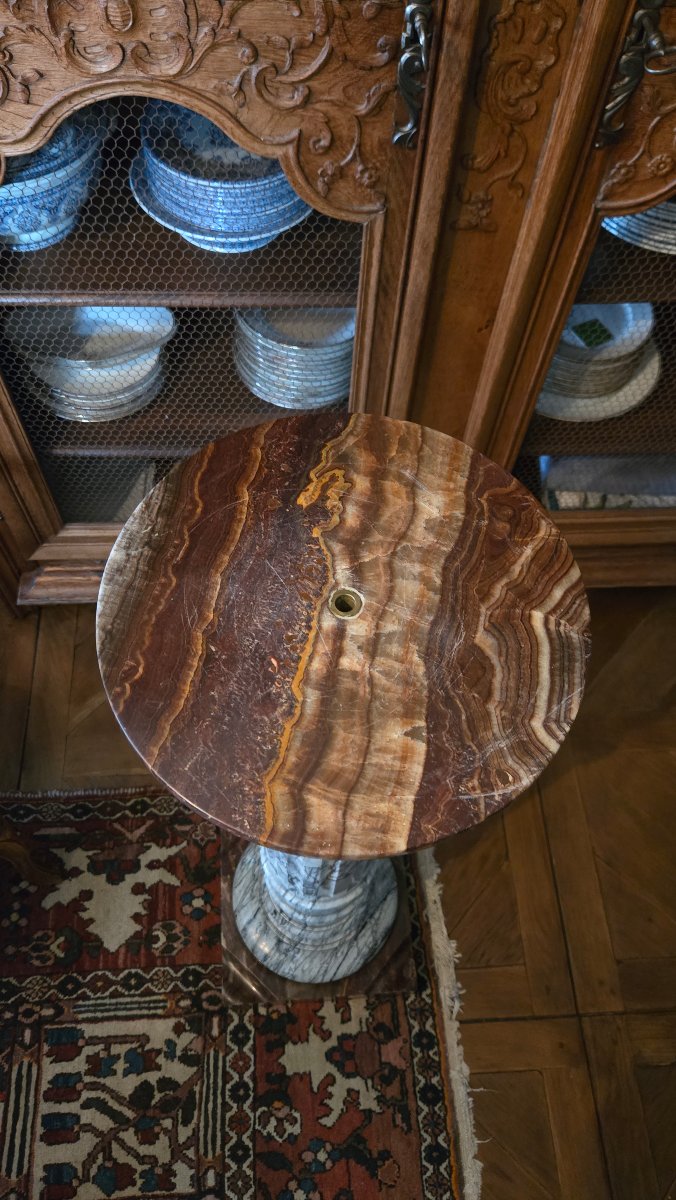
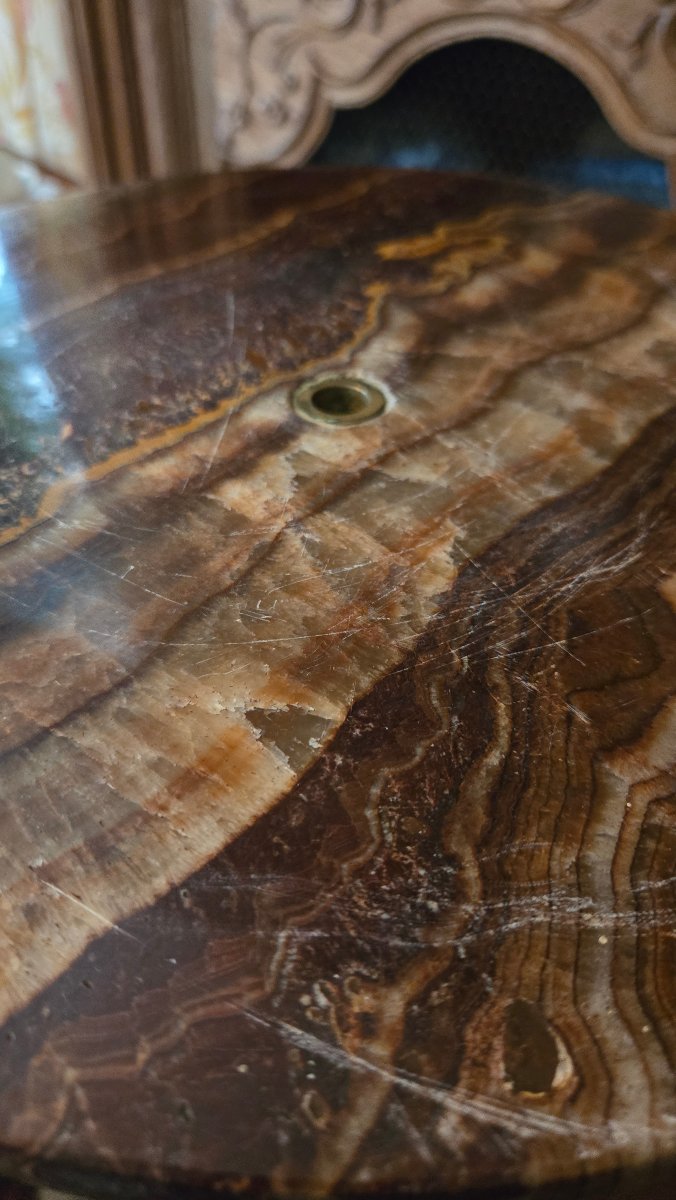
The square base with curved corners and the circular top are crafted from a predominantly red-hued veined alabaster, of the “alabastro fiorito a rosa” type. This banded limestone features a succession of undulating bands in shades of reddish ochre, brown, honey, and cream, with naturally translucent areas.
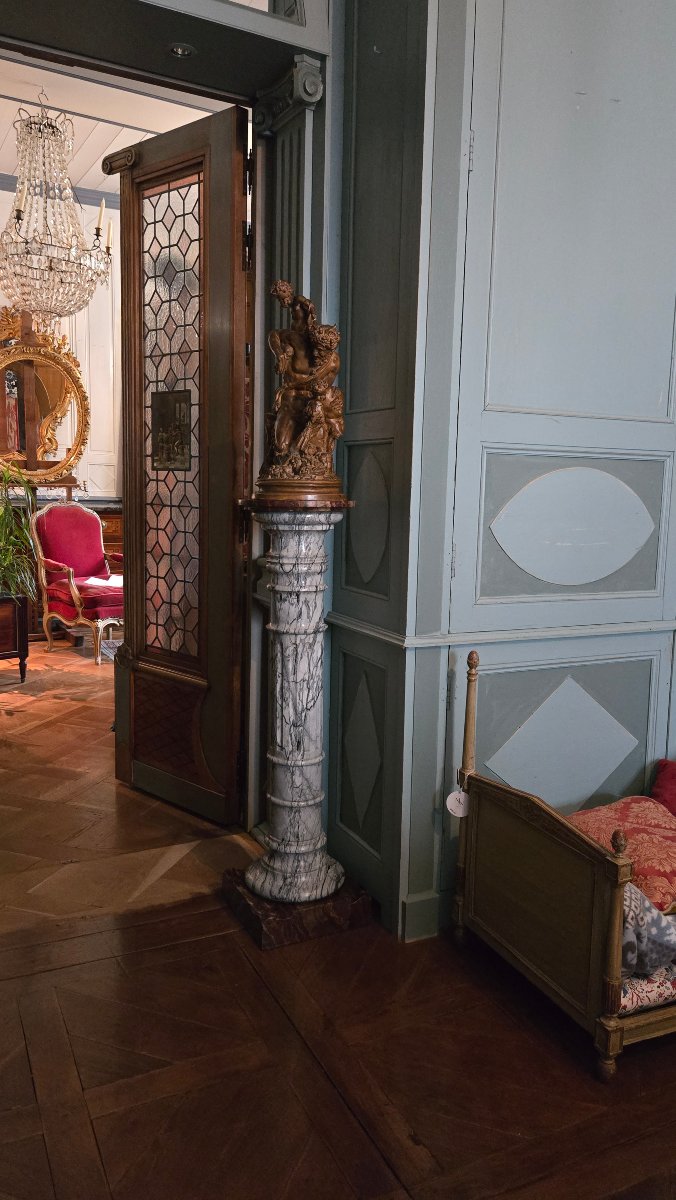
The top retains a brass socket in its center designed to hold the mounting pin for a sculpture, confirming its function as a display column for a bust, a bronze, or a marble sculpture.
An identical example, with the same proportions and nearly identical dimensions, is cataloged as a 19th-century Italian work.
Shows signs of use, including scratches, small chips, and old marks consistent with its use.
Dimensions: H. 108 cm
Top diameter: 29.5 cm
Base: 30 × 30 cm
Bleu Fleuri is a highly recrystallized, bluish-gray crystalline limestone, sometimes with a brecciated structure, whose elements are highlighted by dark veins. A variety related to Bleu Turquin, it is primarily quarried in the Seravezza region, near Carrara, Italy. Highly prized in the 19th century, it was used for fireplaces as well as for furniture, particularly pedestal tables and cabinet fronts. It can be found, for example, in Napoleon I’s bedroom at the Château de Compiègne, where it was used for the fireplace.
The square base with curved corners and the circular top are crafted from a predominantly red-hued veined alabaster, of the “alabastro fiorito a rosa” type. This banded limestone features a succession of undulating bands in shades of reddish ochre, brown, honey, and cream, with naturally translucent areas.
The top retains a brass socket in its center designed to hold the mounting pin for a sculpture, confirming its function as a display column for a bust, a bronze, or a marble sculpture.
An identical example, with the same proportions and nearly identical dimensions, is cataloged as a 19th-century Italian work.
Shows signs of use, including scratches, small chips, and old marks consistent with its use.
Dimensions: H. 108 cm
Top diameter: 29.5 cm
Base: 30 × 30 cm
1 400 €
Period: 19th century
Style: Napoleon 3rd
Condition: Good condition
Reference (ID): 1813894
Availability: In stock
Print