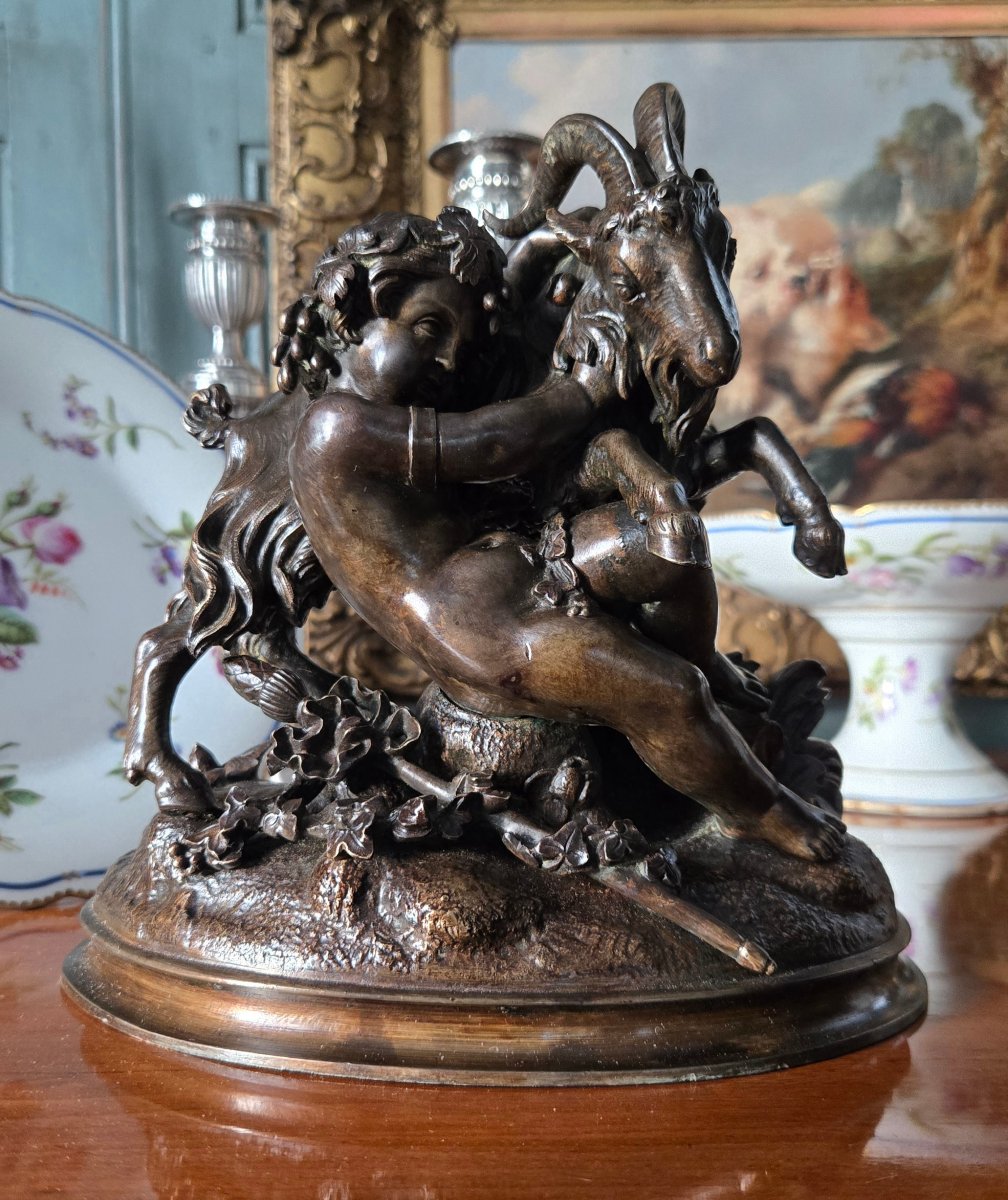
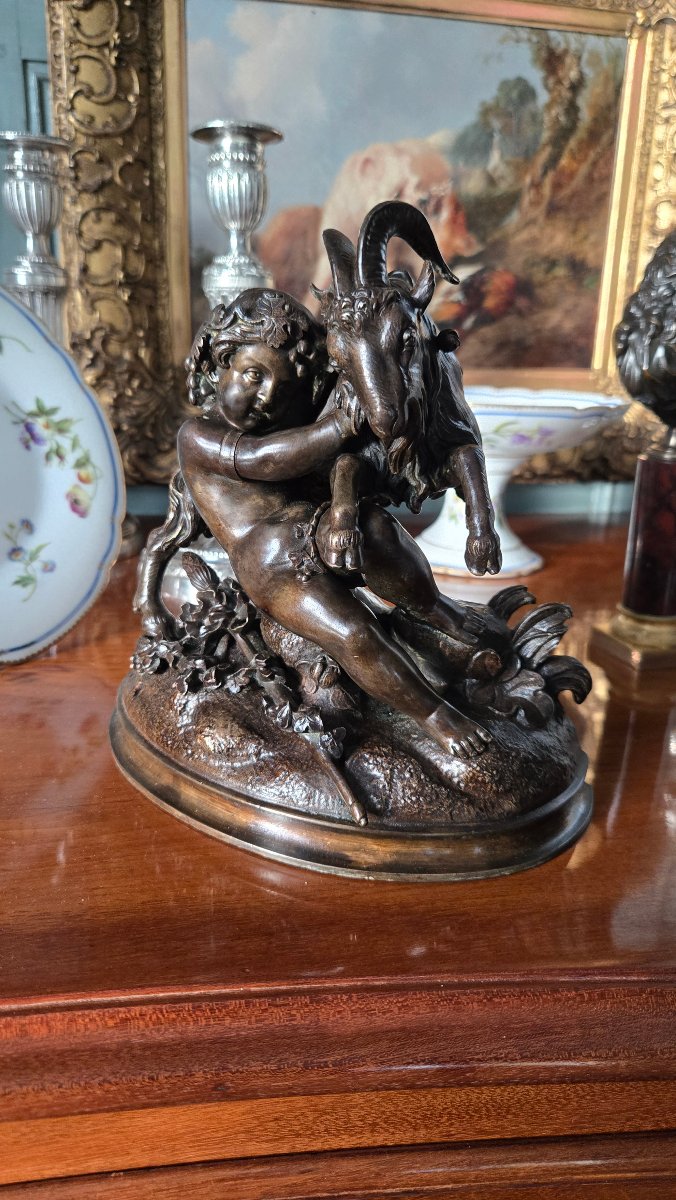




Bacchus As A Child Playing With A Goat—bronze With A Nuanced Patina, 19th Century.
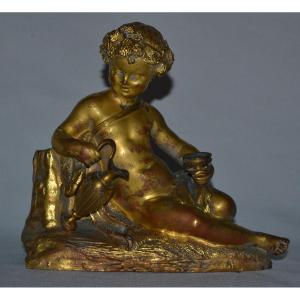
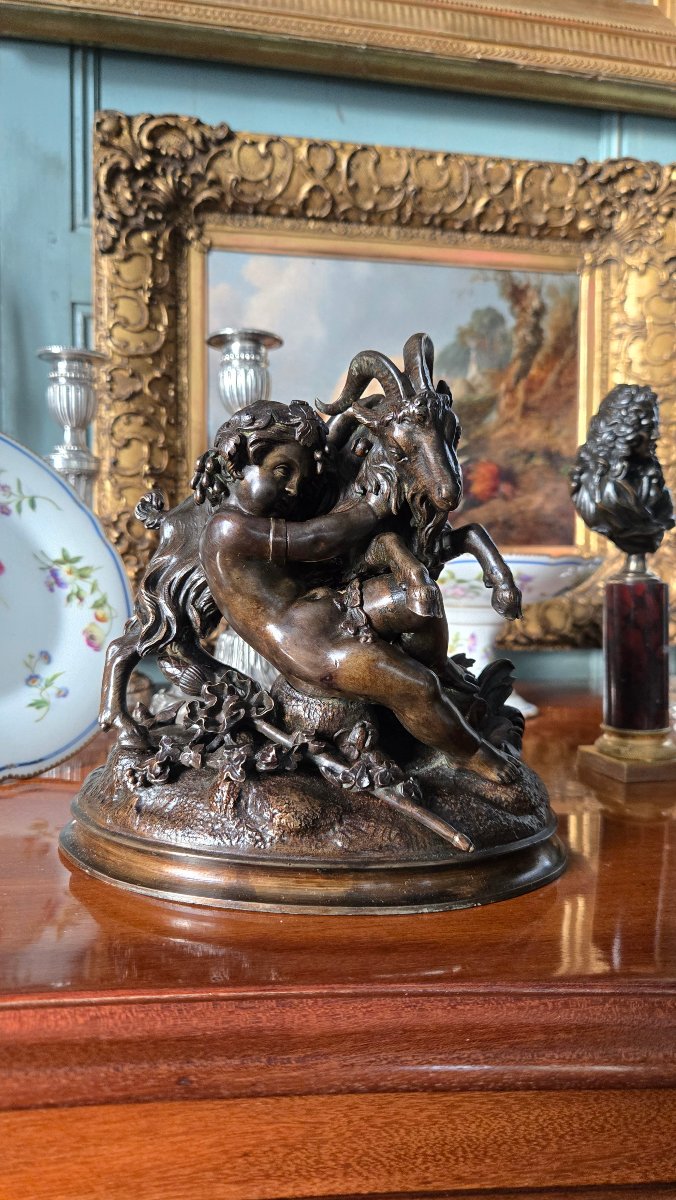
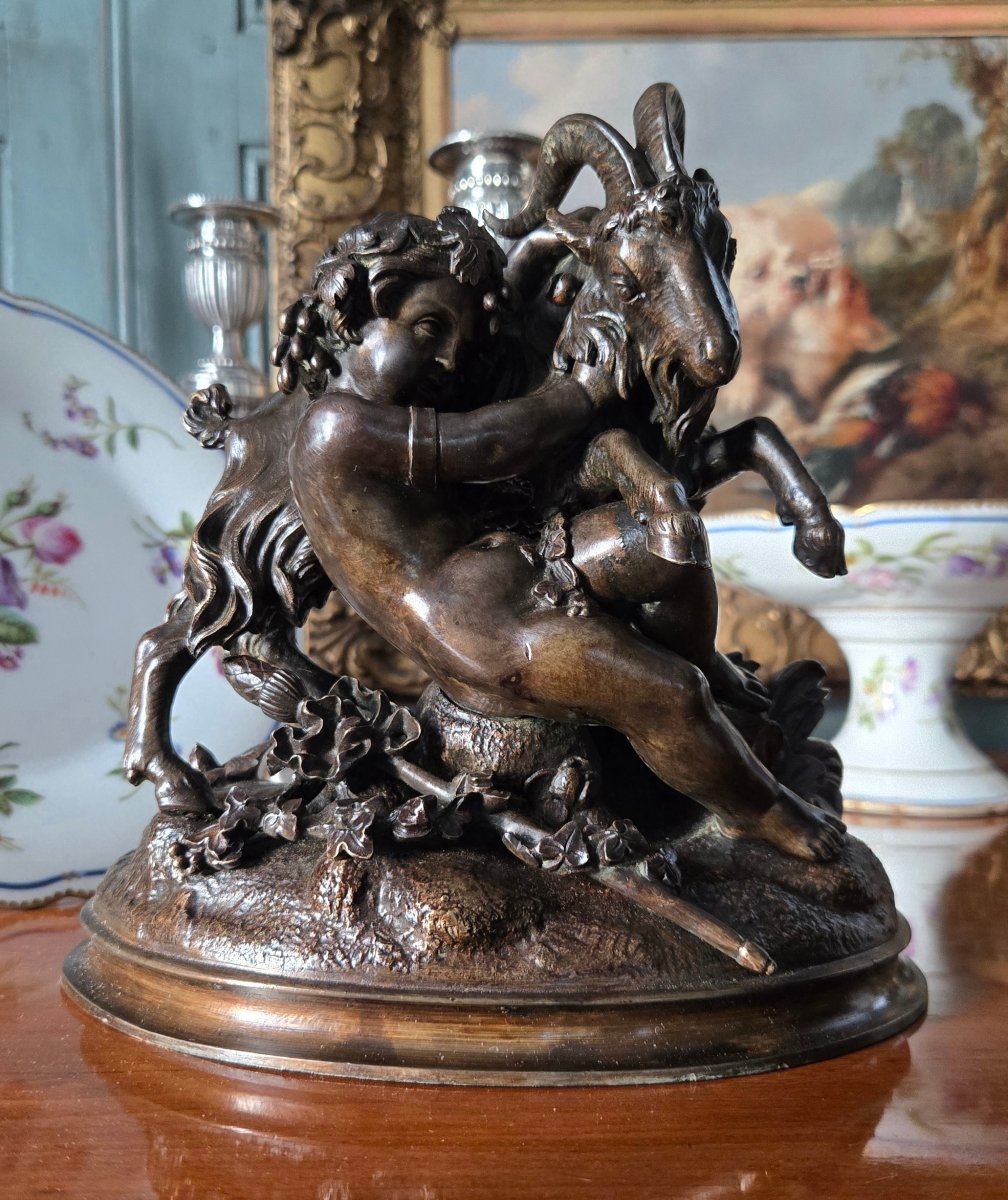
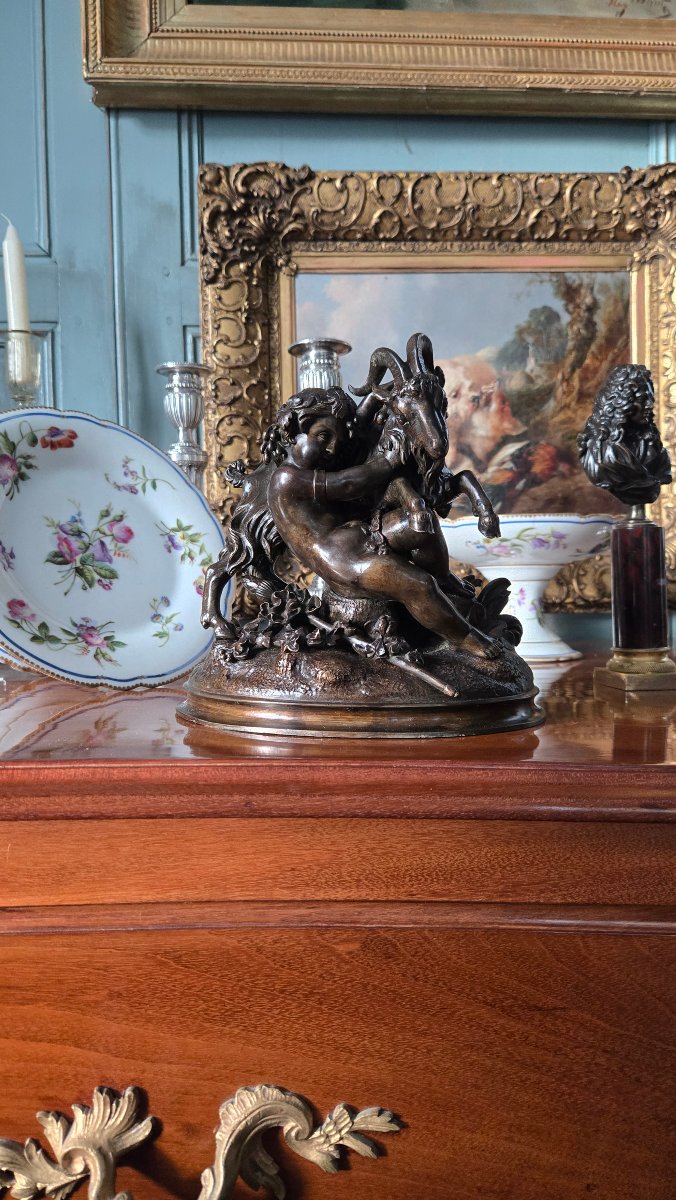
A 19th-century bronze group with a nuanced patina, depicting the child Bacchus playing with a goat that he appears to be trying to straddle. This composition follows the tradition of Bacchic scenes developed in the 17th and 18th centuries, particularly in the work of François Duquesnoy and Claude Michel, known as Clodion (1738–1814).
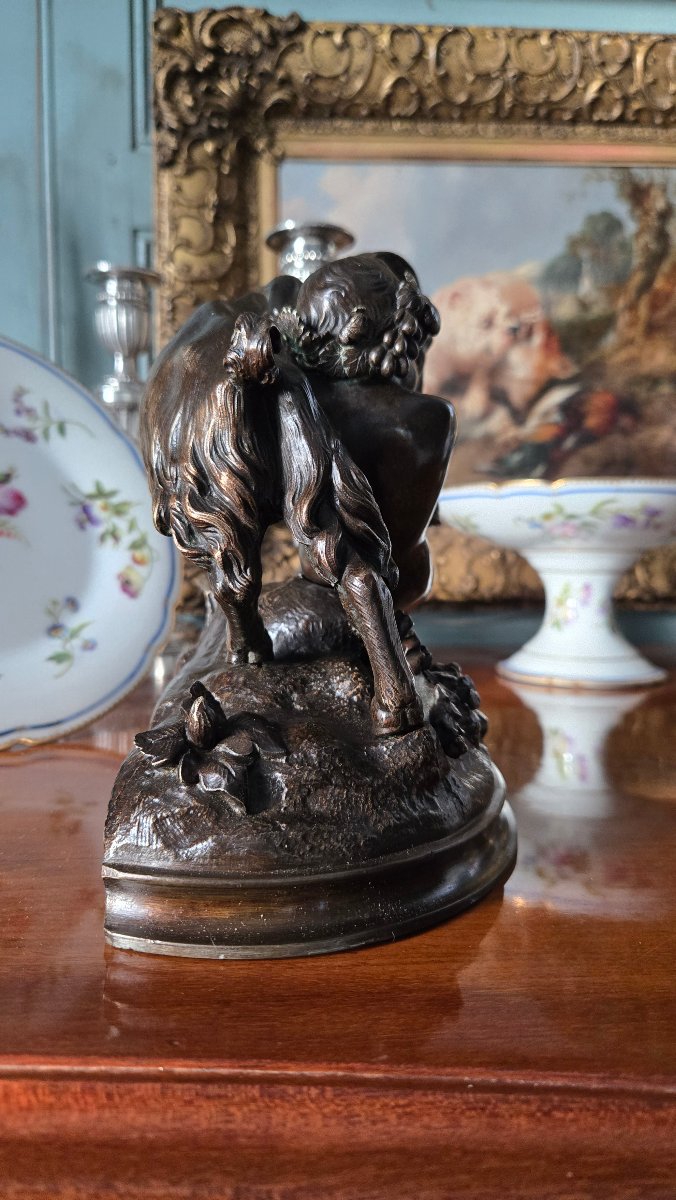
The young Bacchus is depicted nude, seated on a rocky ledge with his legs stretched out before him. His curly hair is crowned with vine leaves and bunches of grapes, while a bracelet adorns his right upper arm. He has his arms wrapped around the neck of a goat that is rearing up, its two front legs raised, in a movement the child seems to be trying to control.
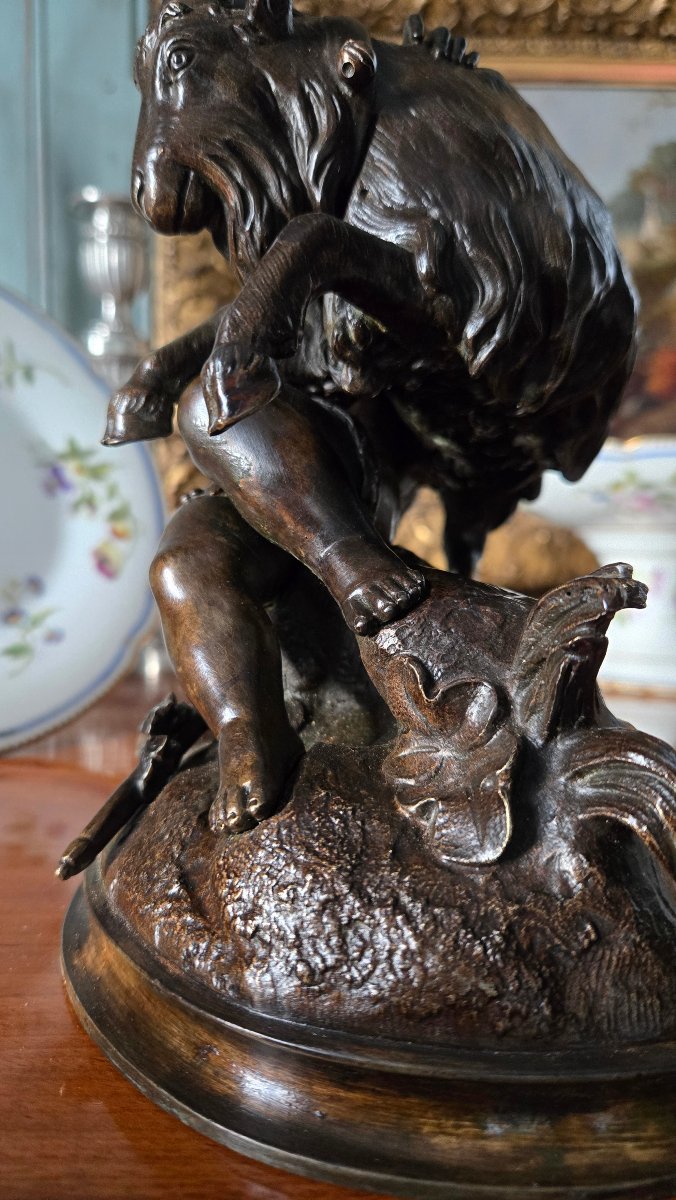
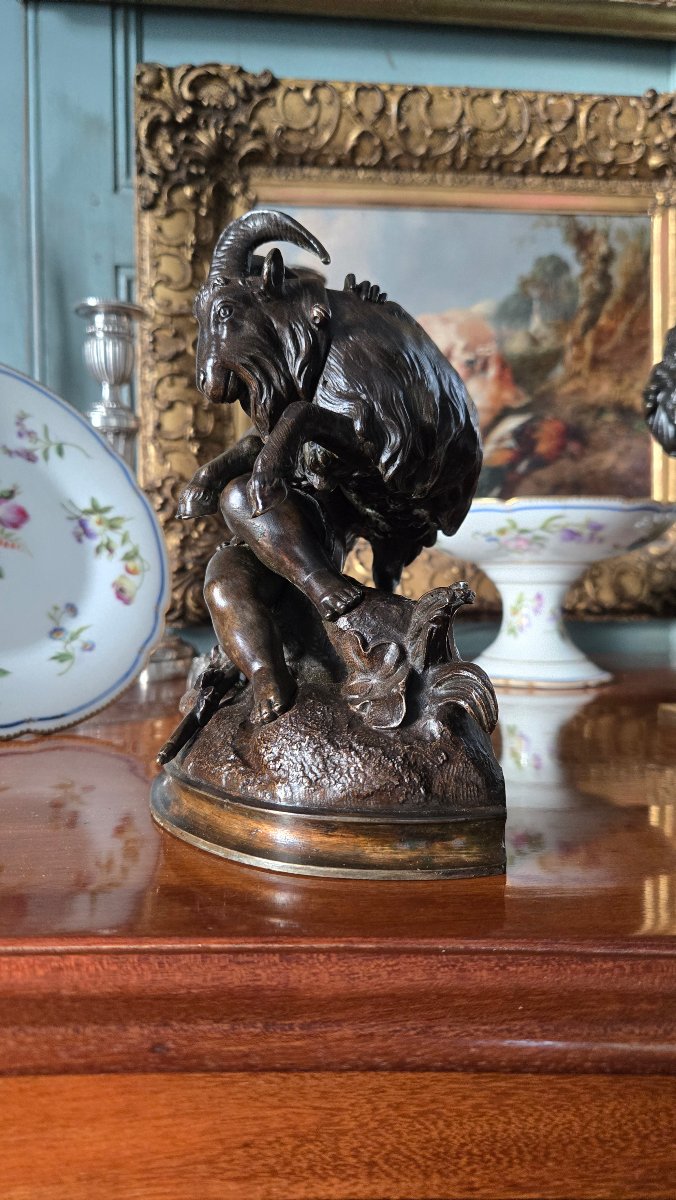
Bacchus’s face, with its full cheeks and rounded features, has a calm expression that contrasts with the animal’s posture. The goat has an elongated head, two large curved and ringed horns, a goatee, and a thick coat rendered as long, wavy locks. The movement of the two figures gives the composition its balance and liveliness.
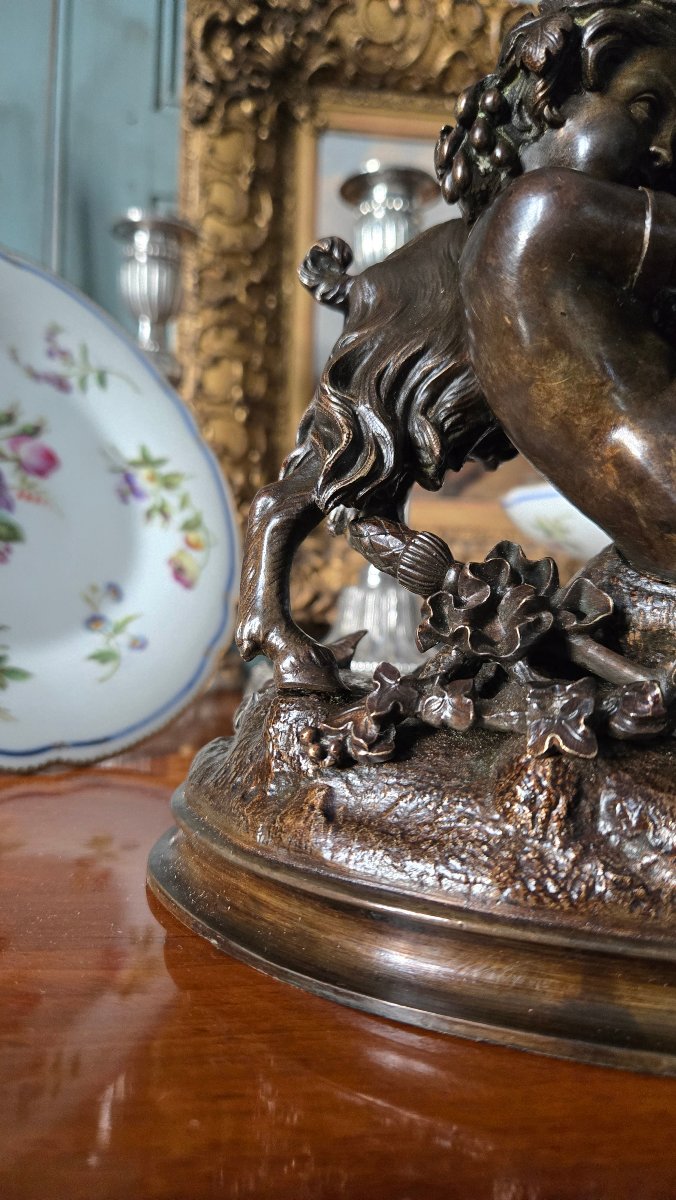
The naturalistic terrace is adorned with foliage, vine shoots, and bunches of grapes. In the foreground lies a thyrsus, a ritual staff associated with the cult of Bacchus, the tip of which is adorned with a pine cone. This attribute, combined with the vine wreath worn by the child, identifies the young Dionysus, the god of the vine and wine in Greco-Roman mythology.
The iconography belongs to the repertoire of childlike Bacchanalia, inspired by antiquity and developed in European sculpture beginning in the 17th century. François Duquesnoy (1597–1643) notably depicted groups of putti playing with goats, while Clodion revisited these subjects—combining children, animals, and Bacchic attributes—in the 18th century. This repertoire was subsequently widely disseminated in 19th-century commissioned sculpture.
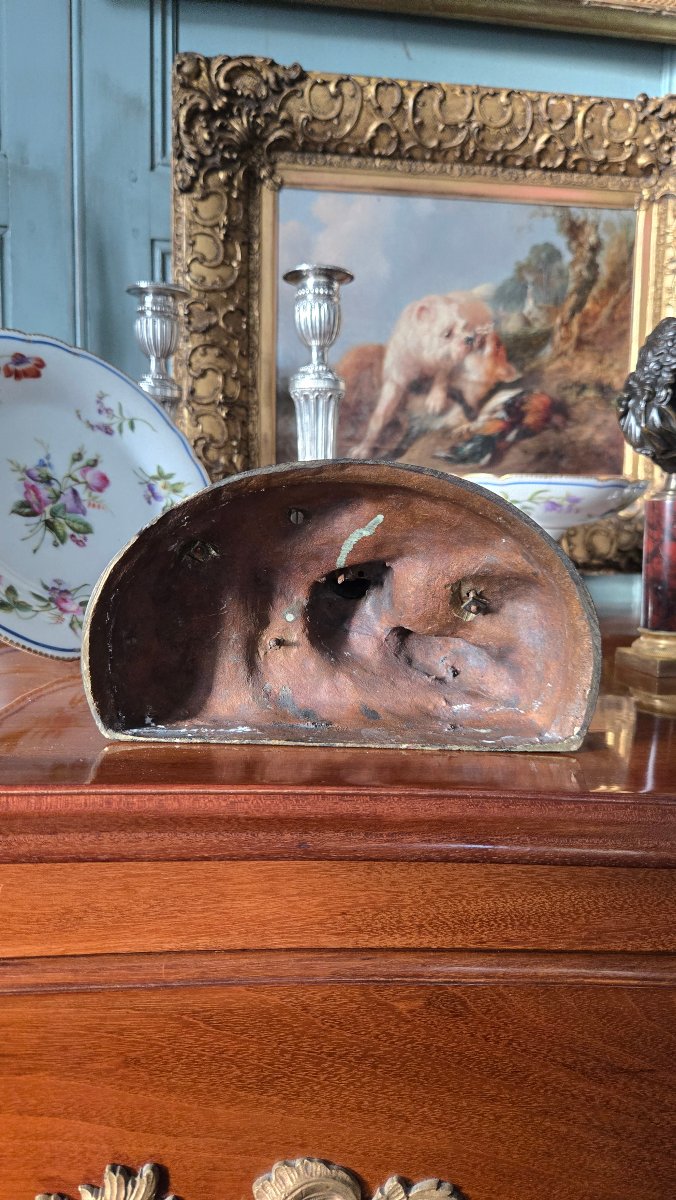
The group features modeling and chiseling techniques that vary depending on the elements. The smooth surfaces of the child’s body contrast with the detailed rendering of the goat’s coat, the striations on the horns, and the intricately carved foliage on the terrace. The bronze is cast as a hollow piece.
The medal-style patina features shades of brown and golden brown, with lighter tones on the raised areas and darker tones in the recessed parts. The entire piece rests on an oval-shaped, molded terrace.
19th-century bronze, unsigned, in the tradition of 18th-century Bacchic compositions.
Dimensions:
Height: 20 cm
Width: 20 cm
Depth: 11 cm
680 €
Period: 19th century
Style: Louis 15th - Transition
Condition: Good condition
Material: Bronze
Reference (ID): 1845875
Availability: In stock
Print