
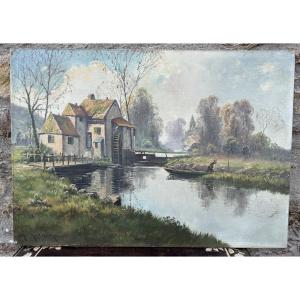


Eugène Galien-laloue (1854–1941), Known As M. Juliany Watermill And Boat On A River
Eugène GALIEN-LALOUE (1854–1941), known as M. Juliany
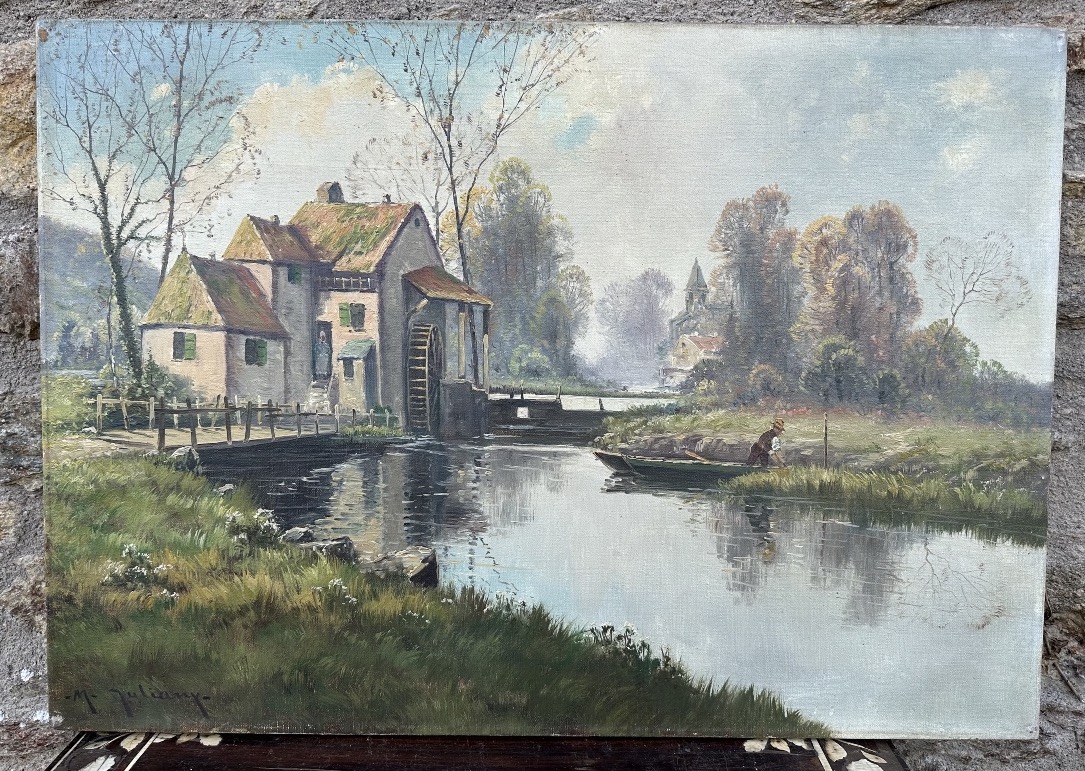
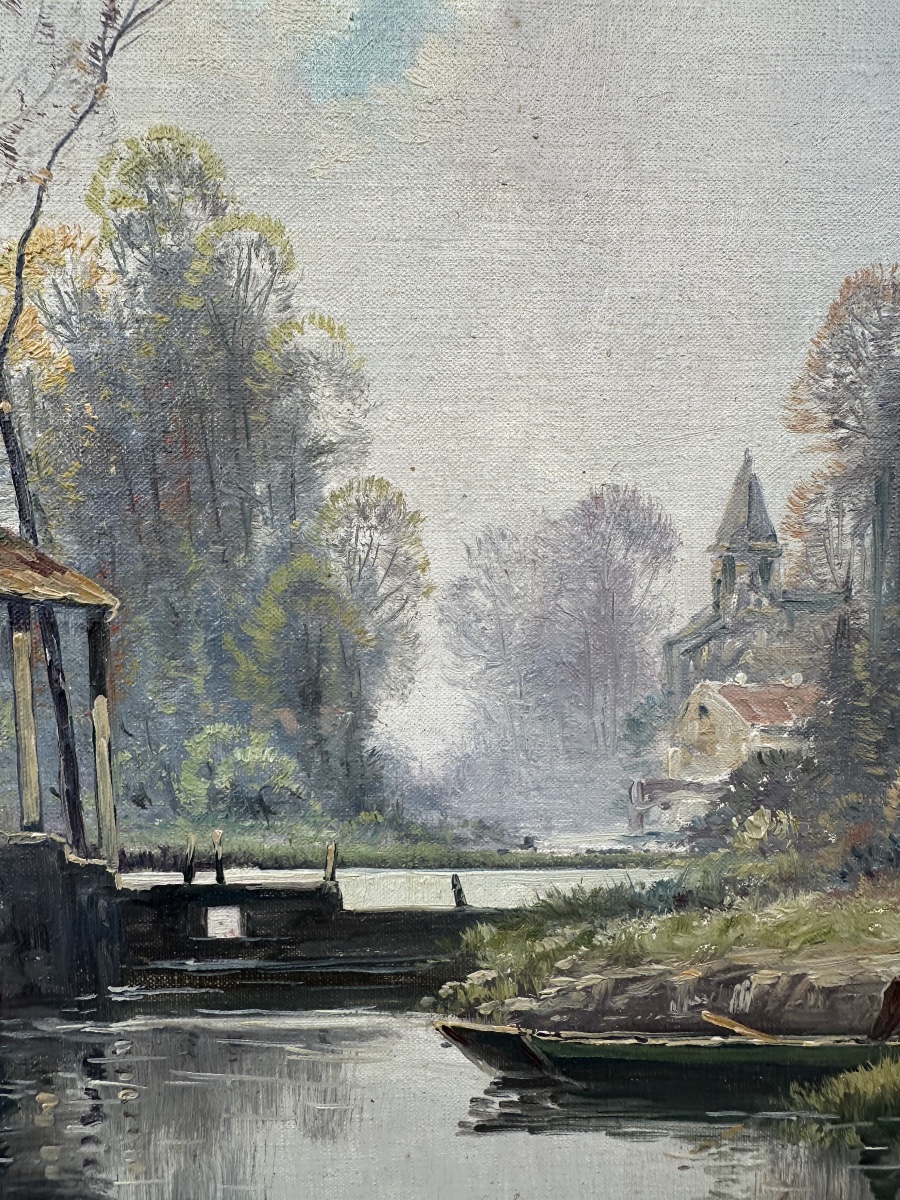
Watermill and Boat on a River
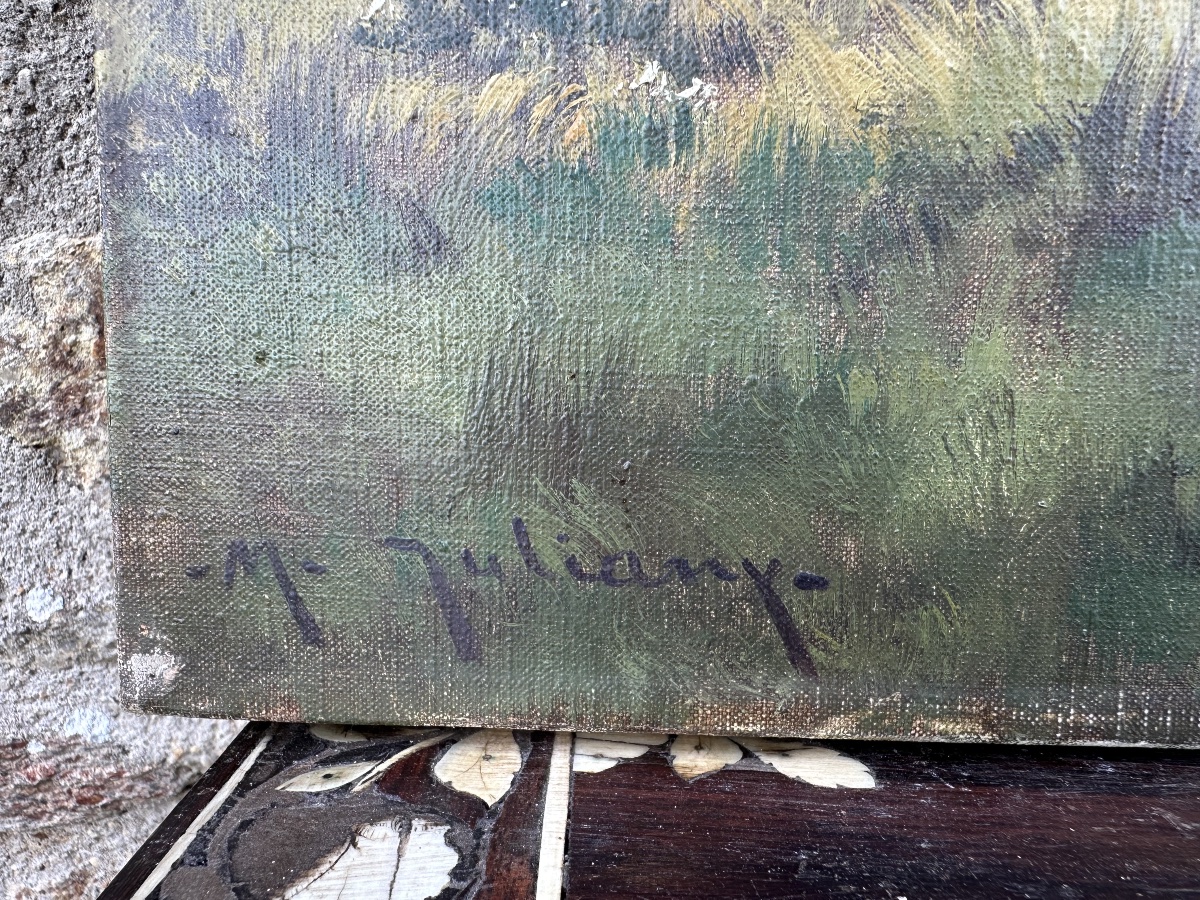
Oil on canvas, signed “M. Juliany” lower left.
46 × 65 cm
The rural side of a painter of Paris
Born in Paris in 1854, Eugène Galien-Laloue exhibited at the Salon from 1877. Celebrated for his Parisian views, he also developed a substantial landscape repertoire featuring villages, country paths and rivers. He used several signatures, including M. Juliany, which appears on part of his rural production. This painting illustrates that quieter aspect of his work: architecture remains a compositional anchor, but here becomes part of the rhythm of water, trees and village life. Musée d’Orsay, de Maigret catalogue.
A composition shaped by reflections
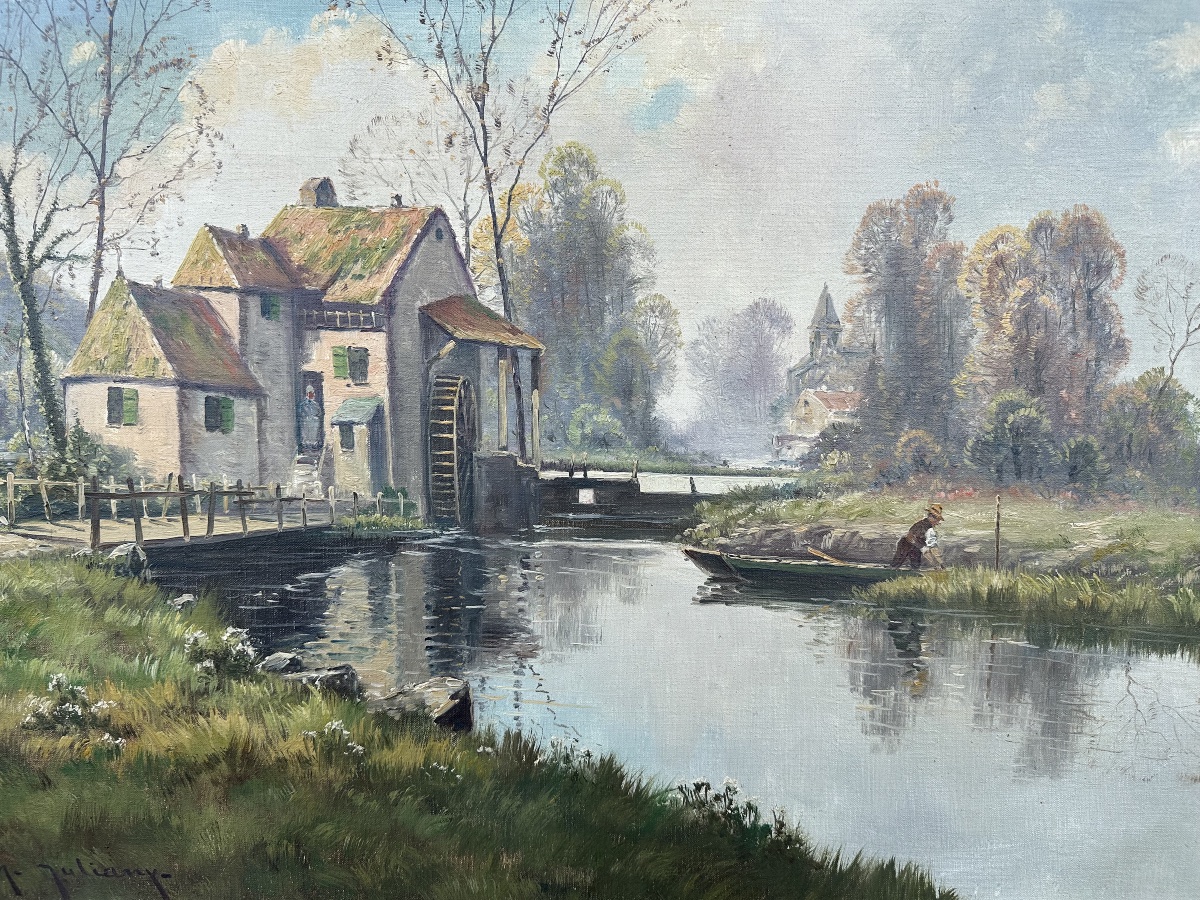
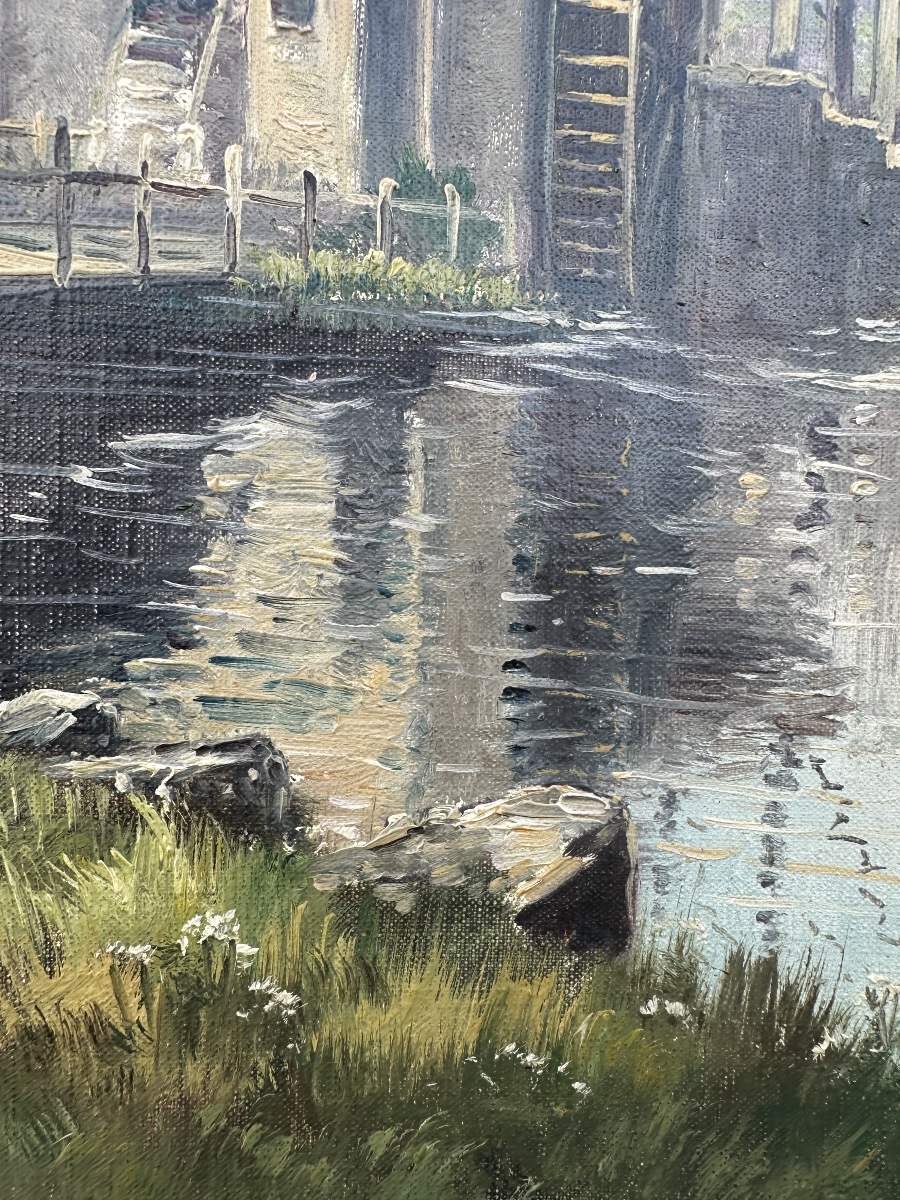
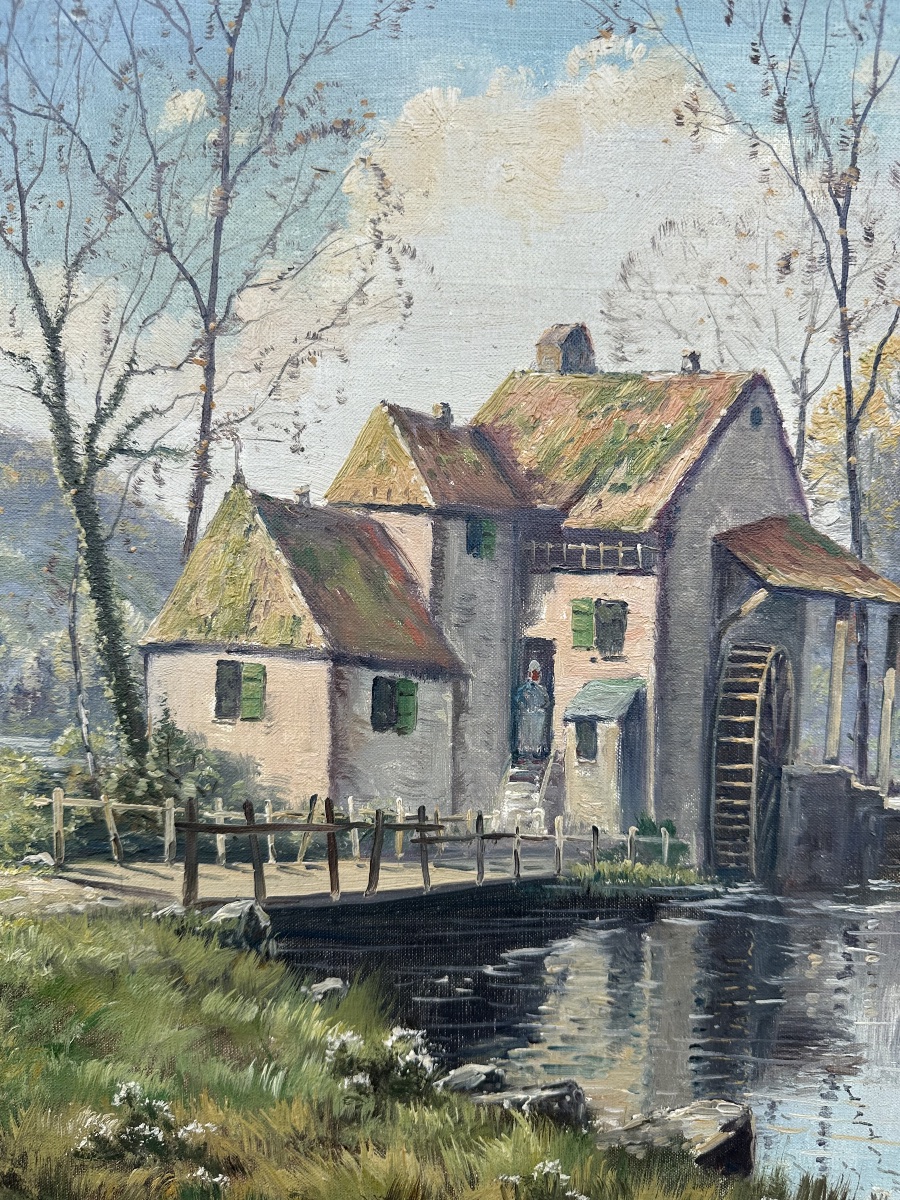
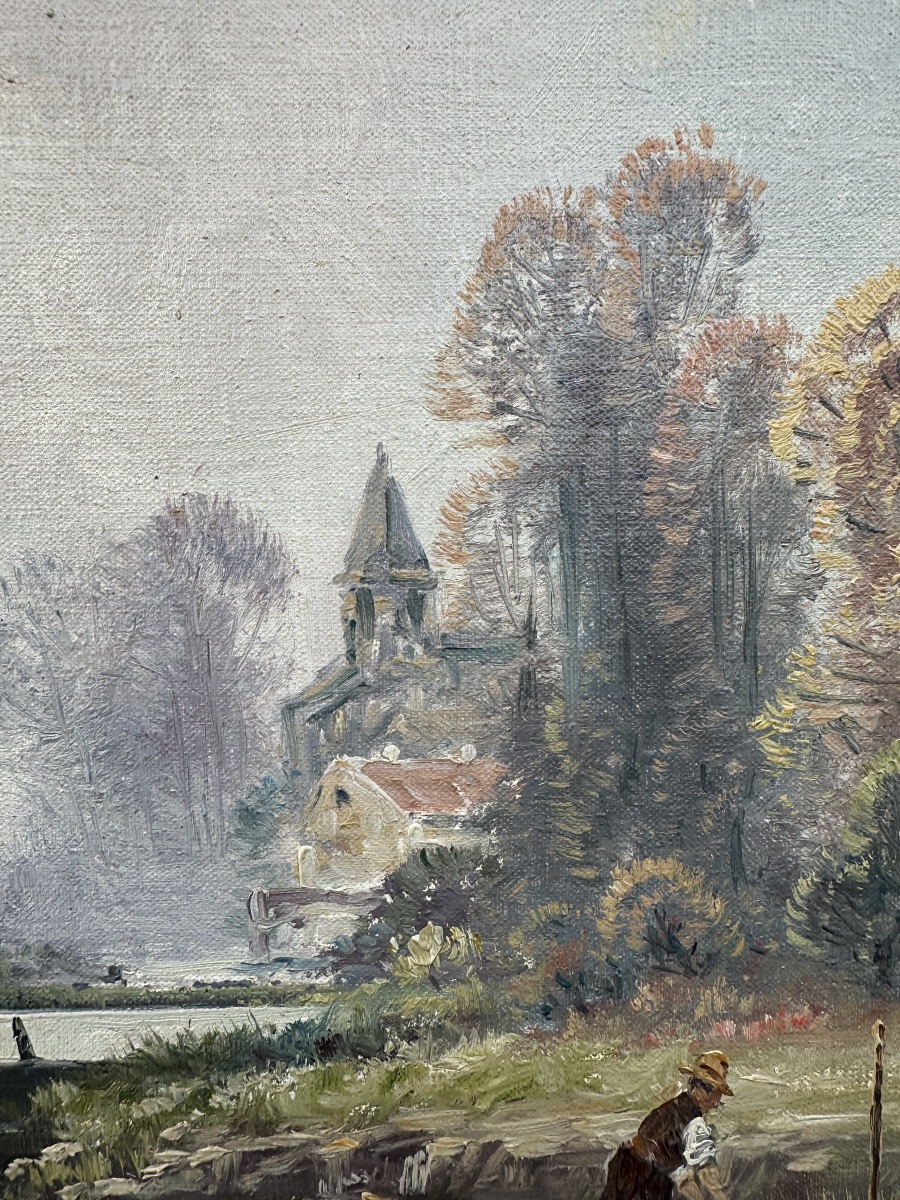
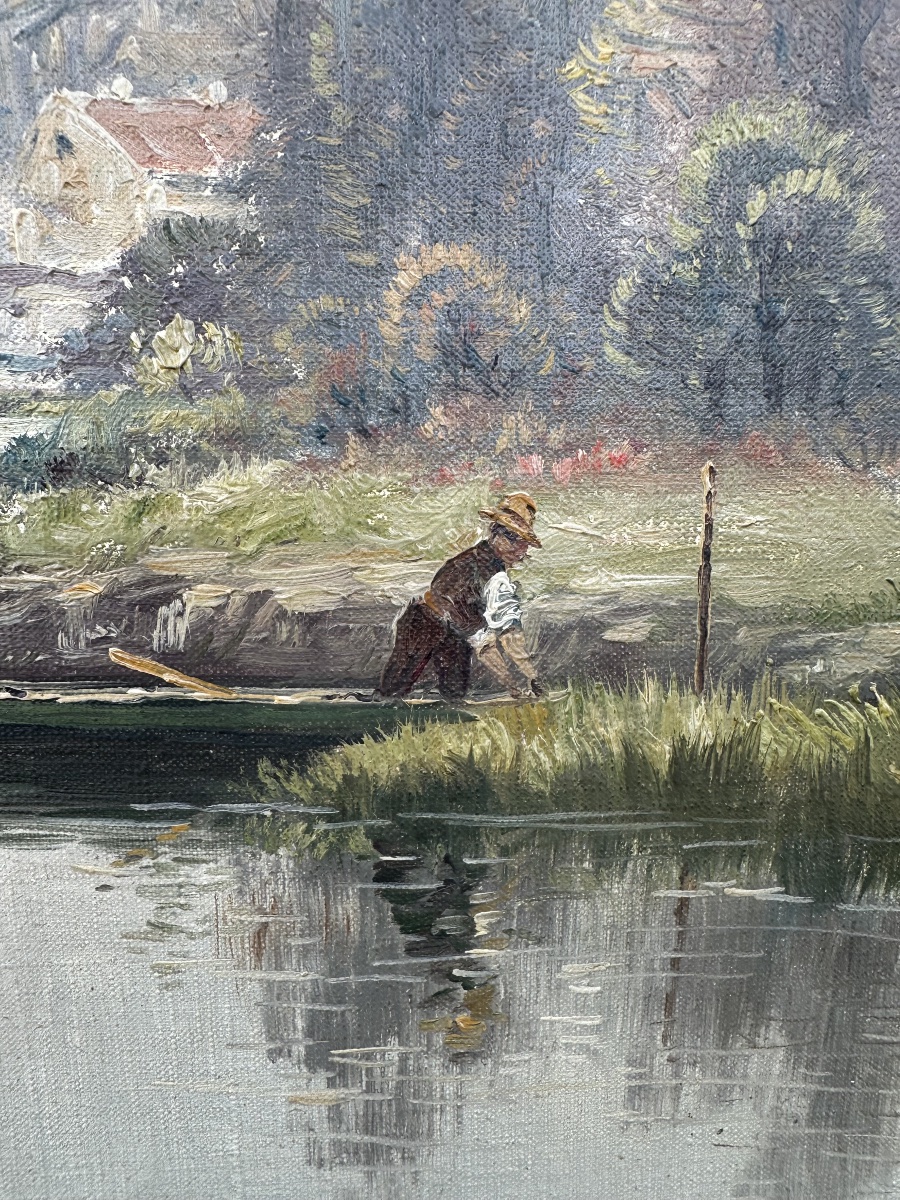
The mill, firmly established on the left, is balanced by the broad expanse of the river. Tree trunks, the waterwheel and the façades continue into gently broken reflections, while the boat introduces a horizontal line at the centre of the landscape. Careful architectural detail is combined with freer brushwork in the foliage, riverbanks and sky. Varied greens, ochre roofs and pale blue water create a luminous harmony enlivened by touches of russet.
A watermill beside the village
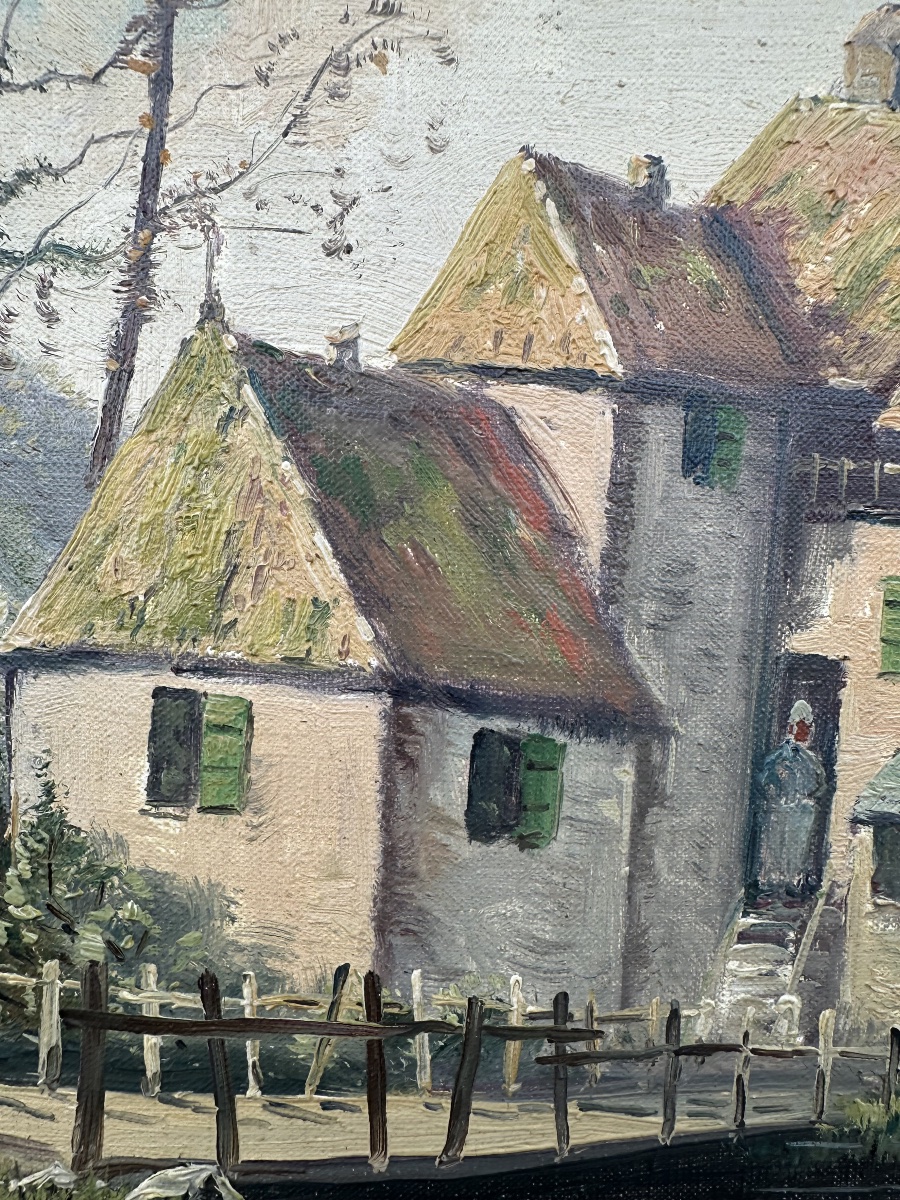
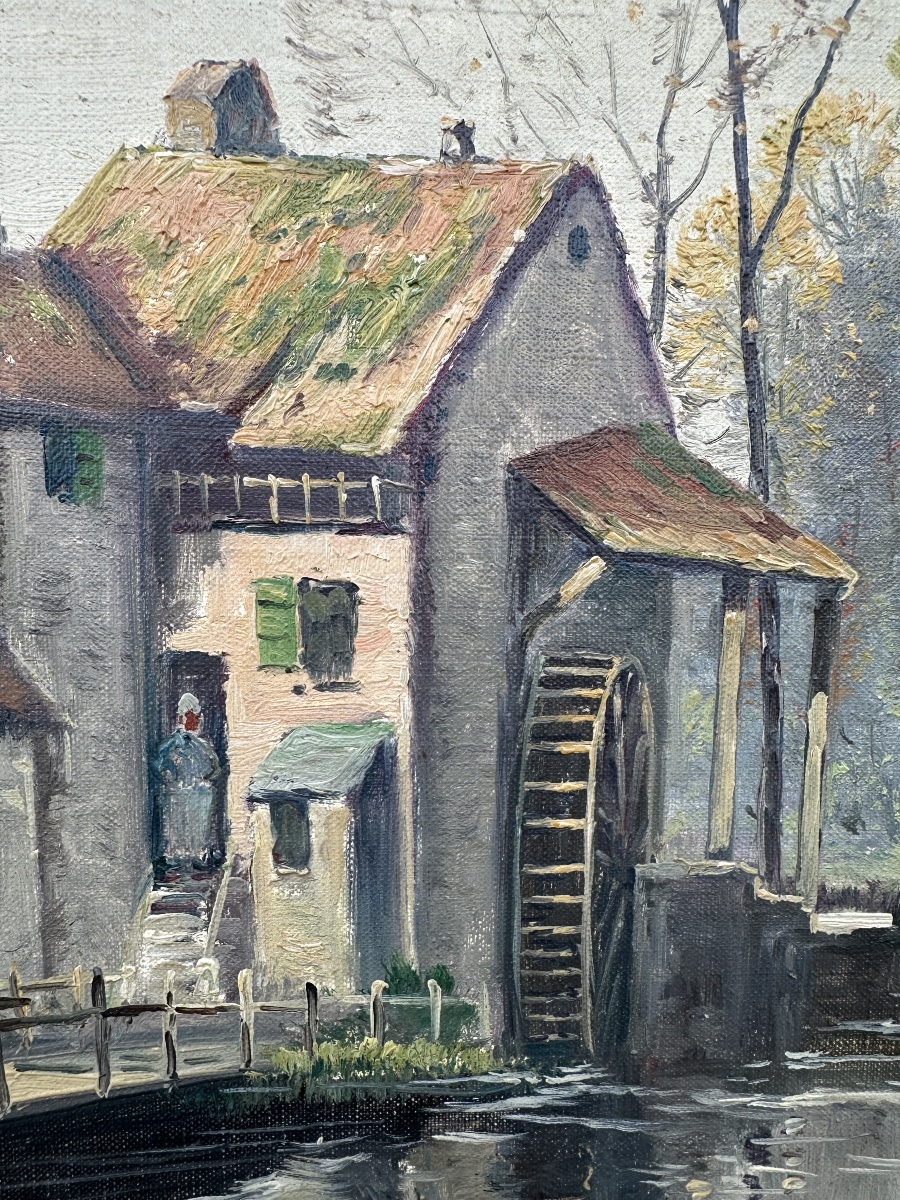
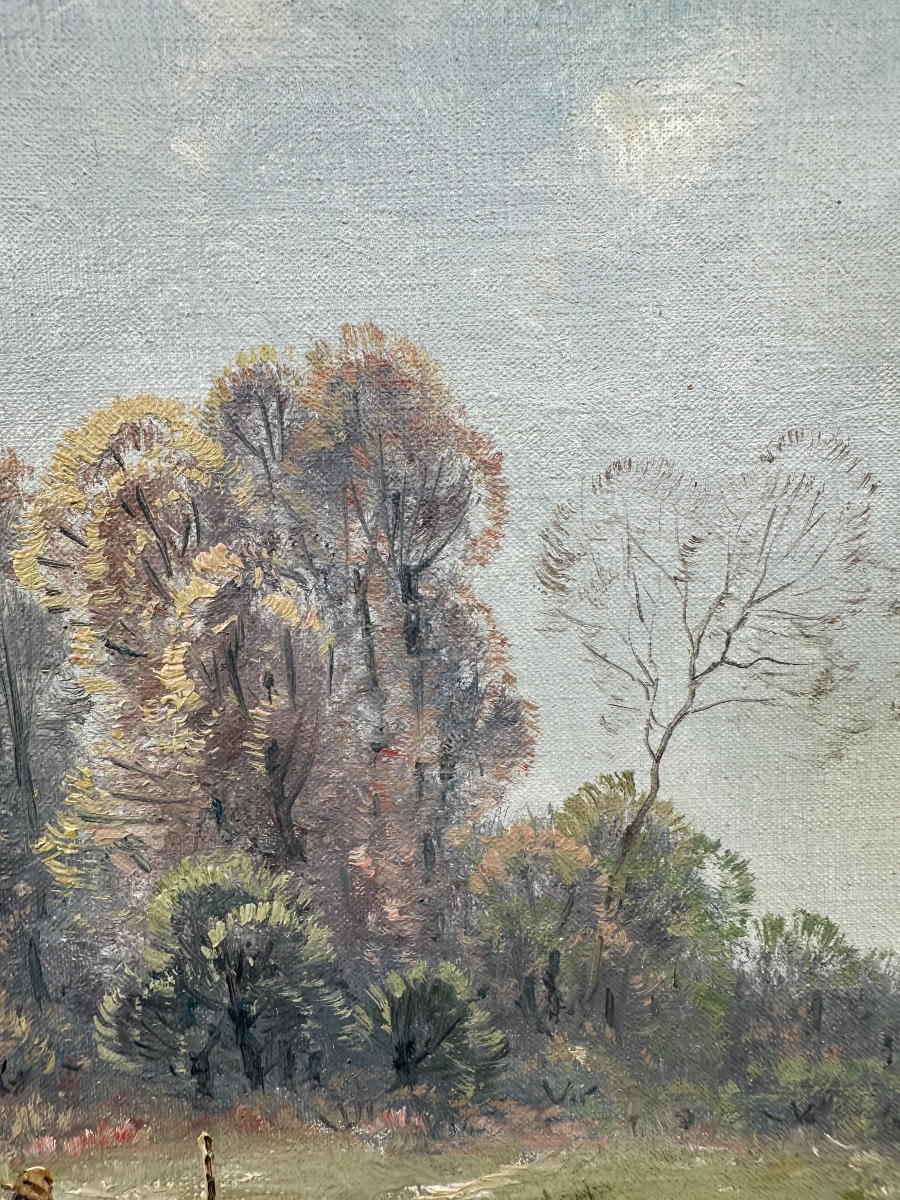
Buildings with tiled roofs, green shutters and pale walls rise beside a wooden footbridge. A large waterwheel identifies the purpose of the site. Near the opposite bank, a figure occupies a boat beside the riverside grasses. Beyond, a church tower emerges between trees and houses, adding another layer of depth. Slender foreground branches stand against a clouded sky, while light passes across the façades and still water. The scene captures the appeal of an inhabited landscape in which human activity remains closely connected with nature.
Condition: some wear and small losses around the edges.
Eugène GALIEN-LALOUE (1854–1941), genannt M. Juliany
Wassermühle und Boot am Fluss
Öl auf Leinwand, unten links „M. Juliany“ signiert.
46 × 65 cm
Die ländliche Seite eines Malers von Paris
Der 1854 in Paris geborene Eugène Galien-Laloue stellte ab 1877 im Salon aus. Neben seinen berühmten Pariser Ansichten schuf er zahlreiche Landschaften mit Dörfern, Feldwegen und Flüssen. Er verwendete verschiedene Signaturen, darunter M. Juliany, die auf einem Teil seiner ländlichen Motive erscheint. Das vorliegende Gemälde veranschaulicht diese ruhigere Seite seines Schaffens: Die Architektur bleibt ein tragendes Element der Komposition, fügt sich jedoch in das Zusammenspiel von Wasser, Bäumen und dörflichem Leben ein. Musée d’Orsay, Katalog de Maigret.
Eine durch Spiegelungen gegliederte Komposition
Die links angeordnete Mühle findet ihr Gegengewicht in der weiten Wasserfläche. Baumstämme, Mühlrad und Fassaden setzen sich in leicht gebrochenen Spiegelungen fort, während das Boot eine horizontale Linie in der Bildmitte bildet. Die sorgfältige Schilderung der Gebäude verbindet sich mit einem freieren Pinselstrich in Laubwerk, Uferzonen und Himmel. Abgestufte Grüntöne, ockerfarbene Dächer und das helle Blau des Wassers ergeben einen lichten Farbklang, den einzelne rostrote Akzente beleben.
Eine Wassermühle am Dorfrand
Gebäude mit Ziegeldächern, grünen Fensterläden und hellen Mauern erheben sich neben einem hölzernen Steg. Ein großes Wasserrad kennzeichnet die Funktion des Ortes. Am gegenüberliegenden Ufer befindet sich eine Person in einem Boot nahe dem Uferbewuchs. Dahinter erscheint zwischen Bäumen und Häusern ein Kirchturm, der dem Bild zusätzliche Tiefe verleiht. Feine Äste im Vordergrund zeichnen sich vor dem bewölkten Himmel ab, während das Licht über Fassaden und ruhiges Wasser gleitet. So entsteht das Bild einer bewohnten Landschaft, in der menschliche Tätigkeit und Natur eng miteinander verbunden bleiben.
Erhaltung: vereinzelte Bereibungen und kleinere Fehlstellen im Randbereich.
Period: 19th century
Style: Other Style
Condition: Excellent condition
Material: Oil painting
Reference (ID): 1838309
Availability: In stock