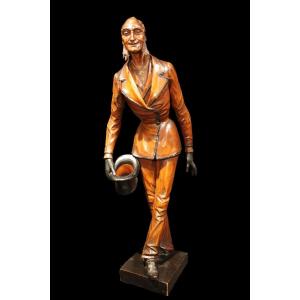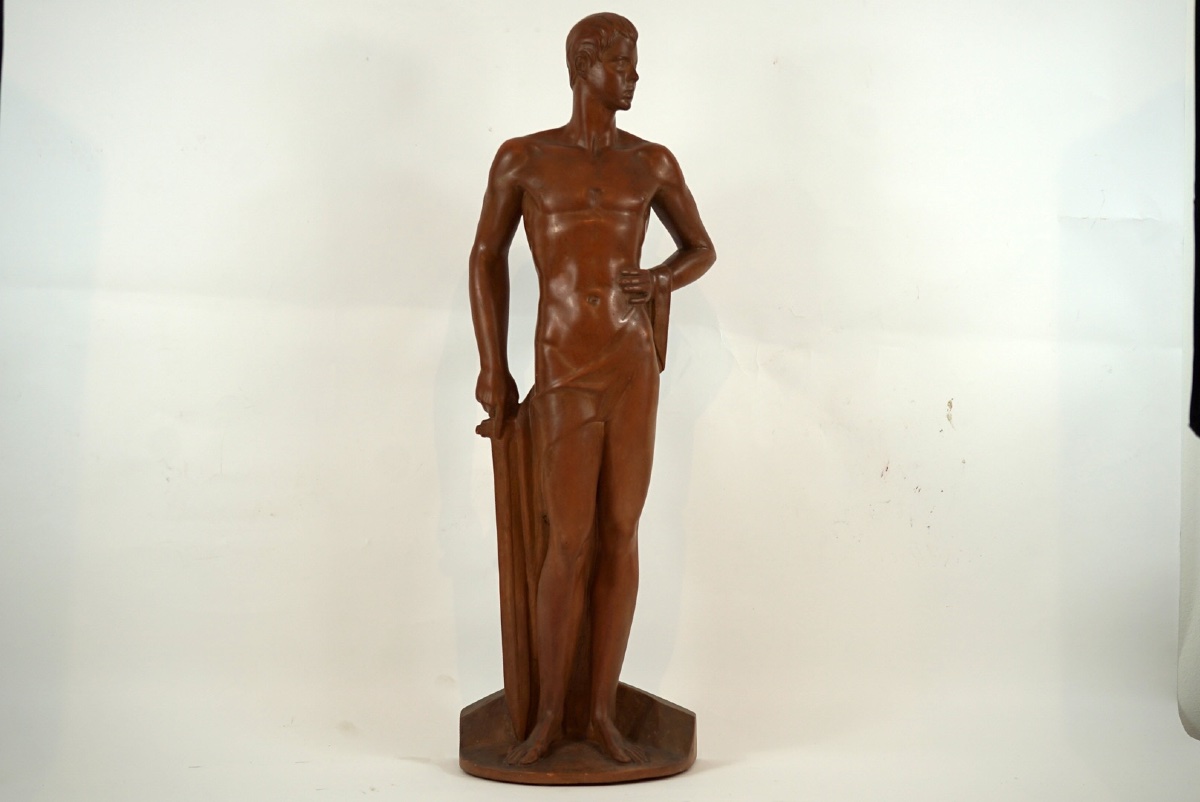
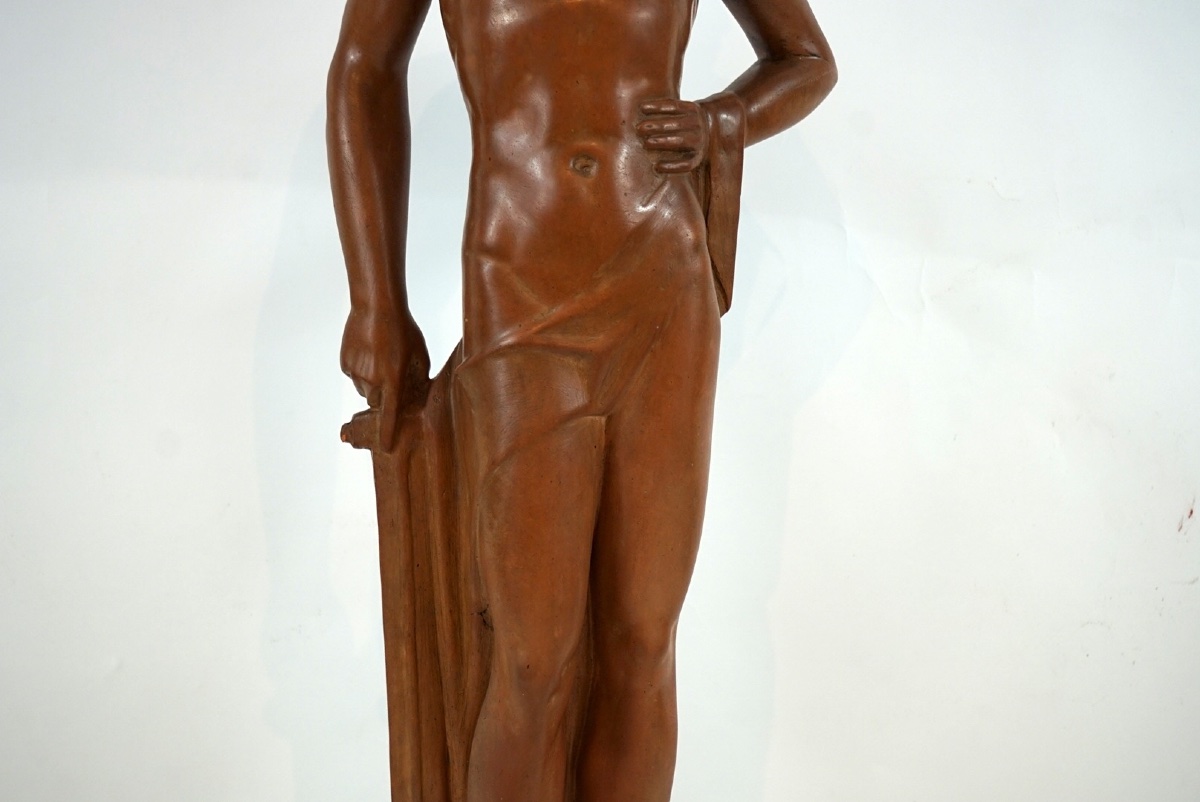
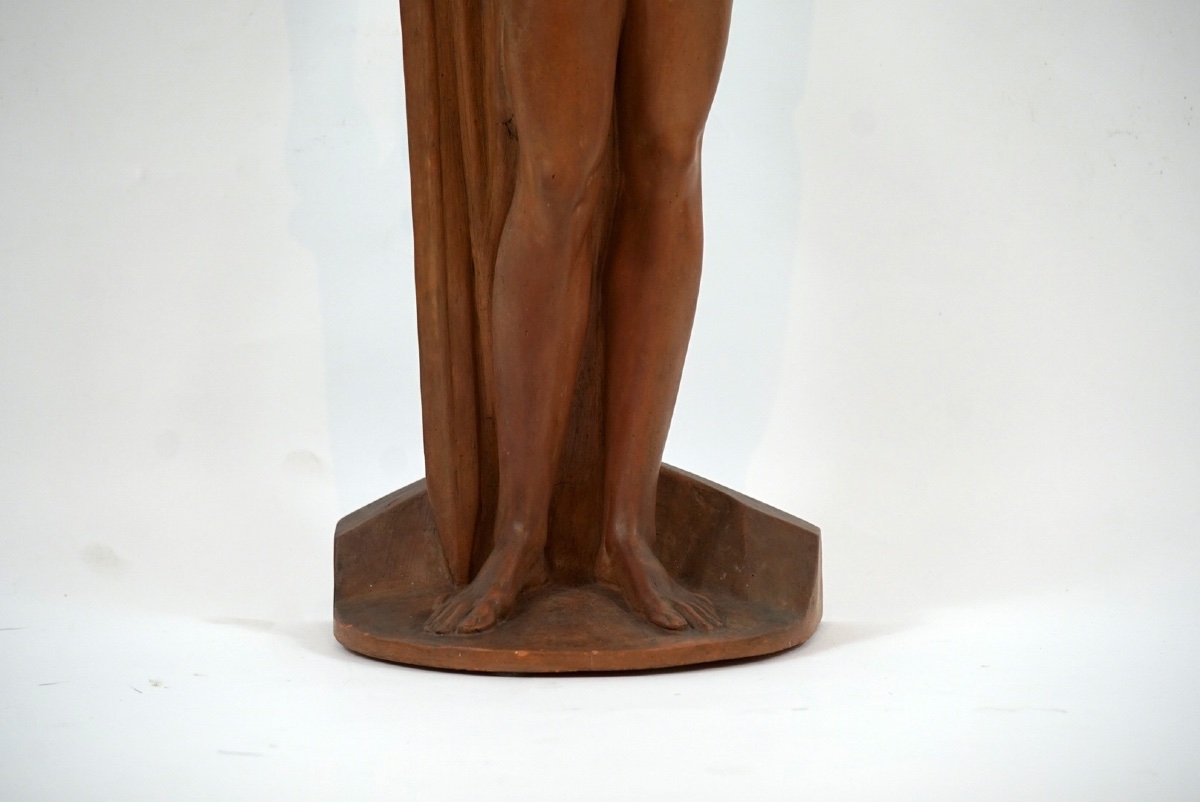

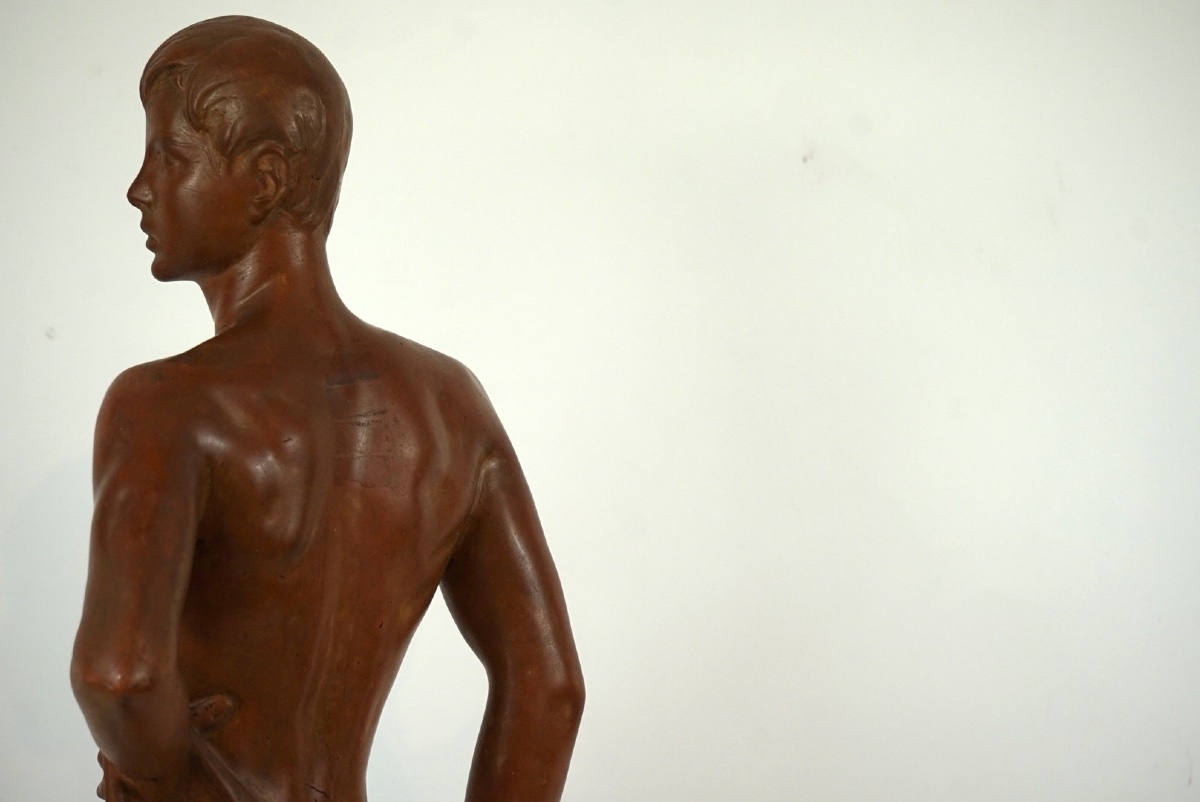
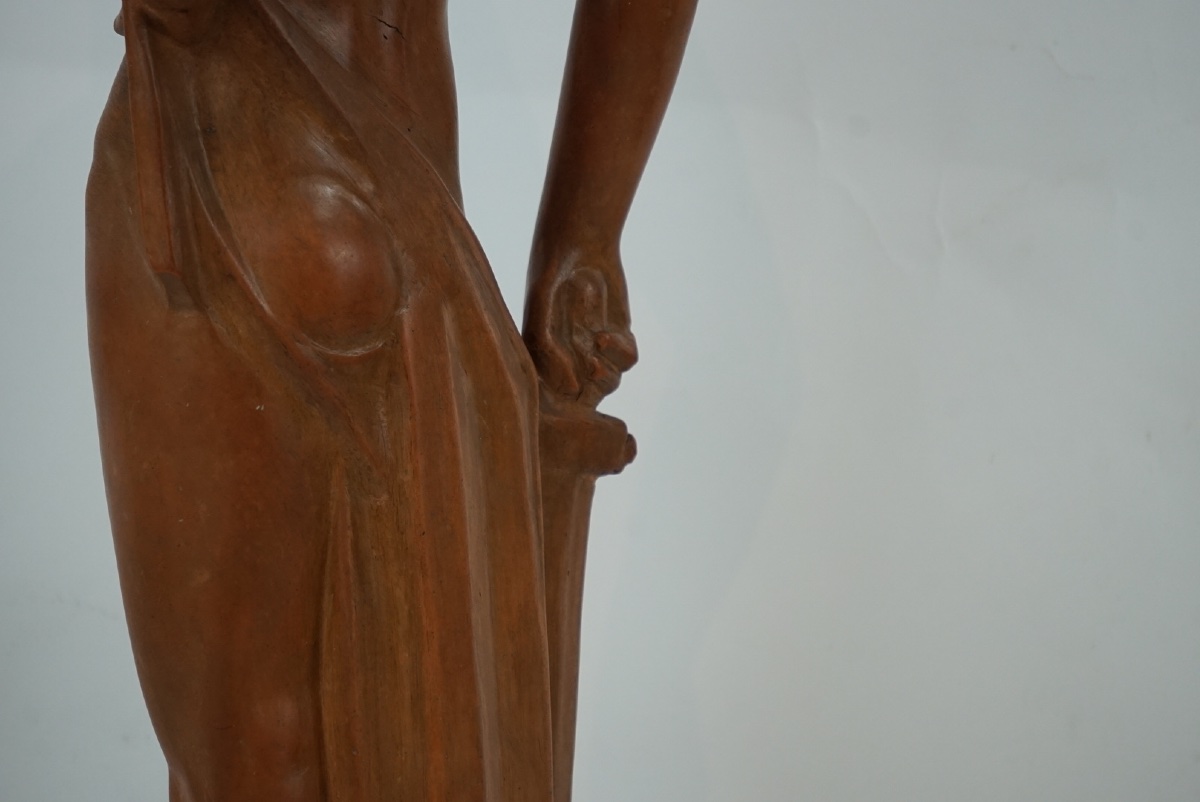
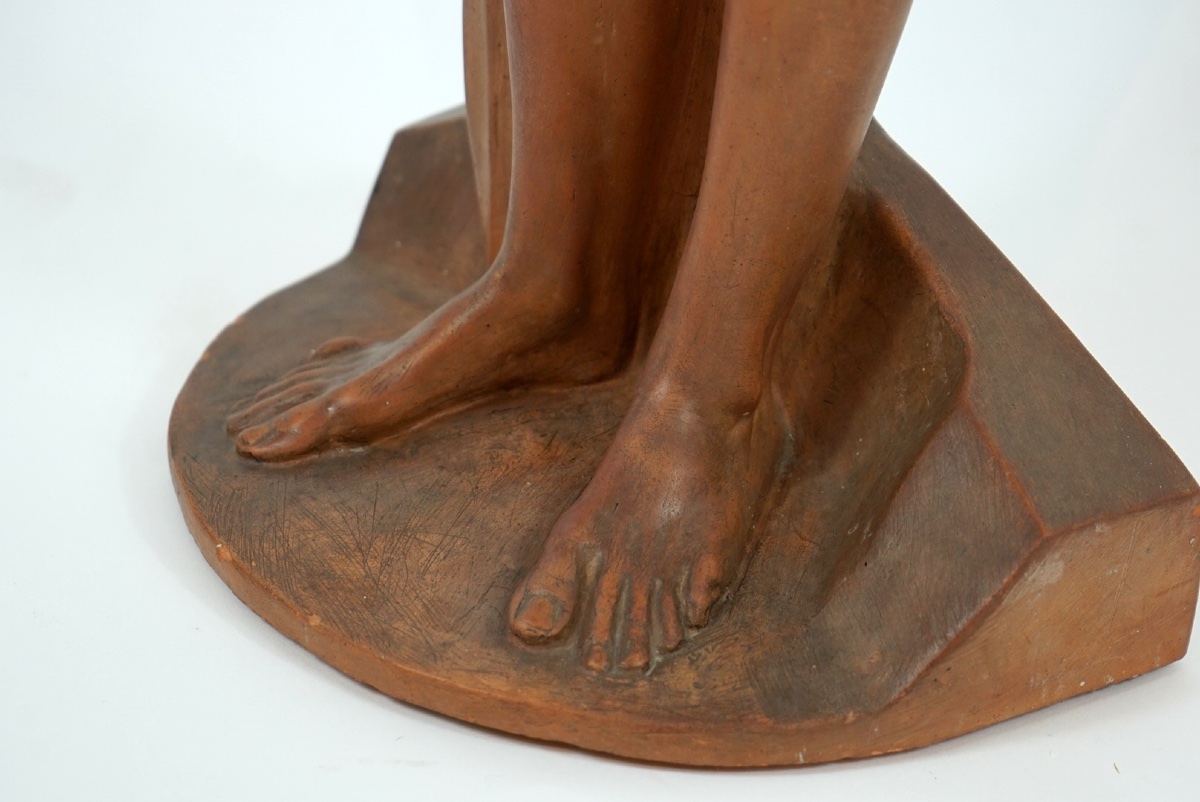
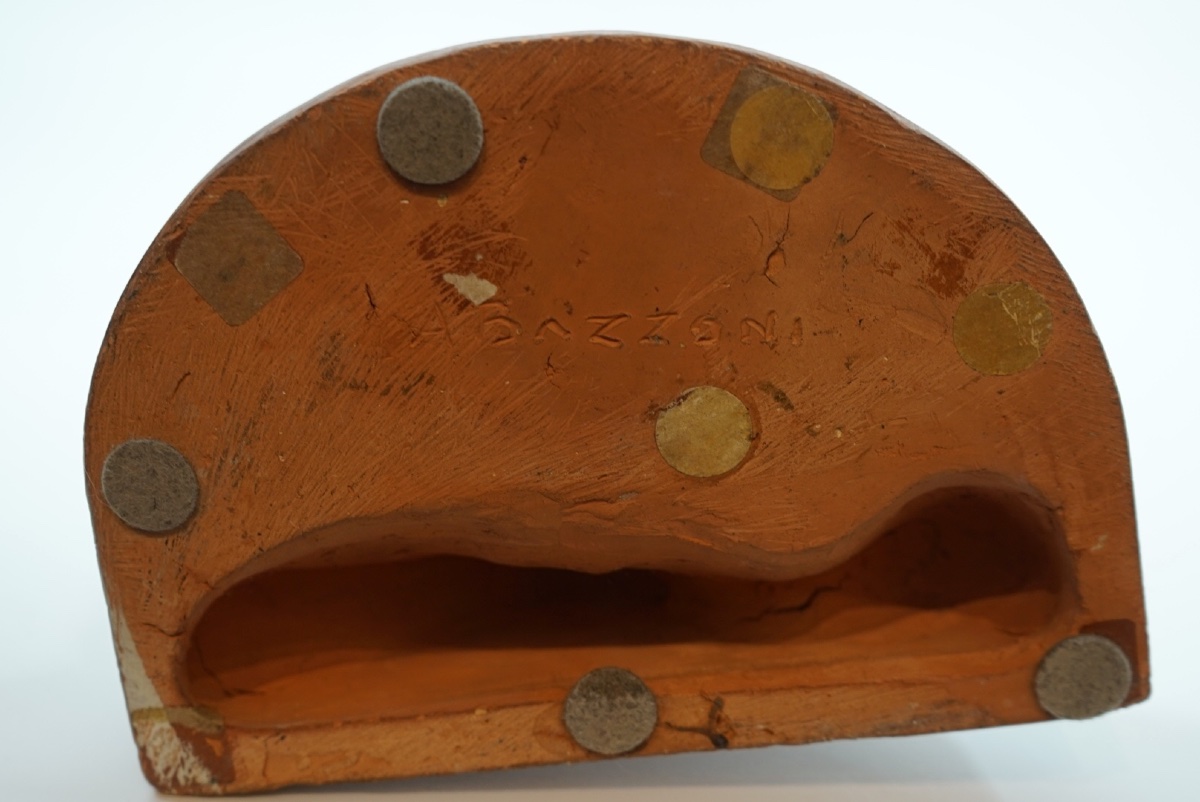



The Legionnaire (or Young Hero With A Gladius)
TECHNICAL SPECIFICATIONS OF THE WORK
Identifying Information
- Artist: Alberto Bazzoni (San Nicomede, 1889 – Milan, 1973)
Attributed Title: The Legionnaire (or Young Hero with a Gladius)
Period / Date: Circa 1930 (1920s–1930s)
Type: Easel sculpture
Material and Technique: Patinated terracotta / wax patina
Dimensions: Height 64 cm
Signature / Marks: Not specified (to be verified on the base or on the back)
Historical Context and Period of Creation
The work dates from the late 1920s to the mid-1930s, during Alberto Bazzoni’s artistic prime. During this two-decade period, the artist combined monumental public commissions (the World War I War Memorials and the decorations for Milan’s Central Station) with the creation of medium-sized terracotta and bronze works intended for private collections and corporate art exhibitions.
Stylistic Analysis and Artistic Movement
The sculpture is an expression of the Italian Novecento movement and the cultural climate of the “Return to Order”:
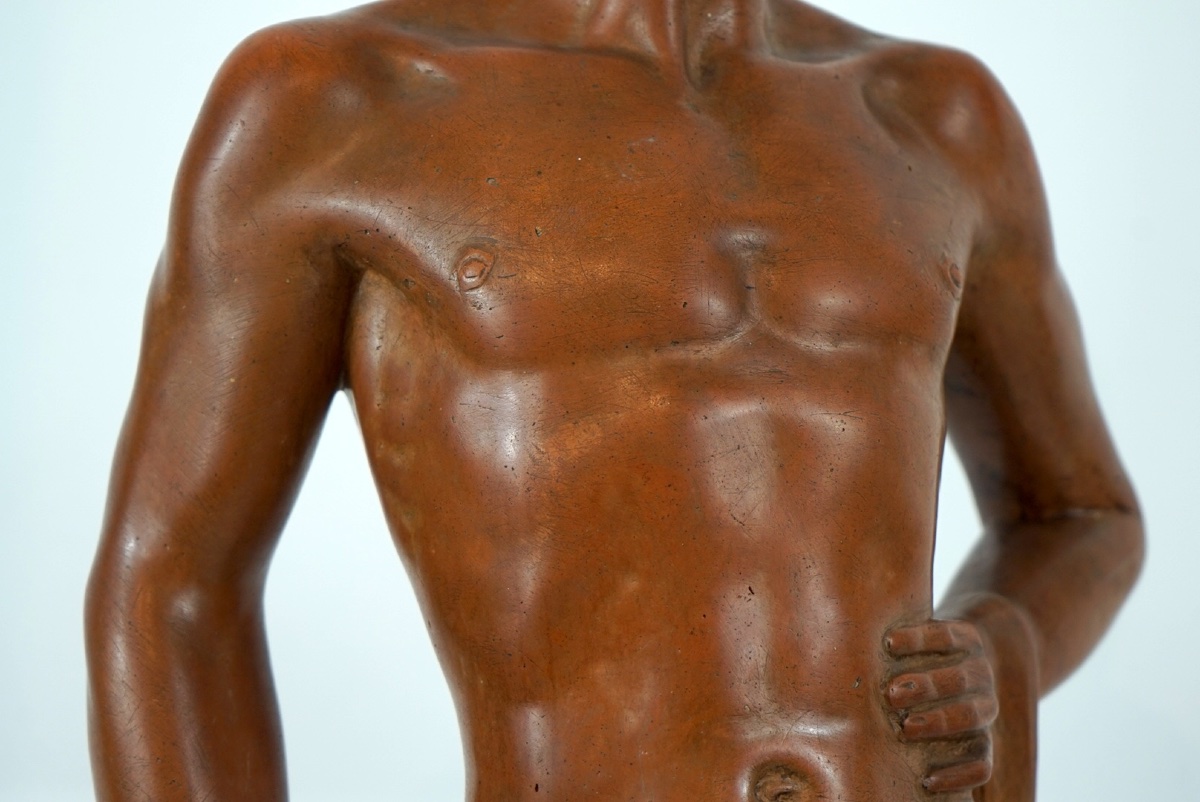
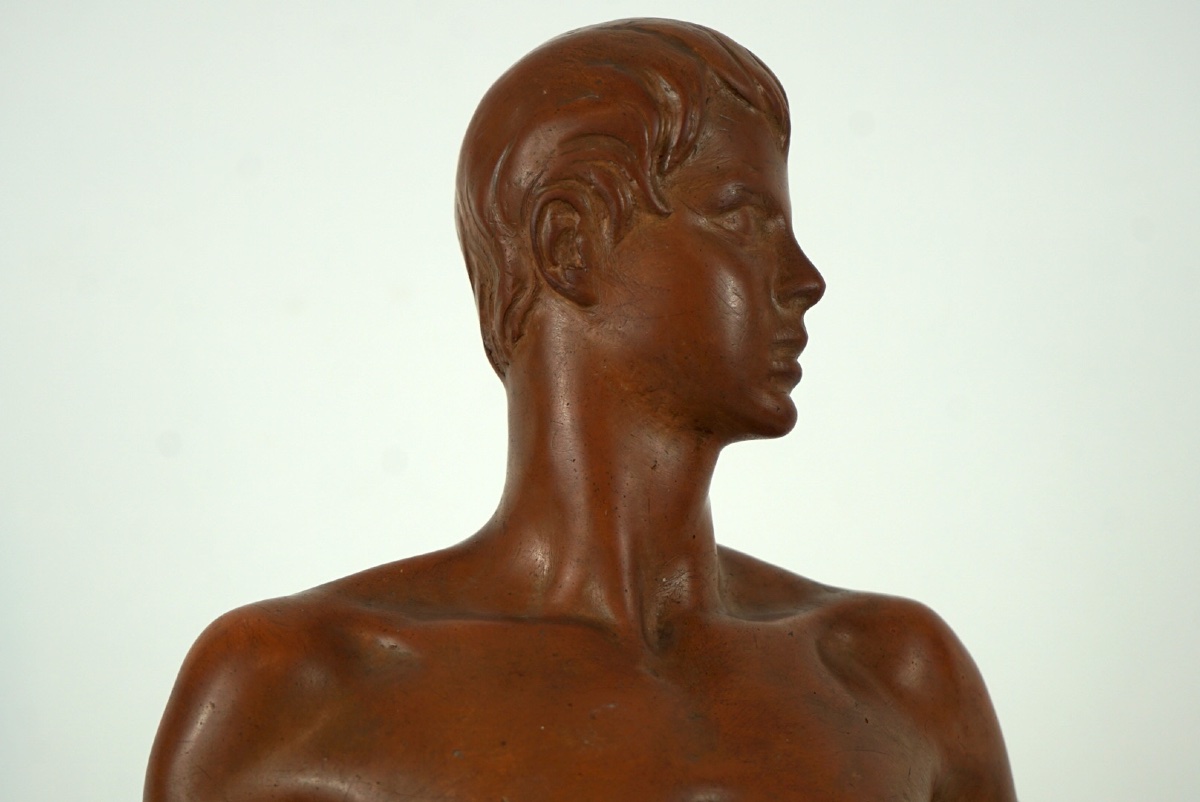
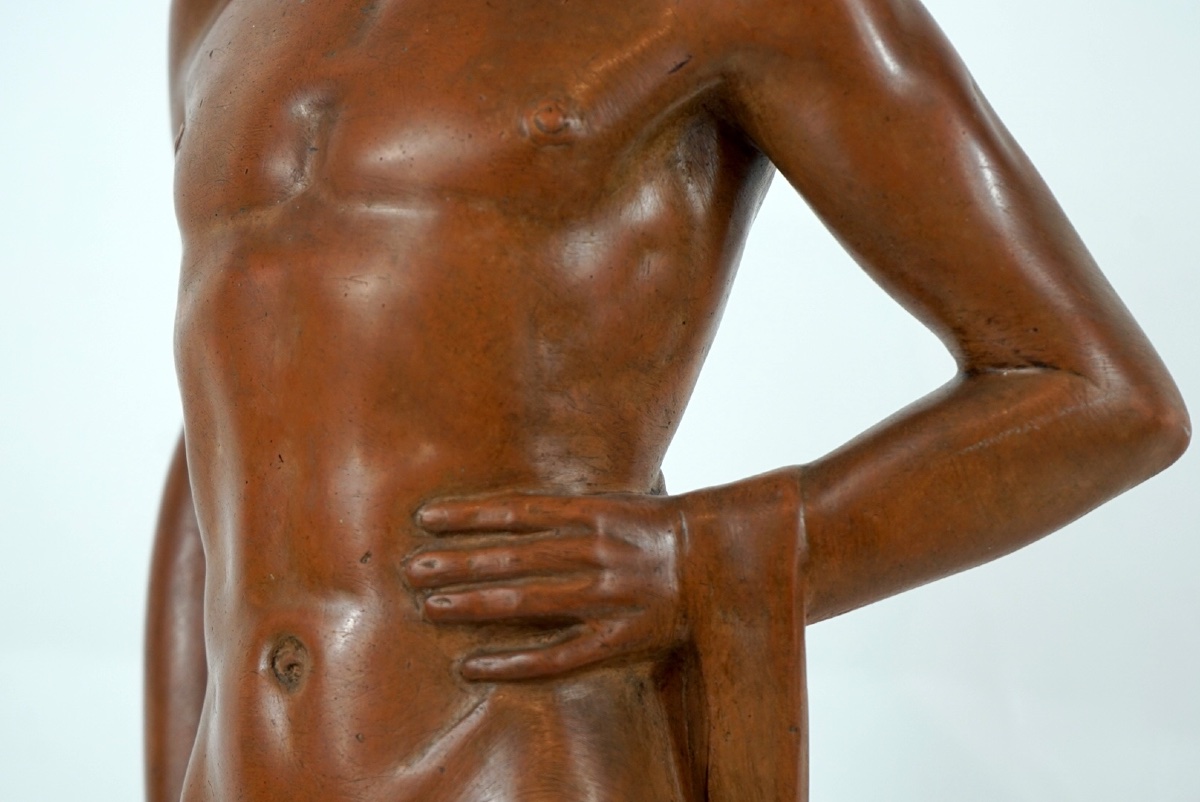
- Volumetric and Formal Synthesis: The human figure is constructed with clean, essential, and vigorous lines. The musculature of the torso, arms, and legs is well-modeled but free of anatomical exaggerations, prioritizing sculptural solidity and the harmony of forms.
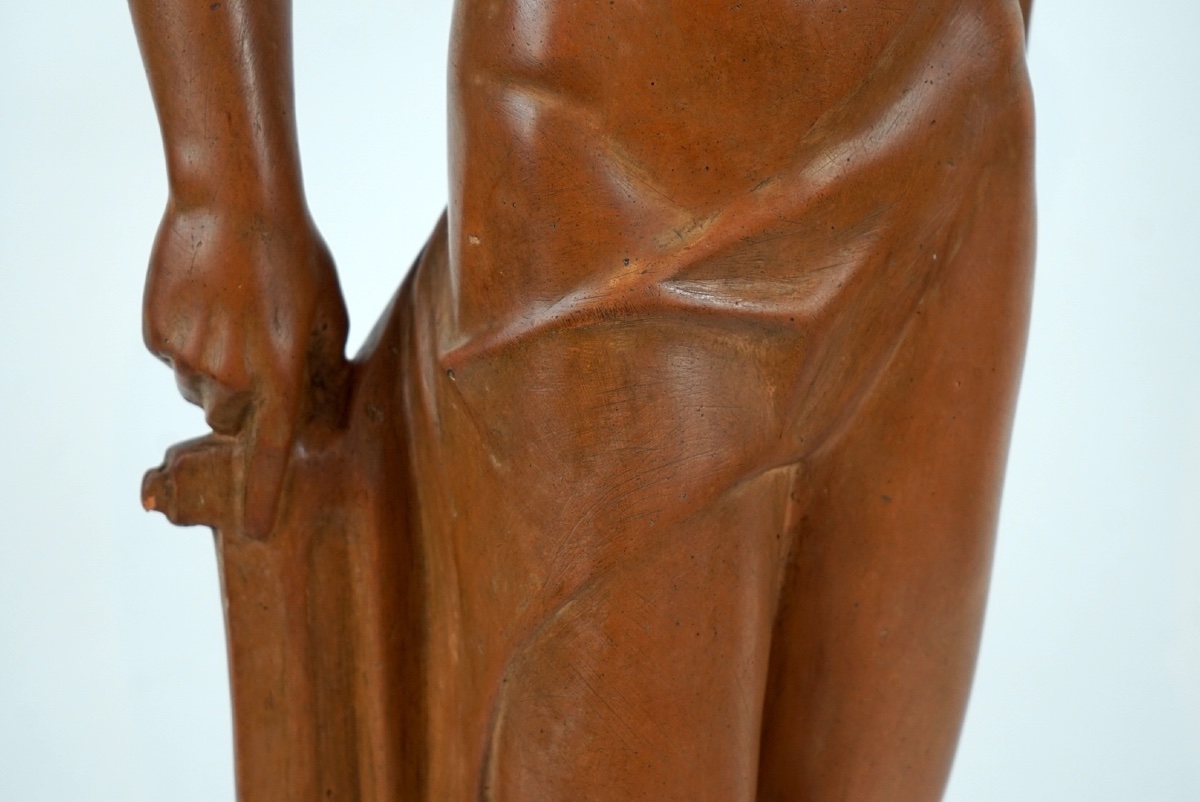
- Classical Proportions: The anatomical composition evokes the chiasm and the contrapposto of classical Greek and Roman statuary. The body’s weight rests on the right leg, while the left hand rests on the hip and the right hand holds the hilt of the gladius with the tip pointing downward.
Surface Treatment: The terracotta features a warm, smooth, and uniform patina, designed to highlight the chiaroscuro effects produced by light on the body’s forms.
Iconography and Symbolic Meaning
- The Weapon (Gladius): The short sword held in the right hand is identifiable as a Roman gladius. In ancient Rome, the gladius was the symbolic weapon of the legionary; in the art of the 1930s, it became a visual metaphor for readiness, defense, and courage.
The Drape and Heroic Nudity: The choice of partial nudity—mitigated by a light drape across the hips and supported by the left arm—draws on the classical concept of “heroic nudity,” freeing the subject from a specific historical era to elevate him to a universal symbol of youth and strength.
Interpretation: Rather than a realistic portrait of a soldier or an arena gladiator, the work represents the idealization of the citizen-soldier / classical hero, perfectly in line with the allegorical taste of the era.
Biographical Note on the Artist
- Education and Early Years: Born in 1889 in San Nicomede (PR), he studied at the Academy of Fine Arts in Parma (1908–1913).
War Experience and Monuments: A combatant in World War I, he created important War Memorials in Emilia-Romagna (Fidenza, Salsomaggiore, Reggio Emilia).
Work in Milan: Having settled in Milan in 1926, he sculpted the statue of St. Augustine for Milan Cathedral and created the reliefs and sculptural elements for Milan Central Station (inaugurated in 1931).
His Parisian Period and Maturity: In the 1930s, he worked extensively in Paris, creating bronze and terracotta sculptures for the international market. He died in Milan in 1973.
Period: 20th century
Style: Other Style
Condition: Good condition
Material: Terracotta
Reference (ID): 1834092
Availability: In stock