

Rare Anatomical Head Of An "écorché" In Stucco And Wax
Rare Anatomical Head of an "Écorché" in Stucco and Wax
Germany (or Central Europe) – Second Half of the 18th Century
Period: 18th Century
Origin: Germany / Central Europe
Materials: Mixed media (polychrome stucco and wax modeling), painted glass, wood, papier-mâché.
Dimensions: Total height 35 cm; Base 20 x 25 cm.
Condition: Good, with period patina and slight wear consistent with the 18th century (see description).
Description of the Work
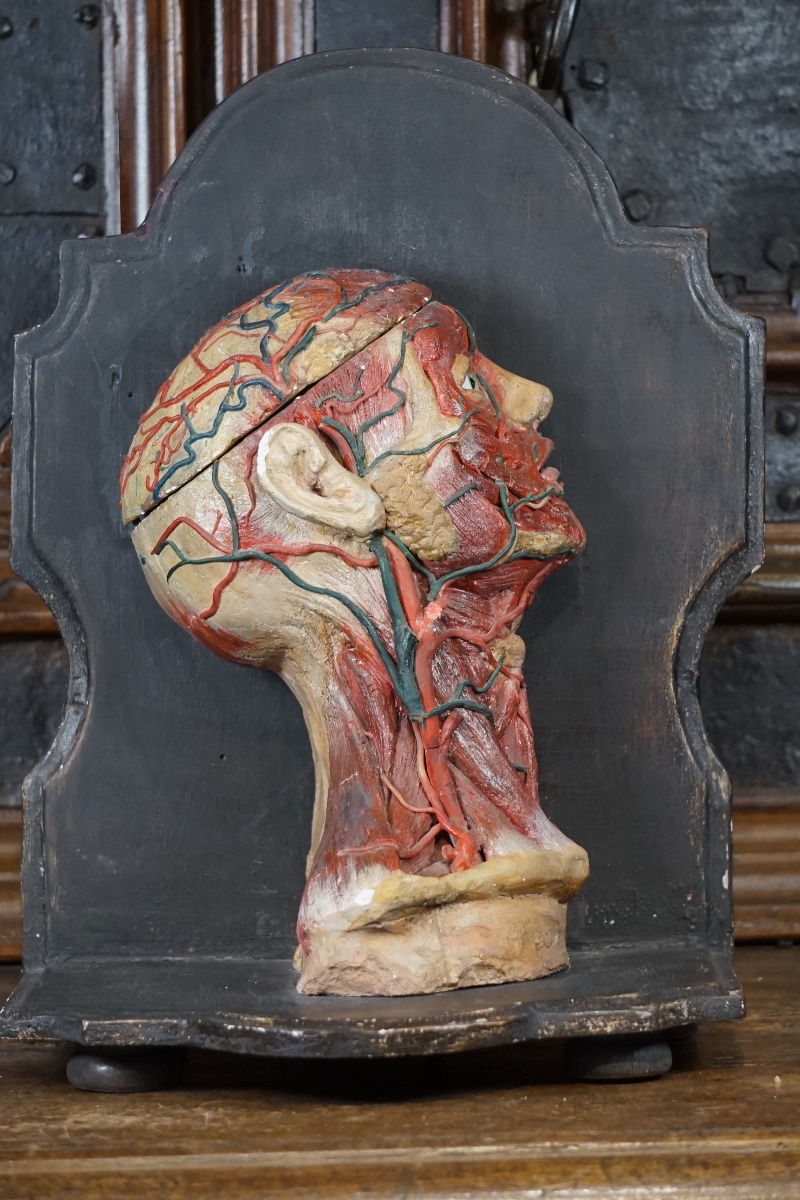
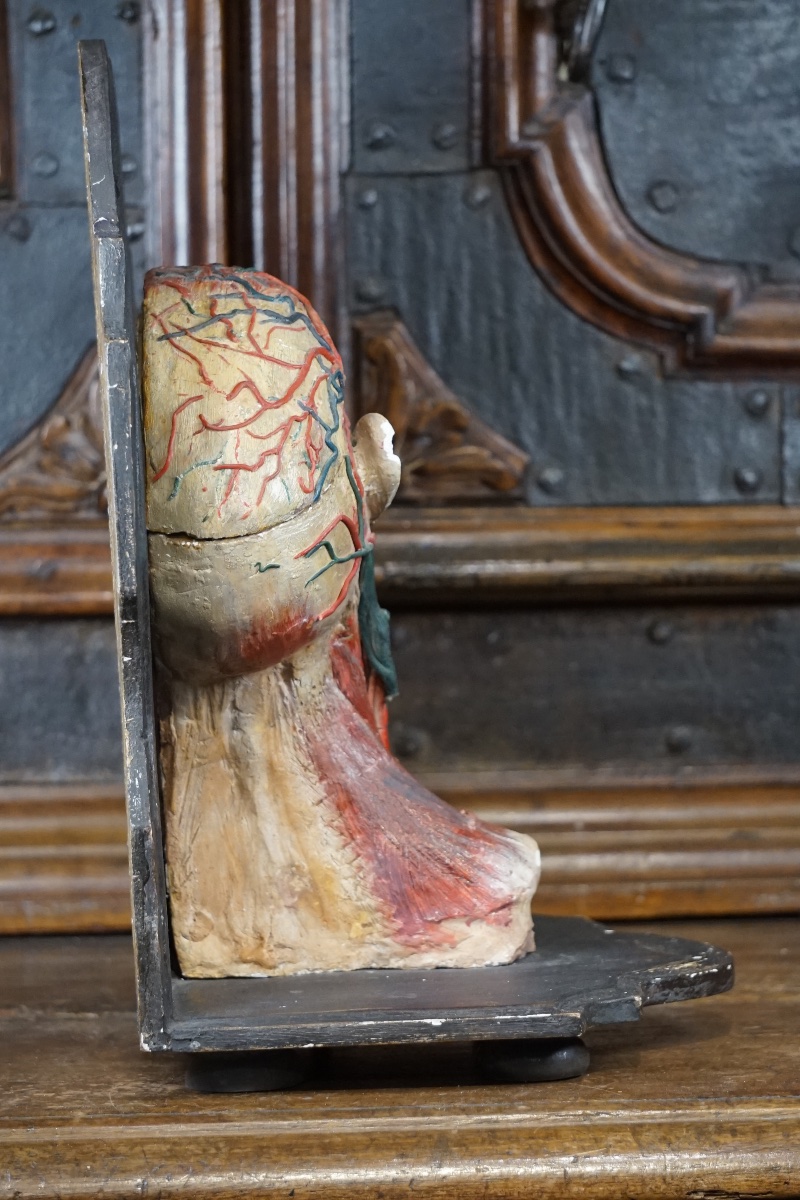
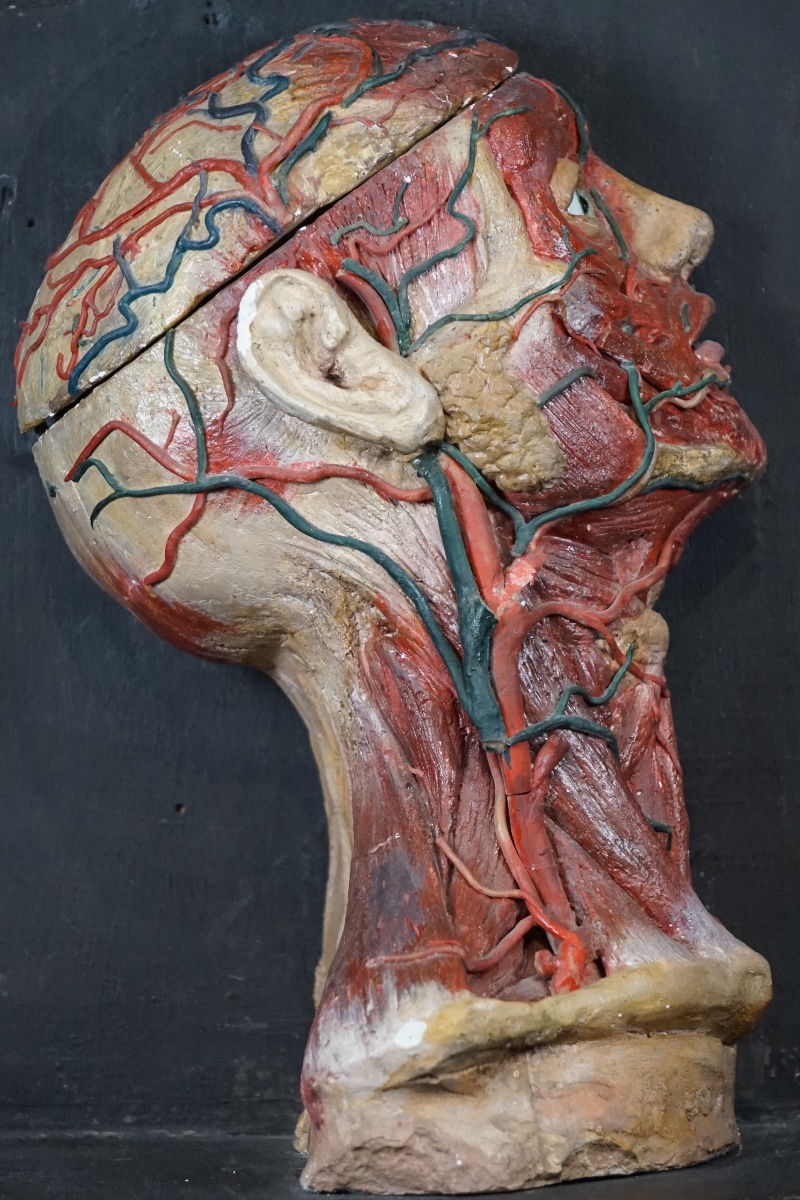
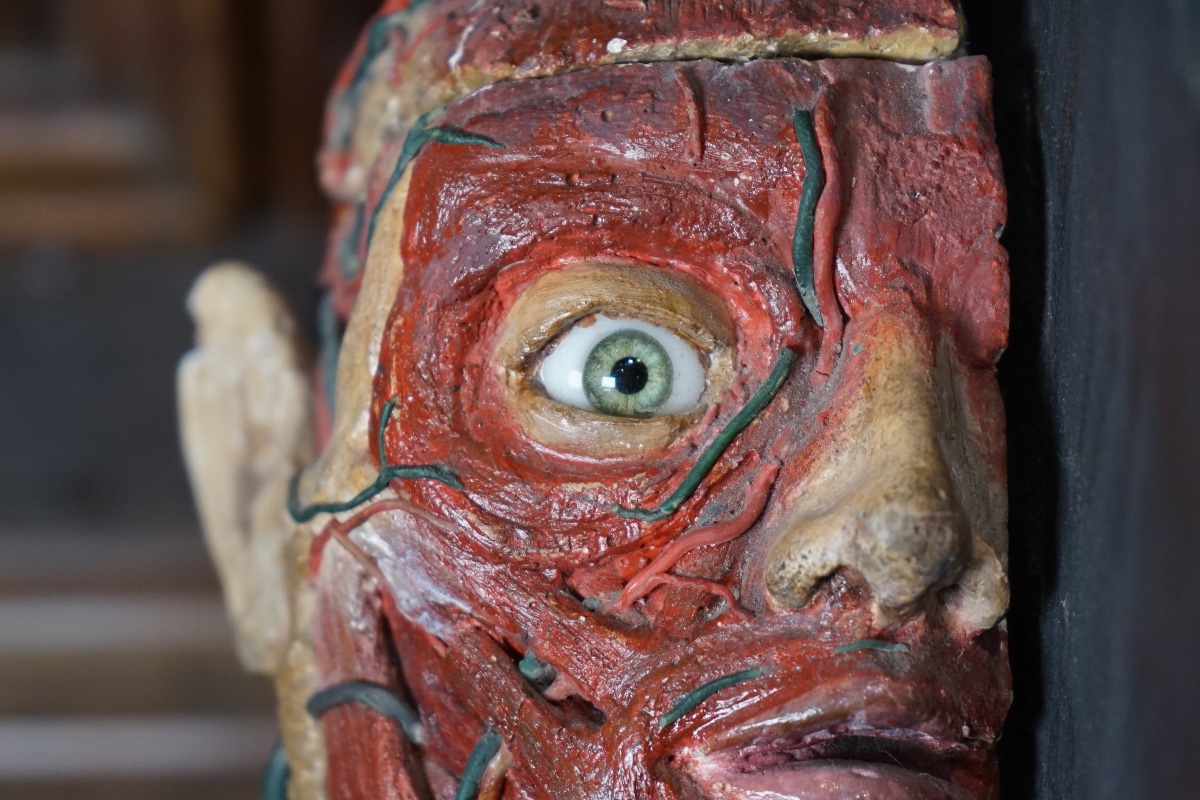
An exceptional and rare three-dimensional anatomical model of a half-head, depicting a “flayed figure” (écorché). This highly precise artifact, dating to the second half of the 18th century and attributable to a Central European workshop (likely German or Austro-German), represents a brilliant example of the fusion between Enlightenment-era scientific rigor and sculptural mastery.
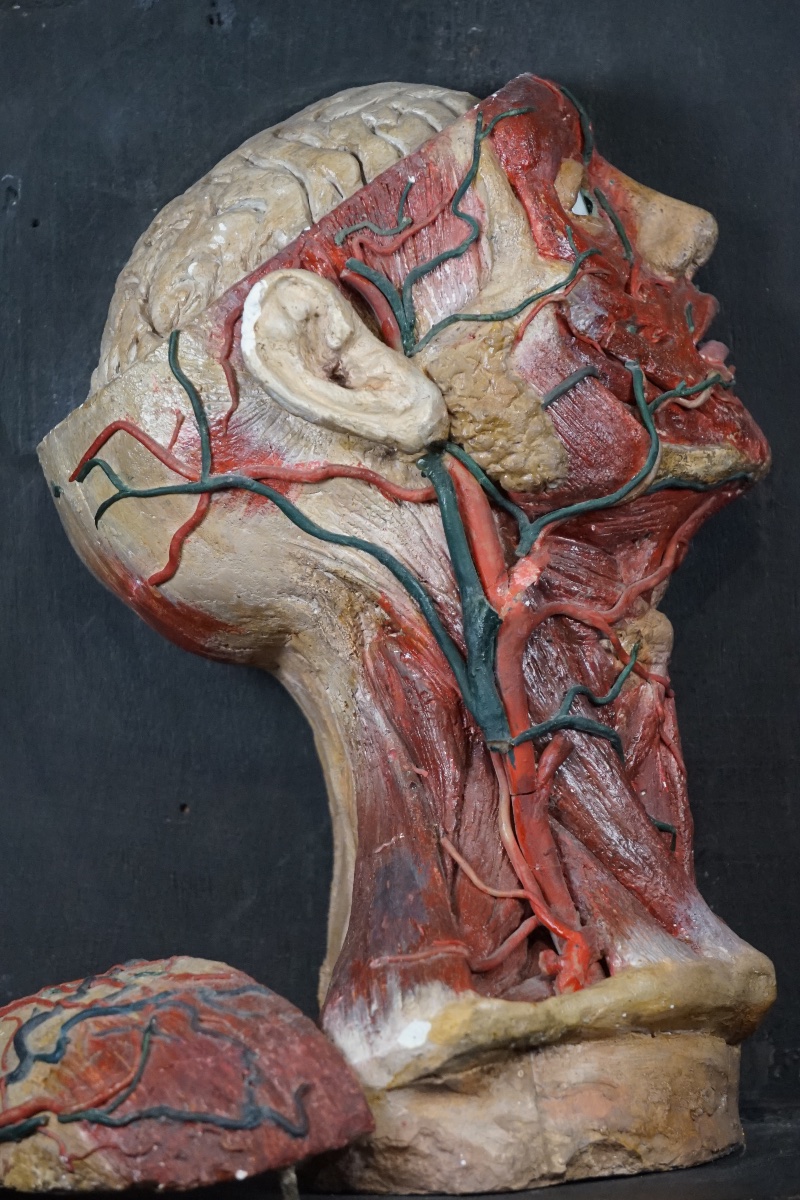
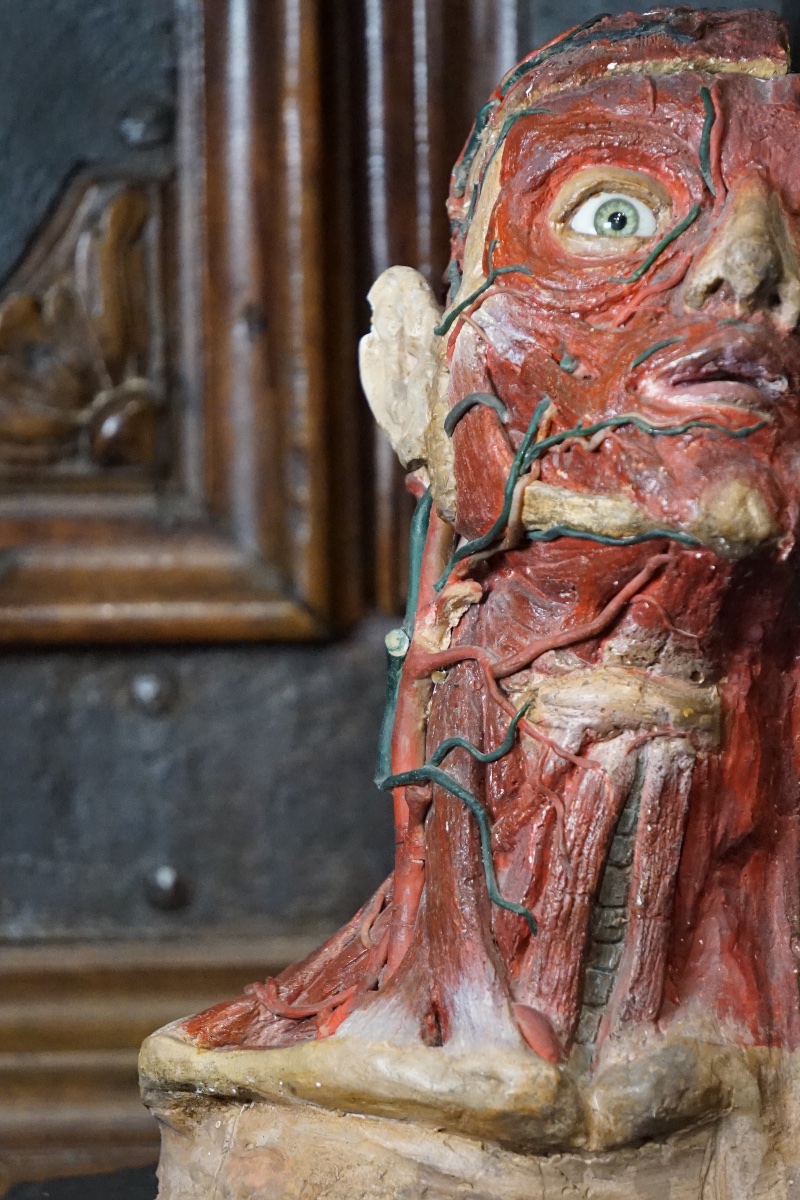
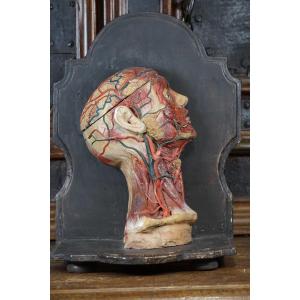
Technical and Anatomical Details: The work was conceived with a clear educational purpose, typical of the Cabinet of Natural History and the medical-surgical academies of the time. It features sagittal and frontal sections that meticulously illustrate the complex anatomy of the human face, skull, and neck.
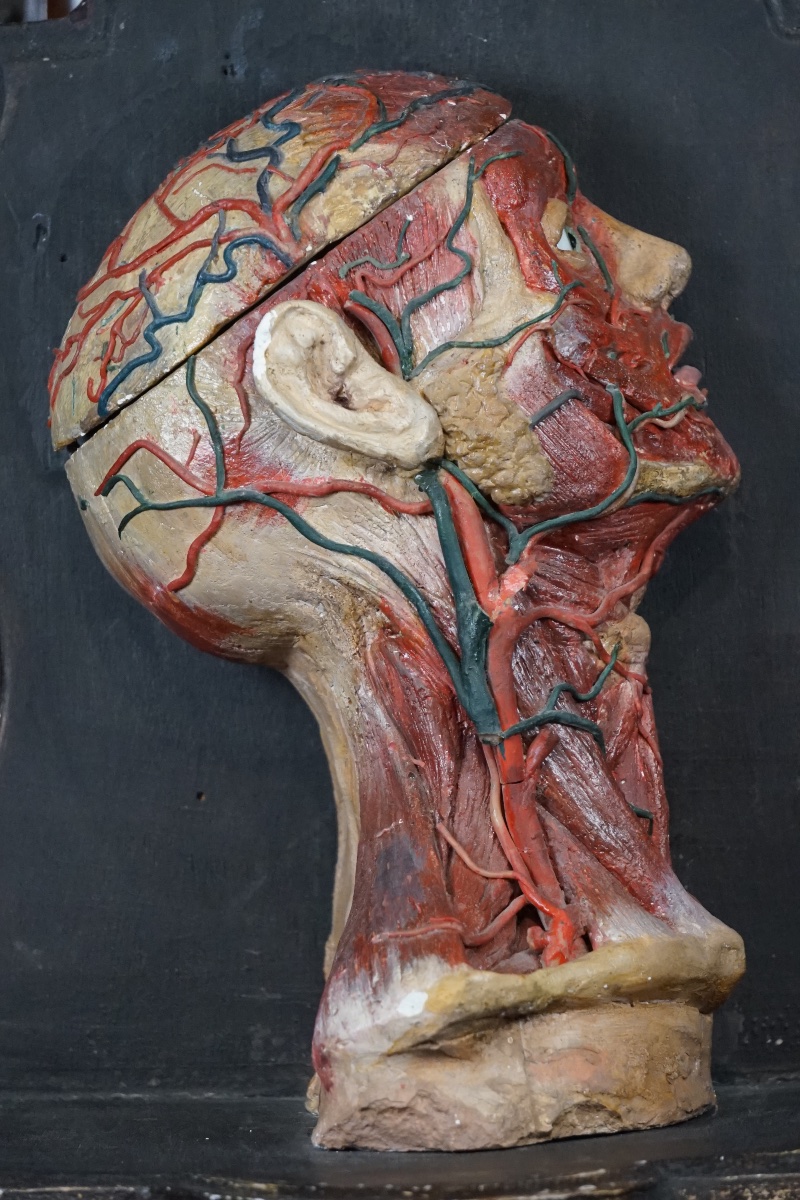
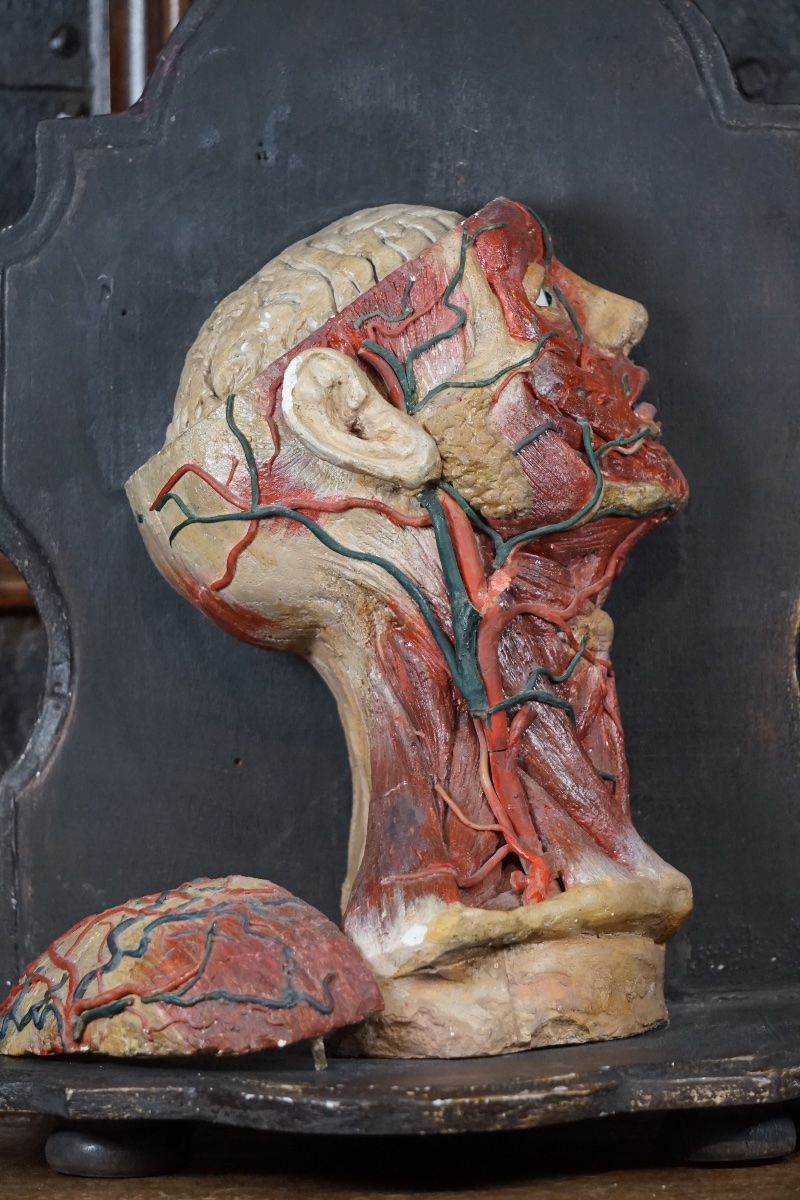
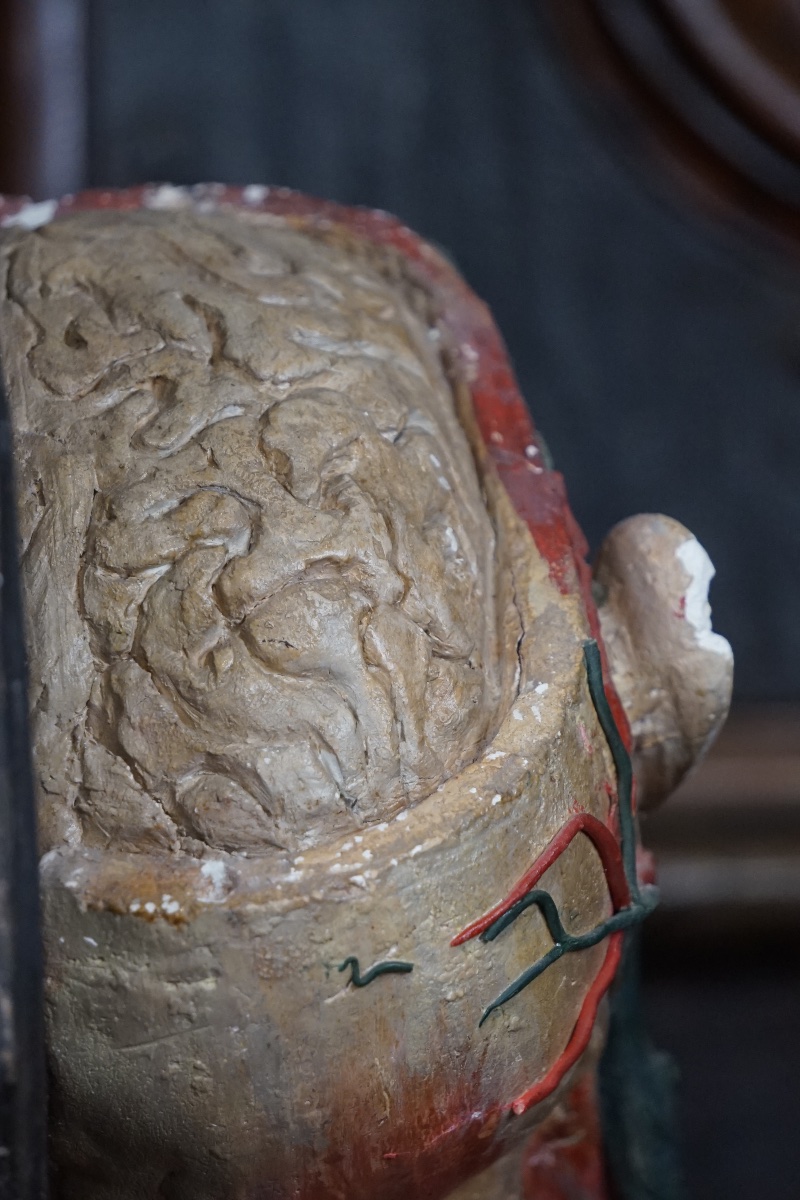
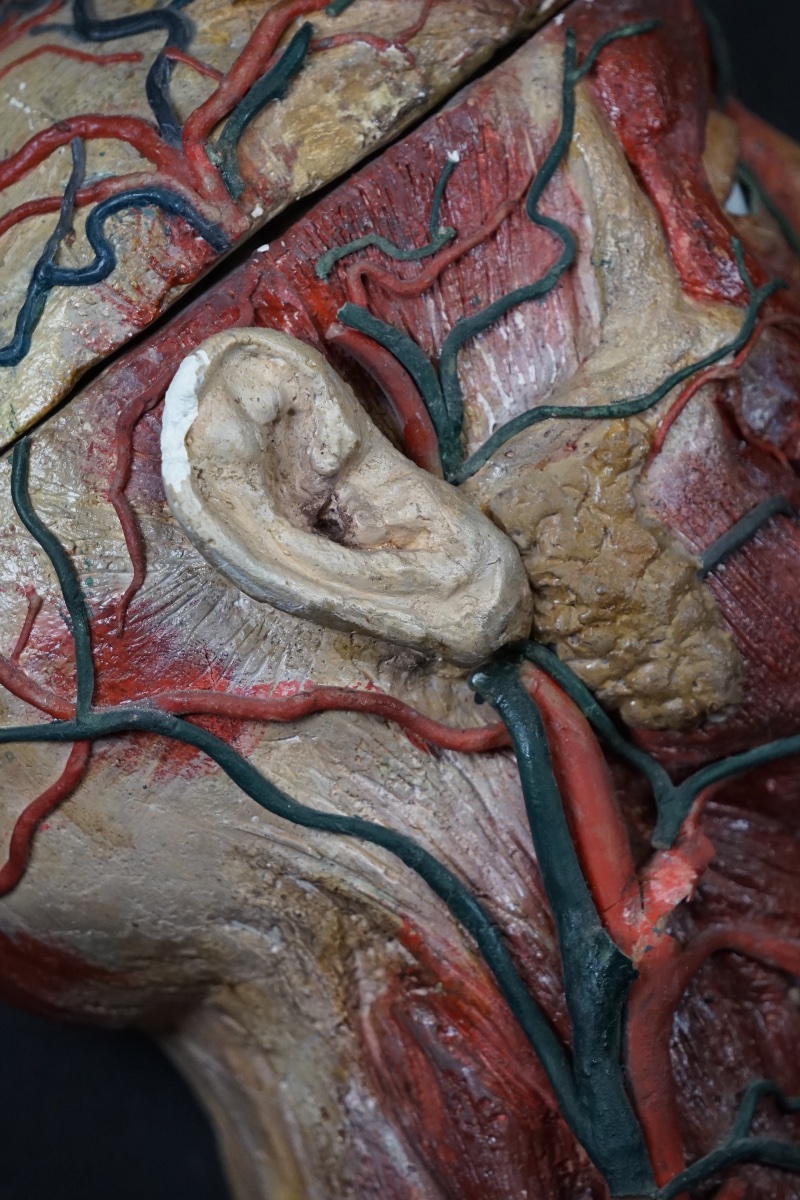
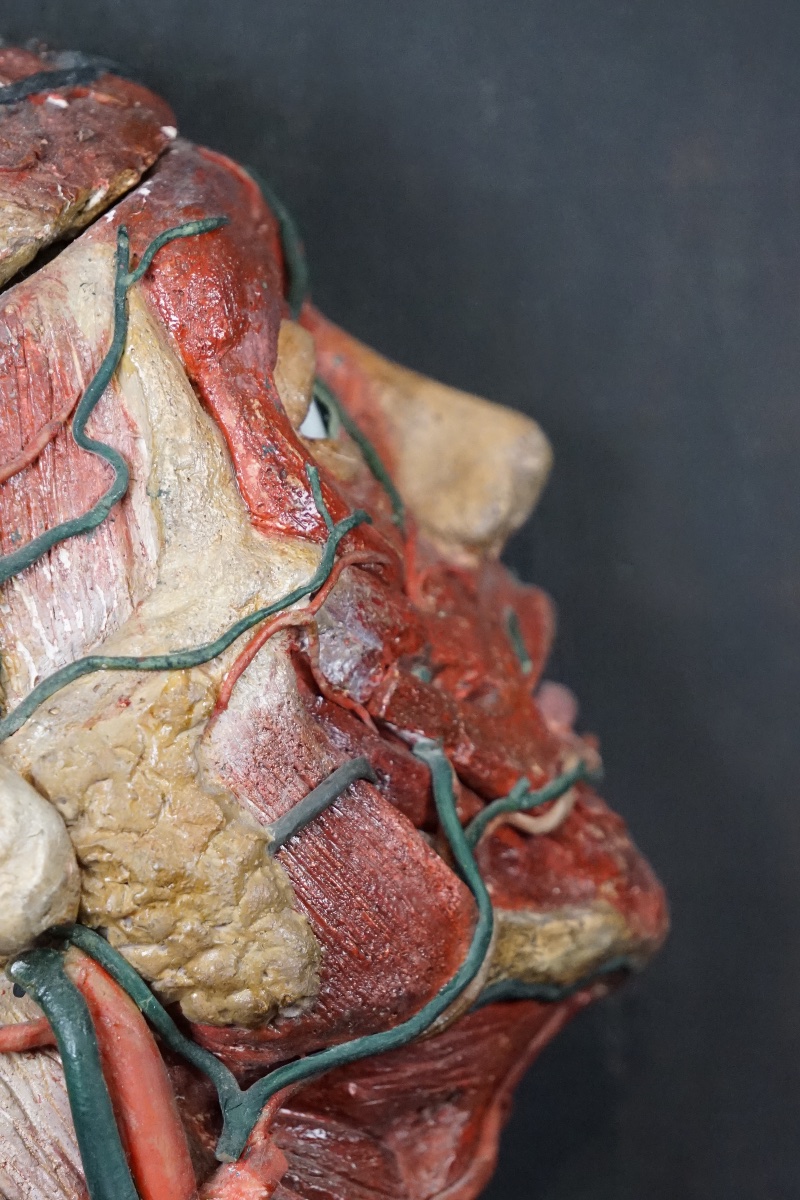
- Deep Anatomy: The skull is partially dissected (or removable), leaving the underlying brain clearly visible. On the exposed side, the muscle groups—rendered in vivid red and brown tones—the salivary glands (with the parotid gland highlighted in ochre), and the intricate vascular system are clearly identifiable.
- Wax Sculpture: Arteries and veins are rendered in relief by applying strands of colored wax (red for arteries, green/bluish for veins), allowing the viewer to trace the path of the circulatory system, such as the carotid artery and the jugular vein on the neck.
- Realism: The gaze is rendered extraordinarily vivid and realistic thanks to the inclusion of a light-colored painted glass paste eye, a technique typical of 18th-century wax modeling to bring the educational model to “life.”
- Construction Technique: The object employs a sophisticated mixed-media technique: a sturdy core of stucco or plaster, covered and finished down to the smallest detail with molded wax. This combination ensured the wax’s plasticity and color accuracy while preserving the piece’s structural stability.
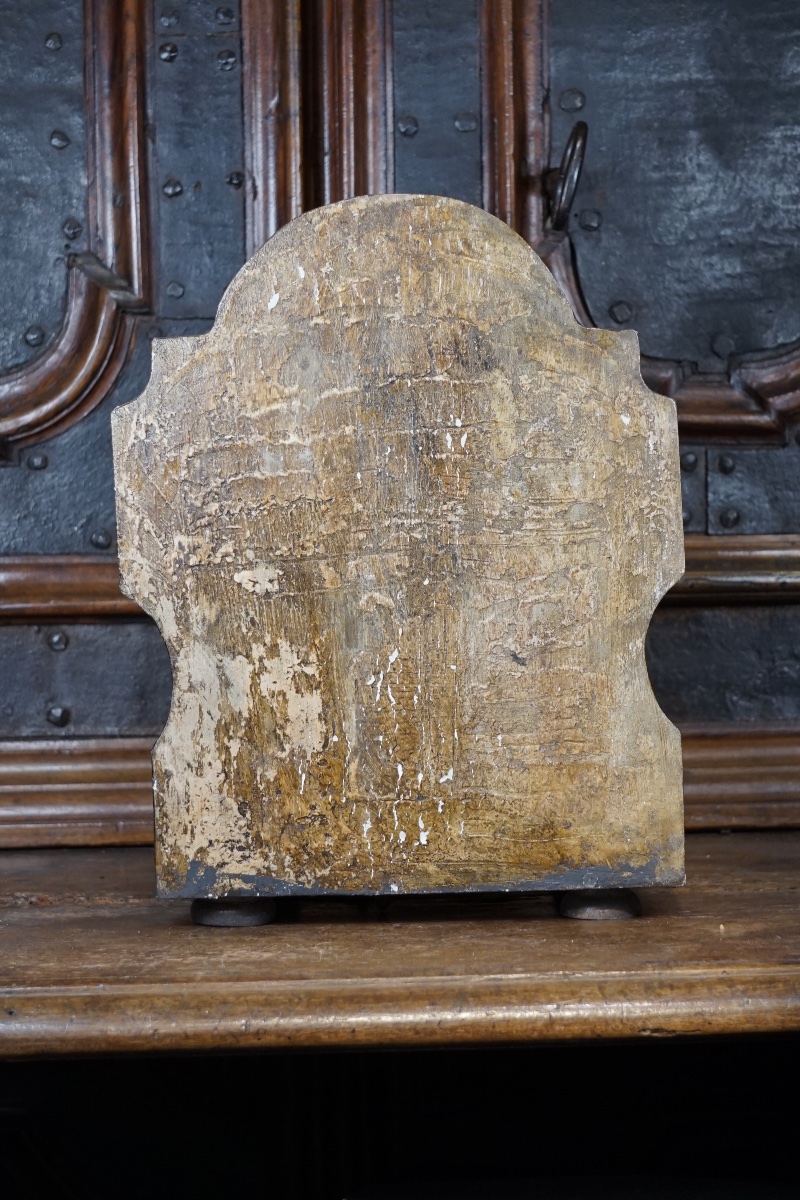
Mount and Display: The model is integrated into and secured to an original molded wooden base, complete with a contoured rear panel that serves both as protection and as an elegant display stand. The entire mount displays a splendid period patina, with traces of plaster preparation on the back.
Historical and Critical Context
During the 18th century, Germany and Italy (Bologna and Florence) were the centers of excellence for the production of anatomical wax models. These objects were not merely study tools for physicians, but fully catered to the collecting tastes of the Wunderkammer (Chambers of Wonders) of the Enlightenment, where Naturalia and Artificialia merged in a dialogue between science, art, and philosophy on human nature.
Condition
The object is in good overall condition, which is surprising given the extreme fragility of the materials and its age. There is natural oxidation of the wax colors, small surface losses, and slight cracking of the stucco, which do not compromise the interpretation of the work but rather attest to its authenticity and splendid “patina of time.” The wooden structure is solid, with wear consistent with centuries of handling.
Note for the Collector
This is a significant collecting opportunity. Eighteenth-century anatomical models created using this mixed stucco-wax technique are difficult to find on the international antiques market. It is a piece with strong visual impact and decorative appeal, ideal for collections of the History of Science, vintage medical artifacts, Naturalia, and objects for a Wunderkammer.
Period: 18th century
Style: Other Style
Condition: En l'etat
Material: Wax
Length: 20
Width: 25
Depth: 5
Reference (ID): 1827733
Availability: In stock