

Large Fox Sculpture By Camille Tharaud Limoges And Robert Lemoine, 1930, Art Deco. Sandoz Robj
Artist: Camille Tharaud (1878-1956)
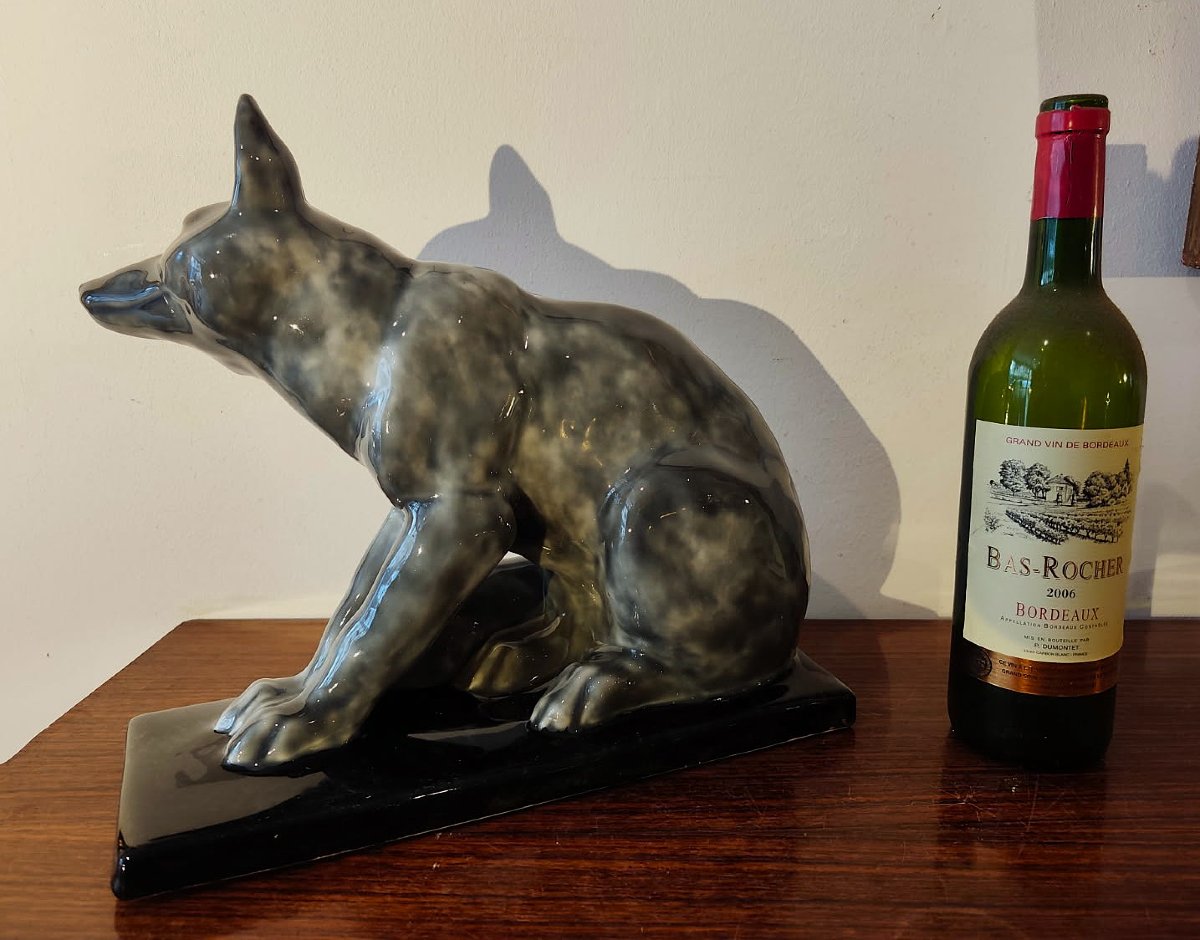
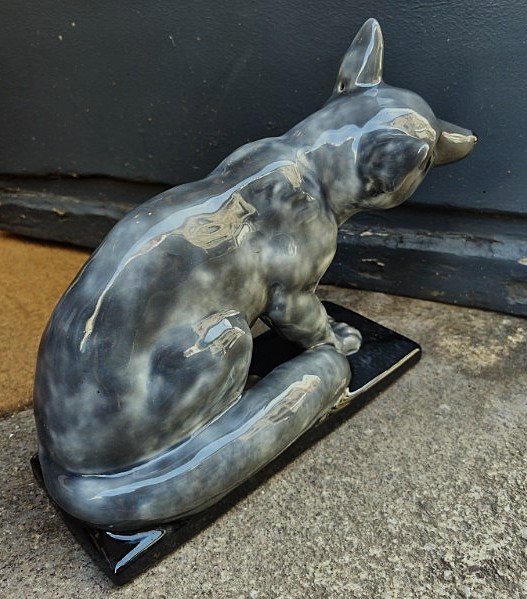
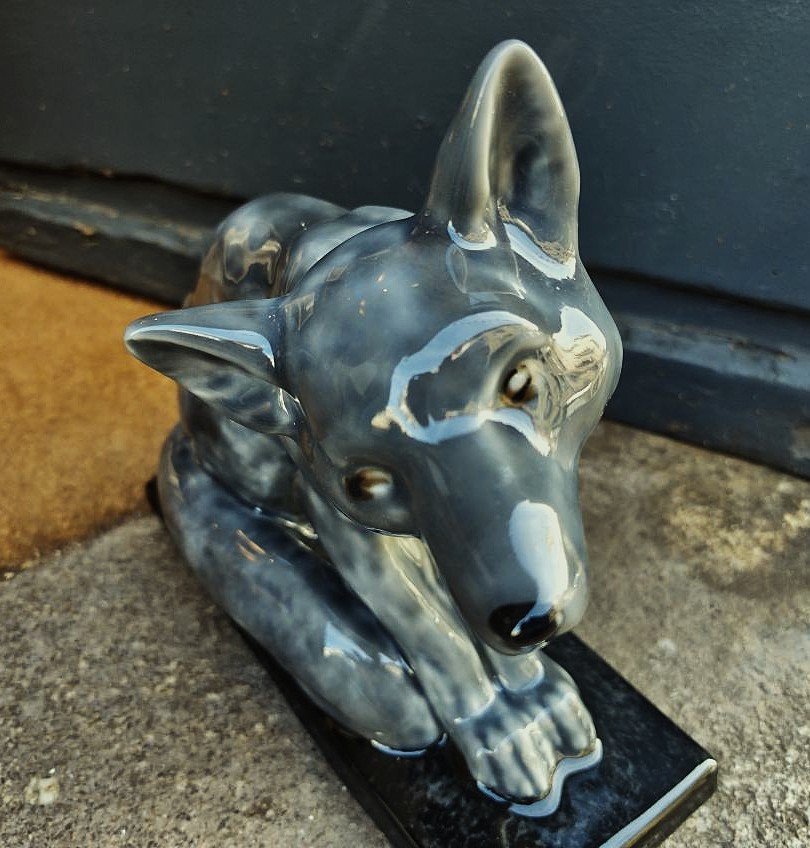
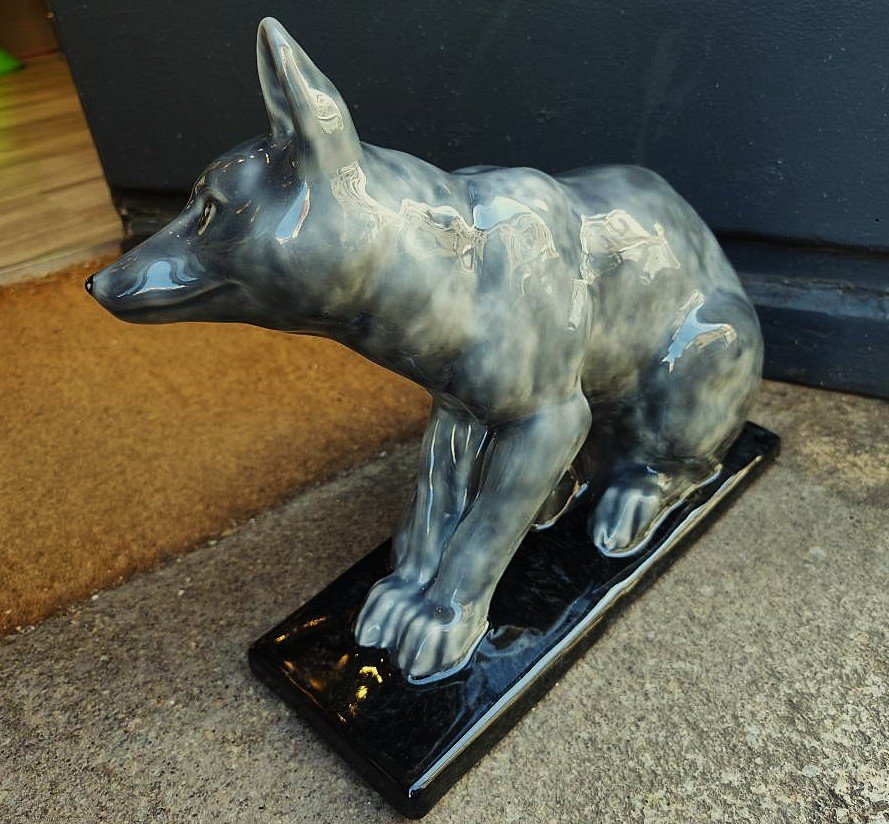
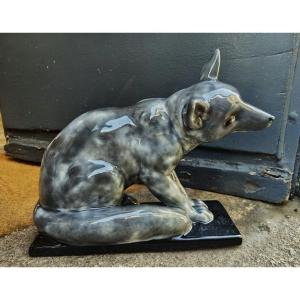
An important and rare porcelain sculpture by Camille Tharaud depicting a fox, based on a design by Robert Lemoine, circa 1930.
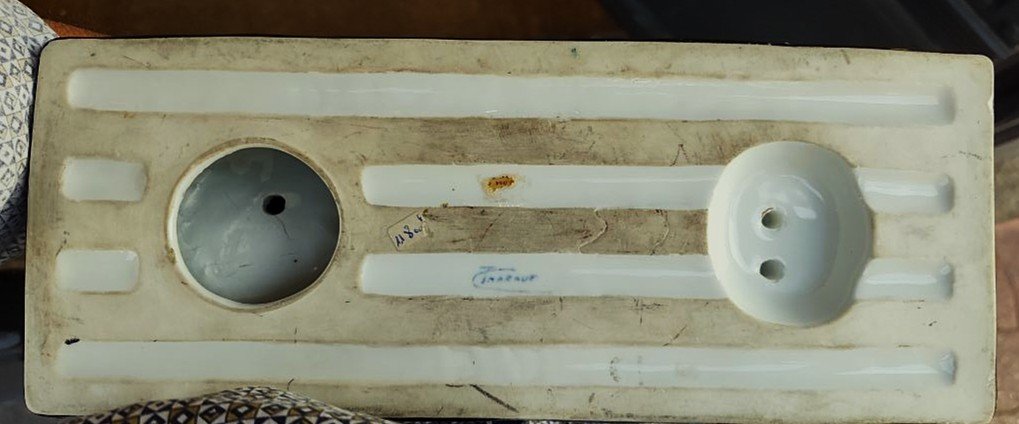
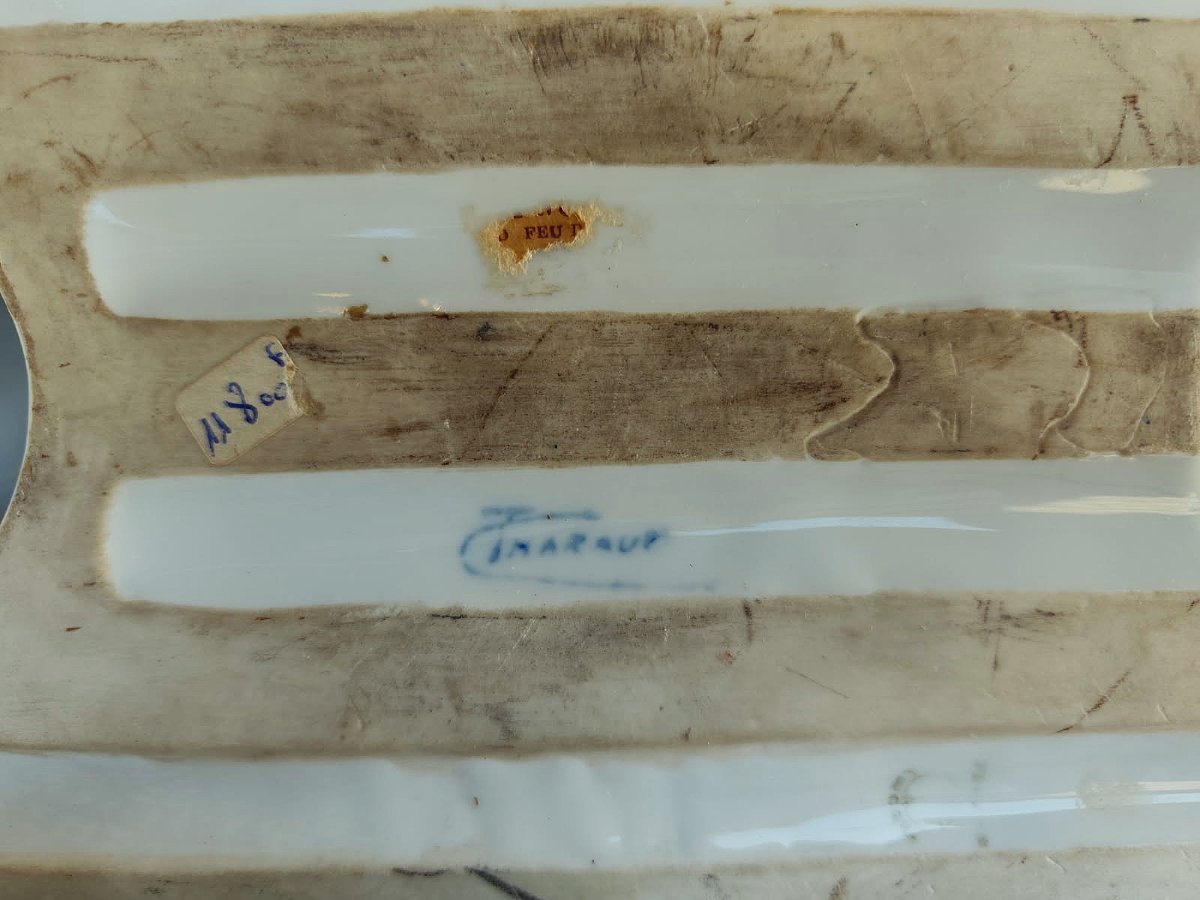
Signed beneath Tharaud’s usual Limoges marks, plus traces of a former label; in my opinion, there is a 90% chance this is from the 1931 Salon des Artistes Décorateurs in Paris.
Substantial dimensions: height: 30 cm; width and length of the base: 13 x 33 cm; weight: approximately 2 kg.
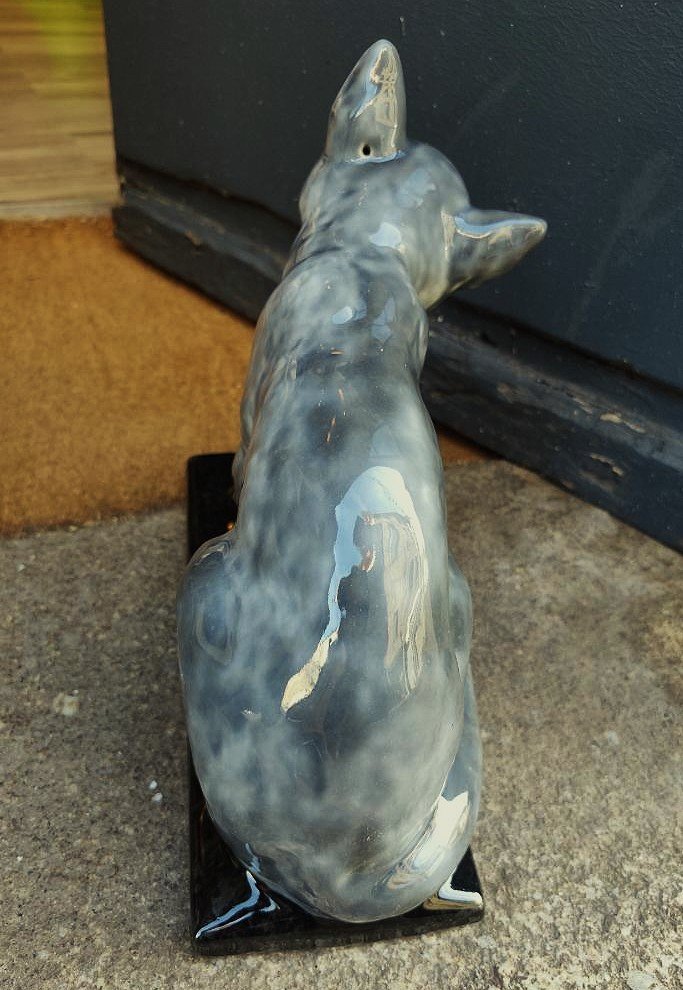
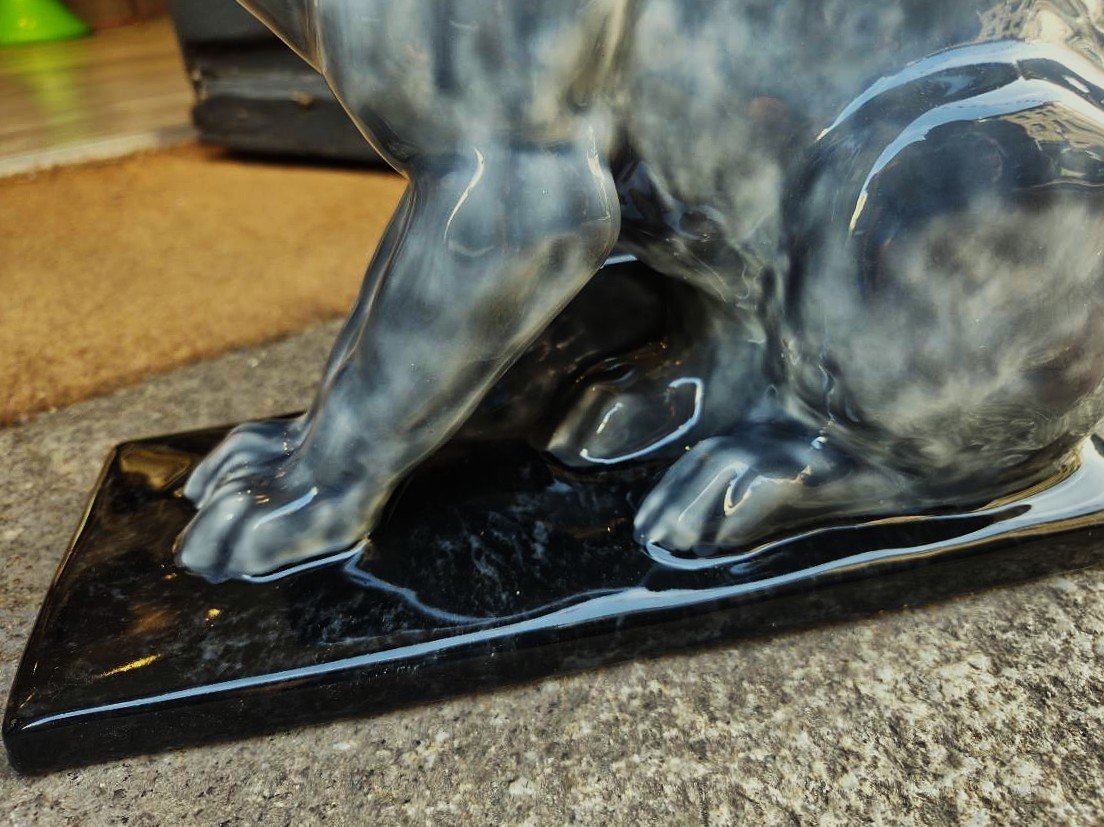
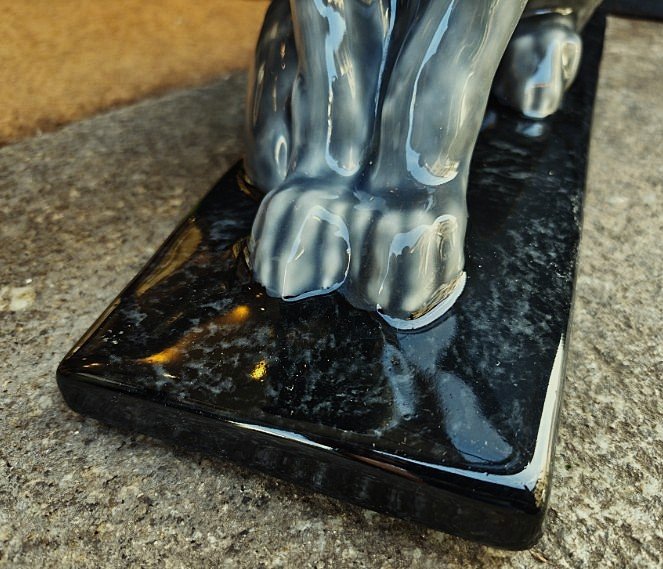
Piece in perfect original condition, no restoration.
This piece is 200% guaranteed to be authentic and period-correct—though that’s easy to confirm, since there are no copies of Tharaud’s work; he died and was buried along with his secrets of enamel and grand feu oxides. There have been a few attempts to replicate his work, but all have failed completely.....
This is a rare and quite exceptional piece by Camille Tharaud—his famous fox, circa 1930—based on a model by his friend Robert Lemoine, a renowned sculptor who also created the rhinoceros for Tharaud.
This piece is therefore rare, with very few copies produced. There are later editions with a very pale gray, almost white glaze, but they are nowhere near as high in quality; moreover, the base is different on the underside, but its rarity stems above all from its glazing—here, an anthracite platinum gray with striking contrast and magnificent nuances. The eyes are white with orange-brown effects, and the base mimics marble with shimmering dark bluish-gray and iridescent black highlights, in short, a true little masterpiece of success, because the vagaries of the high-temperature firing meant there were many failures; this one, however, is a great success....
Camille Tharaud, born in Limoges on April 20, 1878, and died on September 8, 1956, was a French ceramicist. He is known for his porcelain works featuring bold, deep-toned decorations that are soft to the touch, formed from colored enamel fused in a high-temperature firing, made from Limousin granite pebbles—a technique known only to Tharaud.
Camille Tharaud studied at the Lycée Gay-Lussac in Limoges and at the École Supérieure de Bellac. His favorite subject was chemistry. During his studies, he met Francis Chigot, who influenced his decision to work with porcelain. Drafted during World War I at the age of 36, he was seriously wounded in the head. Evacuated to Paris, he was granted convalescent leave, which he spent in Limoges. It was then that he had the opportunity to work with porcelain. His first experiments took place at the former Louis Tharaud factory—named after a man with whom he was not related. After renting the facility for several months, on January 29, 1920, he acquired this factory—founded in 1854 but abandoned for 35 years—located on Rue du Calvaire and Boulevard des Petits-Carmes in Limoges. He immediately began renovations and replaced the outdated direct-flame kiln with a reverse-flame kiln. His early research into colored clay bodies, which he had begun as early as 1915 during his convalescence, would lead him to develop a technique for decorating with colored glazes. Instead of coloring a thin layer of clay or painting on already-hardened glaze, Camille Tharaud succeeded in coloring the glaze throughout its entire thickness. From 1920 to 1923, he went through a period of grueling trials, and the business struggled to survive. The color palette was still limited, the early pieces were small, and the designs were timidly composed... His experiments nearly led to disaster; in early 1924, he came close to bankruptcy. With the help of banks, he continued his business and, ultimately, succeeded. The factory continued to operate until his death and for a short time afterward, producing low-fire pieces, before ceasing operations.
Signed beneath Tharaud’s usual Limoges marks, plus traces of a former label; in my opinion, there is a 90% chance this is from the 1931 Salon des Artistes Décorateurs in Paris.
Substantial dimensions: height: 30 cm; width and length of the base: 13 x 33 cm; weight: approximately 2 kg.
Piece in perfect original condition, no restoration.
This piece is 200% guaranteed to be authentic and period-correct—though that’s easy to confirm, since there are no copies of Tharaud’s work; he died and was buried along with his secrets of enamel and grand feu oxides. There have been a few attempts to replicate his work, but all have failed completely.....
This is a rare and quite exceptional piece by Camille Tharaud—his famous fox, circa 1930—based on a model by his friend Robert Lemoine, a renowned sculptor who also created the rhinoceros for Tharaud.
This piece is therefore rare, with very few copies produced. There are later editions with a very pale gray, almost white glaze, but they are nowhere near as high in quality; moreover, the base is different on the underside, but its rarity stems above all from its glazing—here, an anthracite platinum gray with striking contrast and magnificent nuances. The eyes are white with orange-brown effects, and the base mimics marble with shimmering dark bluish-gray and iridescent black highlights, in short, a true little masterpiece of success, because the vagaries of the high-temperature firing meant there were many failures; this one, however, is a great success....
Camille Tharaud, born in Limoges on April 20, 1878, and died on September 8, 1956, was a French ceramicist. He is known for his porcelain works featuring bold, deep-toned decorations that are soft to the touch, formed from colored enamel fused in a high-temperature firing, made from Limousin granite pebbles—a technique known only to Tharaud.
Camille Tharaud studied at the Lycée Gay-Lussac in Limoges and at the École Supérieure de Bellac. His favorite subject was chemistry. During his studies, he met Francis Chigot, who influenced his decision to work with porcelain. Drafted during World War I at the age of 36, he was seriously wounded in the head. Evacuated to Paris, he was granted convalescent leave, which he spent in Limoges. It was then that he had the opportunity to work with porcelain. His first experiments took place at the former Louis Tharaud factory—named after a man with whom he was not related. After renting the facility for several months, on January 29, 1920, he acquired this factory—founded in 1854 but abandoned for 35 years—located on Rue du Calvaire and Boulevard des Petits-Carmes in Limoges. He immediately began renovations and replaced the outdated direct-flame kiln with a reverse-flame kiln. His early research into colored clay bodies, which he had begun as early as 1915 during his convalescence, would lead him to develop a technique for decorating with colored glazes. Instead of coloring a thin layer of clay or painting on already-hardened glaze, Camille Tharaud succeeded in coloring the glaze throughout its entire thickness. From 1920 to 1923, he went through a period of grueling trials, and the business struggled to survive. The color palette was still limited, the early pieces were small, and the designs were timidly composed... His experiments nearly led to disaster; in early 1924, he came close to bankruptcy. With the help of banks, he continued his business and, ultimately, succeeded. The factory continued to operate until his death and for a short time afterward, producing low-fire pieces, before ceasing operations.
690 €
Period: 20th century
Style: Art Deco
Condition: Perfect condition
Material: Porcelain
Length: 33
Width: 13
Height: 30
Reference (ID): 1831192
Availability: In stock
Print