



Rare Pair Of Okimono / Niō Sculptures In Boxwood (tsuge), Signed Kogetsu (光月) – Japan 19th
Rare pair of Okimono / Niō sculptures in boxwood (tsuge), signed Kogetsu (光月) – Japan, Meiji Period (19th Century)
Technical Specifications and Data Sheet
Subject: Niō / Kongōrikishi Temple Guardians (Agyō and Ungyō)
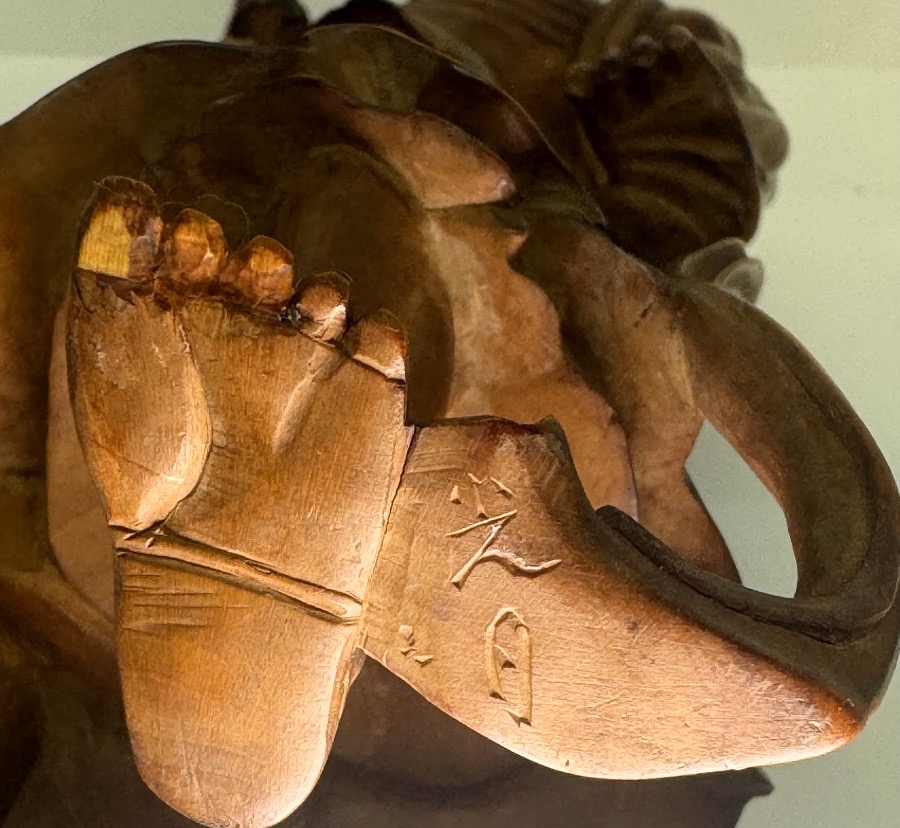
Artist / Signature: Signed on the underside of the base with the artist’s mark, Kogetsu (光月)
Origin: Japan
Period: Meiji Period (19th Century)
Material: Finely carved boxwood (tsuge) featuring intricate openwork (freestanding open-carving)
Height: 22 cm each
Condition and State of Preservation
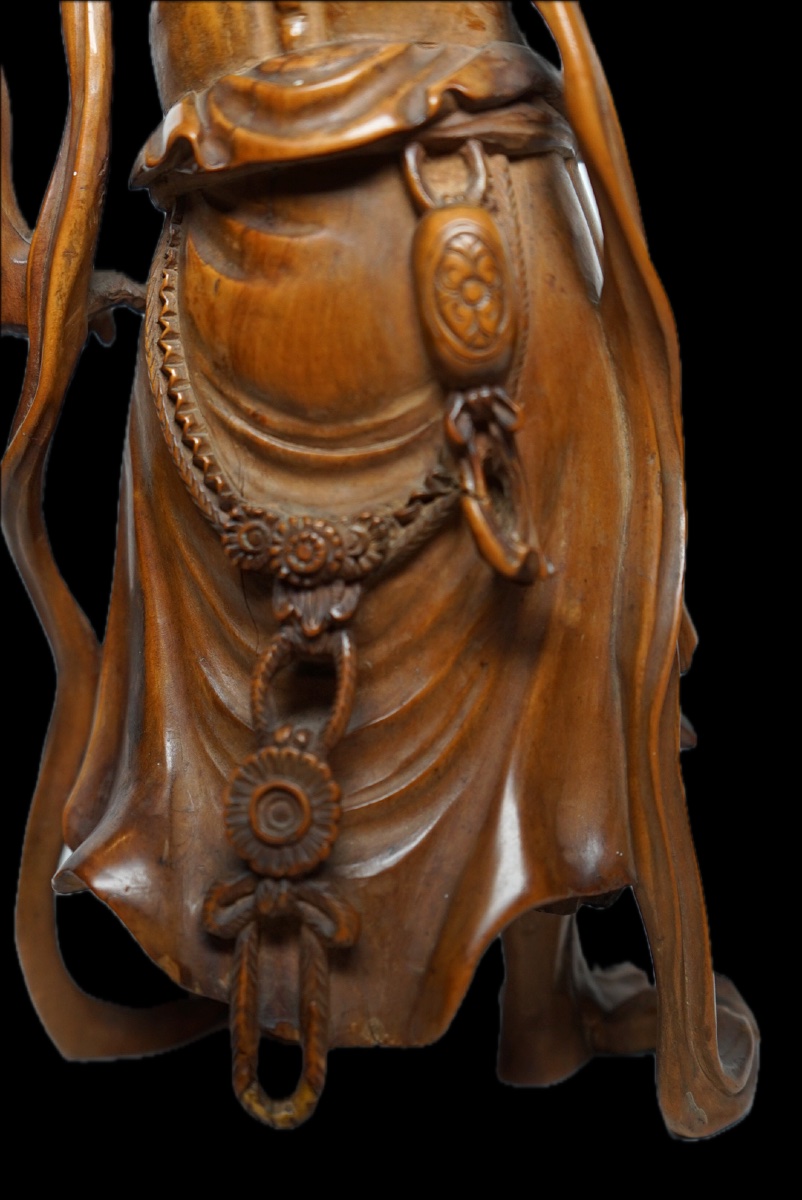
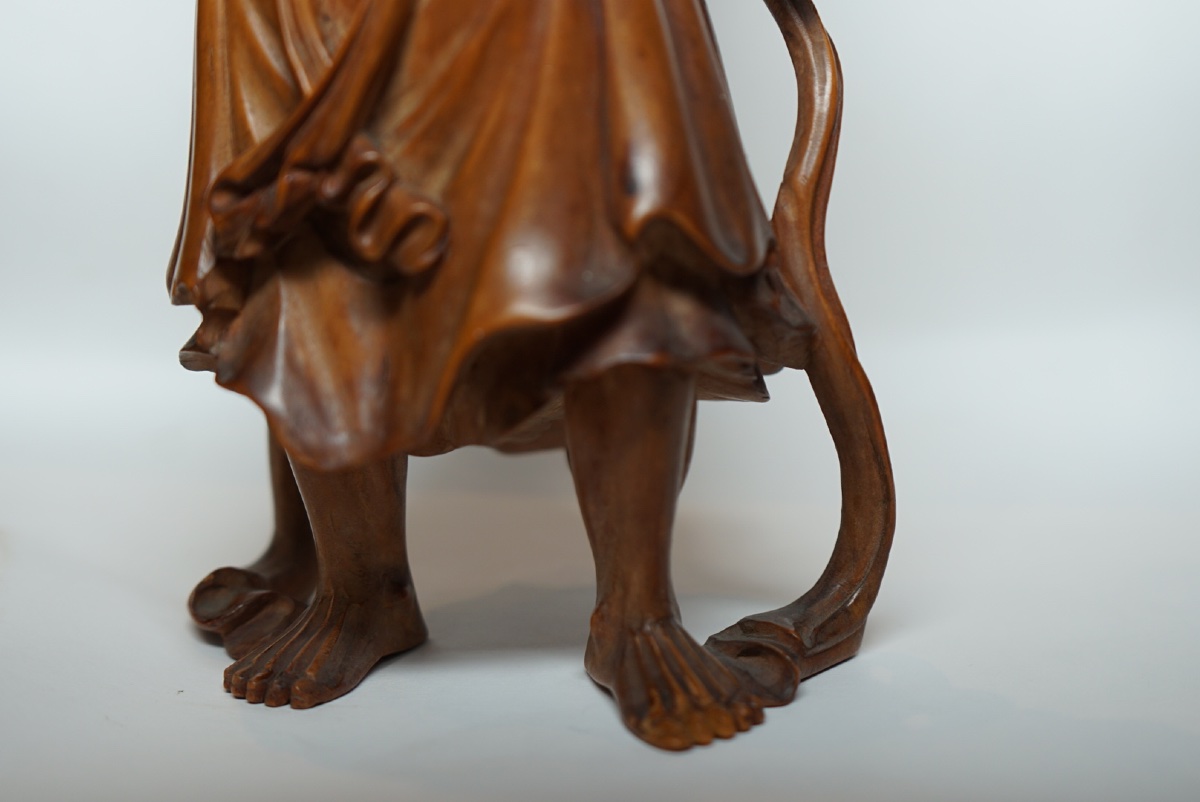
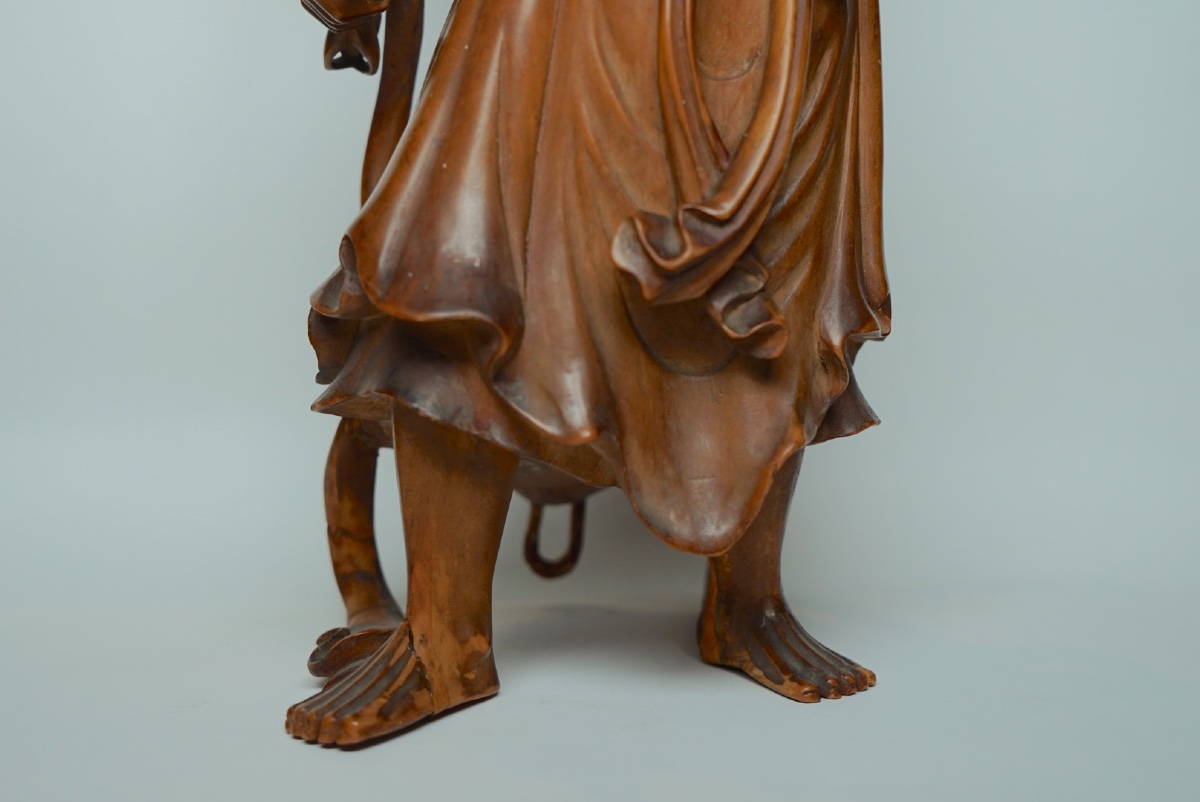
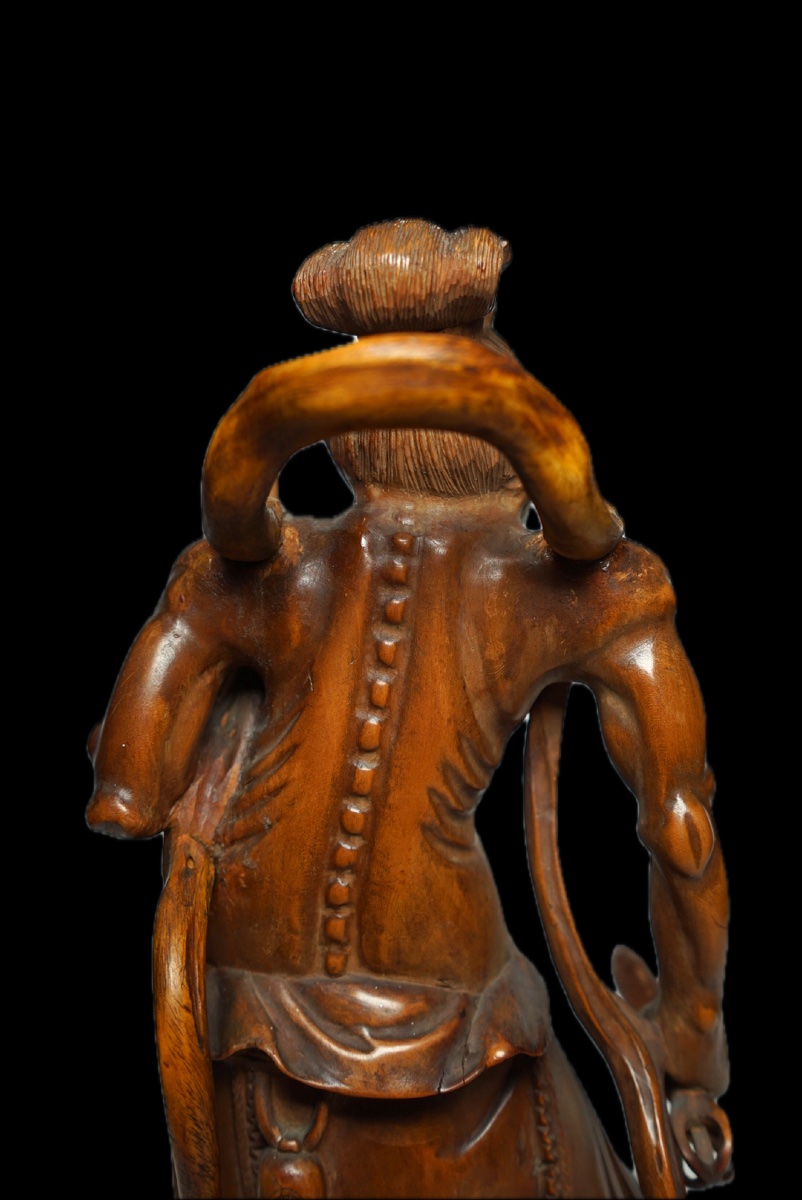
Excellent overall condition for antique boxwood pieces, especially considering the extreme fragility and three-dimensional nature of the openwork carving. There are only very minor, expertly executed conservation repairs to a few isolated, delicate details—such as the flowing ribbons and projecting elements—which are seamlessly integrated and visible only upon close inspection. The pieces retain a splendid, authentic period patina and excellent structural integrity (please refer to the photo gallery for details of the base and the signature).
Historical Context and Attribution
The work is distinguished and identified by the signature "Kogetsu" (光月), clearly incised on the underside of each sculpture’s base. The master carver Kogetsu was one of the most accomplished Japanese artisans active between the late Edo and Meiji periods (19th century), specializing in highly refined, intricate sculptures crafted from premium boxwood (tsuge). The typological relevance and exceptional collector’s value of this work are directly evidenced by similar pieces by the same tradition that have successfully sold at prestigious international auctions specializing in Japanese art (e.g., Galerie Zacke).
Iconography and Symbolism
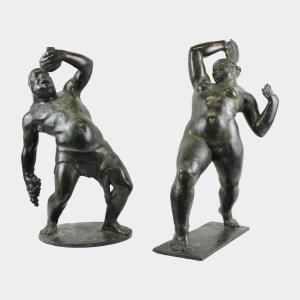
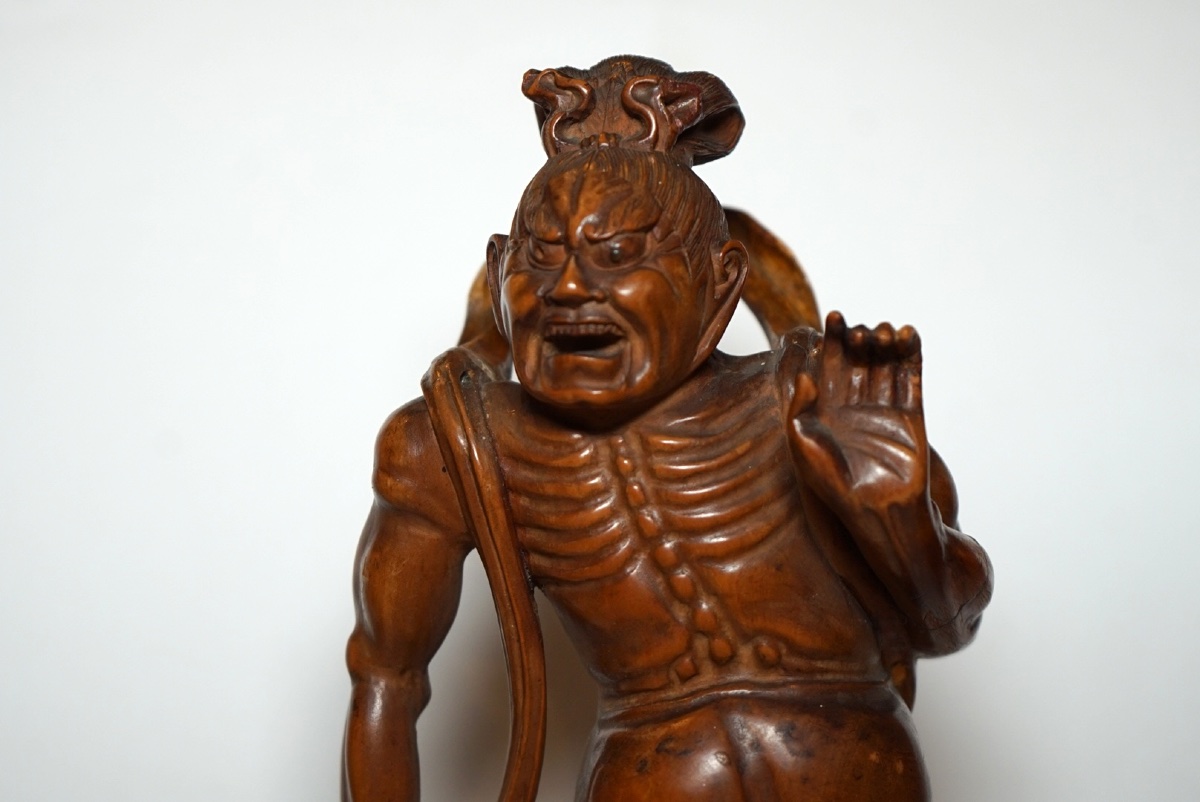
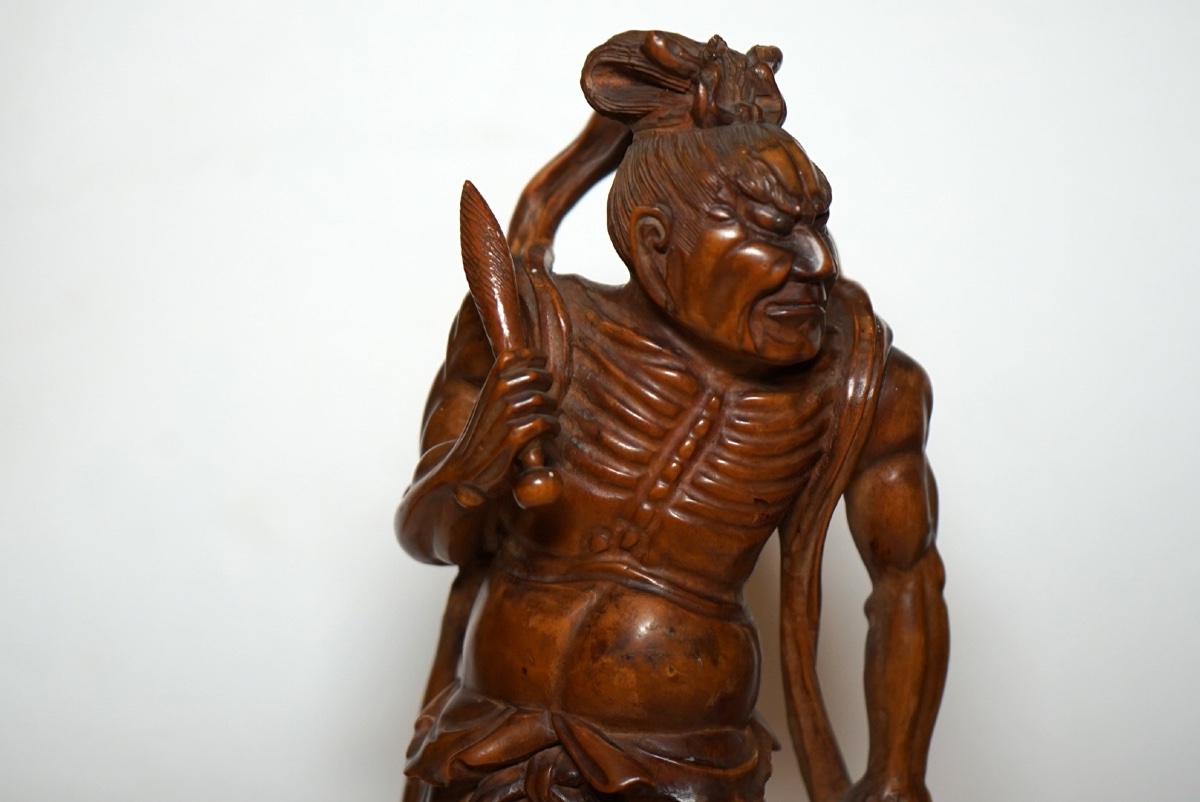
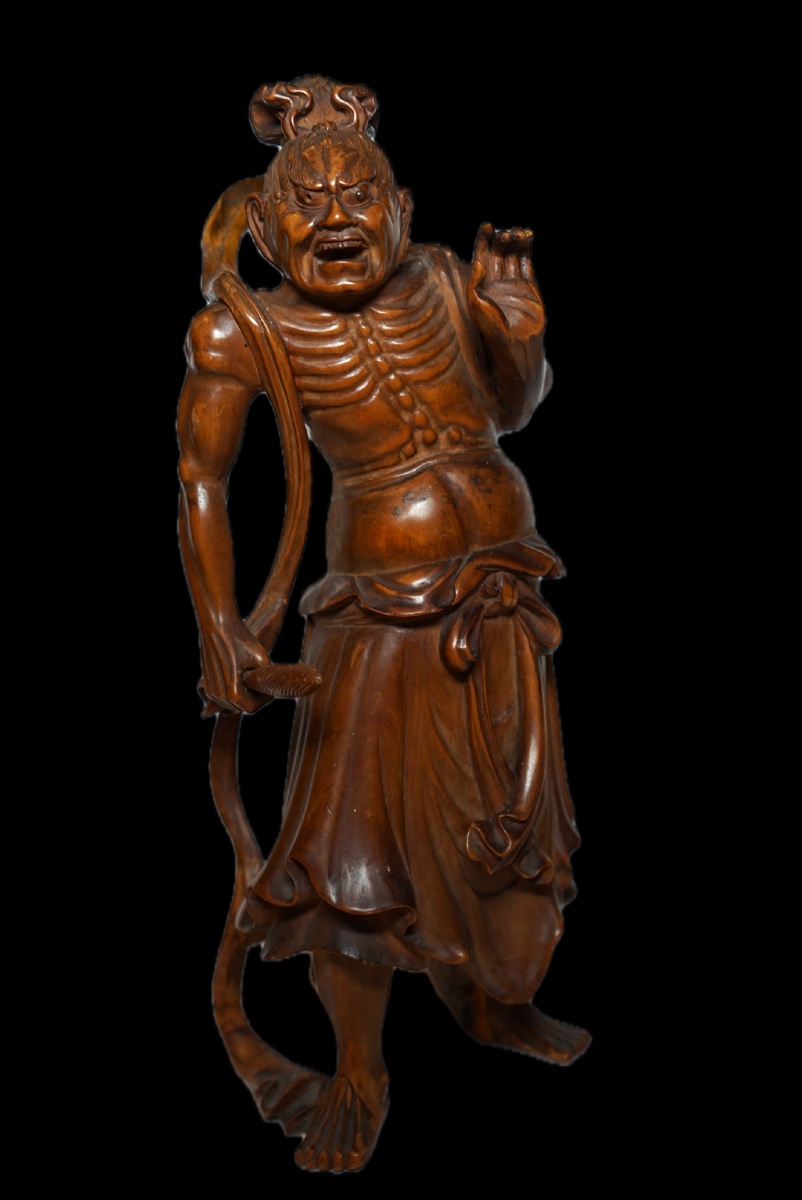
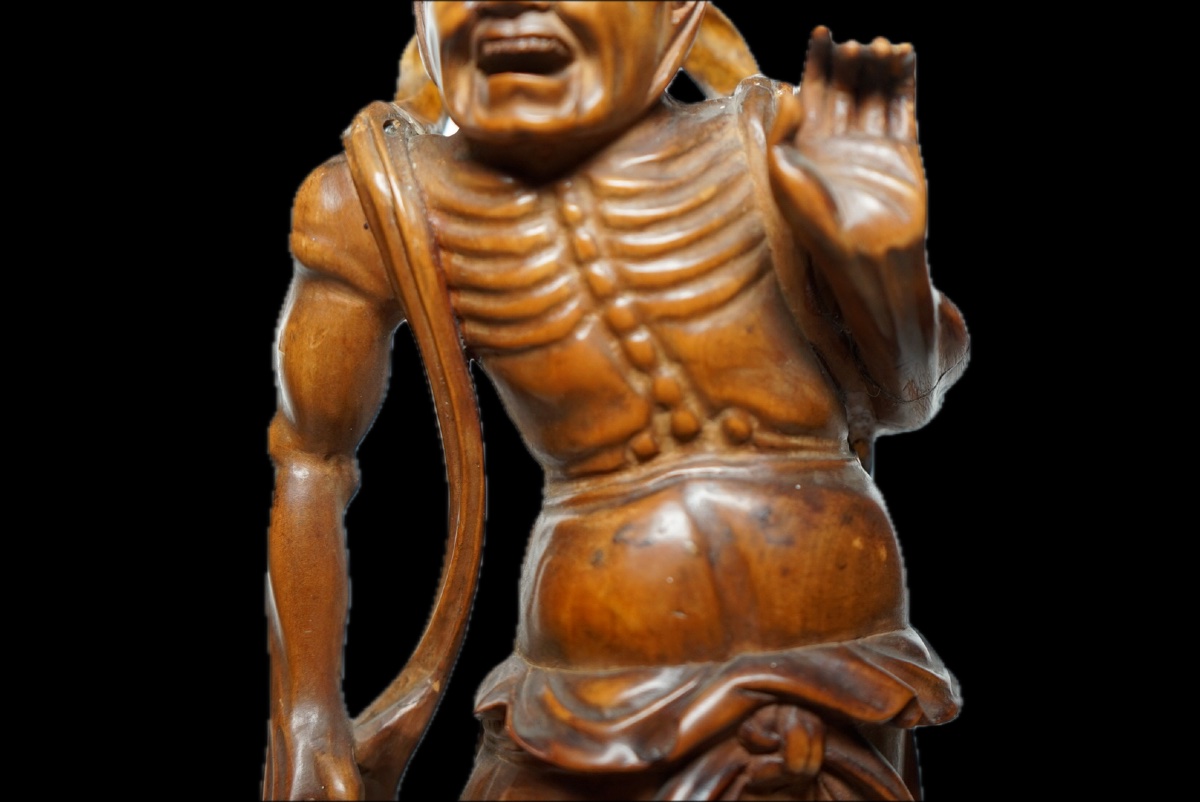
A refined and rare pair of sculptures depicting the Kongōrikishi (commonly known as Niō)—the colossal, wrathful celestial guardians of Buddhism:
Agyō (open mouth): Represents the primordial sound "Ah," symbolizing birth, origin, and the beginning of all things. He holds a ceremonial blade/weapon in his right hand.
Ungyō (closed mouth): Represents the sound "Un," symbolizing fulfillment, conclusion, and protection against the forces of evil; he is depicted with his hand raised in a gesture of protection (abhaya mudra).
Sculptural Mastery and Notable Features
Inspired by the Kei School (Kei-ha): Although created in the 19th century, the artist eschews overly sweetened or commercialized forms, faithfully reviving the dramatic realism found in the magnificent 14th-century models from Nara—characterized by a ribcage defined by deep, furrowed lines (symbolizing both asceticism and martial power), a taut abdomen, and highly tensed musculature.
Openwork Carving of the Sacred Ribbon (Tenne): A supreme display of technical virtuosity, the celestial ribbon (tenne) is carved entirely in openwork—detached from the main body—out of exceptionally hard boxwood, creating a dynamic, three-dimensional effect from every angle. Patina and Material Quality: The boxwood (*tsuge*), with its extremely dense grain, displays a deep, warm, and lustrous patina—layered within the recesses of the drapery and the facial features—which enhances the intense *fudō* (stern/frowning) expression.
3 250 €
Period: 19th century
Style: Asian art
Condition: En l'etat
Reference (ID): 1830521
Availability: In stock
Print