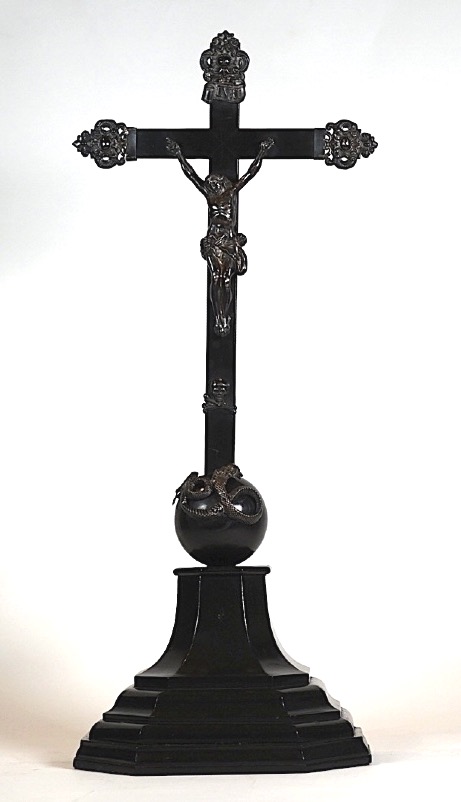



Monumental Crucifix For An Altar Or Oratory (18th–19th Century) – Ebonized Wood And Metal
Rare Monumental Crucifix for an Altar or Oratory (18th–19th Century) – Ebonized Wood and Chiseled Metal – Rare Iconography of the Serpent with the Fruit and Skull – Museum-Grade Conservative Restoration
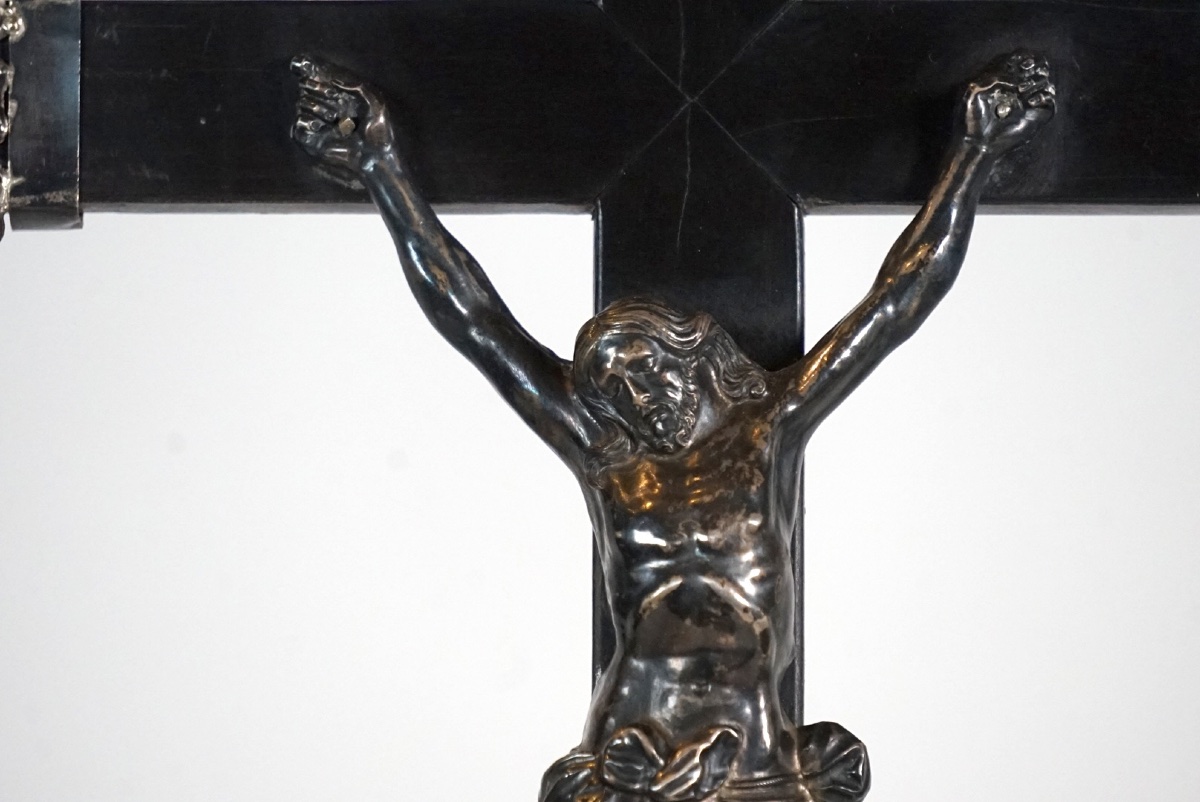
Lot DescriptionExtraordinary devotional crucifix of great historical and artistic significance, likely dating from the second half of the 18th century to the 19th century, an example of high-quality sacred craftsmanship (probably from Italy or central-western Europe).
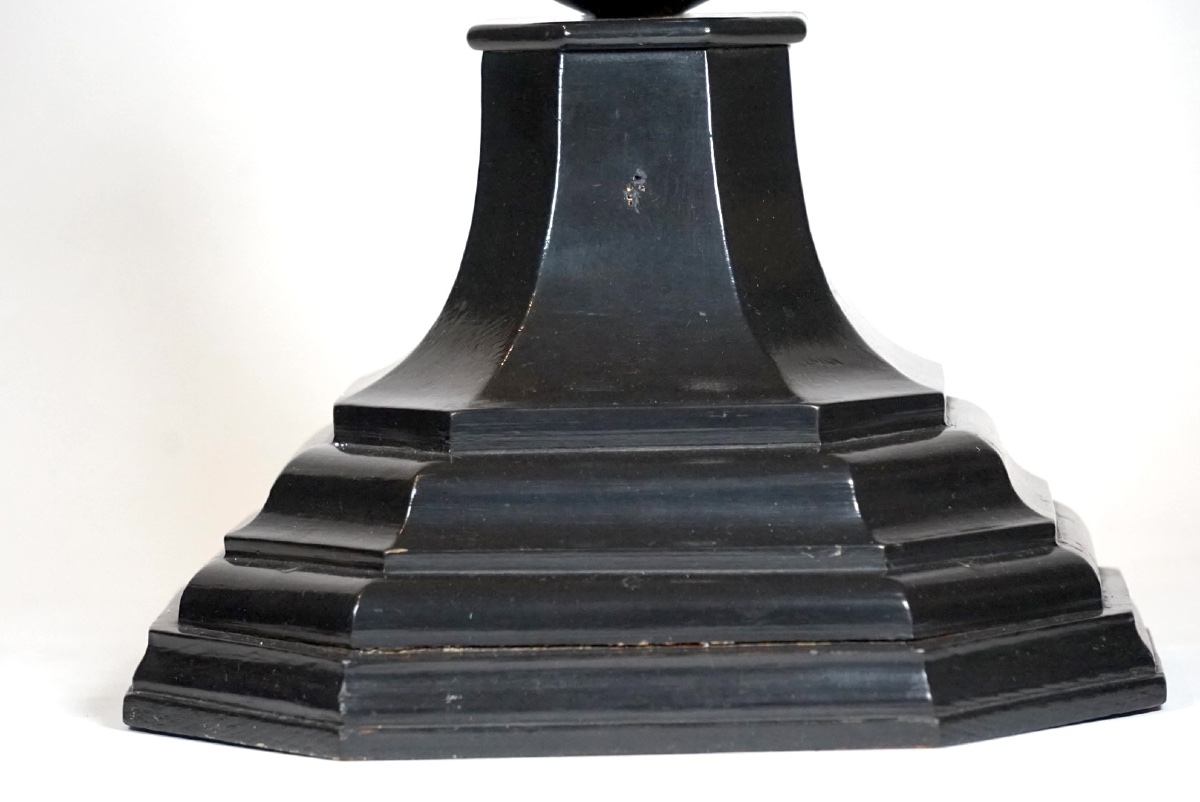
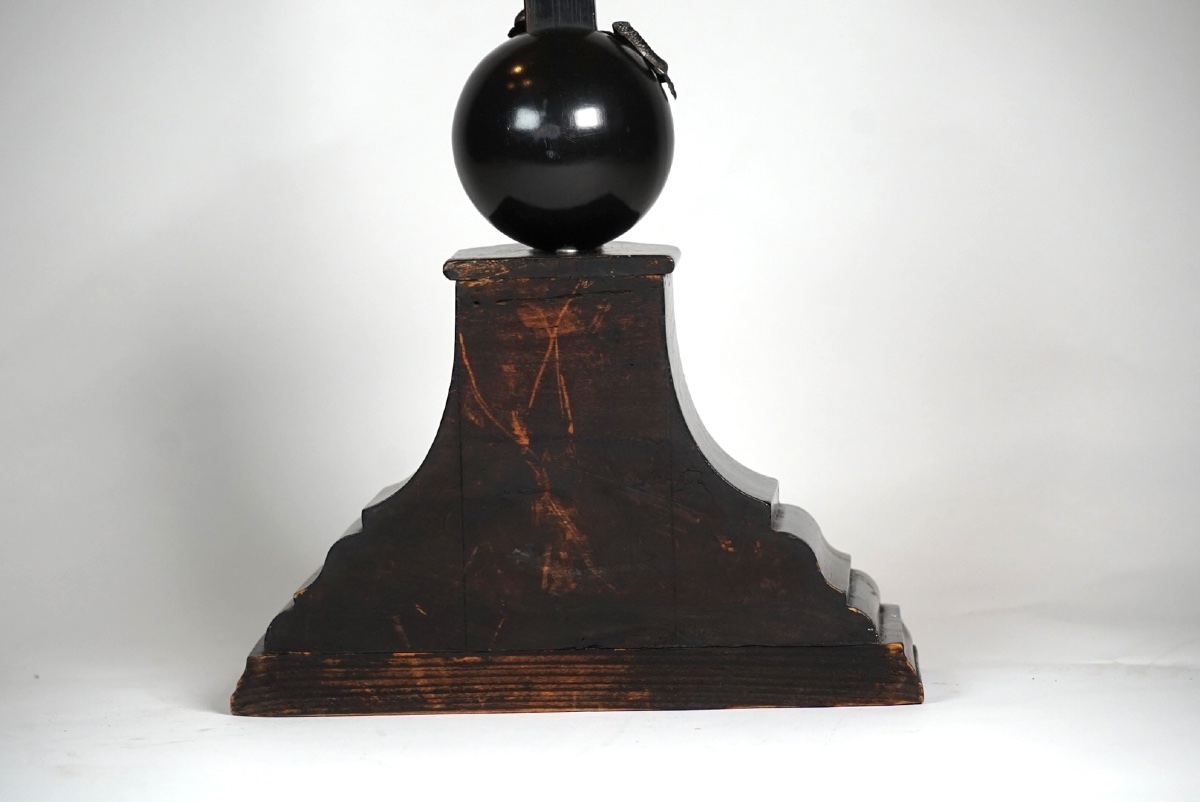
1. Materials, Technique, and RestorationStructure: Crafted from wood with a refined ebonized finish that imparts a deep, dark hue. This stylistic choice creates a strong chromatic contrast with the luminosity of the metal elements, accentuating the solemnity of the piece as a whole.
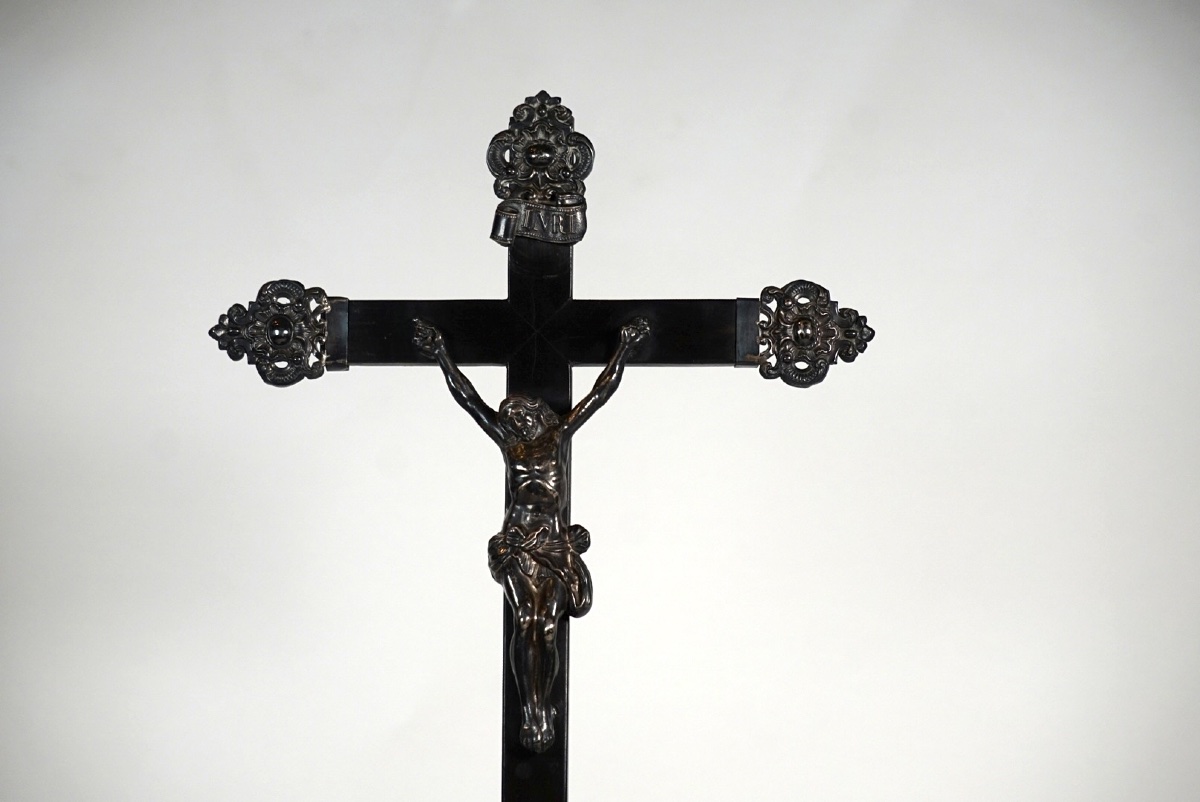
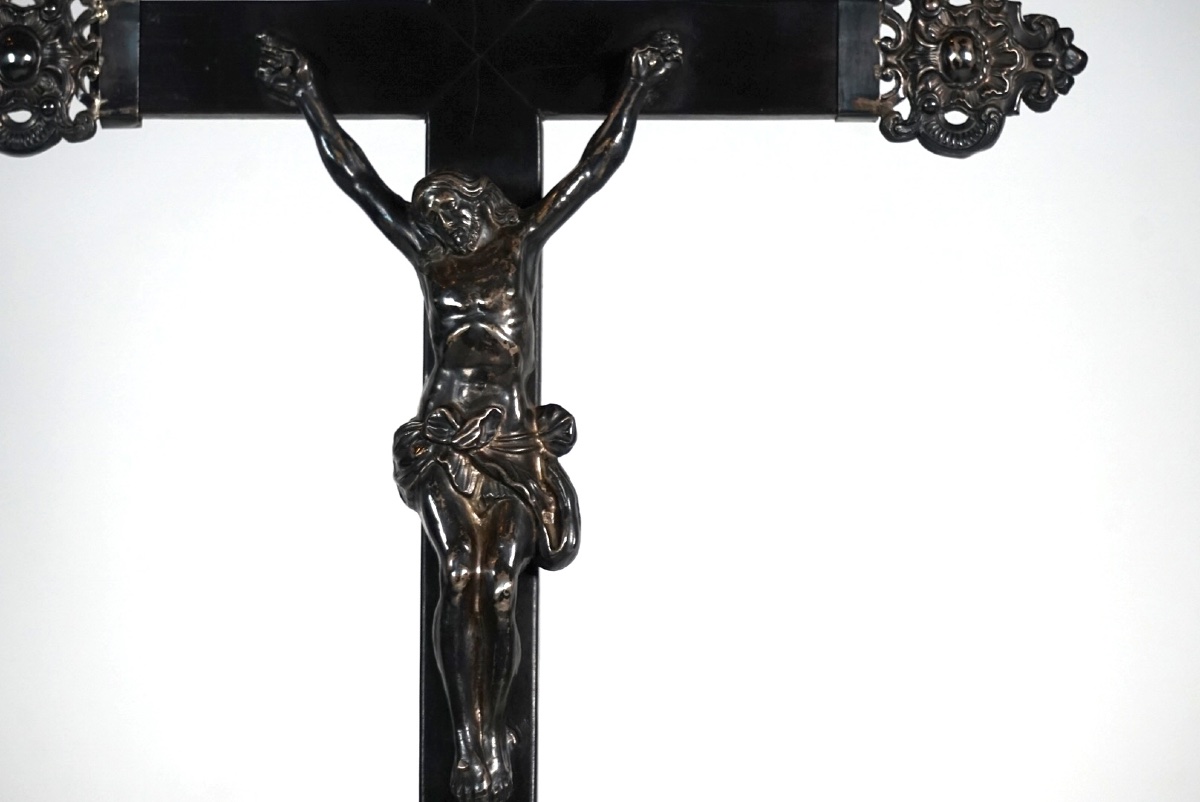
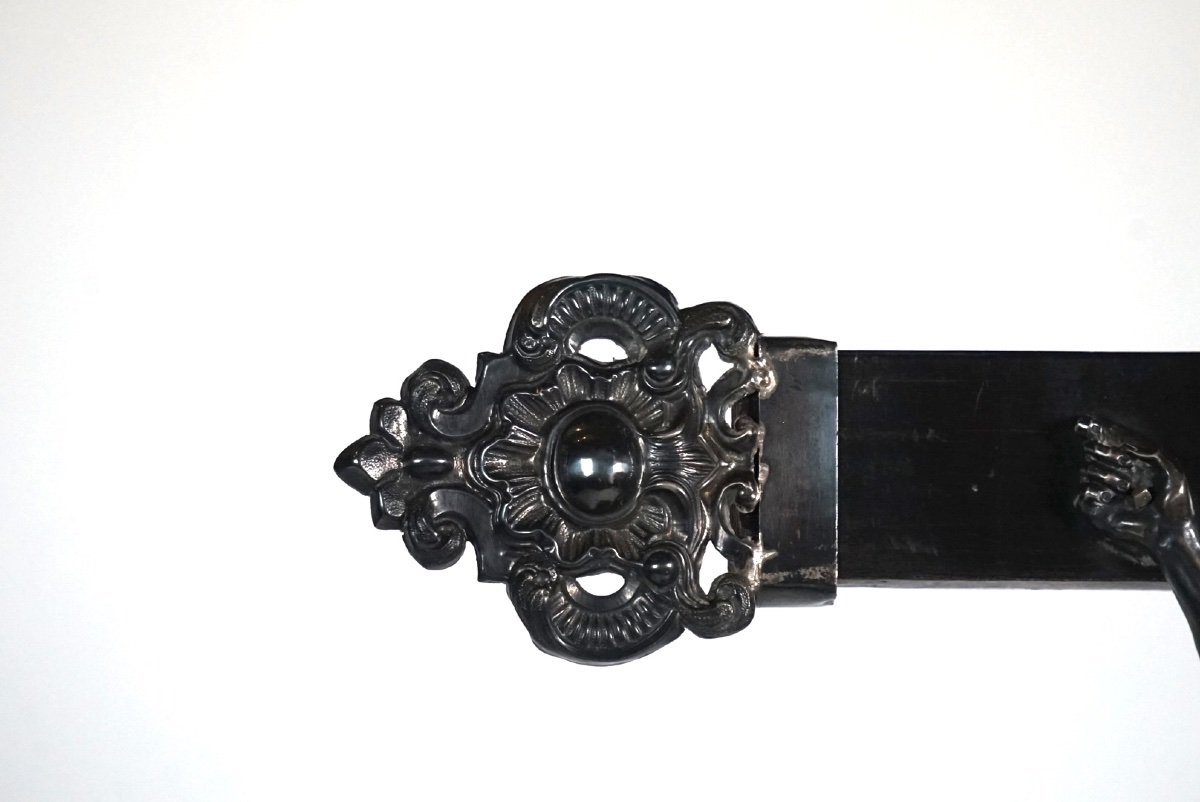
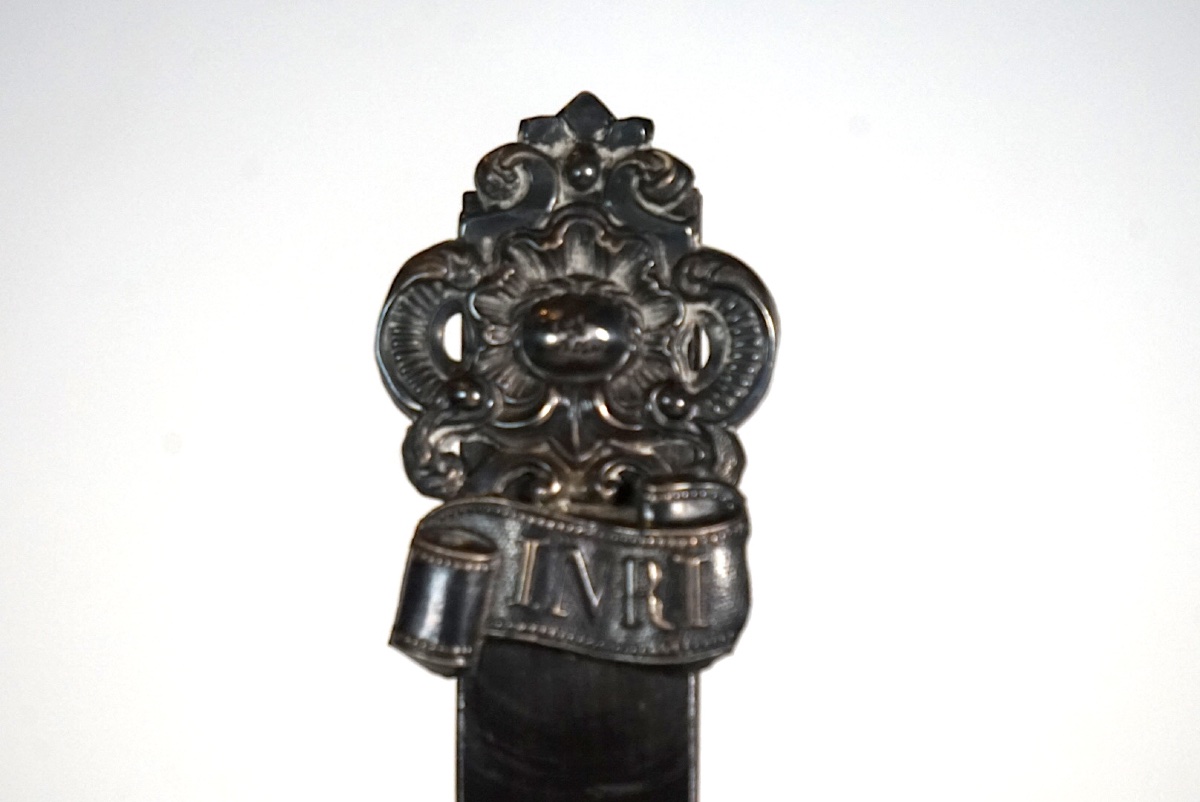
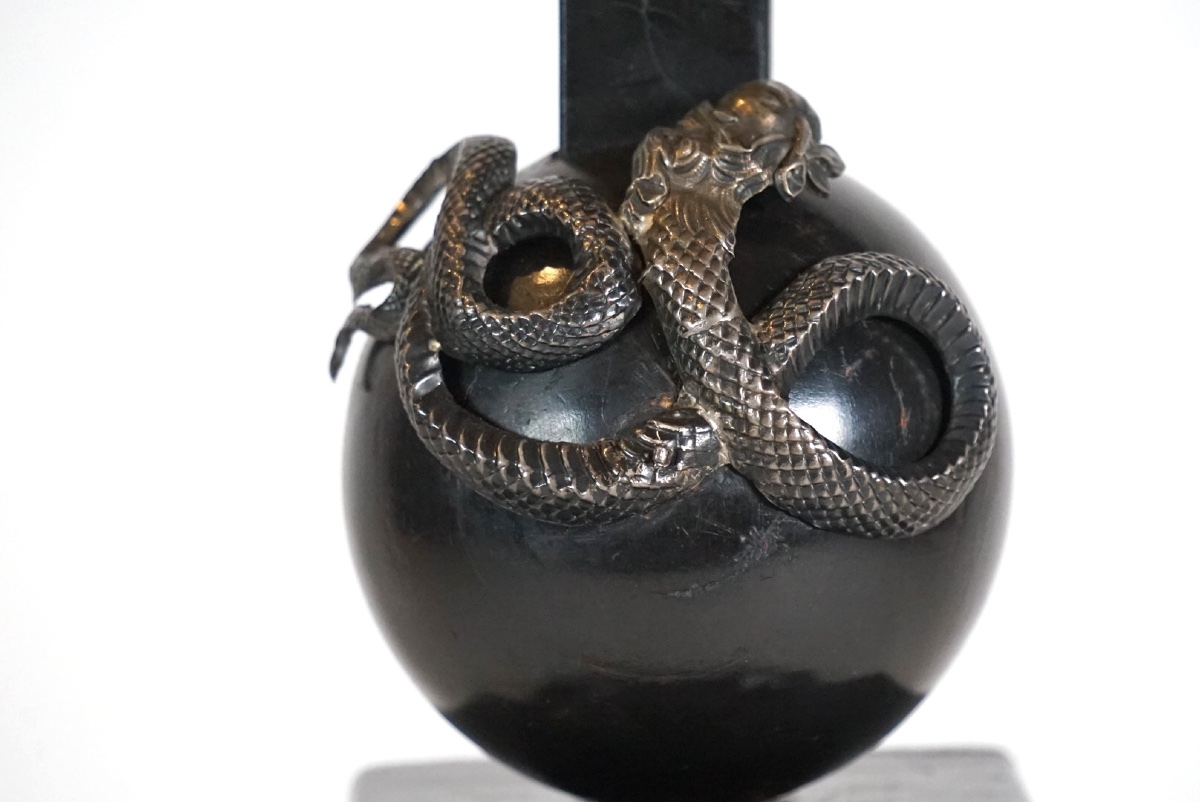
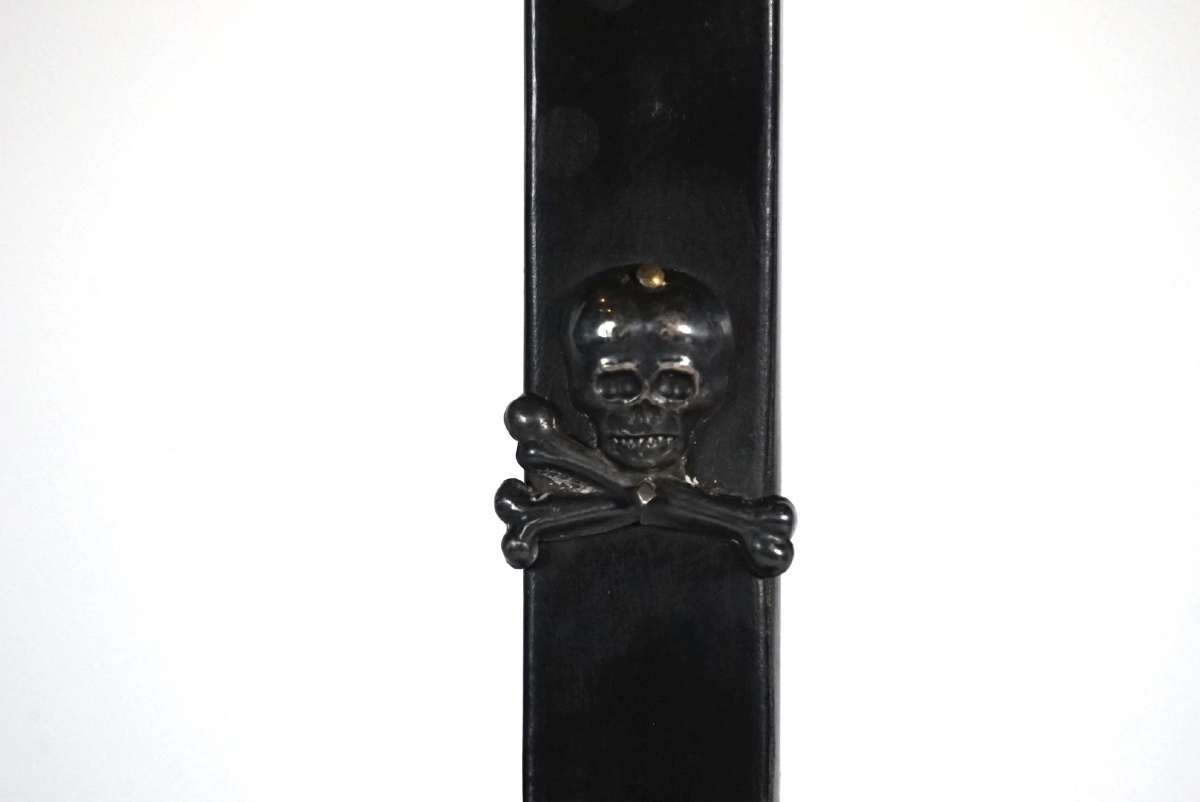
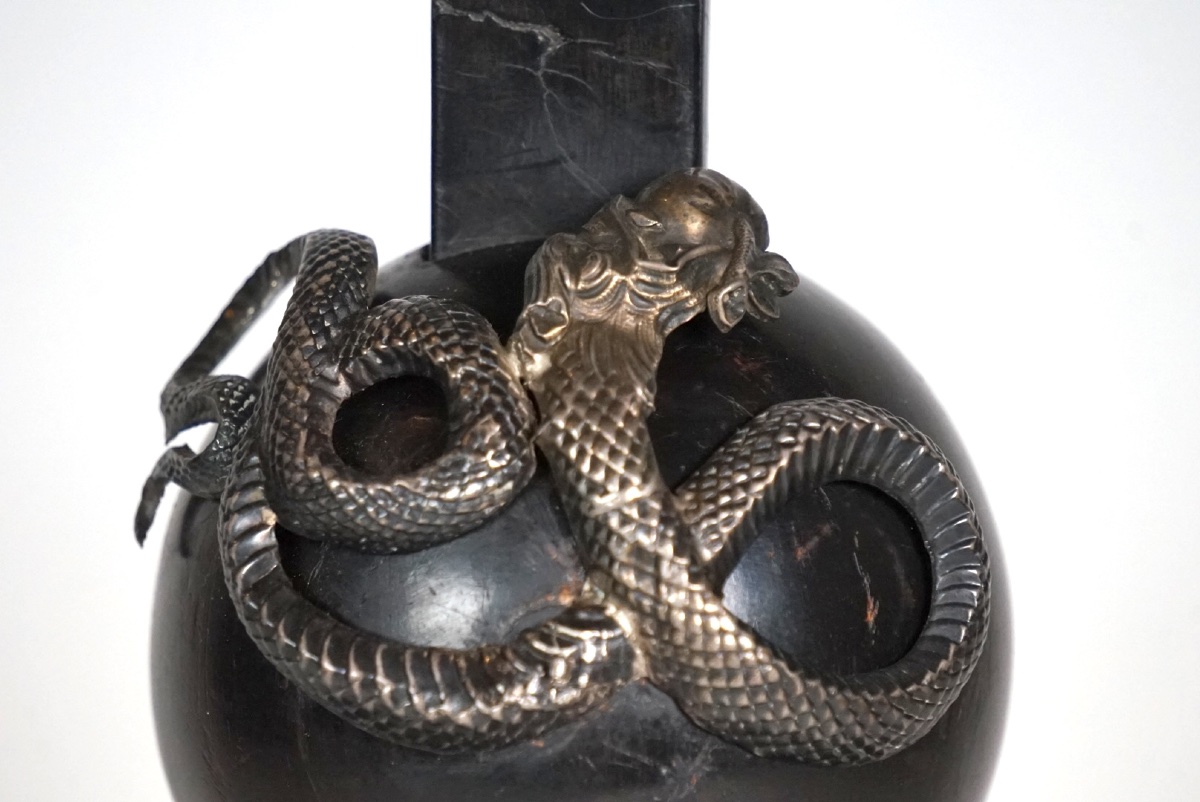
Metal Elements: The figure of Christ, the end plates, the INRI scroll, the skull with the bones, and the serpent are crafted from finely worked metal. The technique combines precision casting with refined hand-chiseling, clearly visible in the anatomical rendering of Christ, the scales of the serpent, and the ornamental details in the late Baroque/Rococo style.
Conservation Restoration: The artifact underwent a meticulous conservation restoration. The most delicate wooden parts were reinforced, and structural stresses were stabilized. The surface was treated using a nearly museum-grade maintenance protocol, applying a protective finish based on microcrystalline wax, which preserves and nourishes the wood and the original patina without altering its historical value.
The work stands out for its rich symbolism, far surpassing that of mass-produced items:
The Serpent with the Fruit on the Globe: At the base of the cross, coiled around the terrestrial sphere (symbol of the redeemed world), lies the serpent in the act of clutching the fruit of the Tree of Knowledge in its jaws.. This detail, rare and deeply theological, illustrates the moment of the primordial temptation, transforming the object into a visual synthesis of the “New Adam” (Christ overcoming original sin).
The Skull and the Crossed Tibias: Located on the shaft, they evoke Golgotha and the tradition that the cross was erected above Adam’s tomb, whose skull is washed and redeemed by the blood of the Redeemer.
Ornamental Details: The ends of the cross are embellished with embossed and chiseled plaques featuring Baroque-style floral and foliage motifs, which accentuate the work’s decorative exuberance.
Condition: Excellent overall condition, thanks to recent and meticulous conservation restoration work that has stabilized the structure and enhanced the splendid period patina.
Period: 18th century
Style: Other Style
Condition: En l'etat
Reference (ID): 1845740
Availability: In stock