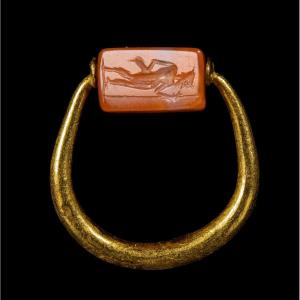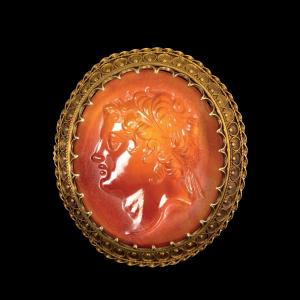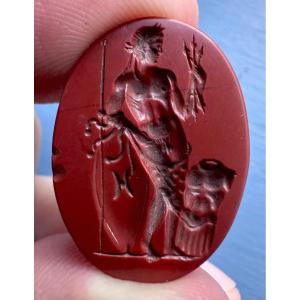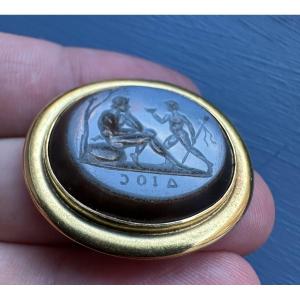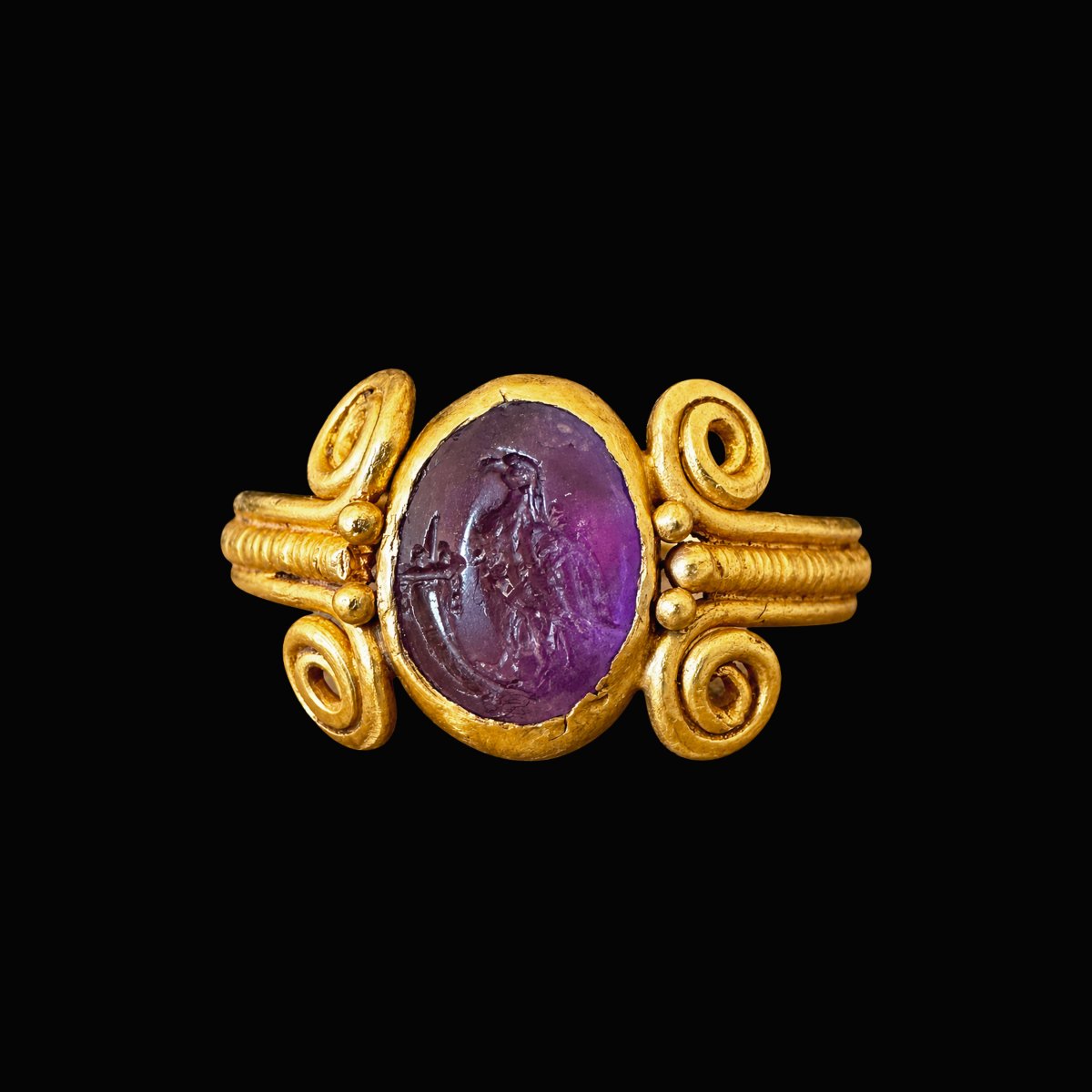
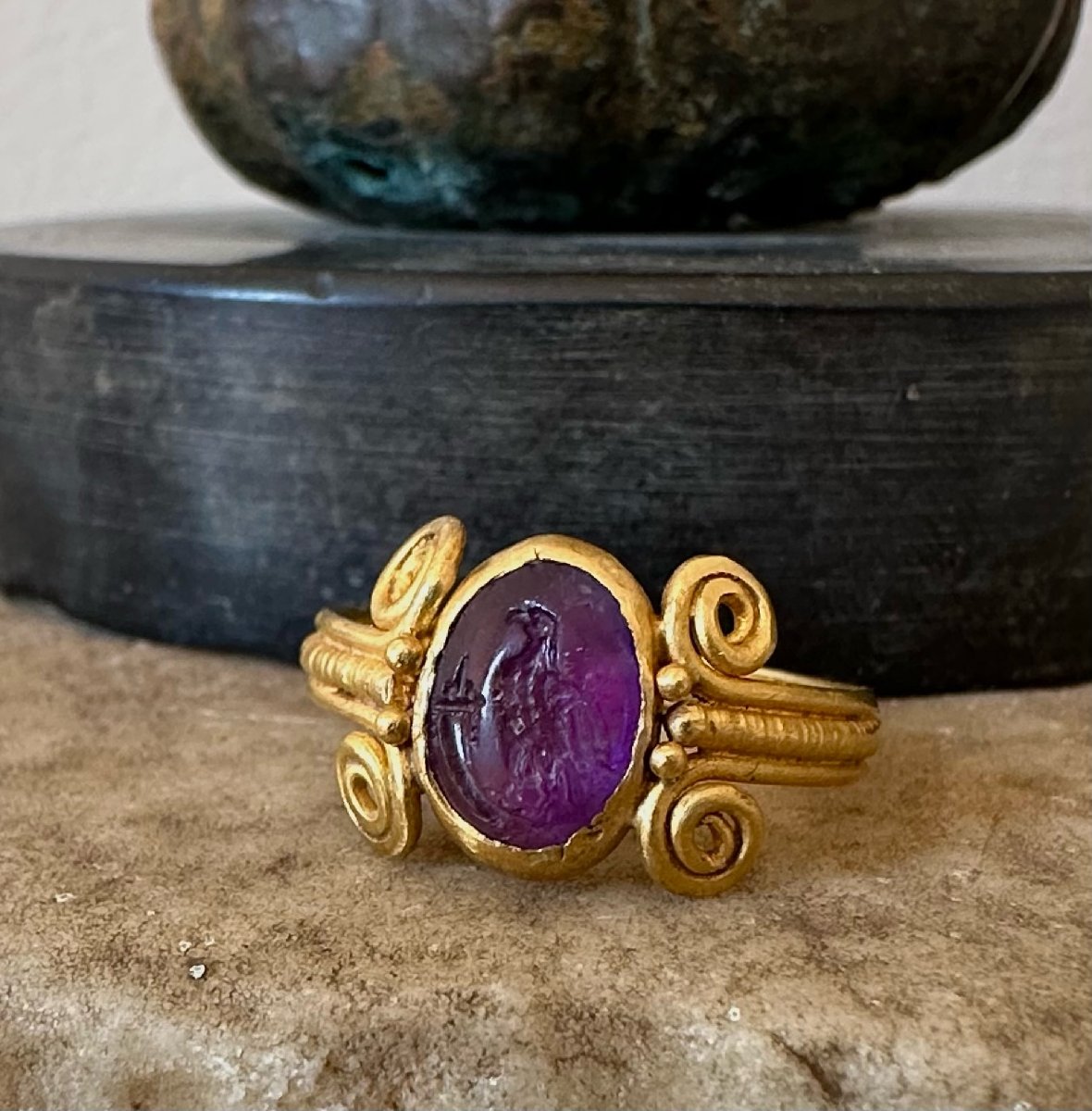
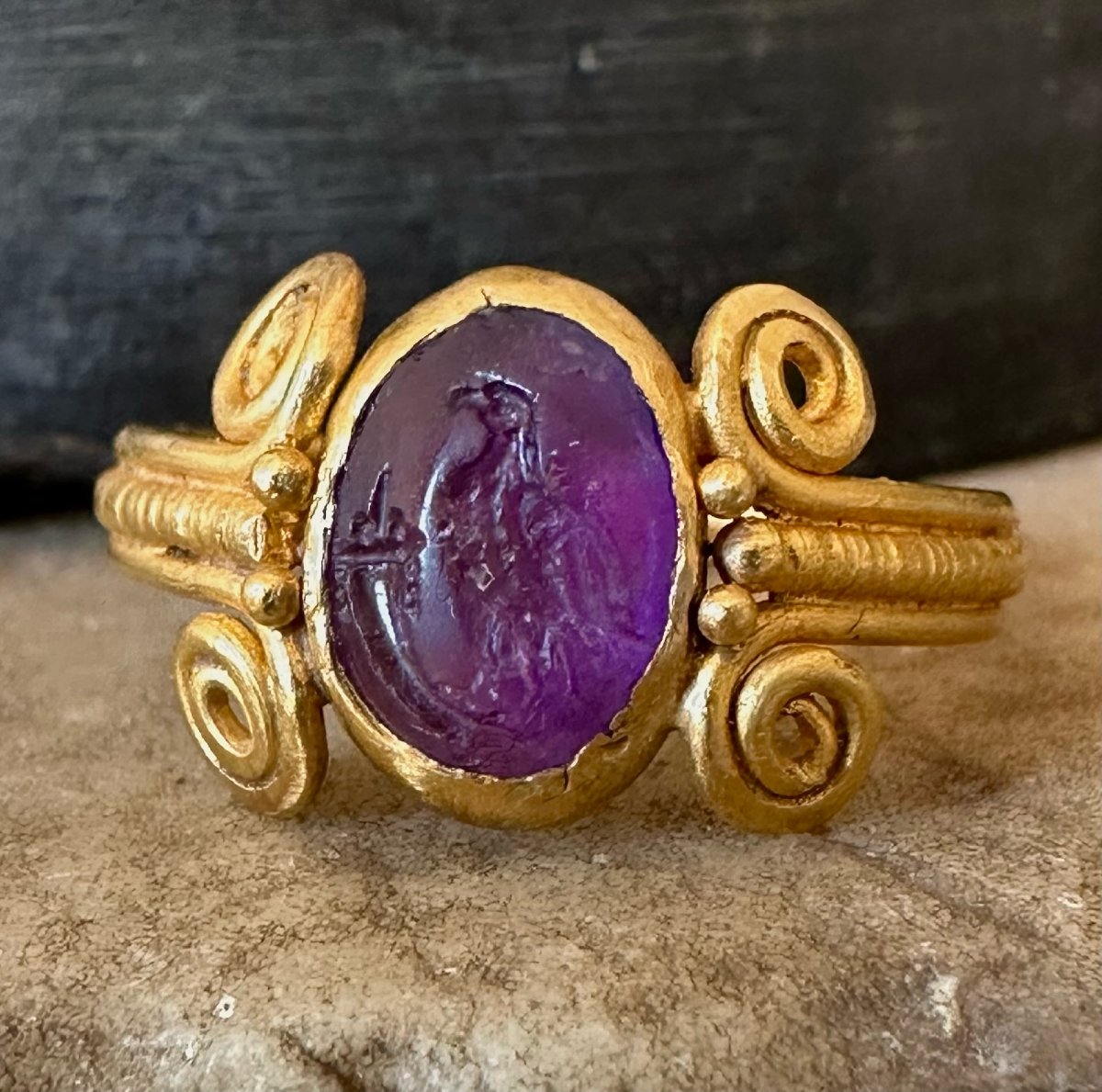
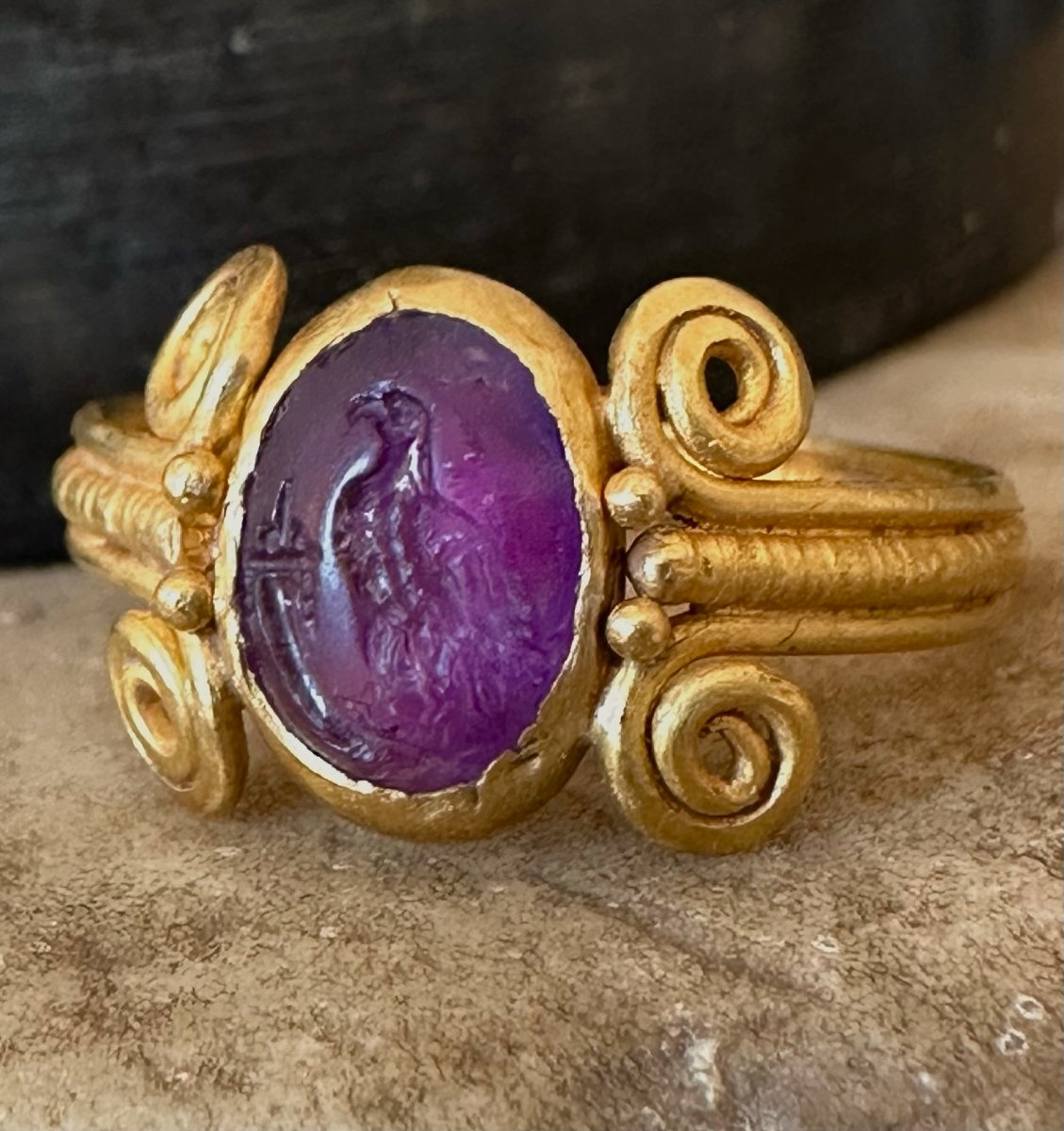
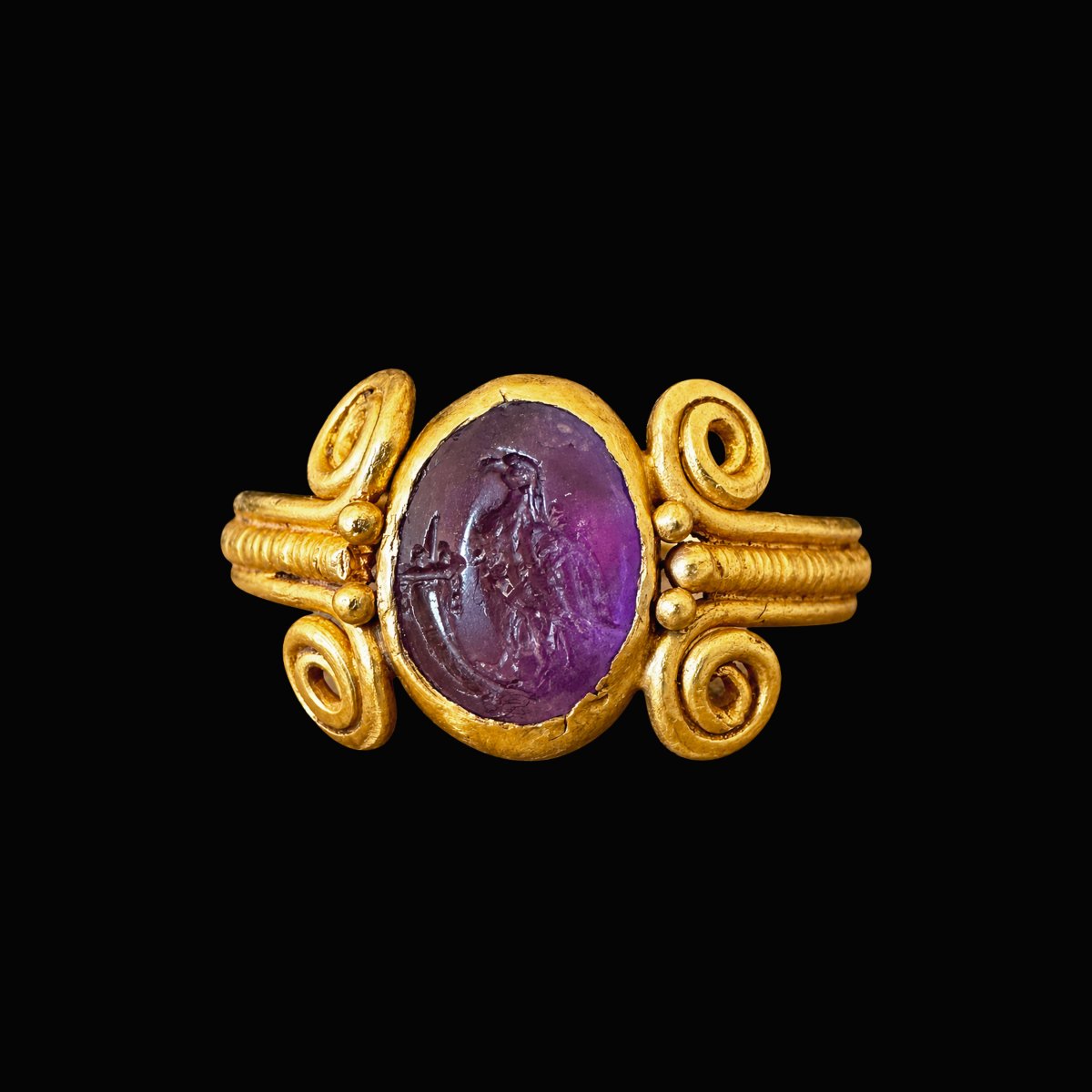
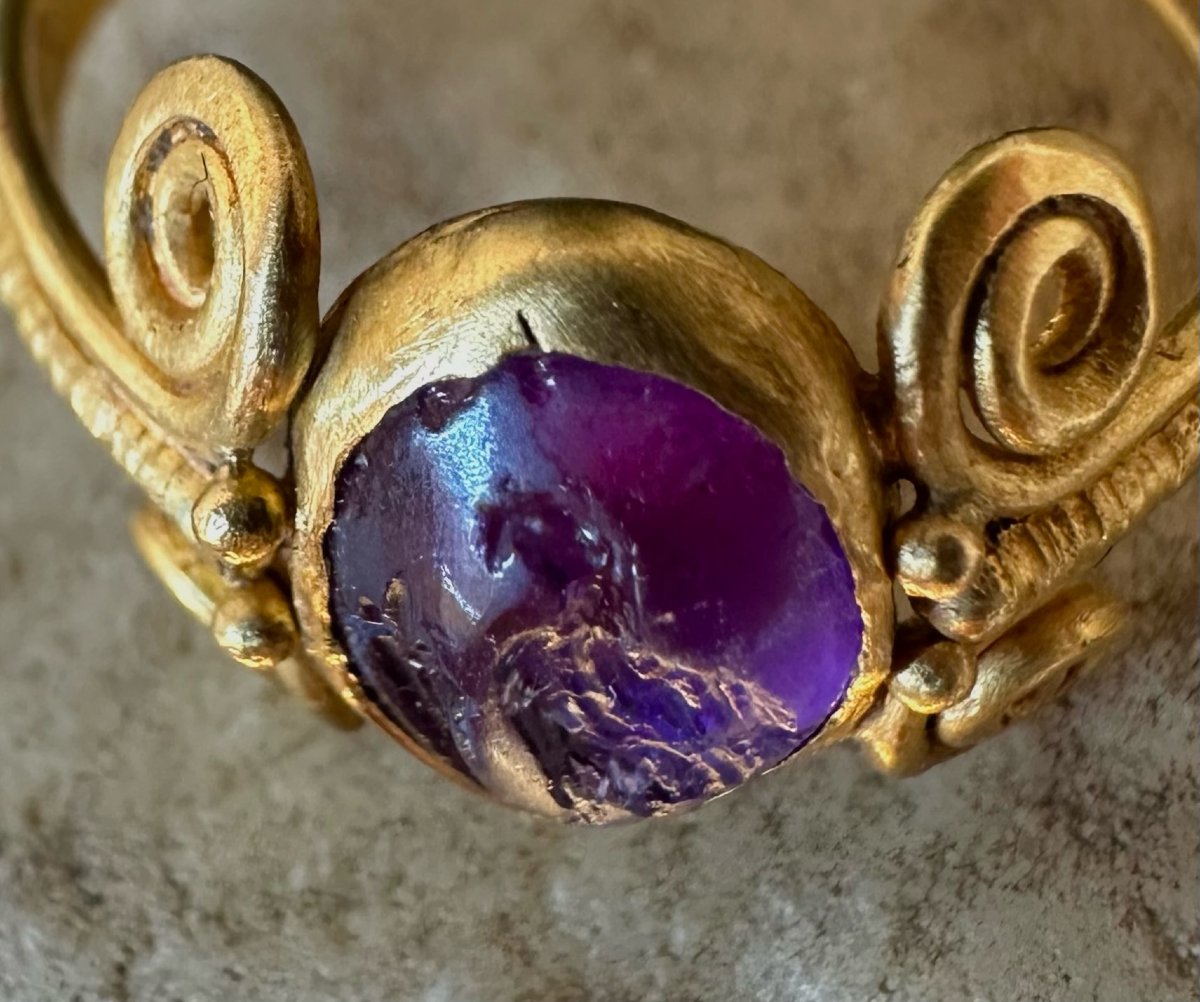


Roman Amethyst Intaglio Depicting An Eagle And A Cornucopia, Set In A Late Roman Gold Ring
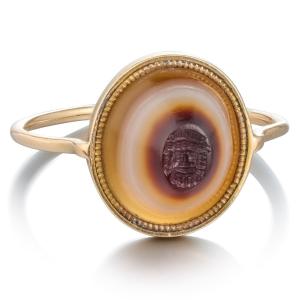
Amethyst intaglio, Imperial Roman period, 1st–2nd century AD. Setting: Late Roman gold ring, 4th–5th century AD.
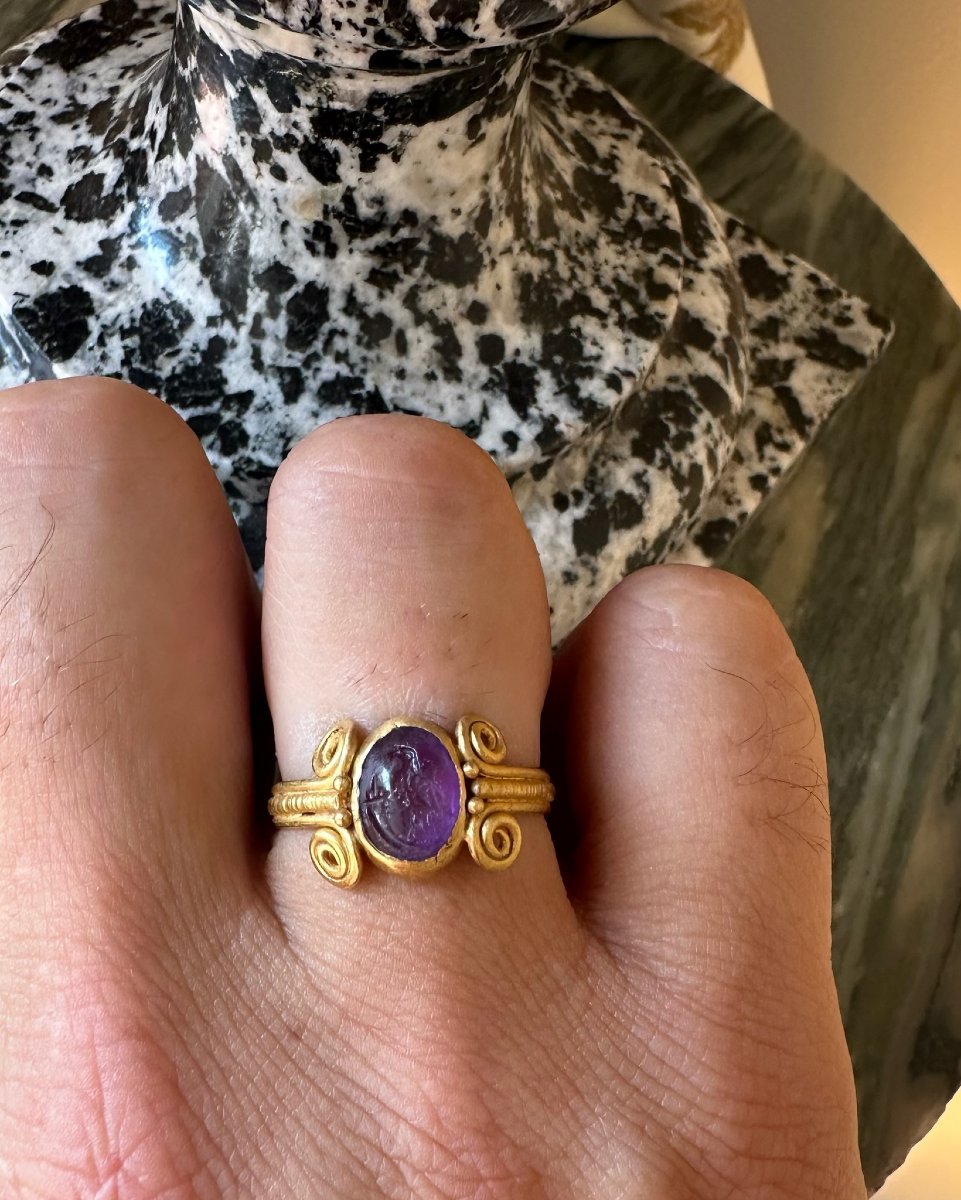
Intaglio: 7 × 9 mm. Ring size: US 8¼ / UK Q½ / EU 58. Gross weight: 4.07 g.
Good condition; minor chips along the edge of the setting, wear consistent with its age.
Description
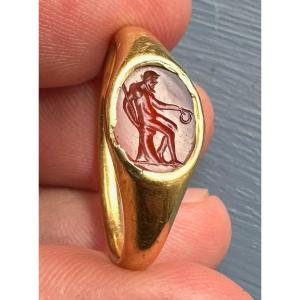
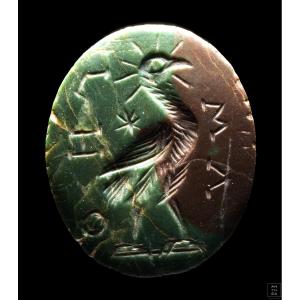
Ring formed of three gold wires, the central wire beaded, punctuated with granules, and flanked by four spiral twists of wire on either side of the setting. The oval setting holds a violet amethyst engraved in intaglio. An eagle is depicted in profile, with its head turned to the left and its wings folded, in front of a cornucopia laden with fruit. Fine engraving; the plumage is rendered with short parallel strokes.
Historical Context
Amethyst, known in Greek as the stone “that wards off drunkenness,” was sought after by imperial engravers for its deep color. Engraved gemstones outlived their original owners: this 1st–2nd-century intaglio was set in a new mount three centuries later. Volutes and granules foreshadow the goldsmithing of the Great Invasions.
Iconography
The eagle is the bird of Jupiter and the standard of the legions; the cornucopia is the attribute of Abundantia and Fortuna. Together, they express the imperial promise: victory in war brings wealth in peace. On this small violet stone, conquest and abundance are captured in a single image.
Comes with a certificate of authenticity signed by Bianca Massard and Gabriele Vangelli de Cresci.
Period: Before 16th century
Style: Rome and Antic Greece
Condition: Good condition
Material: Gold
Reference (ID): 1828490
Availability: In stock