

Storta Sword Or Falchion 16th Century
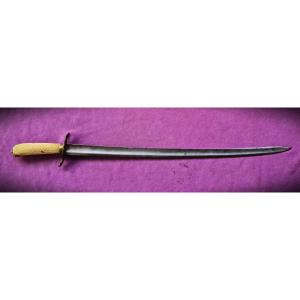
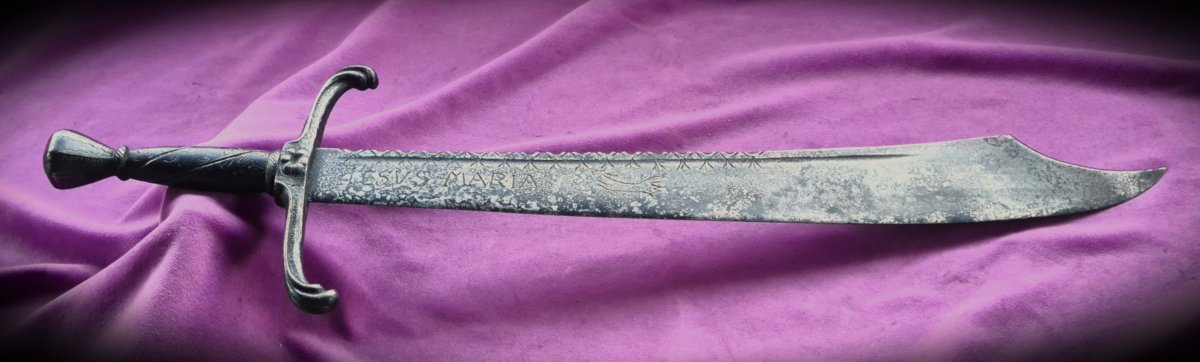
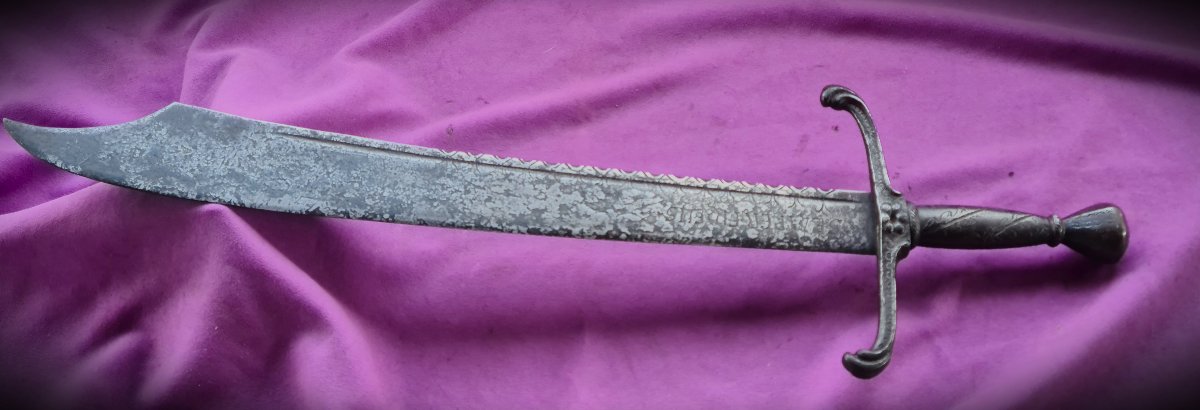
This weapon is a Storta, which is a remnant of the Falchion from the Middle Ages, to which it bears a clear resemblance as it is an evolution of this type of sword . The medieval falchion first appeared during the 13th century, and whether it had a straight or curved blade, it continued to be used for a long time.
This type of weapon enjoyed a resurgence in popularity during the 16thcentury, with the rise of the “Antique” style. Our example is from Germanic manufacture; its geograhic area can be localized from the area of northern Italy and southern Germany and dated to the mid-16th century.
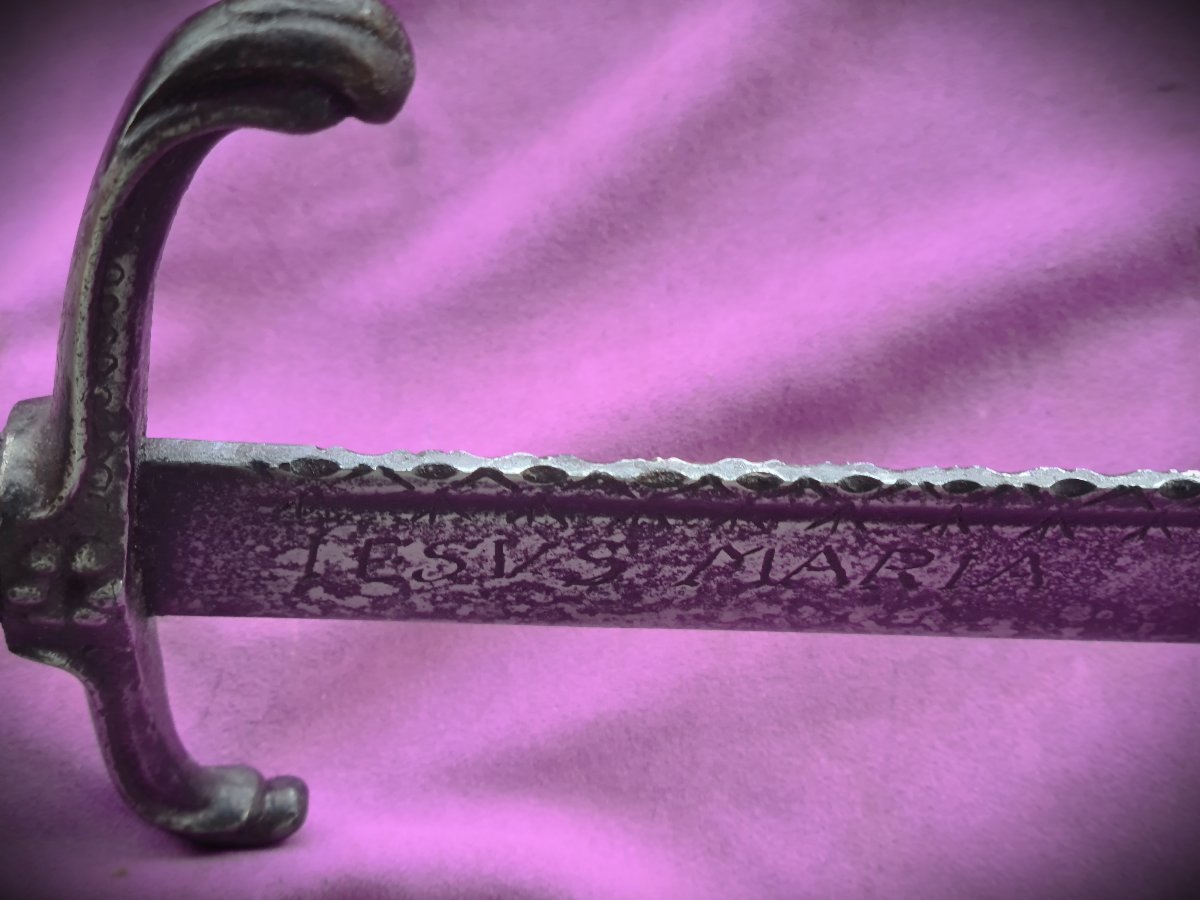
The inscription IESUS MARIA strongly suggests the context of the religious wars.
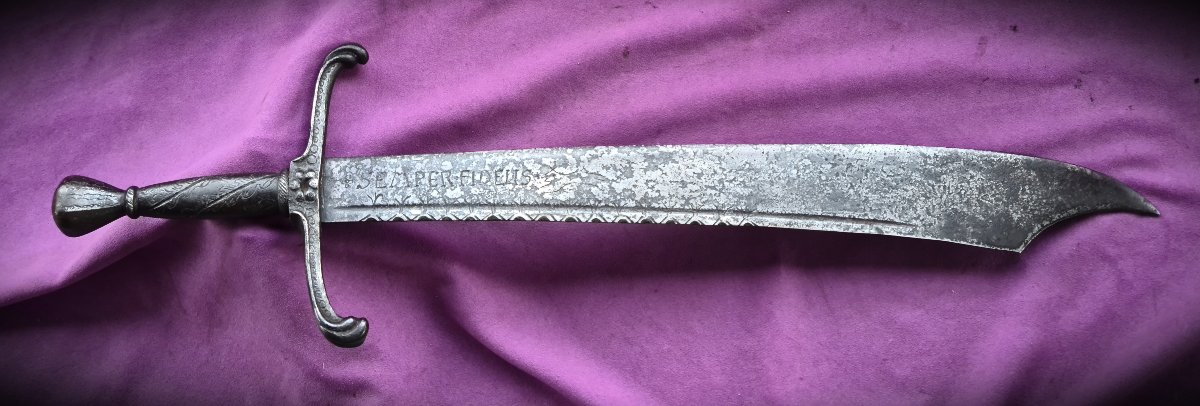
The phrase SEMPER FIDELIS (= Always faithful) on the other side of the blade can be understood in two ways: “this weapon is always faithful to its owner,” or “I am always faithful to the religion,” to Jesus and to Mary in opposition to the principles of the Reformation, one of whose most classic mottos was “Soli Deo Gloria” (Glory to God alone), which excluded the Virgin Mary.
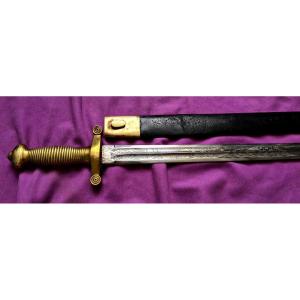
BLADE: It has a single cutting edge and widens gradually from the shoulder of the blade to the tip. The last 10 centimeters near the tip feature a concave, arc-shaped counter-edge, which is characteristic of falchion blades. A fuller near the back of the blade on each side. The back of the blade is adorned with a decorative pattern known as “guilloché,” which continues on both sides.
On the outer side: IESUS MARIA and the running wolf mark of Passau
On the inner side: SEMPER FIDELIS and the wolf of Passau.
Blade length = 51.3 cm, width at the heel = 4.2cm, width at the widest point = 6.3 cm, thickness at the shoulder= 3.5 mm
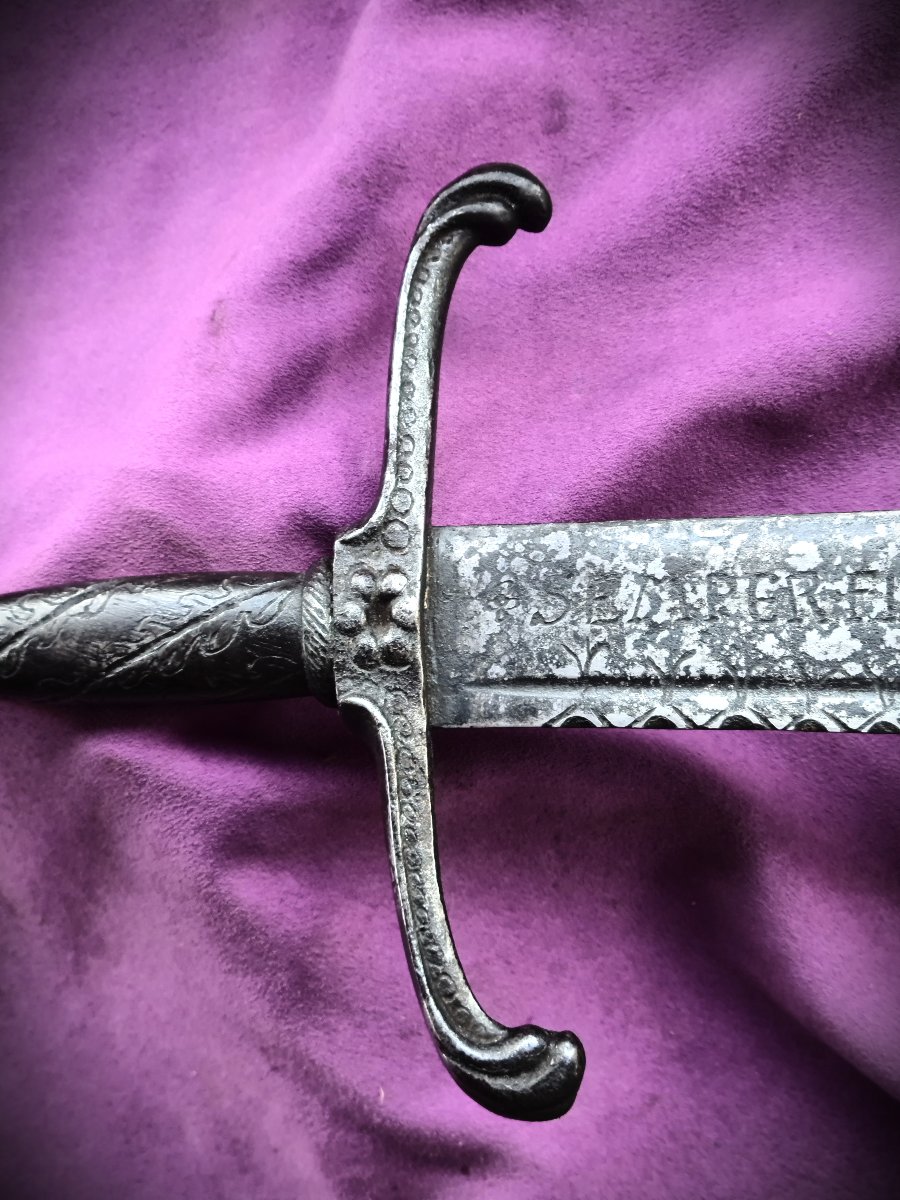
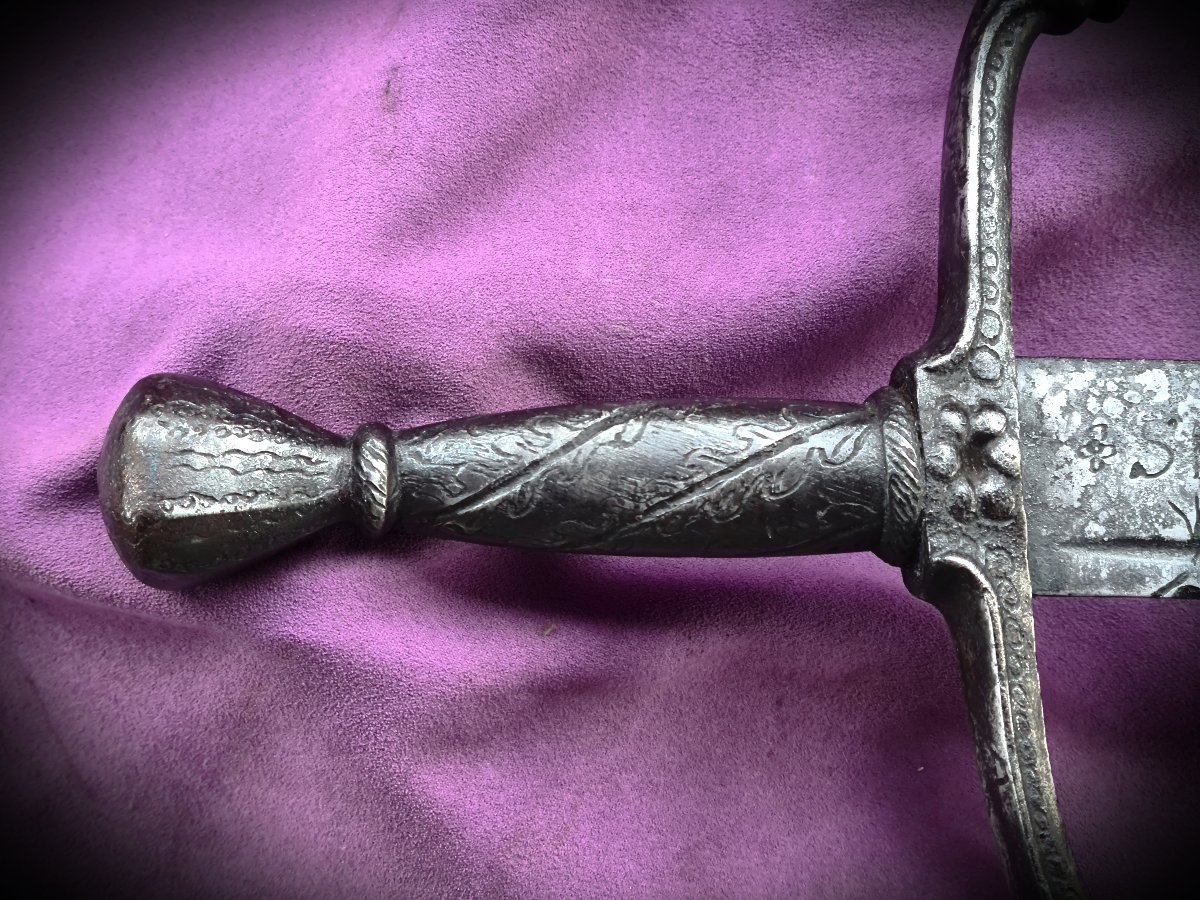
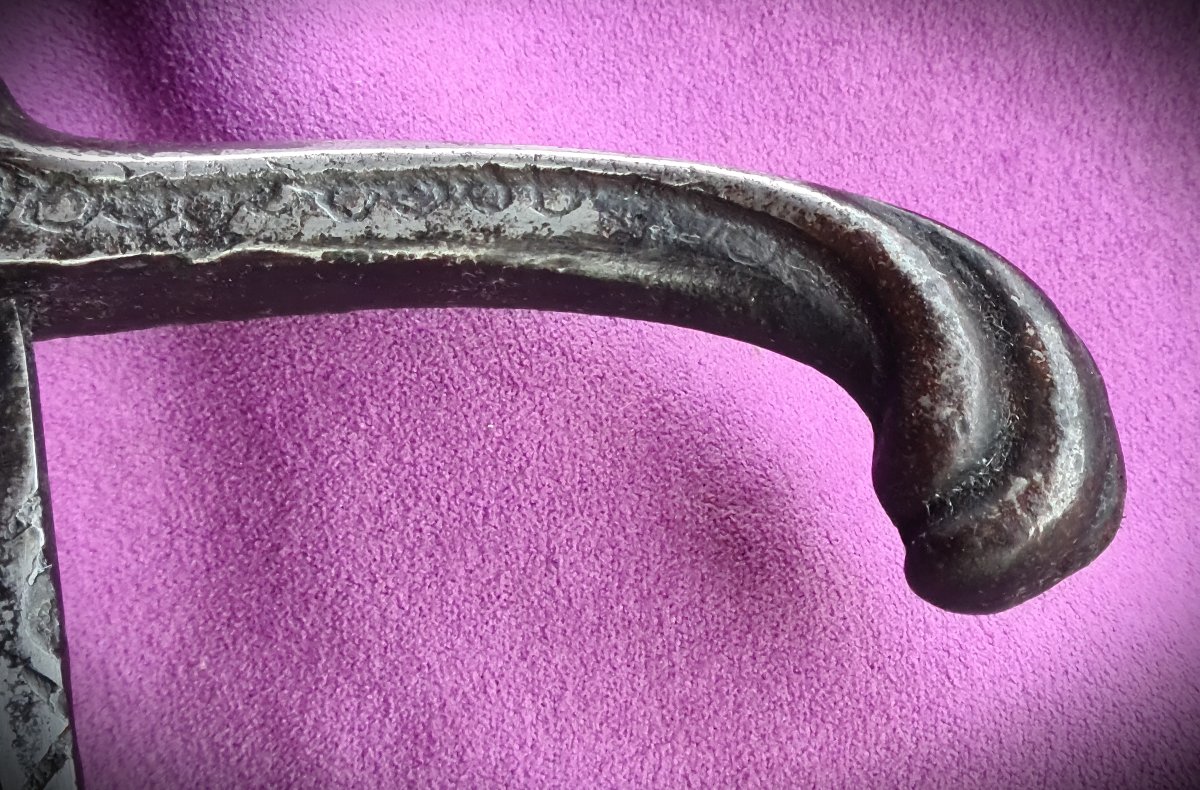
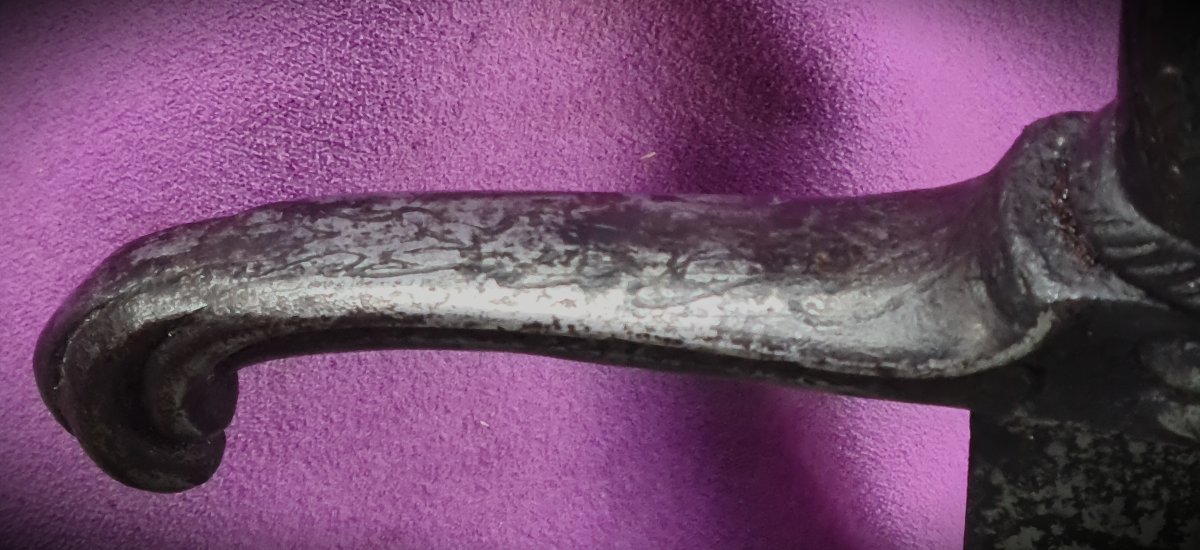
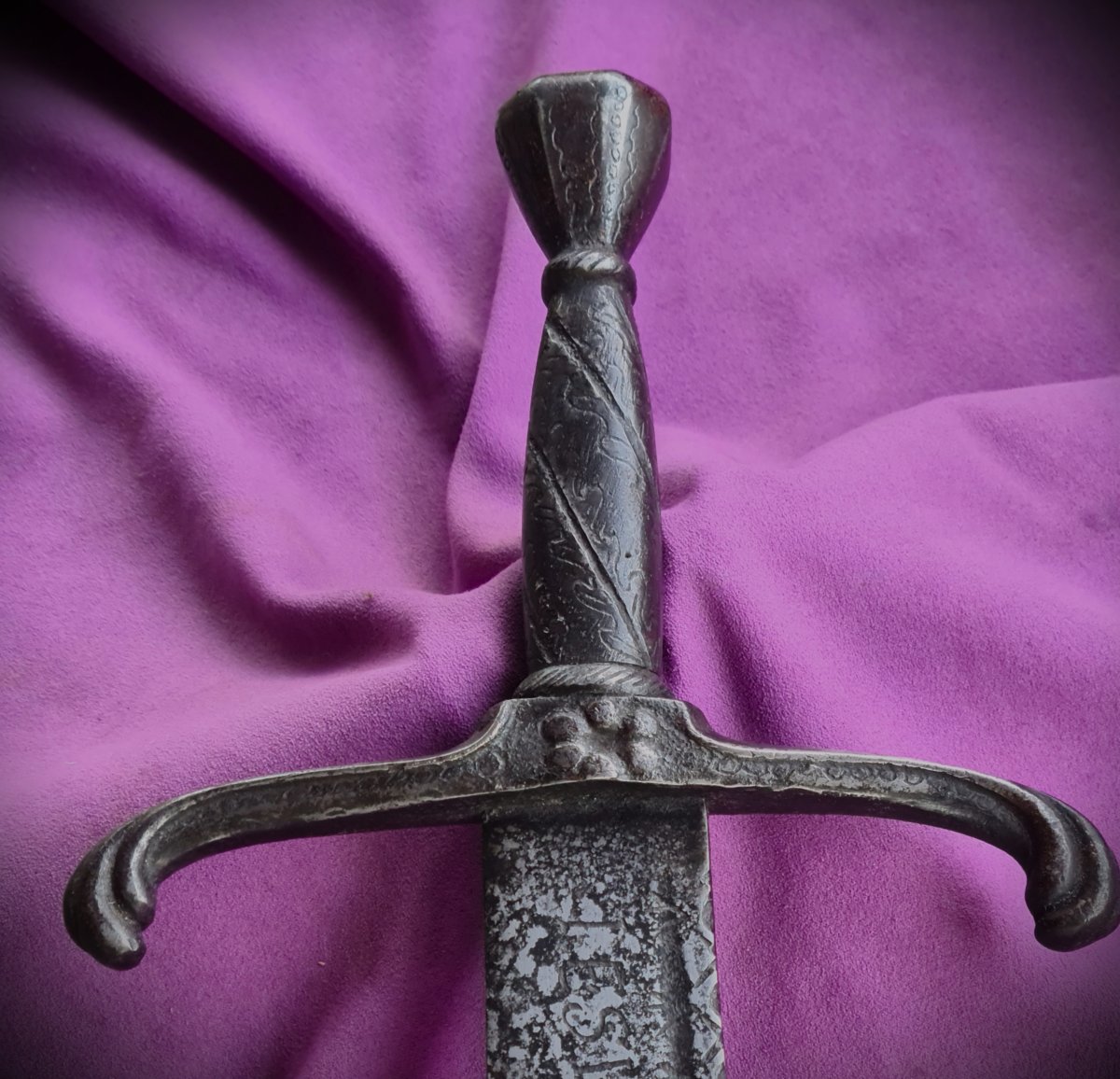
CROSS GUARD = 2 wide quillons in the shape of branches in the 16th century style, decorated on the lateral sides by geometrical patterns and on the back of the cross by plants figures.
in the center of the cross representation of a 6 petals flower, which for some authors is a symbolic representation of Jesus, Virgin Mary, and the 4 evangelists.
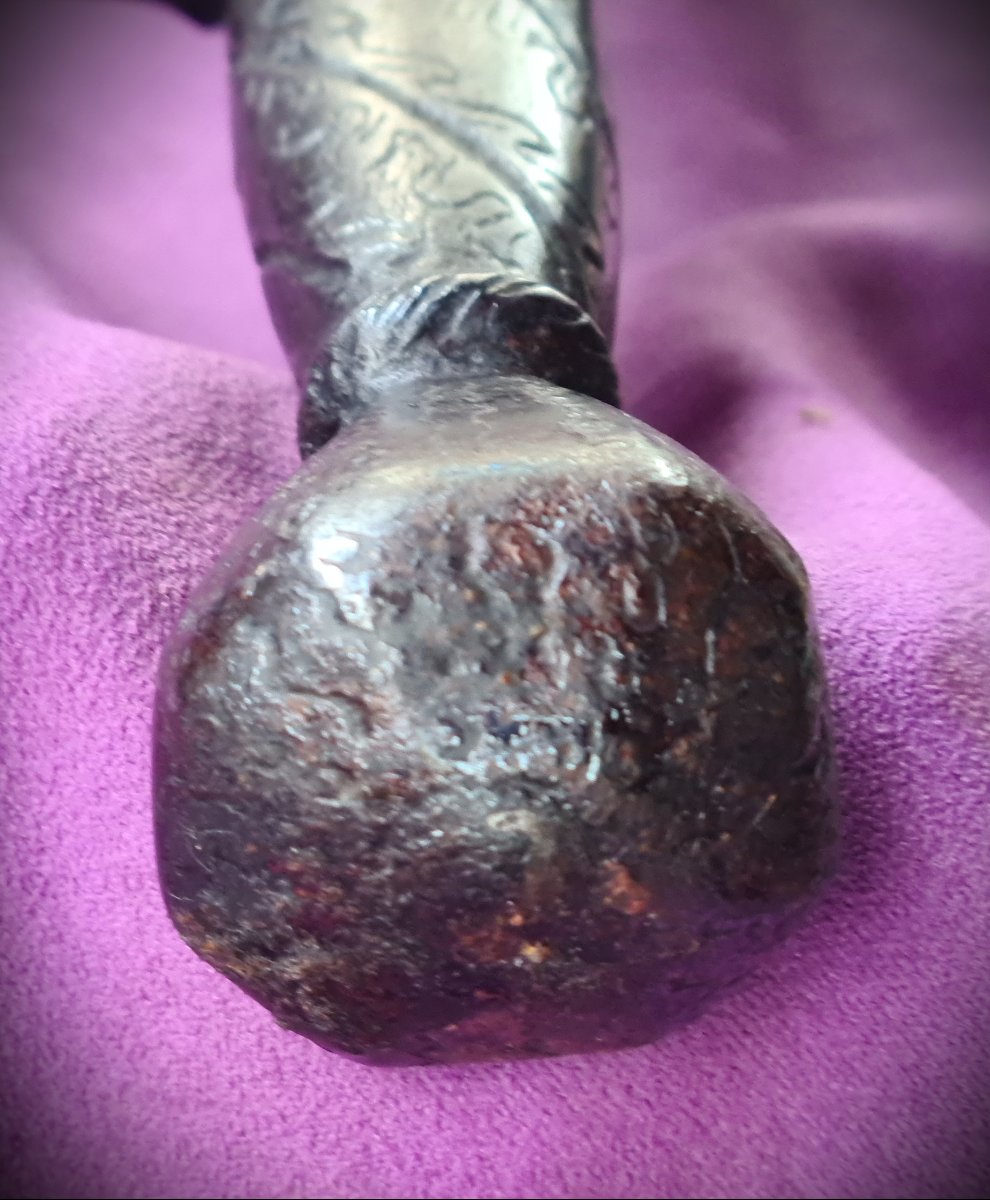
POMMEL : It has a faceted inversed cone shape, with small chiseling decoration.
The tang of the blade is riveted directly to this pommel.
GRIP : plain iron, slightly twisted, with chiseling featuring oaks leaves. The oak being symbol of strenght, constance, and value
Nice weapon, very uncommon. Considering the few exemplars availables on the market, we will pardon the oxydation of blade...
Ref A-2454
Shipping cost contribution via UPSFrance €40 Europe €60
This type of weapon enjoyed a resurgence in popularity during the 16thcentury, with the rise of the “Antique” style. Our example is from Germanic manufacture; its geograhic area can be localized from the area of northern Italy and southern Germany and dated to the mid-16th century.
The inscription IESUS MARIA strongly suggests the context of the religious wars.
The phrase SEMPER FIDELIS (= Always faithful) on the other side of the blade can be understood in two ways: “this weapon is always faithful to its owner,” or “I am always faithful to the religion,” to Jesus and to Mary in opposition to the principles of the Reformation, one of whose most classic mottos was “Soli Deo Gloria” (Glory to God alone), which excluded the Virgin Mary.
BLADE: It has a single cutting edge and widens gradually from the shoulder of the blade to the tip. The last 10 centimeters near the tip feature a concave, arc-shaped counter-edge, which is characteristic of falchion blades. A fuller near the back of the blade on each side. The back of the blade is adorned with a decorative pattern known as “guilloché,” which continues on both sides.
On the outer side: IESUS MARIA and the running wolf mark of Passau
On the inner side: SEMPER FIDELIS and the wolf of Passau.
Blade length = 51.3 cm, width at the heel = 4.2cm, width at the widest point = 6.3 cm, thickness at the shoulder= 3.5 mm
CROSS GUARD = 2 wide quillons in the shape of branches in the 16th century style, decorated on the lateral sides by geometrical patterns and on the back of the cross by plants figures.
in the center of the cross representation of a 6 petals flower, which for some authors is a symbolic representation of Jesus, Virgin Mary, and the 4 evangelists.
POMMEL : It has a faceted inversed cone shape, with small chiseling decoration.
The tang of the blade is riveted directly to this pommel.
GRIP : plain iron, slightly twisted, with chiseling featuring oaks leaves. The oak being symbol of strenght, constance, and value
Nice weapon, very uncommon. Considering the few exemplars availables on the market, we will pardon the oxydation of blade...
Ref A-2454
Shipping cost contribution via UPSFrance €40 Europe €60
3 600 €
Period: 16th century
Style: Renaissance, Louis 13th
Condition: Good condition
Material: Other
Length: 66.5 cm
Width: aux quillons 19 cm
Reference (ID): 1823406
Availability: In stock
Print