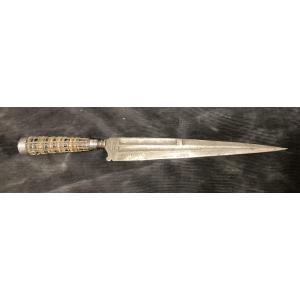


Saxon Left-hand Dagger, Signed Iohannes Willems, Circa 1550–1620
Artist: Iohannes Willems In Solingen
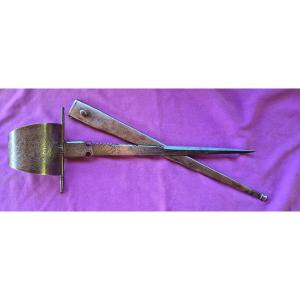
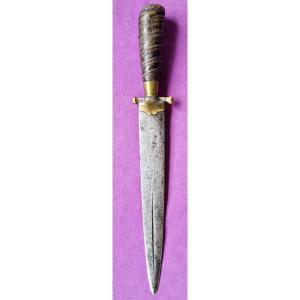
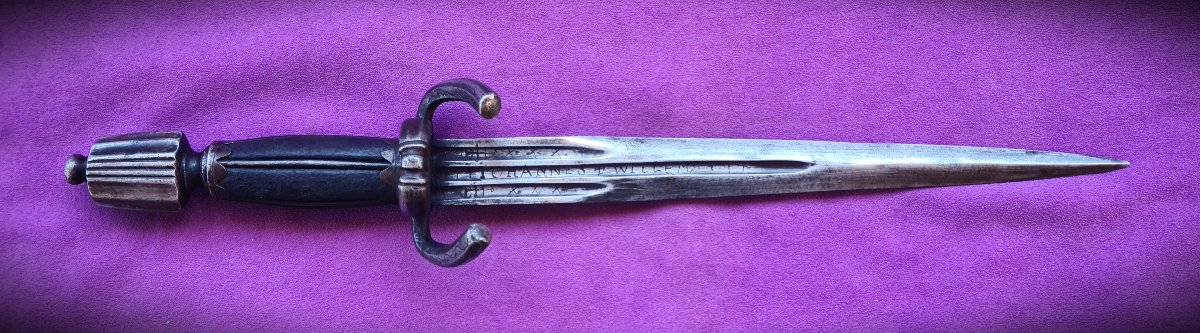
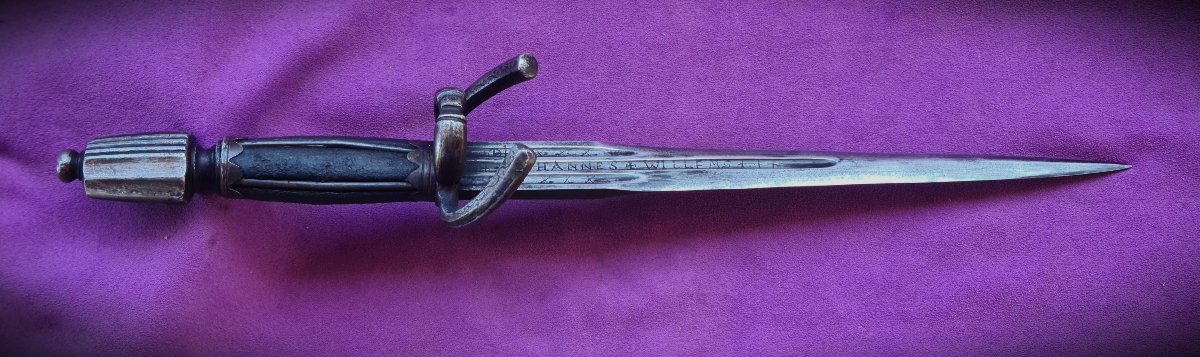
This left-hand dagger is typical of Saxony. Its style corresponds to the second half of the 16th century or the very early 17th century, but the signature on the blade would seem to indicate that it was made in the first quarter of the 17thcentury; we will therefore adopt this dating as a precaution. It is an uncommon model, with a guard designed for maneuvers to seize the opponent’s blade.
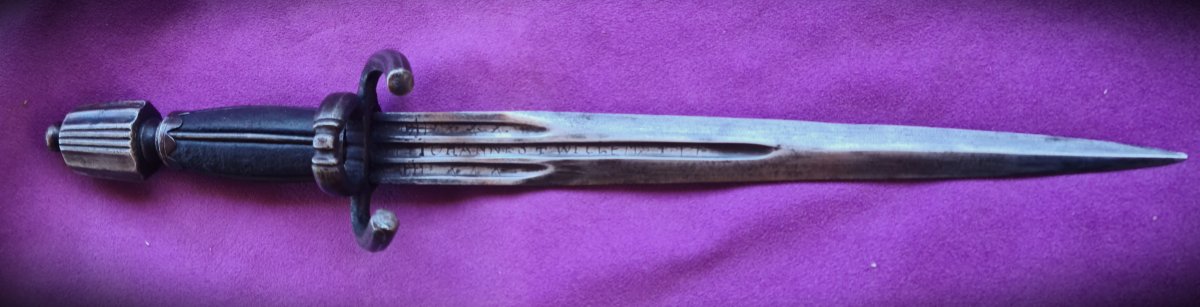
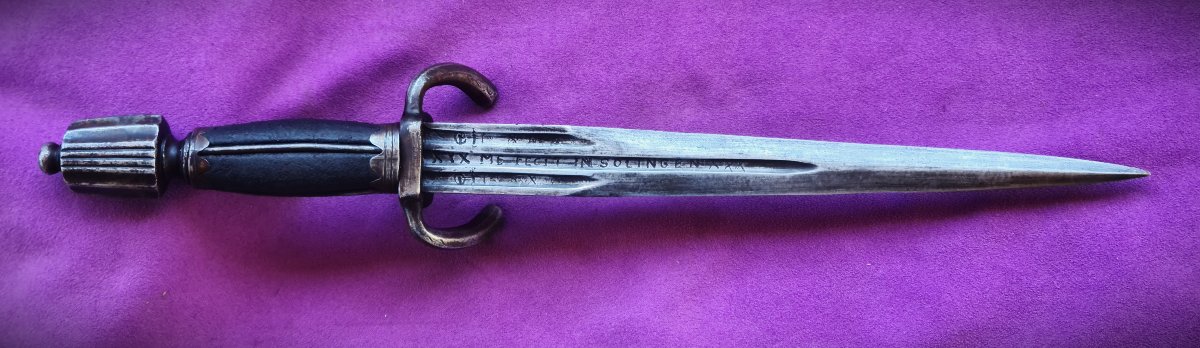
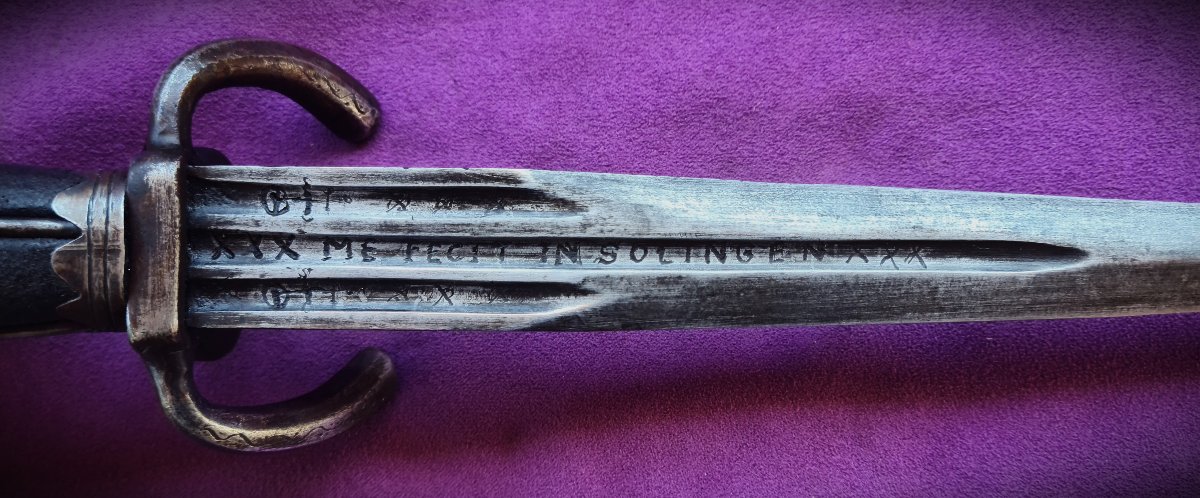
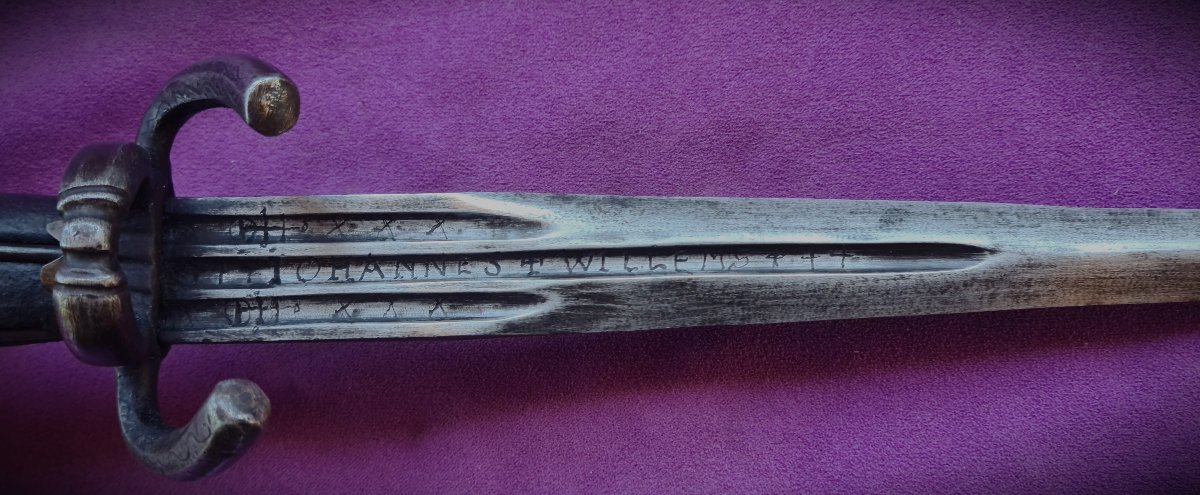
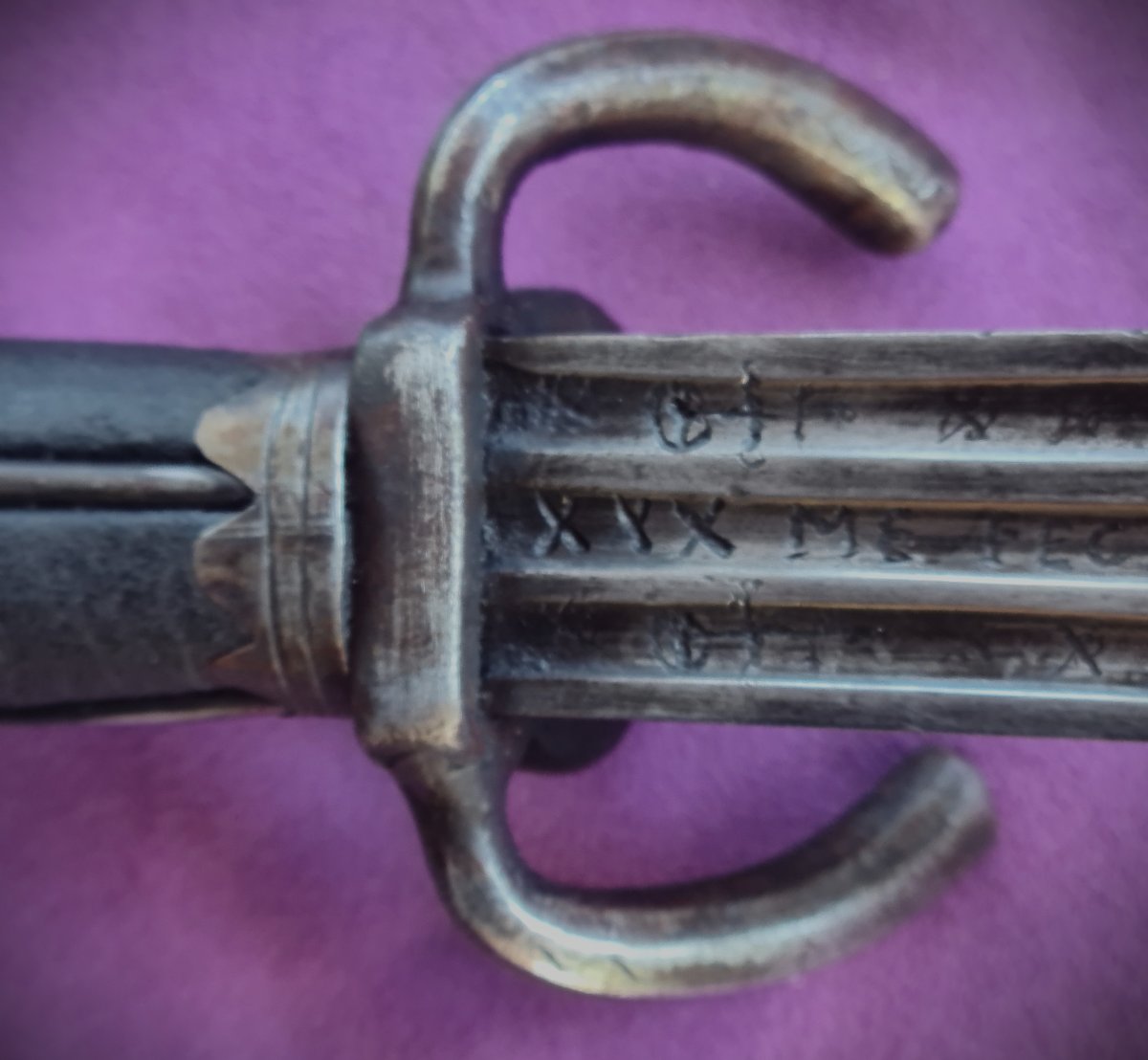
BLADE: After a strong 5cm ricasso, it takes on a lozenge-shaped cross-section. On each side, a central fuller running from the shoulder to two-thirds of the blade’s length, and two lateral fullers in the first third of the blade.
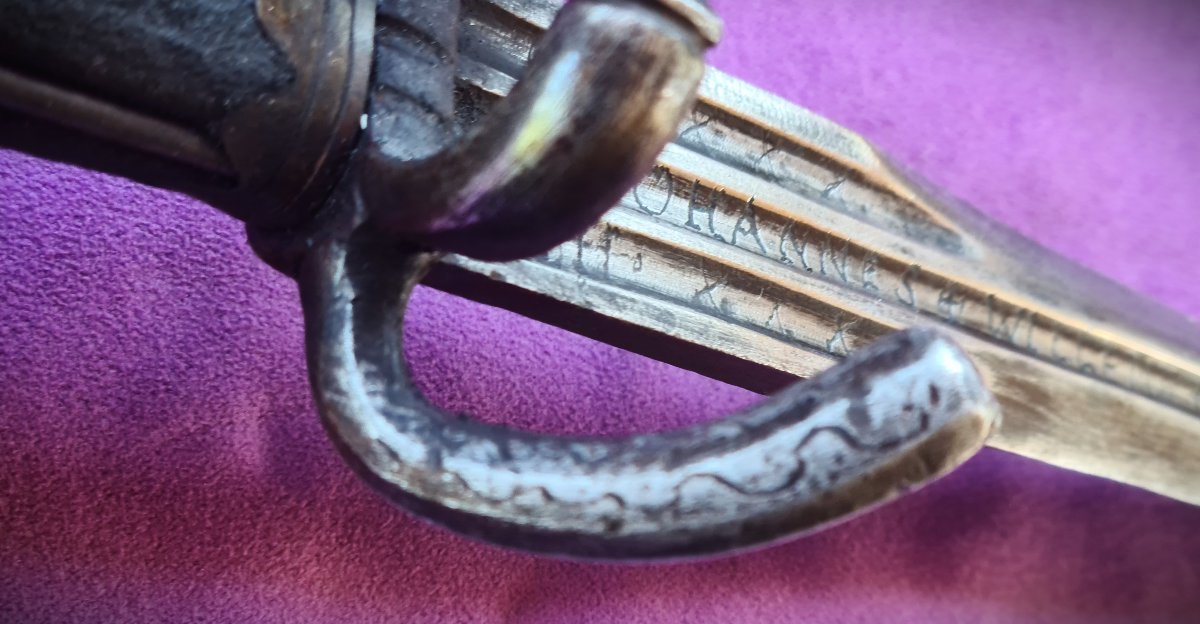
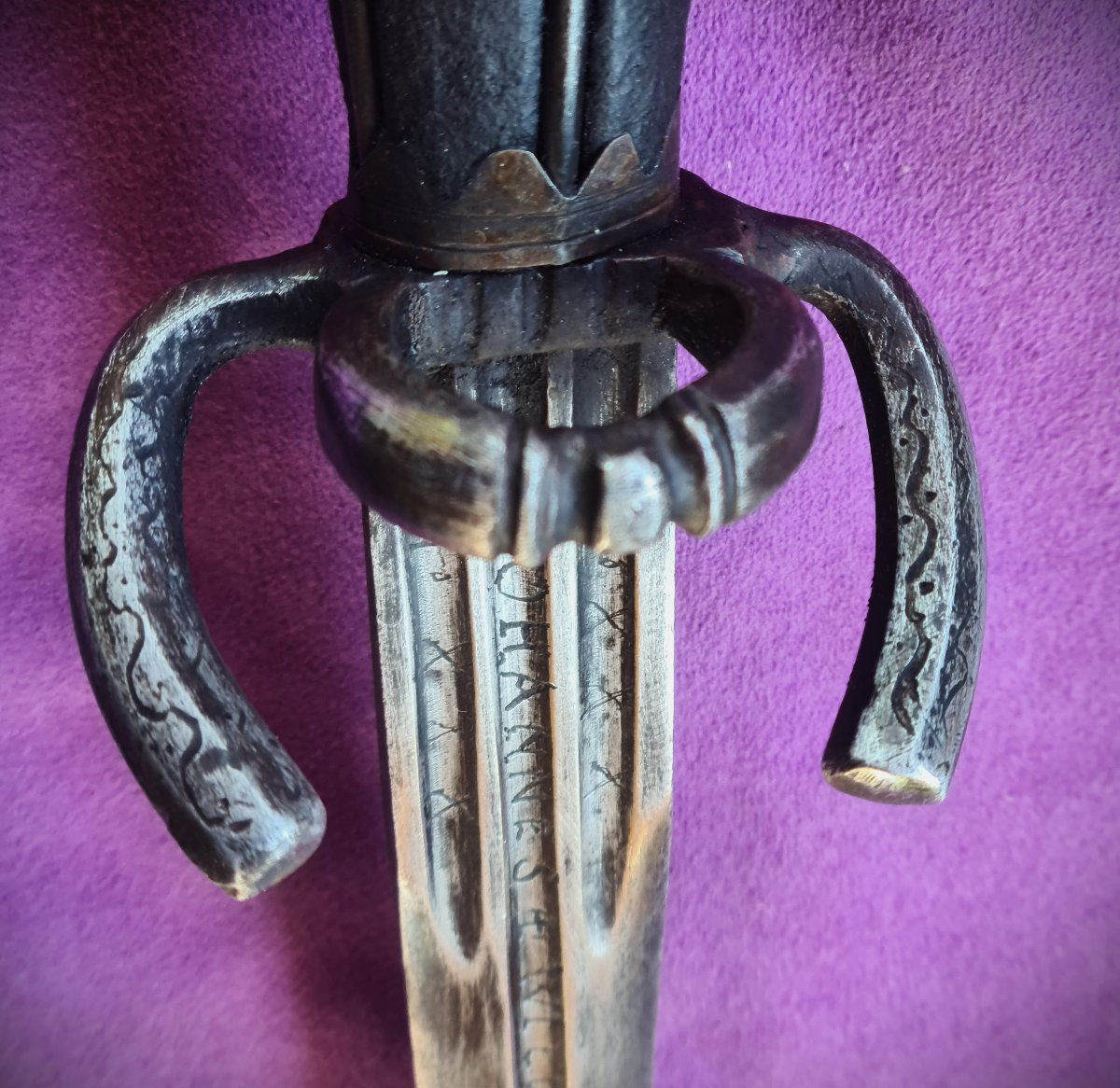
On the external side : In the central fuller + + + IOHANNES + WILLEMS + + + Inside the lateral fuller grooves, a cruciform globe from Solingen
On theinternal side : In thecentral fuller : X X X ME FECIT IN SOLINGEN X X X Inside the lateral fullers Same cruciform globe decoration as on the outer side
A swormaker named IohannesWillems is listed by Bezdek as active in Solingen between 1606 and 1630, which would therefore suggest a fabrication date of at least the first quarter of the 17thcentury : a date I am adopting out of an abundance of caution. However, a predecessor of this makeris also entirely possible, which would better correspond to the style of workmanship of the weapon, which seems to date rather to the second half of the 16th century.
Blade length= 24.7 cm; width at the shoulder= 2.4 cm; thickness at the shoulder= 5.3 mm
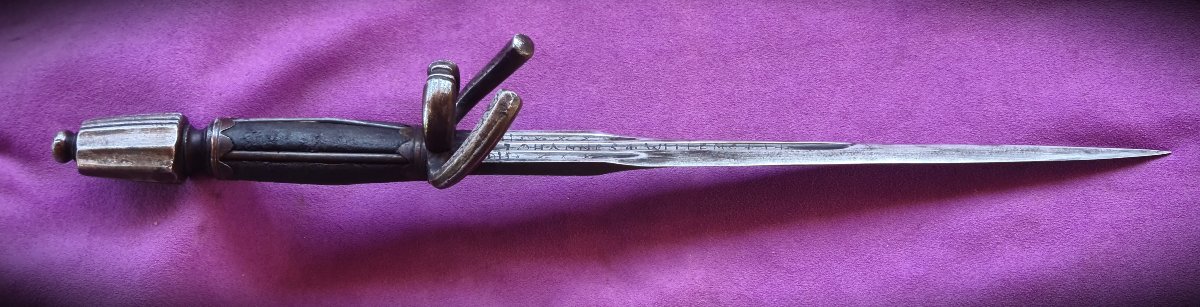
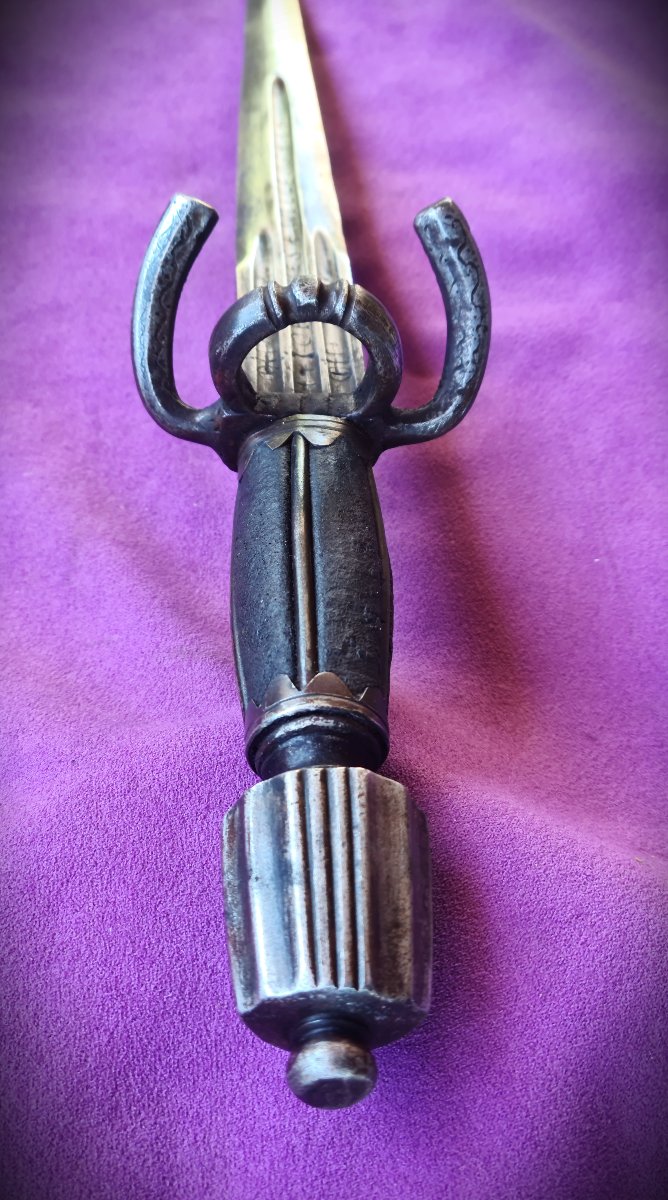
GUARD:This guard features a sturdy ring to protect the fingers and two quillons curved toward the blade and forming a 45-degree angle with the plane of the blade This type of guard was designed to block an opponent’s blade by “capturing” it with a wrist movement The quillons are octagonal and are chiseled with a small decorative pattern
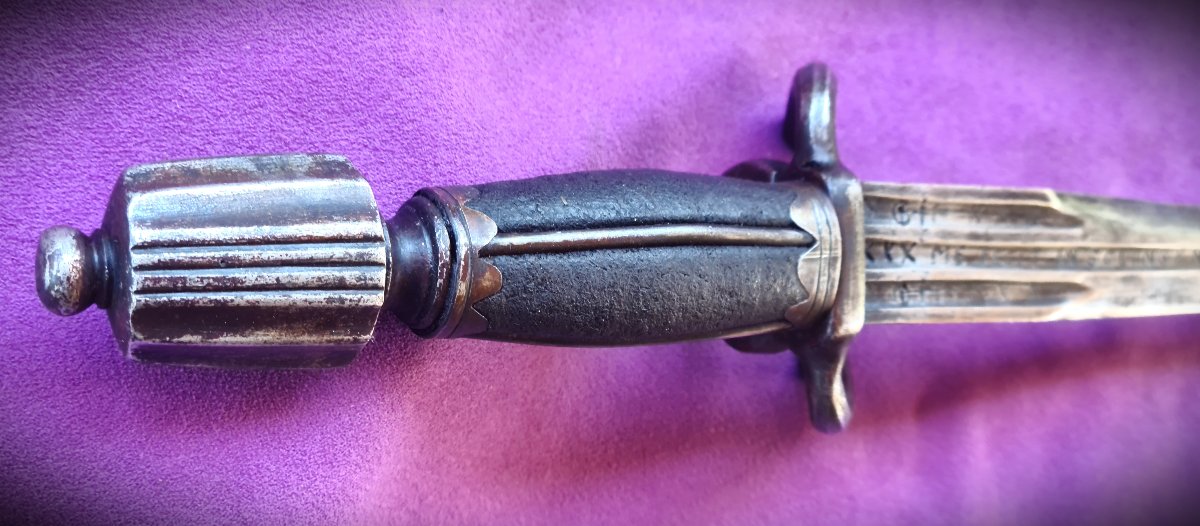
POMMEL :This is the model with the so-called “curtain” decoration that was in fashion during the mid-16th century. It is topped by a small knob to which the blade tang is riveted.
GRIP :It is divided into four sections by iron bands, which run from one ferrule to the other one. Between these iron bars lies the aged, cracked leather. The ferrules are made of cut iron, in the Saxon style of the period.
This is, therefore, a beautiful dagger that exudes a sense of power and sturdiness. It will fit perfectly into a collection of High Middle Ages weapons.
Ref C-2450 Shippingcosts: France €30, Europe €40
BLADE: After a strong 5cm ricasso, it takes on a lozenge-shaped cross-section. On each side, a central fuller running from the shoulder to two-thirds of the blade’s length, and two lateral fullers in the first third of the blade.
On the external side : In the central fuller + + + IOHANNES + WILLEMS + + + Inside the lateral fuller grooves, a cruciform globe from Solingen
On theinternal side : In thecentral fuller : X X X ME FECIT IN SOLINGEN X X X Inside the lateral fullers Same cruciform globe decoration as on the outer side
A swormaker named IohannesWillems is listed by Bezdek as active in Solingen between 1606 and 1630, which would therefore suggest a fabrication date of at least the first quarter of the 17thcentury : a date I am adopting out of an abundance of caution. However, a predecessor of this makeris also entirely possible, which would better correspond to the style of workmanship of the weapon, which seems to date rather to the second half of the 16th century.
Blade length= 24.7 cm; width at the shoulder= 2.4 cm; thickness at the shoulder= 5.3 mm
GUARD:This guard features a sturdy ring to protect the fingers and two quillons curved toward the blade and forming a 45-degree angle with the plane of the blade This type of guard was designed to block an opponent’s blade by “capturing” it with a wrist movement The quillons are octagonal and are chiseled with a small decorative pattern
POMMEL :This is the model with the so-called “curtain” decoration that was in fashion during the mid-16th century. It is topped by a small knob to which the blade tang is riveted.
GRIP :It is divided into four sections by iron bands, which run from one ferrule to the other one. Between these iron bars lies the aged, cracked leather. The ferrules are made of cut iron, in the Saxon style of the period.
This is, therefore, a beautiful dagger that exudes a sense of power and sturdiness. It will fit perfectly into a collection of High Middle Ages weapons.
Ref C-2450 Shippingcosts: France €30, Europe €40
1 400 €
Period: 17th century
Style: Renaissance, Louis 13th
Condition: Excellent condition
Material: Other
Length: 38cm
Reference (ID): 1790436
Availability: In stock
Print