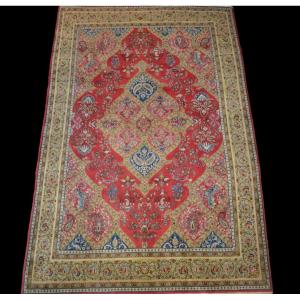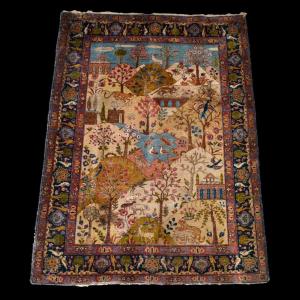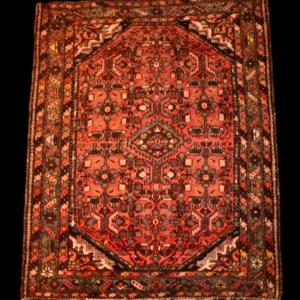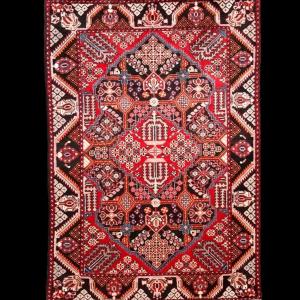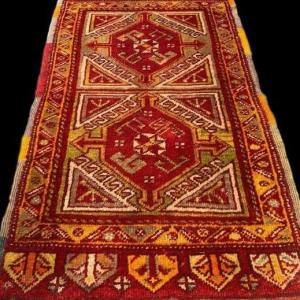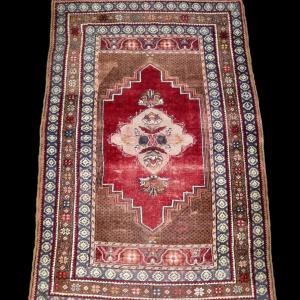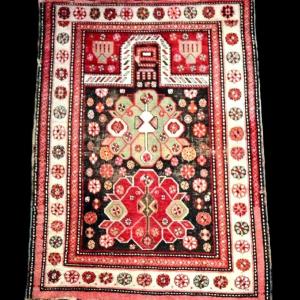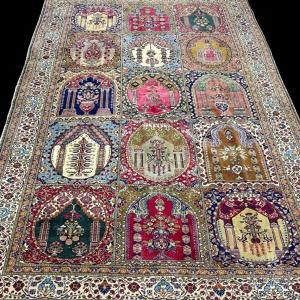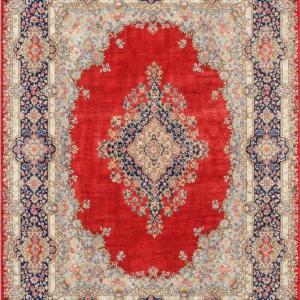
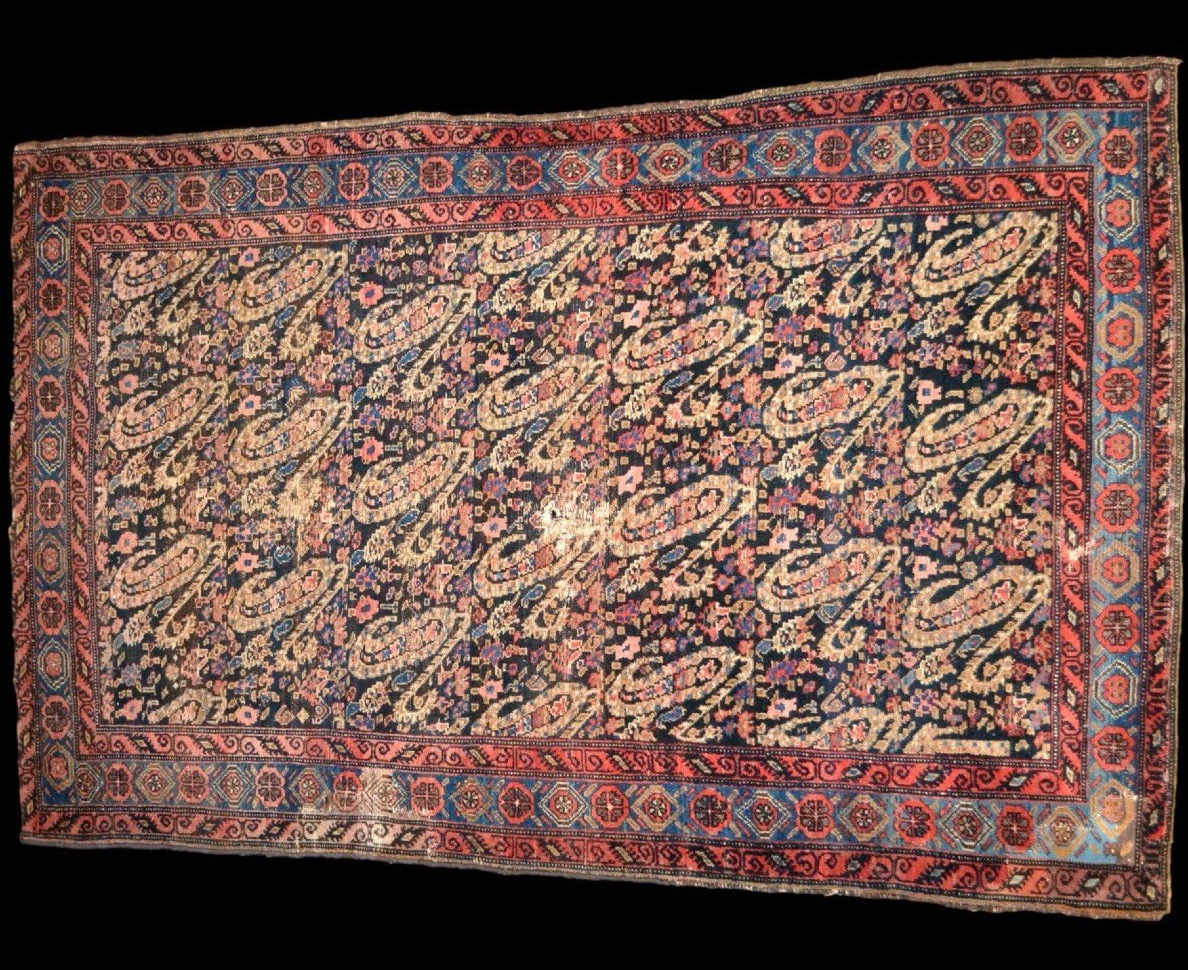
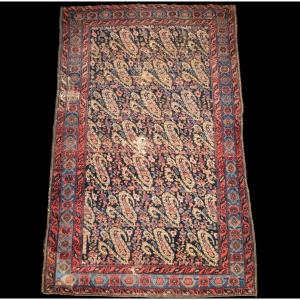


Senneh Rug, 127 X 187 Cm, Hand-knotted Wool From The Qajar Dynasty, Boteh Pattern, 19th Century
Artist: Art D'iran
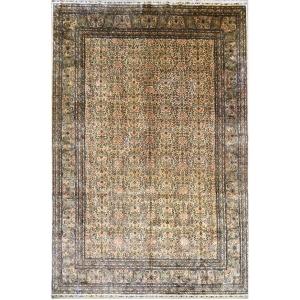
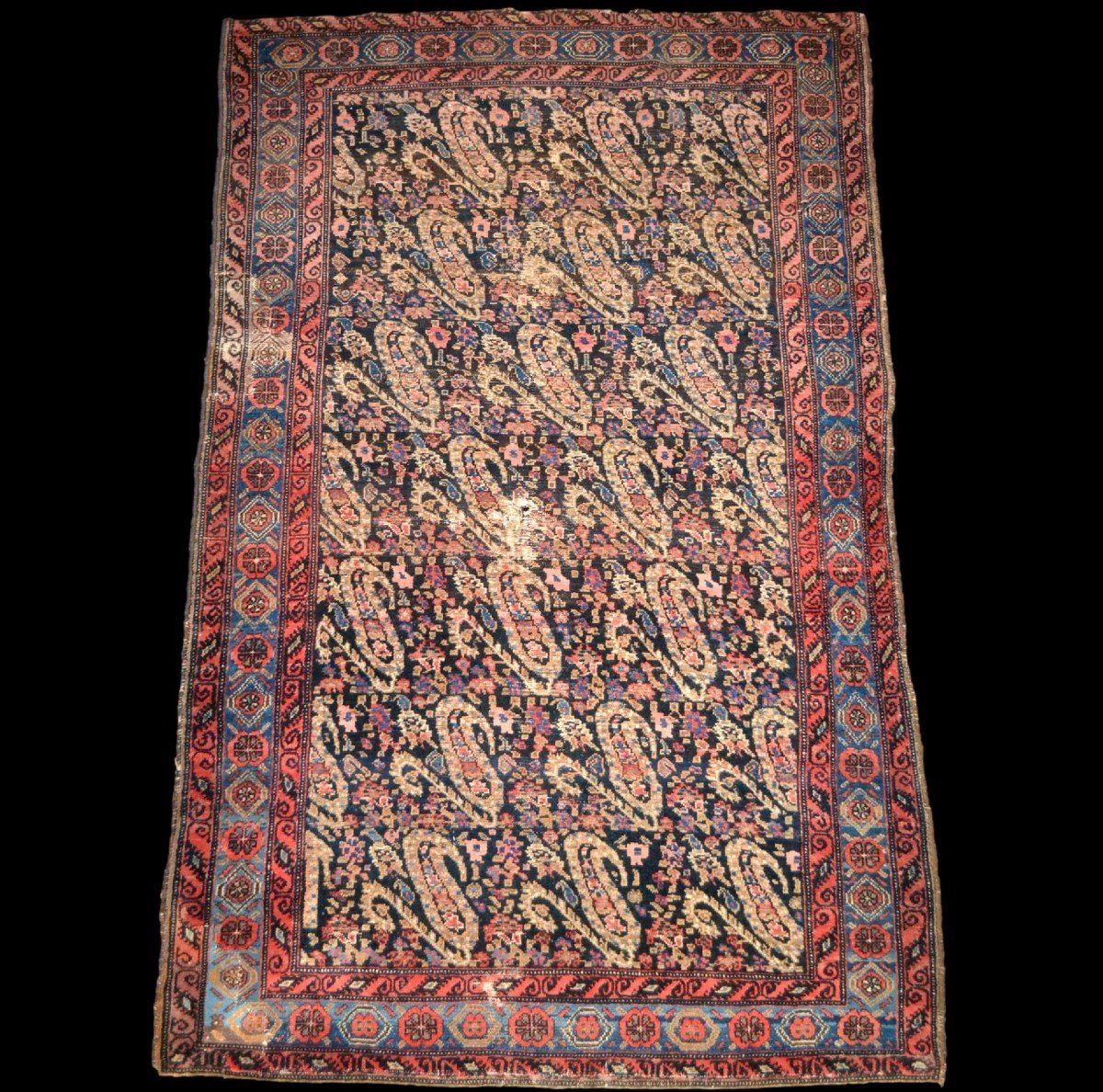
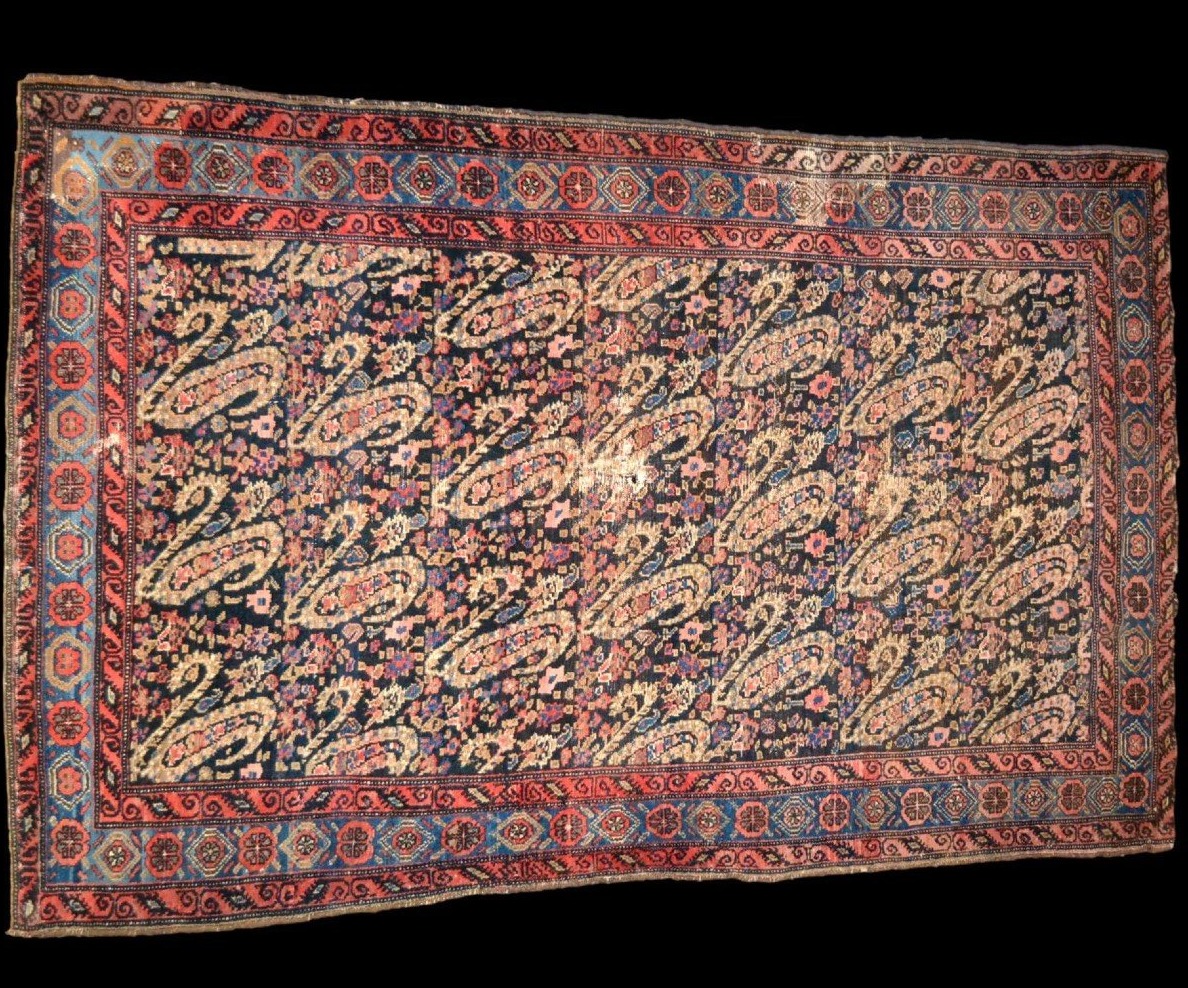
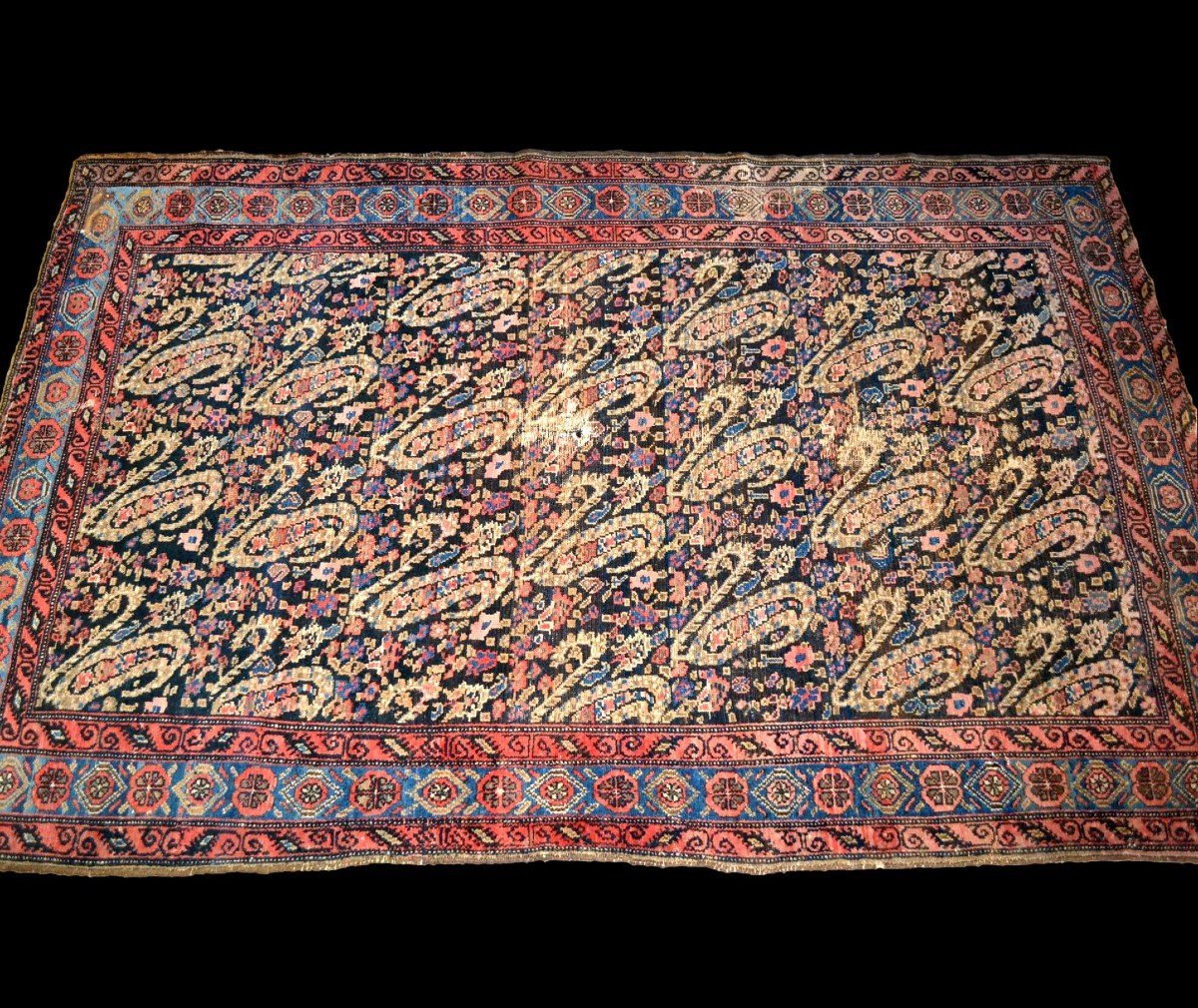
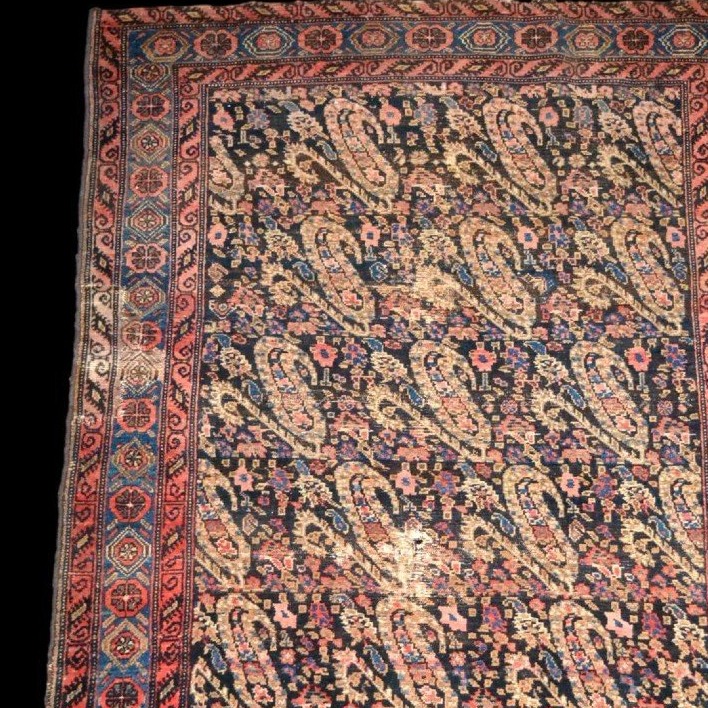
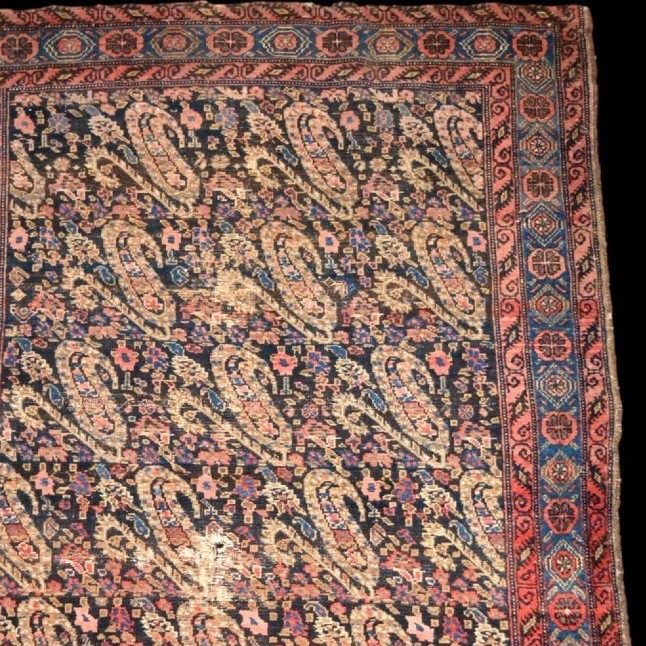
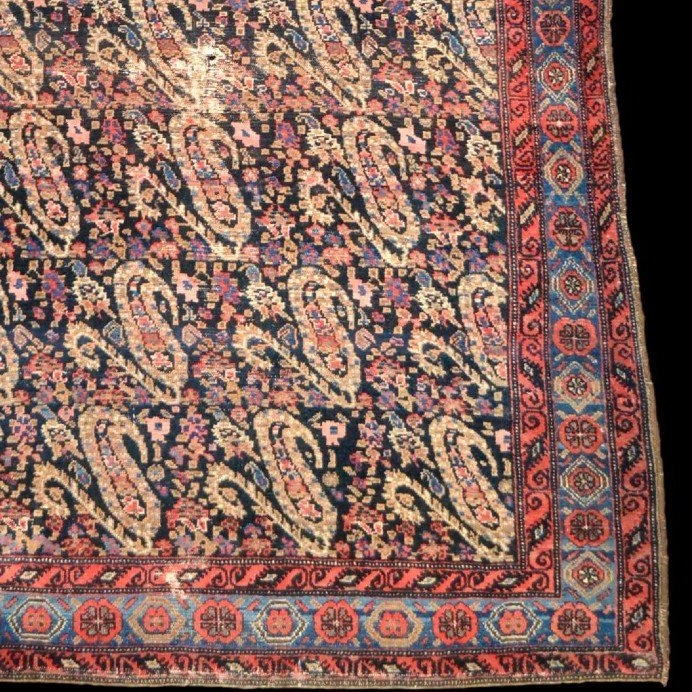
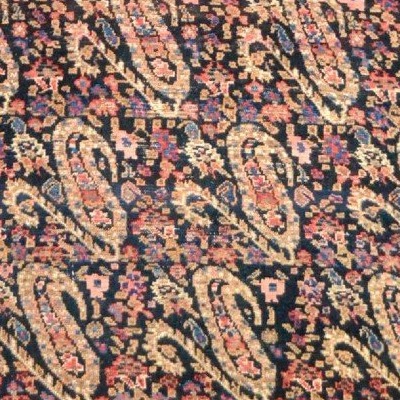
Hand-knotted Senneh wool rug with a Boteh pattern throughout the field.
This rug measures 117 cm wide by 187 cm long.
Knotted in the second half of the 19th century.
### This rug is comparable in its design, period, and size to the rug on display at the “Cleveland Museum of Art” in Cleveland, USA.
Senneh designs often feature Herati motifs, but also Boteh (much less common); they are knotted with extreme precision and distributed throughout the field.
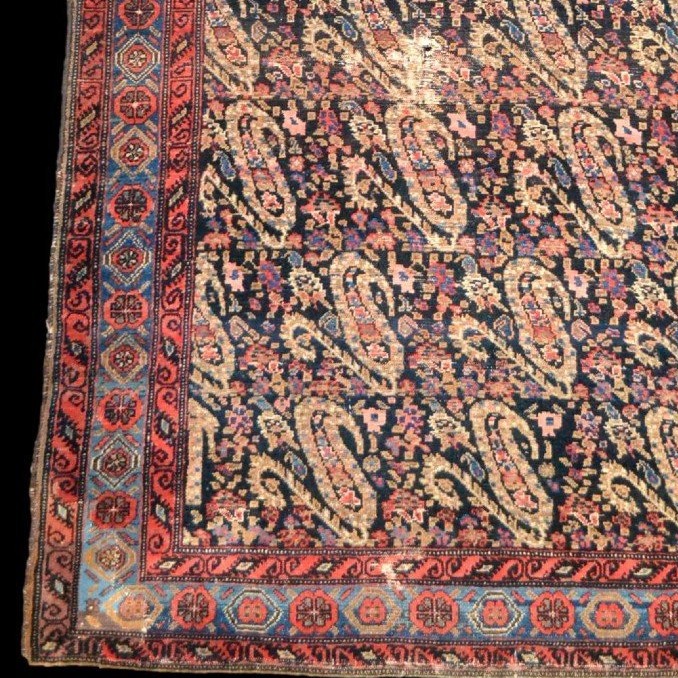
The borders are generally adorned with the Herati motif, and sometimes this is transformed into a motif known as the “turtle,” which is the case with our example.
It displays a marvelous quality of design in both the field and the border.
The dominant colors are blue, straw yellow, ivory, and black; red is used to accentuate and enliven the stylized floral designs and borders.
Senneh rugs bear a strong resemblance to those from Bidjar or other nomadic regions and are renowned for their quality and durability; their knotting is much finer, and their designs more refined.
The fame of Senneh carpets stems from the quality of its antique pieces, which were originally produced to order for merchants in response to high demand and customer preferences.
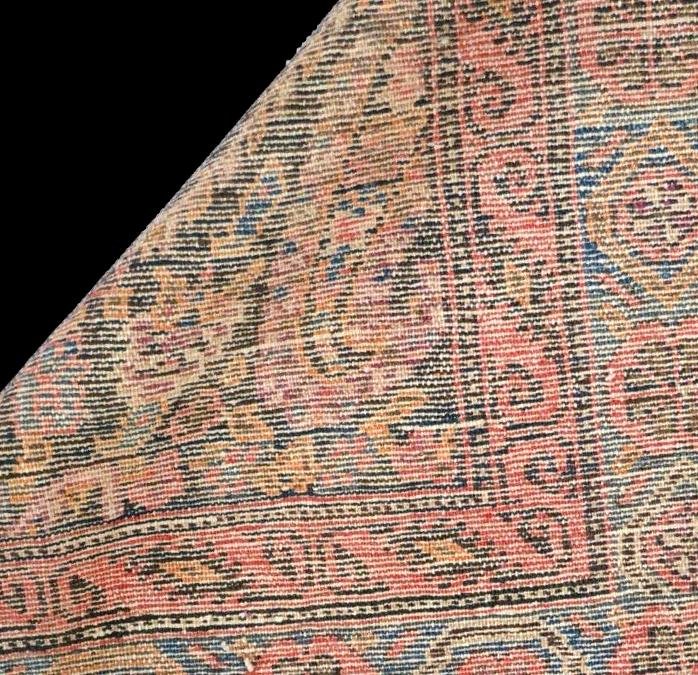
The use of a cotton weft instead of a wool weft, a shorter pile to achieve a sharper design (hence the use of high-quality wool), and a density ranging from 420,000 to 750,000 knots per square meter are the main characteristics of Senneh rugs.
Senneh kilims are just as renowned as its hand-knotted rugs.
Today, since the 1980s, the quality of Senneh rugs has declined significantly, and the knot count has dropped to an average of 200,000 knots per square meter.
Furthermore, chemical dyes are routinely used, even though the designs remain identical.
In short, there is a lack of the artistic and artisanal quality that made the antique Sennehs famous.
This piece shows normal signs of wear—it is, after all, an antique rug!!!.
Our 19th-century model possesses all the qualities of a beautiful collector’s rug: its fineness; 4 mm; its uncommon design, both in the field and the borders; its resemblance to a museum-quality carpet; and its excellent condition for an antique carpet.
Rings are attached to the back of this piece, which was hung on the wall for many years.
### The “boteh” is a Zoroastrian symbol of immortality; the most credible theory regarding its shape is that it represents the Maynu Spentas cypress. It is believed to be associated with the light of the god Ormuzd and with the figure of Zoroaster.
Upon his death, it is carried to the summit of a mountain, where it transforms.
Another legend holds that it is a cypress tree from paradise planted by Zoroaster and Kashmar (Turchiz), which grew to become the tallest in the world.
A symbol dating back to time immemorial.
### Hand-knotted rug from the Qajar dynasty, second half of the 19th century.
The Qajar Dynasty (Qājār, Qadjar, Qajar; Persian: قاجار)
was a Turkmen dynasty that ruled Iran from 1786 to 1925.
Dimensions: Width: 117 cm (46") x Length: 187 cm (73")
This rug has been professionally cleaned using eco-friendly methods.
FREE SHIPPING TO FRANCE, just like for all our rugs, big or small! FR 0€ / EUR 25€ / WORLD 50€
Upon request, you will receive a detailed invoice serving as a certificate of authenticity for every item from WINSTEIN
For any inquiries, please feel free to contact me at:
06 13 36 09 30 or at winsteinprovence@gmail.com
www.winsteinprovence.com
Come visit us!
(text, photos, WINSTEIN, all rights reserved)
This rug measures 117 cm wide by 187 cm long.
Knotted in the second half of the 19th century.
### This rug is comparable in its design, period, and size to the rug on display at the “Cleveland Museum of Art” in Cleveland, USA.
Senneh designs often feature Herati motifs, but also Boteh (much less common); they are knotted with extreme precision and distributed throughout the field.
The borders are generally adorned with the Herati motif, and sometimes this is transformed into a motif known as the “turtle,” which is the case with our example.
It displays a marvelous quality of design in both the field and the border.
The dominant colors are blue, straw yellow, ivory, and black; red is used to accentuate and enliven the stylized floral designs and borders.
Senneh rugs bear a strong resemblance to those from Bidjar or other nomadic regions and are renowned for their quality and durability; their knotting is much finer, and their designs more refined.
The fame of Senneh carpets stems from the quality of its antique pieces, which were originally produced to order for merchants in response to high demand and customer preferences.
The use of a cotton weft instead of a wool weft, a shorter pile to achieve a sharper design (hence the use of high-quality wool), and a density ranging from 420,000 to 750,000 knots per square meter are the main characteristics of Senneh rugs.
Senneh kilims are just as renowned as its hand-knotted rugs.
Today, since the 1980s, the quality of Senneh rugs has declined significantly, and the knot count has dropped to an average of 200,000 knots per square meter.
Furthermore, chemical dyes are routinely used, even though the designs remain identical.
In short, there is a lack of the artistic and artisanal quality that made the antique Sennehs famous.
This piece shows normal signs of wear—it is, after all, an antique rug!!!.
Our 19th-century model possesses all the qualities of a beautiful collector’s rug: its fineness; 4 mm; its uncommon design, both in the field and the borders; its resemblance to a museum-quality carpet; and its excellent condition for an antique carpet.
Rings are attached to the back of this piece, which was hung on the wall for many years.
### The “boteh” is a Zoroastrian symbol of immortality; the most credible theory regarding its shape is that it represents the Maynu Spentas cypress. It is believed to be associated with the light of the god Ormuzd and with the figure of Zoroaster.
Upon his death, it is carried to the summit of a mountain, where it transforms.
Another legend holds that it is a cypress tree from paradise planted by Zoroaster and Kashmar (Turchiz), which grew to become the tallest in the world.
A symbol dating back to time immemorial.
### Hand-knotted rug from the Qajar dynasty, second half of the 19th century.
The Qajar Dynasty (Qājār, Qadjar, Qajar; Persian: قاجار)
was a Turkmen dynasty that ruled Iran from 1786 to 1925.
Dimensions: Width: 117 cm (46") x Length: 187 cm (73")
This rug has been professionally cleaned using eco-friendly methods.
FREE SHIPPING TO FRANCE, just like for all our rugs, big or small! FR 0€ / EUR 25€ / WORLD 50€
Upon request, you will receive a detailed invoice serving as a certificate of authenticity for every item from WINSTEIN
For any inquiries, please feel free to contact me at:
06 13 36 09 30 or at winsteinprovence@gmail.com
www.winsteinprovence.com
Come visit us!
(text, photos, WINSTEIN, all rights reserved)
1 260 €
Period: 19th century
Style: Orientalism
Condition: Good condition
Material: Wool
Length: 187 cm - 74"
Width: 117 cm - 46"
Reference (ID): 1823374
Availability: In stock
Print