

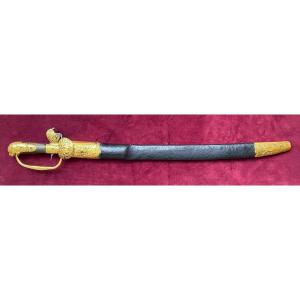


18th-century Hunting Dagger With A Lock Mechanism
An 18th-century hunting dagger combining the effectiveness ofa bladed weapon with the safety of a pistol. These weapons, which were highly prized at the time, are commonly known as“system daggers” or “dagger-pistols.”
They were intended for hunting largegame, such as deer or wild boar, by striking the heart, according to tradition. Butsince, under hunting conditions, a large stag or an old wild boar might notbe very cooperative and could pose a mortal danger to the hunter, itwas useful to have a firearm on hand for safety. This type of hunting daggerremained very popular until around the end of the 19th century, reachingits pinnacle in the famous Dumonthier daggers.
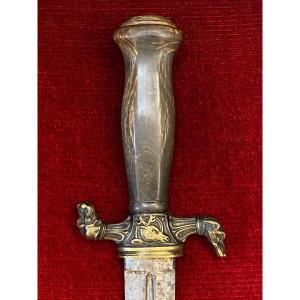
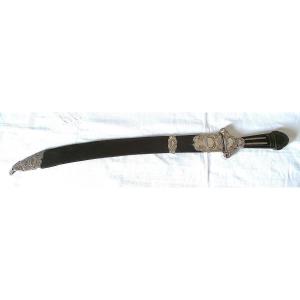
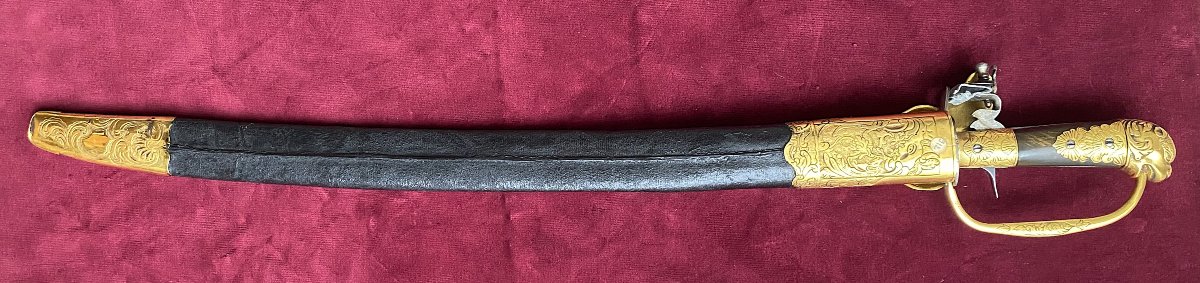
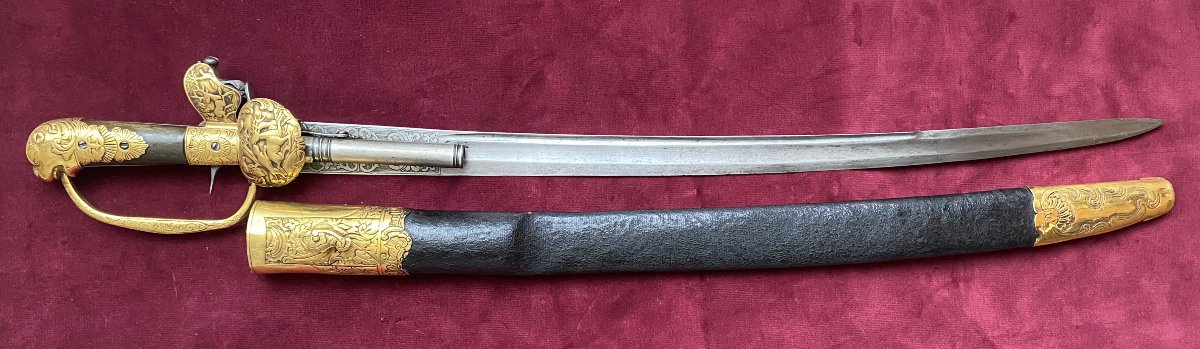
The handle is made of brown horn with brass fittings. The pommelis shaped like a dog’s muzzle. The ferrule incorporates the trigger guard and the hammer of thepistol. It is extended by a protective shell adorned with a stag in the forest. The guardis richly carved with a hunting scene. Simple guard branch. The entire pieceis profusely chiseled with arabesques and screwed onto the tang of theblade.
The blade is engraved at the heel over a 10-cm length with a foliage interlacing pattern. Ithas a single hollow edge and a groove, and is flat on the back. It is secured with screws to thetrigger guard of the pistol.
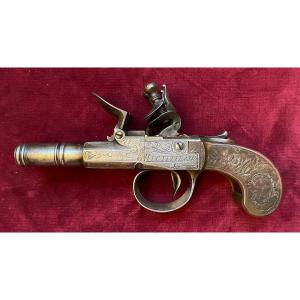
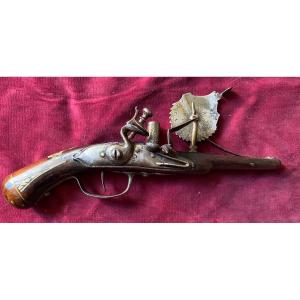
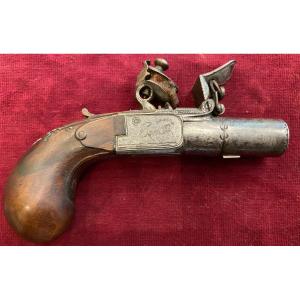
The flintlock pistol is known as a “Scottish-style” or “chest-style” pistol. Thechest actually forms the core of the grip. The barrel, adorned with reinforcing ribs, extends the grip toward the guard.
The scabbard is made of thick, blackened leather. The pommel and itsbelt-fastening button are beautifully carved. The hilt is decoratedin a matching style.
This weapon is in near-mint condition. The leather of thesheath may have been replaced.
They were intended for hunting largegame, such as deer or wild boar, by striking the heart, according to tradition. Butsince, under hunting conditions, a large stag or an old wild boar might notbe very cooperative and could pose a mortal danger to the hunter, itwas useful to have a firearm on hand for safety. This type of hunting daggerremained very popular until around the end of the 19th century, reachingits pinnacle in the famous Dumonthier daggers.
The handle is made of brown horn with brass fittings. The pommelis shaped like a dog’s muzzle. The ferrule incorporates the trigger guard and the hammer of thepistol. It is extended by a protective shell adorned with a stag in the forest. The guardis richly carved with a hunting scene. Simple guard branch. The entire pieceis profusely chiseled with arabesques and screwed onto the tang of theblade.
The blade is engraved at the heel over a 10-cm length with a foliage interlacing pattern. Ithas a single hollow edge and a groove, and is flat on the back. It is secured with screws to thetrigger guard of the pistol.
The flintlock pistol is known as a “Scottish-style” or “chest-style” pistol. Thechest actually forms the core of the grip. The barrel, adorned with reinforcing ribs, extends the grip toward the guard.
The scabbard is made of thick, blackened leather. The pommel and itsbelt-fastening button are beautifully carved. The hilt is decoratedin a matching style.
This weapon is in near-mint condition. The leather of thesheath may have been replaced.
3 800 €
Period: 18th century
Style: Louis 15th - Transition
Condition: Perfect condition
Material: Metal
Length: 65cm, lame 53cm
Reference (ID): 1817451
Availability: In stock
Print