

Christ In Ivory, Rome, Second Half Of The 17th Century. (cites-compliant)
Artist: à Etudier
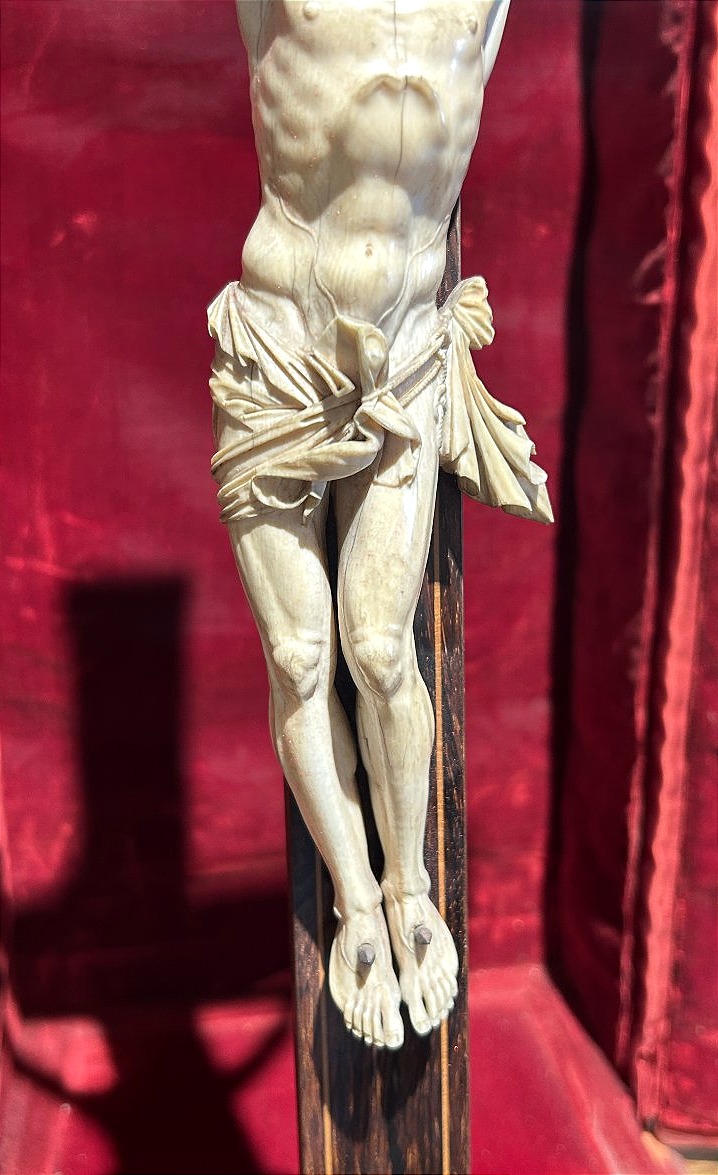
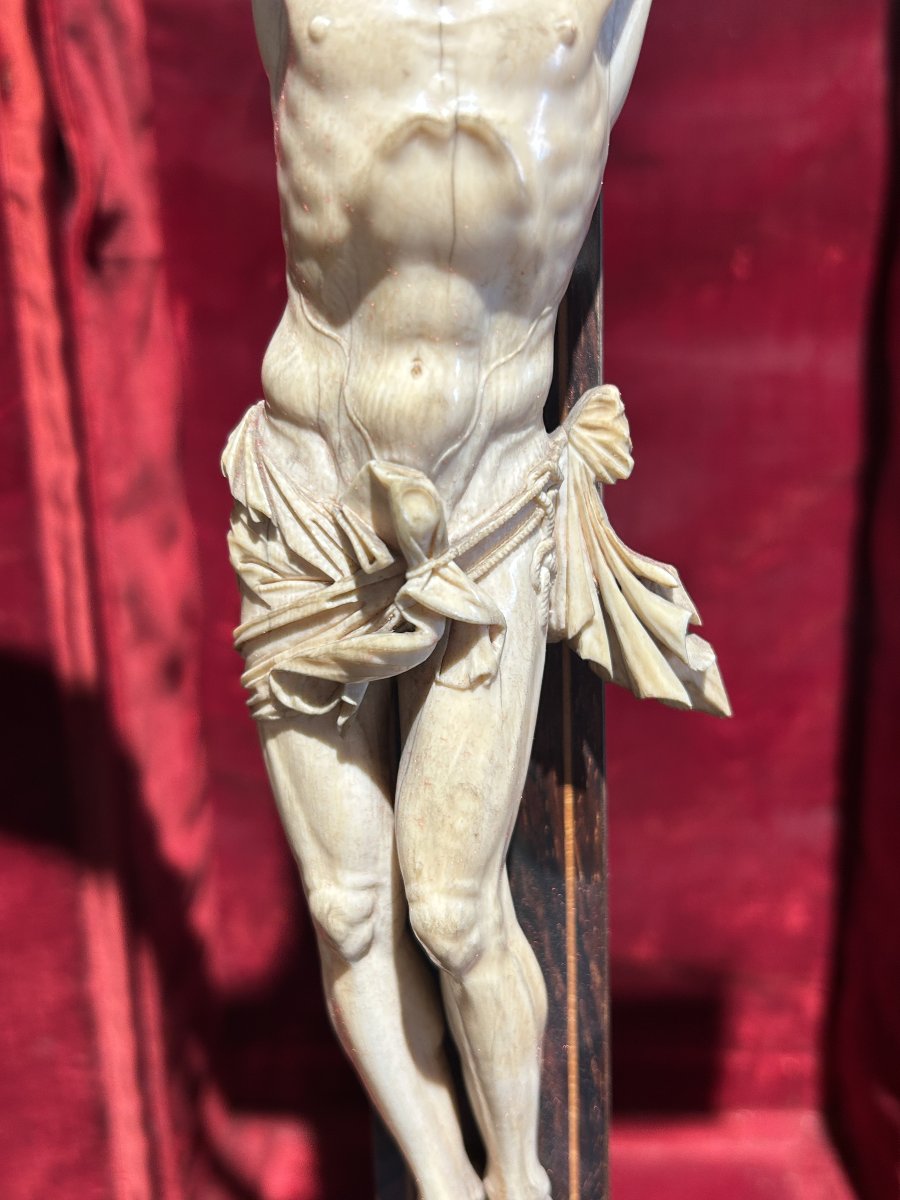
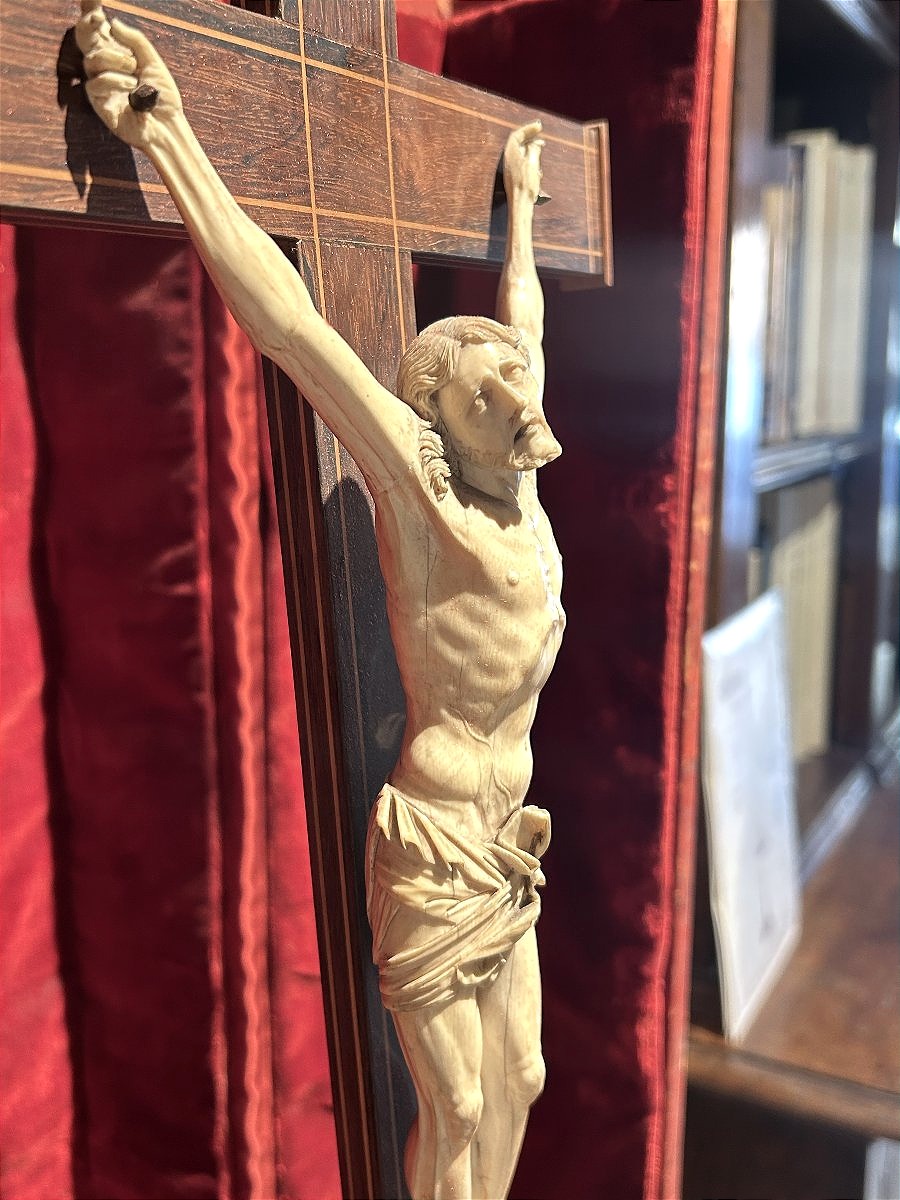
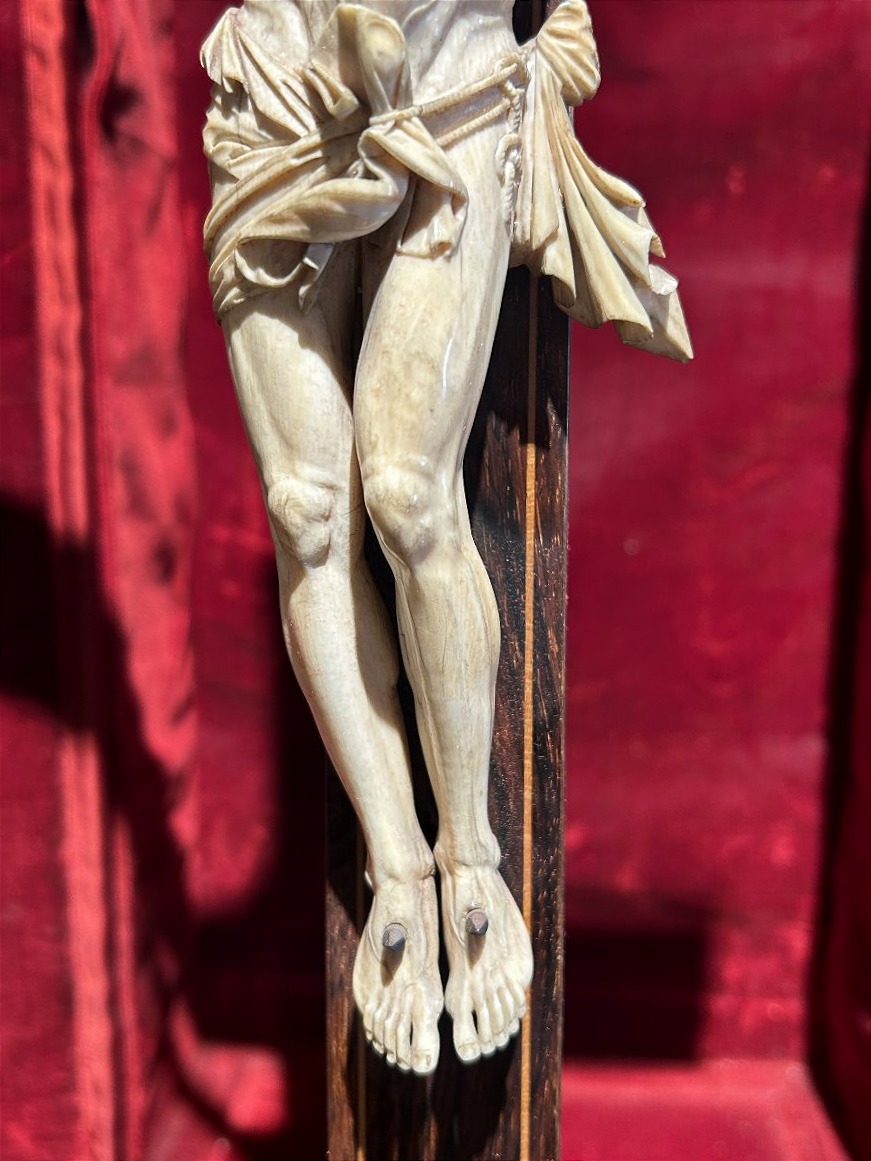
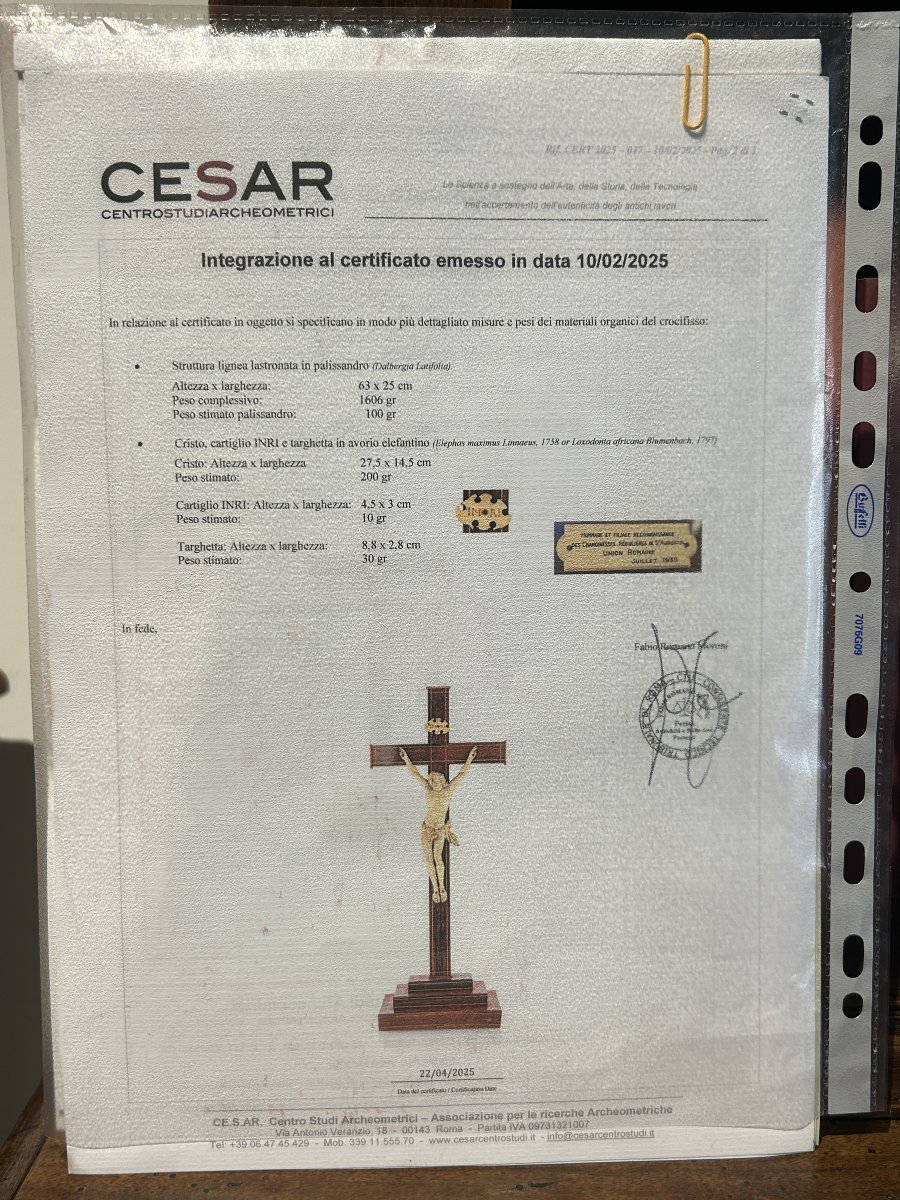
Ivory Christ, Rome, last quarter of the 17th century.
CITES certificate available
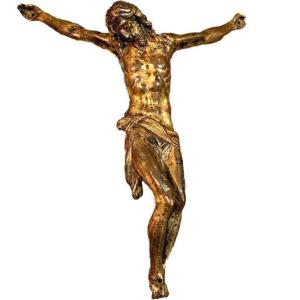
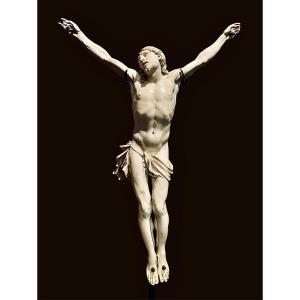
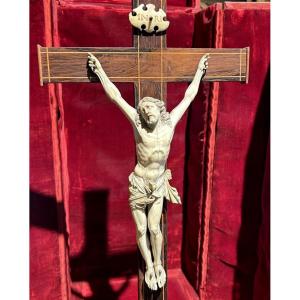
This beautiful ivory crucifix was carved by a skilled woodcarver active in the second half of the 17th century, who drew inspiration from the Algardian prototype of the so-called Pallavicini Crucifix (1640–60), who distributed plaster casts and models of his original design intended for lost-wax casting, leading to its rapid adoption as a standard model in the second half of the 17th century.
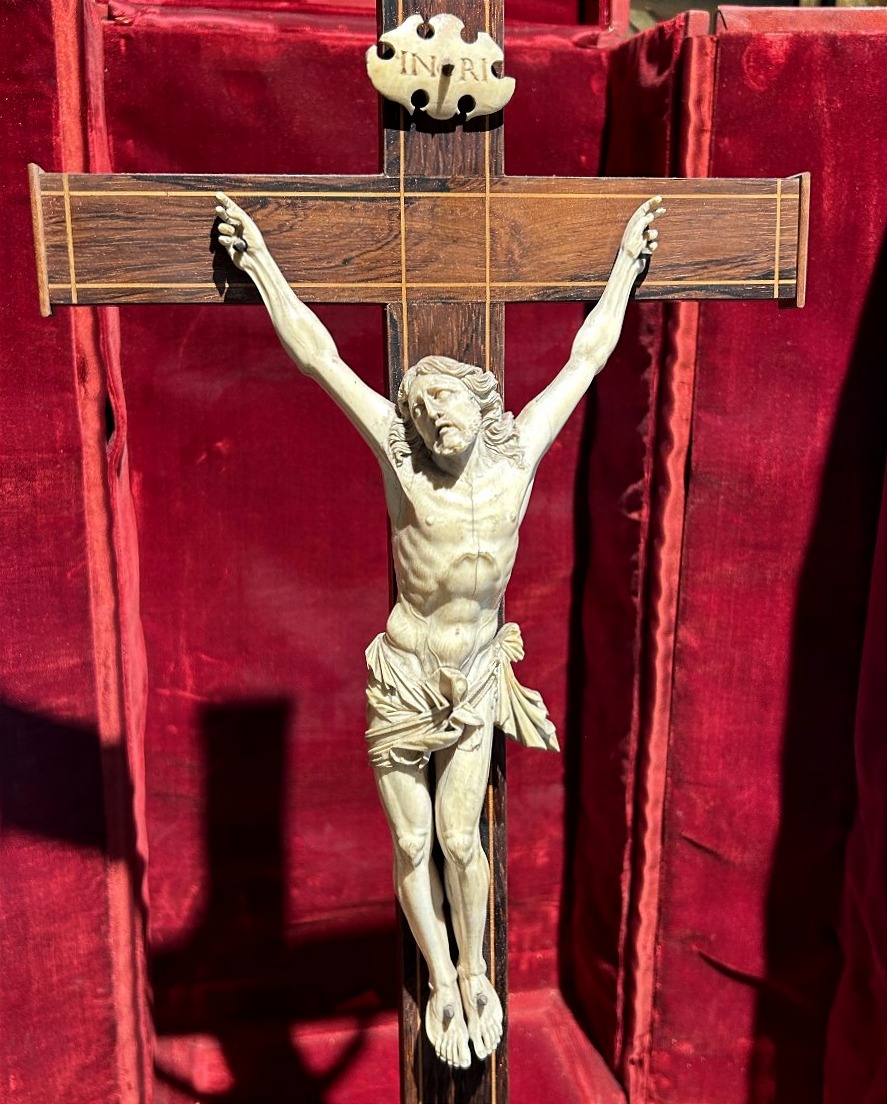
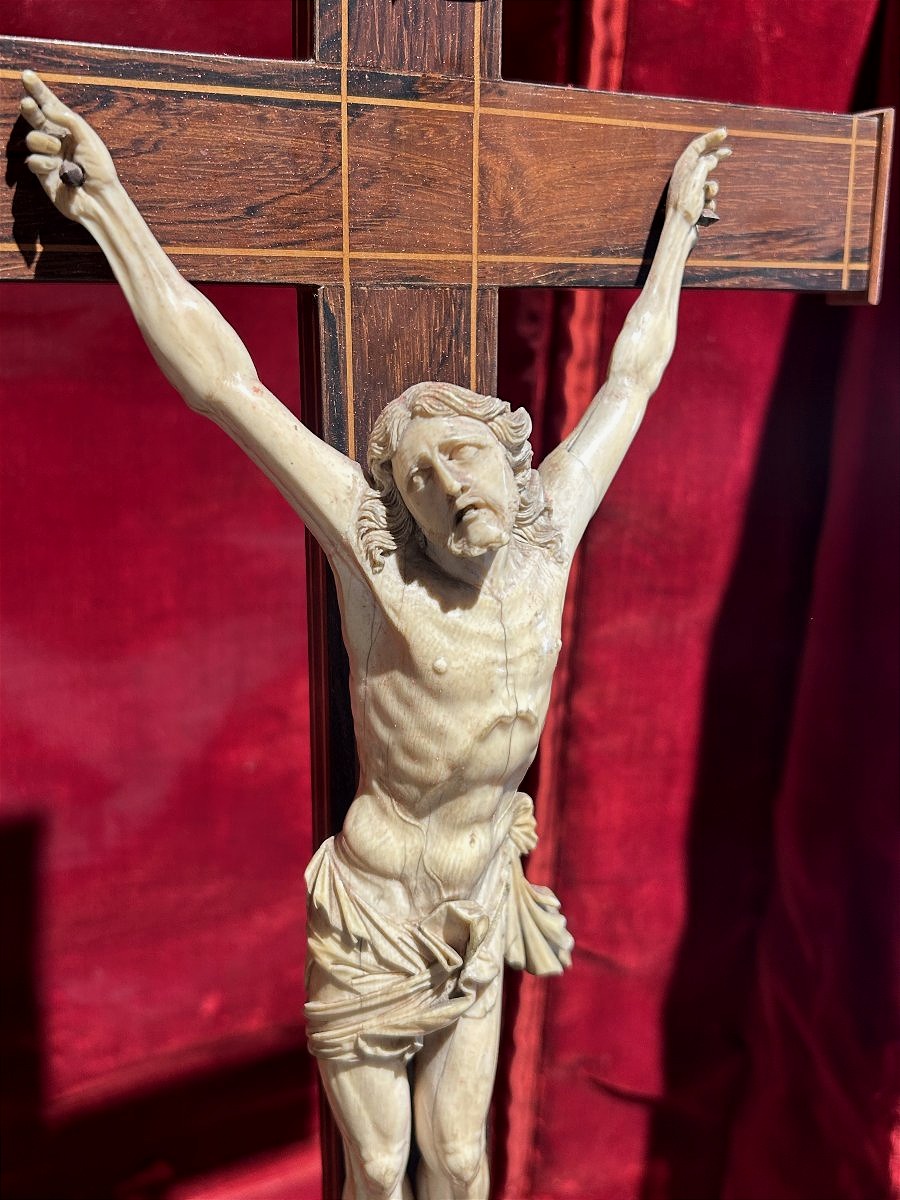
Christ is depicted as alive—and thus triumphant—with the frontal figure nailed to the cross with four nails, his right foot positioned forward of the left, so that they do not overlap, as was previously the case. The outstretched arms, forming a V, are an element that diverges somewhat from the Algardi model, while the head, tilted slightly backward and resting on the right shoulder, is faithful to the model but inverted, as is the case with the loincloth, which is held by a cord whose end flutters over the left hip; the drapery forms a fold at the front that descends toward the right thigh.
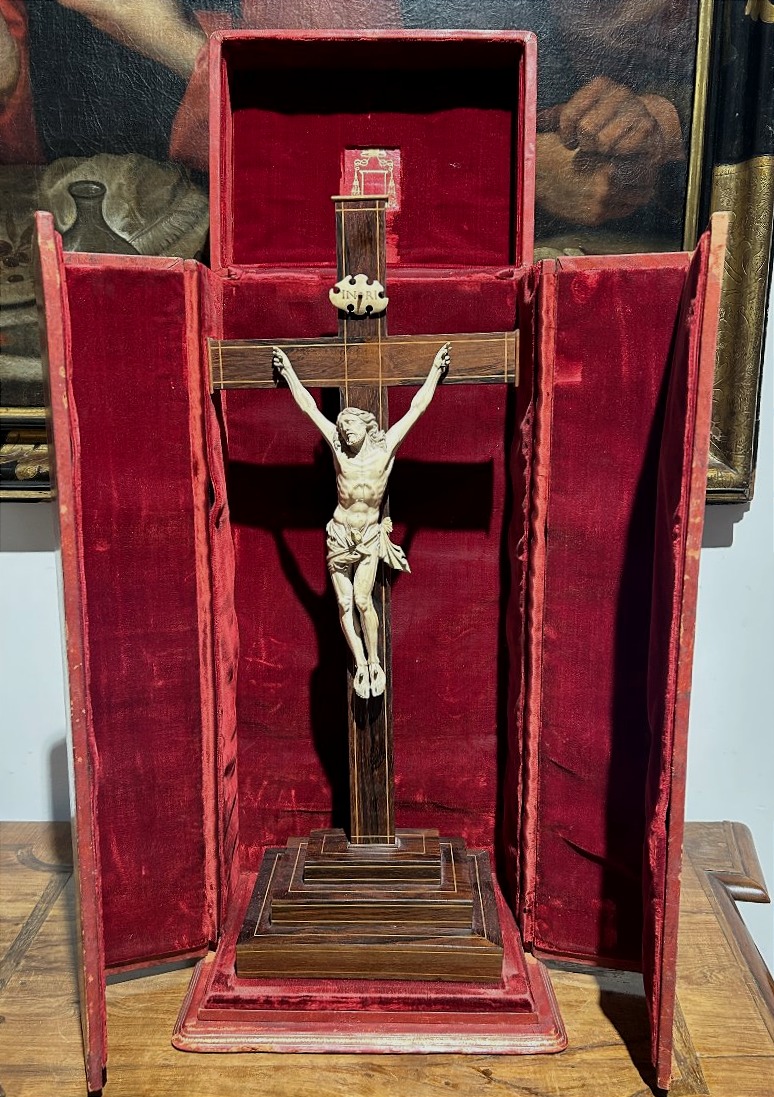
This object of excellent sculptural quality is in excellent condition and, in addition to being accompanied by a CITES certificate, comes complete with a leather case featuring fine gold-leaf decorations and a cardinal’s emblem, indicating that it was likely donated by a cardinal; in fact, on the back of the rosewood cross inlaid with maple, there is a plaque reading “Hommage et filiale reconnaissance des chanoinesses régulières de Saint-Augustin,” Union Romaine 1939.
The Christ figure measures 24.5 cm x 14.5 cm; the rosewood cross measures 63 cm x 25 cm.
A certificate of authenticity is included with the sale.
CITES certificate available
This beautiful ivory crucifix was carved by a skilled woodcarver active in the second half of the 17th century, who drew inspiration from the Algardian prototype of the so-called Pallavicini Crucifix (1640–60), who distributed plaster casts and models of his original design intended for lost-wax casting, leading to its rapid adoption as a standard model in the second half of the 17th century.
Christ is depicted as alive—and thus triumphant—with the frontal figure nailed to the cross with four nails, his right foot positioned forward of the left, so that they do not overlap, as was previously the case. The outstretched arms, forming a V, are an element that diverges somewhat from the Algardi model, while the head, tilted slightly backward and resting on the right shoulder, is faithful to the model but inverted, as is the case with the loincloth, which is held by a cord whose end flutters over the left hip; the drapery forms a fold at the front that descends toward the right thigh.
This object of excellent sculptural quality is in excellent condition and, in addition to being accompanied by a CITES certificate, comes complete with a leather case featuring fine gold-leaf decorations and a cardinal’s emblem, indicating that it was likely donated by a cardinal; in fact, on the back of the rosewood cross inlaid with maple, there is a plaque reading “Hommage et filiale reconnaissance des chanoinesses régulières de Saint-Augustin,” Union Romaine 1939.
The Christ figure measures 24.5 cm x 14.5 cm; the rosewood cross measures 63 cm x 25 cm.
A certificate of authenticity is included with the sale.
2 500 €
Period: 17th century
Style: Louis 14th, Regency
Condition: Excellent condition
Material: Ivory
Width: 15 - 25
Height: 27,5 - 63
Reference (ID): 1815153
Availability: In stock
Print