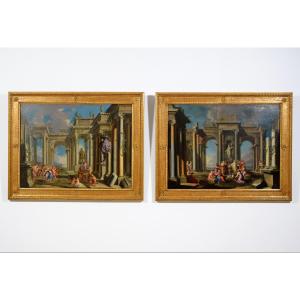
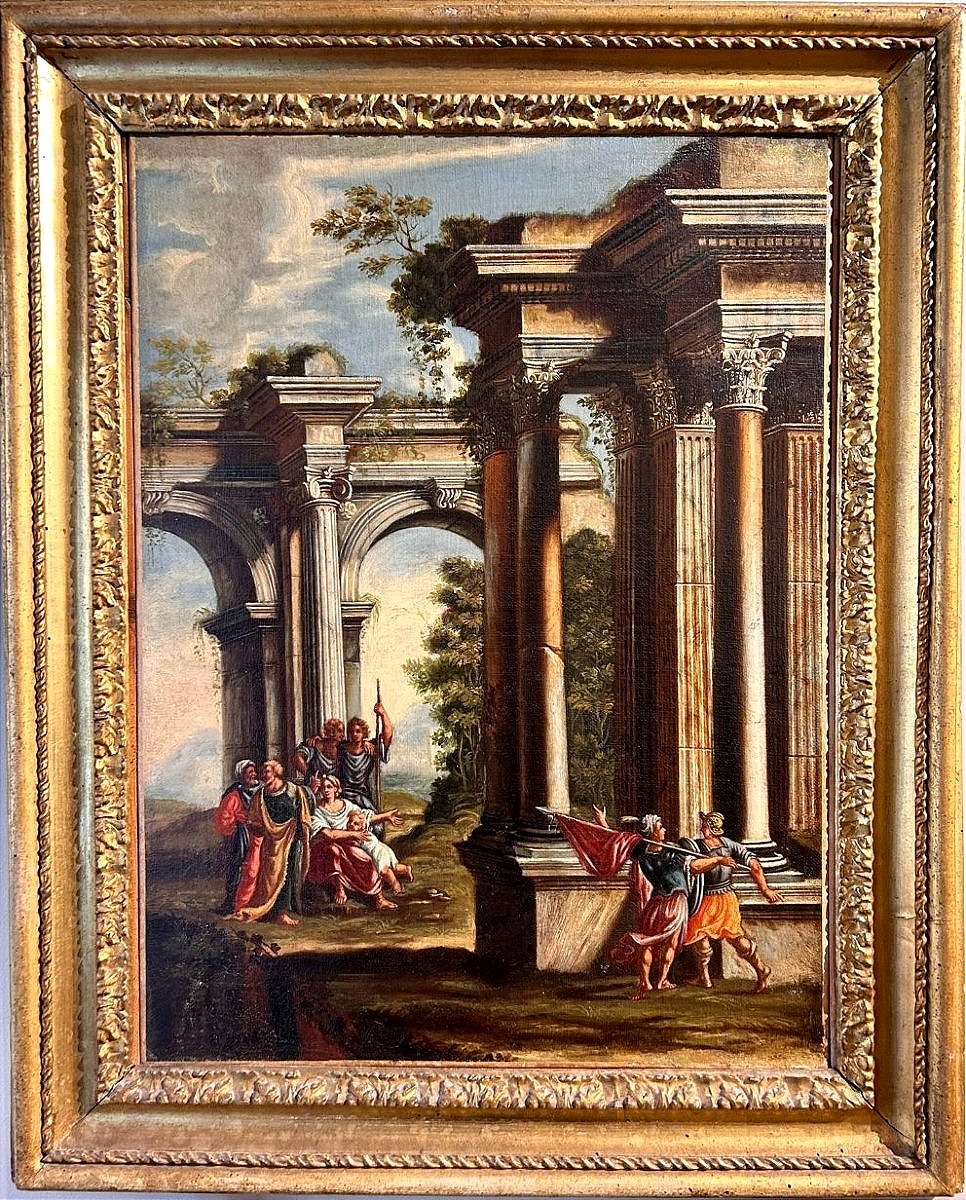
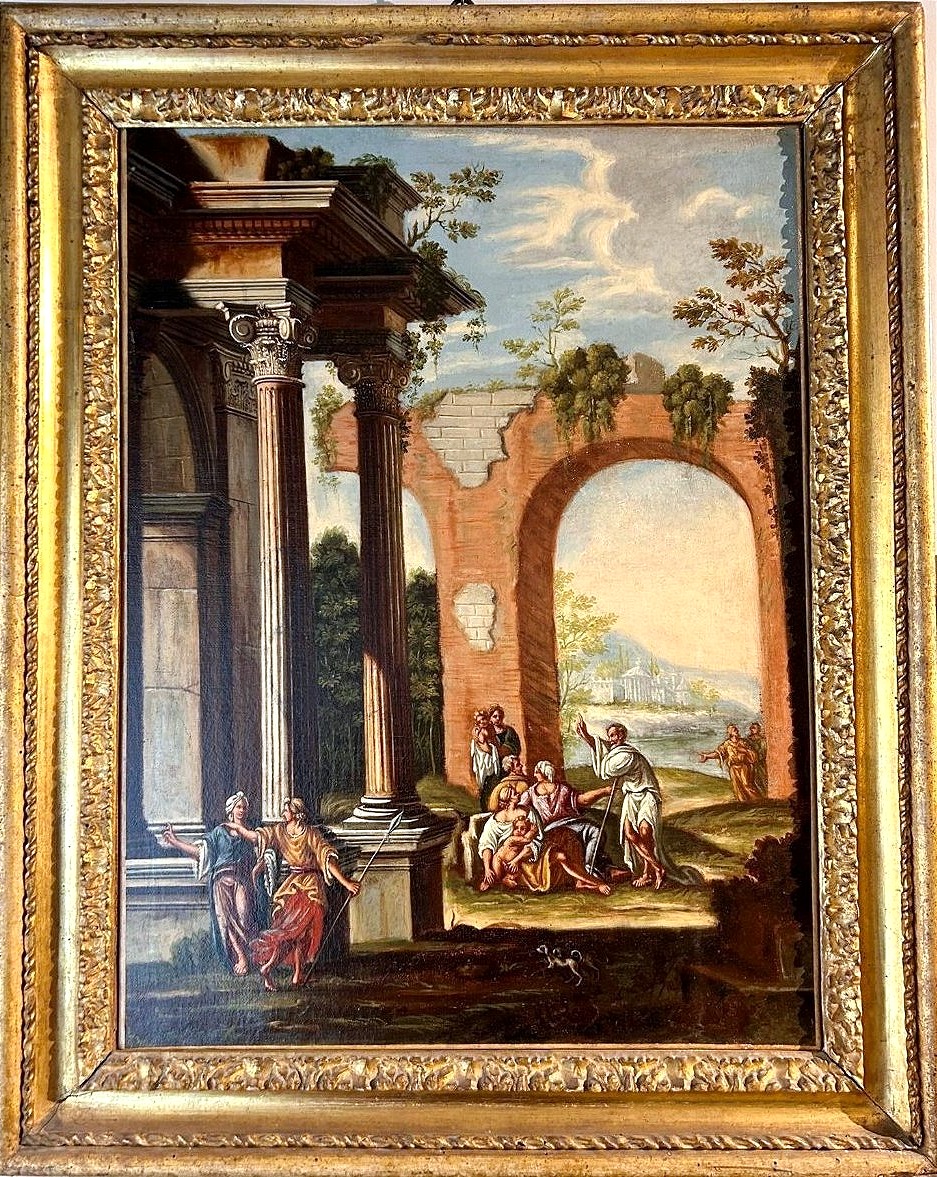


A Pair Of Architectural Caprices Featuring Biblical Scenes With Coeval Roman Frames.
Artist: Alberto Carlieri Et Atelier (roma 1672 - 1720)
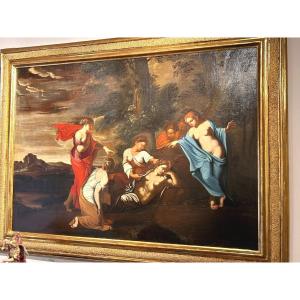
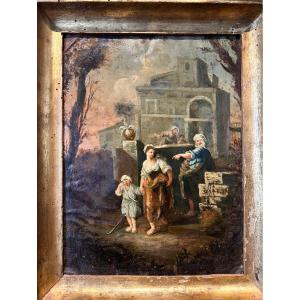
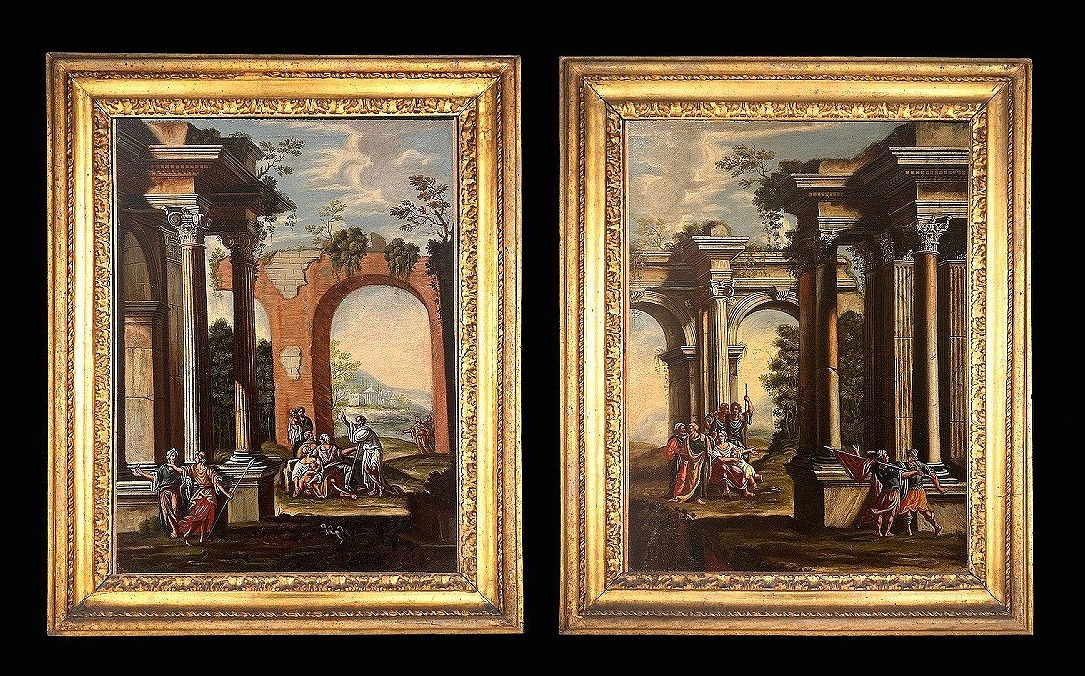
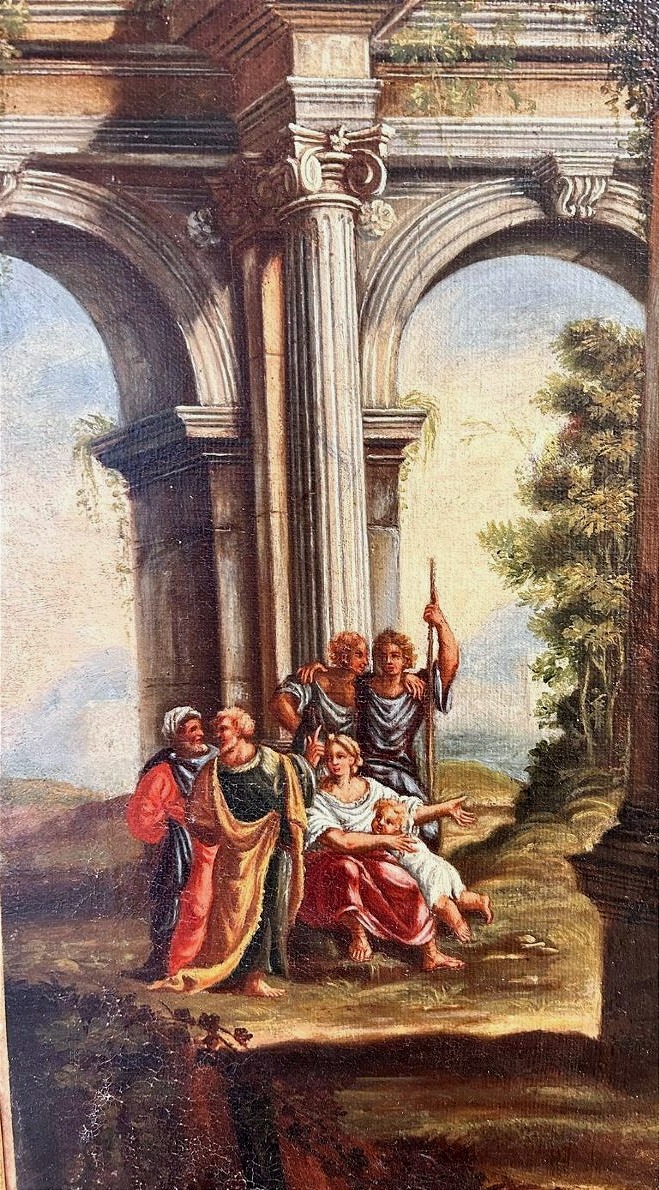
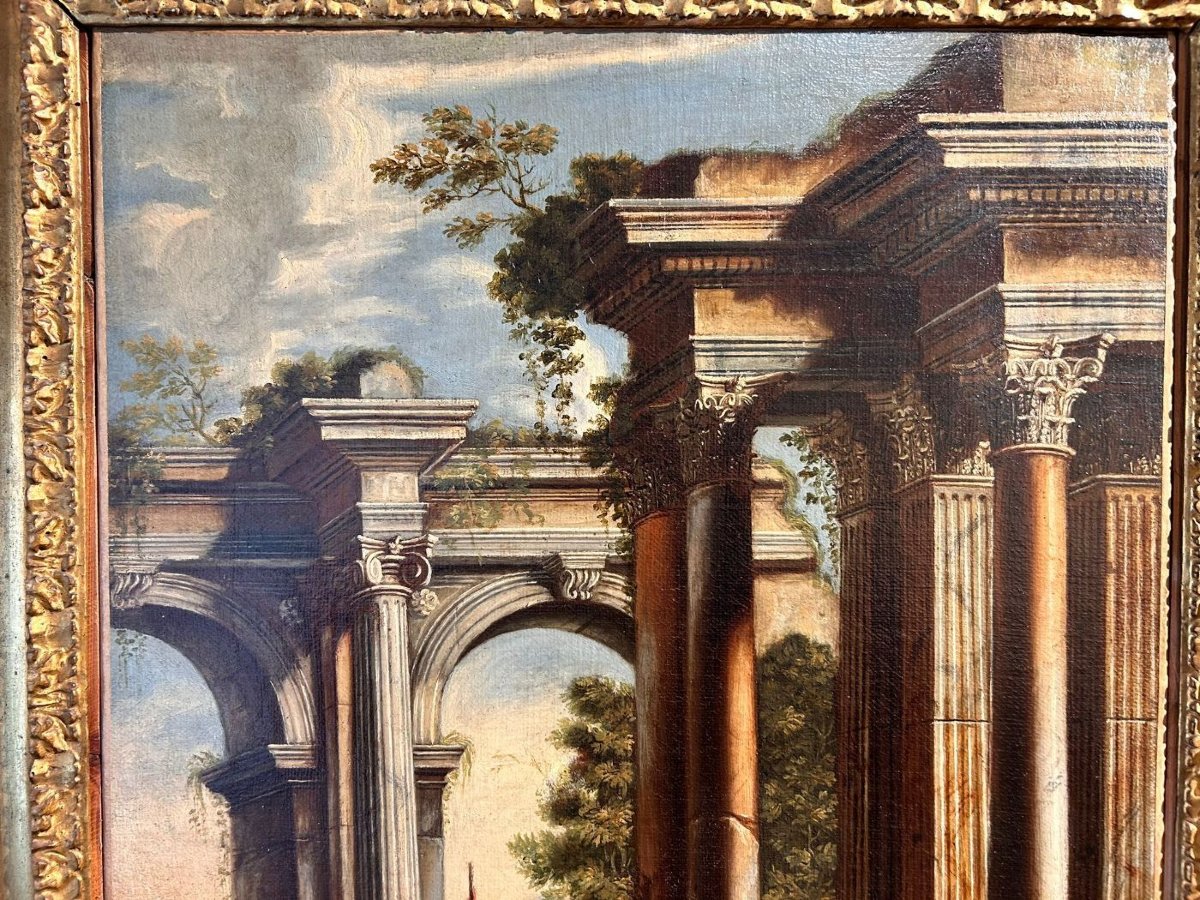
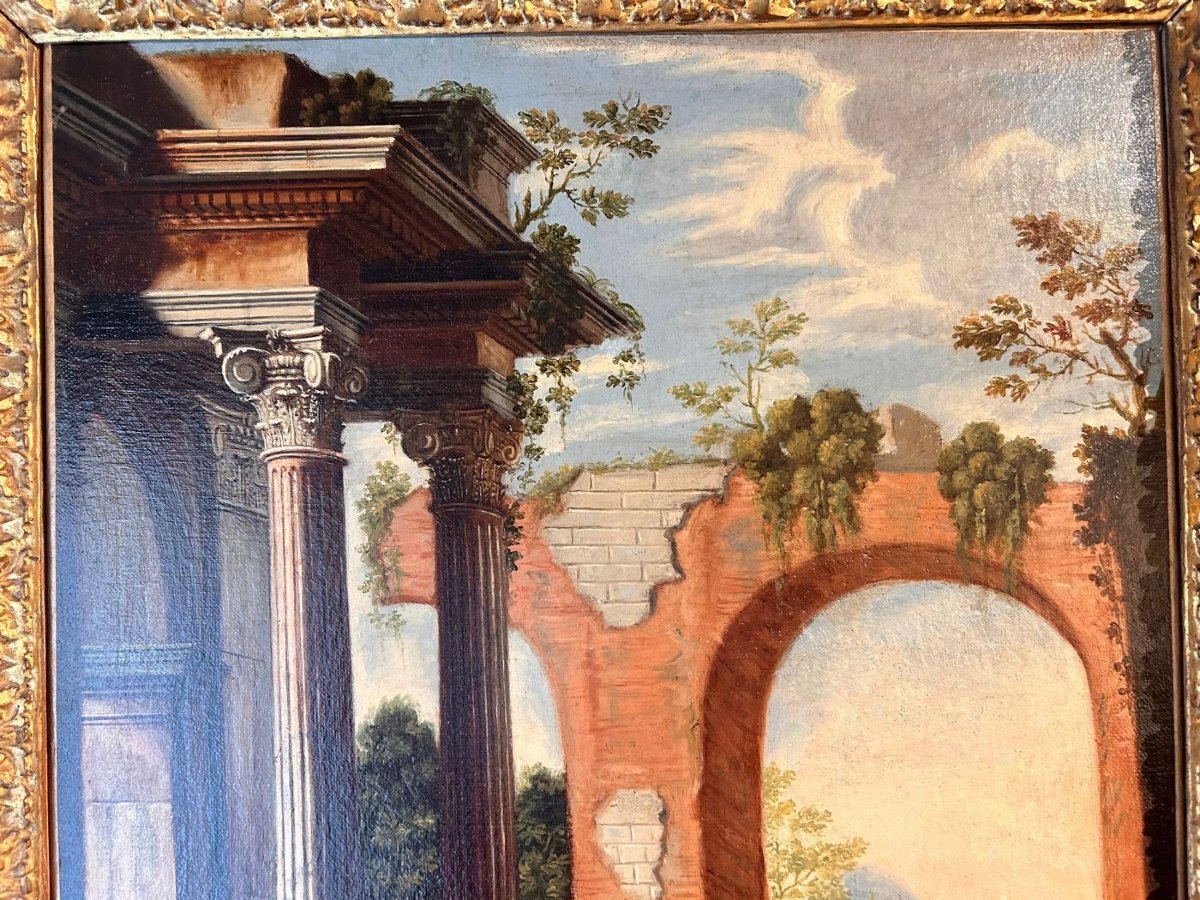
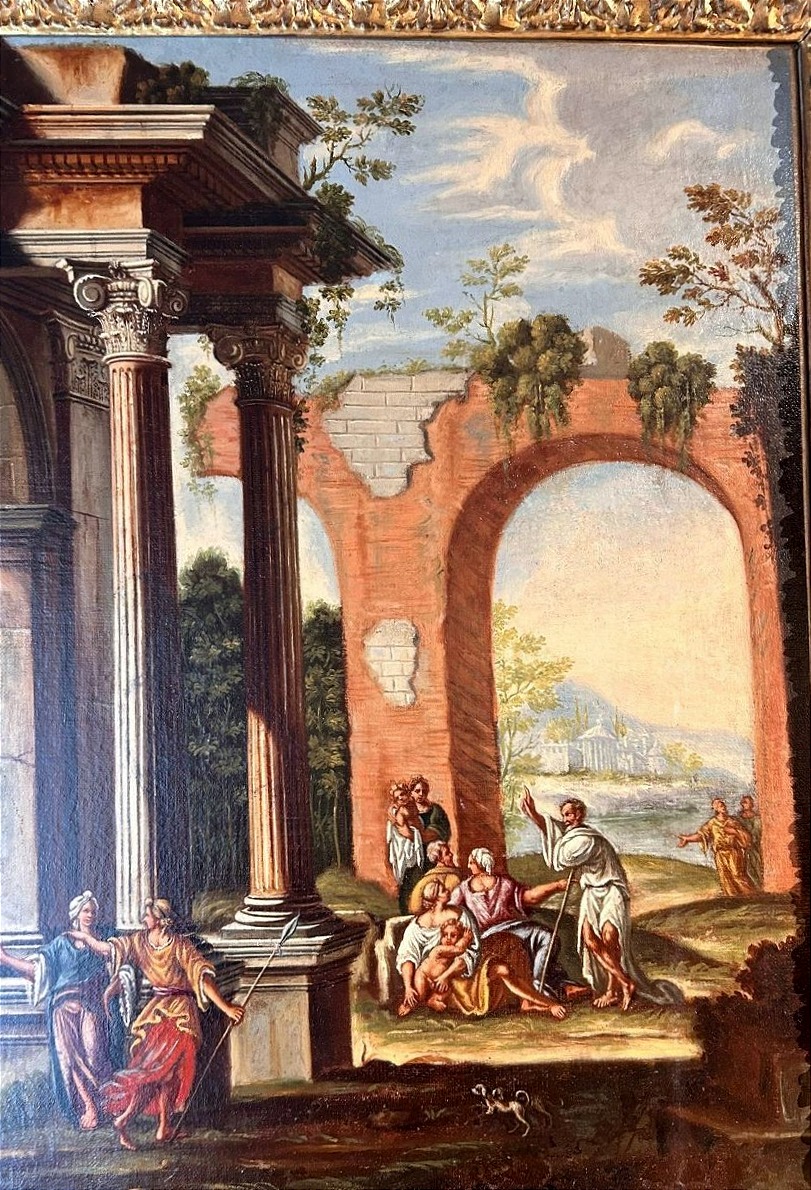
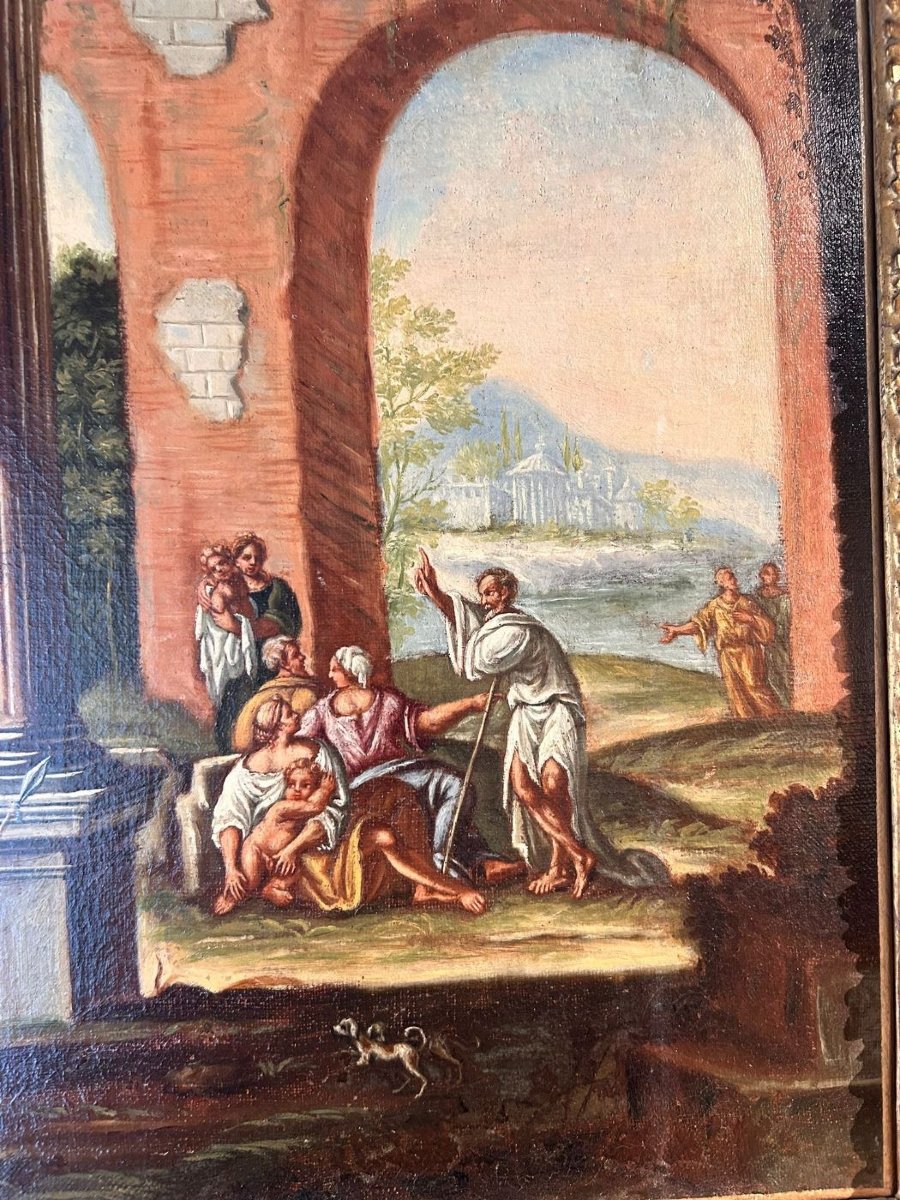
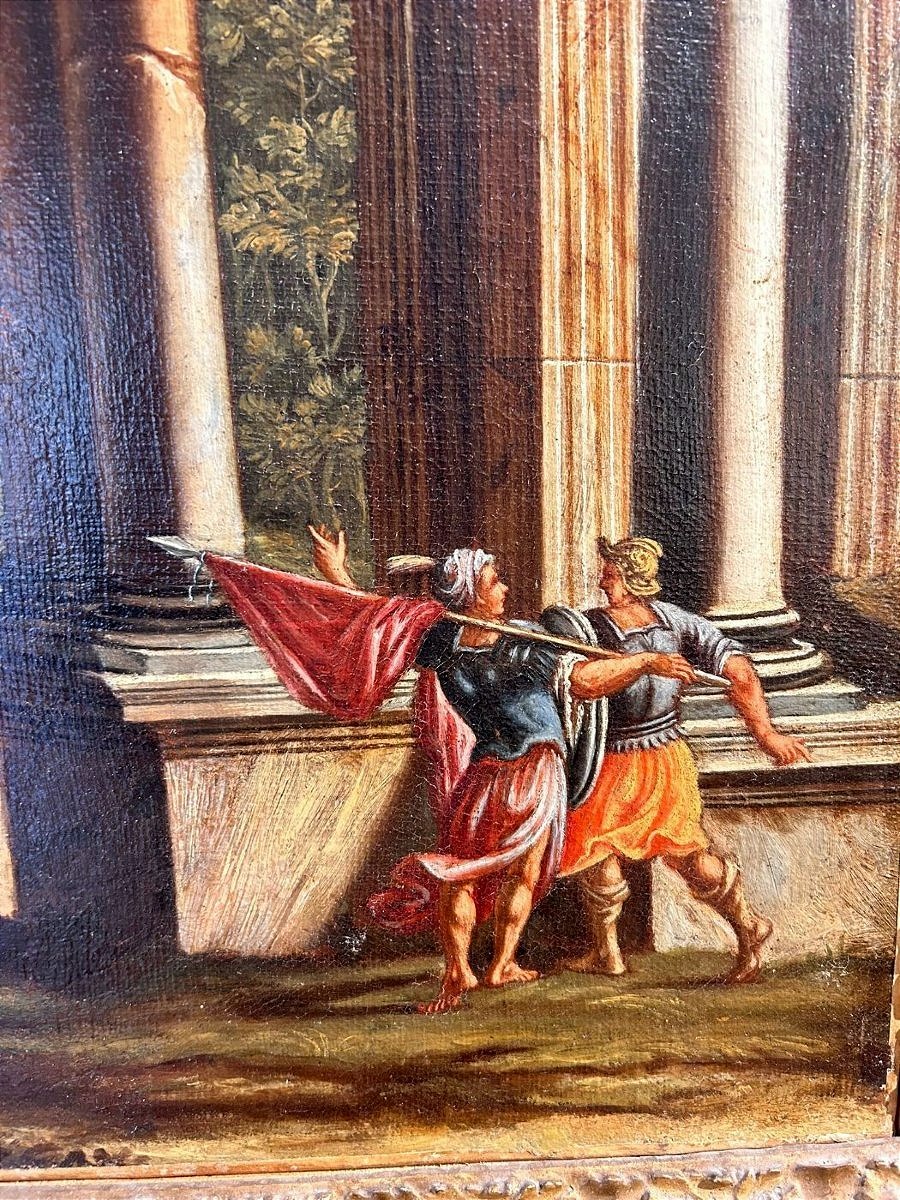
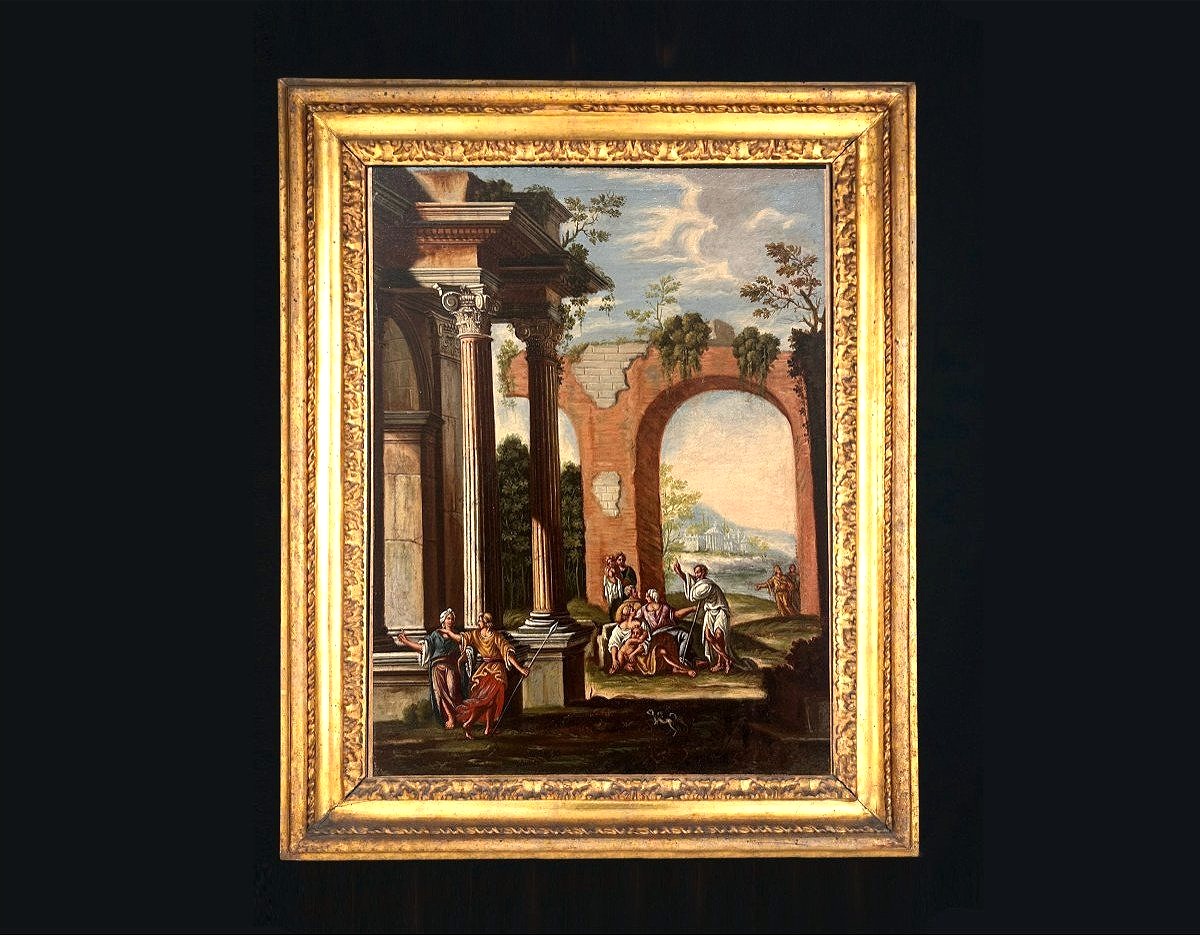
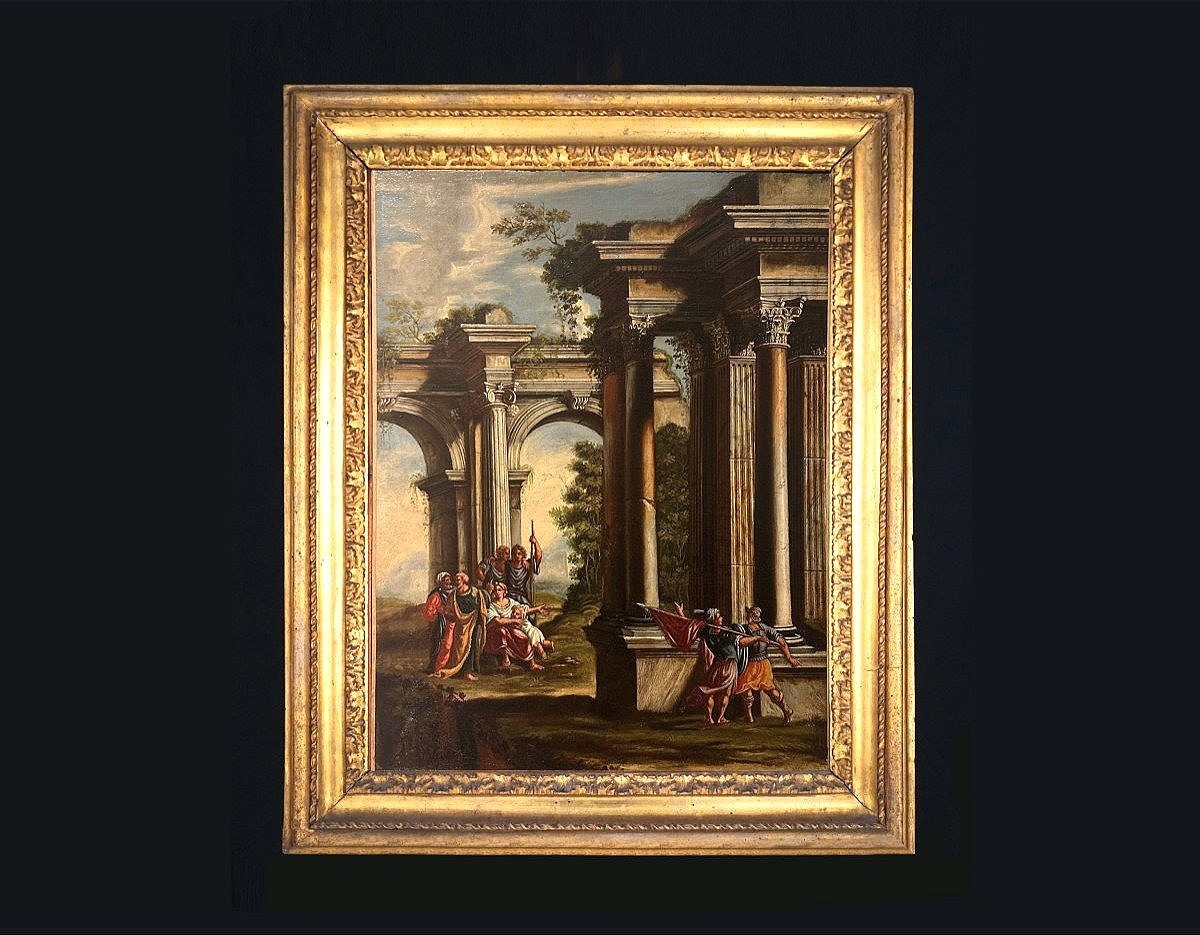
An important pair of "capricci" depicting apostles preaching to groups of the faithful—including mothers with their children—against a backdrop of classical ruins and Corinthian-order temples. These landscapes set among classical ruins can be attributed to the talented Roman master Alberto Carlieri (Rome, 1672–1720), who was active at the turn of the 17th and 18th centuries. These landscapes, which in terms of subject matter, dramatic impact, and the quality of the painted architecture closely follow those already executed in the mid-17th century by Giovanni Ghisolfi of Milan—the pioneer of this pictorial genre—leave us, in fact, some doubt as to whether they actually originated from his workshop. However, as regards the characterization of the figures and the style in which the lively little figures were executed, there is no doubt that they belong to the body of work by Carlieri, a highly skilled landscape painter who bridges the gap between Ghisolfi’s landscape painting and the later work of Pannini. This latter, extremely famous painter—who, for his scenes featuring classical ruins, owed so much to his predecessors, from whom he drew inspiration—
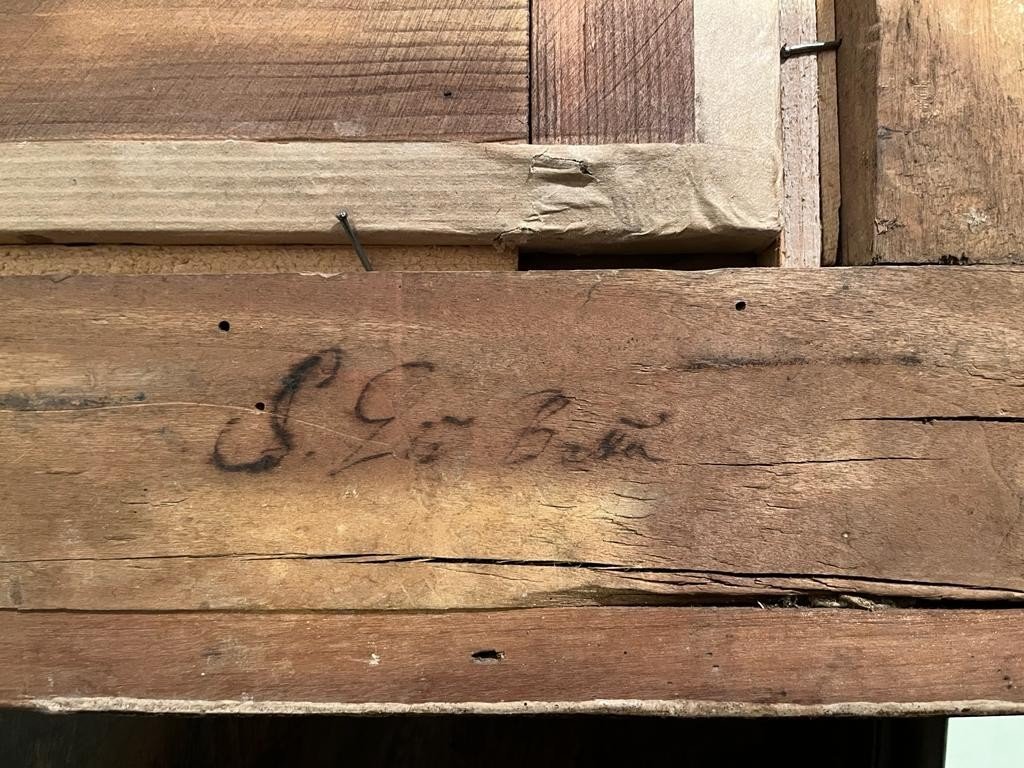
It is particularly interesting that one of the splendid contemporary gilded and carved frames bears the rare signature “Gio. Batta"; this is the Italianized signature of a great Dutch painter: Jan Weenix (Amsterdam 1621–1661). He gained experience in this genre during the brief period he spent in Rome between 1642 and 1646, likely coming into contact with the early pioneers of the genre of “landscapes with capriccios of classical ruins”; certainly, the young Giovanni Ghisolfi (Milan 1623–1683) was also among them—a highly skilled painter who pioneered precisely these specific architectural schemes.
These canvases appear to exhibit stylistic affinities closer to those of Carlieri, particularly in the lively little figures with a late-Mannerist flavor; therefore, it is difficult—though not impossible—that even in the presence of this signature, they might be backdated to the dawn of the genre and, thus, attributed to “Gio. Batta” or Ghisolfi.
After all, it was a genre of such enormous success that it inspired successive generations of great painters and masters, foremost among them Locatelli and Panini; making a definitive attribution of such examples is often a tedious task, even though decades separate the likely artists.
The dimensions of the paintings are: Canvas 49 x 64 cm – outer frames 67 x 82 cm.
The two canvases are in perfect condition. The same applies to the gilded “Salvador Rosa” frames.
We are enclosing a certificate of historical authenticity that verifies the authenticity and period of the paintings, accompanied by photographic documentation.
The paintings are on display at our antique gallery in Foligno (PG), in the heart of Umbria. Come visit us!
We look forward to welcoming you to our 180-square-meter exhibition space, which boasts an incredible assortment of antique and original furniture, paintings, and objects dating from the 15th to the 19th century.
If you’re looking for furnishings for renovations of commercial spaces, apartments, hotels, or farmhouses, we’d be happy to show you our spacious warehouses, where you’ll find every type of antique furniture to meet any need.
Our experience in the field allows us to guide you in your furnishing choices when you have the desire and taste to opt for antique and original furniture for your spaces—perhaps in harmony with more modern elements in your home.
BOMPADRE ANTIQUE GALLERY
FOLIGNO (PG), PIAZZA ETTORE GIACOMINI, 42.
Info: Phone/WhatsApp - 0039/3356925388 - 00393208015489 - Email: Galleriabompadre@proton.me
OPEN DAILY FROM 9:00 AM TO 1:00 PM AND FROM 4:00 PM TO 7:00 PM (We recommend making an appointment by phone, especially on Saturdays and Sundays).
It is particularly interesting that one of the splendid contemporary gilded and carved frames bears the rare signature “Gio. Batta"; this is the Italianized signature of a great Dutch painter: Jan Weenix (Amsterdam 1621–1661). He gained experience in this genre during the brief period he spent in Rome between 1642 and 1646, likely coming into contact with the early pioneers of the genre of “landscapes with capriccios of classical ruins”; certainly, the young Giovanni Ghisolfi (Milan 1623–1683) was also among them—a highly skilled painter who pioneered precisely these specific architectural schemes.
These canvases appear to exhibit stylistic affinities closer to those of Carlieri, particularly in the lively little figures with a late-Mannerist flavor; therefore, it is difficult—though not impossible—that even in the presence of this signature, they might be backdated to the dawn of the genre and, thus, attributed to “Gio. Batta” or Ghisolfi.
After all, it was a genre of such enormous success that it inspired successive generations of great painters and masters, foremost among them Locatelli and Panini; making a definitive attribution of such examples is often a tedious task, even though decades separate the likely artists.
The dimensions of the paintings are: Canvas 49 x 64 cm – outer frames 67 x 82 cm.
The two canvases are in perfect condition. The same applies to the gilded “Salvador Rosa” frames.
We are enclosing a certificate of historical authenticity that verifies the authenticity and period of the paintings, accompanied by photographic documentation.
The paintings are on display at our antique gallery in Foligno (PG), in the heart of Umbria. Come visit us!
We look forward to welcoming you to our 180-square-meter exhibition space, which boasts an incredible assortment of antique and original furniture, paintings, and objects dating from the 15th to the 19th century.
If you’re looking for furnishings for renovations of commercial spaces, apartments, hotels, or farmhouses, we’d be happy to show you our spacious warehouses, where you’ll find every type of antique furniture to meet any need.
Our experience in the field allows us to guide you in your furnishing choices when you have the desire and taste to opt for antique and original furniture for your spaces—perhaps in harmony with more modern elements in your home.
BOMPADRE ANTIQUE GALLERY
FOLIGNO (PG), PIAZZA ETTORE GIACOMINI, 42.
Info: Phone/WhatsApp - 0039/3356925388 - 00393208015489 - Email: Galleriabompadre@proton.me
OPEN DAILY FROM 9:00 AM TO 1:00 PM AND FROM 4:00 PM TO 7:00 PM (We recommend making an appointment by phone, especially on Saturdays and Sundays).
12 500 €
Period: 17th century
Style: Louis 14th, Regency
Condition: Excellent condition
Material: Oil painting
Length: 49 - 67
Height: 64 - 82
Reference (ID): 1816924
Availability: In stock
Print