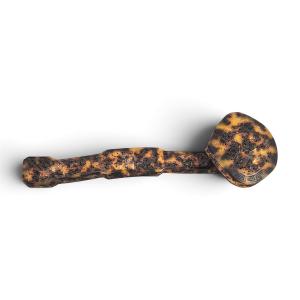


Chinese Ruyi Scepter Made Of Carved Tortoiseshell, Qing Dynasty, Probably Late 19th Century
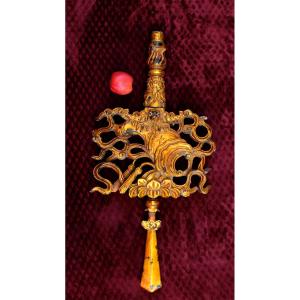
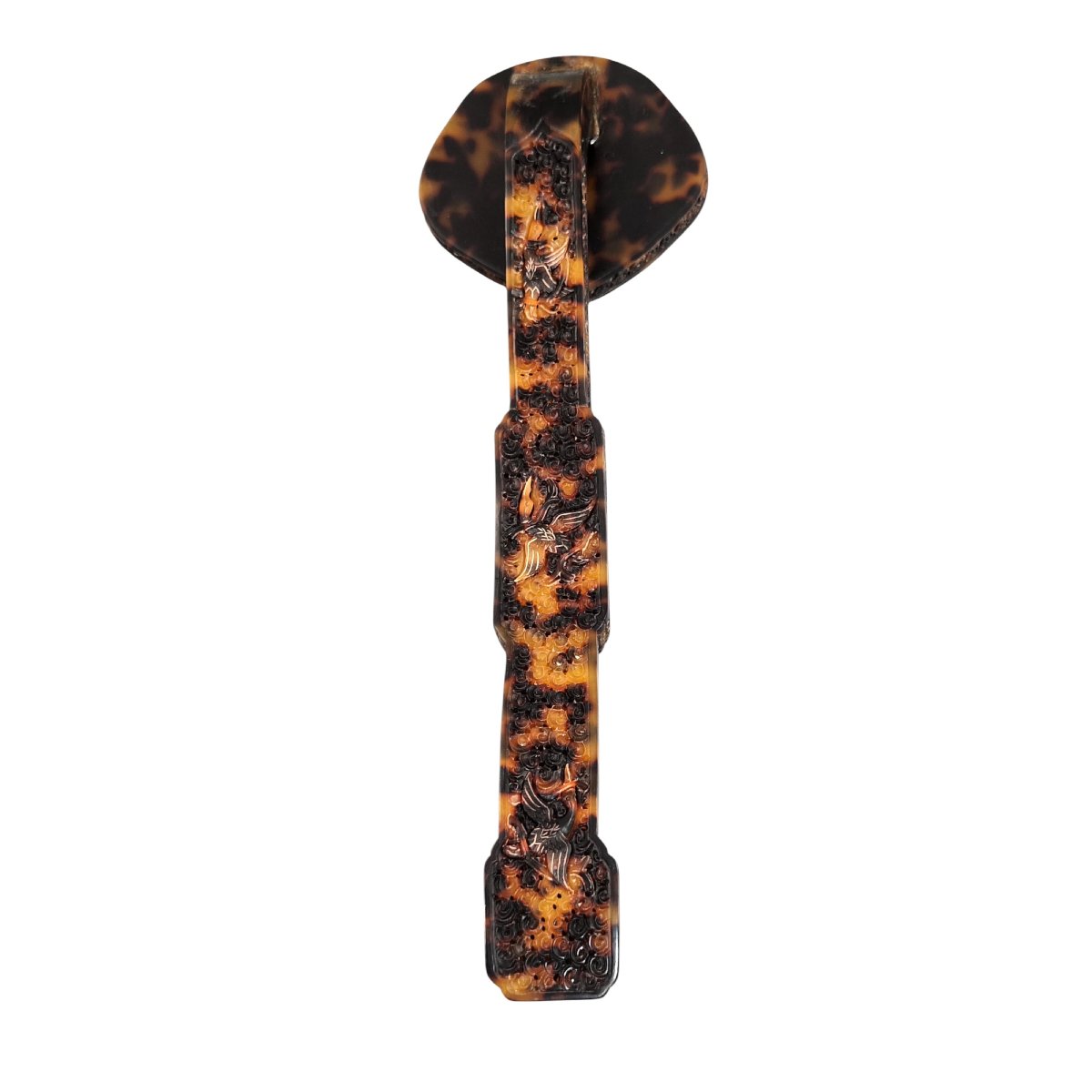
An exceptional Chinese ruyi scepter, finely carved from natural tortoiseshell, dating from the Qing Dynasty and likely from the late 19th century.
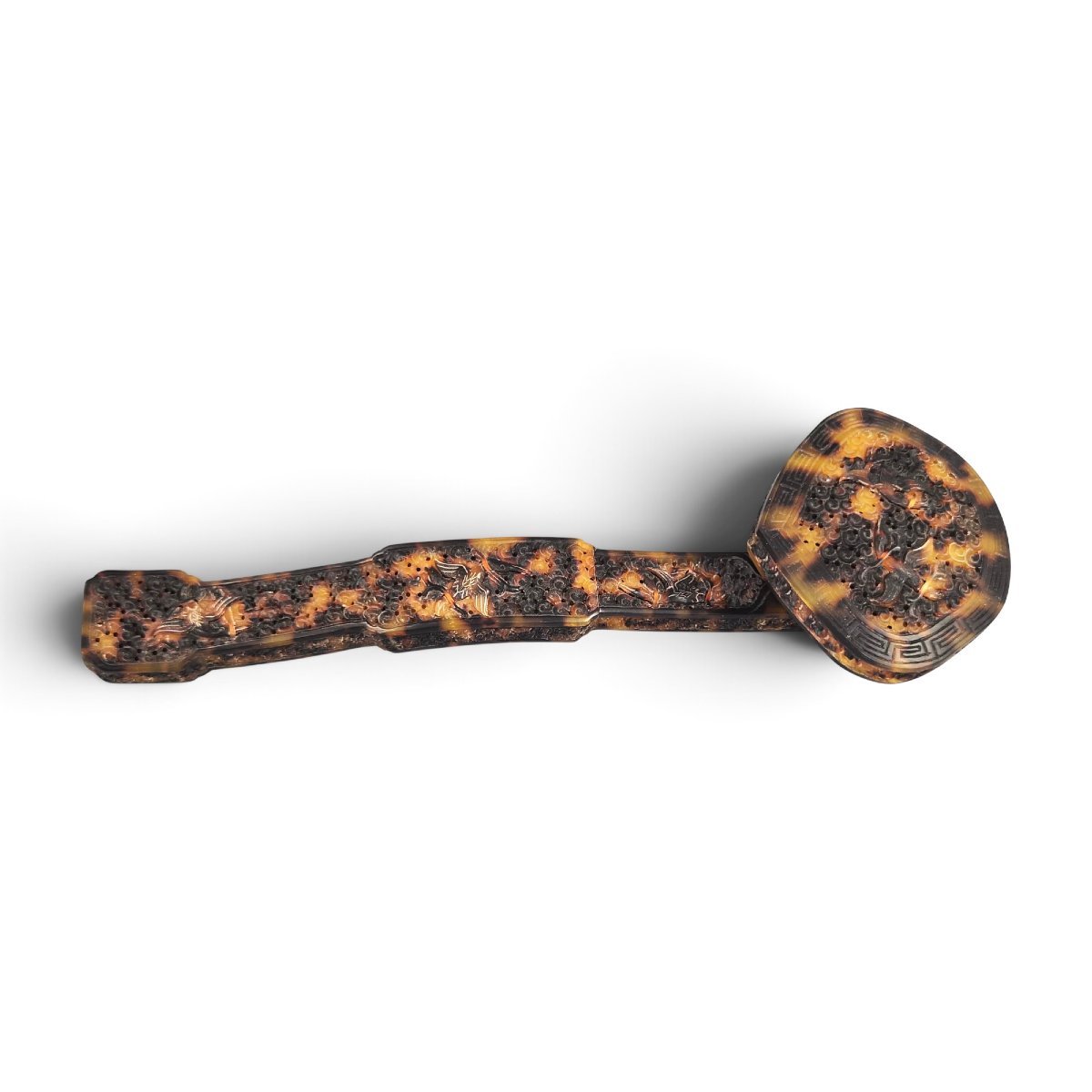
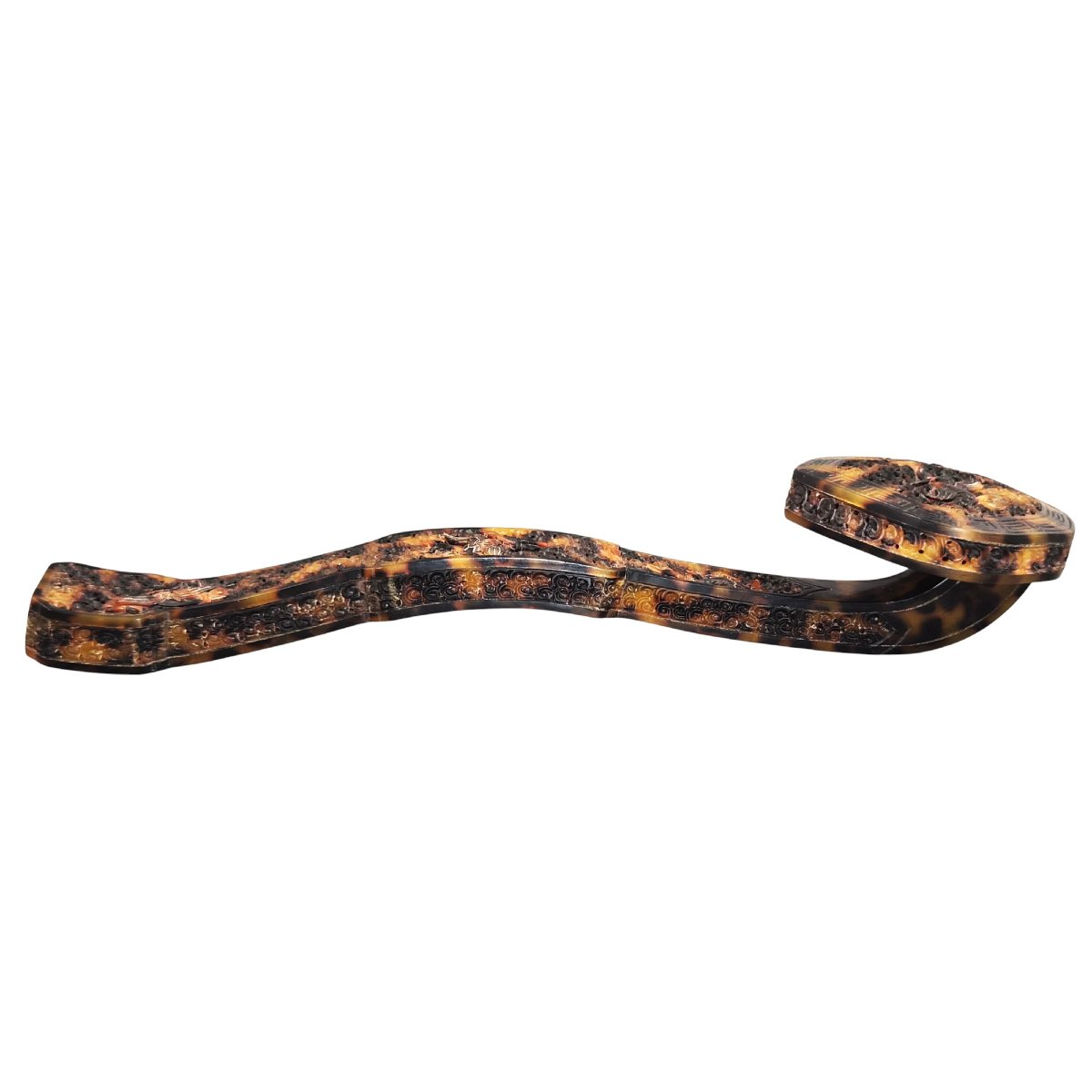
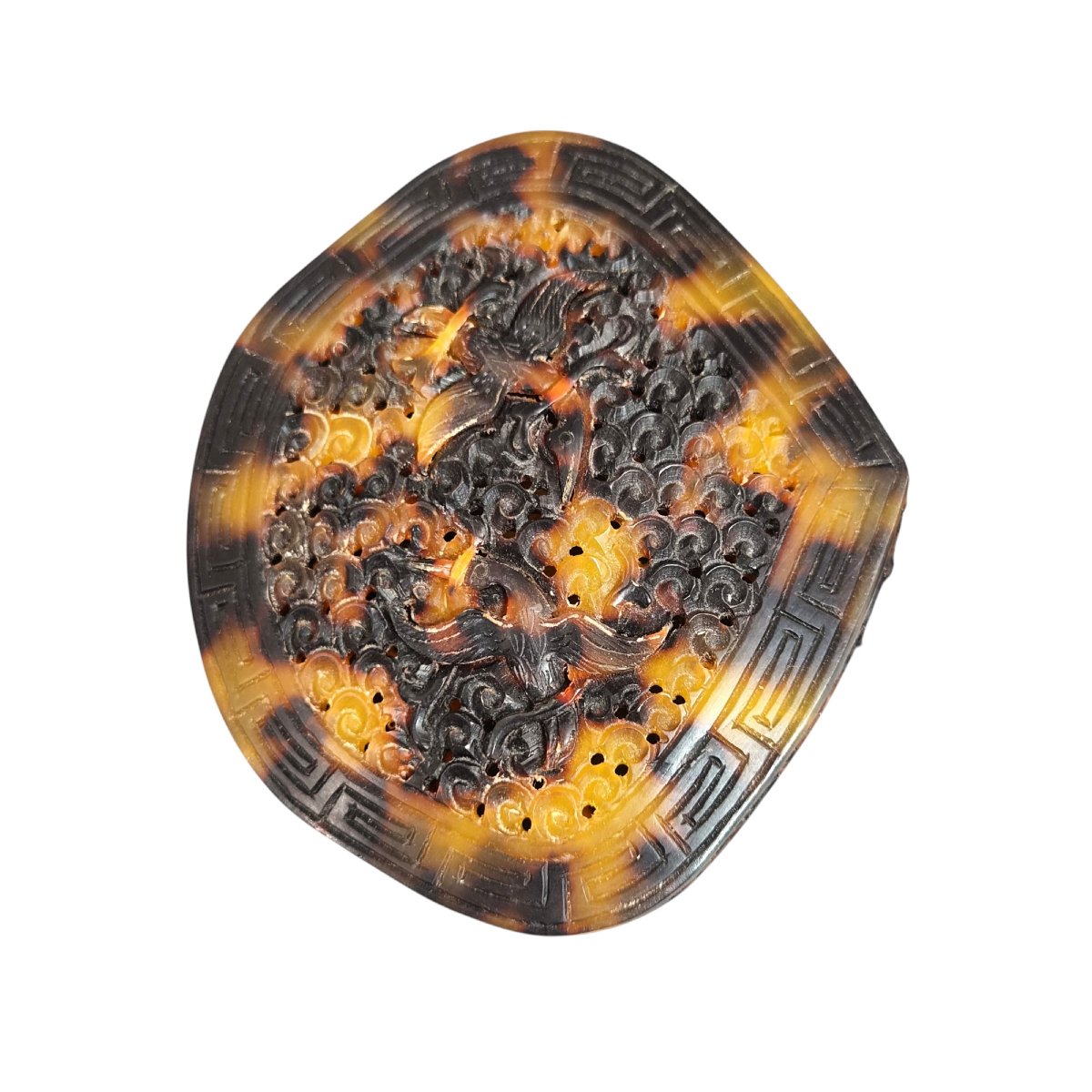
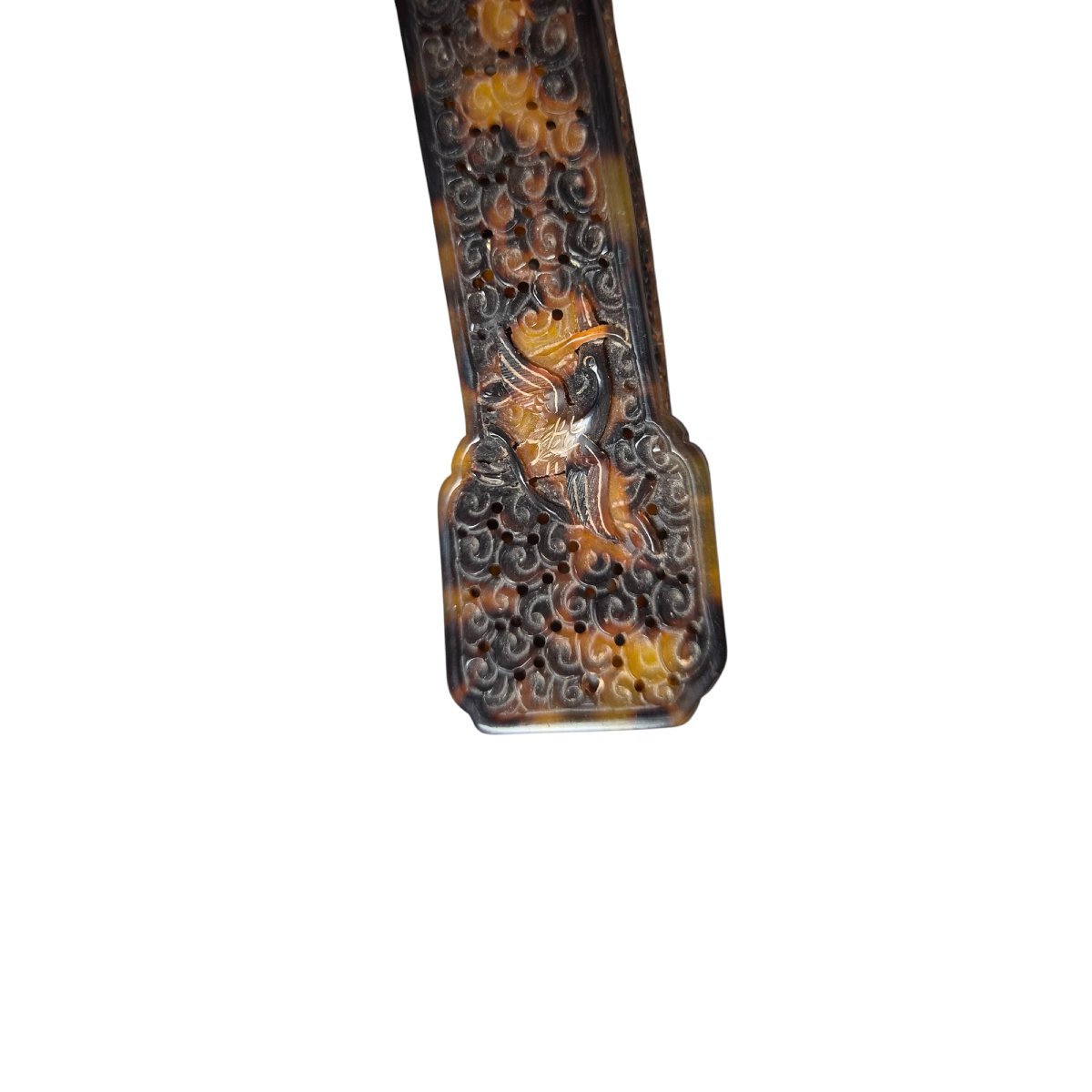
The material displays remarkable natural coloring, ranging from translucent shades of honey and amber to deep dark brown patches. The traditional ruyi form is adorned with intricate, multi-layered decoration, executed in high relief, fine engraving, and delicately carved openwork.
The ruyi, whose name means “as you wish,” is a traditional Chinese ceremonial scepter symbolizing authority, good fortune, and the fulfillment of wishes. Its curved handle ends in a broad head inspired by the lingzhi mushroom, an ancient Chinese symbol of longevity and immortality.
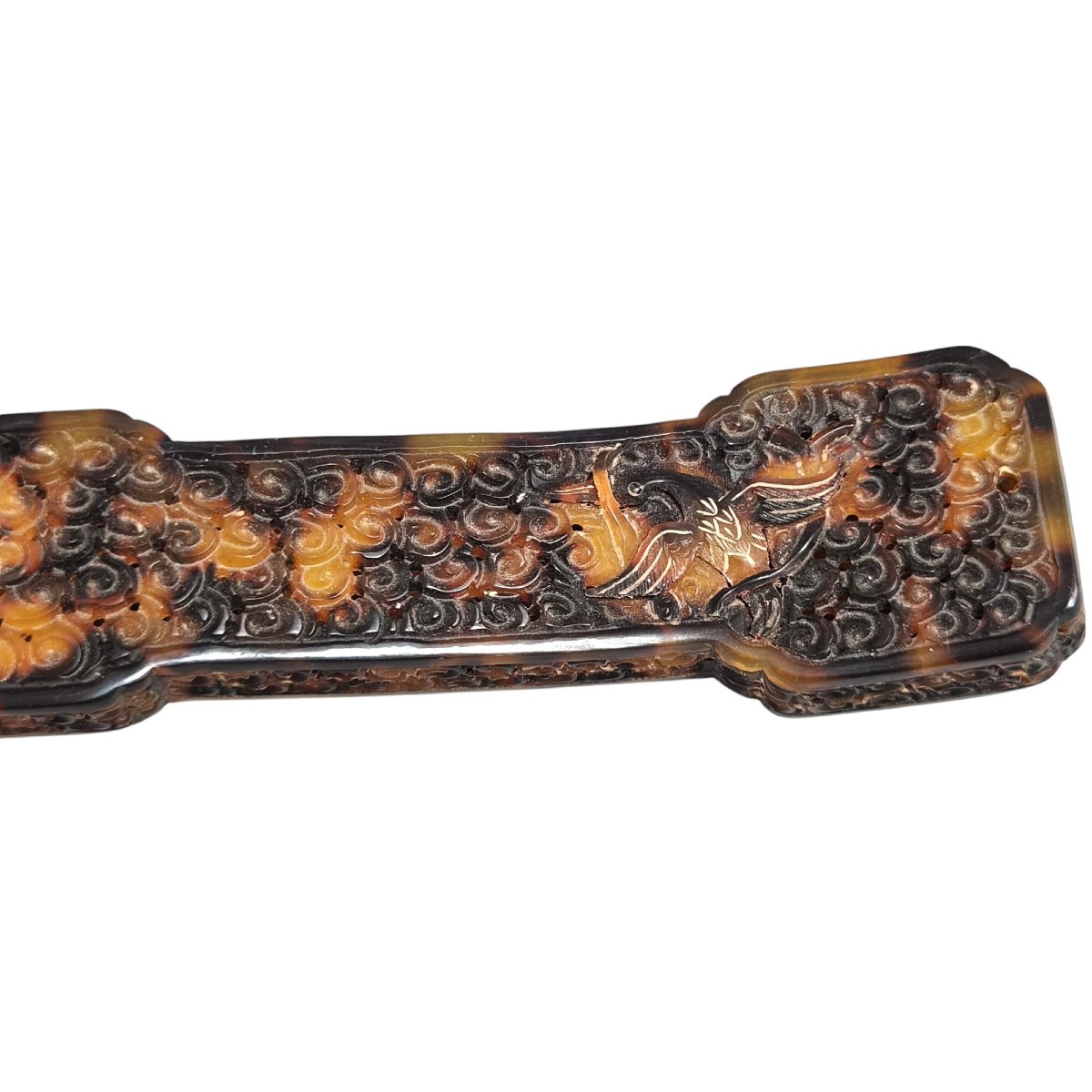
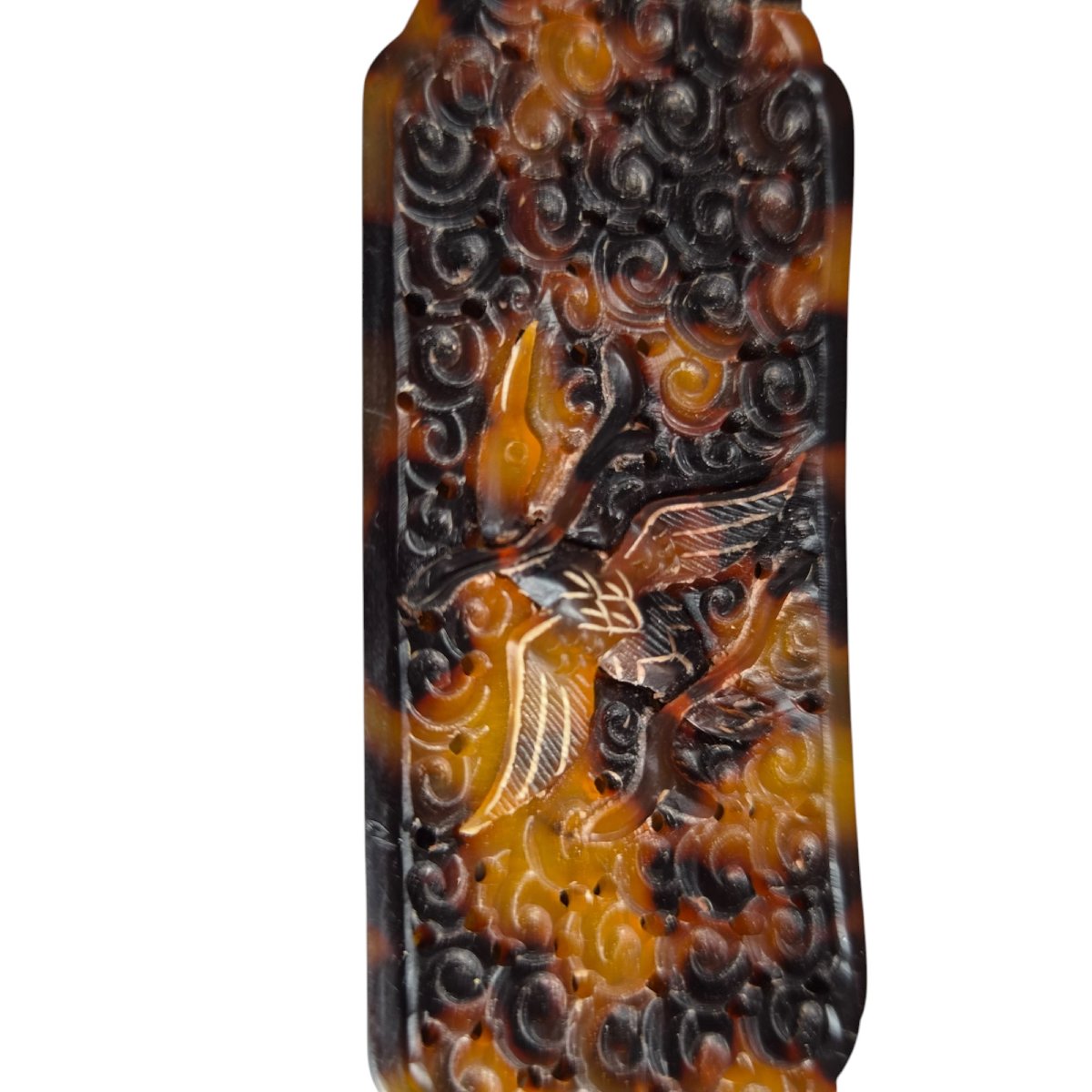
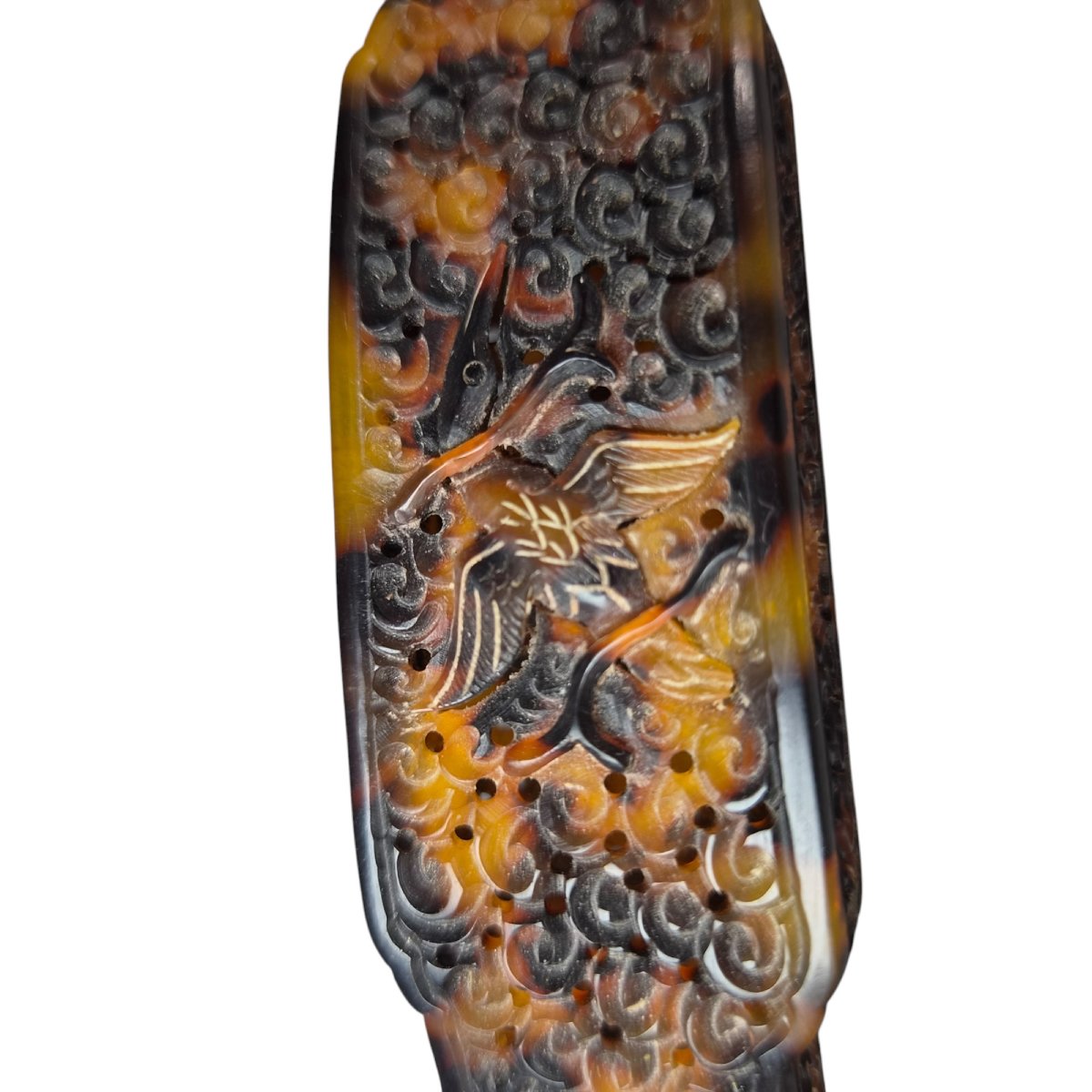
The main decoration features eight articulated cranes amid dense swirls of auspicious clouds.
The most striking feature of this object is the presence of eight separately carved and articulated cranes. Each bird is mounted on a small pivot, allowing it to move independently while remaining securely held within the openwork cloud design.
Creating freely moving elements within this openwork design posed a considerable technical challenge and required great precision. The articulated cranes lend the composition remarkable depth as well as a sense of movement and three-dimensionality, distinguishing this ruyi from more common examples with entirely fixed designs.
In Chinese and Taoist tradition, the crane is one of the principal symbols of longevity, spiritual elevation, and immortality. The auspicious clouds represent divine favor, good fortune, and the fulfillment of wishes. Combined with the lingzhi-shaped head, these motifs form a symbolic ensemble expressing longevity, prosperity, and well-being.
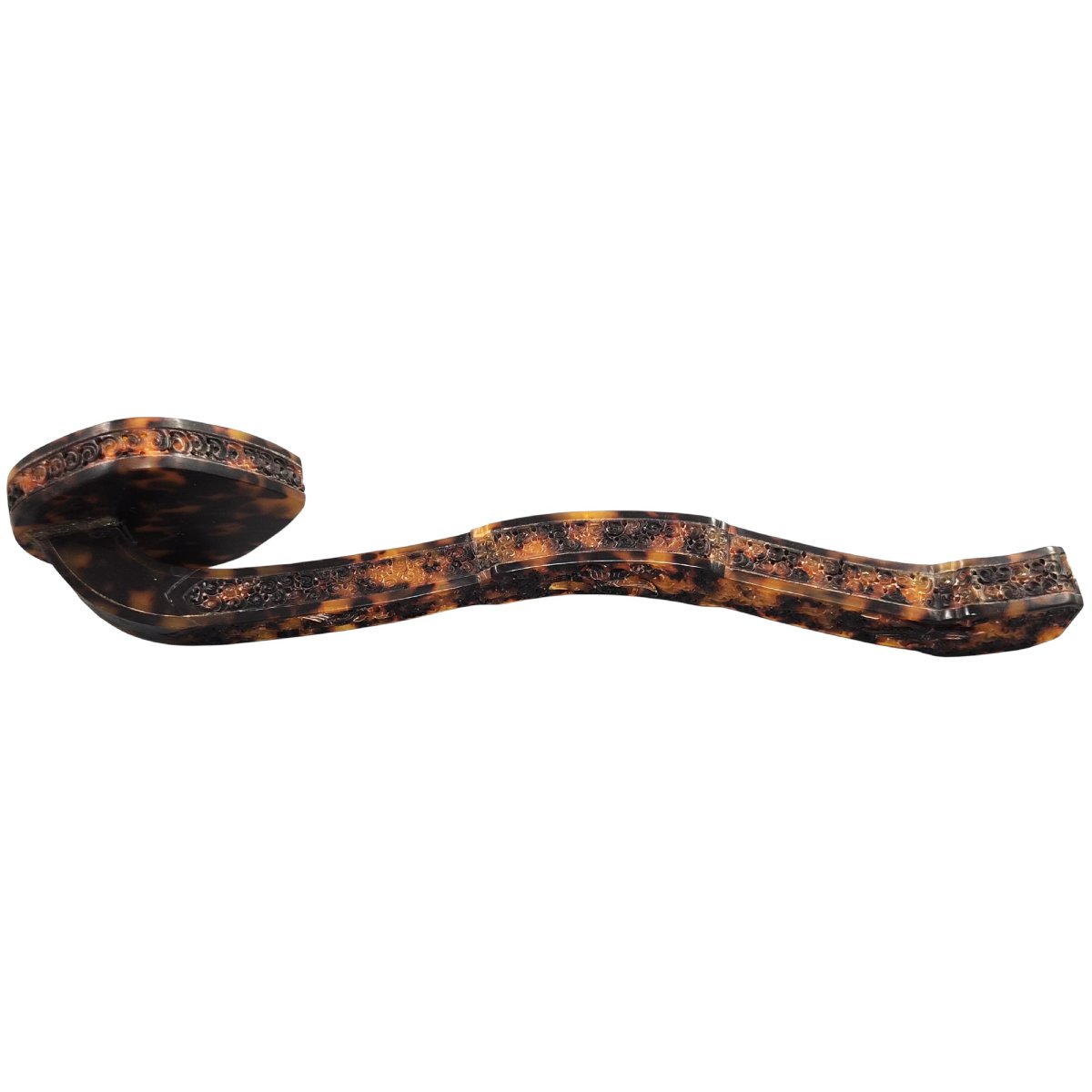
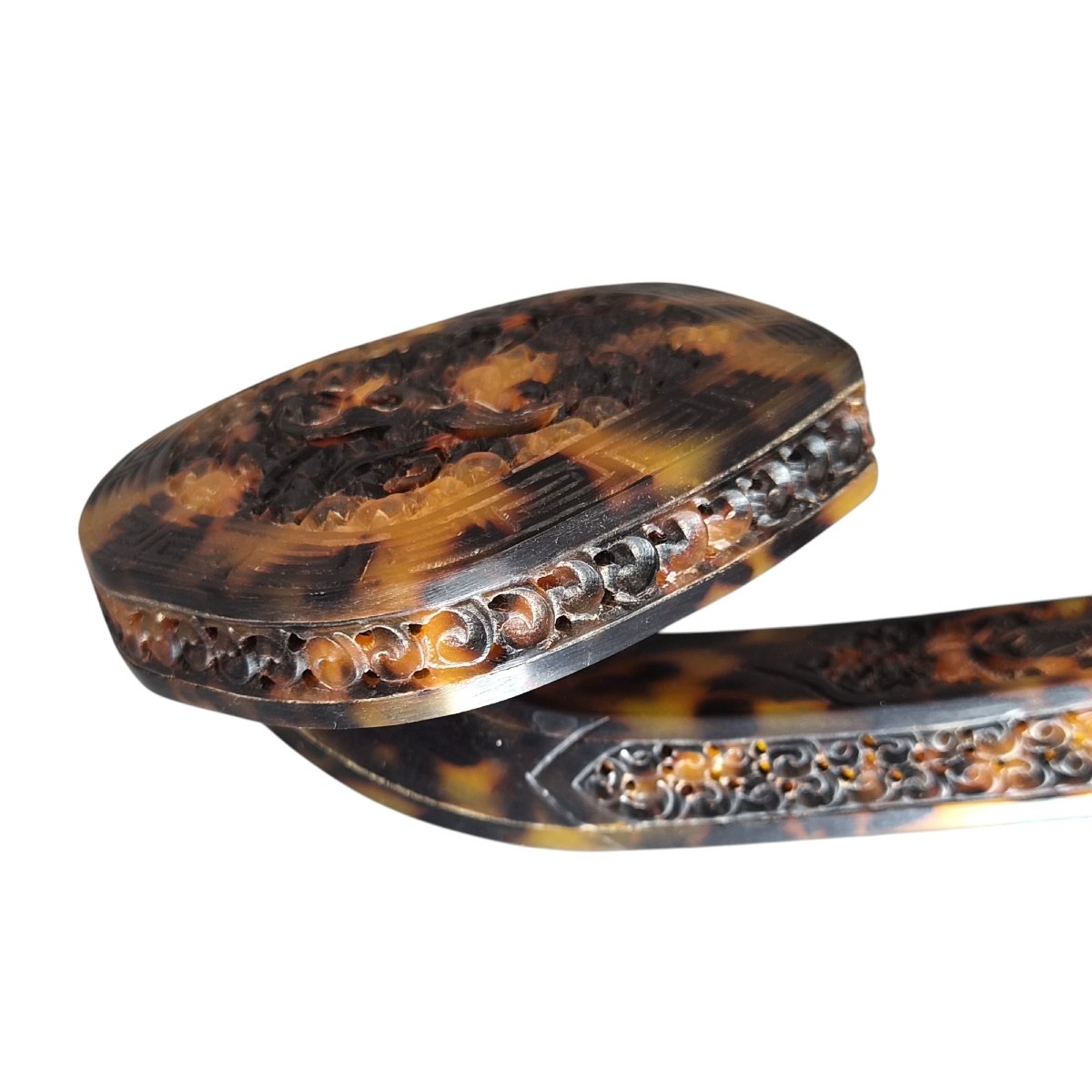
The carved decoration covers almost the entire main face of the scepter. The ruyi head is surrounded by a geometric border, complemented on the sides by a beaded frieze in relief. The openwork design allows light to pass through the translucent tortoiseshell, highlighting its warm amber hues and naturally mottled pattern.
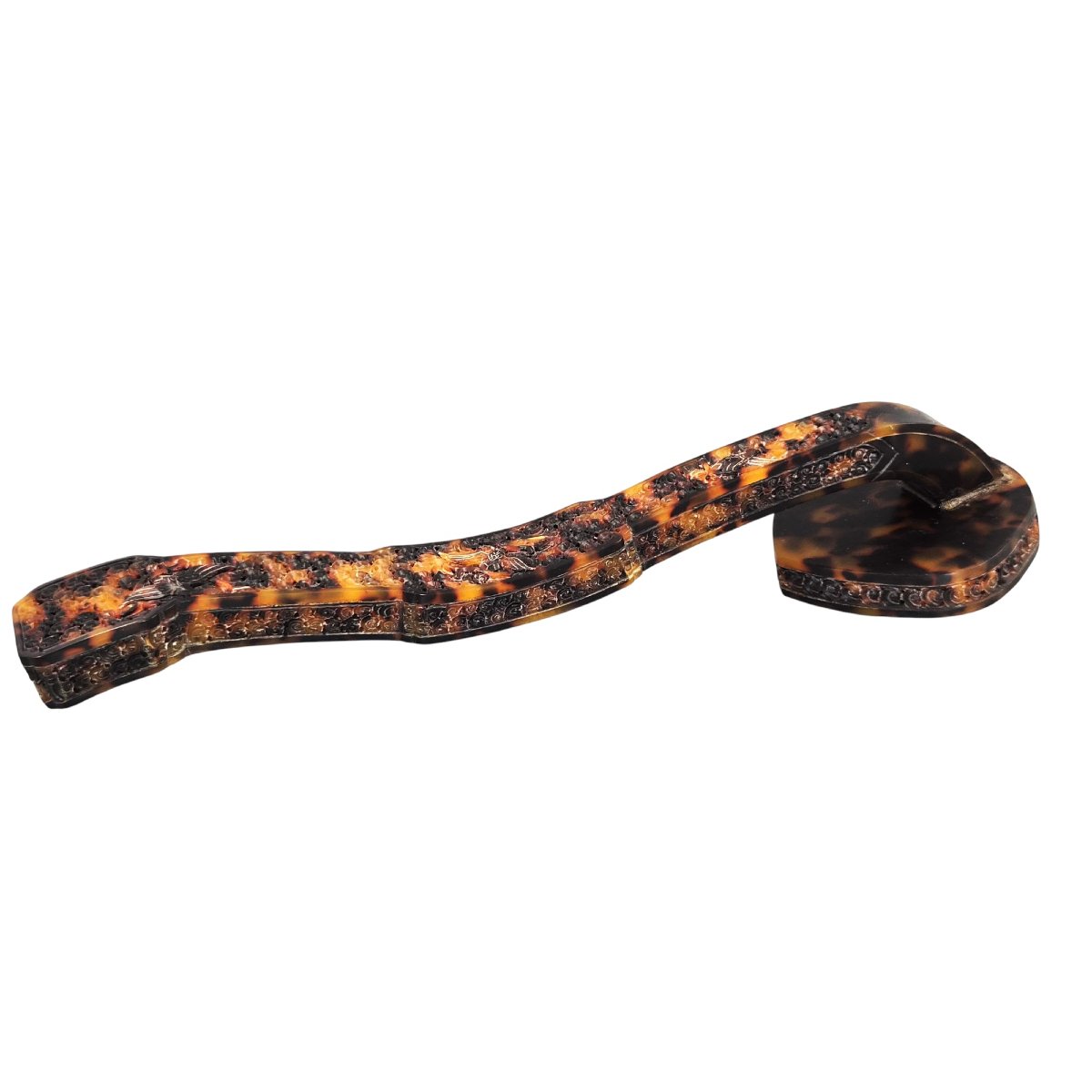
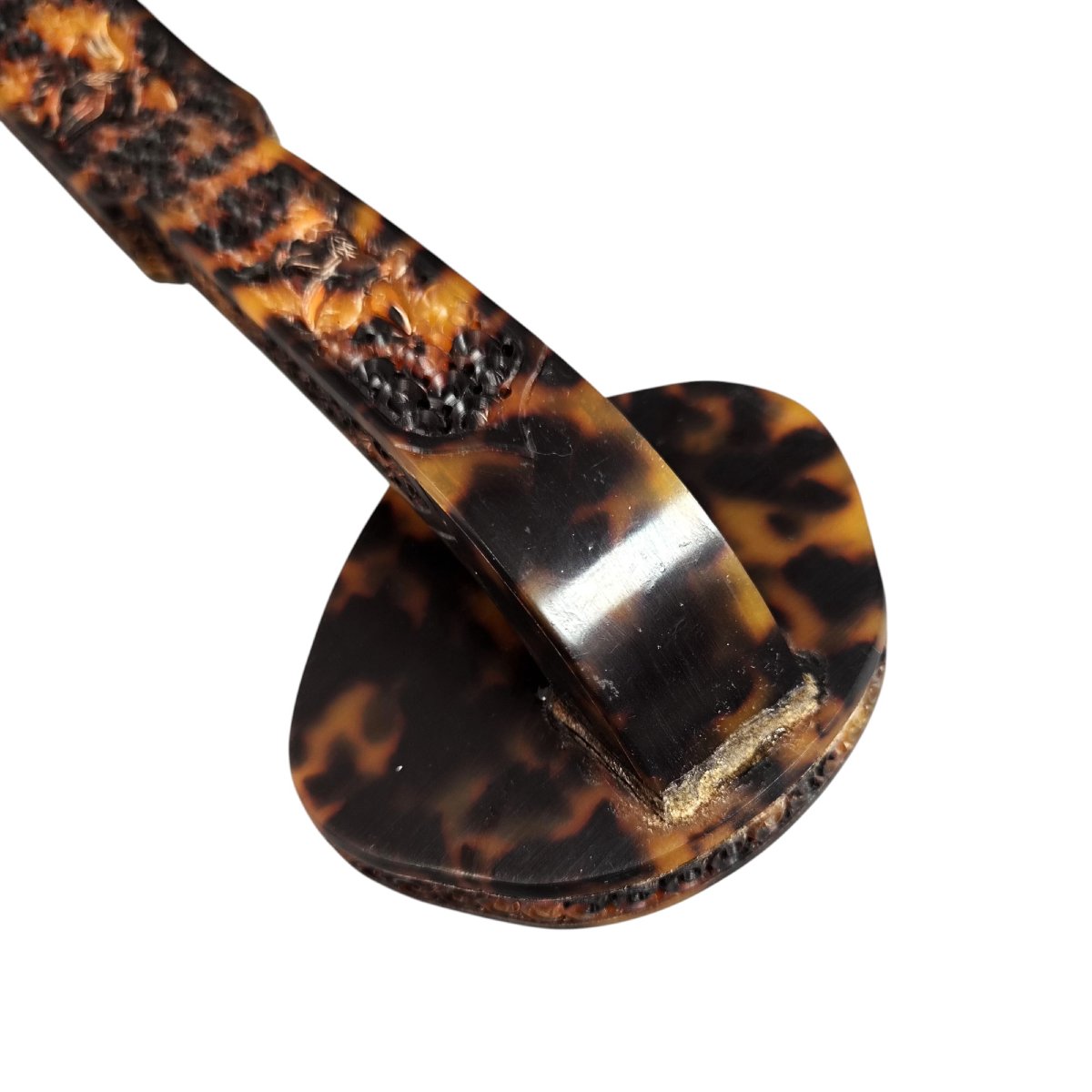
The underside of the ruyi head is carefully polished, revealing the material’s natural marbling, while the carved decoration continues along the shaft and onto the side panels.
The scepter features a complex multi-part construction, necessary to create its deep, multi-level relief and its articulated figures. The combination of natural tortoiseshell, traditional symbolism, delicate openwork, and the eight preserved articulated cranes attests to the high technical quality of this unusual Chinese ruyi.
Dimensions:
Length: 28 cm
Maximum width: 8.5 cm
Maximum height/depth: 5 cm
Condition:
Good antique condition, consistent with the object’s age and complex, multi-part construction. The eight carved cranes are intact and remain articulated.
Old adhesive lines are visible at the junction between the shaft and the head of the ruyi. The object shows slight natural signs of age and careful use, with no significant impact on its overall appearance, decorative integrity, or presentation quality.
Please examine all the attached photographs carefully, as they are an integral part of the description and accurately show the condition, the quality of the carving, and the articulated construction of the object.
We are available to provide any additional information. The item will be professionally packed and shipped with full tracking and insurance.
BUYERS RESIDING IN THE UNITED KINGDOM ARE WELCOME.
BUYERS RESIDING IN OTHER COUNTRIES ARE ASKED TO CONTACT US BEFORE MAKING ANY PAYMENT.
The material displays remarkable natural coloring, ranging from translucent shades of honey and amber to deep dark brown patches. The traditional ruyi form is adorned with intricate, multi-layered decoration, executed in high relief, fine engraving, and delicately carved openwork.
The ruyi, whose name means “as you wish,” is a traditional Chinese ceremonial scepter symbolizing authority, good fortune, and the fulfillment of wishes. Its curved handle ends in a broad head inspired by the lingzhi mushroom, an ancient Chinese symbol of longevity and immortality.
The main decoration features eight articulated cranes amid dense swirls of auspicious clouds.
The most striking feature of this object is the presence of eight separately carved and articulated cranes. Each bird is mounted on a small pivot, allowing it to move independently while remaining securely held within the openwork cloud design.
Creating freely moving elements within this openwork design posed a considerable technical challenge and required great precision. The articulated cranes lend the composition remarkable depth as well as a sense of movement and three-dimensionality, distinguishing this ruyi from more common examples with entirely fixed designs.
In Chinese and Taoist tradition, the crane is one of the principal symbols of longevity, spiritual elevation, and immortality. The auspicious clouds represent divine favor, good fortune, and the fulfillment of wishes. Combined with the lingzhi-shaped head, these motifs form a symbolic ensemble expressing longevity, prosperity, and well-being.
The carved decoration covers almost the entire main face of the scepter. The ruyi head is surrounded by a geometric border, complemented on the sides by a beaded frieze in relief. The openwork design allows light to pass through the translucent tortoiseshell, highlighting its warm amber hues and naturally mottled pattern.
The underside of the ruyi head is carefully polished, revealing the material’s natural marbling, while the carved decoration continues along the shaft and onto the side panels.
The scepter features a complex multi-part construction, necessary to create its deep, multi-level relief and its articulated figures. The combination of natural tortoiseshell, traditional symbolism, delicate openwork, and the eight preserved articulated cranes attests to the high technical quality of this unusual Chinese ruyi.
Dimensions:
Length: 28 cm
Maximum width: 8.5 cm
Maximum height/depth: 5 cm
Condition:
Good antique condition, consistent with the object’s age and complex, multi-part construction. The eight carved cranes are intact and remain articulated.
Old adhesive lines are visible at the junction between the shaft and the head of the ruyi. The object shows slight natural signs of age and careful use, with no significant impact on its overall appearance, decorative integrity, or presentation quality.
Please examine all the attached photographs carefully, as they are an integral part of the description and accurately show the condition, the quality of the carving, and the articulated construction of the object.
We are available to provide any additional information. The item will be professionally packed and shipped with full tracking and insurance.
BUYERS RESIDING IN THE UNITED KINGDOM ARE WELCOME.
BUYERS RESIDING IN OTHER COUNTRIES ARE ASKED TO CONTACT US BEFORE MAKING ANY PAYMENT.
8 500 €
Period: 19th century
Style: Asian art
Condition: Perfect condition
Reference (ID): 1814602
Availability: In stock
Print