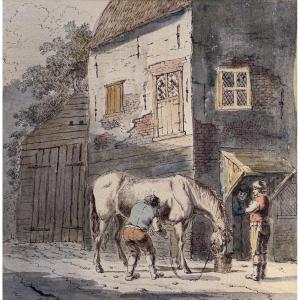


German School, Circle Of Johann Von Dillis, Stable Yard With A Horse, Ca. 1790–1800
Artist: école Allemande, Entourage De Johann Von Dillis
German School, circle of Johann von Dillis — Stable Yard with a Horse — Circa 1790–1800
During the eighteenth century, many German painters and draughtsmen looked with profound admiration to the seventeenth-century Dutch tradition. Their representation of everyday life drew extensively upon its interest in familiar subjects, modest interiors, courtyards, animals and ordinary work.
The rise of Sentimentalism gradually altered this relationship. Without abandoning the visual language inherited from Dutch genre painting, German artists began to view daily life through a more intimate and contemplative lens. The simplest gestures acquired a quiet poetry and, at times, a gentle sense of melancholy.
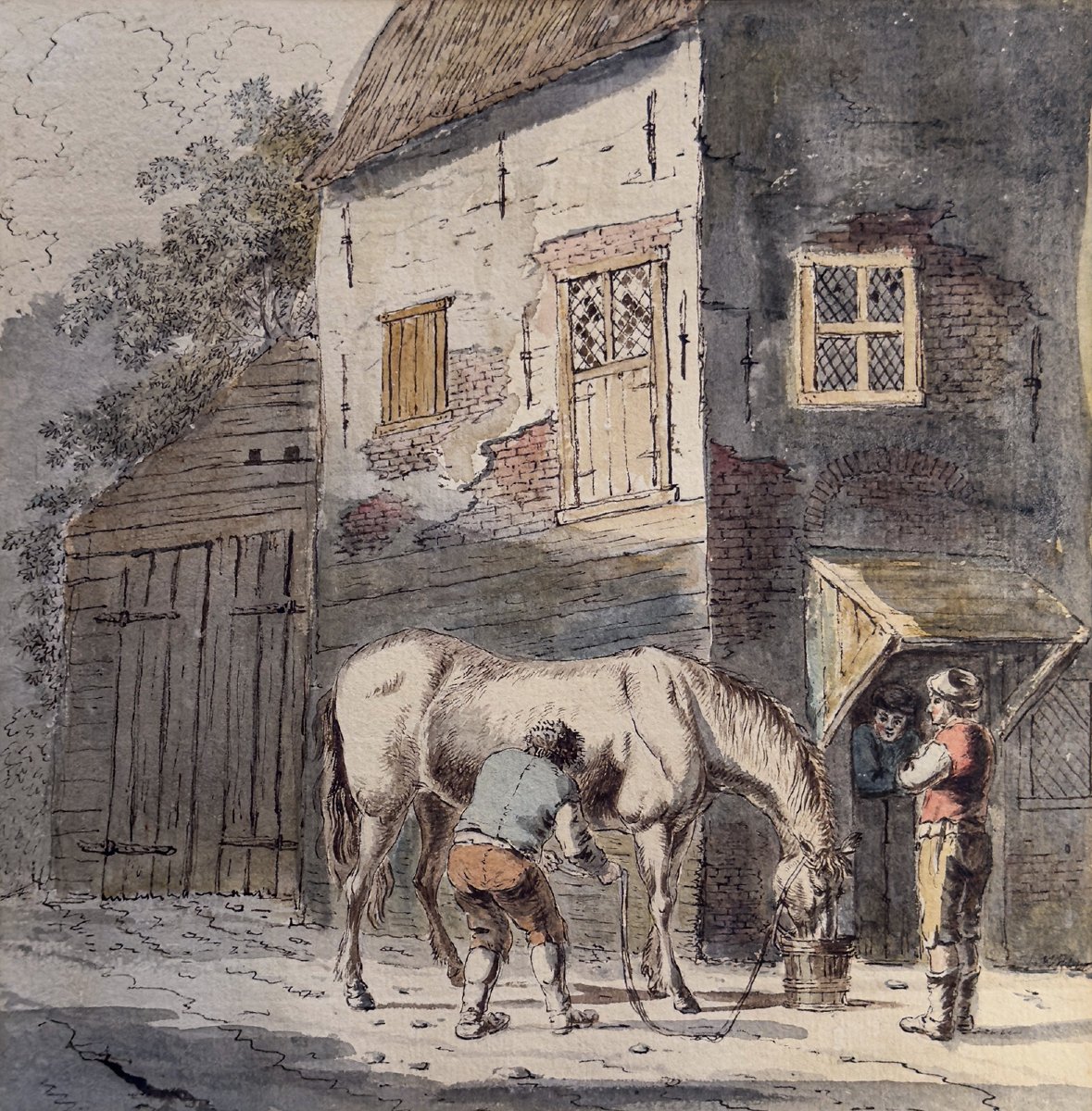
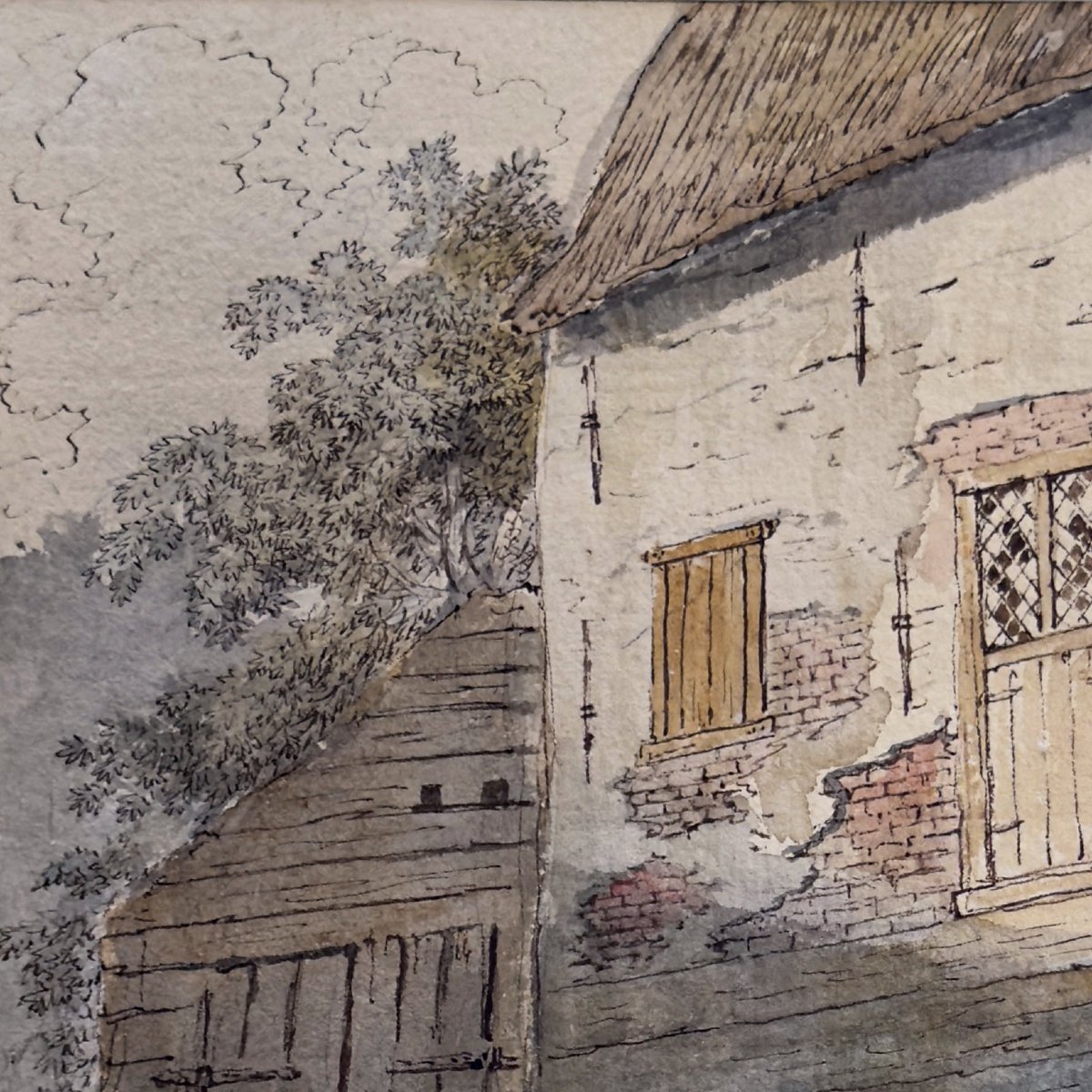
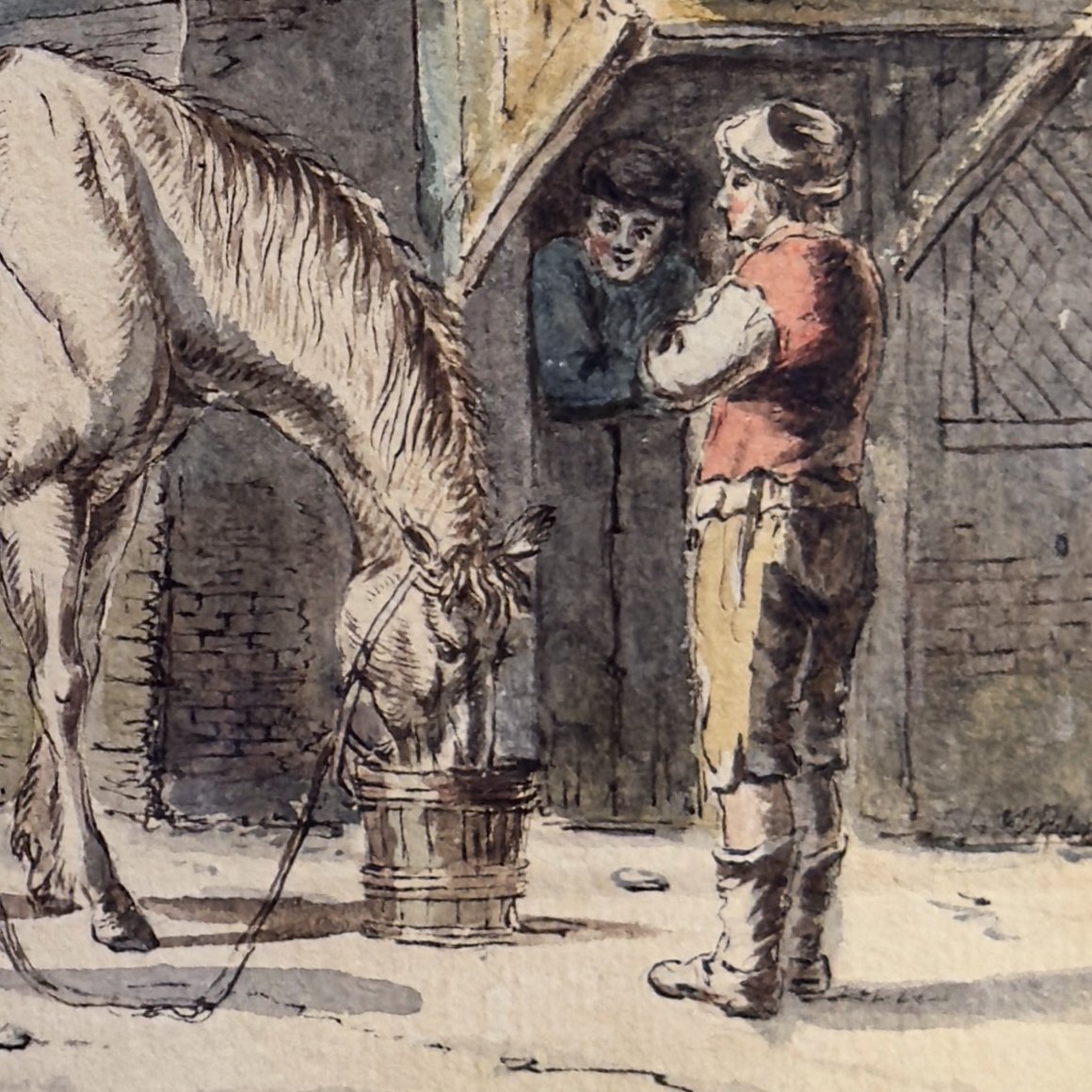
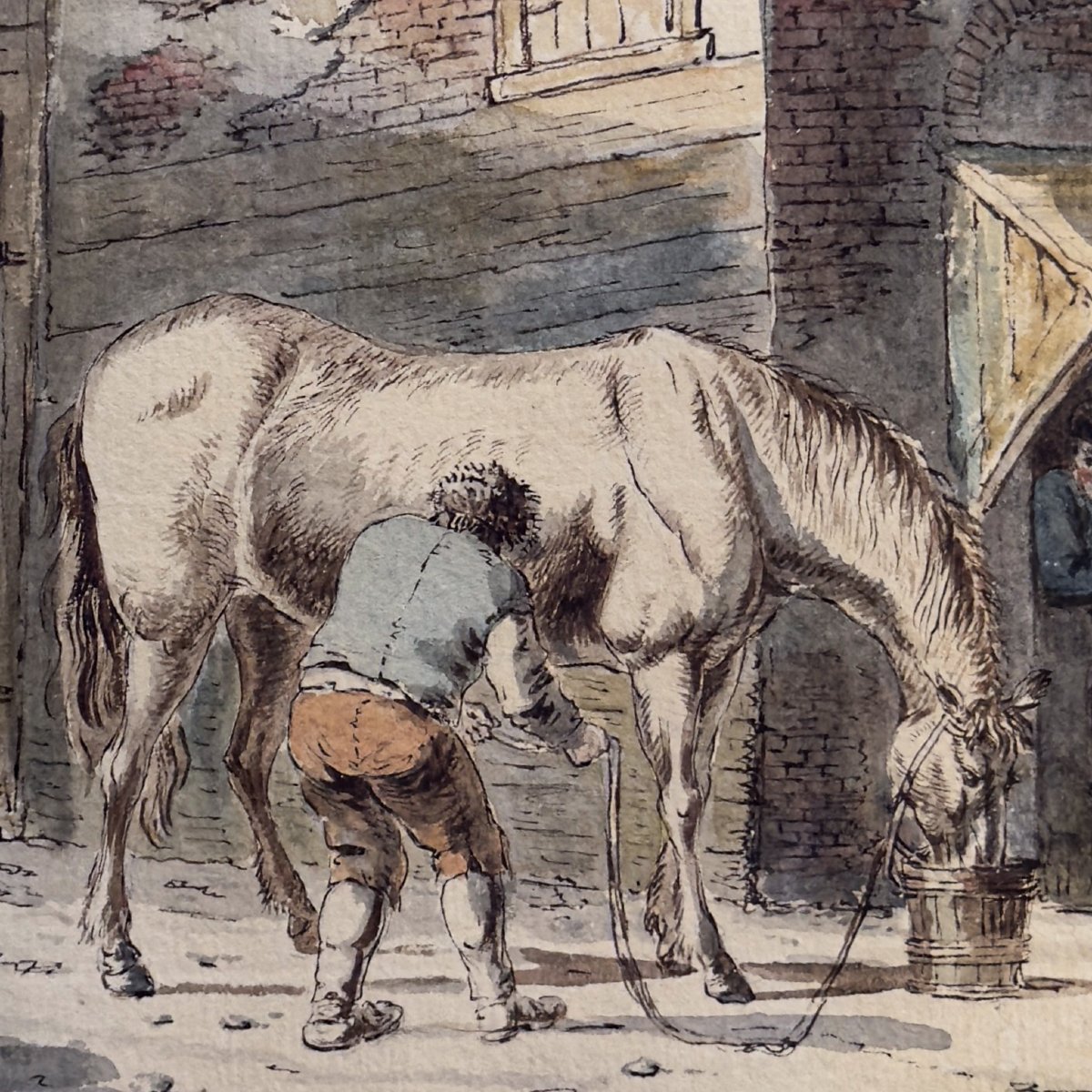
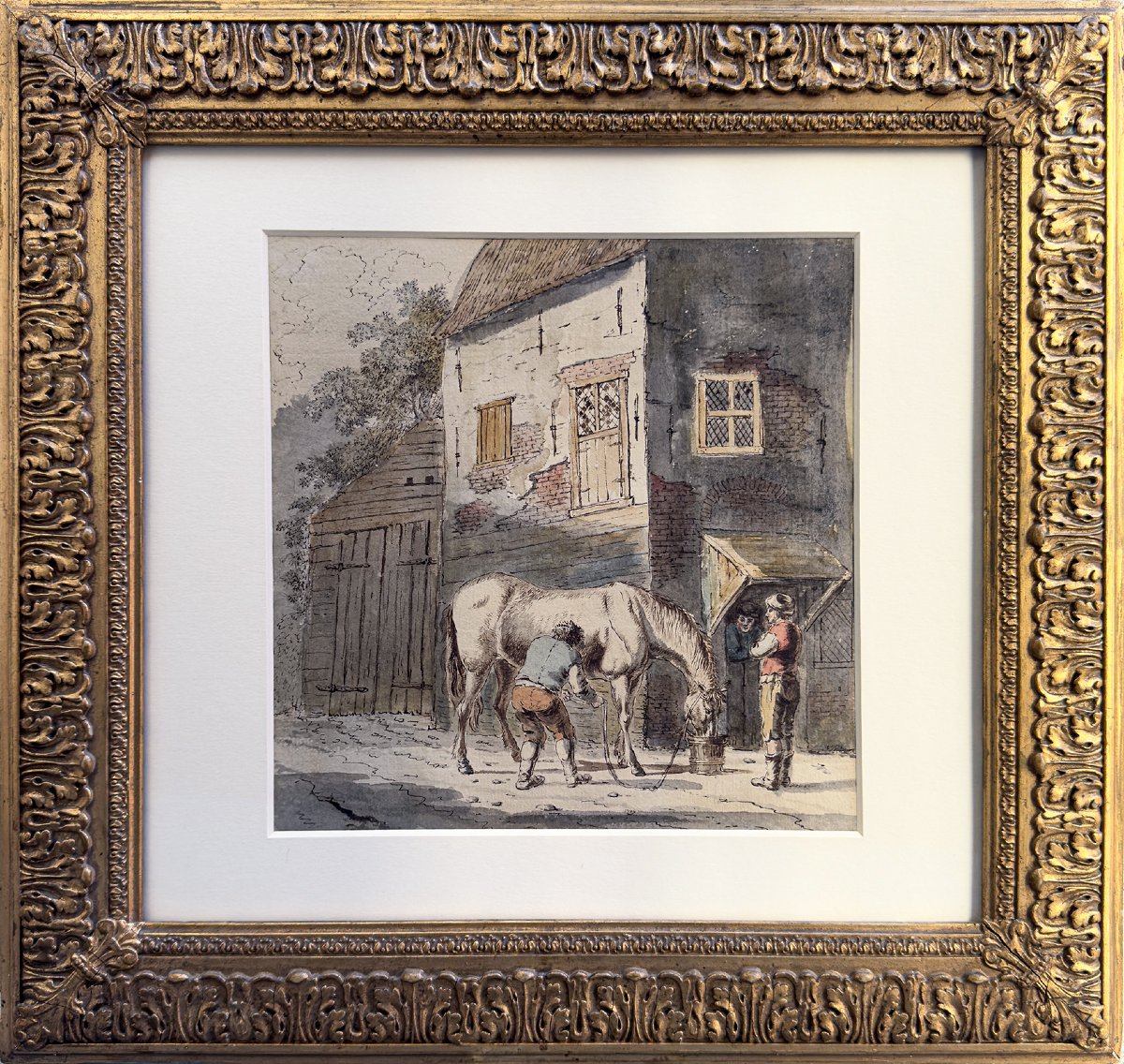
This sheet is a particularly evocative example of that transformation. Nothing truly exceptional is taking place: a man tends to a horse while two boys watch. Yet the restraint of the figures, the silence of the courtyard and the attention given to worn walls and humble outbuildings transform an ordinary episode into an image charged with feeling. Everyday life is no longer merely described; it becomes the subject of affectionate and melancholy contemplation.
In its interest in rural life, careful observation of vernacular architecture and delicate combination of pen and watercolour, the sheet belongs to the artistic circle of Johann Georg von Dillis. A major figure in German art around 1800, Dillis contributed to the transformation of the classical landscape tradition into a more immediate and realistic observation of nature and everyday surroundings.
Technique: pen and ink, watercolor on paper.
Dimensions of the drawing: 24.5 × 24 cm.
Dimensions with frame: 44 × 47 cm.
Presented with a light-colored mat in a rich gilded frame featuring a relief floral design.
During the eighteenth century, many German painters and draughtsmen looked with profound admiration to the seventeenth-century Dutch tradition. Their representation of everyday life drew extensively upon its interest in familiar subjects, modest interiors, courtyards, animals and ordinary work.
The rise of Sentimentalism gradually altered this relationship. Without abandoning the visual language inherited from Dutch genre painting, German artists began to view daily life through a more intimate and contemplative lens. The simplest gestures acquired a quiet poetry and, at times, a gentle sense of melancholy.
This sheet is a particularly evocative example of that transformation. Nothing truly exceptional is taking place: a man tends to a horse while two boys watch. Yet the restraint of the figures, the silence of the courtyard and the attention given to worn walls and humble outbuildings transform an ordinary episode into an image charged with feeling. Everyday life is no longer merely described; it becomes the subject of affectionate and melancholy contemplation.
In its interest in rural life, careful observation of vernacular architecture and delicate combination of pen and watercolour, the sheet belongs to the artistic circle of Johann Georg von Dillis. A major figure in German art around 1800, Dillis contributed to the transformation of the classical landscape tradition into a more immediate and realistic observation of nature and everyday surroundings.
Technique: pen and ink, watercolor on paper.
Dimensions of the drawing: 24.5 × 24 cm.
Dimensions with frame: 44 × 47 cm.
Presented with a light-colored mat in a rich gilded frame featuring a relief floral design.
450 €
Period: 18th century
Style: Louis 16th, Directory
Condition: Good condition
Material: Paper
Length: 24 cm
Height: 24.5 cm
Reference (ID): 1814295
Availability: In stock
Print