

Ag Dorschner, Saint Barbara
Artist: A. G. Dorschner
A. G. DORSCHNER
active 1930–1955 in Austria
ST. BARBARA
Ink on paper28.5 × 20 cm / 11.2 × 7.9 in
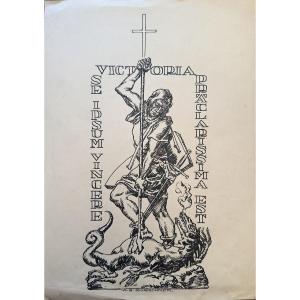
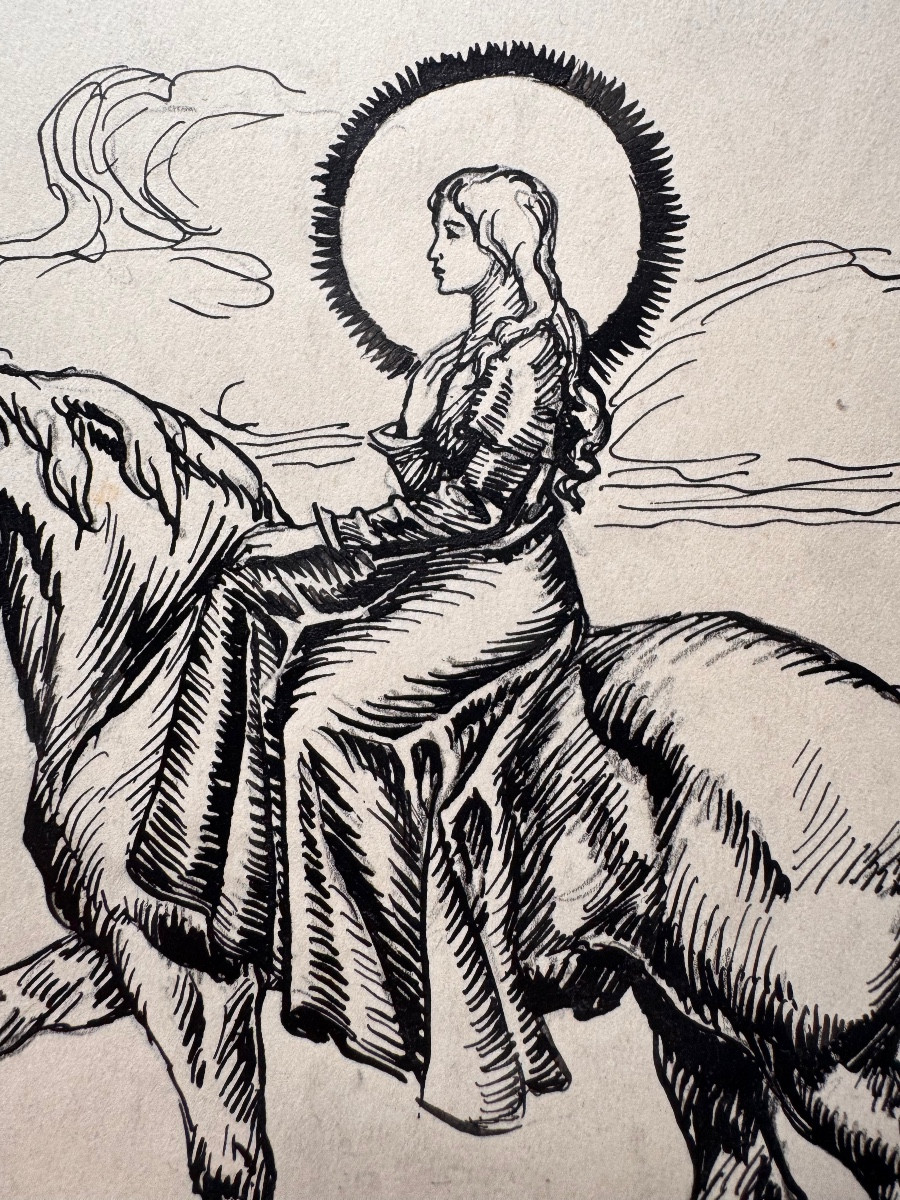
This striking ink composition reveals Dorschner’s clear engagement with the tradition of German woodcut. The bold contour, simplified modelling, and emphatic black-and-white contrast recall the formal clarity that defined late medieval and early modern printmaking in the German-speaking world.
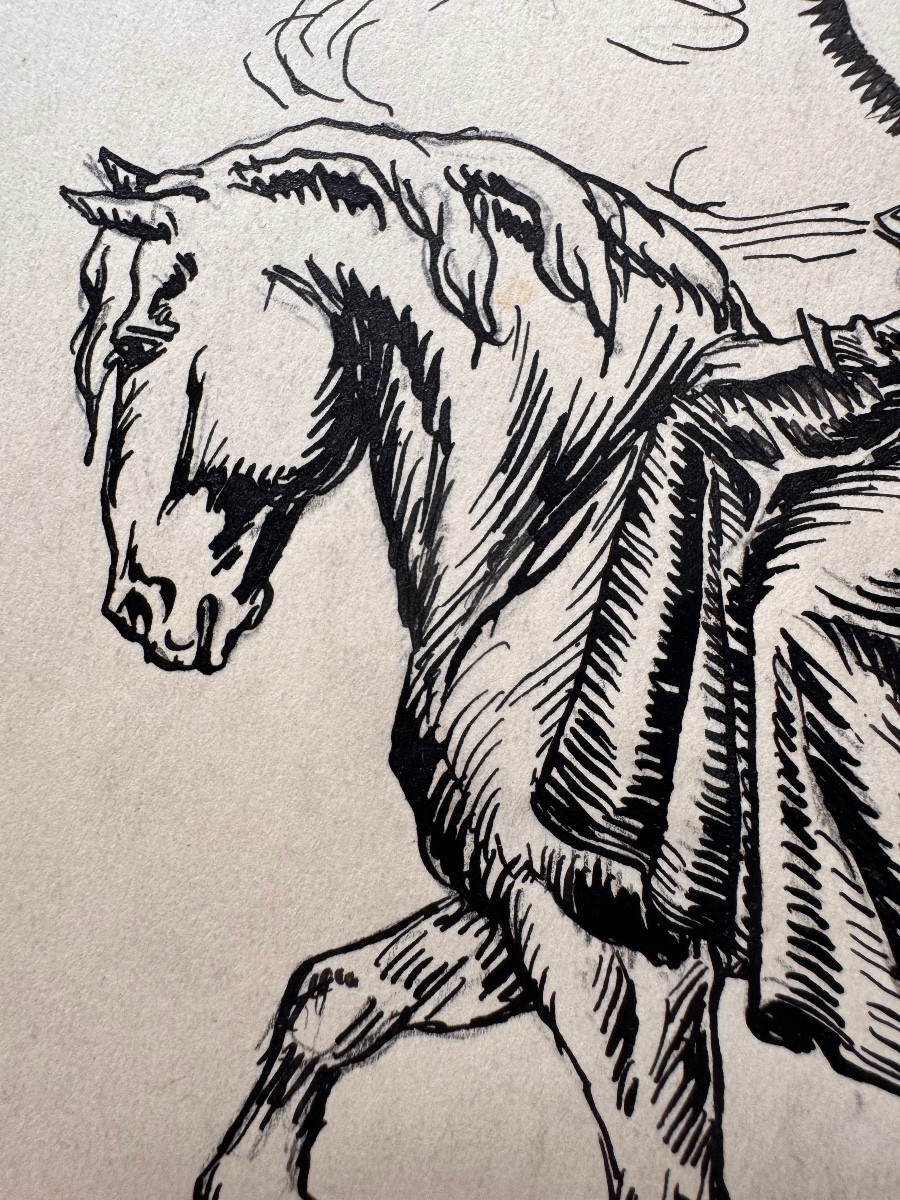
The figure of Saint Barbara is rendered in a consciously archaic manner. Seated upon a powerful horse, haloed and monumentalised, she is presented less as a narrative character than as an emblematic presence. The sculptural solidity of the forms and the controlled linear rhythm suggest an artist deeply attentive to the structural discipline of wood engraving.
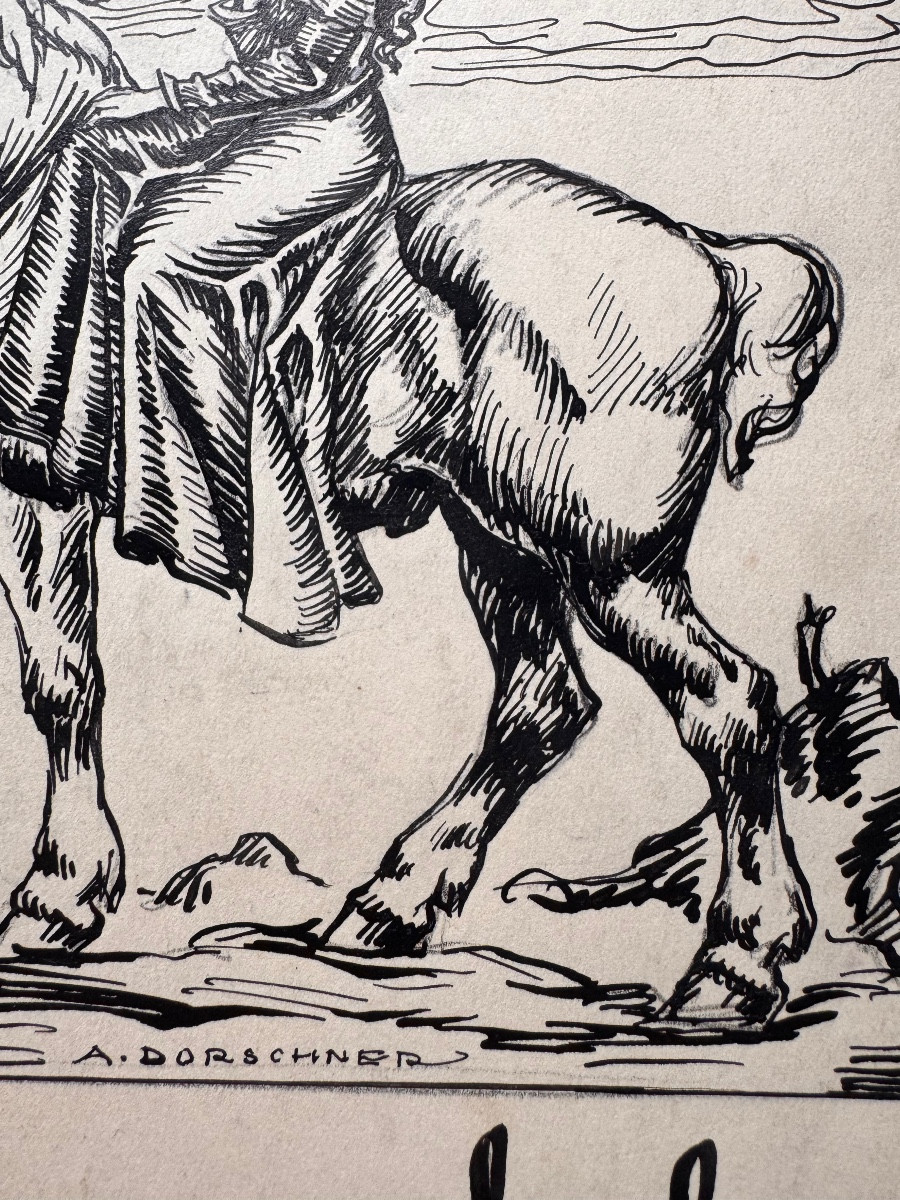
The inscription below, written in deliberately archaic German, invokes Saint Barbara as protector of the artillery. Translated loosely, it calls upon her to guard the guild and offer protection. Such devotional formulas formed part of a long-standing Central European tradition in which saints were invoked as patrons of specific professions, particularly those associated with danger.
Dorschner’s treatment demonstrates how 20th-century artists continued to draw inspiration from the formal discipline of German woodcut — valuing clarity of silhouette, compositional restraint, and the expressive power of line.
active 1930–1955 in Austria
ST. BARBARA
Ink on paper28.5 × 20 cm / 11.2 × 7.9 in
This striking ink composition reveals Dorschner’s clear engagement with the tradition of German woodcut. The bold contour, simplified modelling, and emphatic black-and-white contrast recall the formal clarity that defined late medieval and early modern printmaking in the German-speaking world.
The figure of Saint Barbara is rendered in a consciously archaic manner. Seated upon a powerful horse, haloed and monumentalised, she is presented less as a narrative character than as an emblematic presence. The sculptural solidity of the forms and the controlled linear rhythm suggest an artist deeply attentive to the structural discipline of wood engraving.
The inscription below, written in deliberately archaic German, invokes Saint Barbara as protector of the artillery. Translated loosely, it calls upon her to guard the guild and offer protection. Such devotional formulas formed part of a long-standing Central European tradition in which saints were invoked as patrons of specific professions, particularly those associated with danger.
Dorschner’s treatment demonstrates how 20th-century artists continued to draw inspiration from the formal discipline of German woodcut — valuing clarity of silhouette, compositional restraint, and the expressive power of line.
190 €
Period: 20th century
Style: Art Deco
Condition: Good condition
Material: Paper
Length: 20 cm
Height: 28,5 cm
Reference (ID): 1712653
Availability: In stock
Print