

Panealbo Attr. – Maria Theresa, Countess Of Artois As Diana: Rare Rococo Iconography
Artist: Giovanni Panealbo, Attribué
GIOVANNI PANEALBO, attributed
PORTRAIT OF MARIA THERESA OF SAVOY AS DIANA
GIOVANNI PANEALBO
Torino 1742 – 1815 Torino
Oil on canvas
63.5 x 53.6 cm / 25 x 21.1 inches, with frame 79.5 x 69.6 cm / 31.3 x 27.4 inches
PROVENANCE
France, private collection
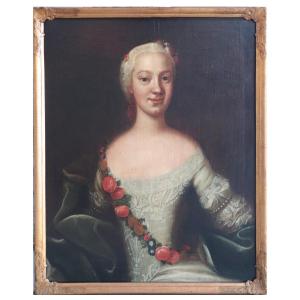
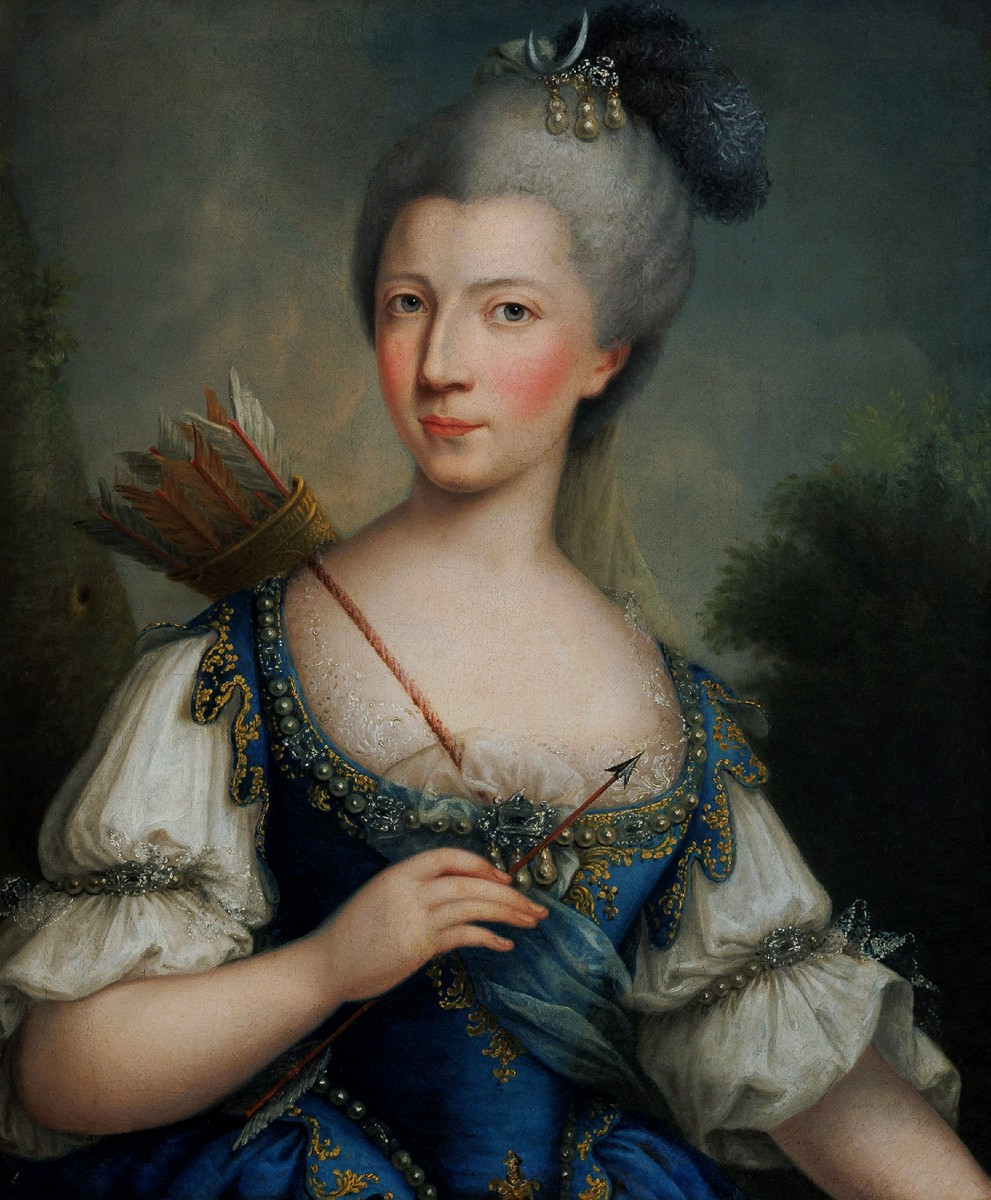
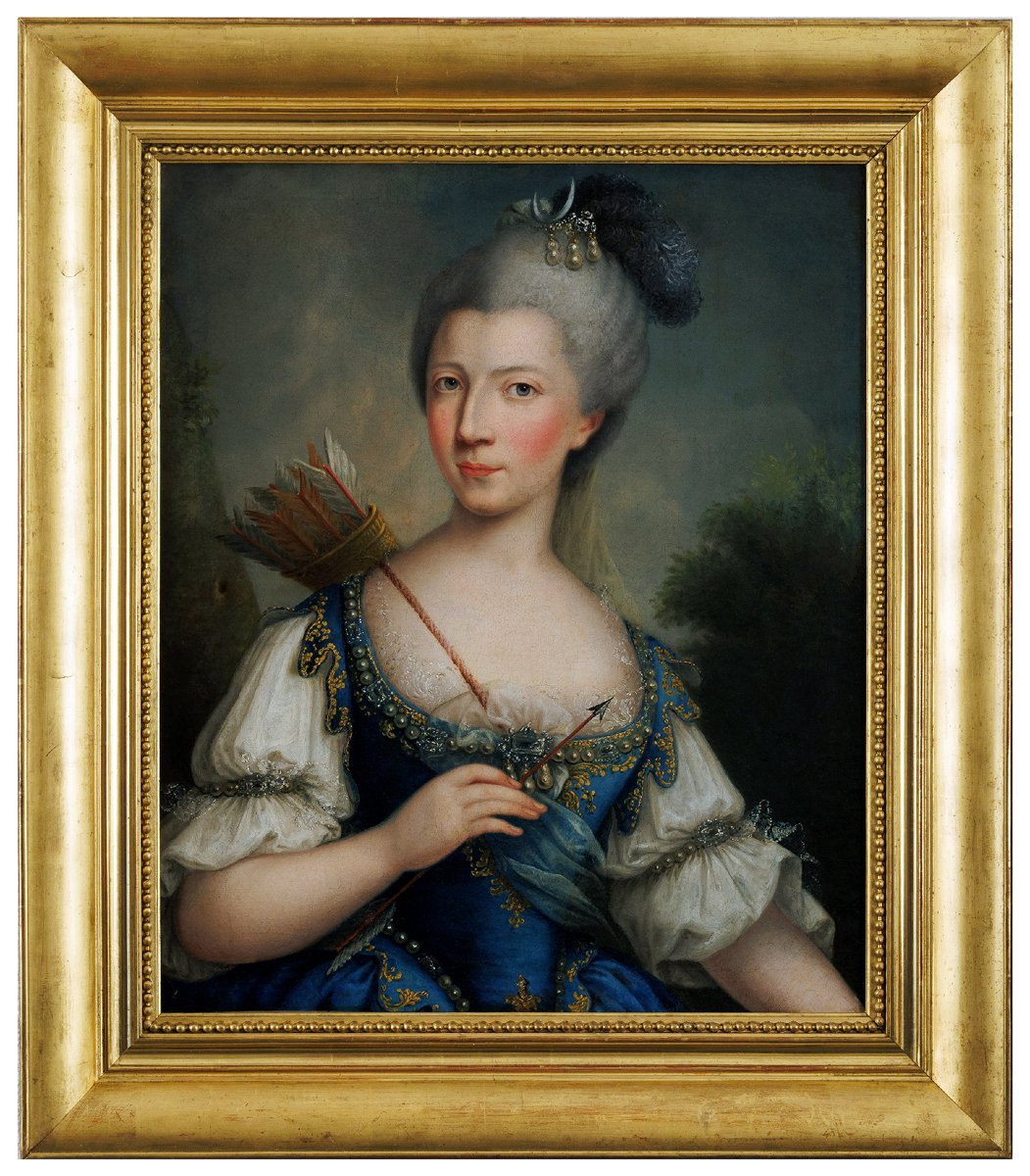
This rare early portrait depicts Maria Theresa of Savoy (1756–1805), the future Countess of Artois — wife of Charles Philippe, Count of Artois, younger brother of Louis XVI and future King Charles X of France. Represented here as Diana, the young princess appears before her marriage — or perhaps on the eve of the dynastic union that would soon link the House of Savoy to the French Bourbons.
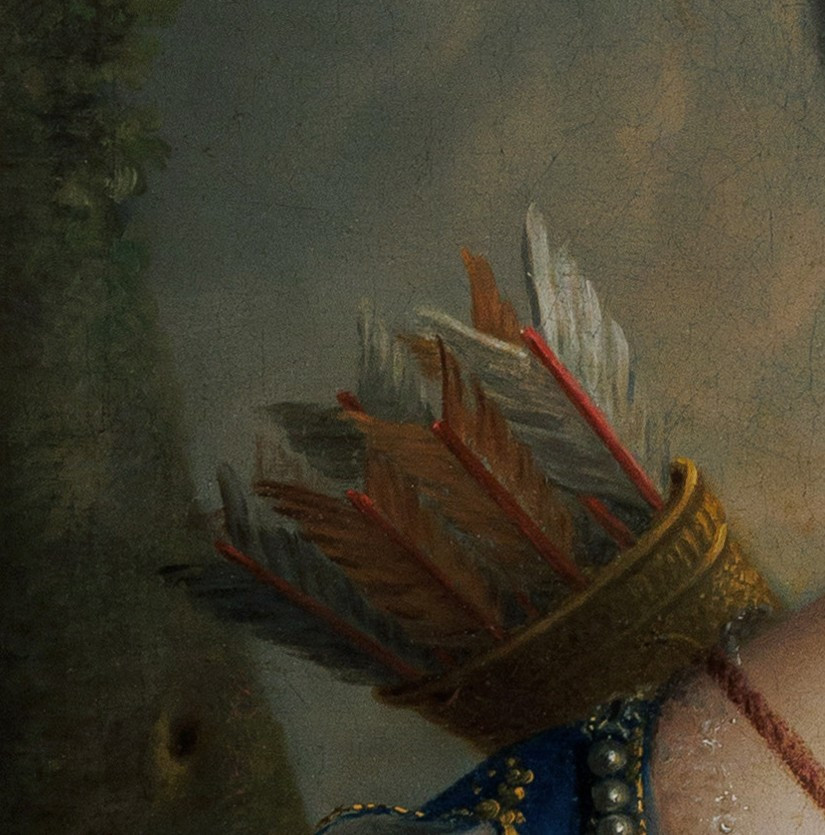
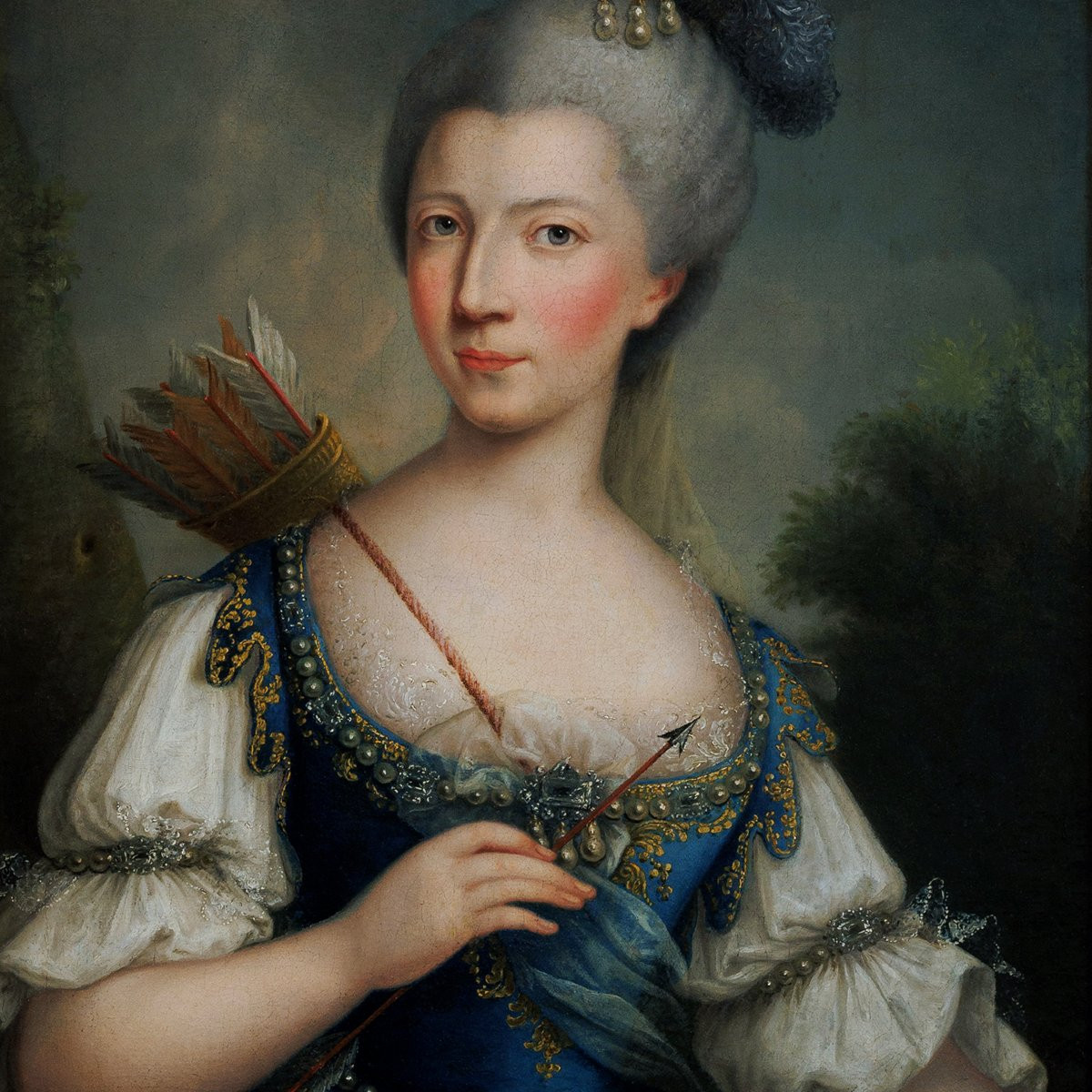
The iconography of Diana held a special place in eighteenth-century court culture. The goddess of the hunt symbolised not only chastity, but also youth, noble self-command, and a form of aristocratic independence particularly suited to the representation of unmarried princesses. In this case, the choice seems especially fitting: Maria Theresa is portrayed with a lightness, almost theatrical joy, and Rococo grace that naturally correspond to the image of a young Savoyard princess standing at the threshold of a new stage in life.
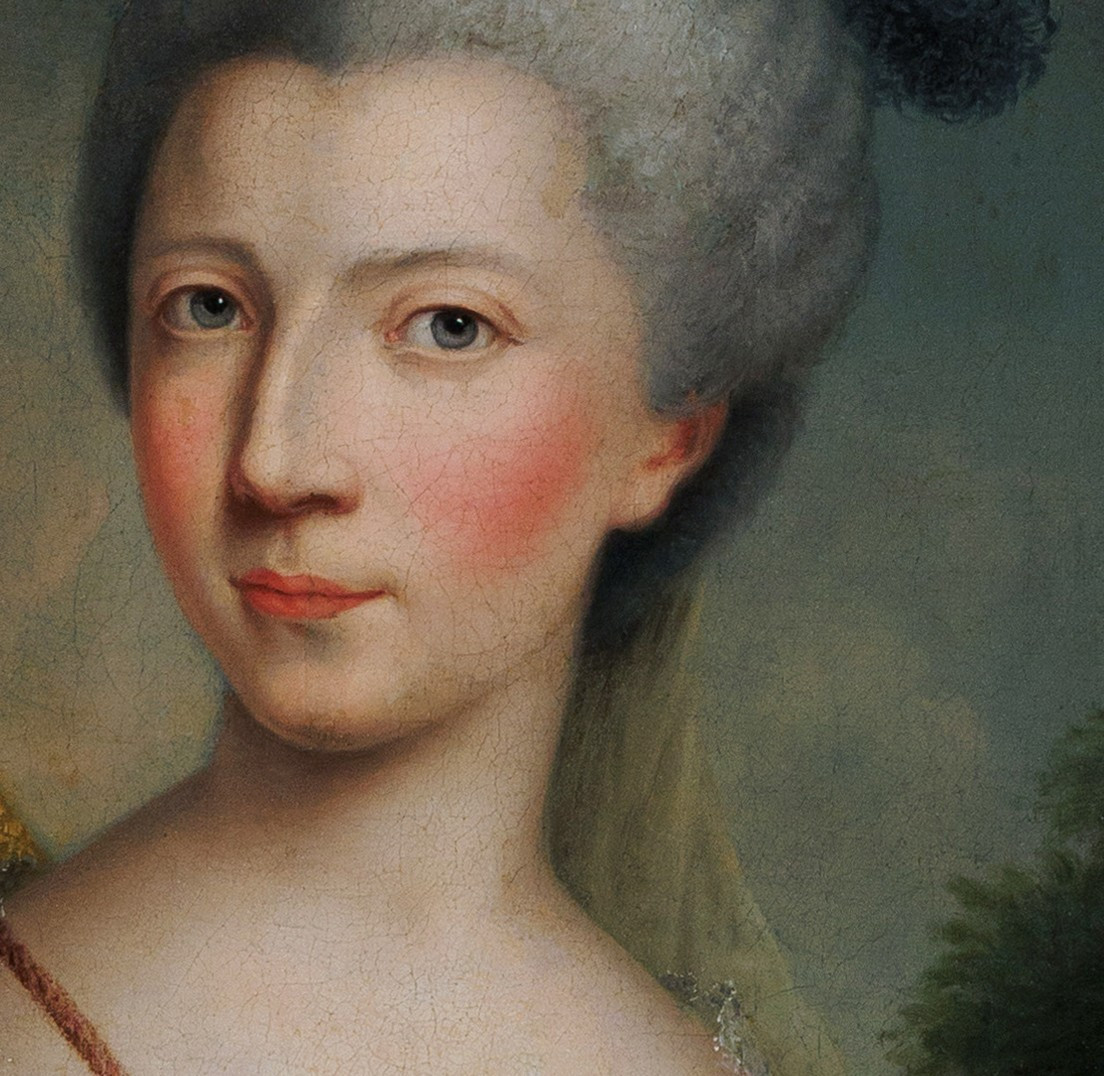
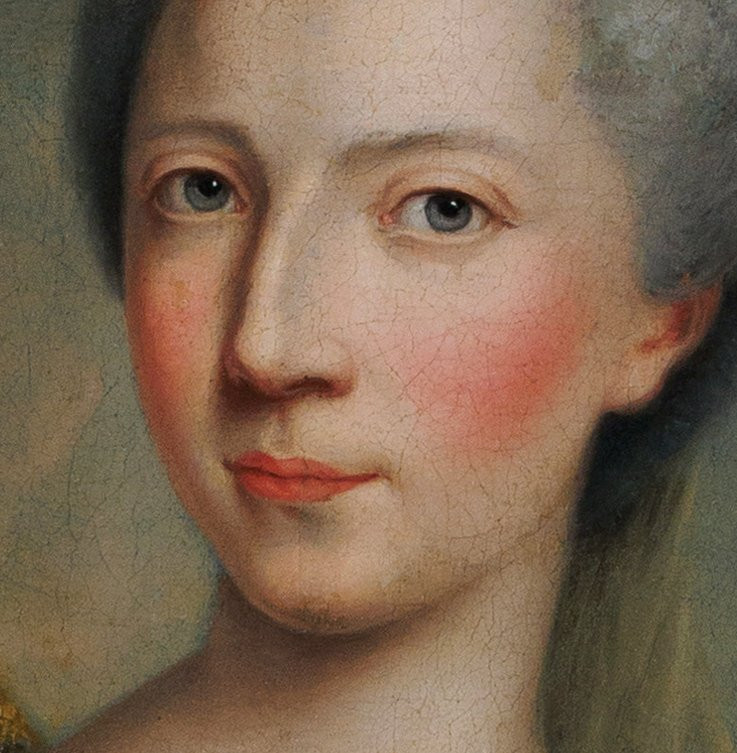
The dating of the portrait to around 1770–1775 is supported above all by the sitter’s hairstyle. Its form still belongs to the late Rococo period and predates the considerably more elaborate and monumental coiffures that spread through aristocratic circles after the rise of Marie Antoinette on the French stage. Everything in the sitter’s appearance — from the liveliness of her expression to the lightness of the allegorical costume — points toward an early image of the princess before her marriage to the Count of Artois.
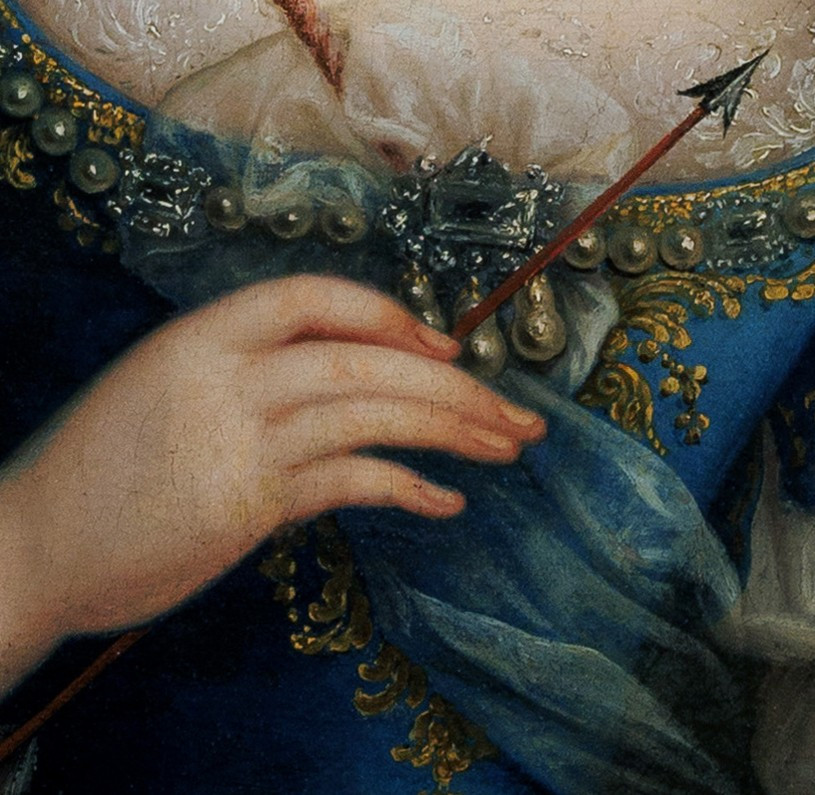
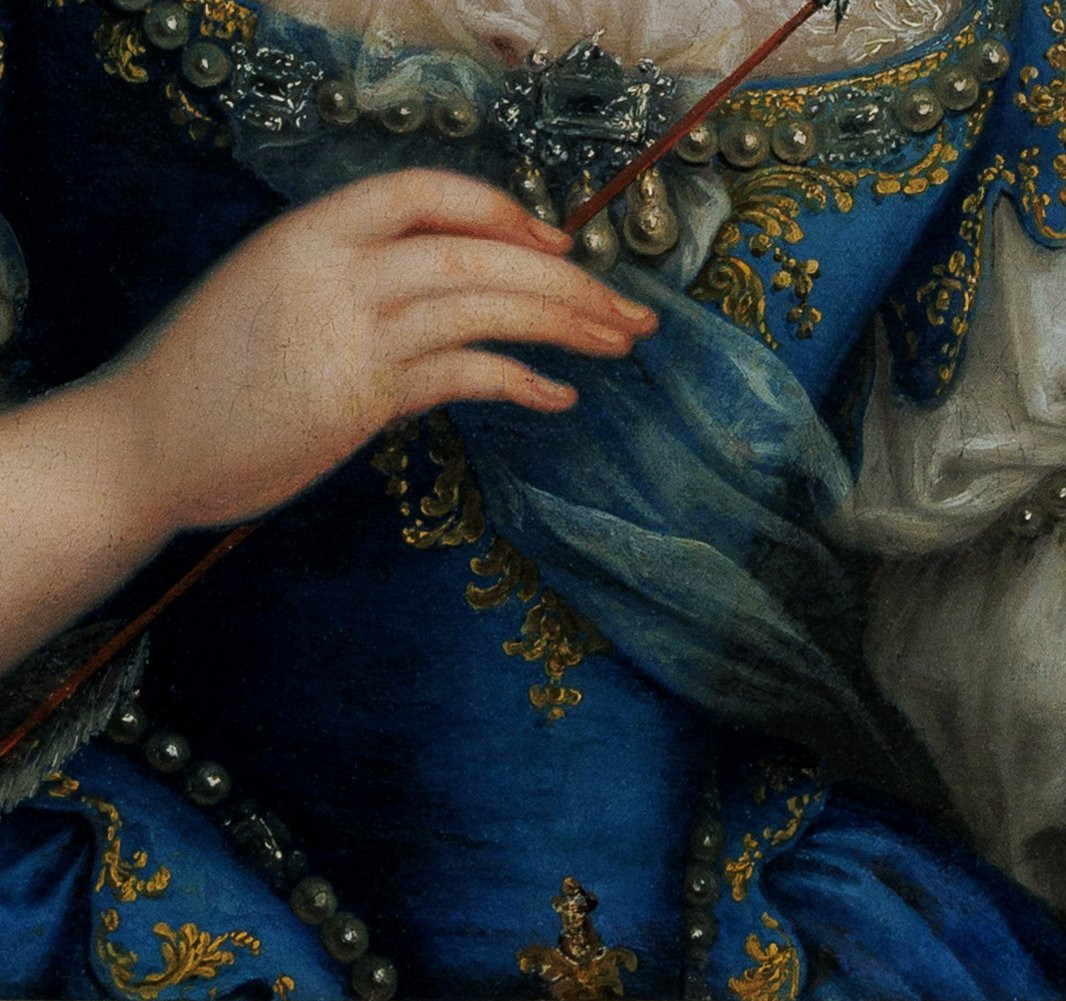
The jewels worn by the sitter are of particular interest. The large pendant pearls, almost peregrina-like in character, together with the striking brooch at her bodice, evoke the refined taste of the Spanish court and recall jewels seen in portraits of Maria Antonia Ferdinanda of Spain, Maria Theresa’s mother. Such details may have served as subtle references to the Spanish branch of the Savoy dynasty, whose dynastic significance remained deeply important at the Turin court.
One further detail appears especially intriguing. Despite Maria Theresa of Savoy’s obvious love of jewellery — clearly visible both in the present portrait and in other representations of her — the princess never wore earrings, a rather unusual characteristic for a woman of her rank in the eighteenth century. In the present portrait, the absence of this familiar courtly ornament unexpectedly becomes yet another small but highly individual feature of her image.
The painting should be regarded as an early work by Giovanni Panealbo, one of the most interesting court painters active in Turin during the second half of the eighteenth century. Particularly striking here are the softness of the painterly modelling, the transparency of the paint surface, and the festive, almost musical harmony of colour that characterise the artist’s early manner. The delicacy of execution, refined treatment of the face, and vivid sense of courtly elegance make this portrait an especially successful early example of Panealbo’s art.
Today, the portrait may be seen not only as an image of a young Savoyard princess, but also as a kind of historical prologue. Before us stands a serene Diana — youthful, graceful, and filled with the confidence of courtly optimism. Yet only a few years later, Maria Theresa would become part of the French court, whose fate would soon be inseparable from the dramatic collapse of the Ancien Régime.
PORTRAIT OF MARIA THERESA OF SAVOY AS DIANA
GIOVANNI PANEALBO
Torino 1742 – 1815 Torino
Oil on canvas
63.5 x 53.6 cm / 25 x 21.1 inches, with frame 79.5 x 69.6 cm / 31.3 x 27.4 inches
PROVENANCE
France, private collection
This rare early portrait depicts Maria Theresa of Savoy (1756–1805), the future Countess of Artois — wife of Charles Philippe, Count of Artois, younger brother of Louis XVI and future King Charles X of France. Represented here as Diana, the young princess appears before her marriage — or perhaps on the eve of the dynastic union that would soon link the House of Savoy to the French Bourbons.
The iconography of Diana held a special place in eighteenth-century court culture. The goddess of the hunt symbolised not only chastity, but also youth, noble self-command, and a form of aristocratic independence particularly suited to the representation of unmarried princesses. In this case, the choice seems especially fitting: Maria Theresa is portrayed with a lightness, almost theatrical joy, and Rococo grace that naturally correspond to the image of a young Savoyard princess standing at the threshold of a new stage in life.
The dating of the portrait to around 1770–1775 is supported above all by the sitter’s hairstyle. Its form still belongs to the late Rococo period and predates the considerably more elaborate and monumental coiffures that spread through aristocratic circles after the rise of Marie Antoinette on the French stage. Everything in the sitter’s appearance — from the liveliness of her expression to the lightness of the allegorical costume — points toward an early image of the princess before her marriage to the Count of Artois.
The jewels worn by the sitter are of particular interest. The large pendant pearls, almost peregrina-like in character, together with the striking brooch at her bodice, evoke the refined taste of the Spanish court and recall jewels seen in portraits of Maria Antonia Ferdinanda of Spain, Maria Theresa’s mother. Such details may have served as subtle references to the Spanish branch of the Savoy dynasty, whose dynastic significance remained deeply important at the Turin court.
One further detail appears especially intriguing. Despite Maria Theresa of Savoy’s obvious love of jewellery — clearly visible both in the present portrait and in other representations of her — the princess never wore earrings, a rather unusual characteristic for a woman of her rank in the eighteenth century. In the present portrait, the absence of this familiar courtly ornament unexpectedly becomes yet another small but highly individual feature of her image.
The painting should be regarded as an early work by Giovanni Panealbo, one of the most interesting court painters active in Turin during the second half of the eighteenth century. Particularly striking here are the softness of the painterly modelling, the transparency of the paint surface, and the festive, almost musical harmony of colour that characterise the artist’s early manner. The delicacy of execution, refined treatment of the face, and vivid sense of courtly elegance make this portrait an especially successful early example of Panealbo’s art.
Today, the portrait may be seen not only as an image of a young Savoyard princess, but also as a kind of historical prologue. Before us stands a serene Diana — youthful, graceful, and filled with the confidence of courtly optimism. Yet only a few years later, Maria Theresa would become part of the French court, whose fate would soon be inseparable from the dramatic collapse of the Ancien Régime.
7 500 €
Period: 18th century
Style: Louis 15th - Transition
Condition: Good condition
Material: Oil painting
Length: 53.6 cm
Height: 63.5 cm
Reference (ID): 1348838
Availability: In stock
Print