

Pair Of Candelabras, After Clodion, Restoration Period,
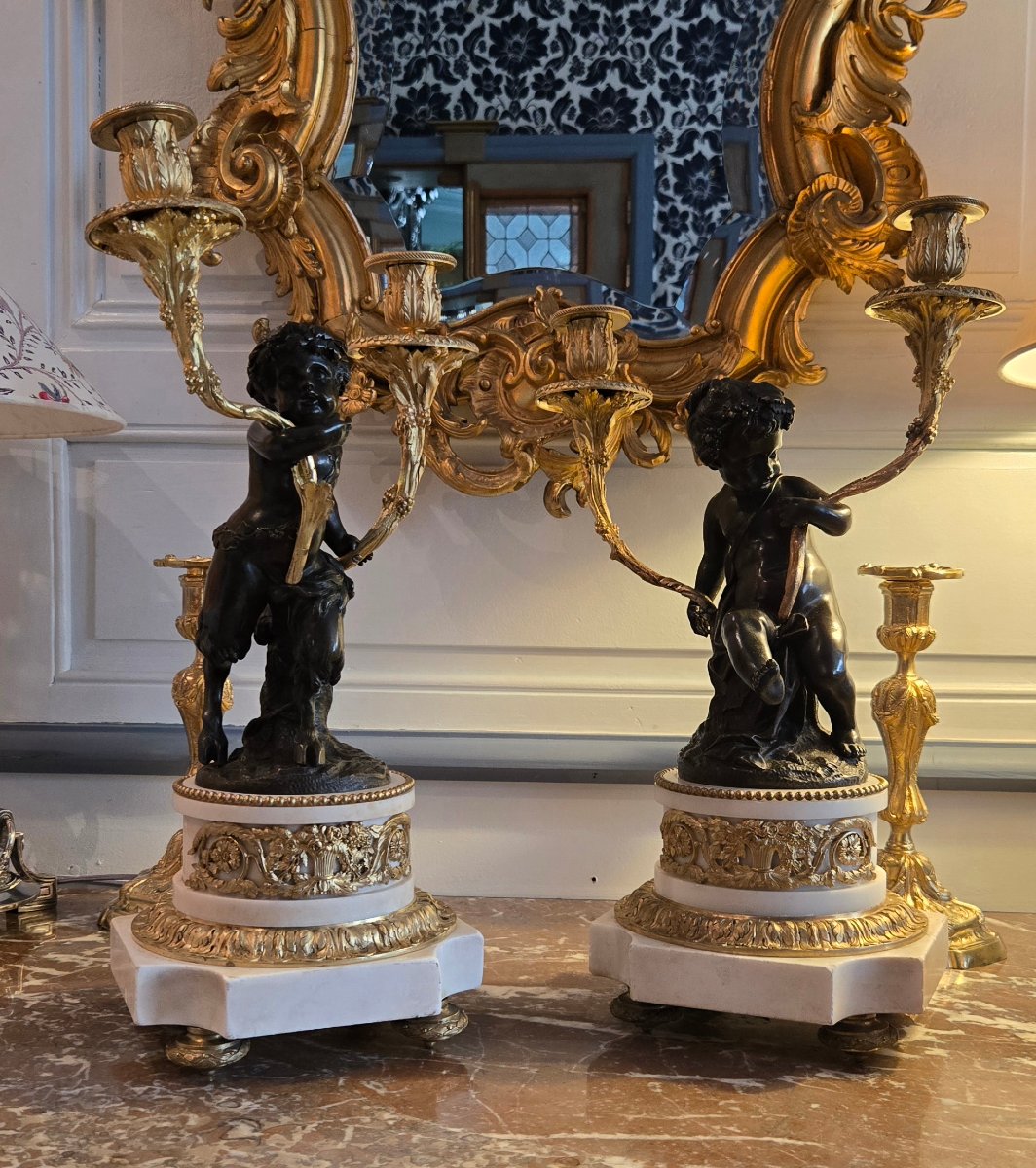
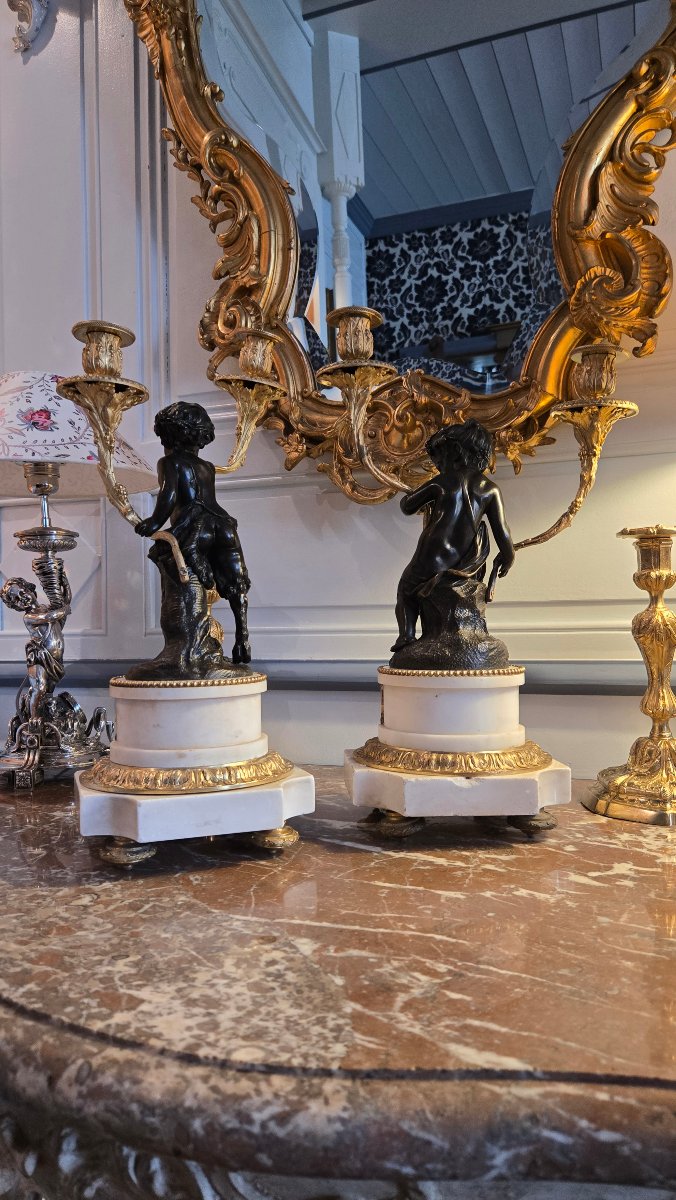
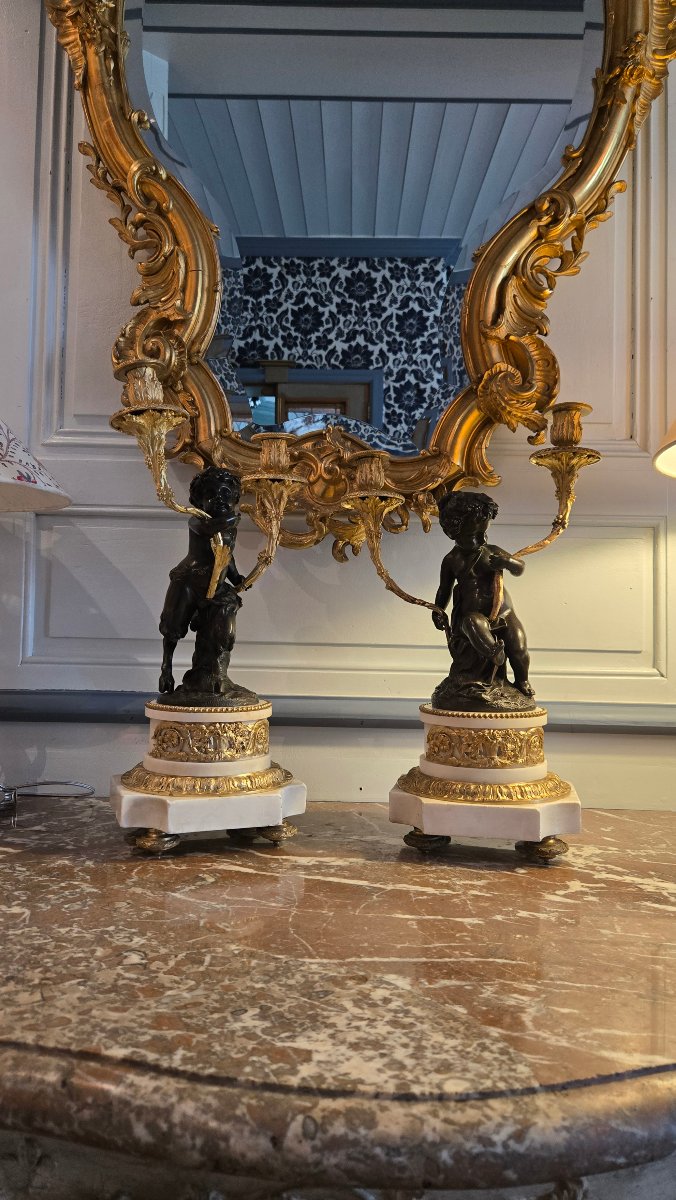
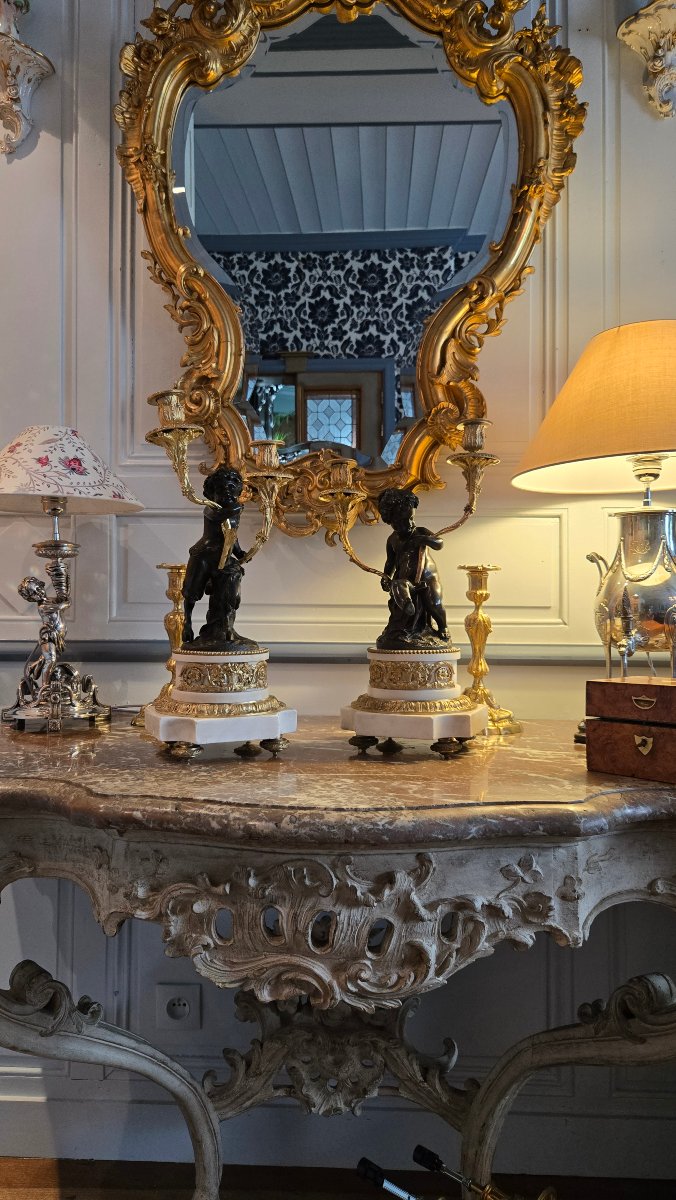
A pair of two-light candelabra made of patinated bronze, chiseled and gilded bronze, and white marble, featuring matching depictions of a young satyr and a young female figure from the Bacchic world.
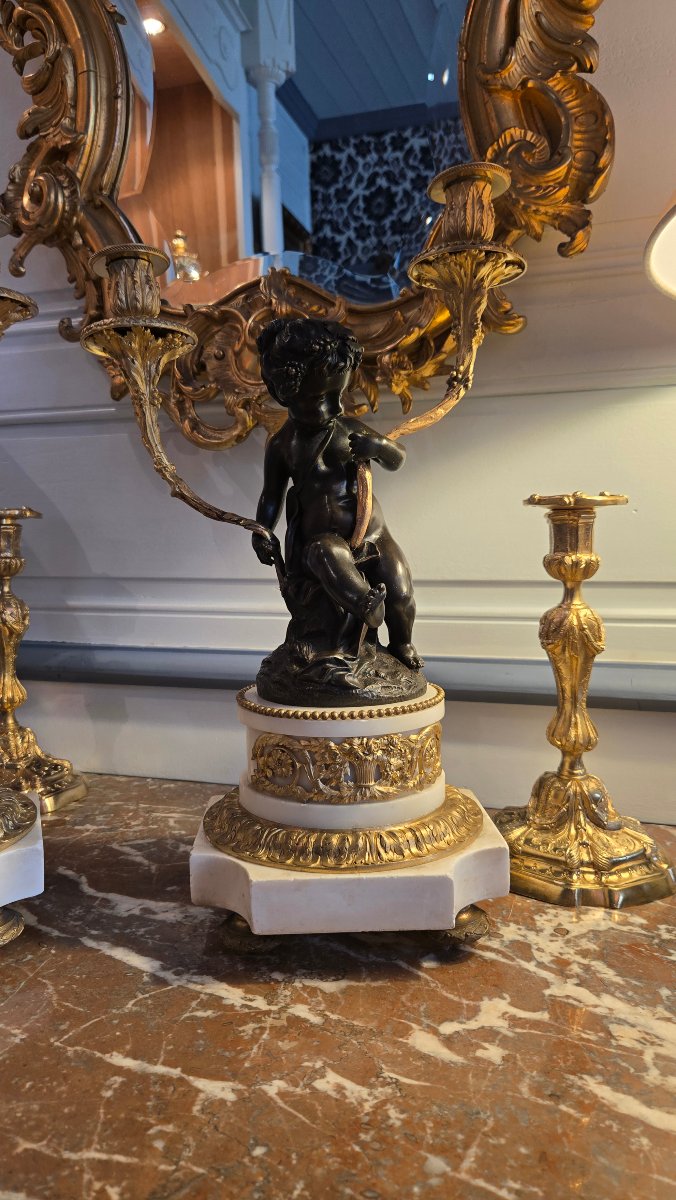
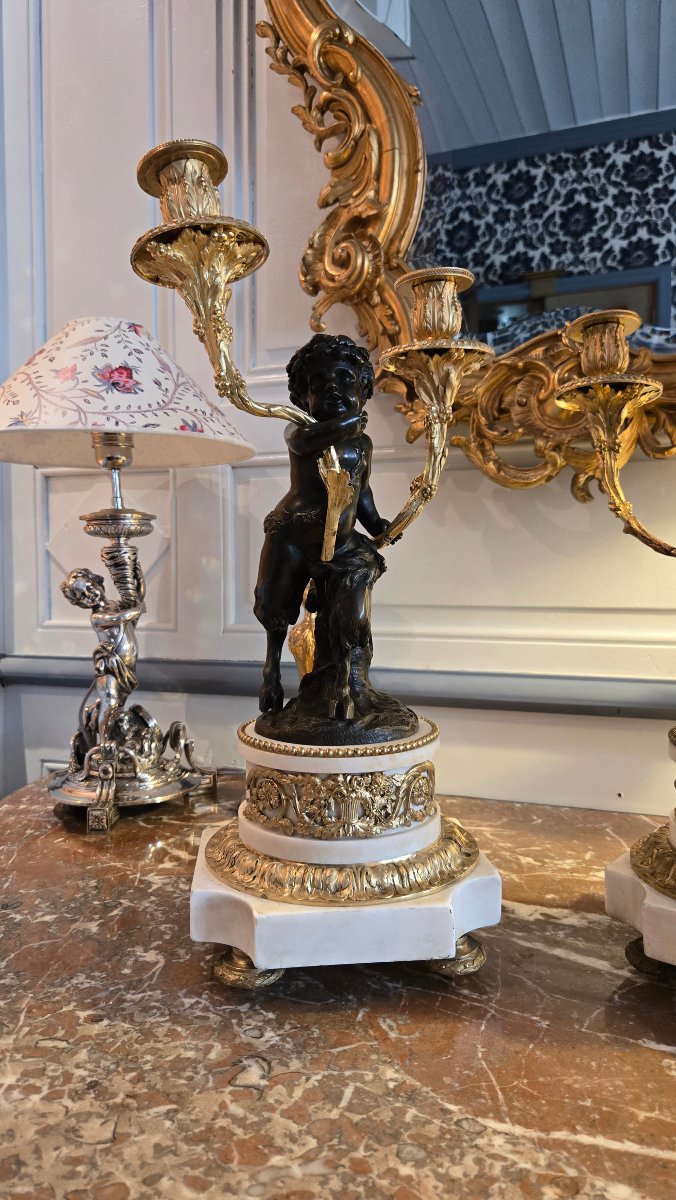
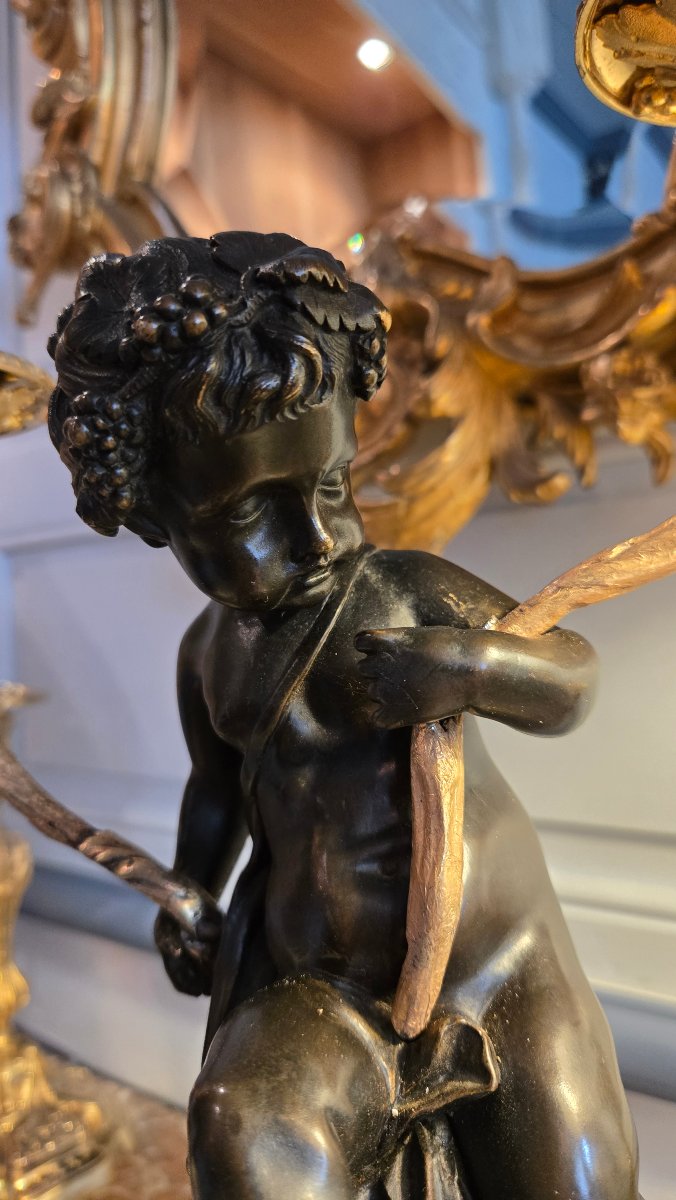
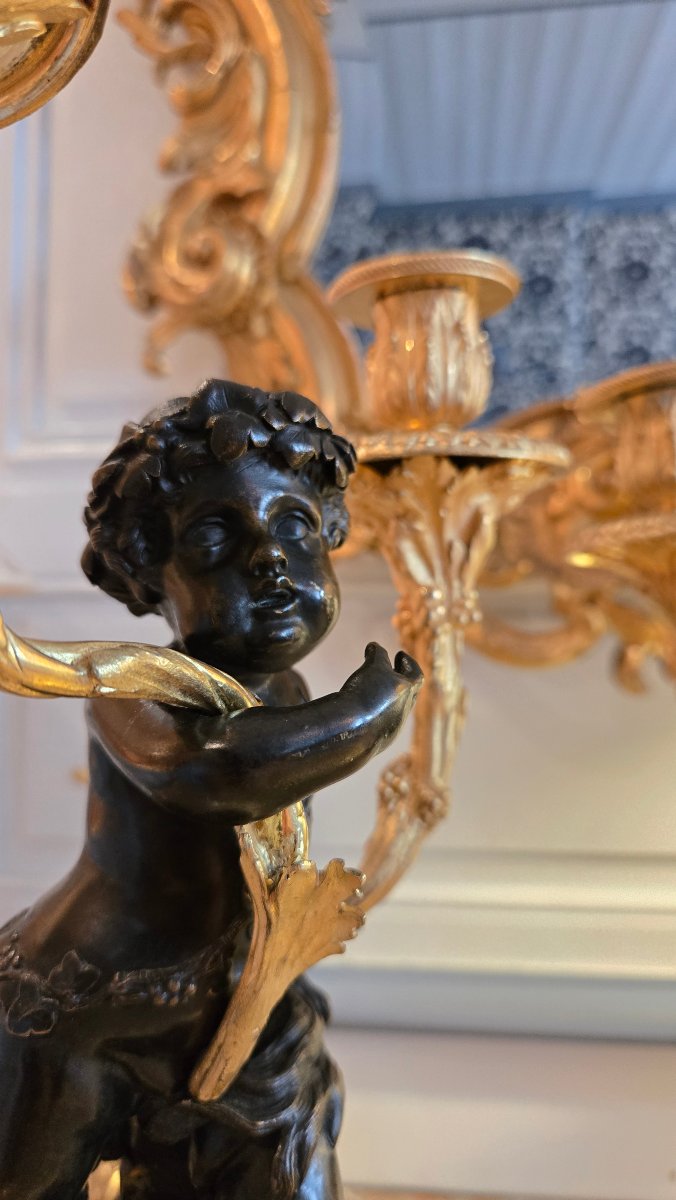
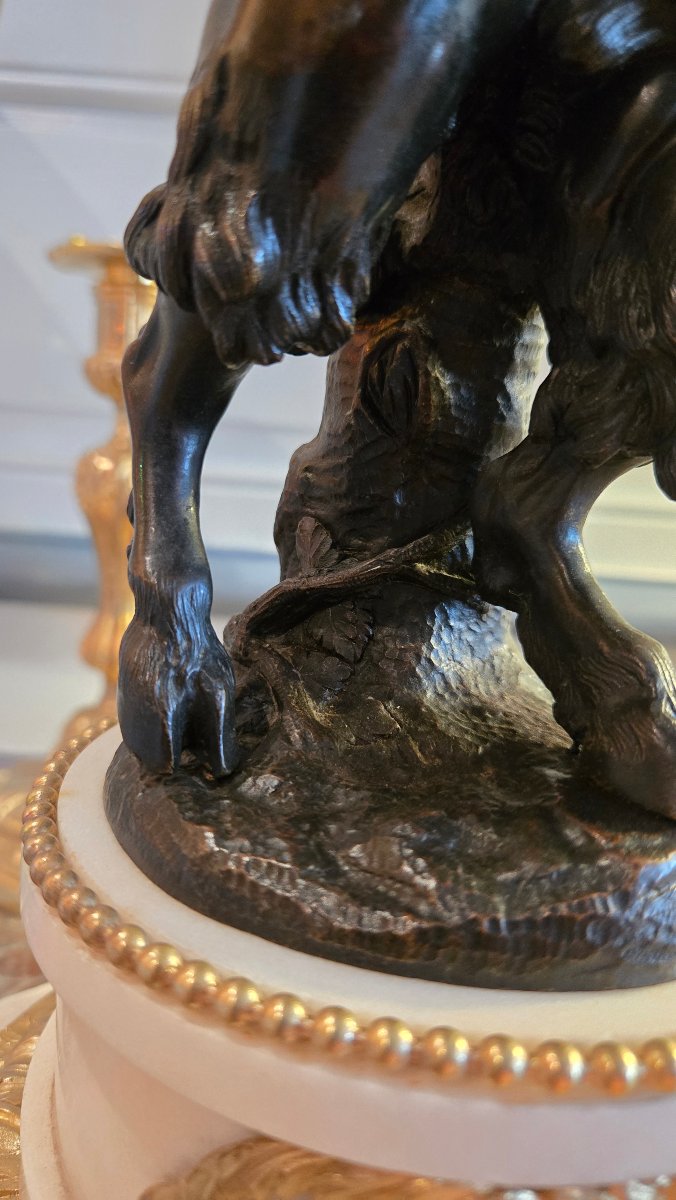
The young satyr is depicted standing in a lively pose, his body slightly swaying. His childlike features contrast with his hairy legs, which end in cloven hooves. Crowned with foliage and fruit, he wears a knotted animal skin around his waist. His female counterpart is depicted seated on a tree stump, one leg raised, her body partially wrapped in a light drapery. Also crowned with foliage and fruit, she can be likened to the young Bacchantes and nymphs that populate the works of Clodion and his contemporaries.
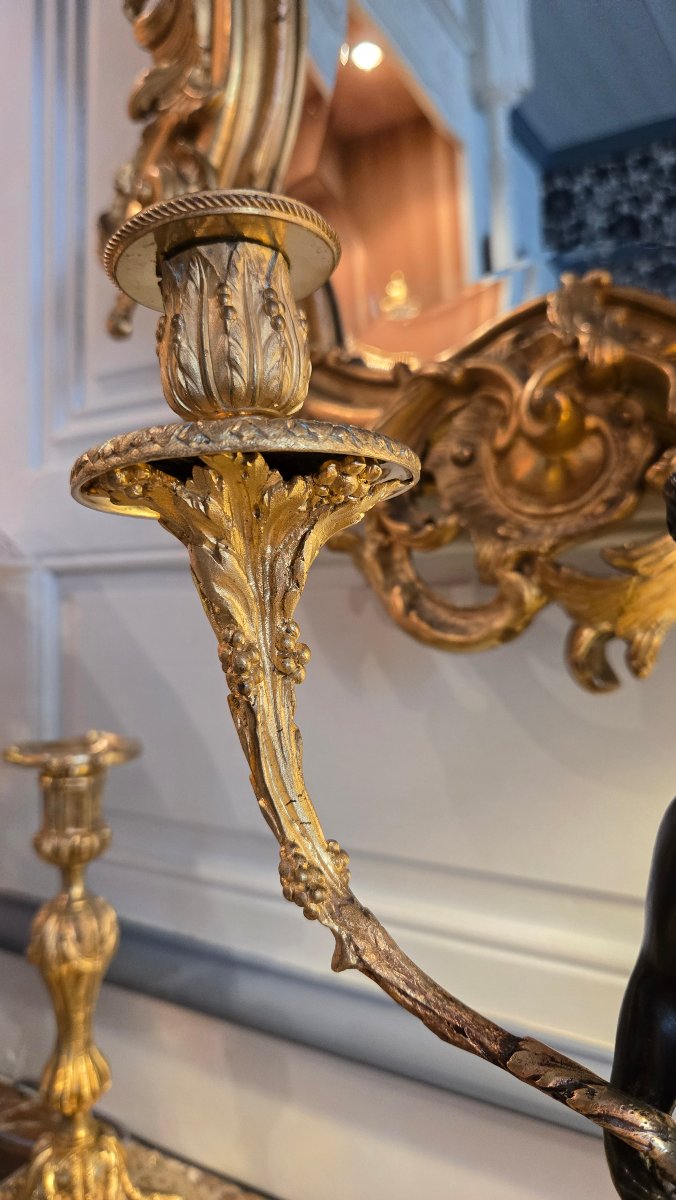
Each figure holds two branches of light made of chiseled and gilded bronze. Shaped like sinuous twigs, they extend on either side of the figures amid foliage and fruit and terminate in calyx-shaped candelabra and candle holders. The contrast between the brown-black patina of the figures and the gilding of the branches accentuates the sculptural character of the ensemble.
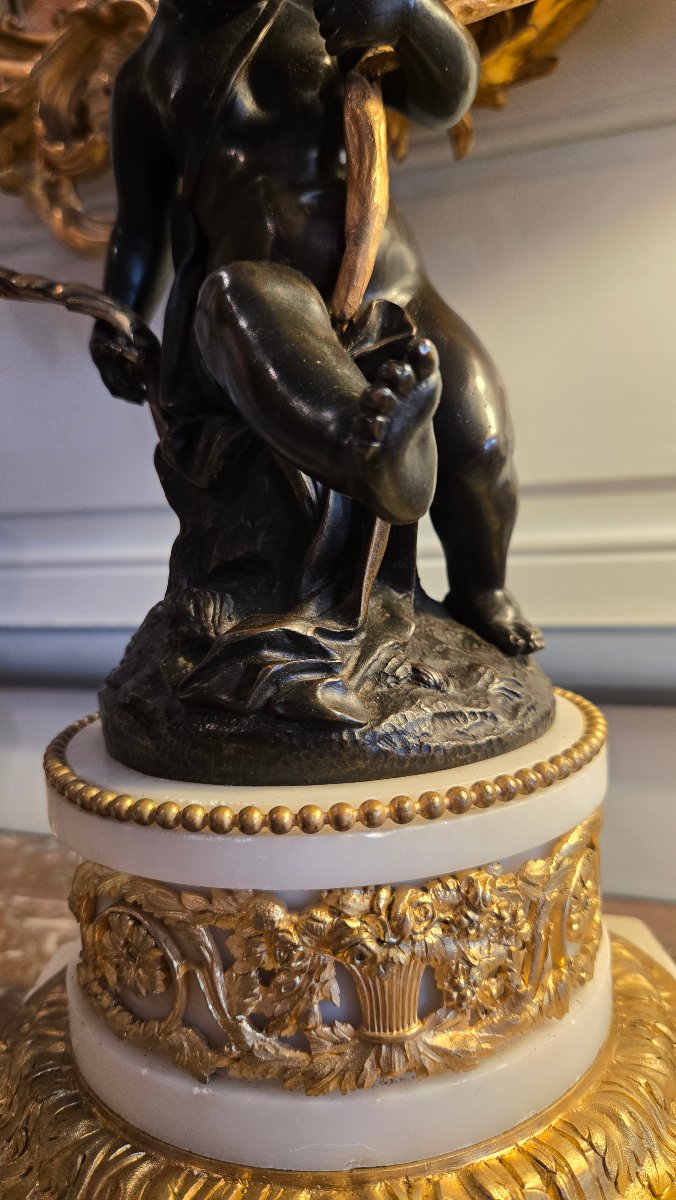
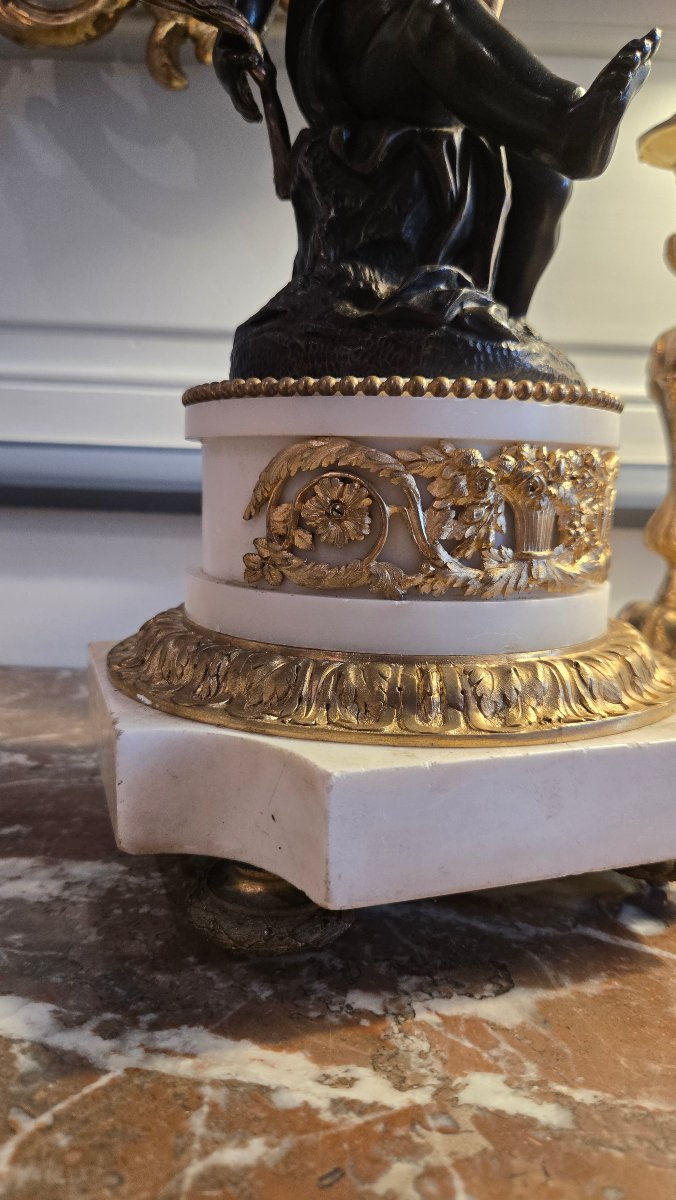
The groups rest on naturalistic terraces of patinated bronze set upon cylindrical bases of white marble. These bases are encircled by a row of pearls and an openwork frieze of chiseled and gilded bronze combining garlands, wreaths, and plant motifs. A lower molding featuring water leaves precedes a square white marble plinth with recessed corners, resting on small gilded bronze feet that are original to the piece.
The composition is directly part of a family of candelabra created during the reign of Louis XVI, inspired by the Bacchic figures of Claude Michel, known as Clodion (1738–1814), and Louis-Félix Delarue (1730/31–1765/77).
The Louvre Museum houses a particularly significant pair, dated around 1775 (OA 5207 and OA 5208). It features a young satyr and a young girl, both cast in patinated bronze, each holding two branches of light and resting on a round base with moldings and a row of pearls. The young satyr is said to be based on a model by Clodion, while its female counterpart is attributed to Louis-Félix Delarue. This pair provides valuable evidence of the origins, as early as the 18th century, of the design from which these candelabras are derived.
Clodion’s taste for satyrs, Bacchantes, and Bacchic scenes, which developed as early as the 1760s and 1770s, had a significant influence on the decorative arts. His compositions were adapted by bronze casters and continued to be reinterpreted well into the early 19th century.
This pair appears to be part of that tradition. Their overall craftsmanship places them in the Restoration period, around 1820–1830, but their disassembly during cleaning revealed the presence of several old, irregular threads—worn down and reworked with a file—characteristic of 18th-century assemblies.
These elements could indicate the reuse of components from 18th-century candelabra, which were reassembled or adapted in the early 19th century. It is also possible that certain parts of the set are older than its current assembly suggests. This feature is particularly interesting given the composition’s similarity to models created around 1775.
The patinated bronze pieces retain a beautiful antique brown-black patina with some signs of wear. The original gilding is also well-preserved, with only a few isolated areas of wear. One gilded bronze arm shows an old repair.
There are a few small chips and imperfections on the white marble bases, mainly along the edges. Signs of wear and minor imperfections from use.
Comparison: Musée du Louvre, Department of Decorative Arts, pair of small two-light candelabras, c. 1775, OA 5207, after Claude Michel, known as Clodion, and OA 5208, by Louis-Félix Delarue.
Dimensions: Height: 46 cm
Bibliography: Daniel Alcouffe, Anne Dion, and Gérard Mabille, *Les bronzes d’ameublement du Louvre*, Dijon, Faton, 2004, p. 107, no. 48.
The young satyr is depicted standing in a lively pose, his body slightly swaying. His childlike features contrast with his hairy legs, which end in cloven hooves. Crowned with foliage and fruit, he wears a knotted animal skin around his waist. His female counterpart is depicted seated on a tree stump, one leg raised, her body partially wrapped in a light drapery. Also crowned with foliage and fruit, she can be likened to the young Bacchantes and nymphs that populate the works of Clodion and his contemporaries.
Each figure holds two branches of light made of chiseled and gilded bronze. Shaped like sinuous twigs, they extend on either side of the figures amid foliage and fruit and terminate in calyx-shaped candelabra and candle holders. The contrast between the brown-black patina of the figures and the gilding of the branches accentuates the sculptural character of the ensemble.
The groups rest on naturalistic terraces of patinated bronze set upon cylindrical bases of white marble. These bases are encircled by a row of pearls and an openwork frieze of chiseled and gilded bronze combining garlands, wreaths, and plant motifs. A lower molding featuring water leaves precedes a square white marble plinth with recessed corners, resting on small gilded bronze feet that are original to the piece.
The composition is directly part of a family of candelabra created during the reign of Louis XVI, inspired by the Bacchic figures of Claude Michel, known as Clodion (1738–1814), and Louis-Félix Delarue (1730/31–1765/77).
The Louvre Museum houses a particularly significant pair, dated around 1775 (OA 5207 and OA 5208). It features a young satyr and a young girl, both cast in patinated bronze, each holding two branches of light and resting on a round base with moldings and a row of pearls. The young satyr is said to be based on a model by Clodion, while its female counterpart is attributed to Louis-Félix Delarue. This pair provides valuable evidence of the origins, as early as the 18th century, of the design from which these candelabras are derived.
Clodion’s taste for satyrs, Bacchantes, and Bacchic scenes, which developed as early as the 1760s and 1770s, had a significant influence on the decorative arts. His compositions were adapted by bronze casters and continued to be reinterpreted well into the early 19th century.
This pair appears to be part of that tradition. Their overall craftsmanship places them in the Restoration period, around 1820–1830, but their disassembly during cleaning revealed the presence of several old, irregular threads—worn down and reworked with a file—characteristic of 18th-century assemblies.
These elements could indicate the reuse of components from 18th-century candelabra, which were reassembled or adapted in the early 19th century. It is also possible that certain parts of the set are older than its current assembly suggests. This feature is particularly interesting given the composition’s similarity to models created around 1775.
The patinated bronze pieces retain a beautiful antique brown-black patina with some signs of wear. The original gilding is also well-preserved, with only a few isolated areas of wear. One gilded bronze arm shows an old repair.
There are a few small chips and imperfections on the white marble bases, mainly along the edges. Signs of wear and minor imperfections from use.
Comparison: Musée du Louvre, Department of Decorative Arts, pair of small two-light candelabras, c. 1775, OA 5207, after Claude Michel, known as Clodion, and OA 5208, by Louis-Félix Delarue.
Dimensions: Height: 46 cm
Bibliography: Daniel Alcouffe, Anne Dion, and Gérard Mabille, *Les bronzes d’ameublement du Louvre*, Dijon, Faton, 2004, p. 107, no. 48.
1 800 €
Period: 19th century
Style: Louis 16th, Directory
Condition: Condition of use
Material: Bronze
Reference (ID): 1813171
Availability: In stock
Print