

Douai, 1744, Chocolate Pot, Solid Silver, Maximilien Joseph Savary
Important Solid Silver Chocolate Pot
Maximilien-Joseph Savary – Douai, circa 1740–1751
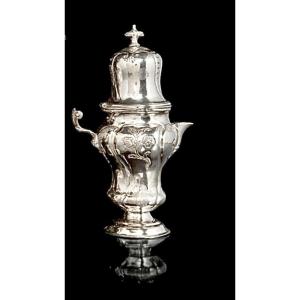
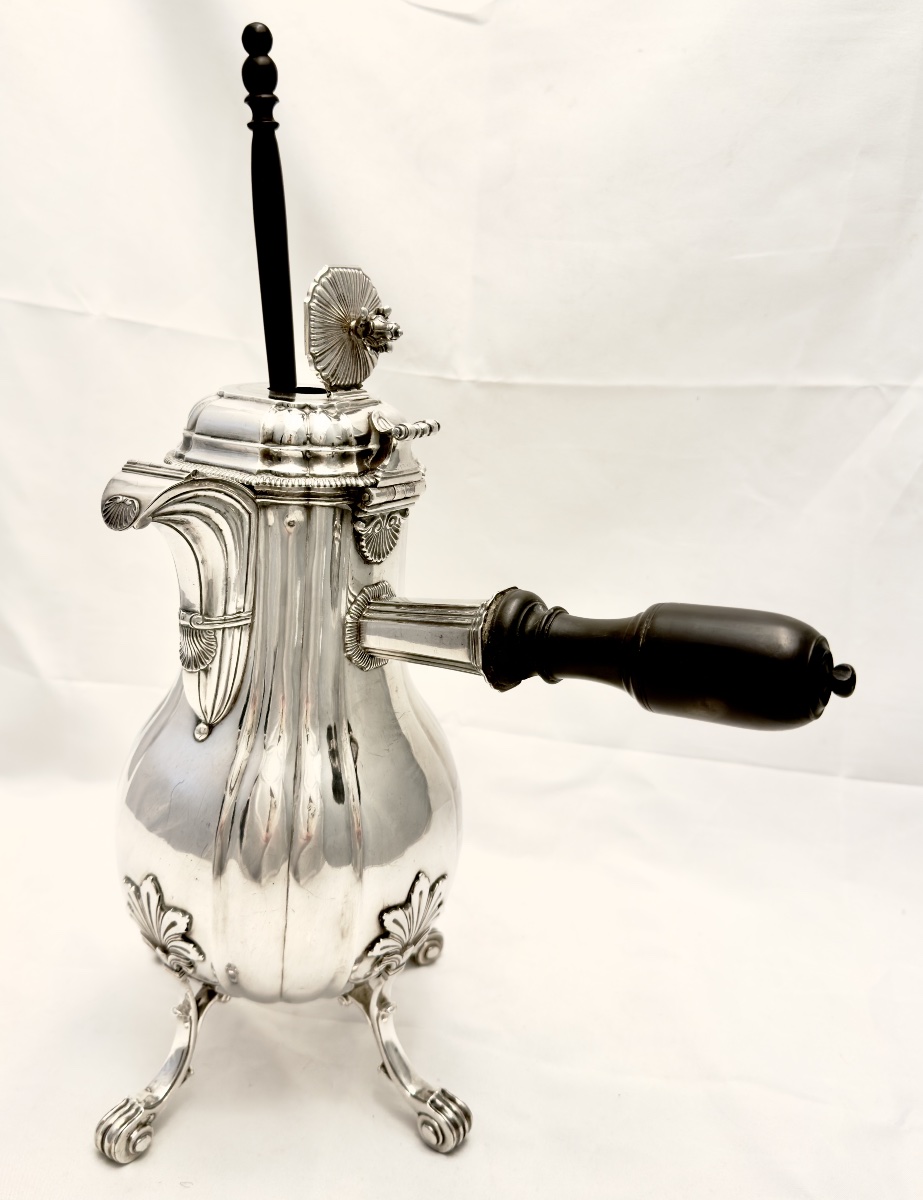
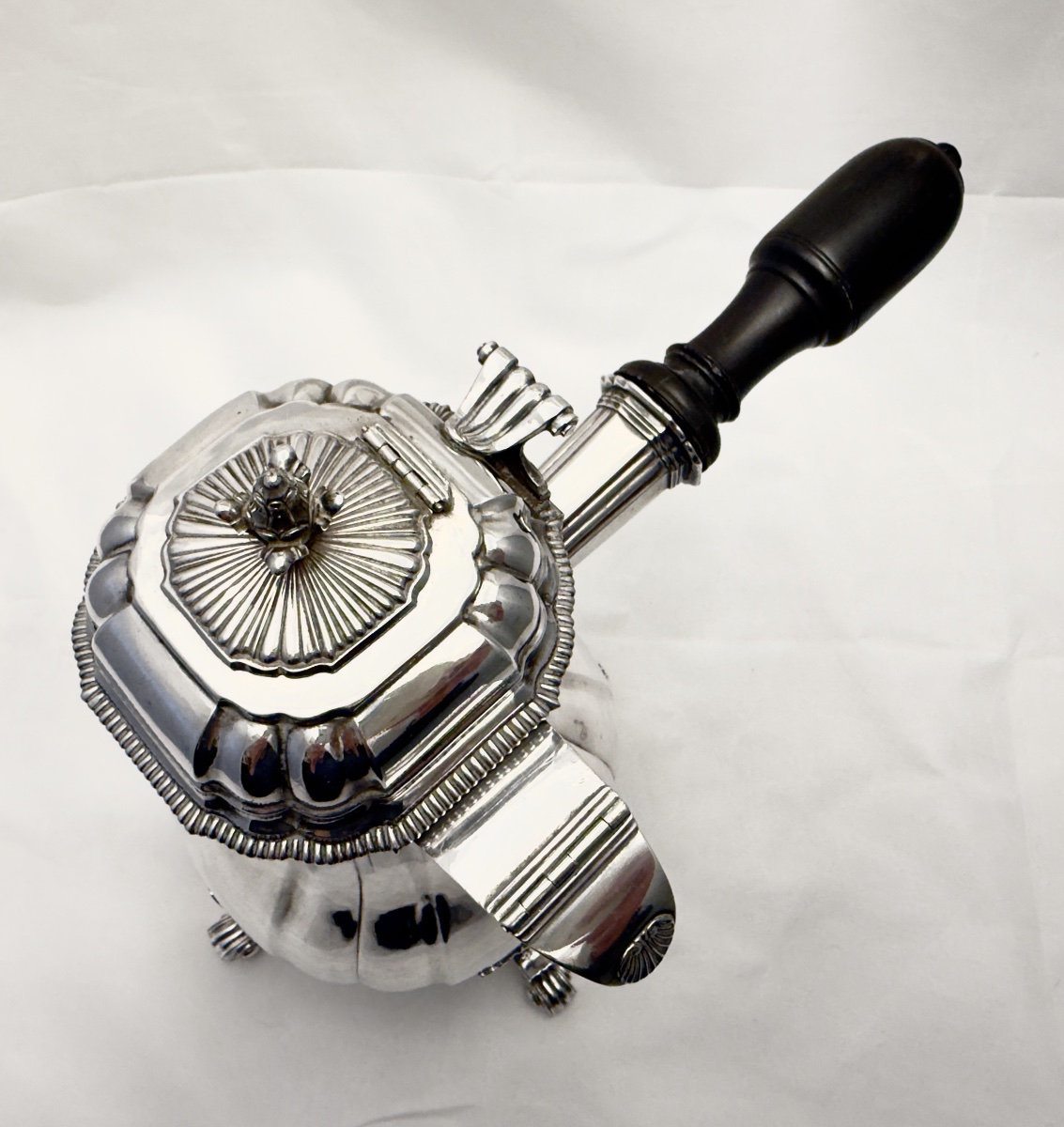
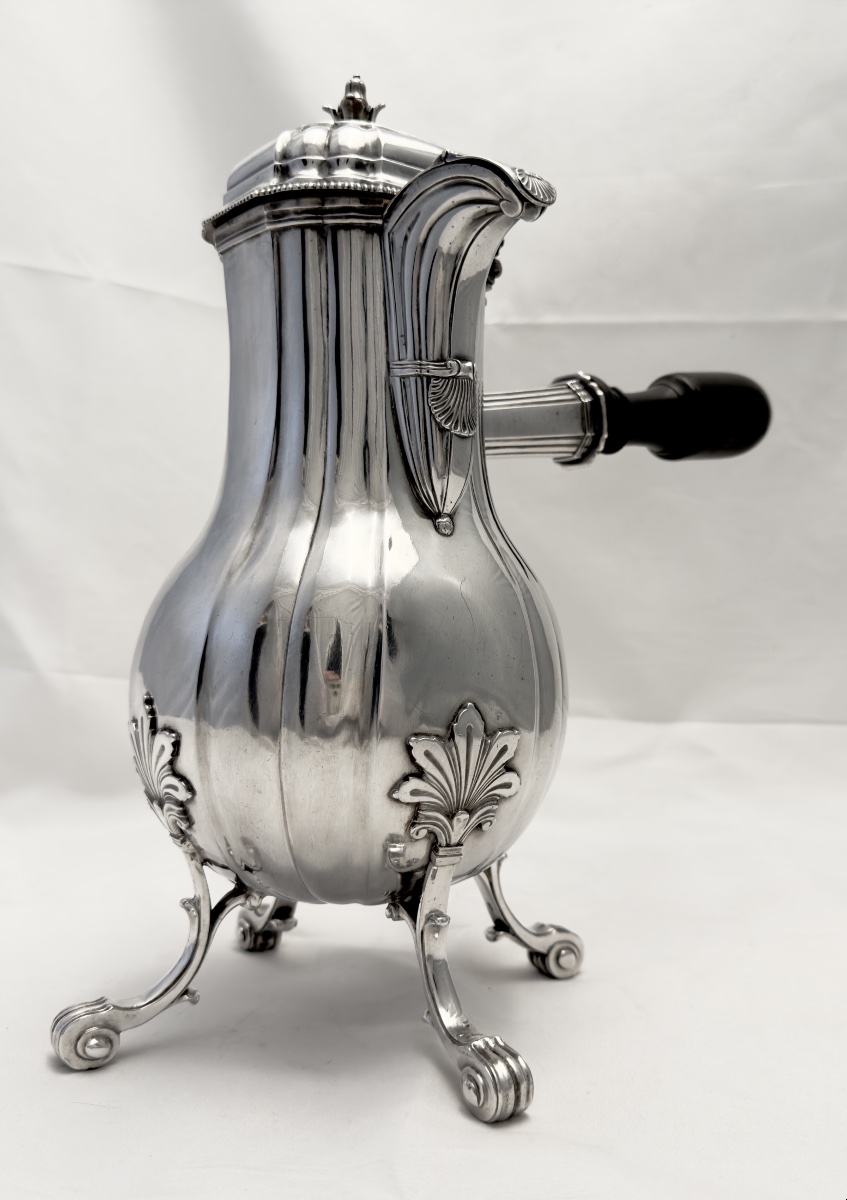
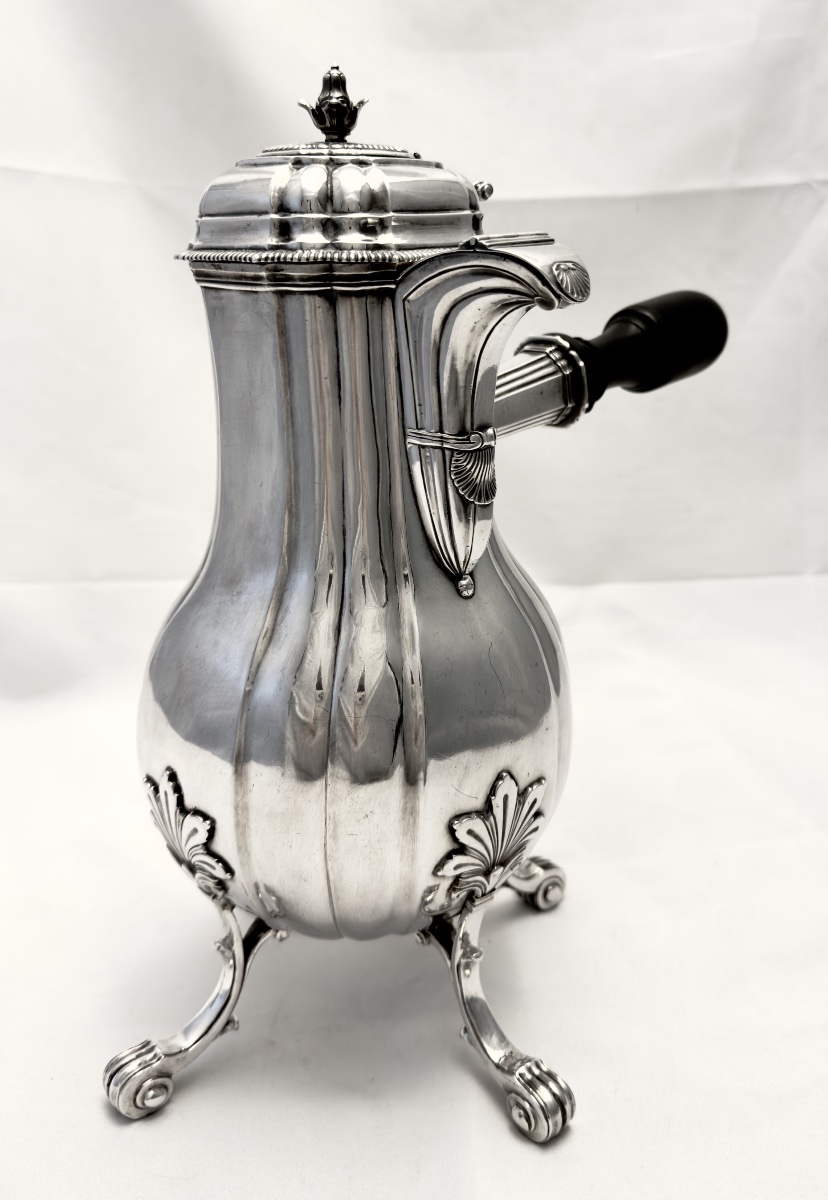
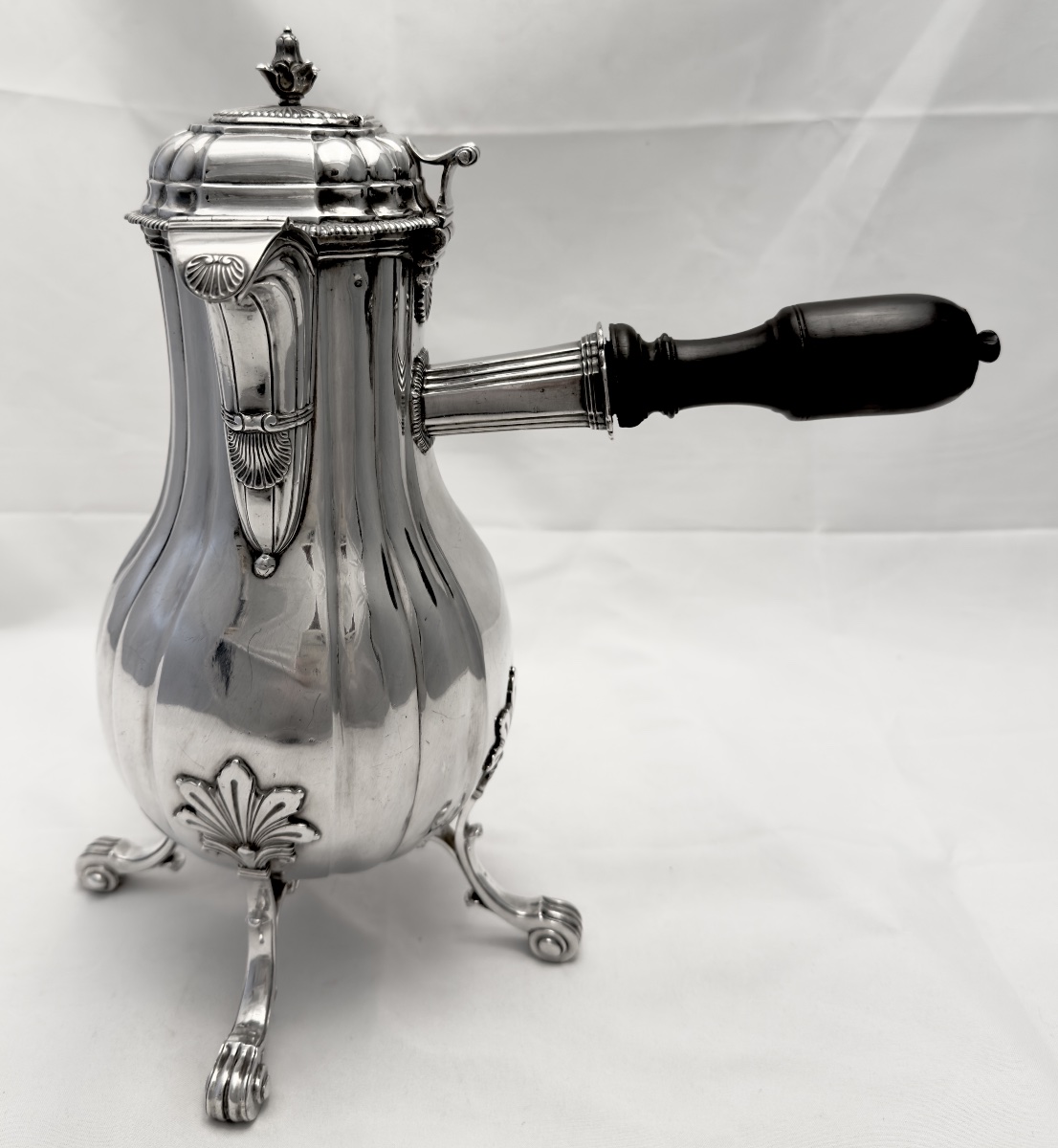
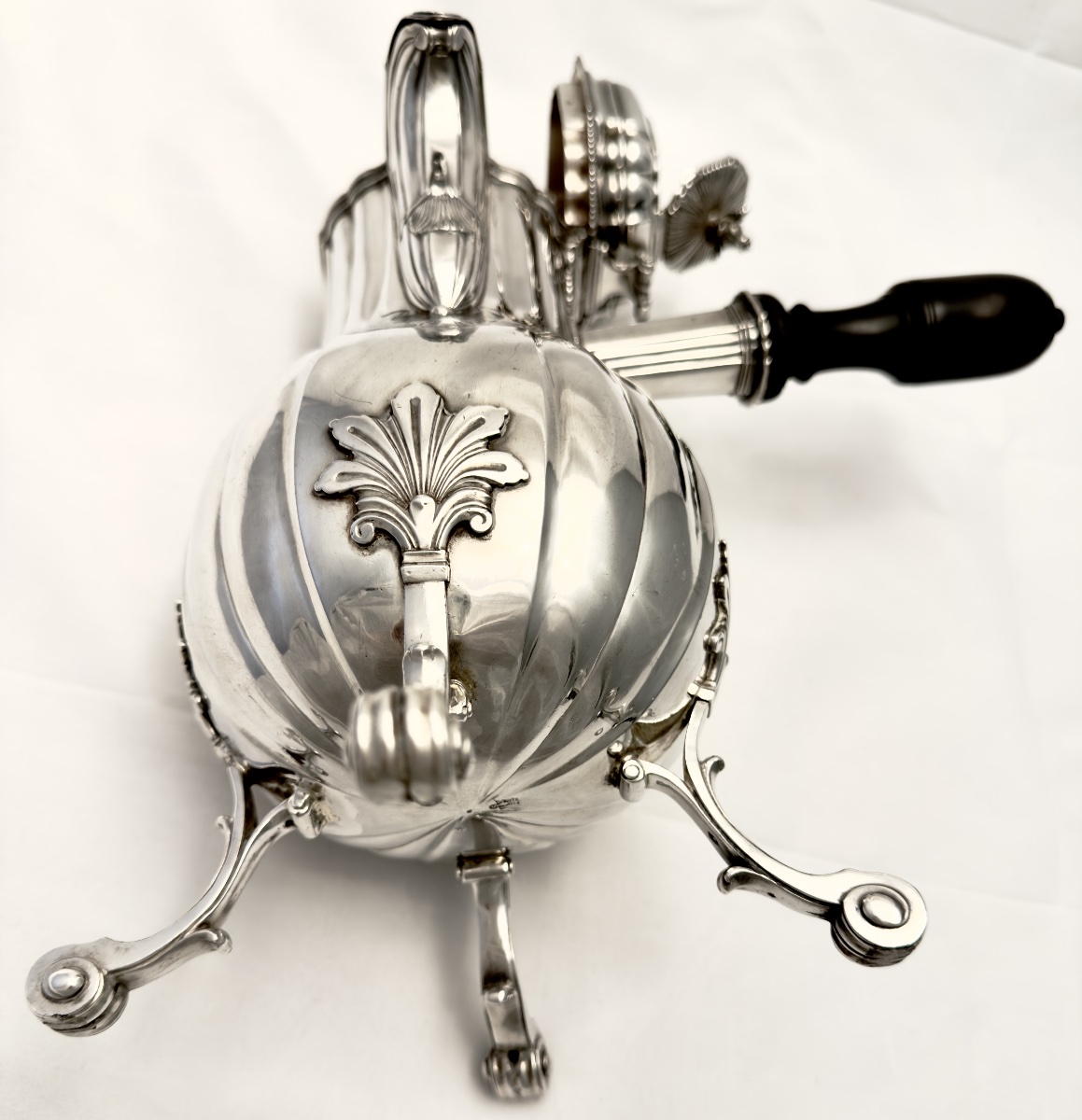
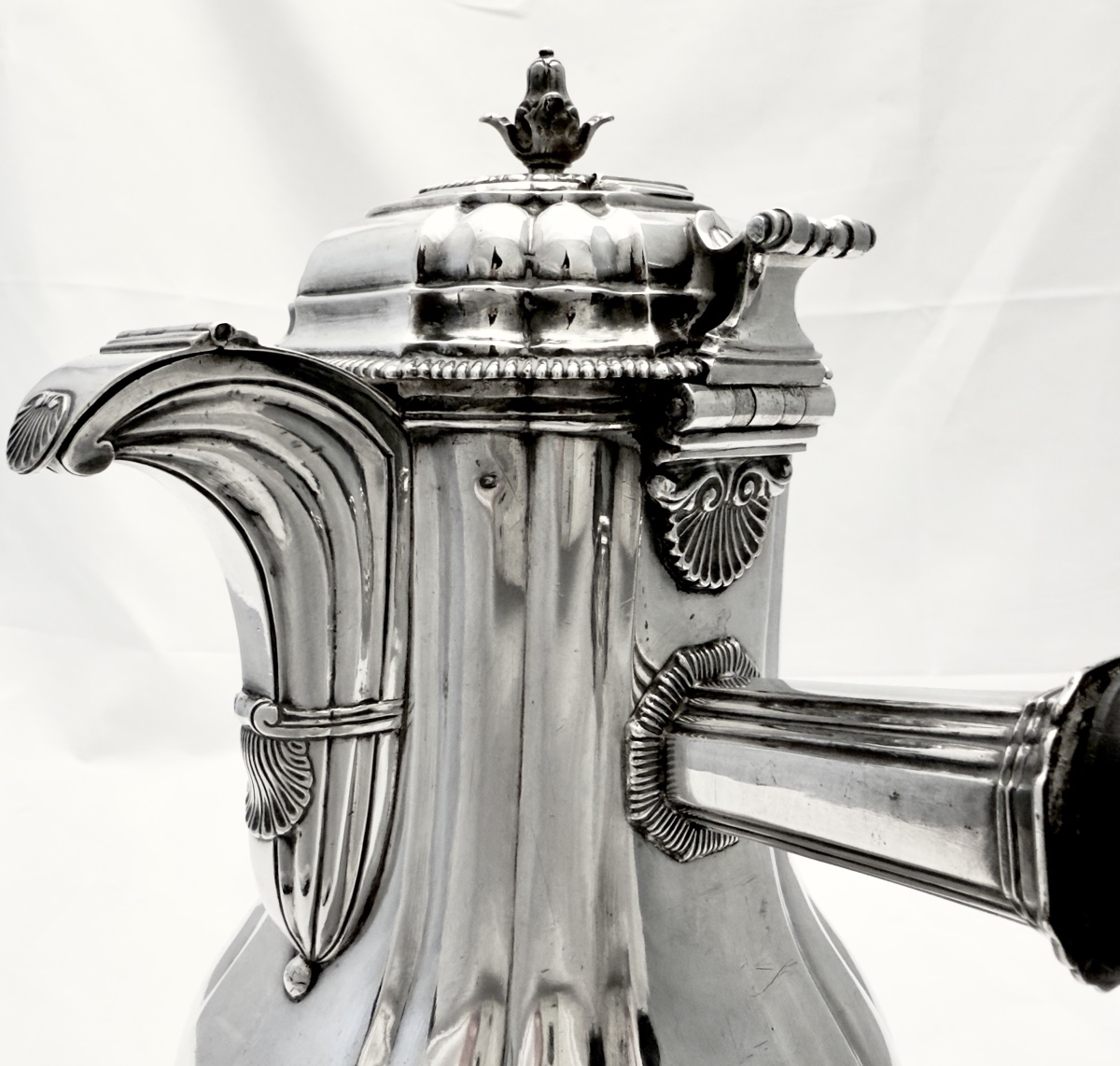
This important solid silver chocolate pot was made in Douai by Maximilien-Joseph Savary, who was admitted as a master silversmith in the city in 1740. With its generous proportions, distinctive four-footed construction and lid fitted with an opening for a chocolate whisk, it is a particularly characteristic example of Douai silverware from the mid-eighteenth century.
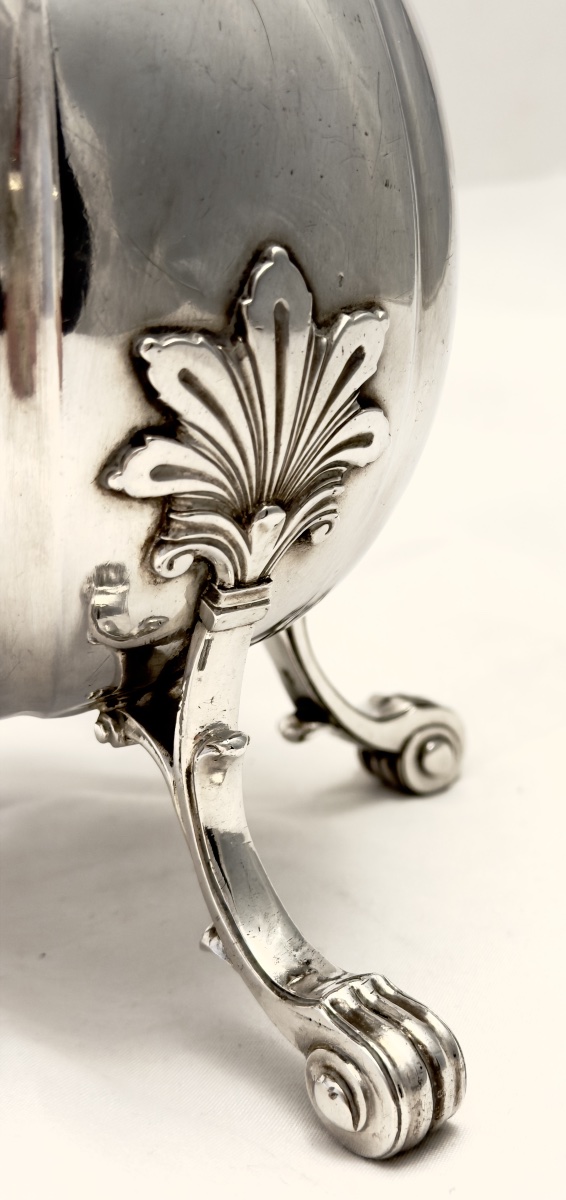
The chocolate pot has a generously rounded body structured by alternating flat and curved panels. It stands on four scroll feet decorated with gadrooning, positioned beneath the ribs of the body and joined to it by broad foliate mounts. This four-footed construction is one of the most distinctive features of coffee and chocolate pots made in Douai, whereas contemporary French vessels of this type were very often supported on three feet.
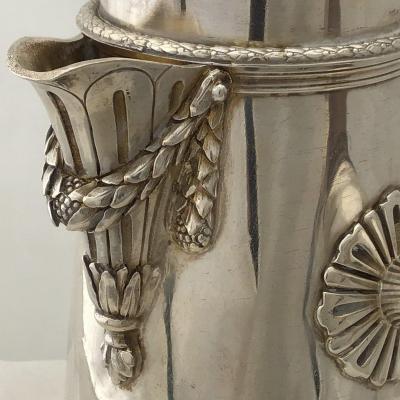
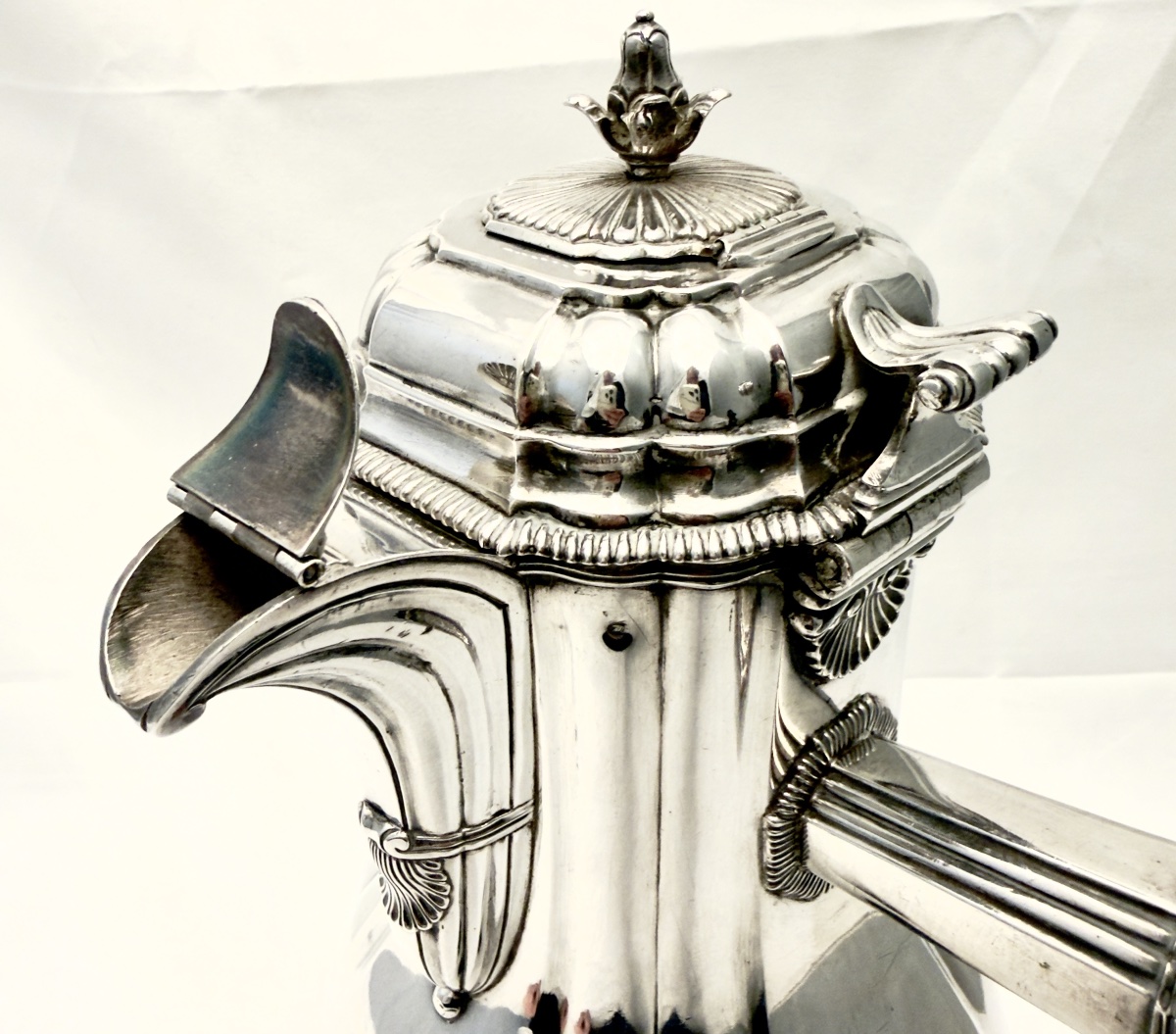
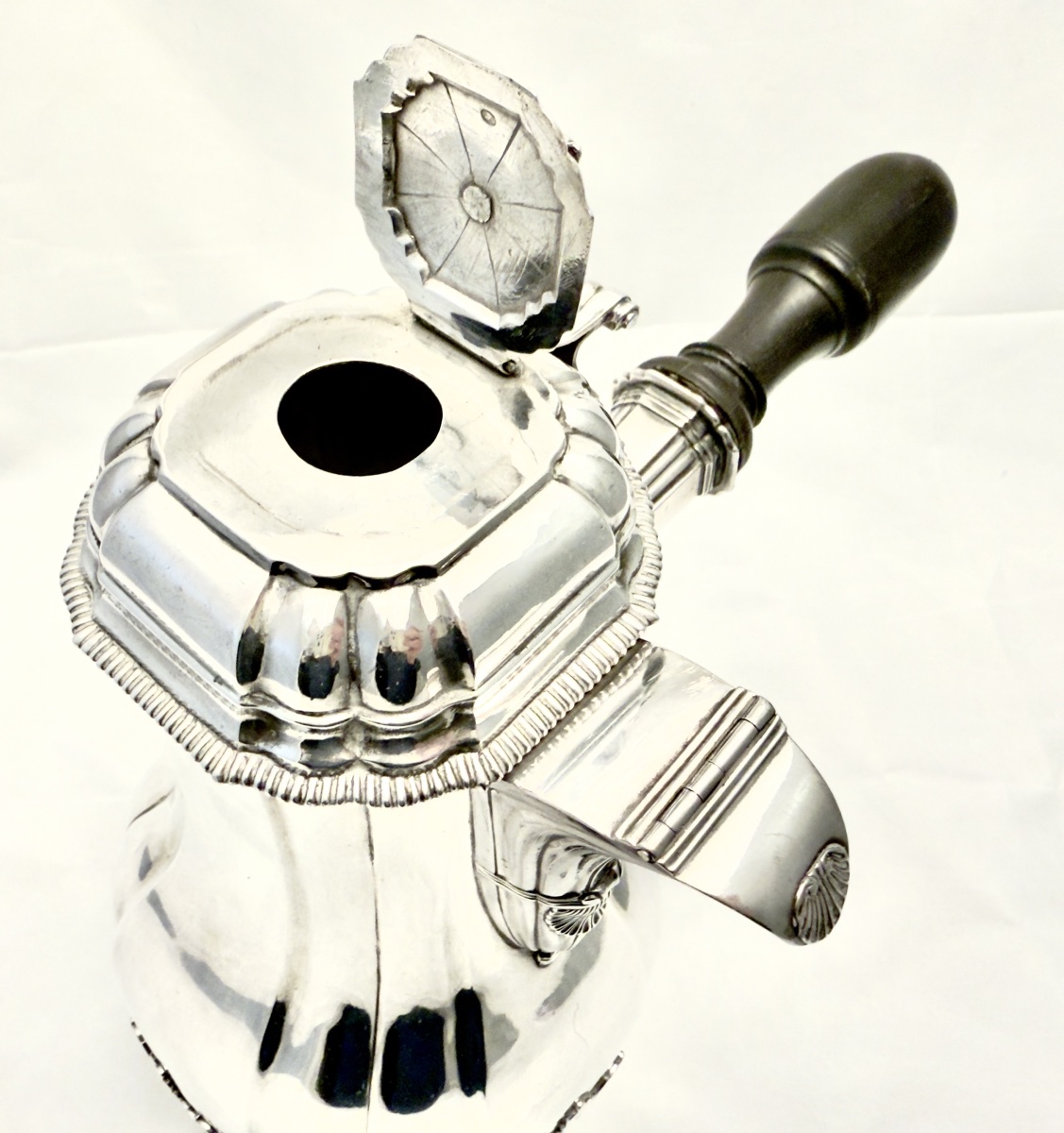
The short, boldly modelled spout is enhanced with moulded decoration and a shell motif. Opposite it, the long side handle of blackened wood, designed to insulate the hand from the heat of the vessel, is fitted into a substantial moulded and fluted silver socket.
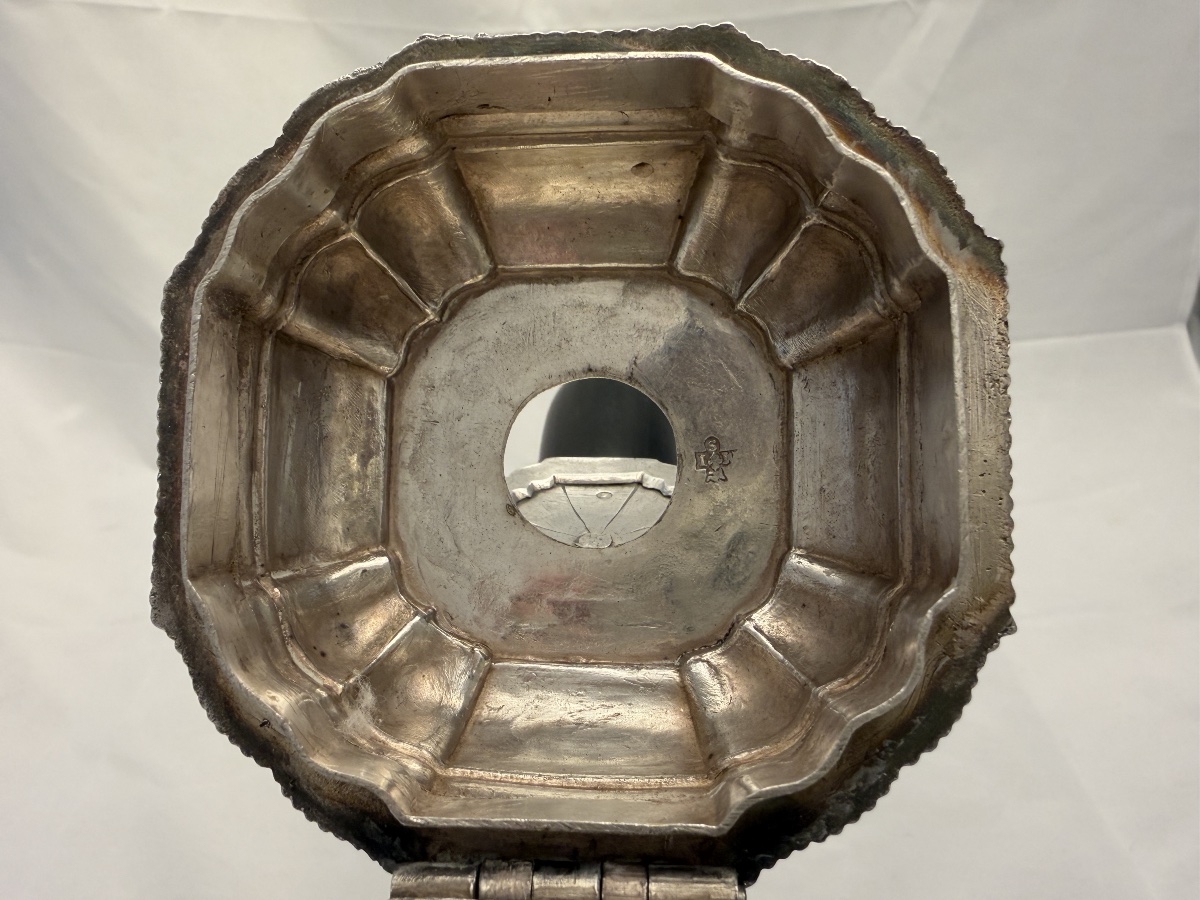
The lid follows the contours of the body and is bordered by a prominent band of gadrooning. This decoration is particularly characteristic of Douai silver during the first half of the eighteenth century: Nicole Cartier emphasises its almost ubiquitous use on objects and mounts produced in Douai between 1701 and 1766, including the chocolate and coffee pots of Maximilien-Joseph Savary.
At the centre of the lid is the feature that reveals the vessel’s original function: a hinged flap opens to reveal an aperture for the chocolate whisk, or moussoir. This long implement, generally made of wood, was inserted into the chocolate pot and rapidly rolled between the palms in order to mix the hot chocolate and create the abundant froth that was particularly appreciated at the time.
A Form Characteristic of Douai
Nicole Cartier’s study of Douai silver allows this chocolate pot to be placed quite precisely within the local tradition. The earliest known chocolate pot from Douai dates from 1736. Between that date and approximately 1751, these vessels could have a dual function: with the aperture open, the moussoir could be inserted to prepare chocolate; once the small flap was closed, the same vessel could also be used as a coffee pot. Maximilien-Joseph Savary was the first known Douai silversmith to produce both types of vessel, with and without an opening for the whisk.
Cartier also emphasises the originality of Douai vessels with straight ribs, characterised by their four feet and by the alternating flat and curved sections that articulate the body. This regional form, combined here with the opening for the moussoir, makes it possible to date the present chocolate pot most probably to circa 1740–1751.
Maximilien-Joseph Savary
Maximilien-Joseph Savary was born in Douai, in the parish of Saint-Pierre, on 22 March 1717, the son of Jean-Maximilien Savary and Marie-Joseph Lamotte. In 1738, at the age of twenty-two, he married Lucie-Joseph Lenoir, daughter of a royal notary. Among the witnesses to the marriage were a lawyer at the Parliament of Flanders and two Douai silversmiths, illustrating the close connections that existed between the artistic trades and the city’s judicial and bourgeois elites.
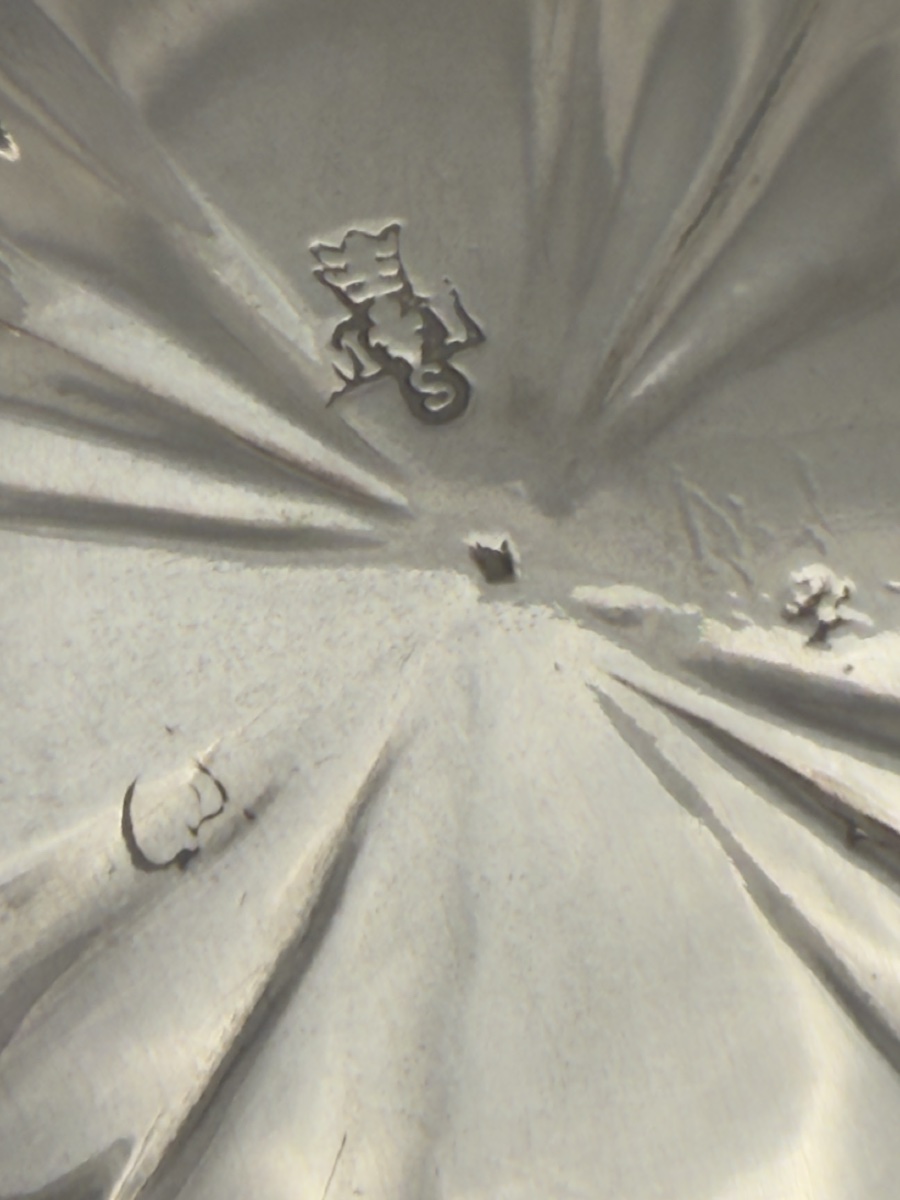
Admitted as a master silversmith in 1740, Savary then registered his maker’s marks on the guild’s copper plate. His large mark combines, beneath the royal crown, the letters M, I and S with a fleur-de-lis. His production is documented for more than a quarter of a century, into the 1760s.
He died in Douai on 4 December 1769, aged fifty-two. Of his numerous children, Casimir-Joseph was the only one to follow his father’s profession as a silversmith. After Maximilien-Joseph’s death, his widow continued to operate the family workshop until Casimir was admitted as a master in 1772, thereby ensuring the continuity of the Savary workshop.
Douai in the Eighteenth Century
The prosperity of Douai’s silversmithing trade can partly be explained by the distinctive composition of its clientele. Alongside the old aristocratic families was an important noblesse de robe, particularly following the permanent establishment of the Parliament of Flanders in Douai in 1714. Lawyers, magistrates, merchants and prosperous master craftsmen formed an affluent bourgeoisie that readily commissioned silverware.
Douai was also an important garrison town, accommodating approximately two thousand soldiers during the eighteenth century. Officers, often younger sons of noble families, sometimes remained in the city for many months and likewise formed an important clientele for local silversmiths. Surviving pieces of Douai silver bearing military coats of arms still testify to such commissions. The parliamentary nobility, prosperous bourgeoisie and military community thus all contributed to the remarkable vitality of Douai’s silversmithing workshops.
Chocolate in the Eighteenth Century
Introduced into Europe from Spanish America, chocolate gradually became, during the seventeenth and eighteenth centuries, a fashionable beverage among Europe’s elites. Together with coffee and tea, it gave rise to new dining customs and to the creation of specialised silver vessels specifically designed for its preparation and service.
Eighteenth-century chocolate was prepared from cocoa paste, generally combined with sugar and sometimes spices, and diluted while hot. The chocolate whisk, or moussoir, was used to beat the preparation vigorously, both to homogenise it and, above all, to produce the frothy consistency that was so highly prized. The aperture in the lid is therefore the essential functional characteristic distinguishing a chocolate pot.
With its imposing proportions, vigorous modelling, gadrooned decoration, four-footed construction and ingenious hinged opening for the moussoir, this chocolate pot is a remarkable example of Douai domestic silver from the reign of Louis XV, as well as a fascinating testimony to changing dining customs and the European taste for newly fashionable exotic beverages during the eighteenth century.
Bibliography: Nicole Cartier, Les Orfèvres de Douai. Dictionnaire des poinçons de l’orfèvrerie française, Cahiers du Patrimoine, no. 42, Paris, Imprimerie nationale Éditions, 1995.
Period: 18th century
Style: Louis 14th, Regency
Condition: Excellent condition
Material: Sterling silver
Height: 31 cm
Reference (ID): 1811445
Availability: In stock