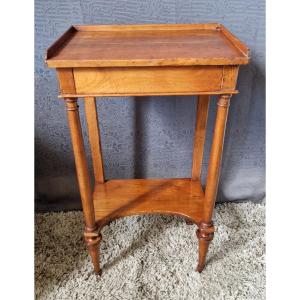
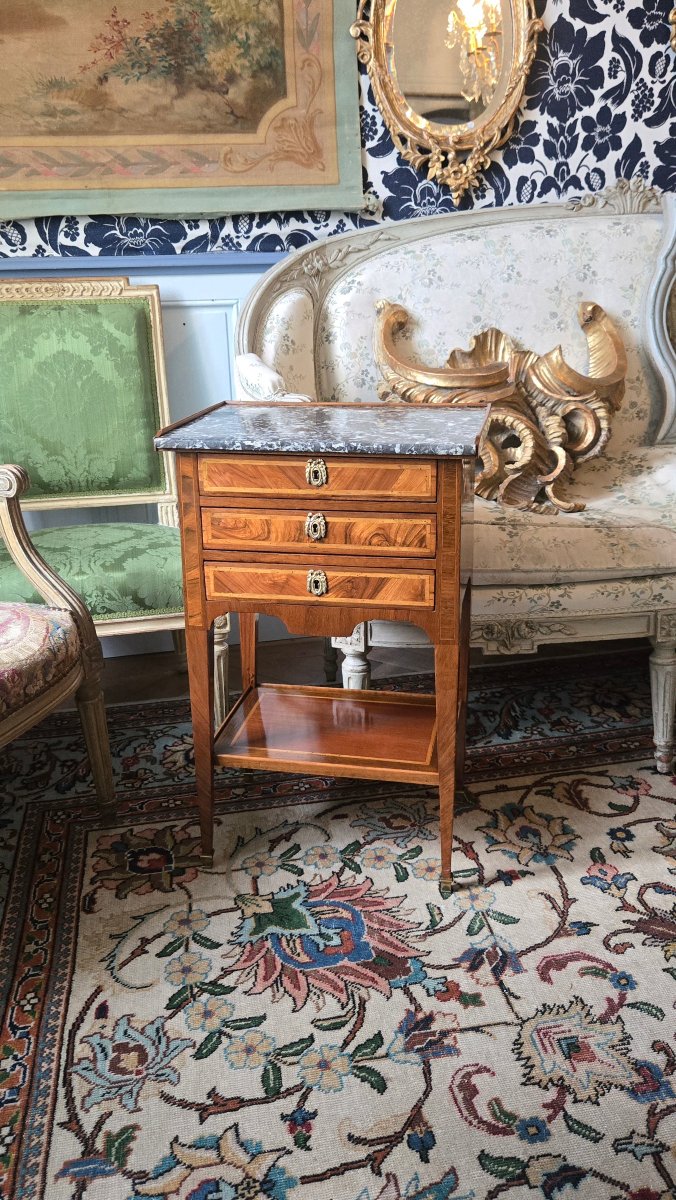


Small Chest Of Drawers With Writing Desk Louis XVI Period, Late 18th Century.
Handcrafted in Eastern France
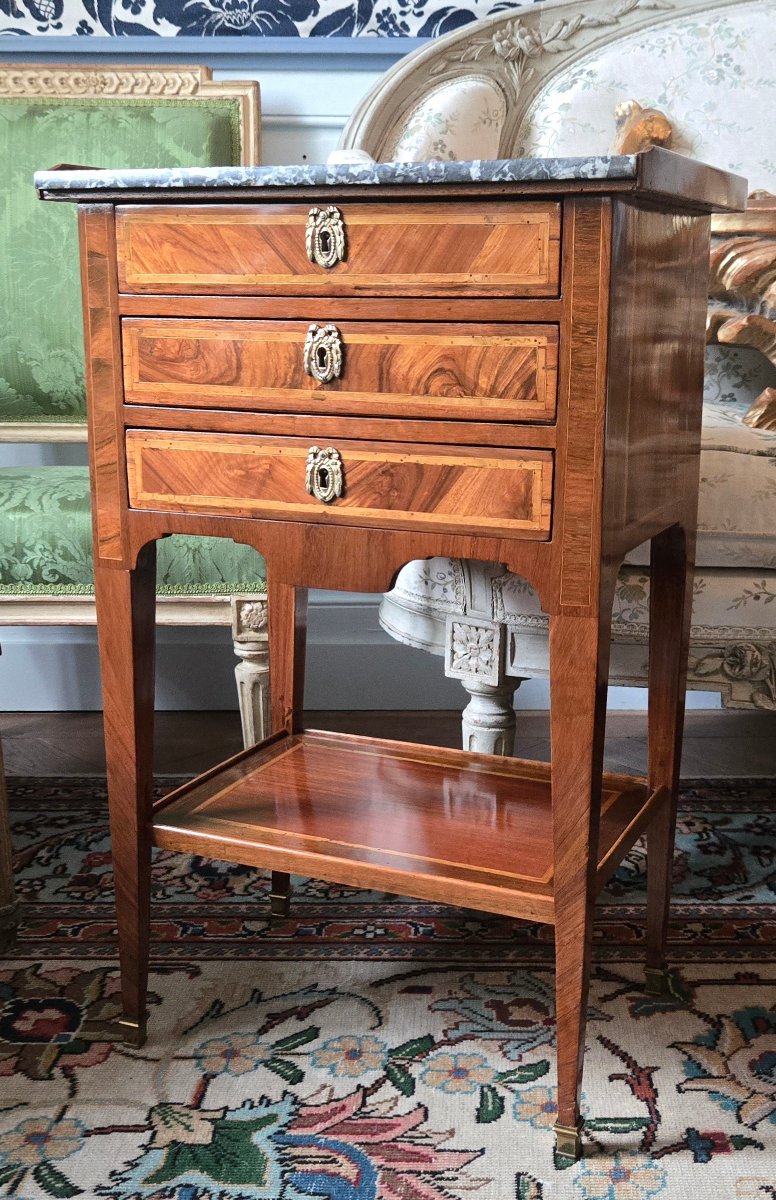
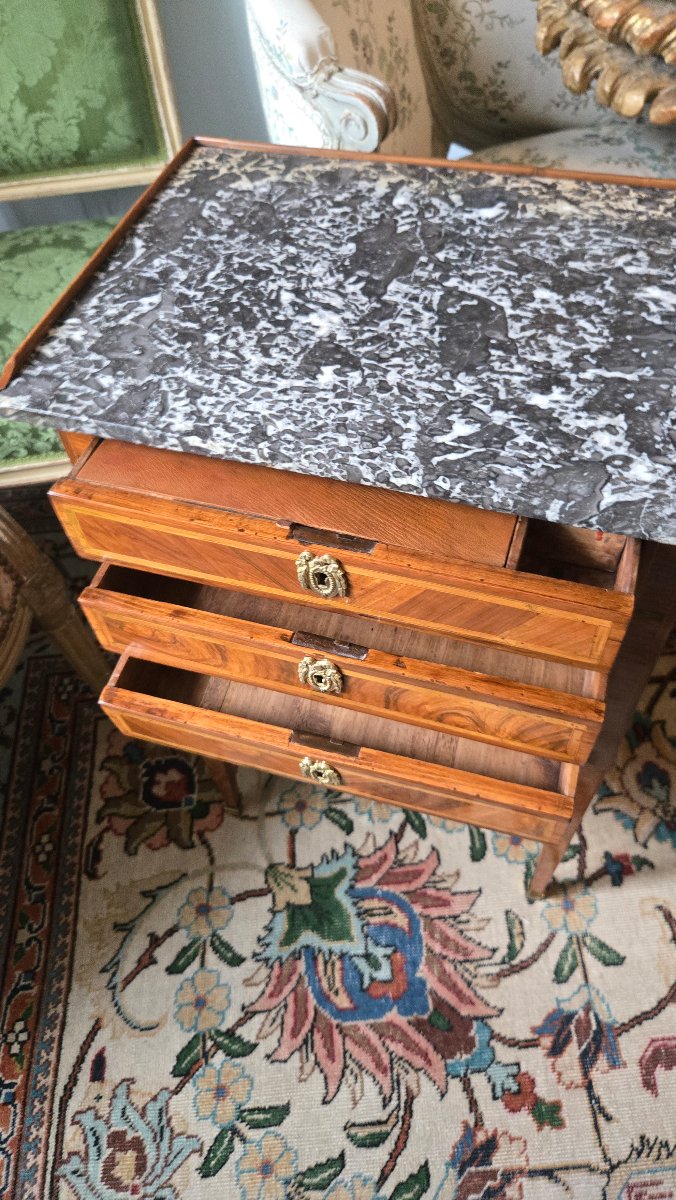
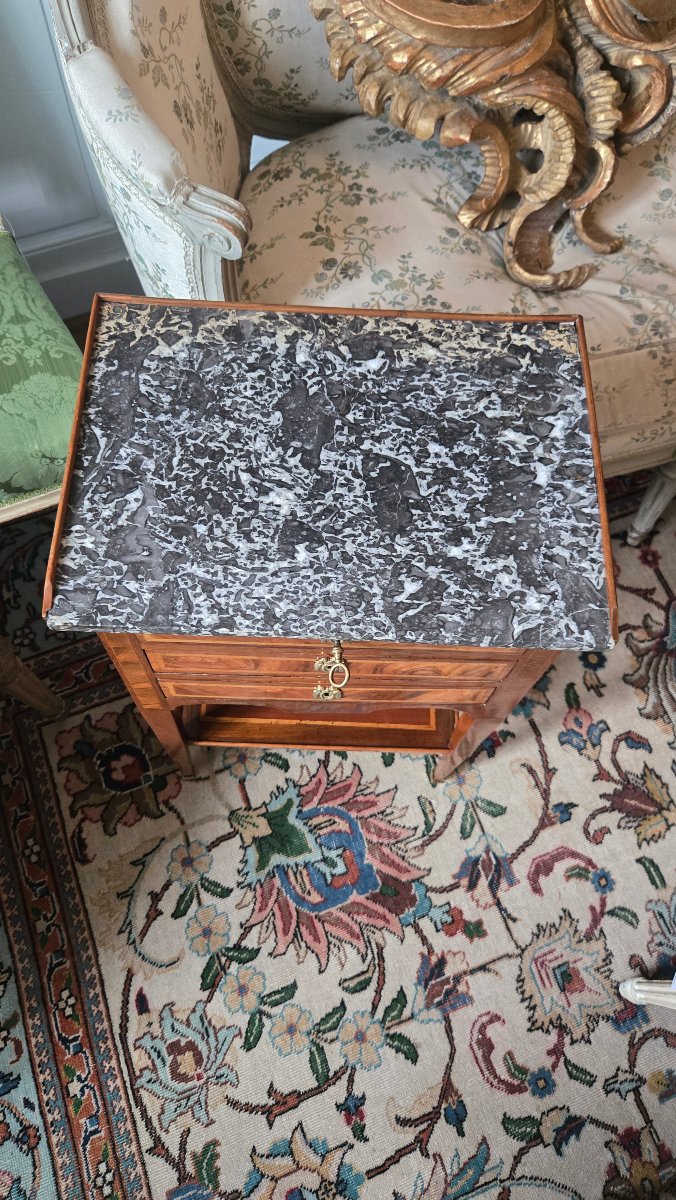
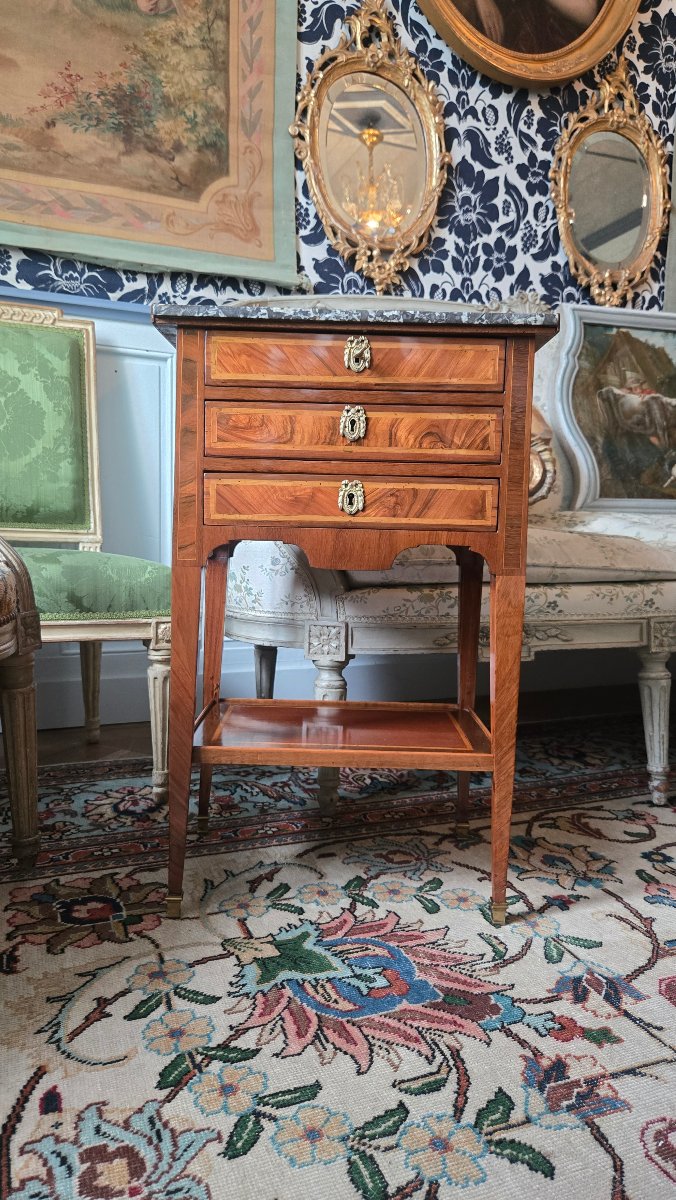
A small Louis XVI-period chest of drawers featuring three stacked drawers opening from the front and resting on four tapered legs with square cross-sections.
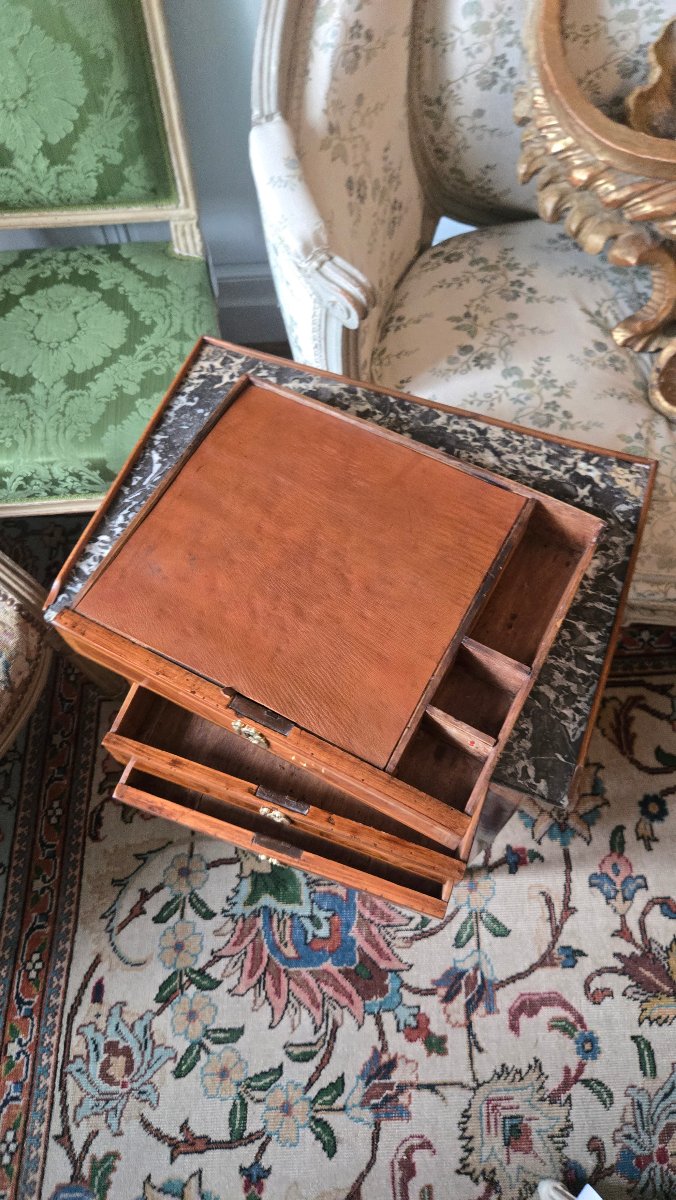
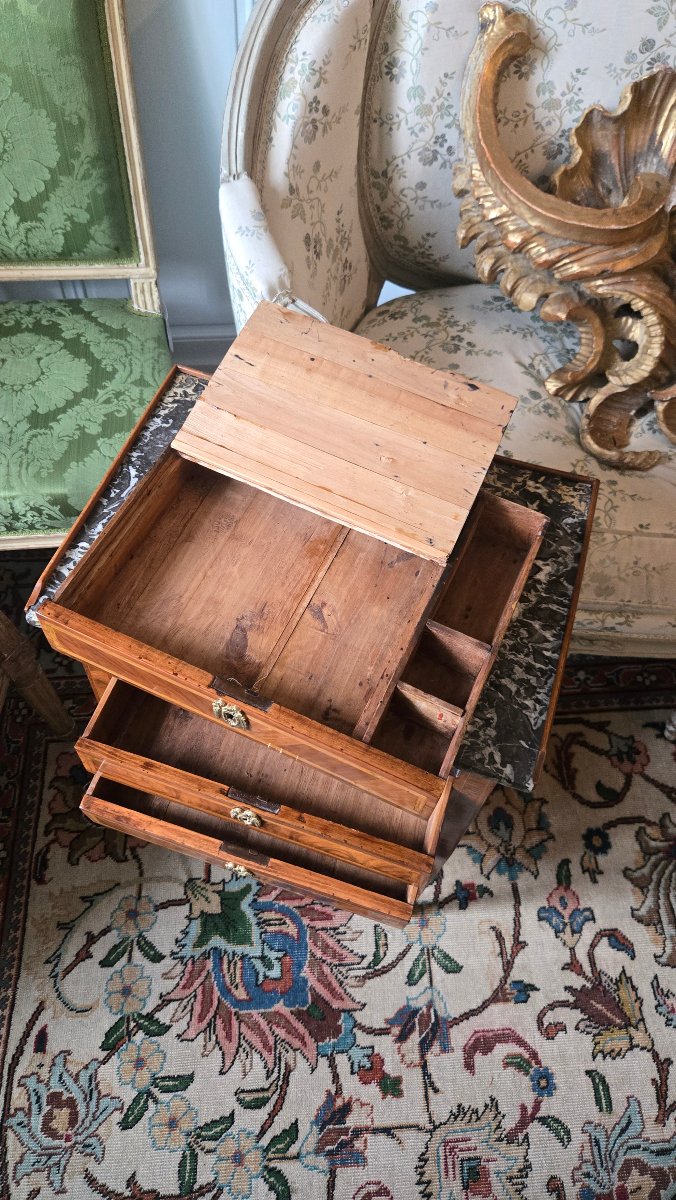
It is topped with a Sainte-Anne gray marble top, edged with a thin wooden molding. The top drawer features a writing desk configuration, consisting of a lift-up rectangular shelf and several side compartments.
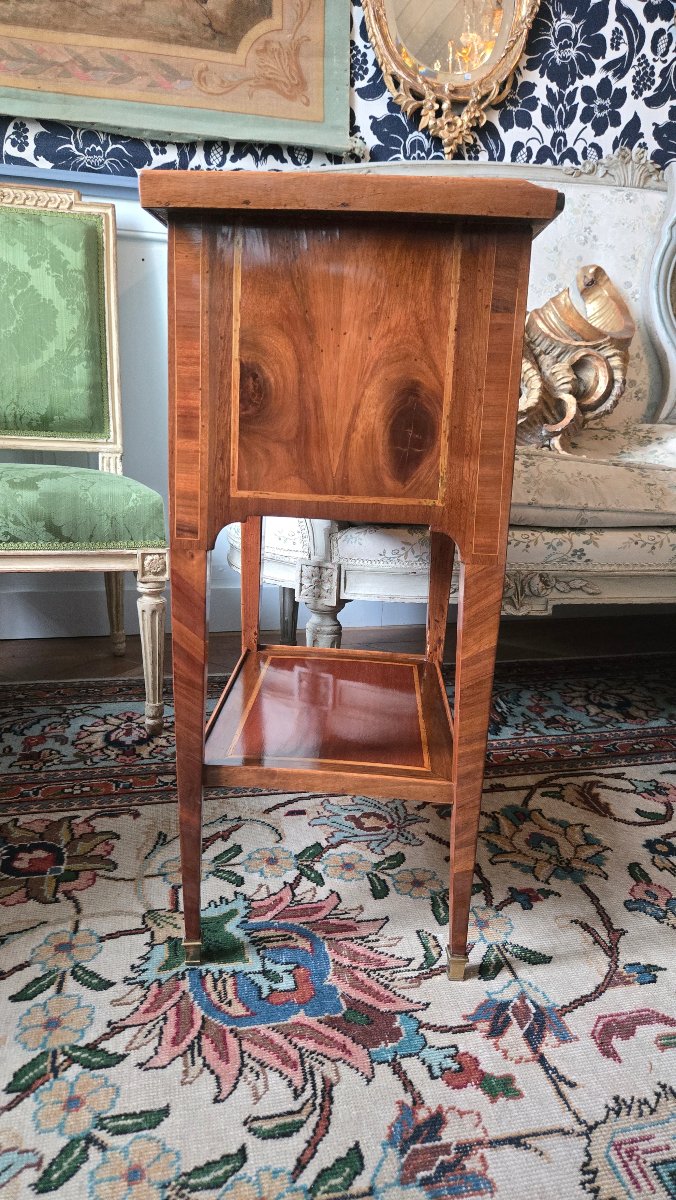
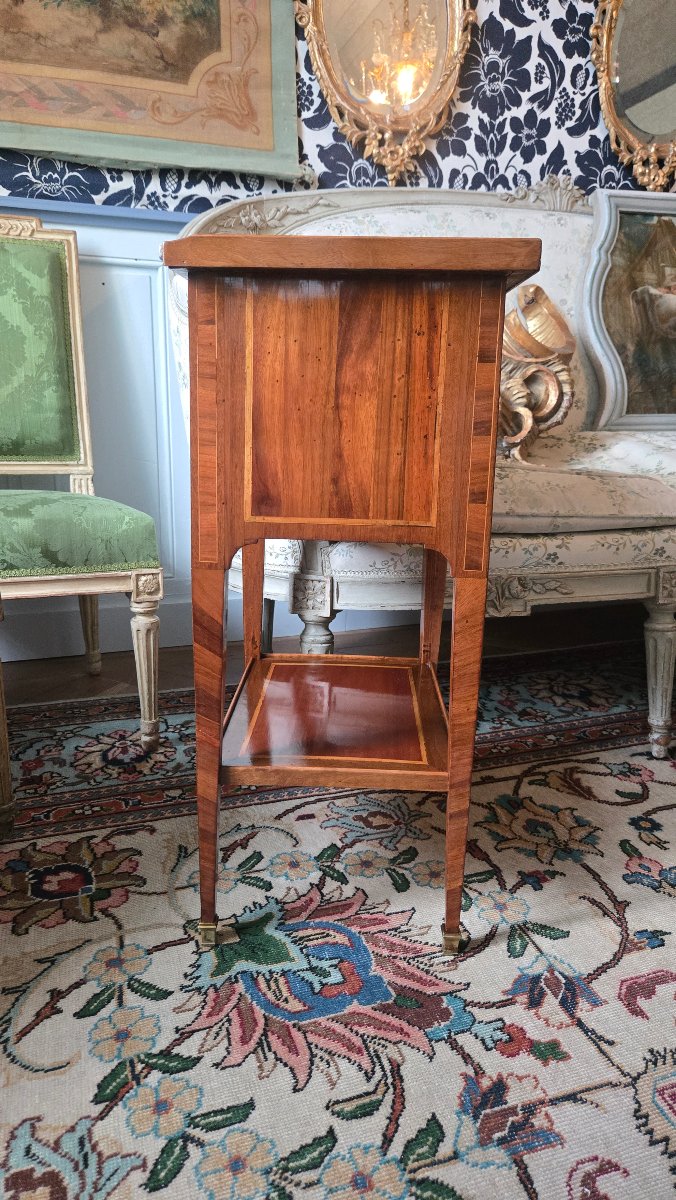
The front, uprights, and sides are adorned with wood veneers from the Isles, combining satinwood, amaranth, and rosewood. On each of the three drawer fronts, the veneer is laid out in an “open book” pattern, with two sheets arranged symmetrically on either side of a central axis.
The fronts of the three drawers, the side panels, and the cross-leg shelf are accented with green-stained sycamore and boxwood moldings, ensuring continuity in the decoration across the different parts of the piece.
A rectangular crossbar, edged with a rim on three sides, connects the four legs.
The frame and the three drawers are made entirely of alder. The piece retains its three original locks, all of which are functional, as well as a key. The three bronze lock plates are later additions, as are the caps adorning the ends of the legs.
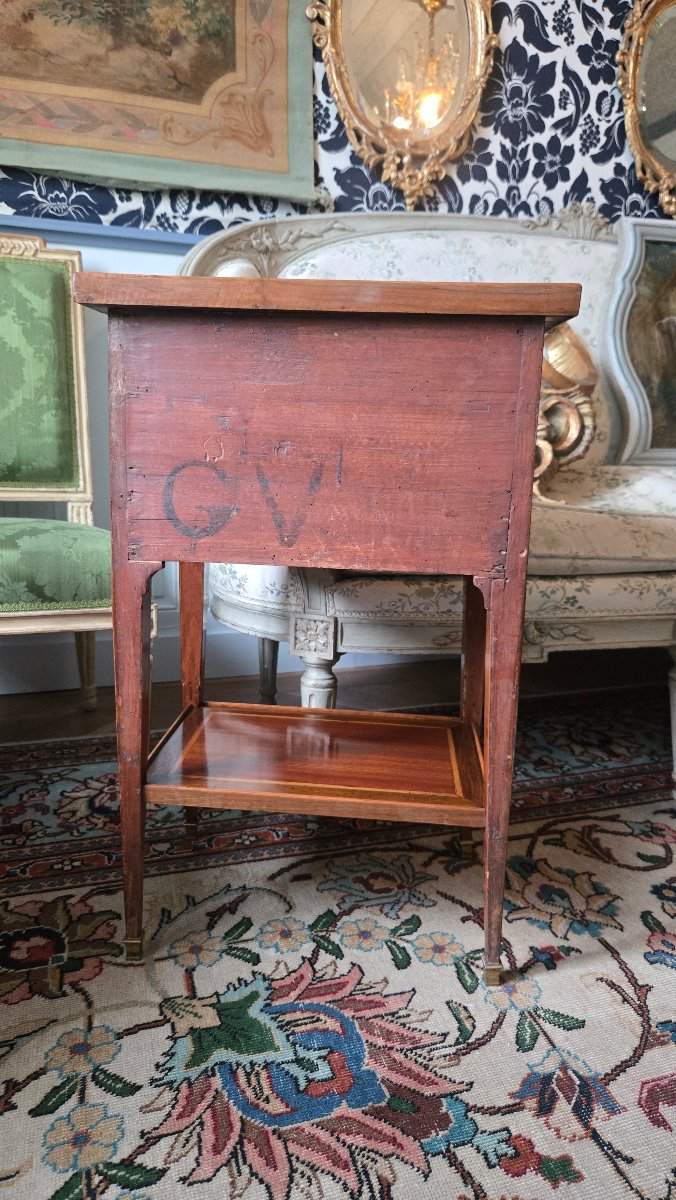
The back is left unfinished, without veneer, indicating that this chest of drawers was intended to be placed against a wall rather than used as a freestanding piece. Its small size made it particularly suitable for a bedroom, near a bed, where it could also serve as a nightstand.
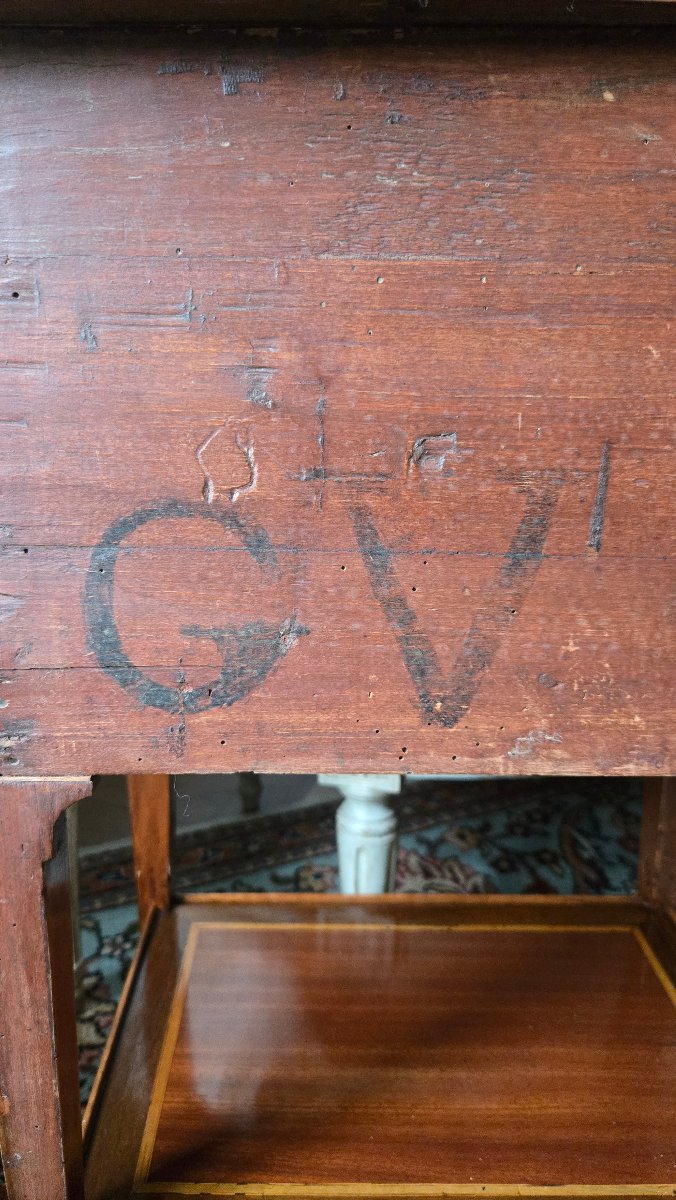
The back retains an old oil-based paint finish in a reddish-ochre hue, applied with a brush. This treatment helped protect the surface of the alder by partially sealing the pores of this soft wood and limiting the penetration of moisture and dirt. It also served to even out the appearance of the unveneered wood.
This coating bears a large mark painted with a brush consisting of the letters “GV.” In the absence of any other inscriptions or marks, its meaning remains unknown. It could correspond to an old mark of ownership, inventory, or designation, though it is currently impossible to associate it with a specific person, residence, or government agency.
The piece retains its original frame in its entirety. It shows signs of restoration and maintenance.
Three original, functional locks with a key. Lock faces and bronze lock plates added later.
Dimensions: H. 68.5 × W. 43.2 × D. 30.8 cm
A small Louis XVI-period chest of drawers featuring three stacked drawers opening from the front and resting on four tapered legs with square cross-sections.
It is topped with a Sainte-Anne gray marble top, edged with a thin wooden molding. The top drawer features a writing desk configuration, consisting of a lift-up rectangular shelf and several side compartments.
The front, uprights, and sides are adorned with wood veneers from the Isles, combining satinwood, amaranth, and rosewood. On each of the three drawer fronts, the veneer is laid out in an “open book” pattern, with two sheets arranged symmetrically on either side of a central axis.
The fronts of the three drawers, the side panels, and the cross-leg shelf are accented with green-stained sycamore and boxwood moldings, ensuring continuity in the decoration across the different parts of the piece.
A rectangular crossbar, edged with a rim on three sides, connects the four legs.
The frame and the three drawers are made entirely of alder. The piece retains its three original locks, all of which are functional, as well as a key. The three bronze lock plates are later additions, as are the caps adorning the ends of the legs.
The back is left unfinished, without veneer, indicating that this chest of drawers was intended to be placed against a wall rather than used as a freestanding piece. Its small size made it particularly suitable for a bedroom, near a bed, where it could also serve as a nightstand.
The back retains an old oil-based paint finish in a reddish-ochre hue, applied with a brush. This treatment helped protect the surface of the alder by partially sealing the pores of this soft wood and limiting the penetration of moisture and dirt. It also served to even out the appearance of the unveneered wood.
This coating bears a large mark painted with a brush consisting of the letters “GV.” In the absence of any other inscriptions or marks, its meaning remains unknown. It could correspond to an old mark of ownership, inventory, or designation, though it is currently impossible to associate it with a specific person, residence, or government agency.
The piece retains its original frame in its entirety. It shows signs of restoration and maintenance.
Three original, functional locks with a key. Lock faces and bronze lock plates added later.
Dimensions: H. 68.5 × W. 43.2 × D. 30.8 cm
1 600 €
Period: 18th century
Style: Louis 16th, Directory
Condition: Good condition
Material: Wood marquetry
Reference (ID): 1811379
Availability: In stock
Print