

"the Return Of The Holy Family," 17th Alabaster Group From Mechelen
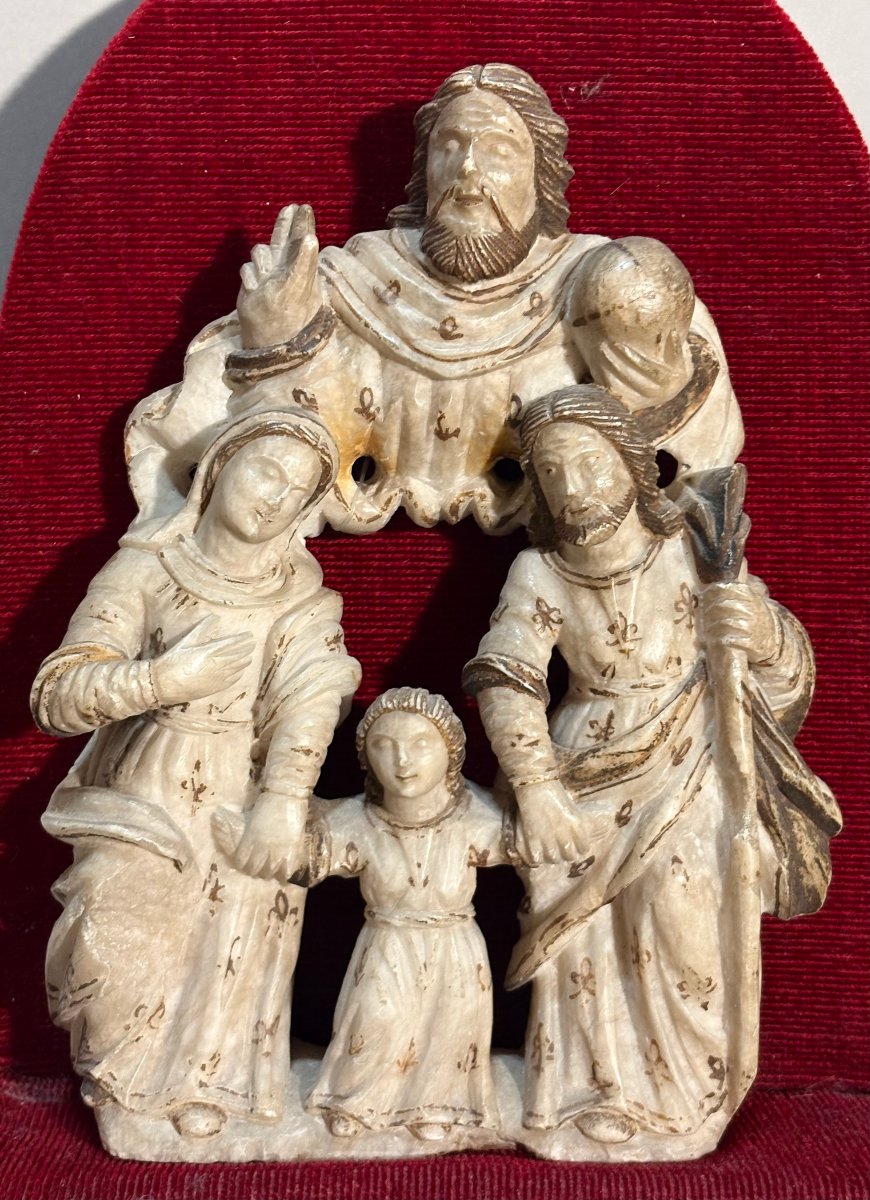
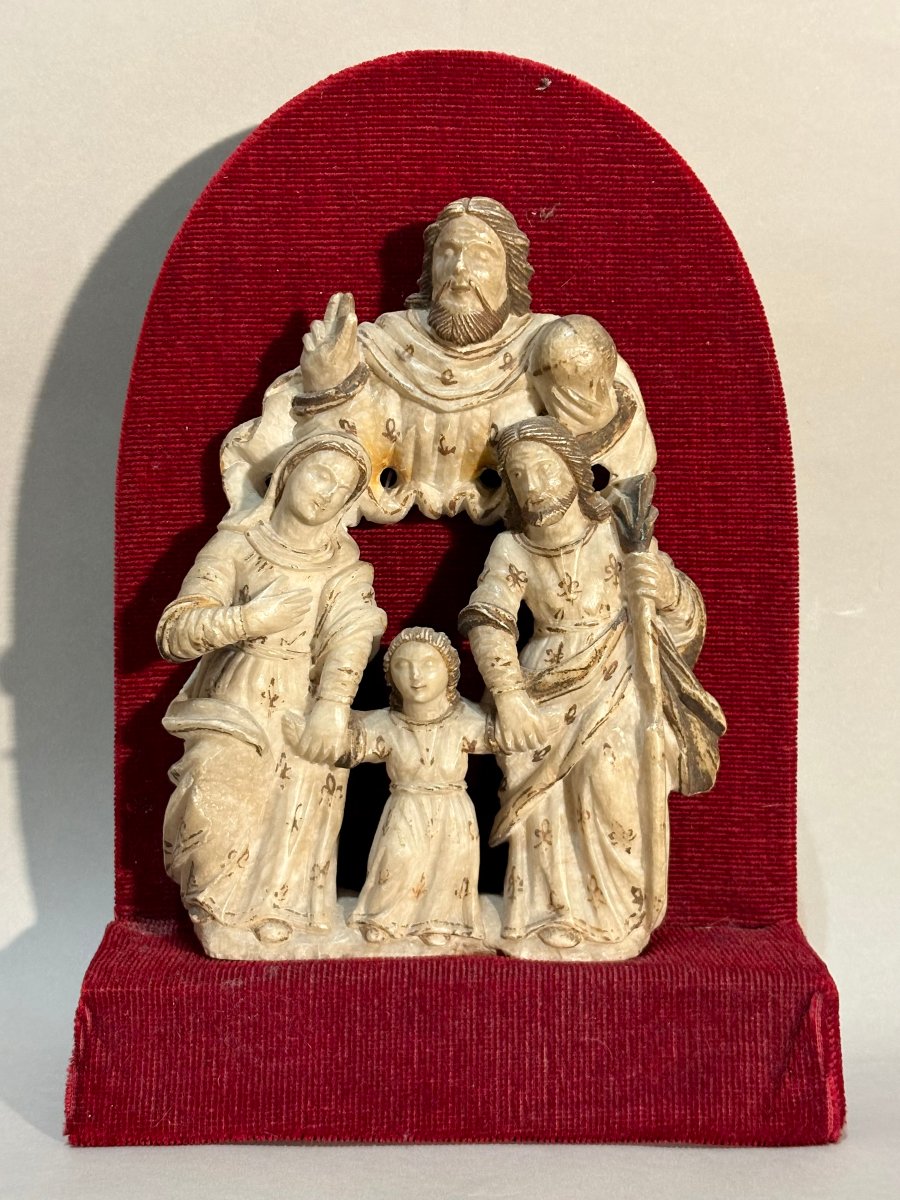
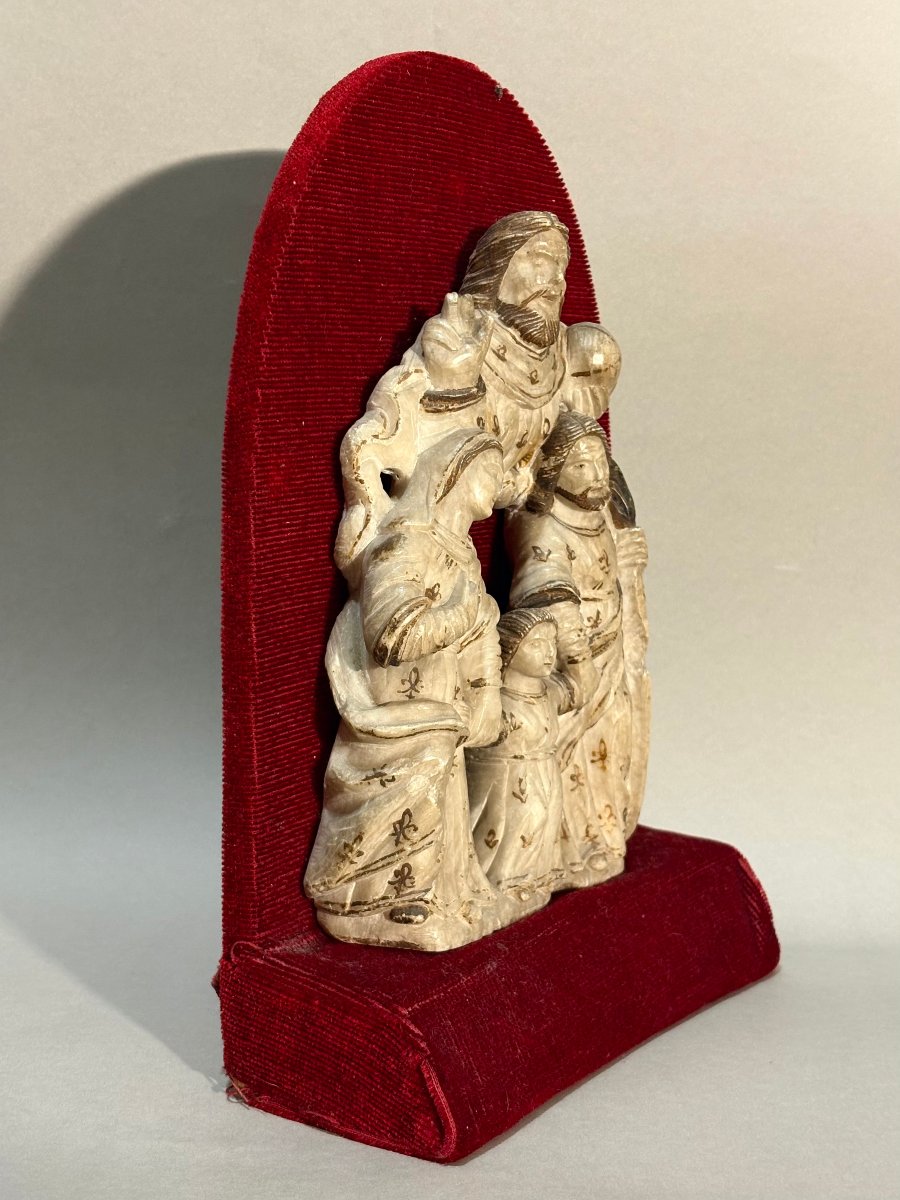
Alabaster group depicting "The Return of the Holy Family," Flanders, probably Mechelen, 17th century.
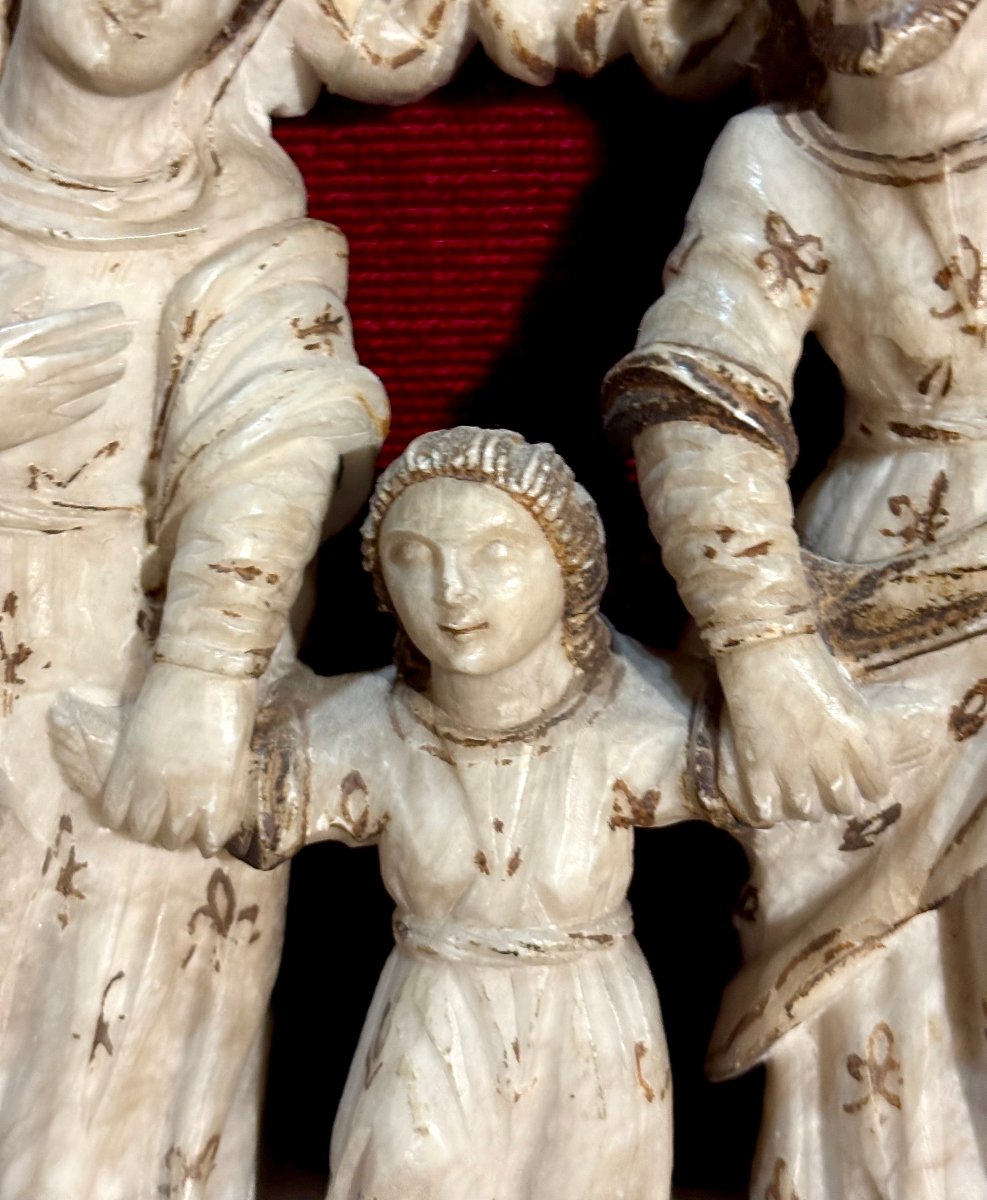
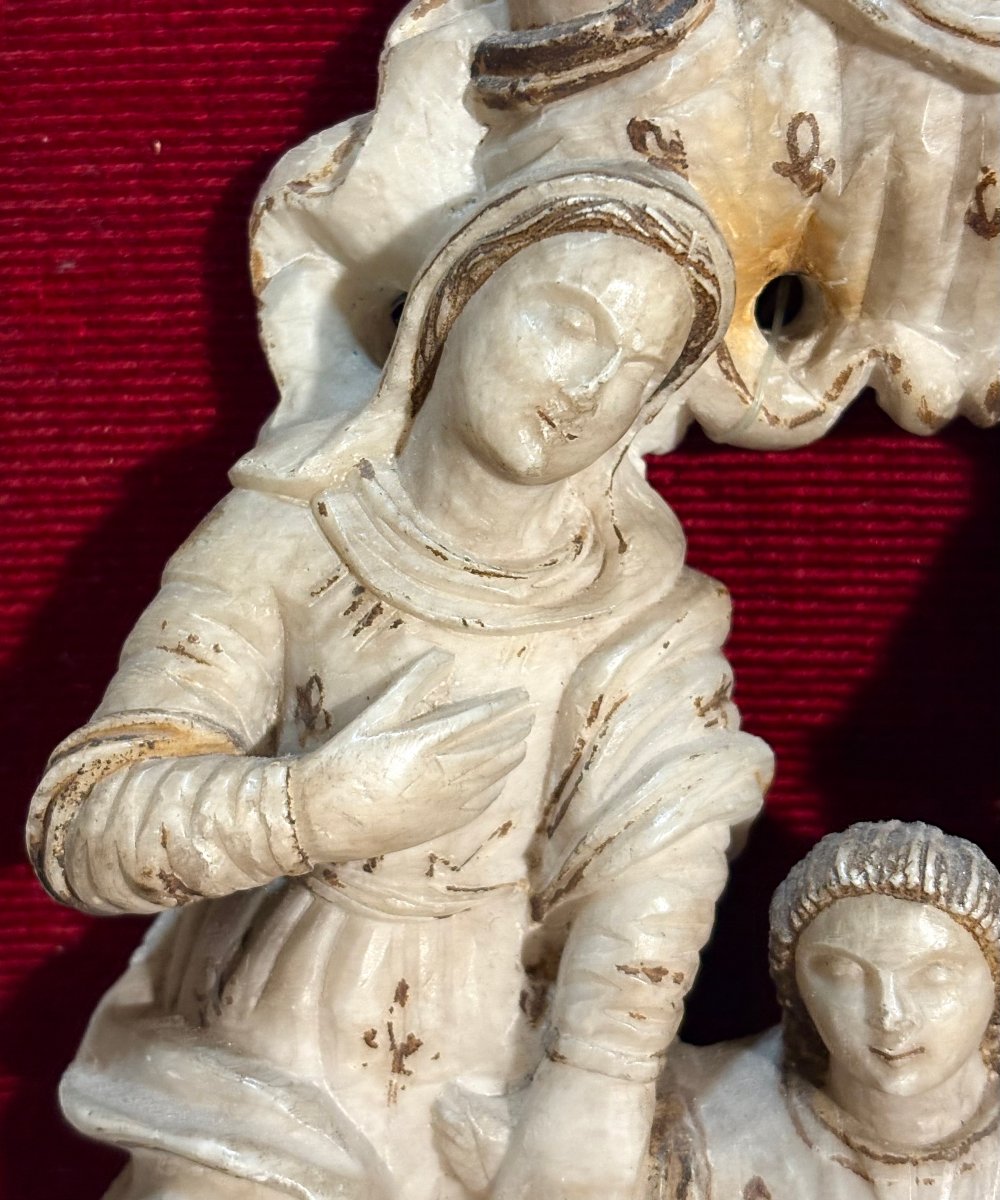
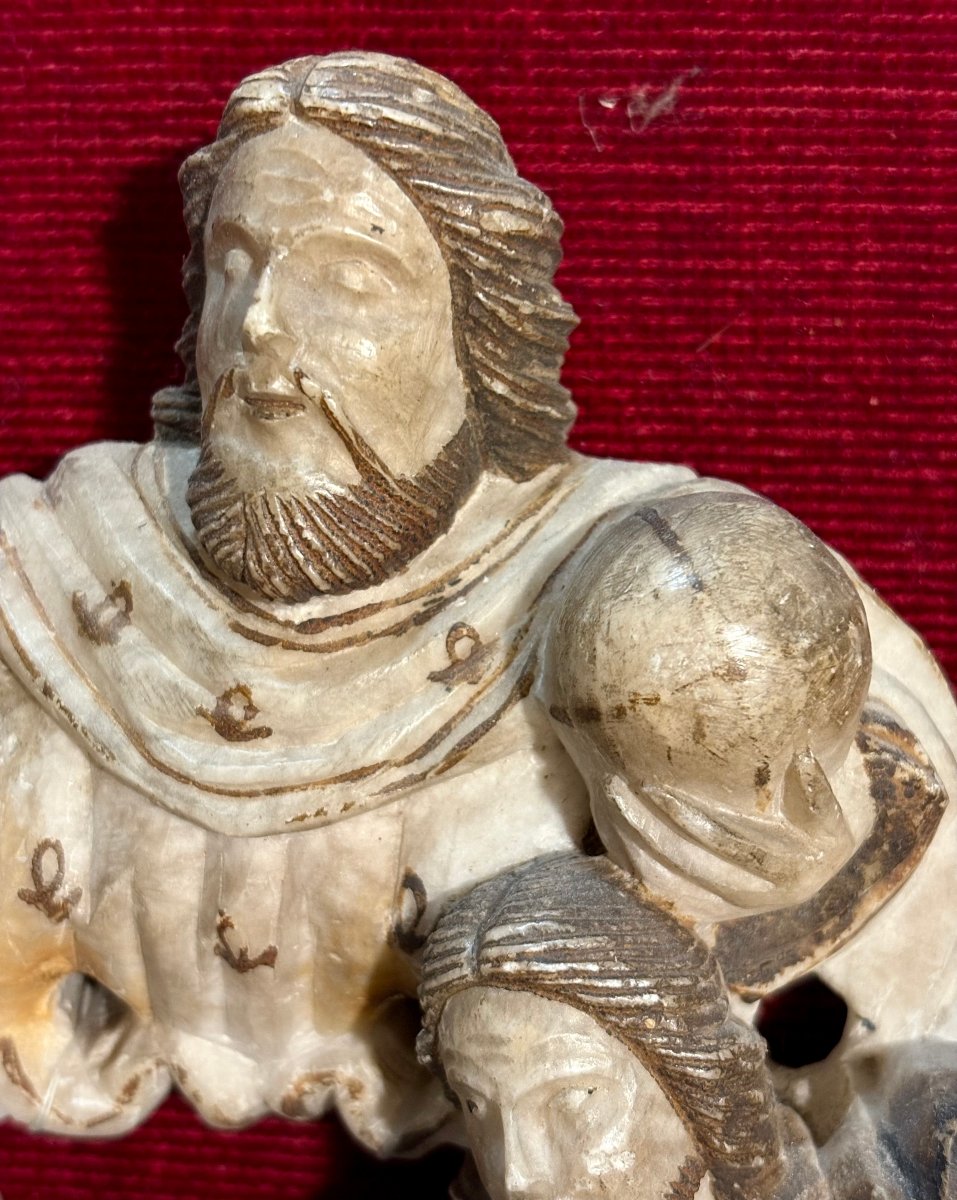
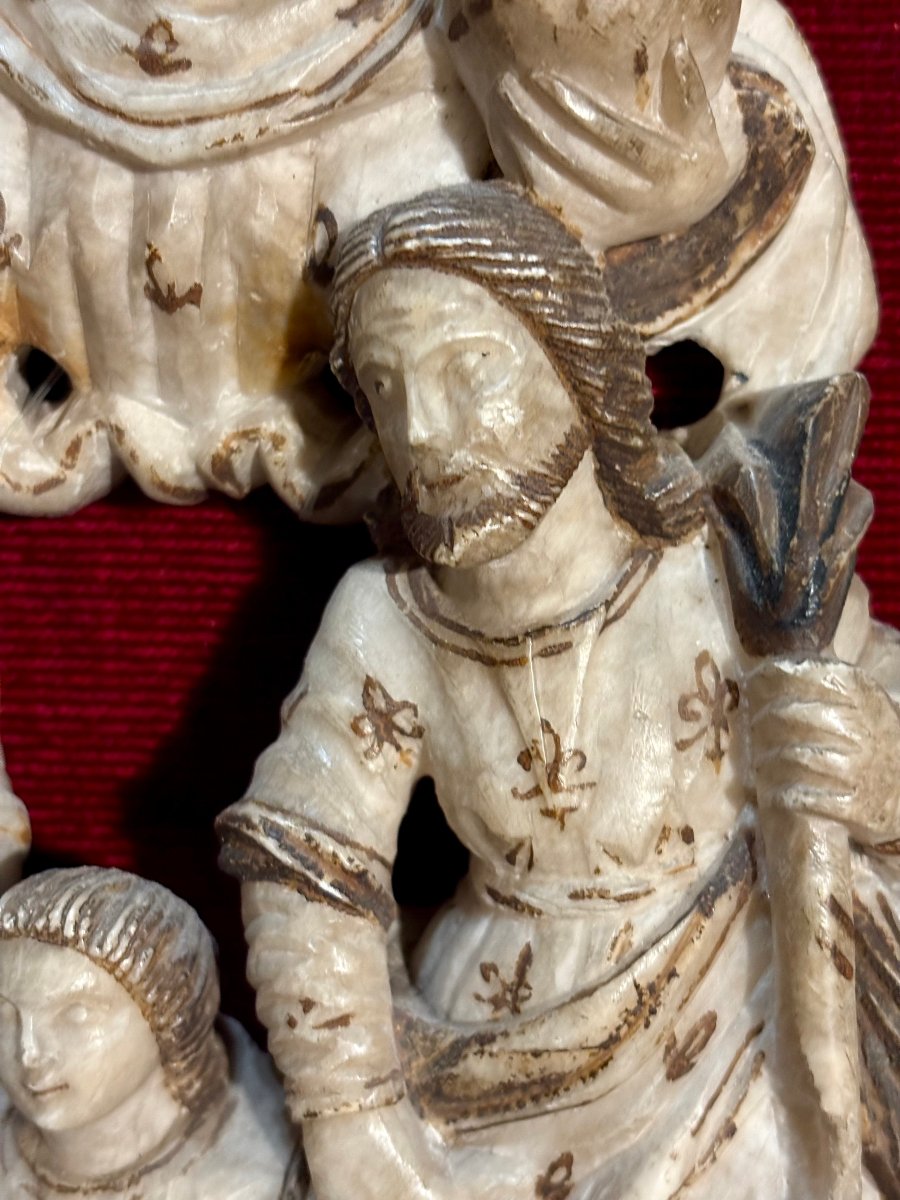
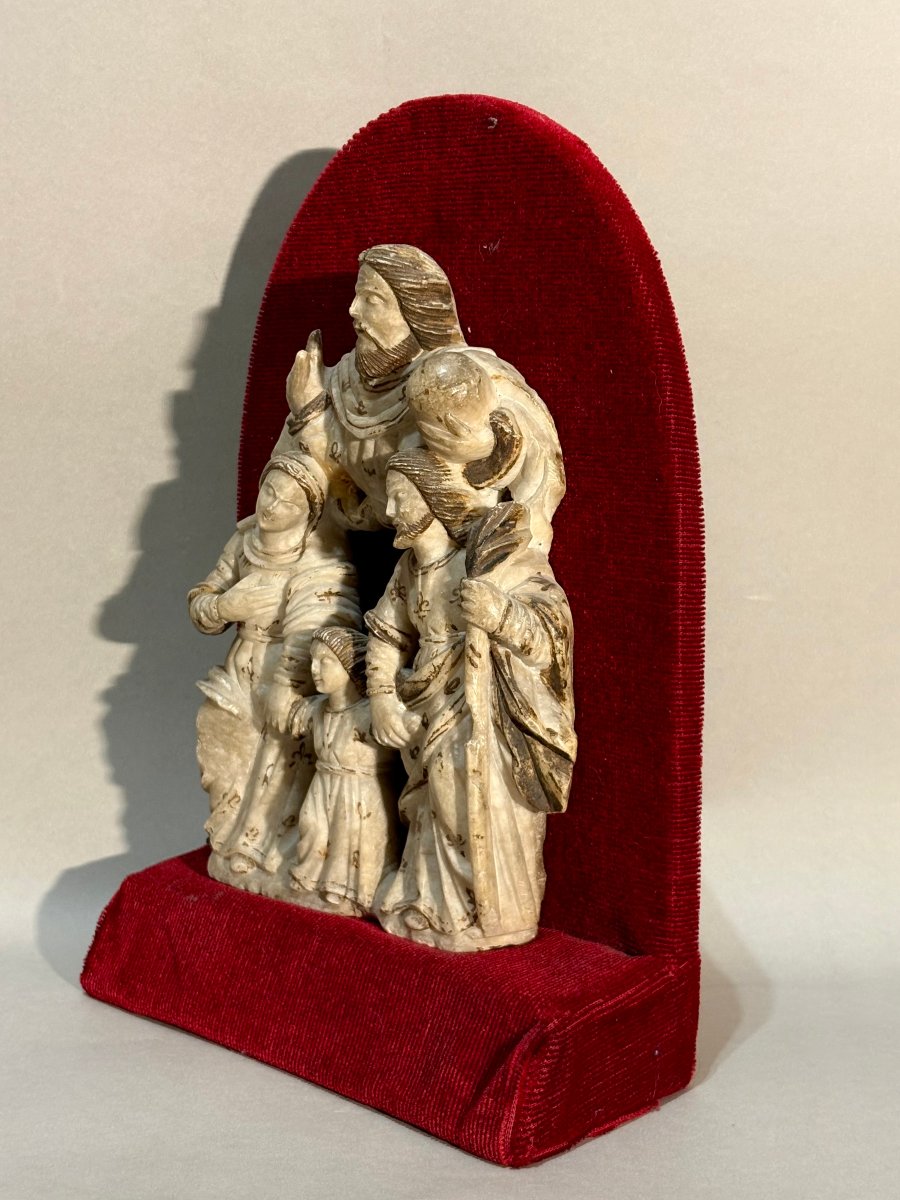
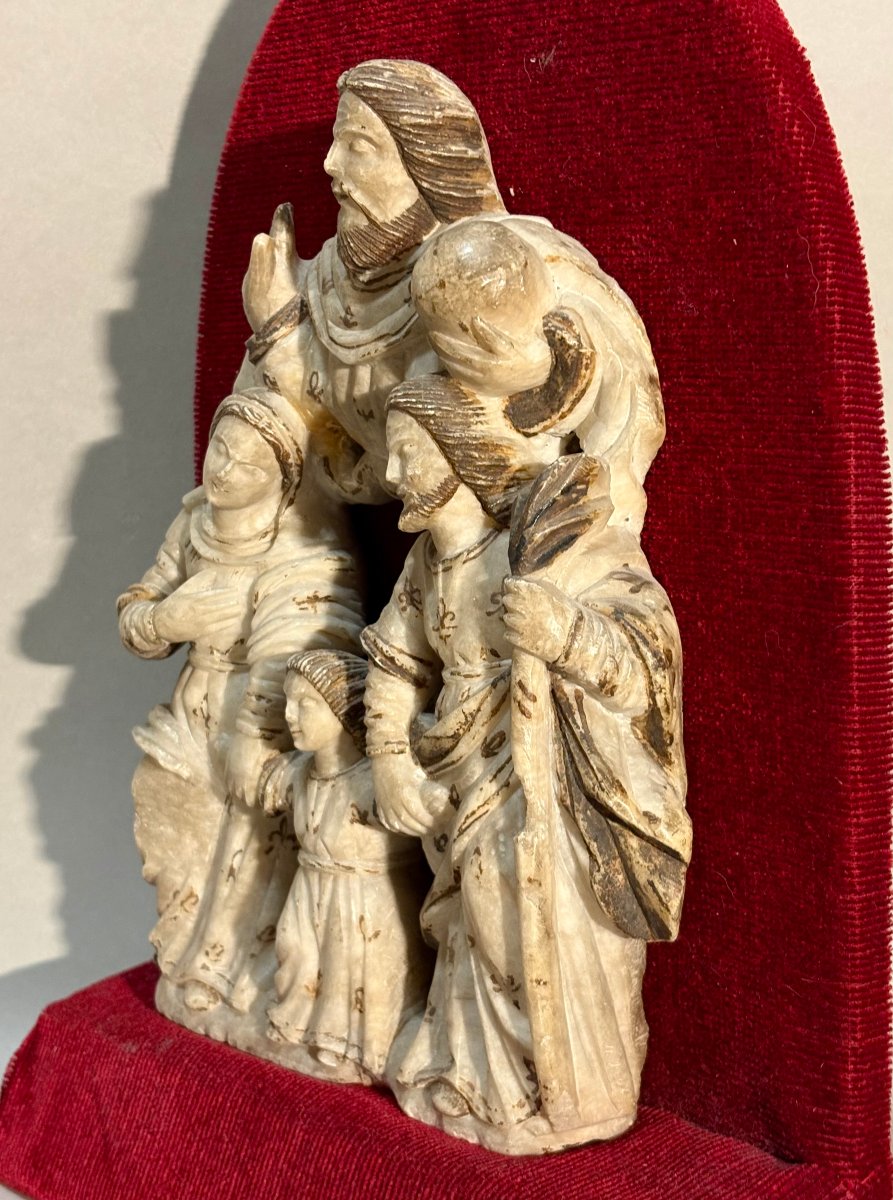
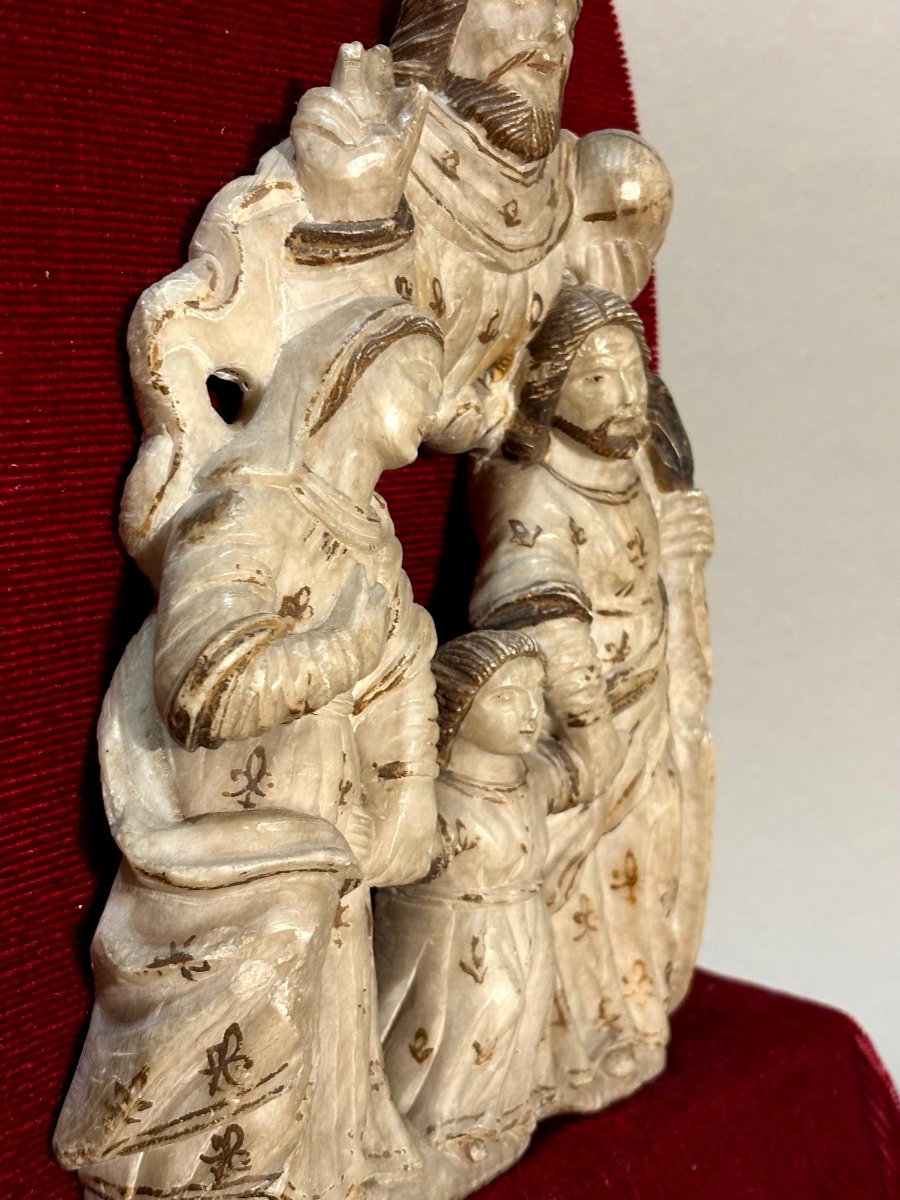
The Return of the Holy Family takes place after the exile in Egypt. The danger has passed, and the family can return to Nazareth. The infant Jesus is already a few years old and walks between Mary and Joseph. Above, among the clouds, God the Father appears, holding the globe in one hand while blessing the family with the other. This depicts the dual nature of Jesus: Son of God in the heavenly Trinity on the vertical axis, and human child in the earthly Trinity composed of Mary, Joseph, and the Child on the horizontal axis. The theme gained popularity following the Counter-Reformation (1545–1563) to highlight the protective and human role of Saint Joseph. It is a rare theme in Christian art compared to the better-known “Flight into Egypt,” having developed primarily in painting and within the Flemish and Roman traditions. The most notable work is “The Return of the Holy Family” by Peter Paul Rubens, donated by the mayor of Antwerp to the Church of St. Charles Borromeo in 1620. The theme is explored in Flemish devotional sculpture through bas-reliefs and sculptural groups, usually crafted from alabaster in the workshops of Mechelen.
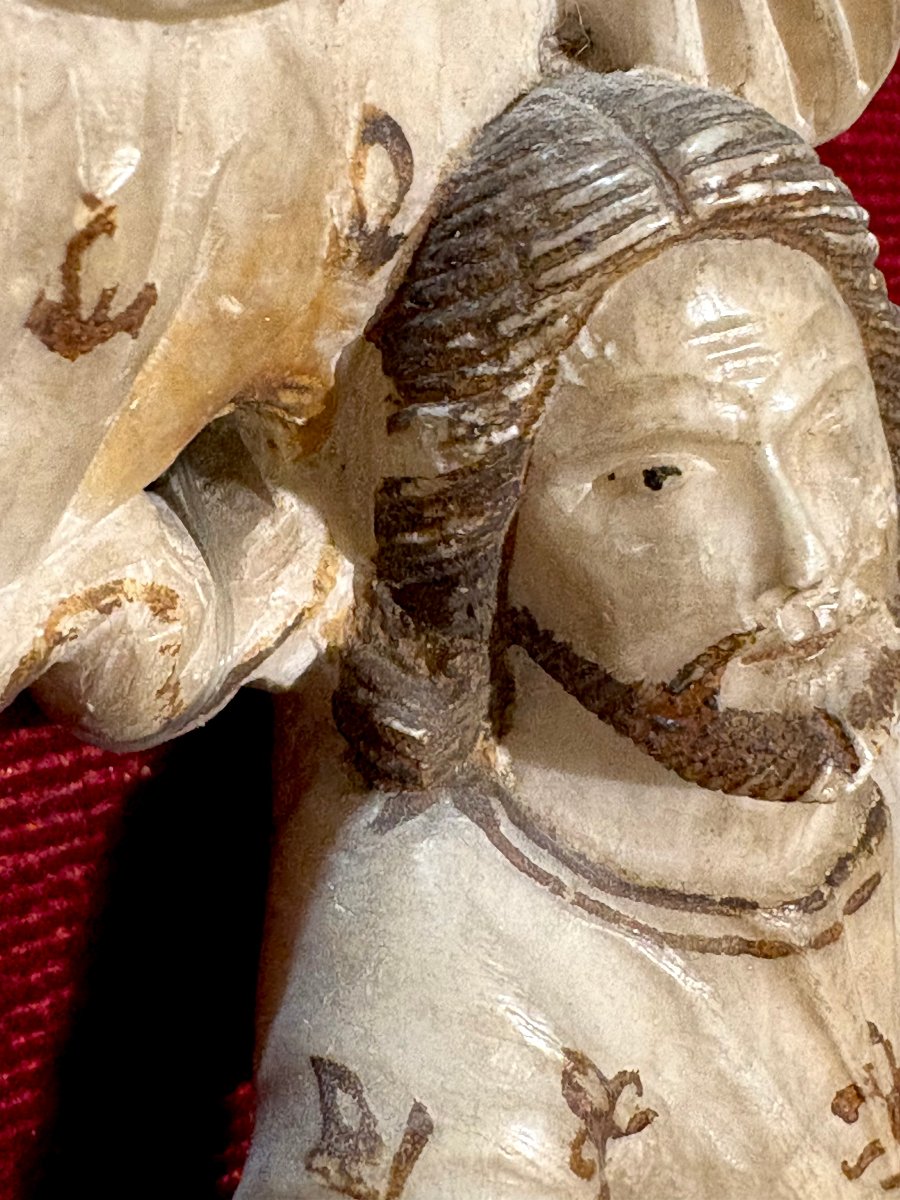
Our group belongs to this tradition: the alabaster is finely carved and finished with gilded details on the hair, beard, and robes. The gold has oxidized over time but is still present.
Excellent condition, with minor signs of age.
Dimensions
Alabaster group: H 24 cm W 18 cm D 4 cm
Red velvet base: H 35 cm W 24 cm D 9 cm
++++++++++++++++++++++++++++++++++++++++DELIVERY AND PAYMENT++++++++++++++++++++++++++++++++
SHIPPING VIA DHL in a custom-made crate including insurance based on value
Payment methods: Bank transfer - Online credit card (including AMEX) - PayPal (+3.7%) - NO checks +++++++++++++++++++++++++++++++++++++++++++++++++++++++++++++++++++++++++++++++++++++++++++++++
The Return of the Holy Family takes place after the exile in Egypt. The danger has passed, and the family can return to Nazareth. The infant Jesus is already a few years old and walks between Mary and Joseph. Above, among the clouds, God the Father appears, holding the globe in one hand while blessing the family with the other. This depicts the dual nature of Jesus: Son of God in the heavenly Trinity on the vertical axis, and human child in the earthly Trinity composed of Mary, Joseph, and the Child on the horizontal axis. The theme gained popularity following the Counter-Reformation (1545–1563) to highlight the protective and human role of Saint Joseph. It is a rare theme in Christian art compared to the better-known “Flight into Egypt,” having developed primarily in painting and within the Flemish and Roman traditions. The most notable work is “The Return of the Holy Family” by Peter Paul Rubens, donated by the mayor of Antwerp to the Church of St. Charles Borromeo in 1620. The theme is explored in Flemish devotional sculpture through bas-reliefs and sculptural groups, usually crafted from alabaster in the workshops of Mechelen.
Our group belongs to this tradition: the alabaster is finely carved and finished with gilded details on the hair, beard, and robes. The gold has oxidized over time but is still present.
Excellent condition, with minor signs of age.
Dimensions
Alabaster group: H 24 cm W 18 cm D 4 cm
Red velvet base: H 35 cm W 24 cm D 9 cm
++++++++++++++++++++++++++++++++++++++++DELIVERY AND PAYMENT++++++++++++++++++++++++++++++++
SHIPPING VIA DHL in a custom-made crate including insurance based on value
Payment methods: Bank transfer - Online credit card (including AMEX) - PayPal (+3.7%) - NO checks +++++++++++++++++++++++++++++++++++++++++++++++++++++++++++++++++++++++++++++++++++++++++++++++
3 300 €
Period: 17th century
Style: Renaissance, Louis 13th
Condition: Excellent condition
Material: Alabaster
Width: albatre cm 18
Height: albatre cm 24
Depth: albatre cm 4
Reference (ID): 1810250
Availability: In stock
Print