


18th Italian Rococo-style Console Table In Gilded Wood Grotesque Mask
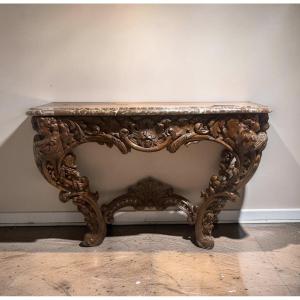
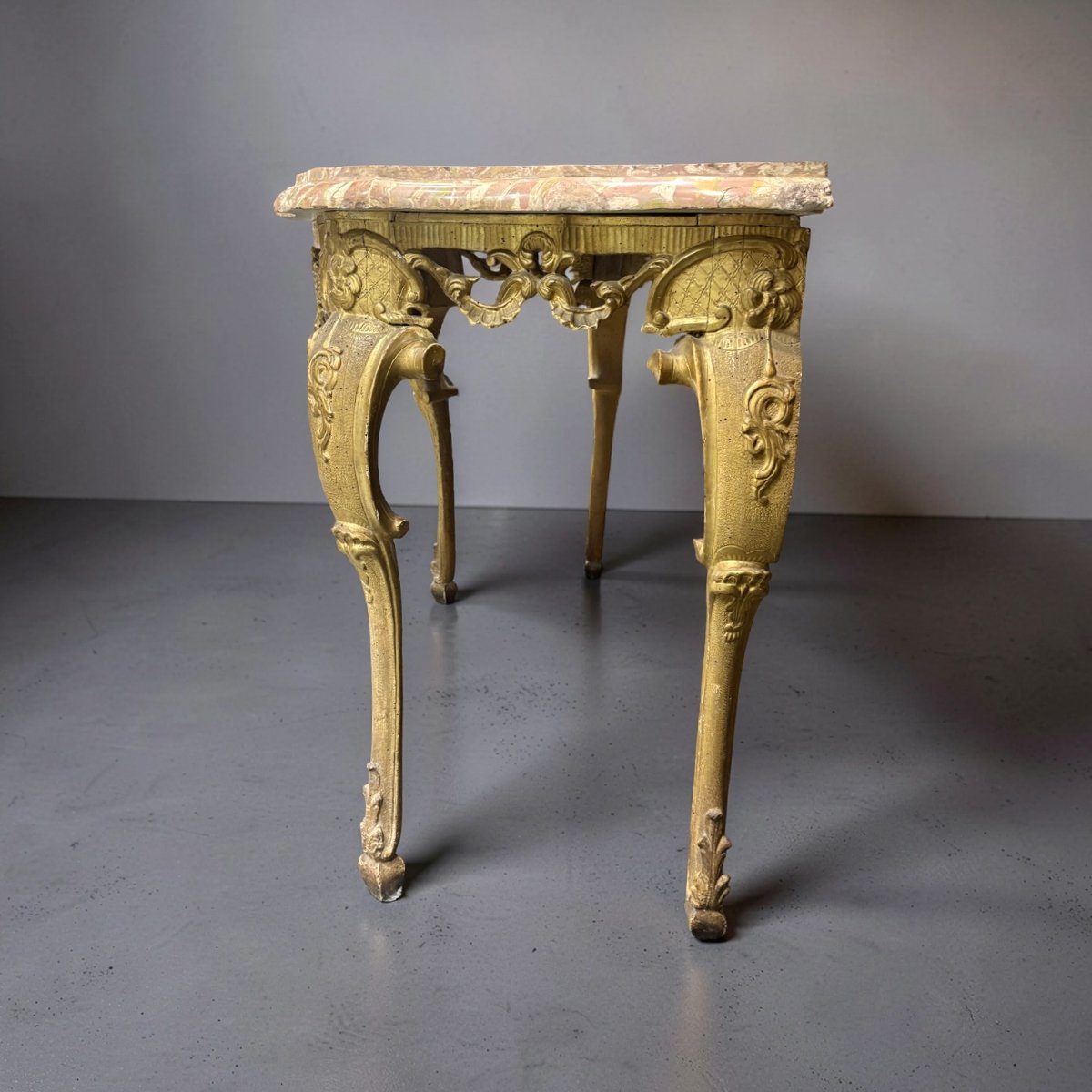
Extraordinary Rococo-style console table, Bologna, 18th century.
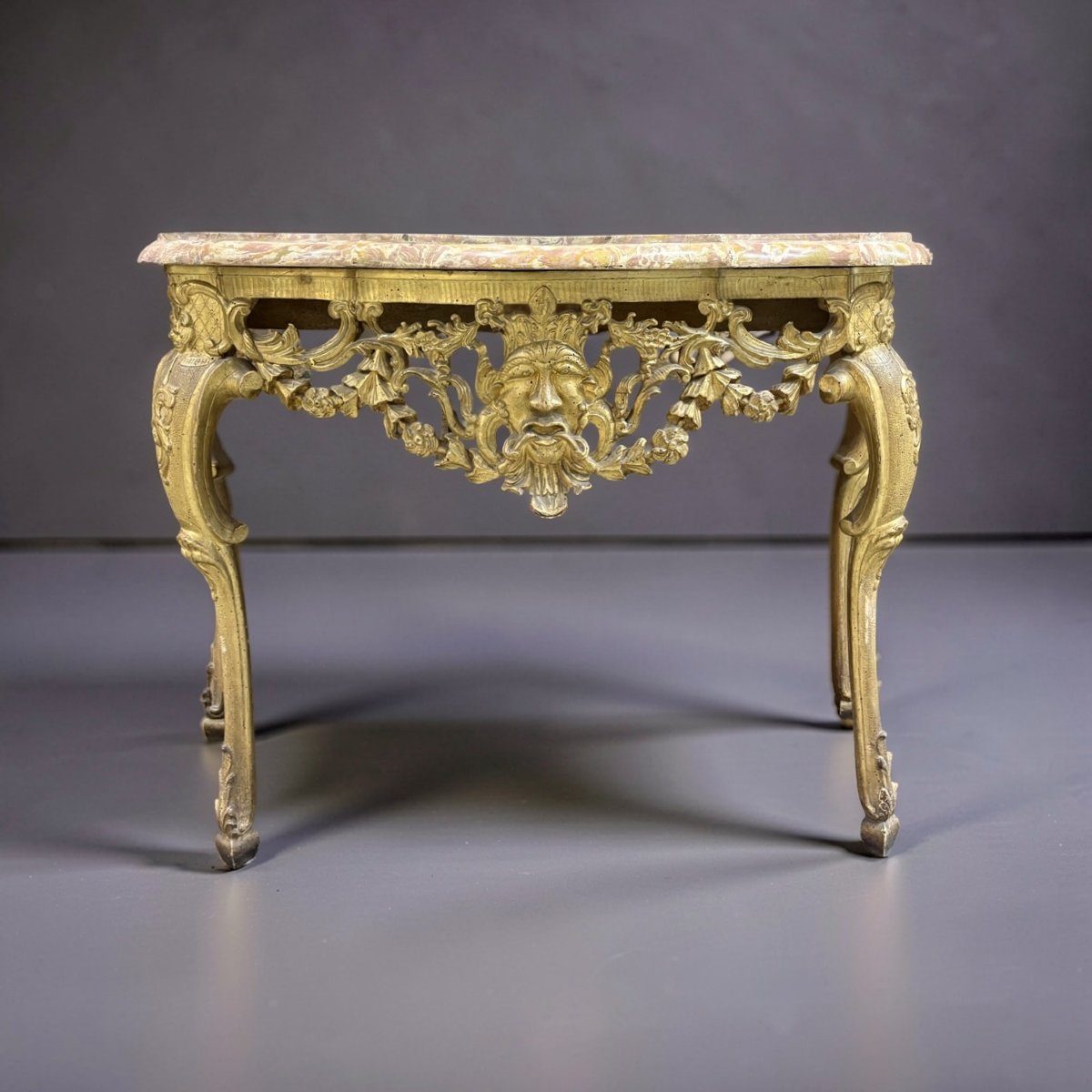
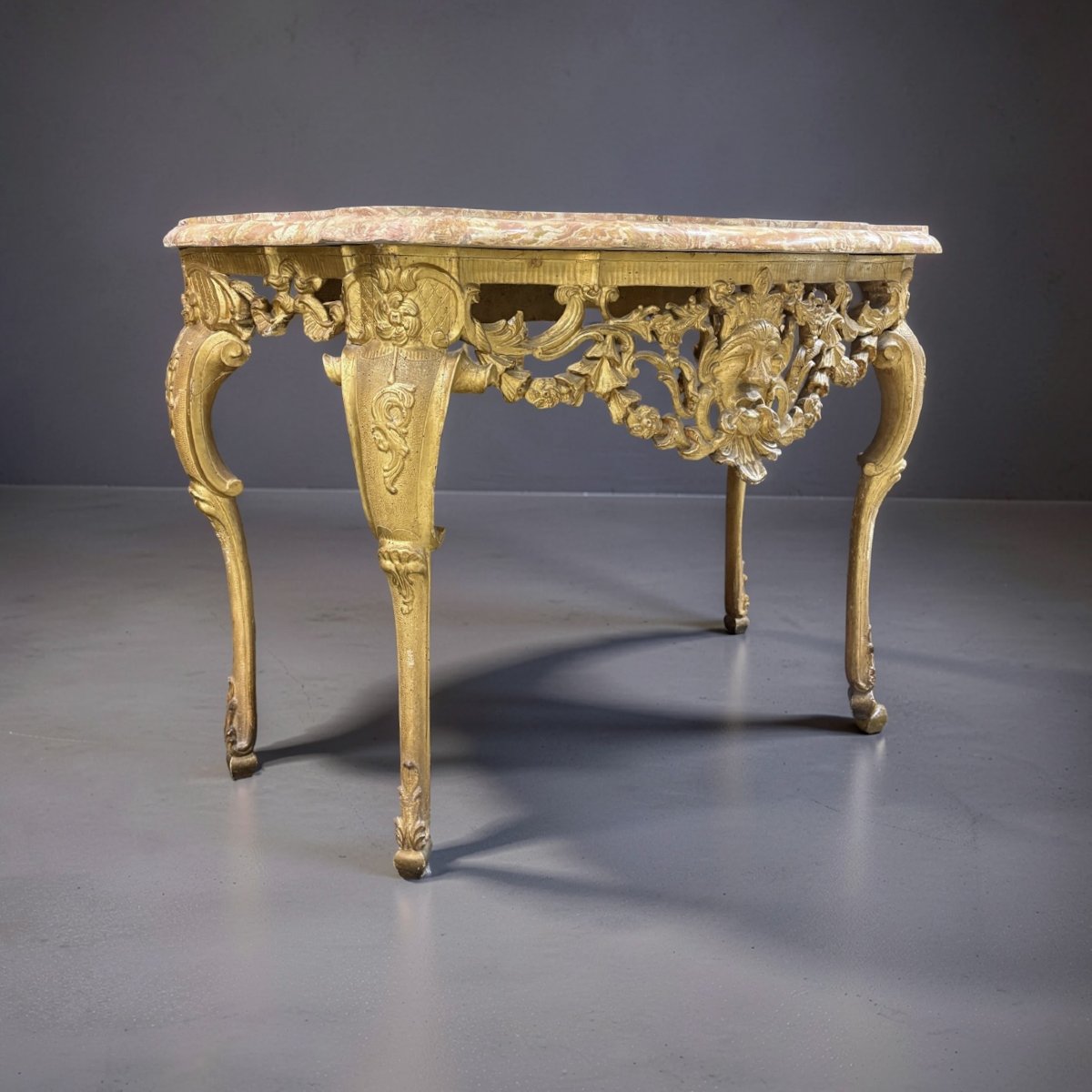
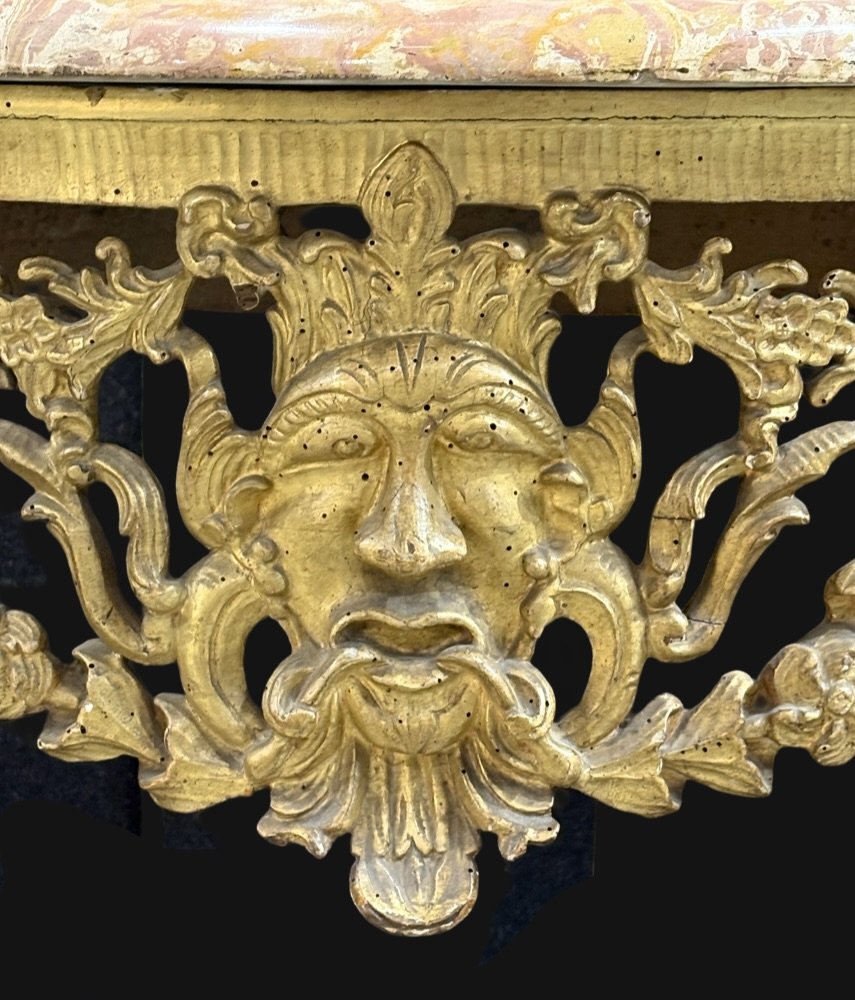
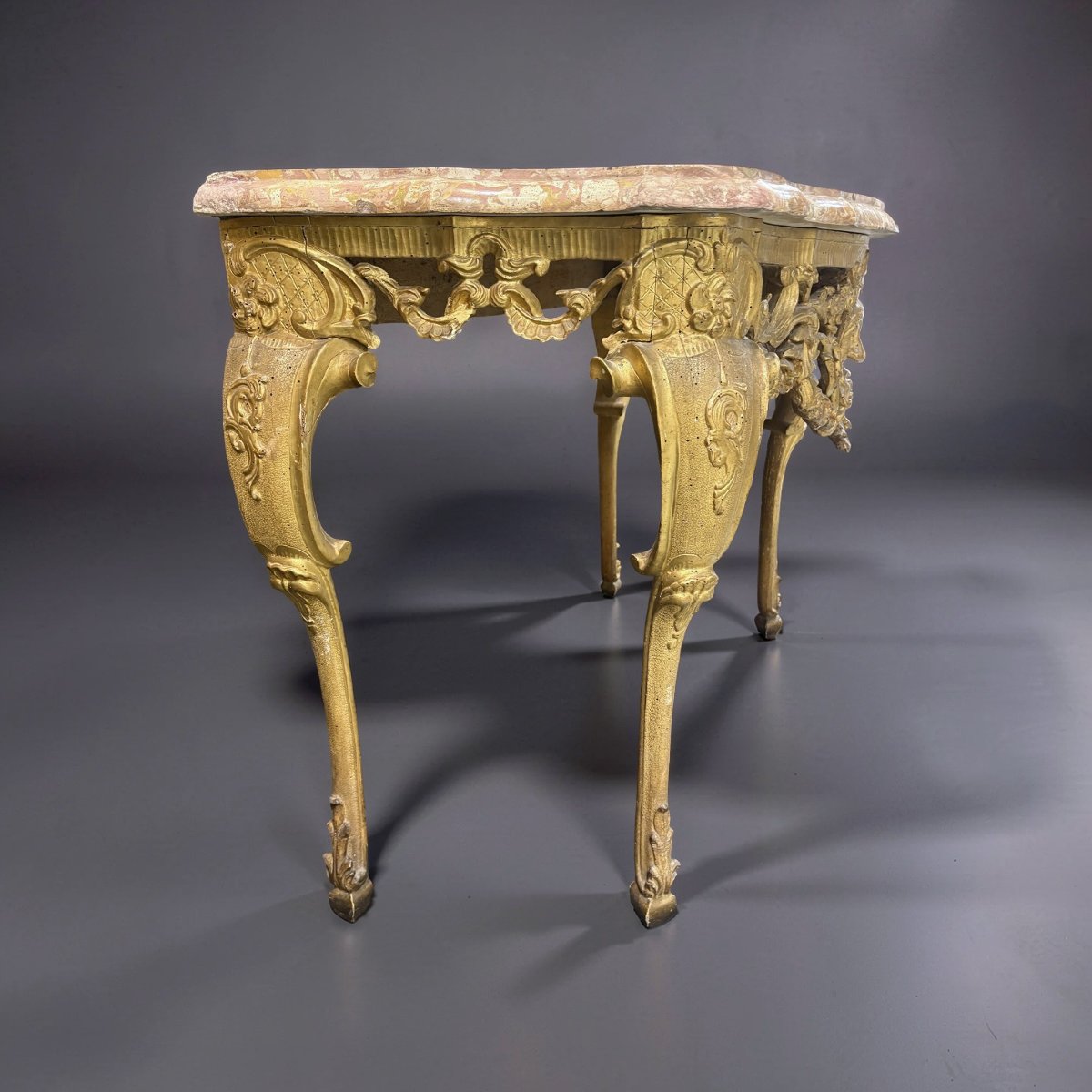
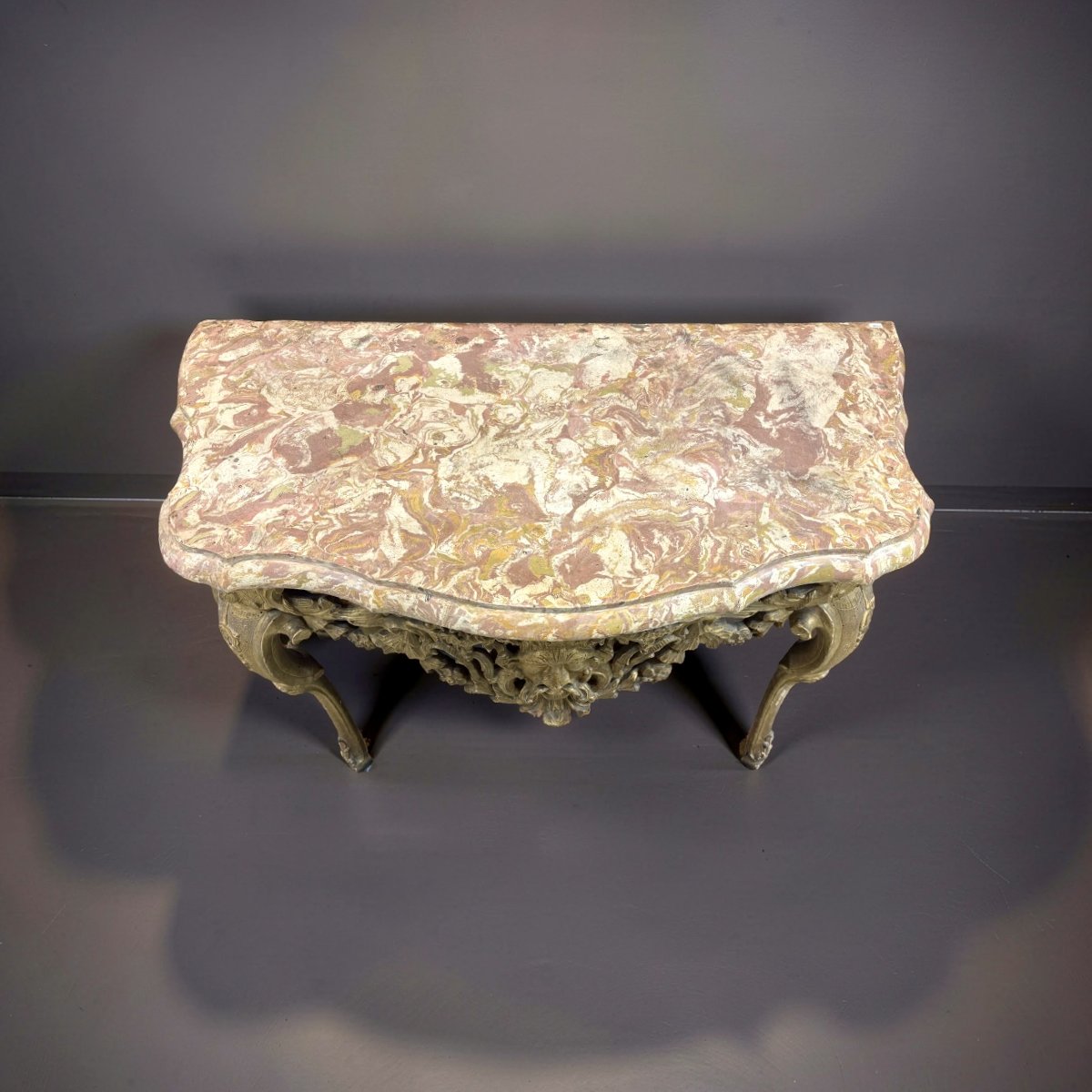
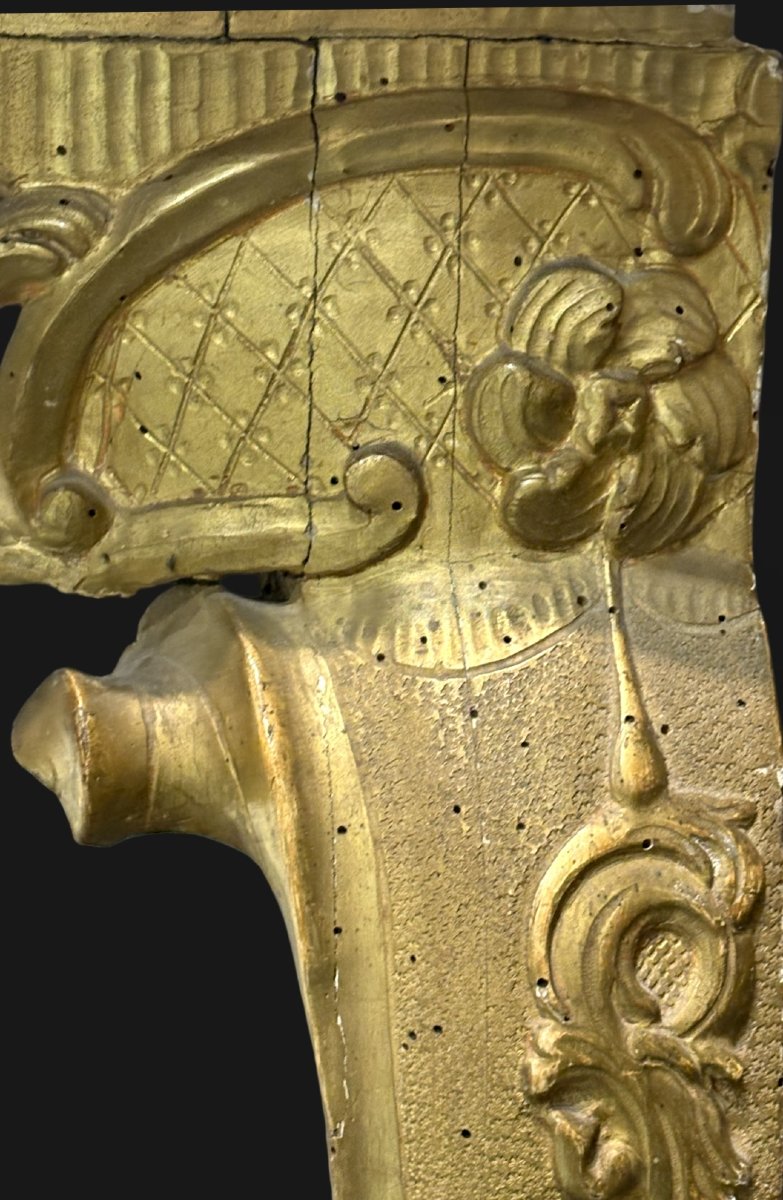
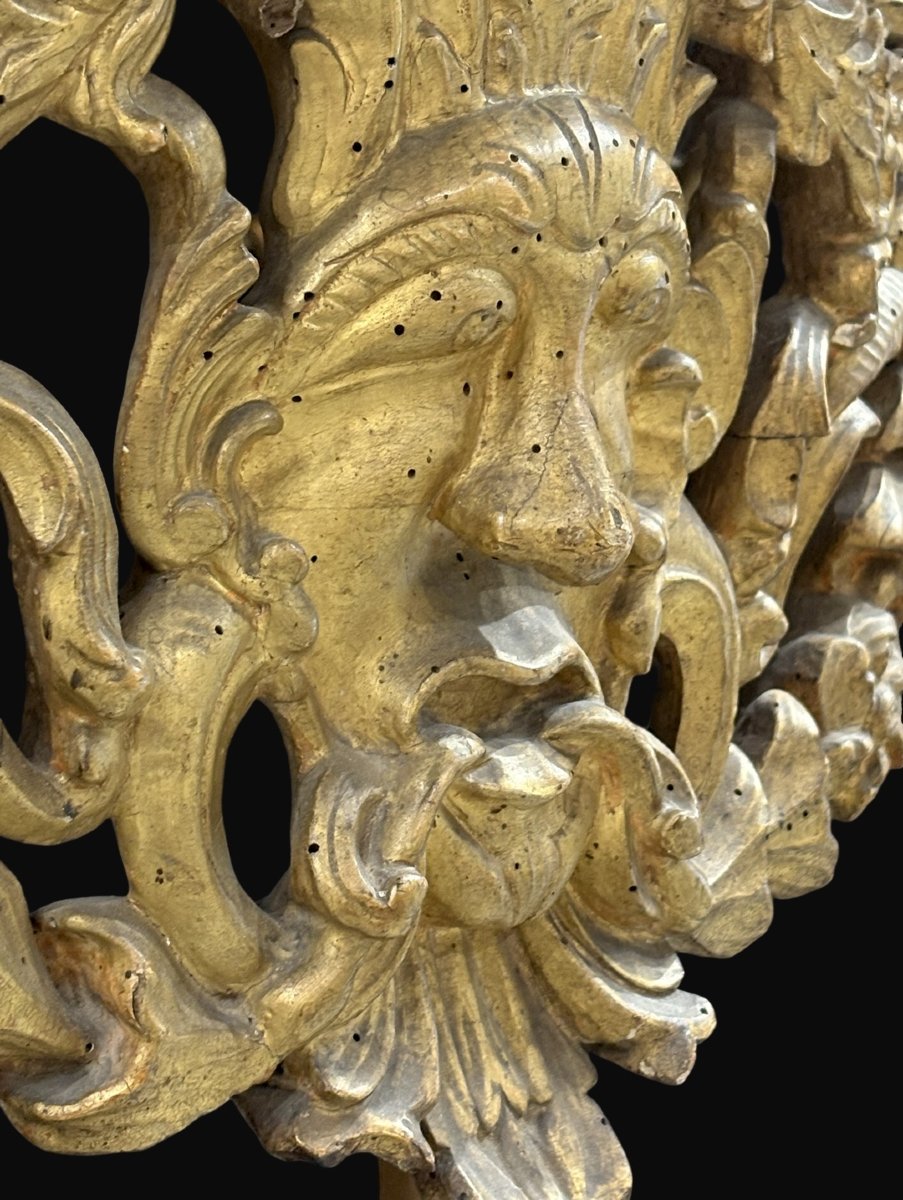
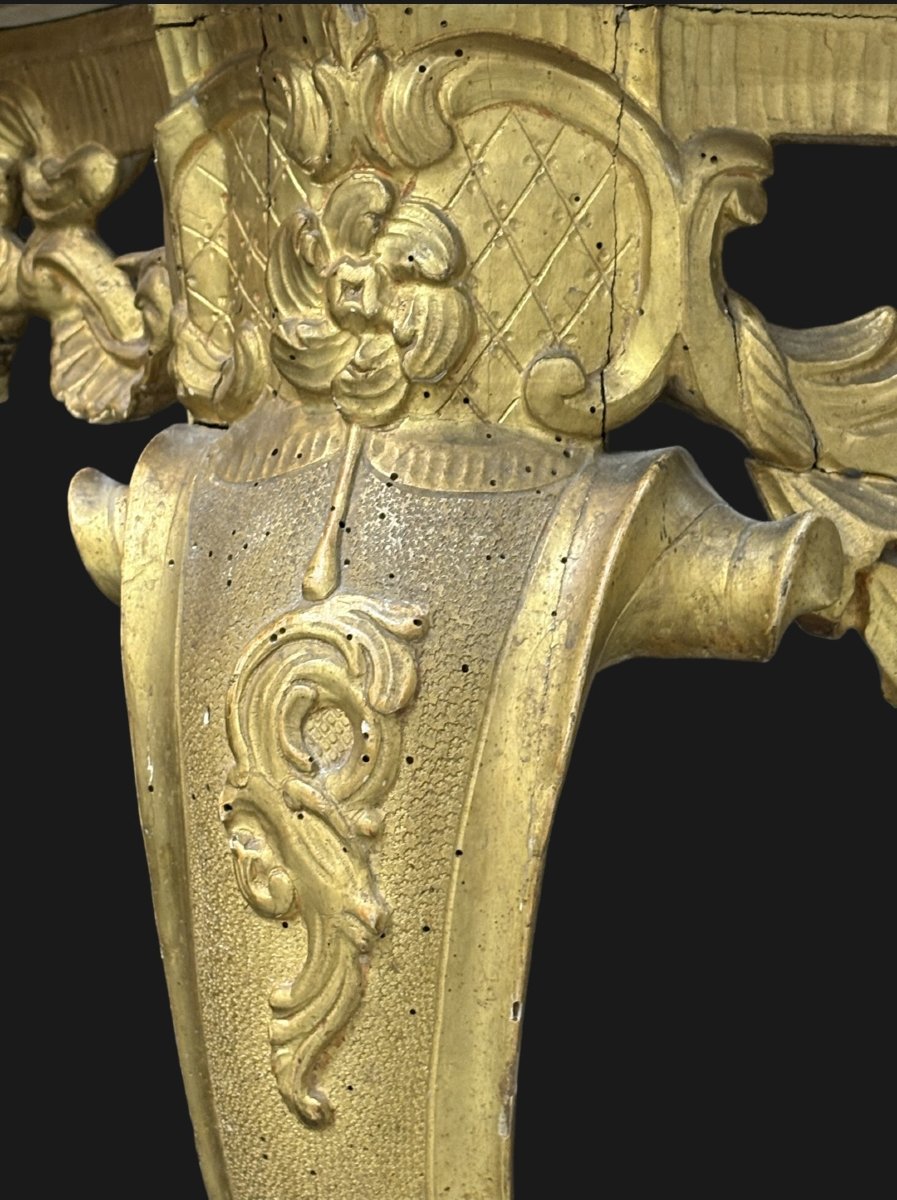
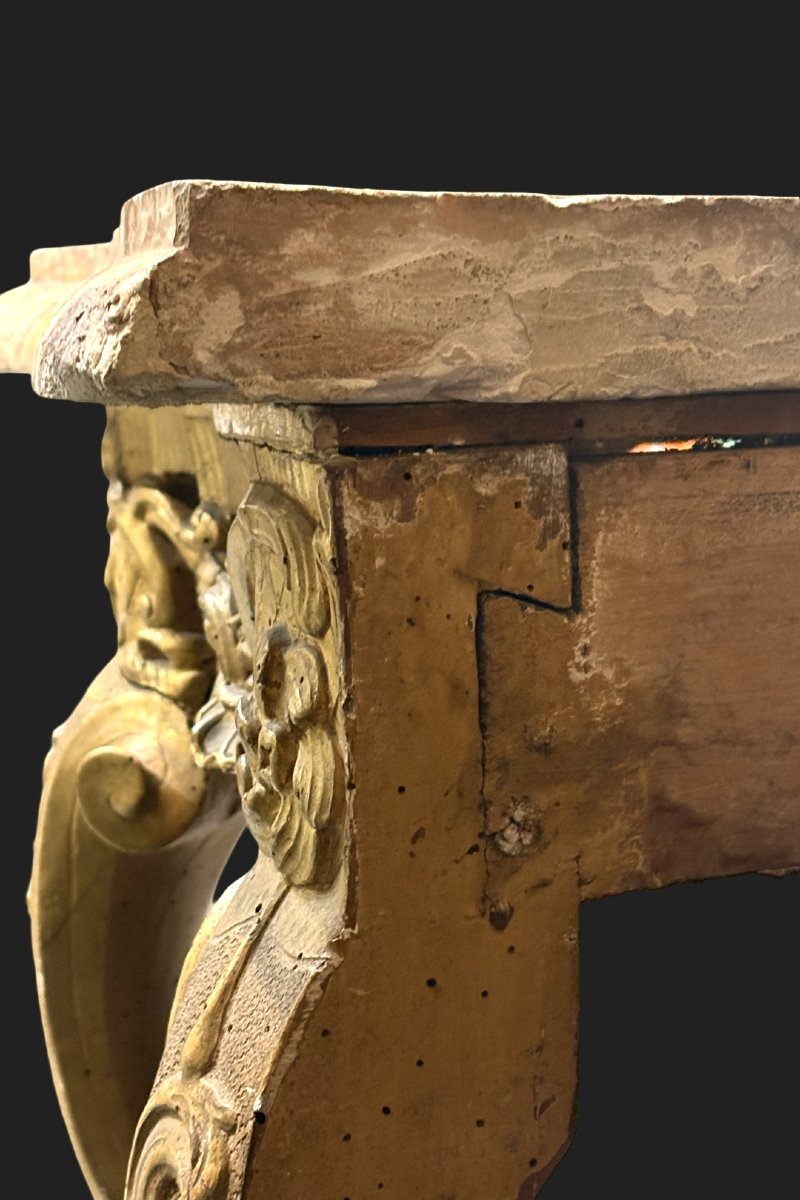
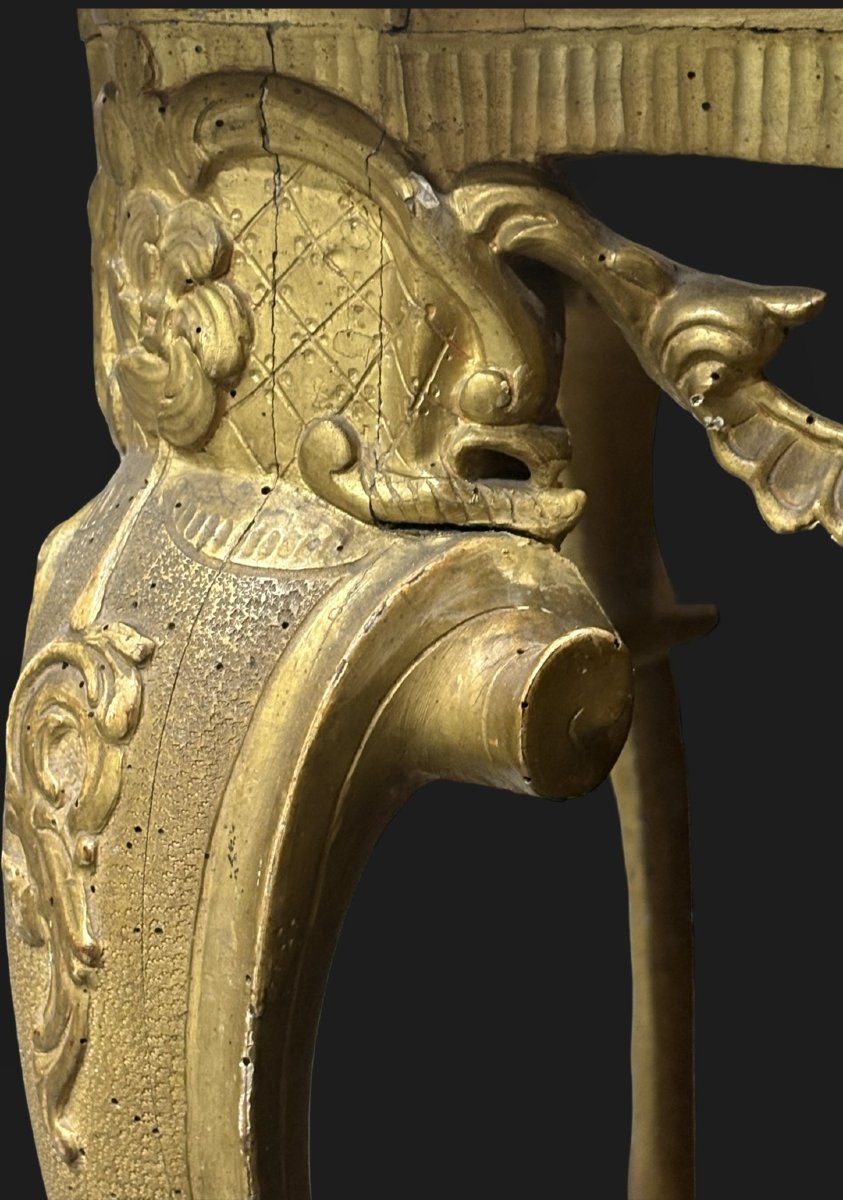
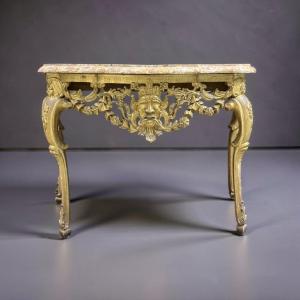
The piece is distinguished by an exquisitely ornate, fully openwork-carved band beneath the top, dominated at the center by a vigorous grotesque mask set among leaf-shaped volutes and floral festoons that cascade with theatrical grace. The four elegant cabriole legs lend the structure a slender silhouette; they are embellished at the knees with soft acanthus leaves and connected to the floor by scroll-shaped feet. The tabletop is crafted from fine scagliola with warm pink and ochre veining.
Consoles with a central mask are quite rare on the art market: this was not merely a geometric decoration, but a captivating figurative element. In 18th-century furniture, the mask served as the visual focal point of the entire room.
The Rococo style in Bologna developed primarily between the late 17th century (preceded by architectural and scenographic elements such as the grand staircase of Palazzo Ranuzzi from 1695) and the 18th century, blending with the local late Baroque tradition. The style spread primarily in aristocratic palaces, in vaulted ceilings, in furnishings, and in private residences. Unlike in France or Turin (where the Savoy court meticulously kept records of the master craftsmen), in Bologna the production of Rococo-style furniture was regulated by the city’s artisan guilds, where roles were strictly divided: the woodcarver carved the wood (often soft local woods such as linden) and the gilder applied the precious gold-leaf finish. The preparatory drawings and sculptural lines of the consoles did not originate directly from the artisans but were commissioned from the city’s great masters of perspective and interior decoration, such as members of the famous Galli da Bibbiena family or the quadraturisti active on noble construction sites. It was they who sketched the rocaille motifs, the asymmetries, the “deer-leg” legs, and the masks that the woodcarver then rendered in wood. Bolognese Rococo console tables were distinguished by a vigorous plasticity, which still bore the influence of the grandeur of the Emilian Baroque, though softened by curls, floral motifs, and more ethereal volutes. The extraordinary quality of the gold leaf gilding on Bolognese console tables—masterfully polished with agate stones to gleam in candlelight—was the result of a dense network of goldsmiths who worked in close collaboration with the cabinetmaking workshops.
The console table is in excellent condition. The gold leaf gilding is original and very well preserved. Minor signs of age.
This type of console table is a piece of furniture with great visual impact and looks best in spacious rooms that highlight its theatricality and classic elegance. It can be placed in the entryway, perhaps topped by a large antique mirror, where it immediately defines the style and grandeur of the home. In a formal living room, it is perfect against a free wall, between two windows, or to fill an architectural niche, serving as the room’s true focal point. It blends seamlessly into both classic and minimalist-modern settings.
Dimensions
Max. L 128 cm
Max. D 65 cm
H 89 cm
Shipping via a carrier specializing in works of art.
5 400 €
Period: 18th century
Style: Louis 15th - Transition
Condition: Excellent condition
Material: Gilted wood
Width: 128
Height: 89
Depth: 65
Reference (ID): 1839161
Availability: In stock
Print