


Mid-18th Large French Louis XV Console Table In Natural Wood
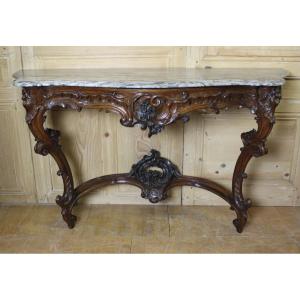
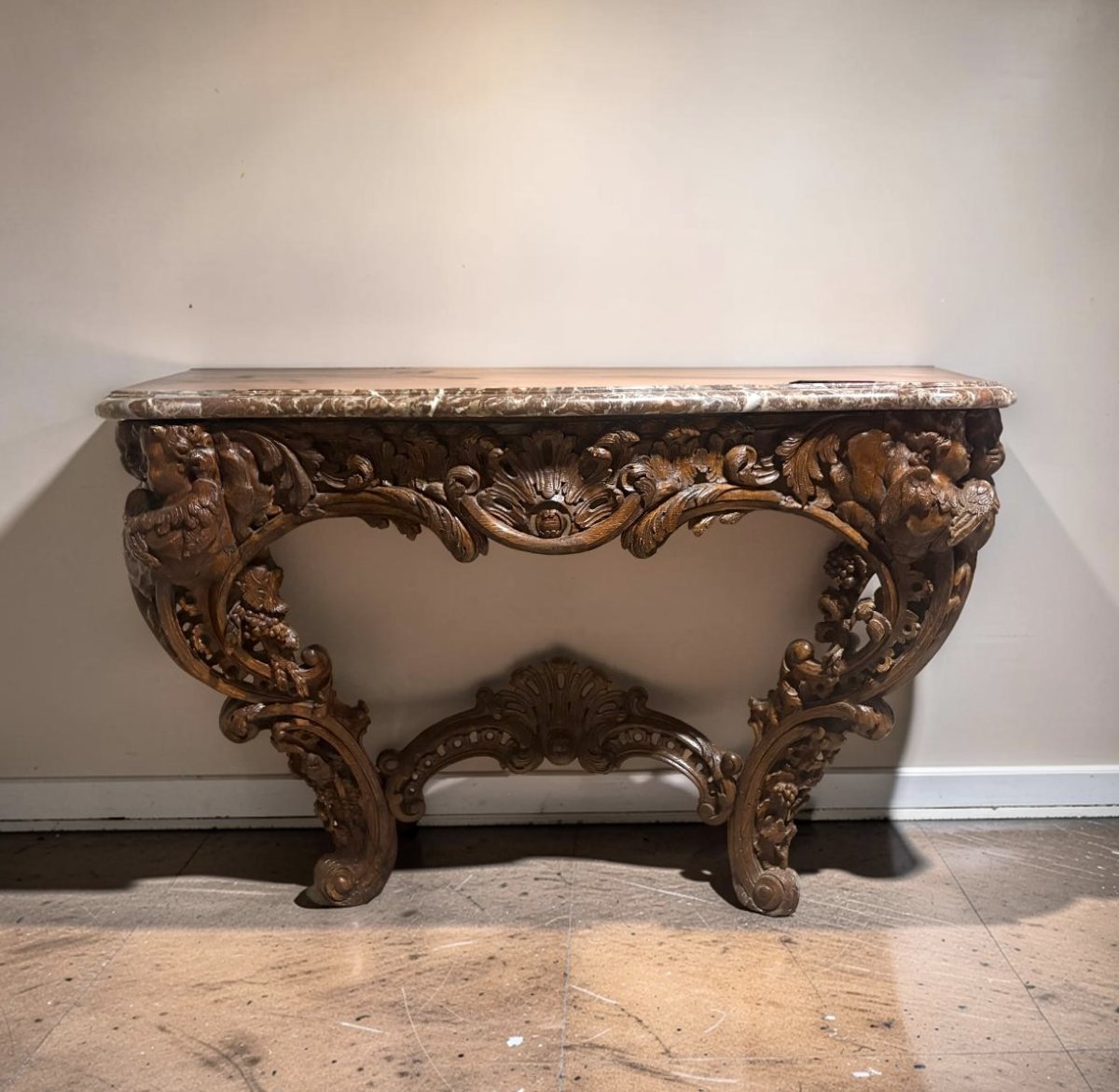
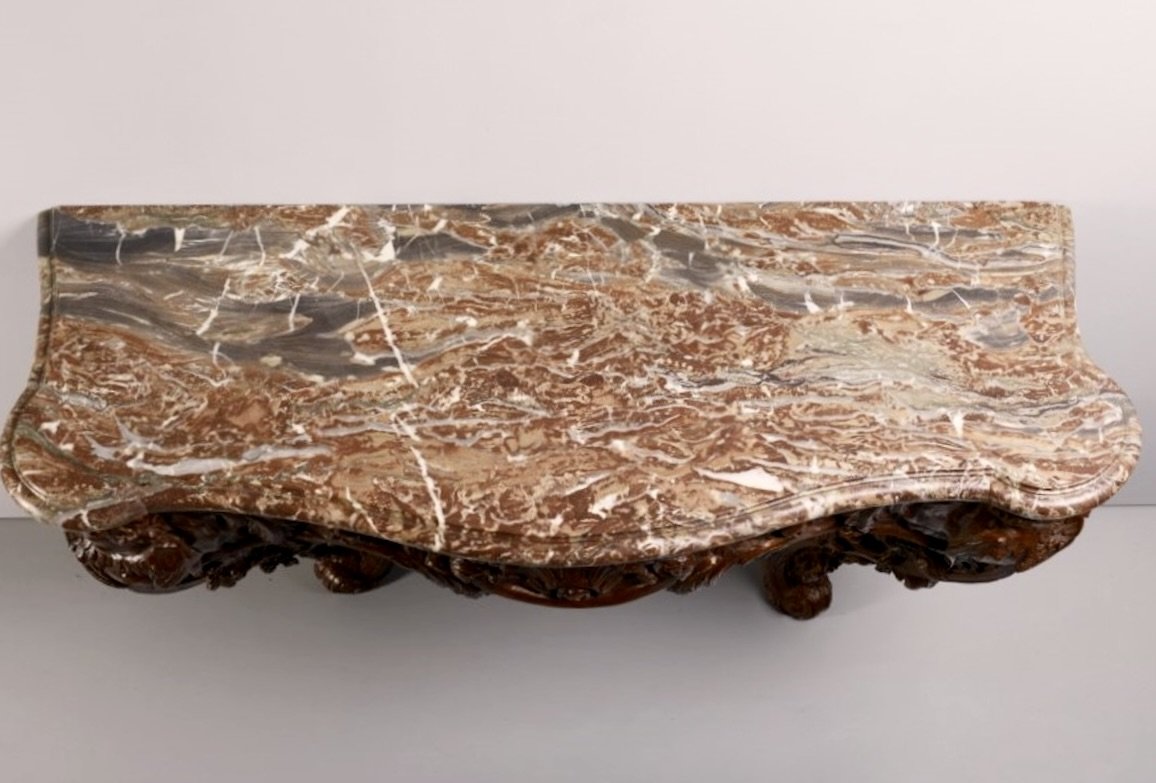
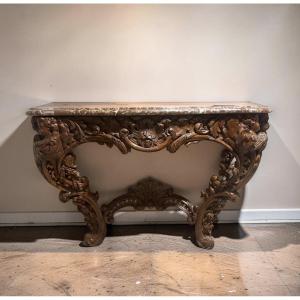
An imposing wall-mounted console table in waxed natural wood with a veined marble top, from the French provinces, mid-18th century.
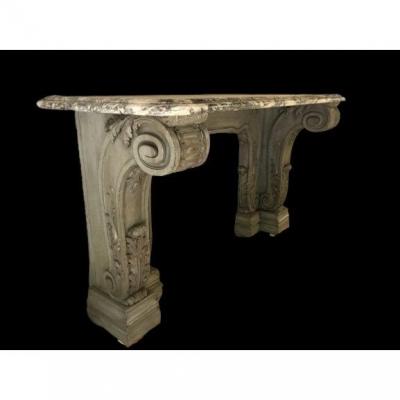
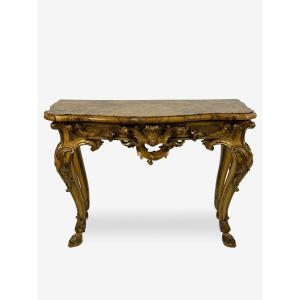
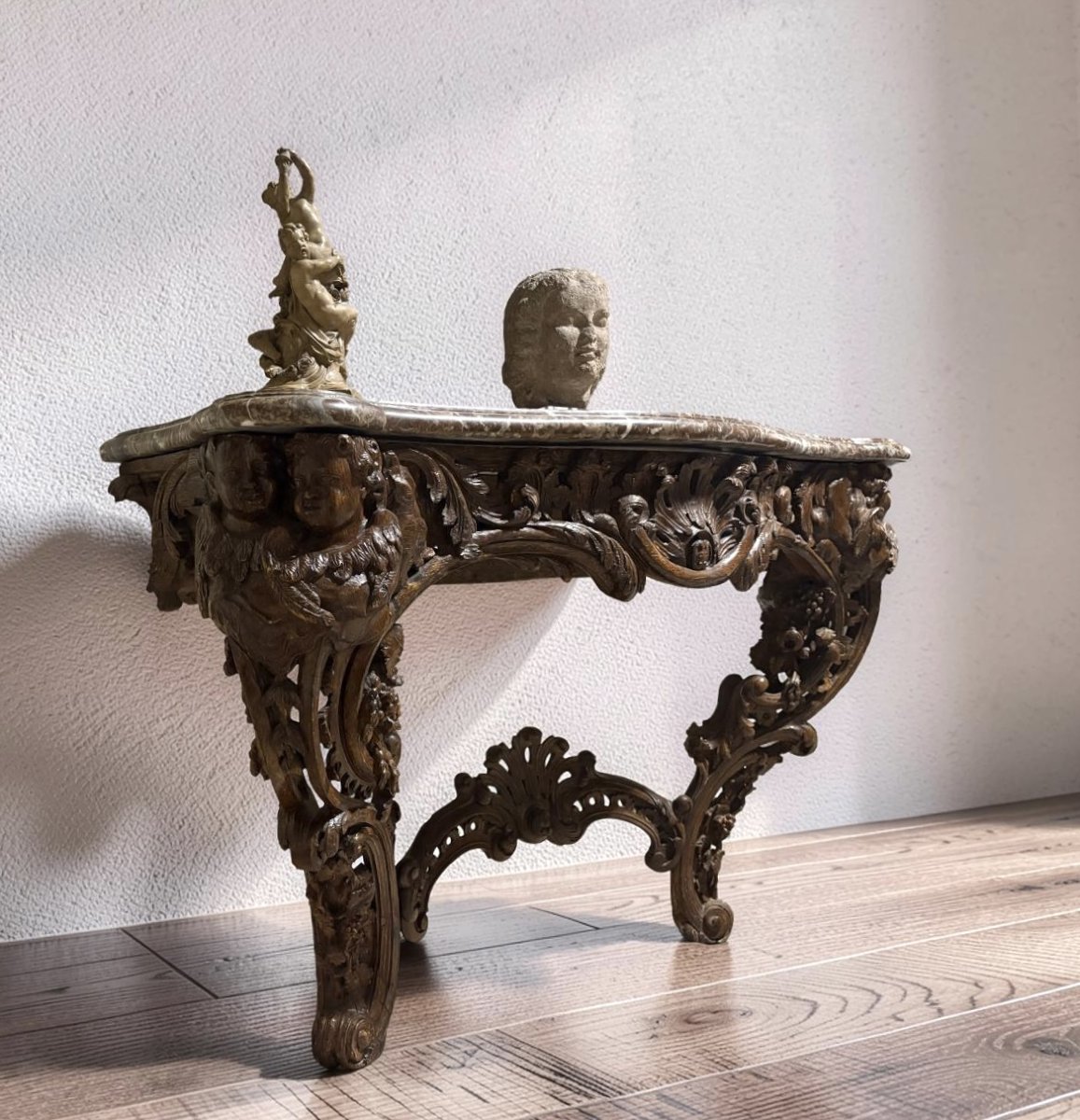
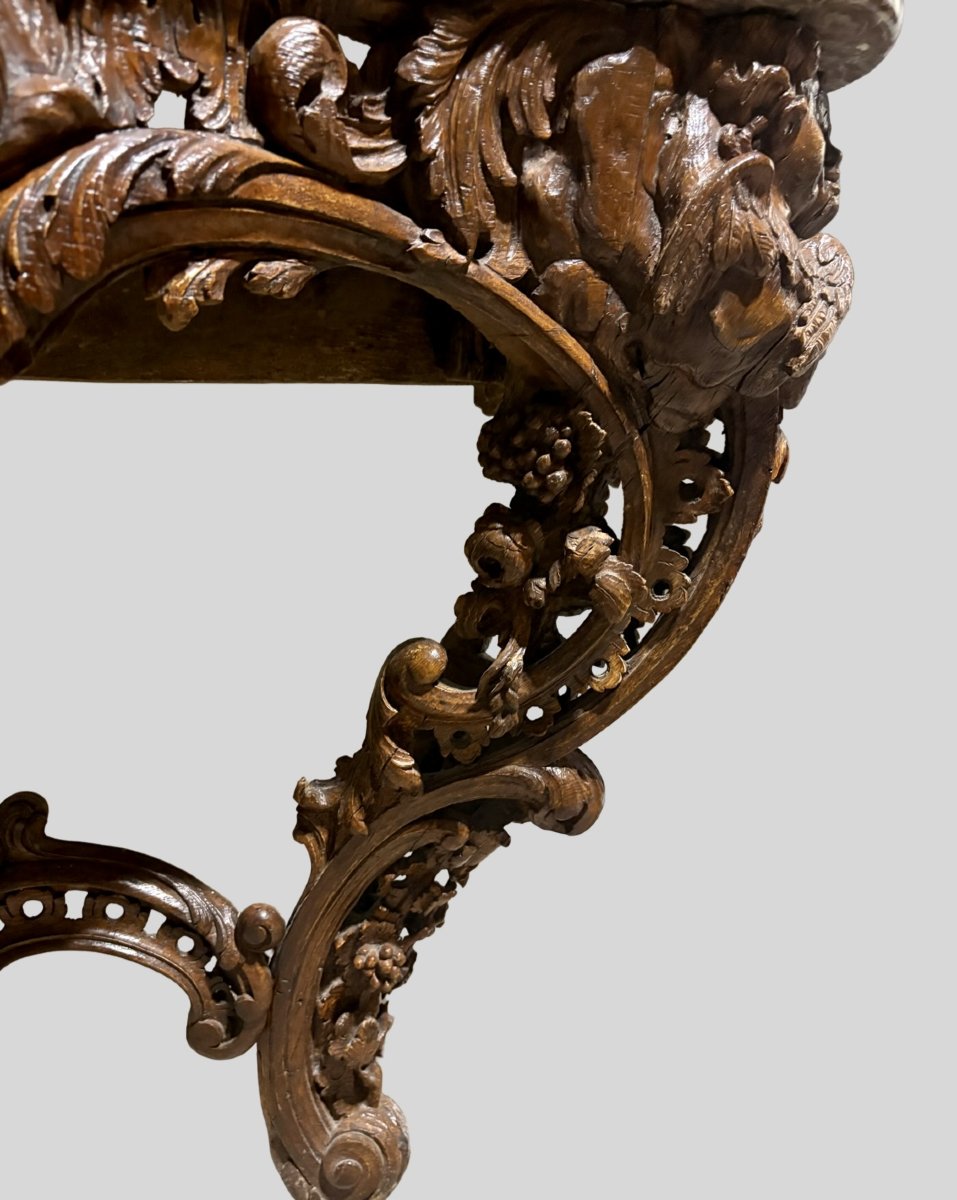
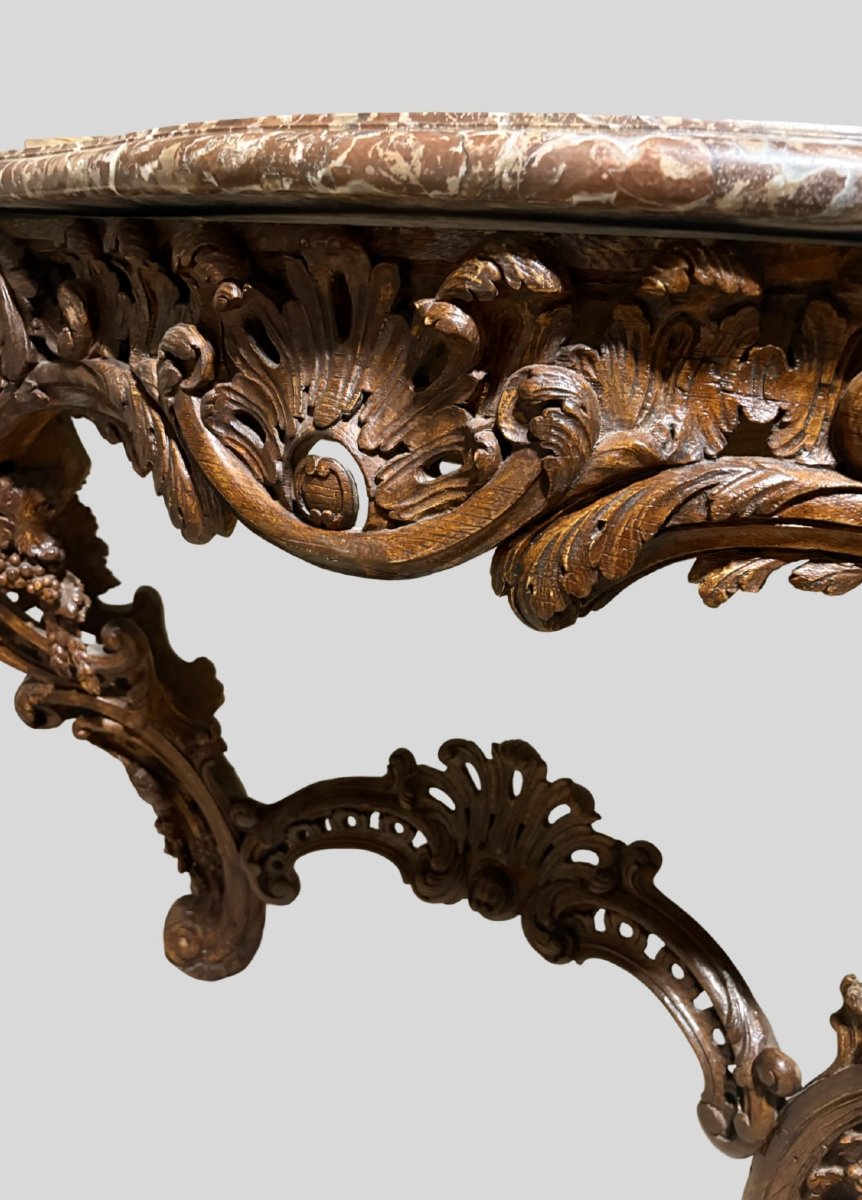
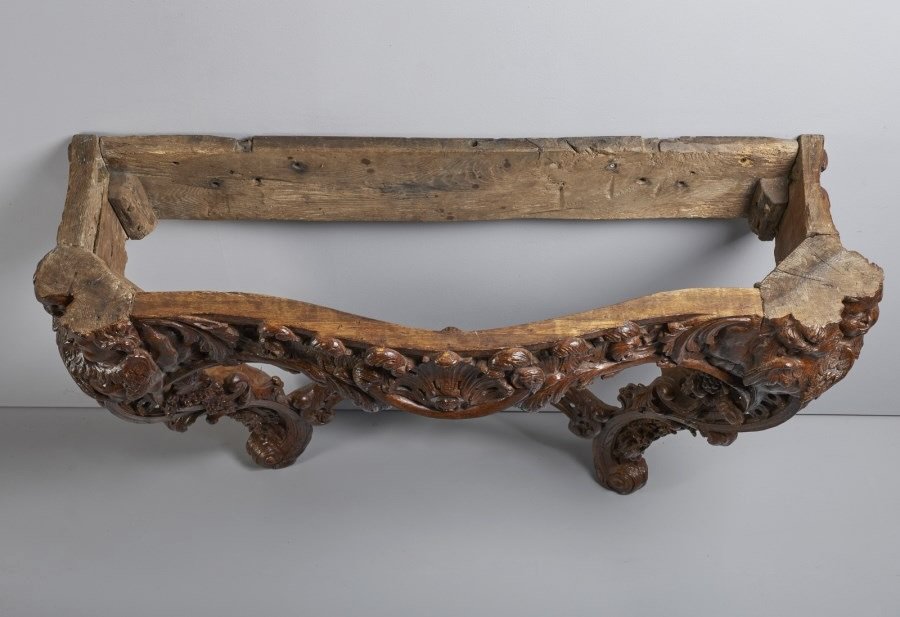
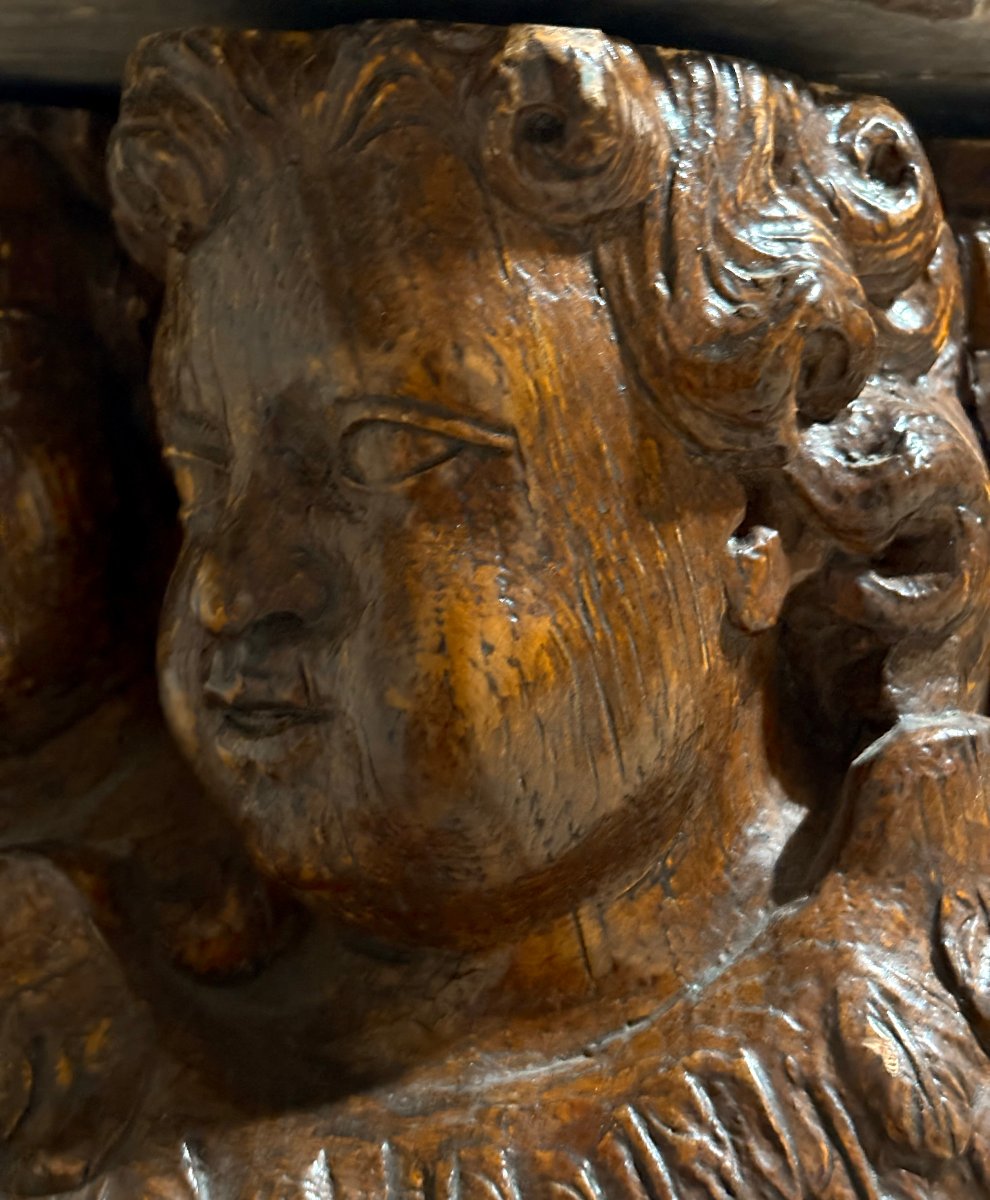
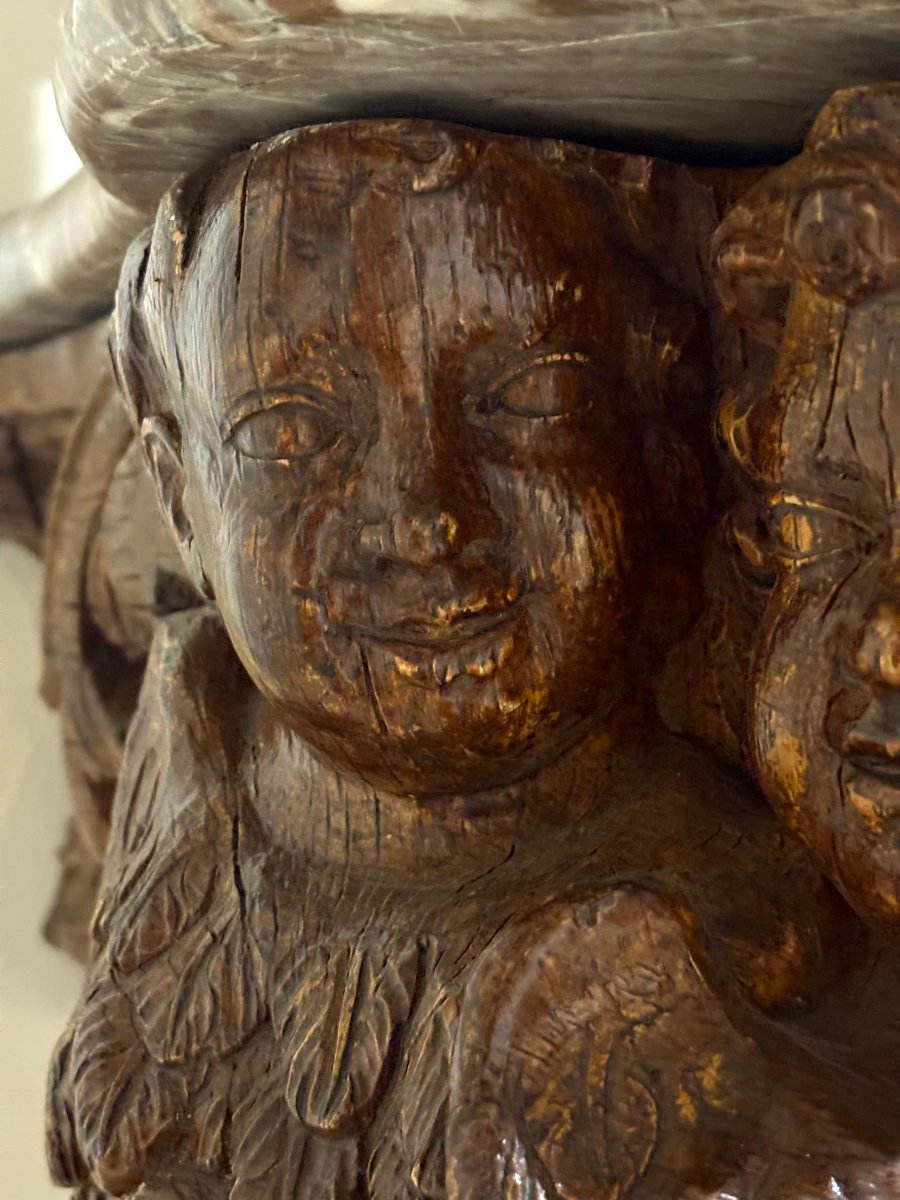
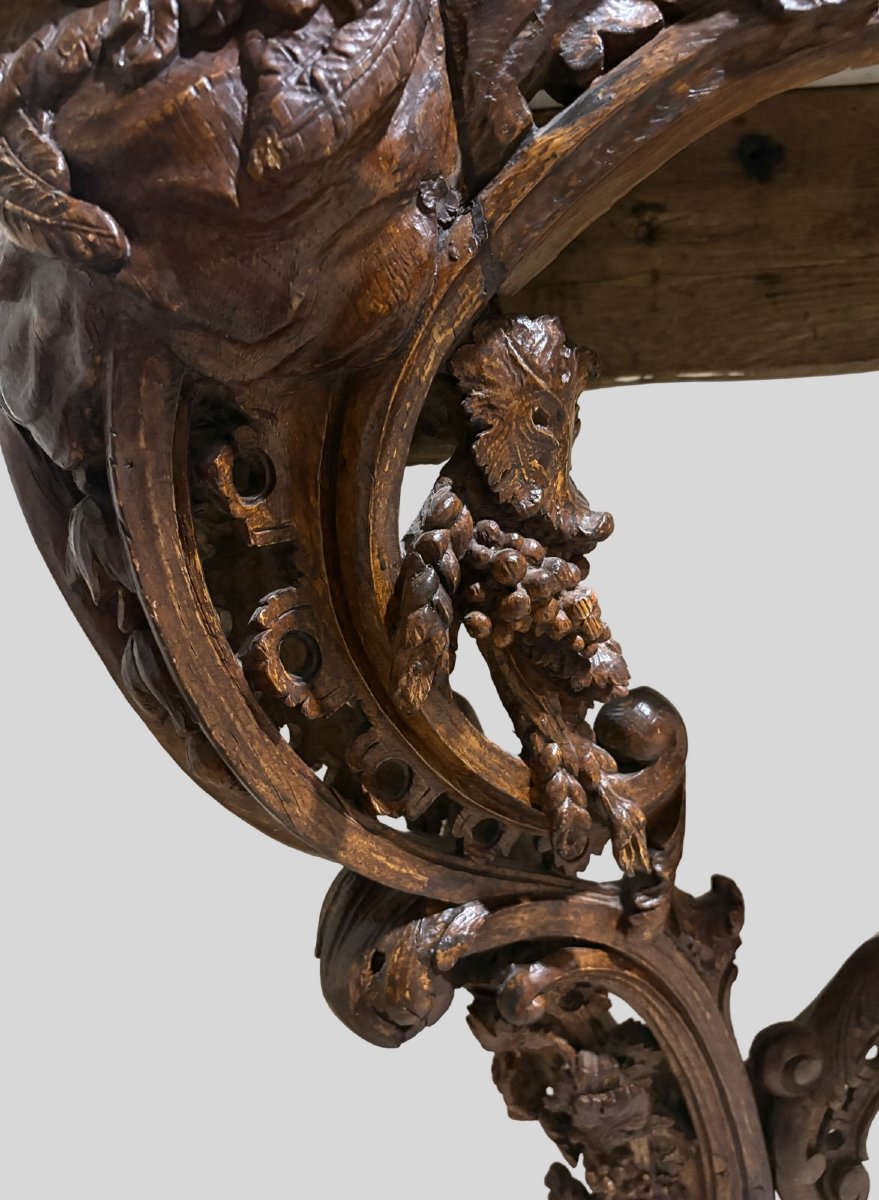
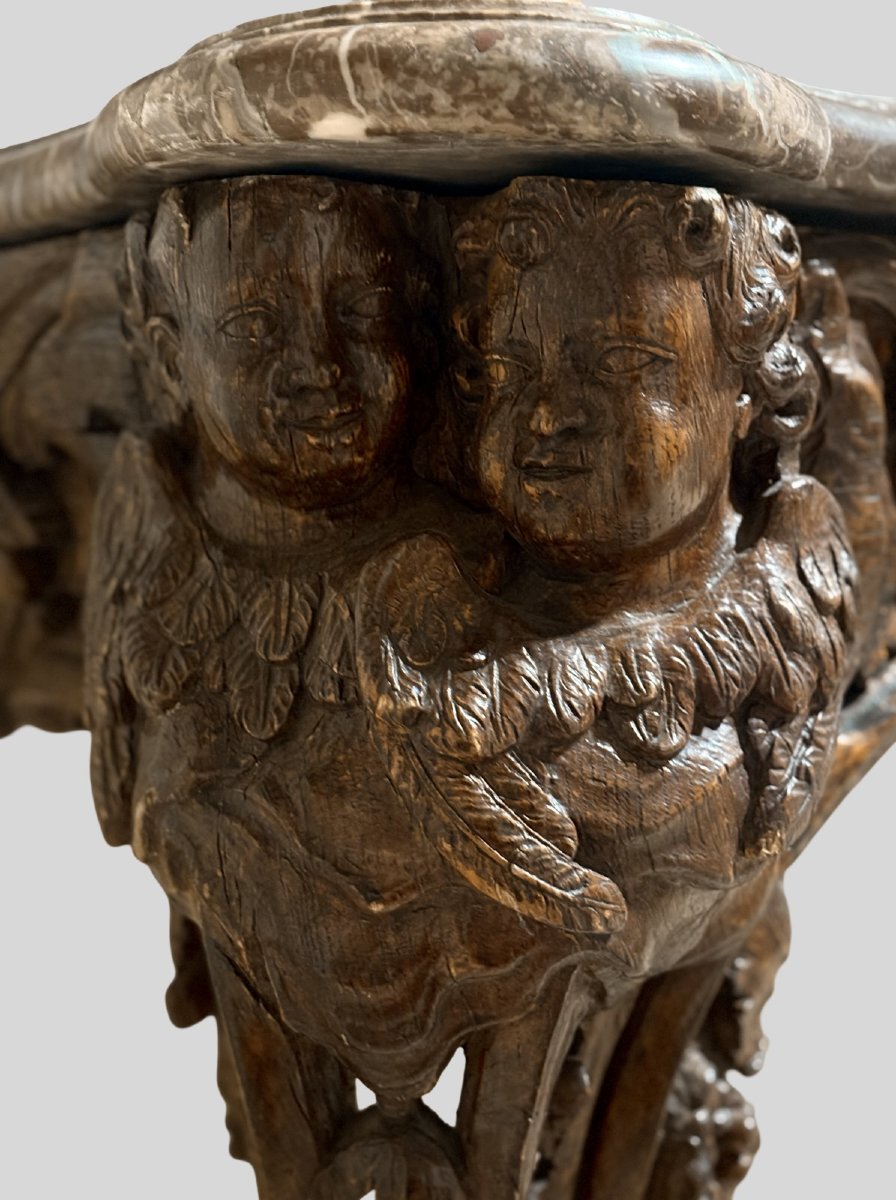
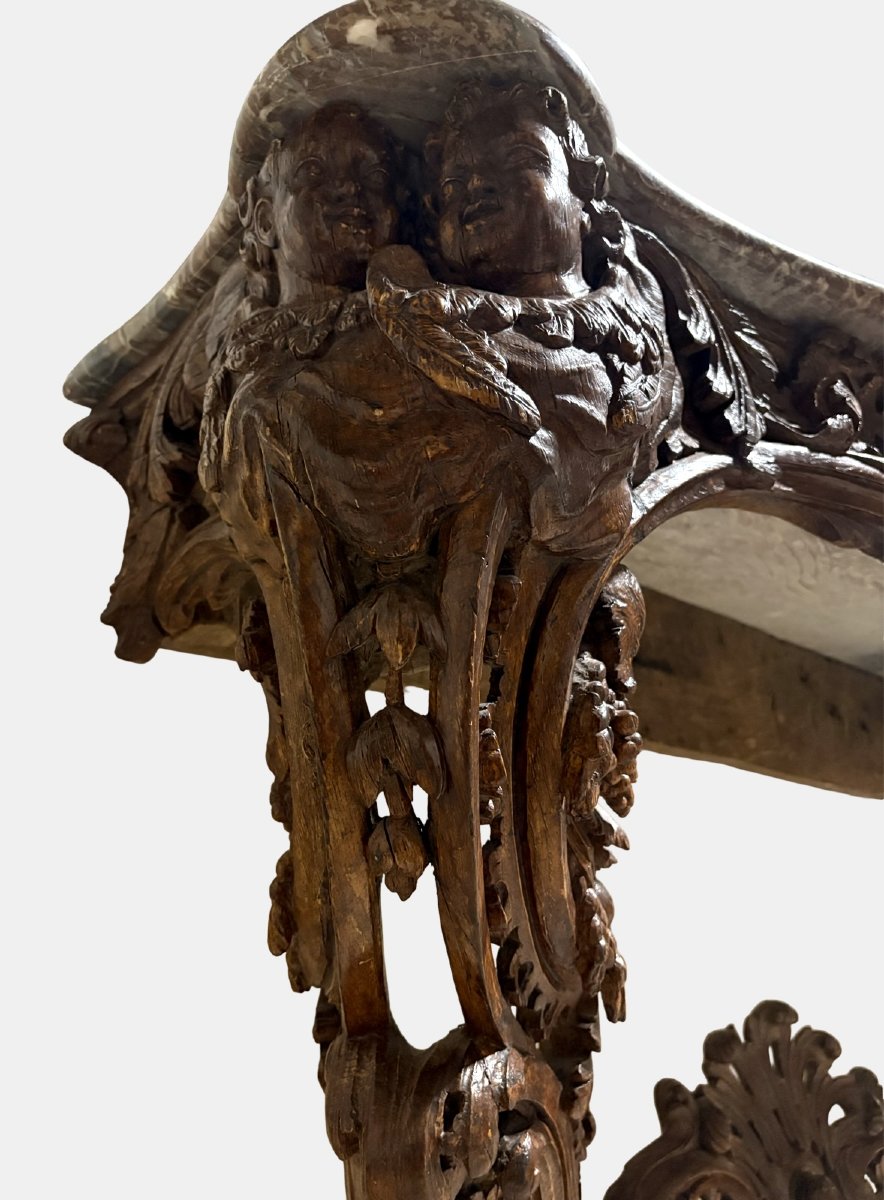
This large console table in natural wood features carved and openwork decorations with plant motifs, including large heads of winged cherubs at the corners; the decoration wraps around the legs, which are adorned with tendrils composed of branches, leaves, and bunches of grapes. The wooden surface is entirely carved and openwork.
First appearing in the late 17th century, the console table accompanied the development of mirrors above the fireplace, with which it formed a piece of furniture designed to structure the wall or organize the symmetry of a room. It became a standard feature in the 18th century, particularly within wainscoting. Originally, the console table was conceived as a fixed element, integrated into the wainscoting. It was crafted for a specific location, most often between two windows or in front of a fireplace. The marble of its top was generally matched to that of the fireplace. It was intended to hold decorative objects such as bronzes, vases, or other collectibles.
The ornamental repertoire of the console table in question combines leaves and grape clusters, a theme in keeping with mid-18th-century taste, blending naturalistic inspiration with Bacchic references, all carved with remarkable verve. This vine motif was sometimes prevalent in mid-18th-century interior design and lends itself particularly well to expressing the various forms of the Rococo style. The console table is part of a regional tradition influenced by Parisian models, while also developing characteristics specific to workshops in southern France. Among the styles that emerged in the 18th century, the Louis XV style was widely adopted in the provinces, particularly by the local nobility. In Provence, cabinetmakers and carpenters—often called “fustiers”—developed their own distinctive style, drawing inspiration from Parisian craftsmanship. Characterized by an interplay of curves and counter-curves, this style celebrates naturalistic ornamentation, symbolically representing love, local rusticity, and the desire for prosperity.
The console table is in excellent condition.
To find out more
Dimensions:
W 135 cm
D 43 cm
H 92.5 cm
++++++++++++++++++++++++++++++++++++++SHIPPING AND PAYMENT+++++++++++++++++++++++++++++++++
SHIPPING VIA: Trusted carrier
Payment Methods: Bank Transfer - Online Credit Card (including AMEX) - PayPal (+3.7%) - NO checks https://internationalantiques.eu/fr/livraison-et-assurance/ ++++++++++++++++++++++++++++++++++++++++++++++++++++++++++++++++++++++++++++++++++++++++++++++
This large console table in natural wood features carved and openwork decorations with plant motifs, including large heads of winged cherubs at the corners; the decoration wraps around the legs, which are adorned with tendrils composed of branches, leaves, and bunches of grapes. The wooden surface is entirely carved and openwork.
First appearing in the late 17th century, the console table accompanied the development of mirrors above the fireplace, with which it formed a piece of furniture designed to structure the wall or organize the symmetry of a room. It became a standard feature in the 18th century, particularly within wainscoting. Originally, the console table was conceived as a fixed element, integrated into the wainscoting. It was crafted for a specific location, most often between two windows or in front of a fireplace. The marble of its top was generally matched to that of the fireplace. It was intended to hold decorative objects such as bronzes, vases, or other collectibles.
The ornamental repertoire of the console table in question combines leaves and grape clusters, a theme in keeping with mid-18th-century taste, blending naturalistic inspiration with Bacchic references, all carved with remarkable verve. This vine motif was sometimes prevalent in mid-18th-century interior design and lends itself particularly well to expressing the various forms of the Rococo style. The console table is part of a regional tradition influenced by Parisian models, while also developing characteristics specific to workshops in southern France. Among the styles that emerged in the 18th century, the Louis XV style was widely adopted in the provinces, particularly by the local nobility. In Provence, cabinetmakers and carpenters—often called “fustiers”—developed their own distinctive style, drawing inspiration from Parisian craftsmanship. Characterized by an interplay of curves and counter-curves, this style celebrates naturalistic ornamentation, symbolically representing love, local rusticity, and the desire for prosperity.
The console table is in excellent condition.
To find out more
Dimensions:
W 135 cm
D 43 cm
H 92.5 cm
++++++++++++++++++++++++++++++++++++++SHIPPING AND PAYMENT+++++++++++++++++++++++++++++++++
SHIPPING VIA: Trusted carrier
Payment Methods: Bank Transfer - Online Credit Card (including AMEX) - PayPal (+3.7%) - NO checks https://internationalantiques.eu/fr/livraison-et-assurance/ ++++++++++++++++++++++++++++++++++++++++++++++++++++++++++++++++++++++++++++++++++++++++++++++
6 800 €
Period: 18th century
Style: Louis 15th - Transition
Condition: Excellent condition
Material: Solid wood
Width: 135
Height: 92,5
Depth: 43
Reference (ID): 1796513
Availability: In stock
Print