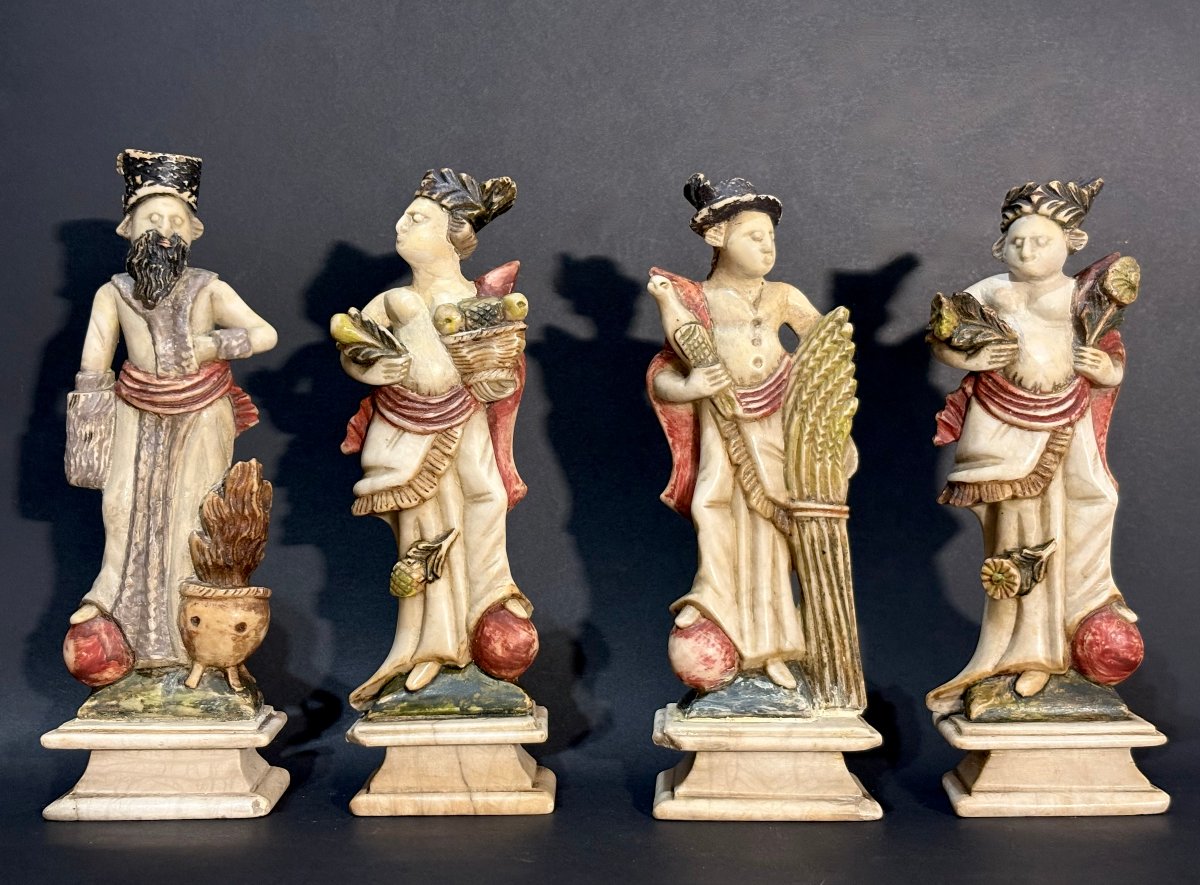
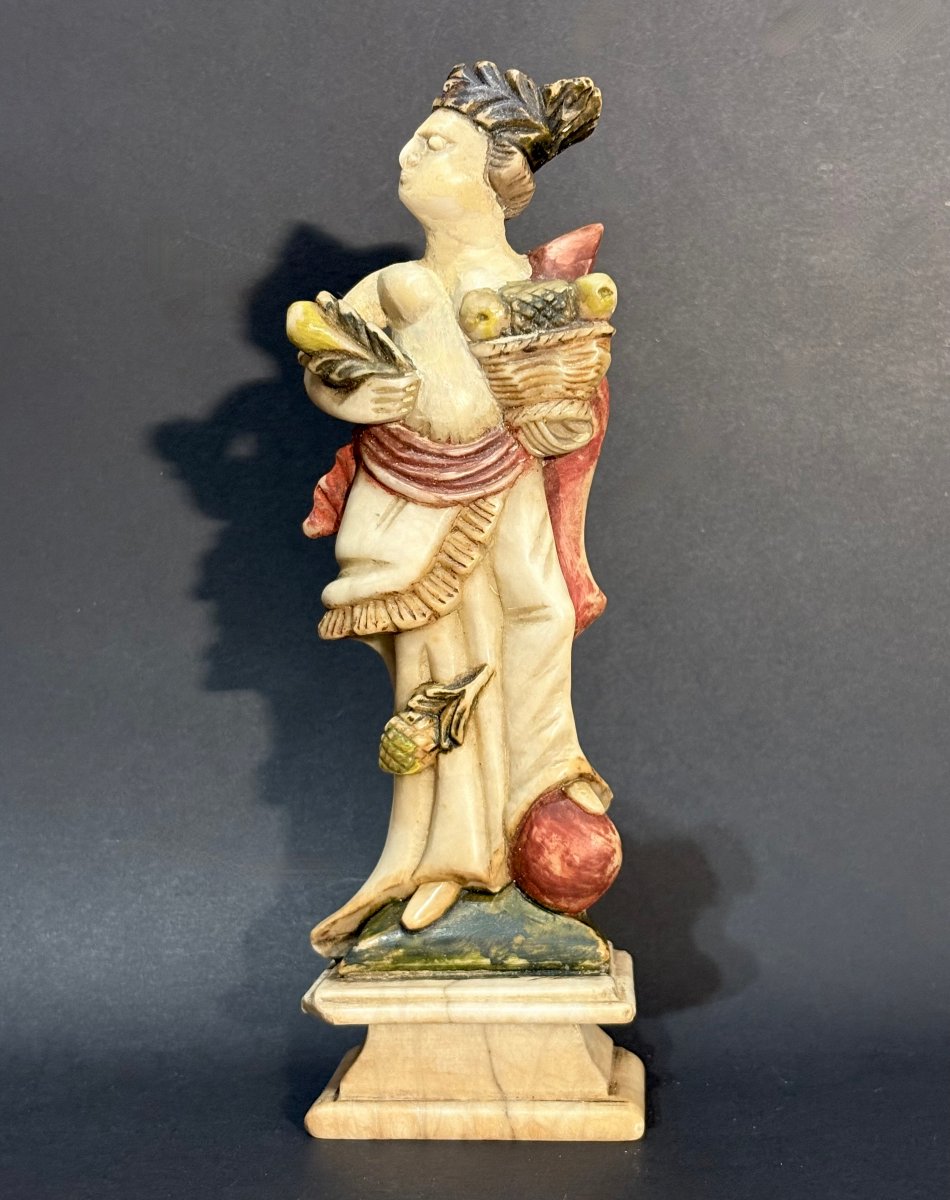
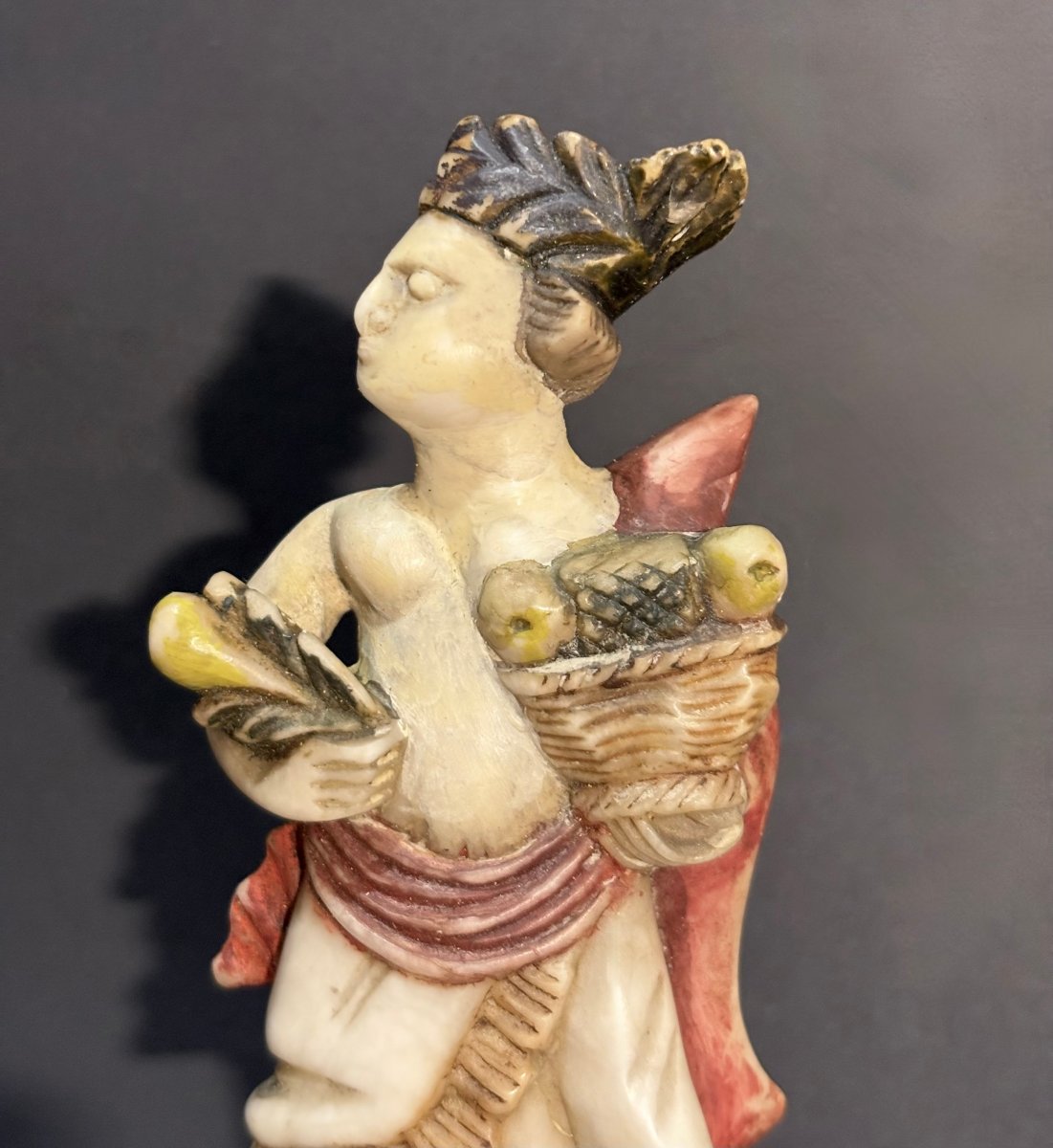
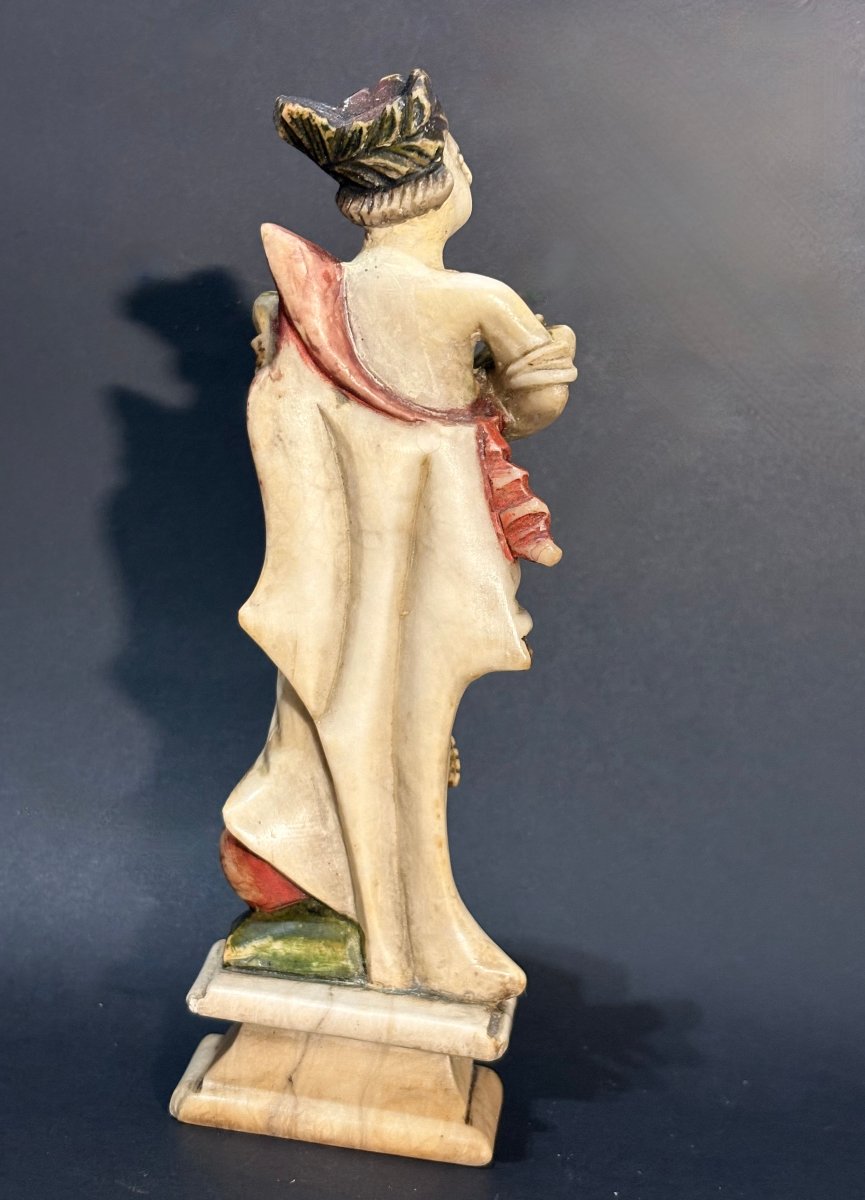
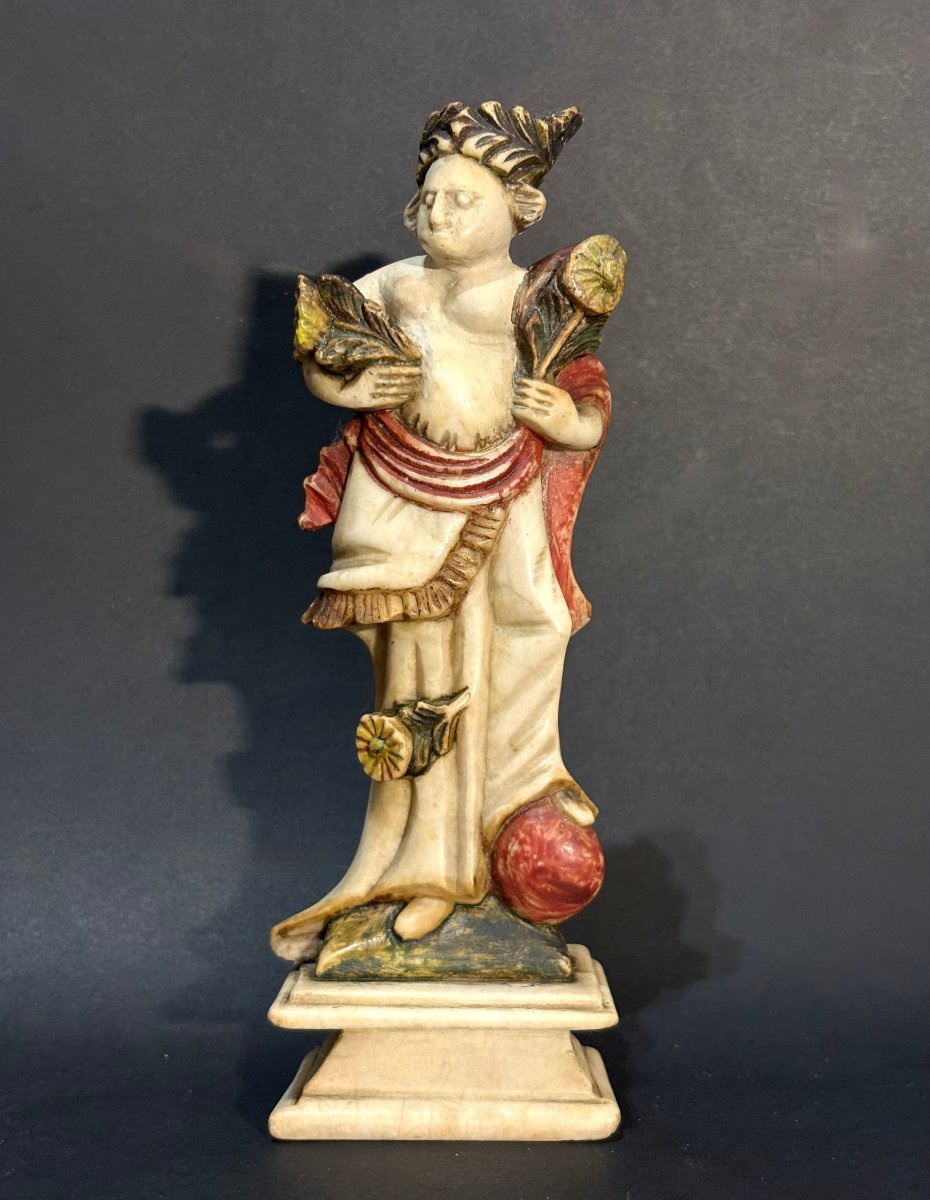
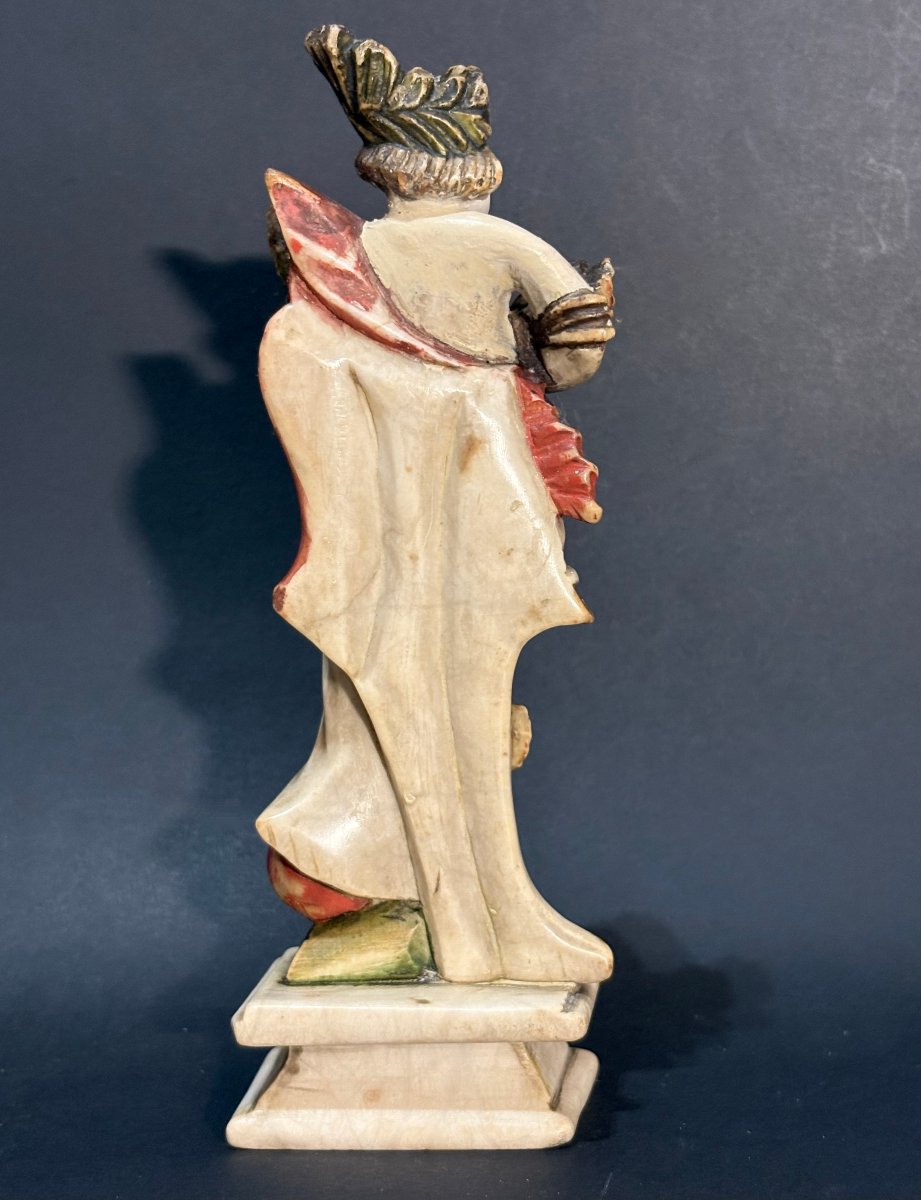


"the Four Seasons," 17th Polychrome Alabaster Group From Northern Italy
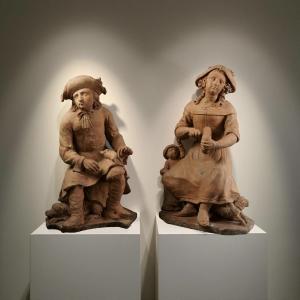
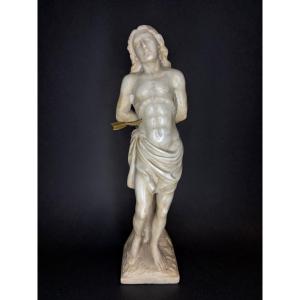
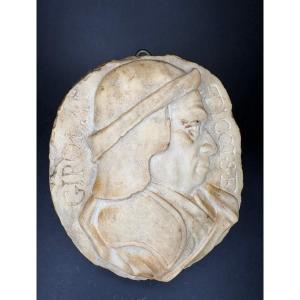
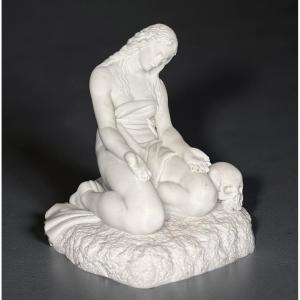
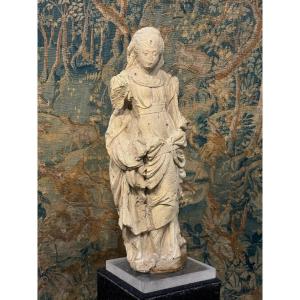
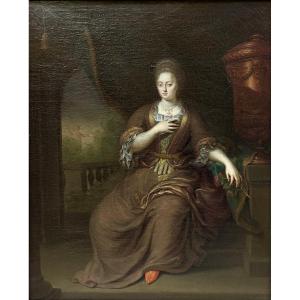
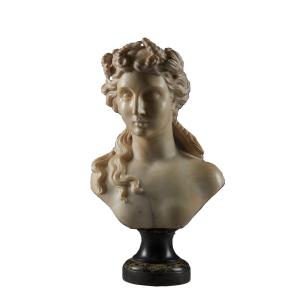
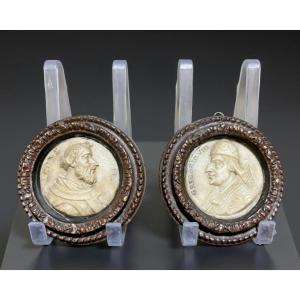
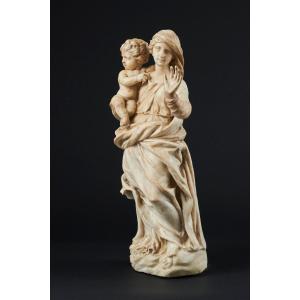
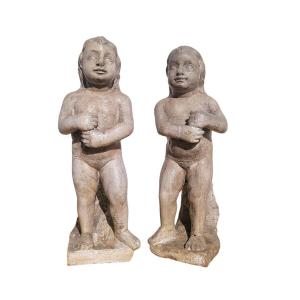
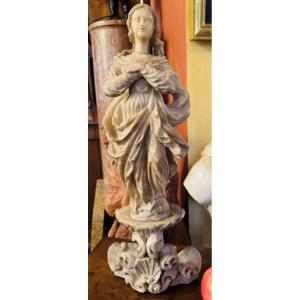
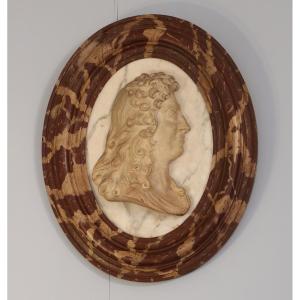
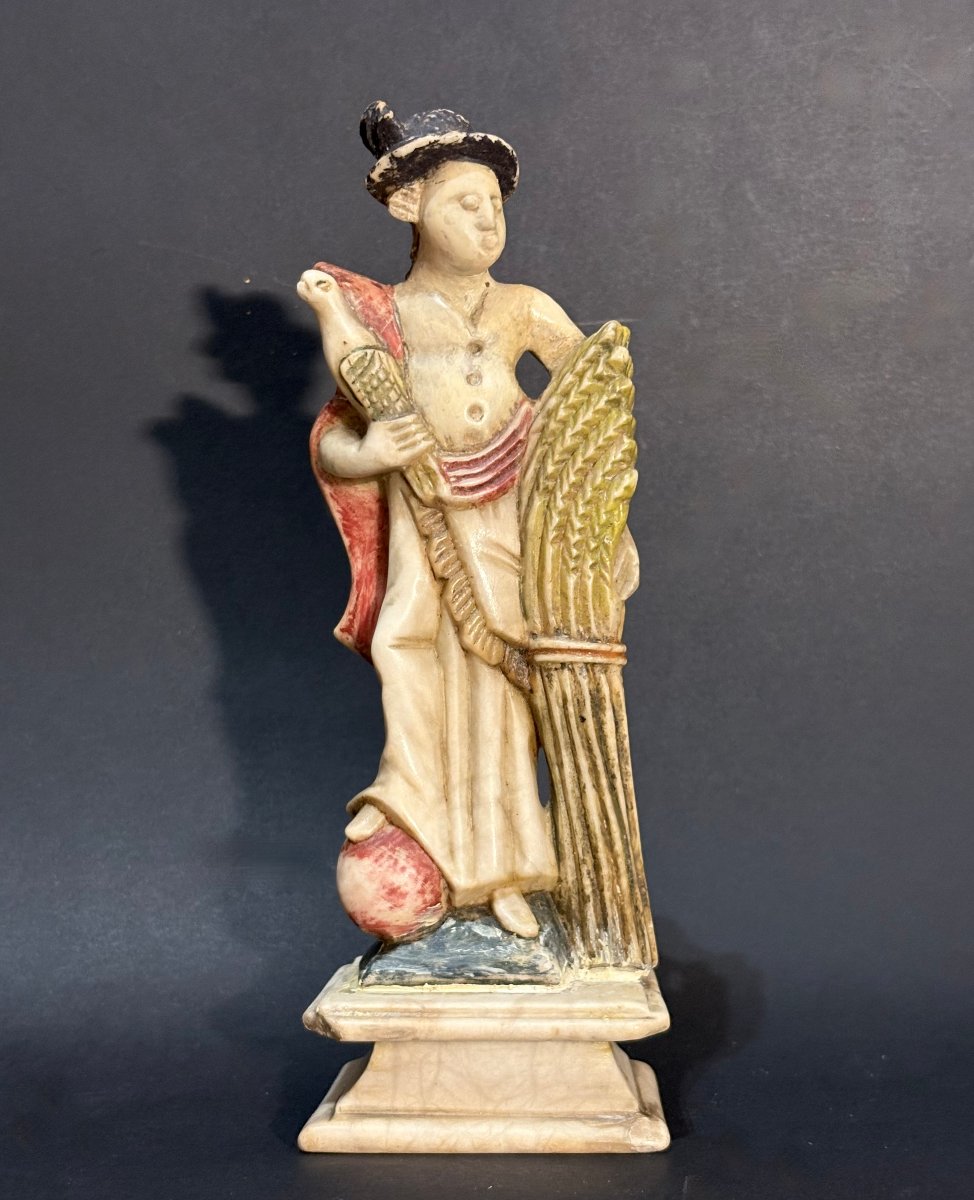
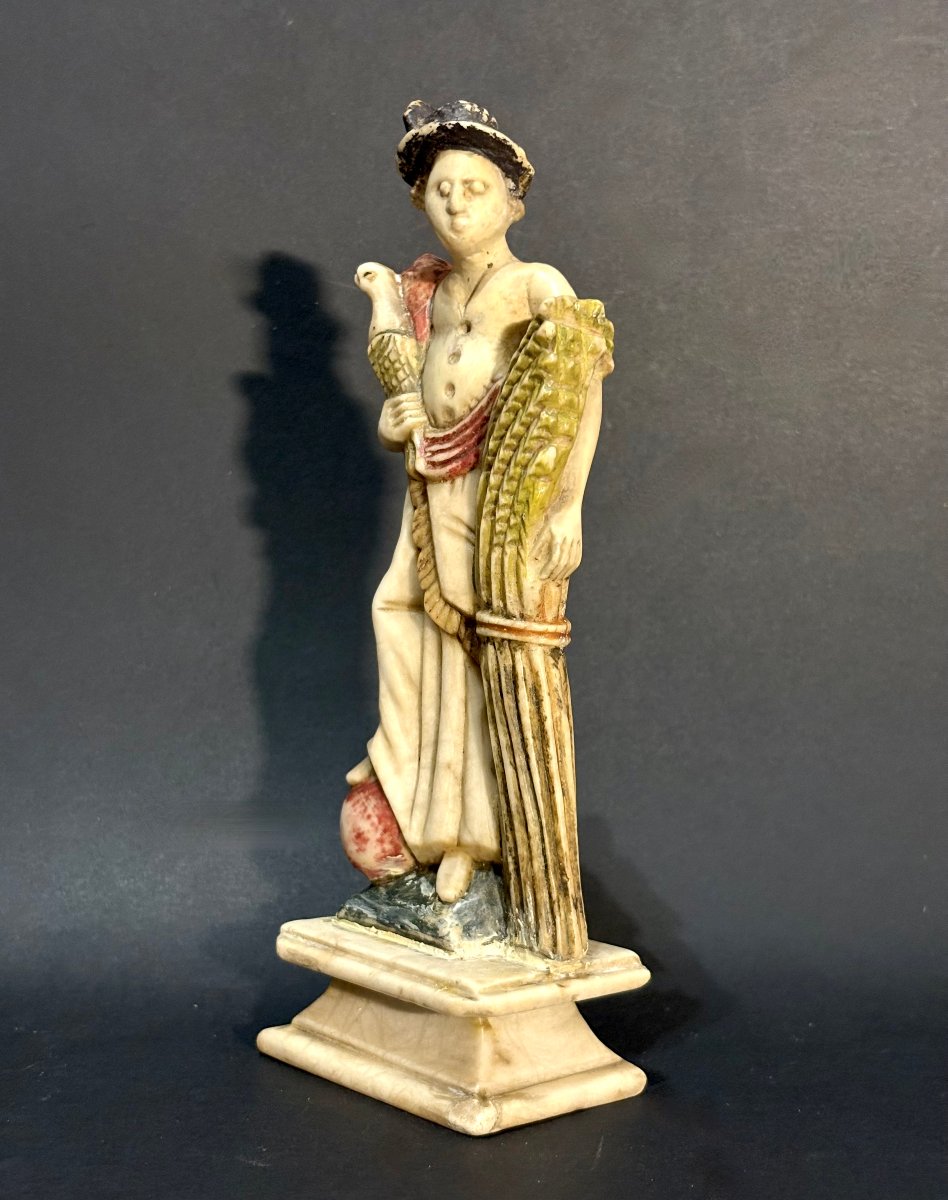
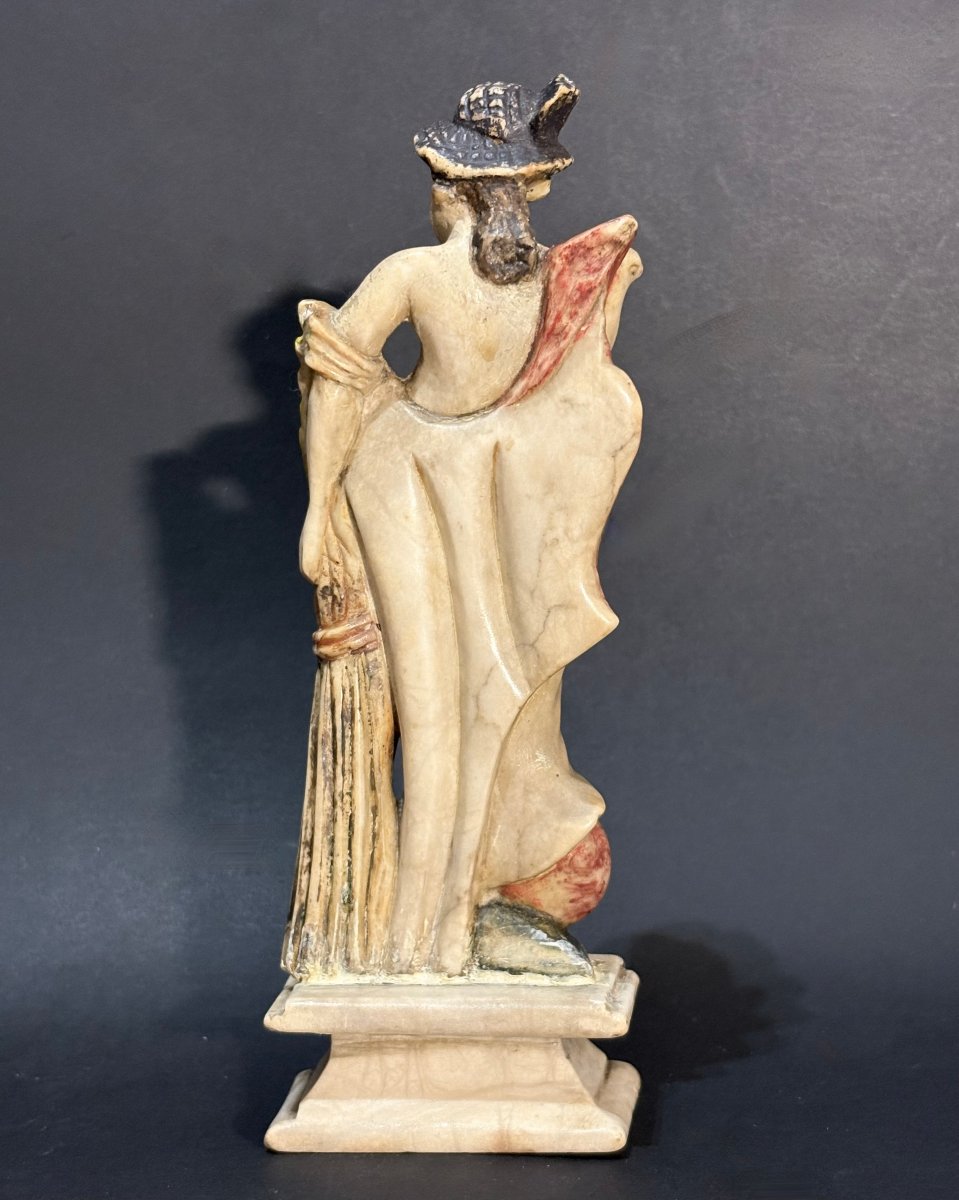
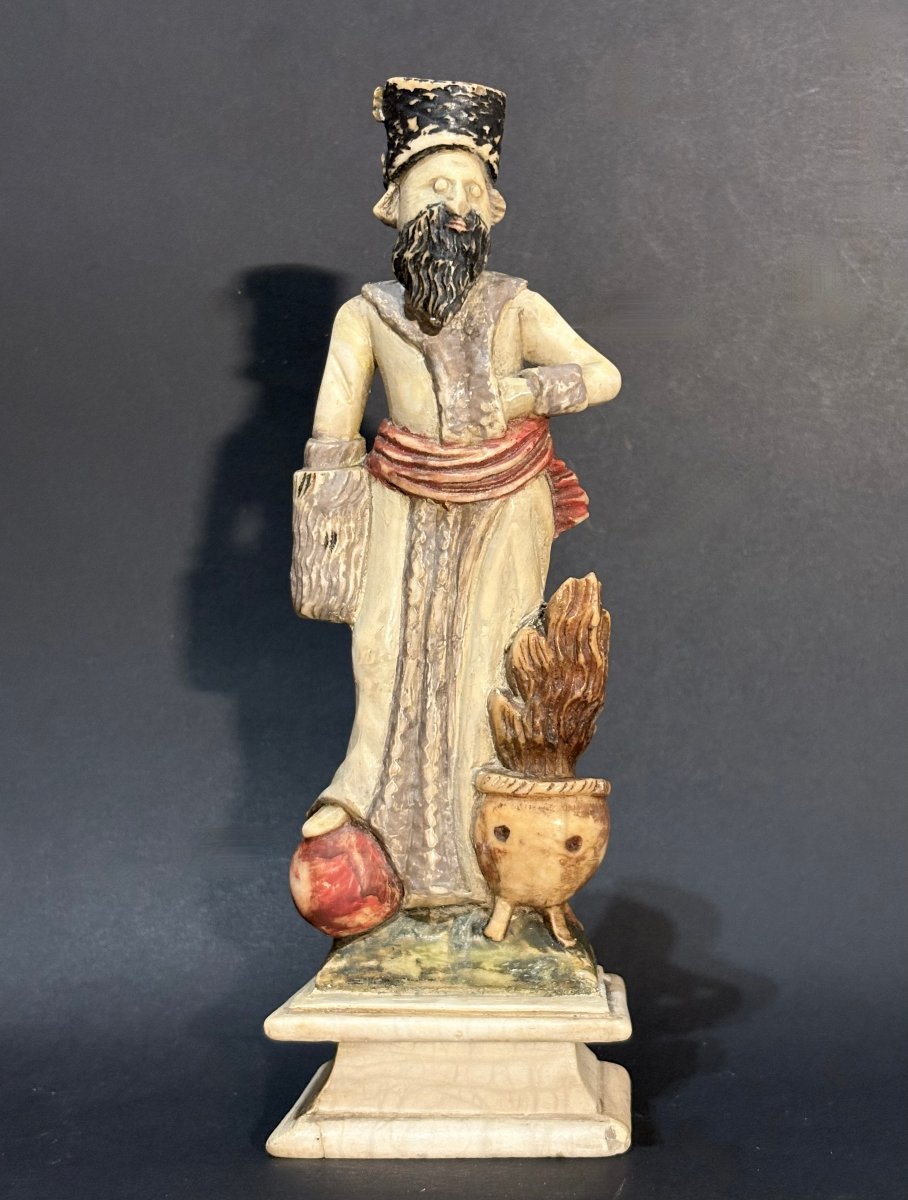
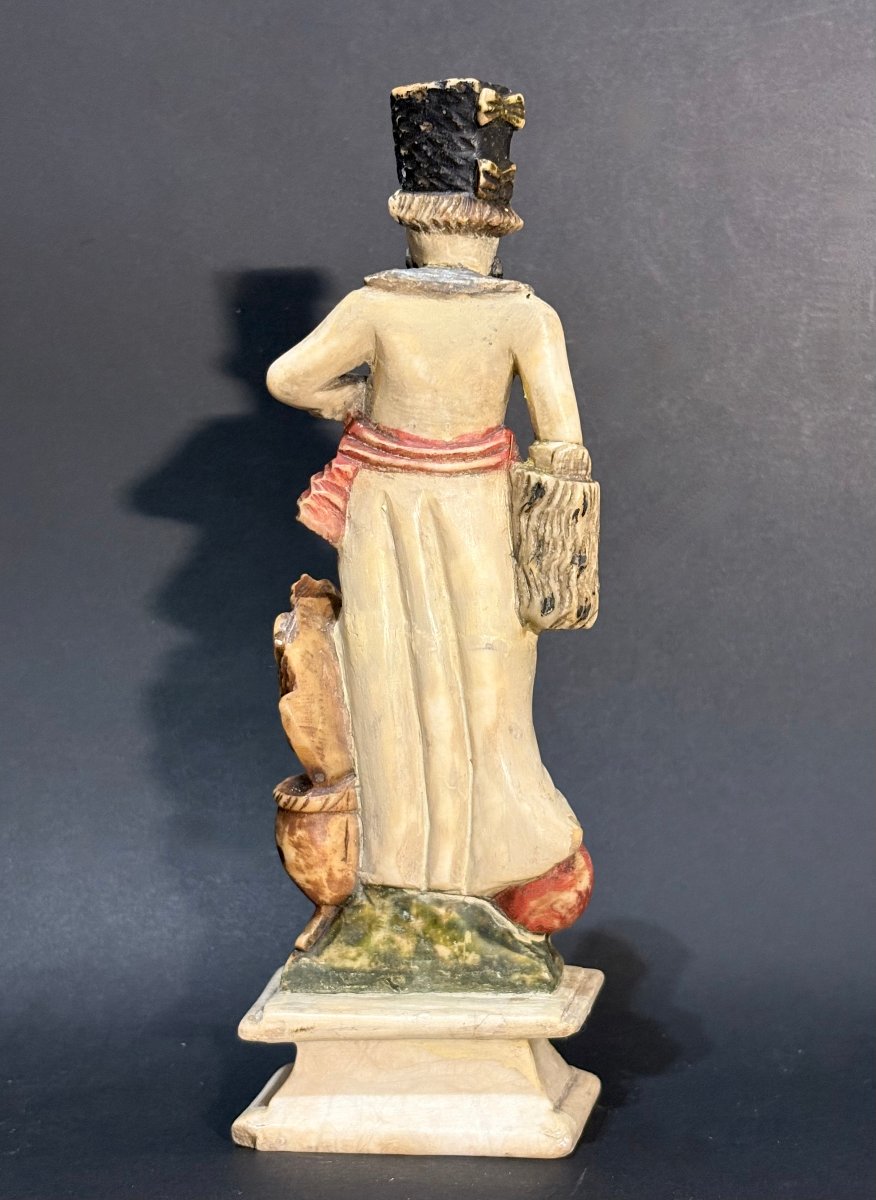
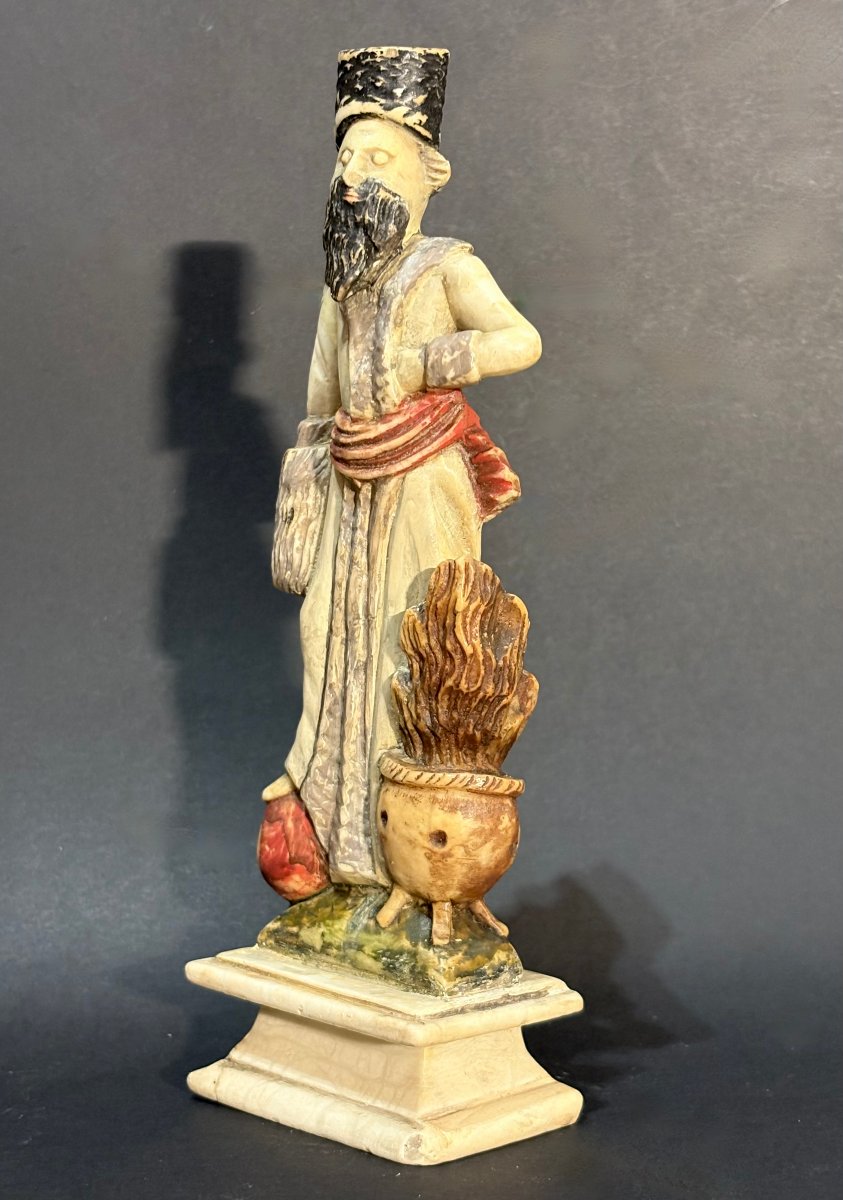
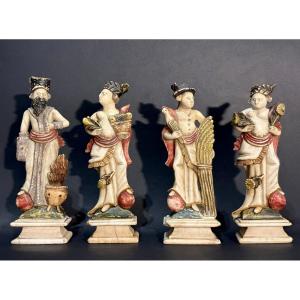
A rare polychrome alabaster group depicting “The Four Seasons,” Northern Italy, presumably Bergamo, late 17th century.
In the 17th century, alabaster in Bergamo experienced a period of considerable artistic significance. The Bergamo area was not only a center for the import and consumption of this precious material but also home to important quarries within its territory. Unlike the chalky alabaster typical of Volterra, the Bergamo region—more specifically the Albina Valley—was distinguished by the presence of calcareous alabaster, which is harder and less transparent, with a color ranging from white to honey.
The 17th century was also the golden age of so-called “painted stones” and objects for the wunderkammer (chambers of wonders): the production of small decorative alabaster sculptural groups intended for private collections and the palaces of the Bergamo nobility became widespread.
The theme of the Four Seasons, in an era marked by Galileo’s discoveries, became a symbol of the cycle of human life: they represent the four stages of human life—youth (spring), maturity (summer), adulthood (fall), and old age (winter). The inevitable transition from one season to the next reminded the viewer of the transience of earthly life (memento mori), but at the same time, this regular flow reassured them, demonstrating that the cosmos was governed by a harmonious and immutable divine plan.
This type of sculpture is already rare on the art market; finding a complete group is even rarer.
The sculptures have retained their original polychrome; there are some old restorations and minor signs of aging, but overall they are in excellent condition.
To find out more
Dimensions
Height: 20 cm
Base: 6 cm,5 x 4.5
++++++++++++++++++++++++++++++++++++++++DELIVERY AND PAYMENT++++++++++++++++++++++++++++++++
SHIPPING VIA DHL in a custom-made crate, including insurance for the full value
Payment methods: Bank transfer - Online credit card (including AMEX) - PayPal (+3.7%) - NO checks +++++++++++++++++++++++++++++++++++++++++++++++++++++++++++++++++++++++++++++++++++++++++++++++
In the 17th century, alabaster in Bergamo experienced a period of considerable artistic significance. The Bergamo area was not only a center for the import and consumption of this precious material but also home to important quarries within its territory. Unlike the chalky alabaster typical of Volterra, the Bergamo region—more specifically the Albina Valley—was distinguished by the presence of calcareous alabaster, which is harder and less transparent, with a color ranging from white to honey.
The 17th century was also the golden age of so-called “painted stones” and objects for the wunderkammer (chambers of wonders): the production of small decorative alabaster sculptural groups intended for private collections and the palaces of the Bergamo nobility became widespread.
The theme of the Four Seasons, in an era marked by Galileo’s discoveries, became a symbol of the cycle of human life: they represent the four stages of human life—youth (spring), maturity (summer), adulthood (fall), and old age (winter). The inevitable transition from one season to the next reminded the viewer of the transience of earthly life (memento mori), but at the same time, this regular flow reassured them, demonstrating that the cosmos was governed by a harmonious and immutable divine plan.
This type of sculpture is already rare on the art market; finding a complete group is even rarer.
The sculptures have retained their original polychrome; there are some old restorations and minor signs of aging, but overall they are in excellent condition.
To find out more
Dimensions
Height: 20 cm
Base: 6 cm,5 x 4.5
++++++++++++++++++++++++++++++++++++++++DELIVERY AND PAYMENT++++++++++++++++++++++++++++++++
SHIPPING VIA DHL in a custom-made crate, including insurance for the full value
Payment methods: Bank transfer - Online credit card (including AMEX) - PayPal (+3.7%) - NO checks +++++++++++++++++++++++++++++++++++++++++++++++++++++++++++++++++++++++++++++++++++++++++++++++
2 600 €
Period: 17th century
Style: Louis 14th, Regency
Condition: Excellent condition
Material: Alabaster
Width: 6,5
Height: 20
Depth: 4,5
Reference (ID): 1814194
Availability: In stock
Print