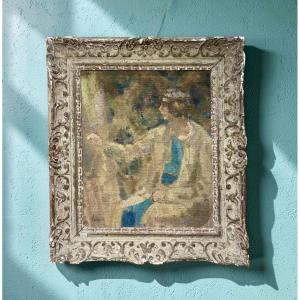


Joseph Louis François Lépine (1867–1943) “a Painter In Montmartre” French Post-impressionism
Artist: Joseph Lépine
https://internationalantiques.eu/prodotto/joseph-lepine-1867-1943-painter-at-the-easel-french-school-expressionist/
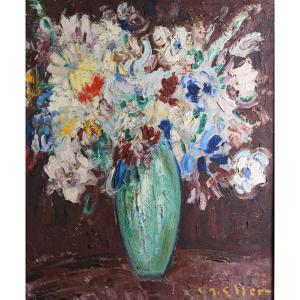
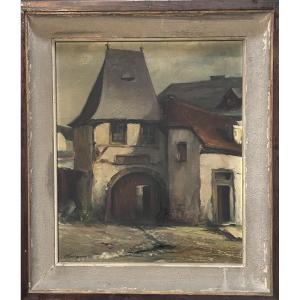
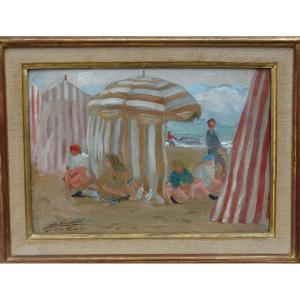
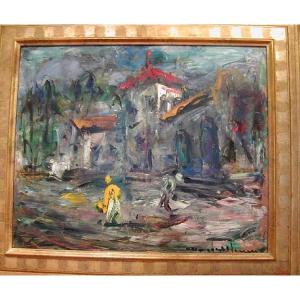
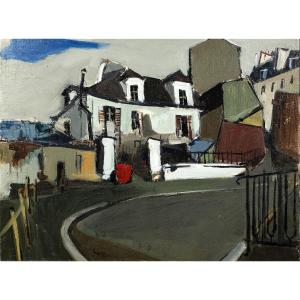
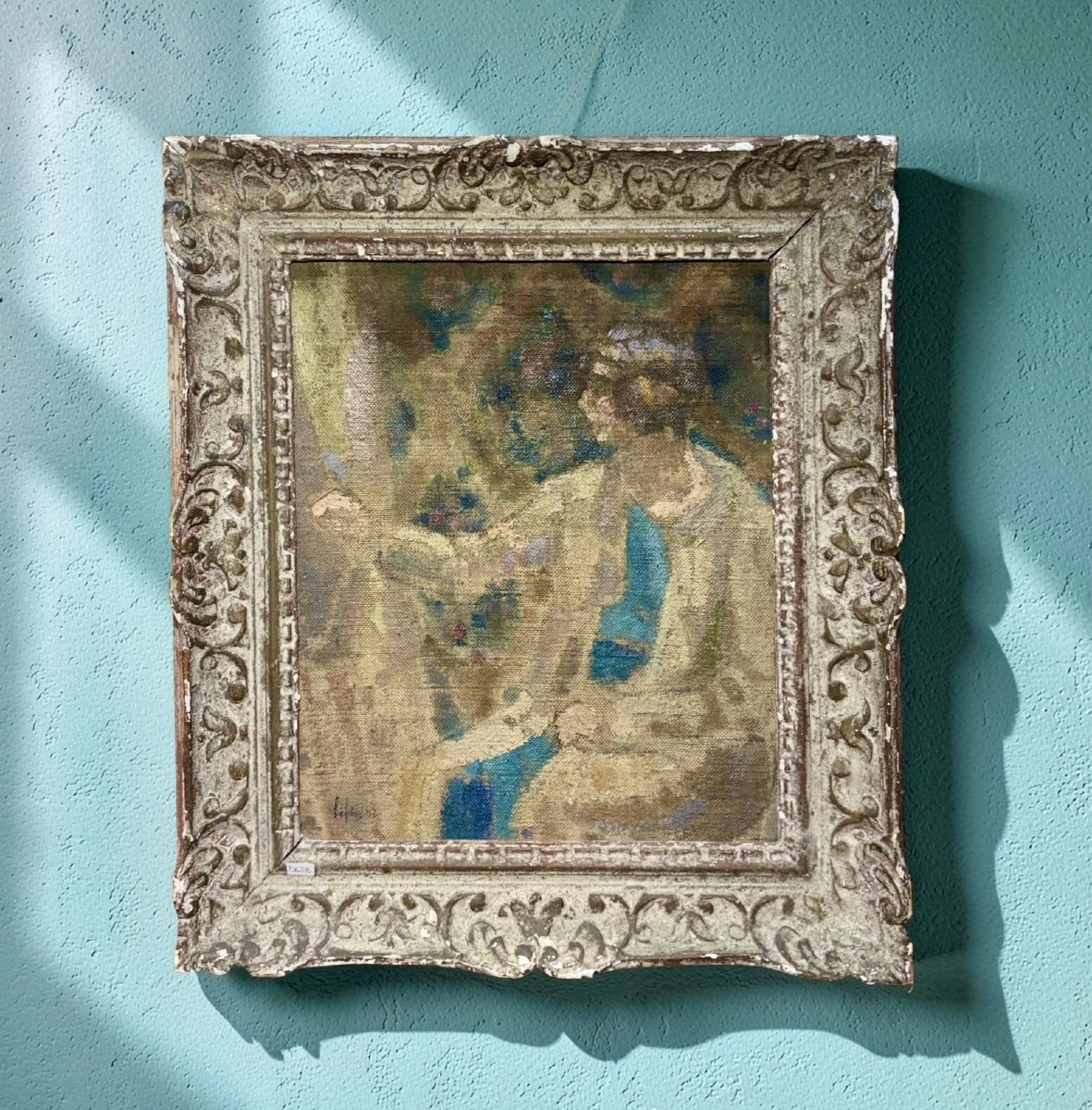
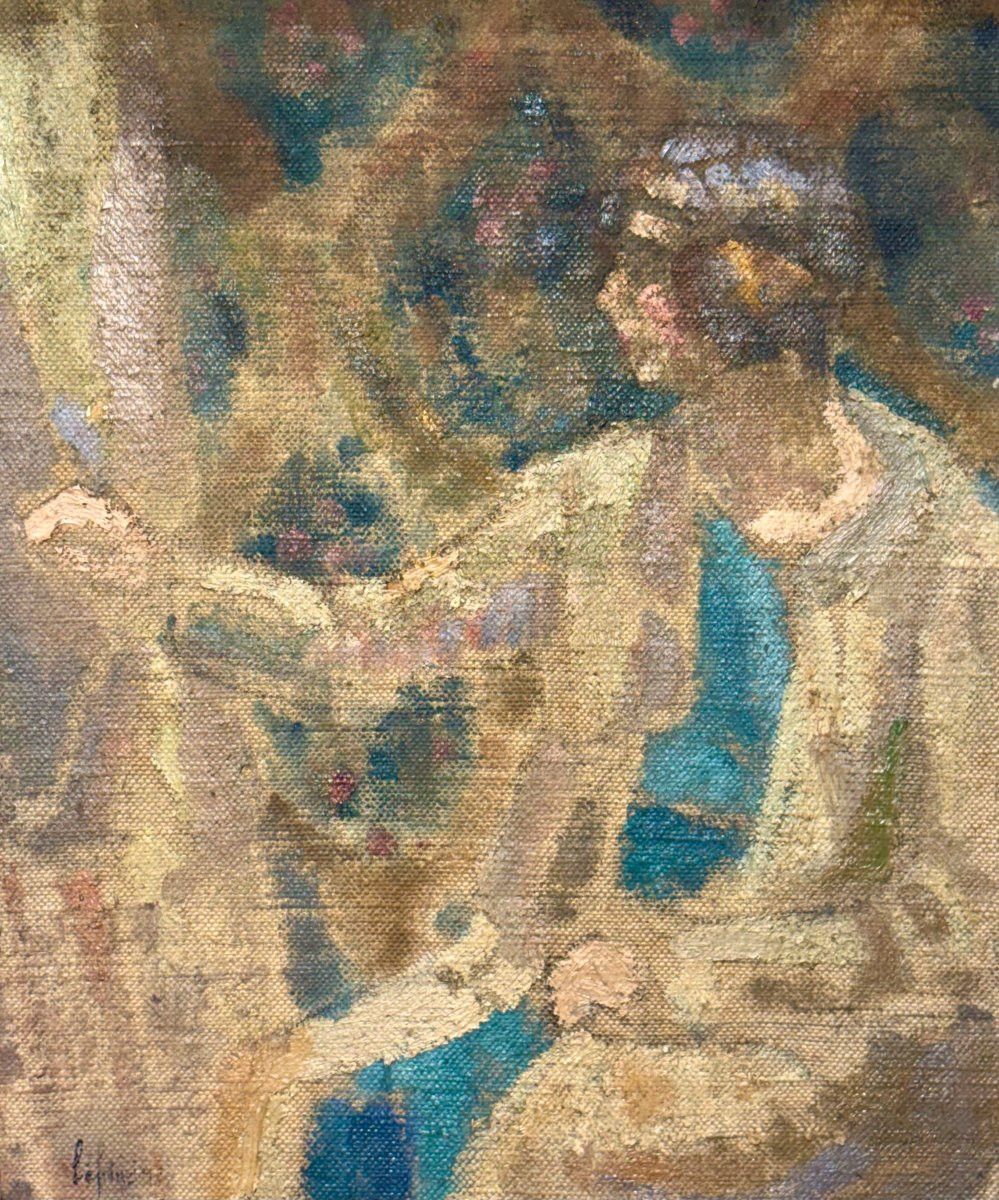
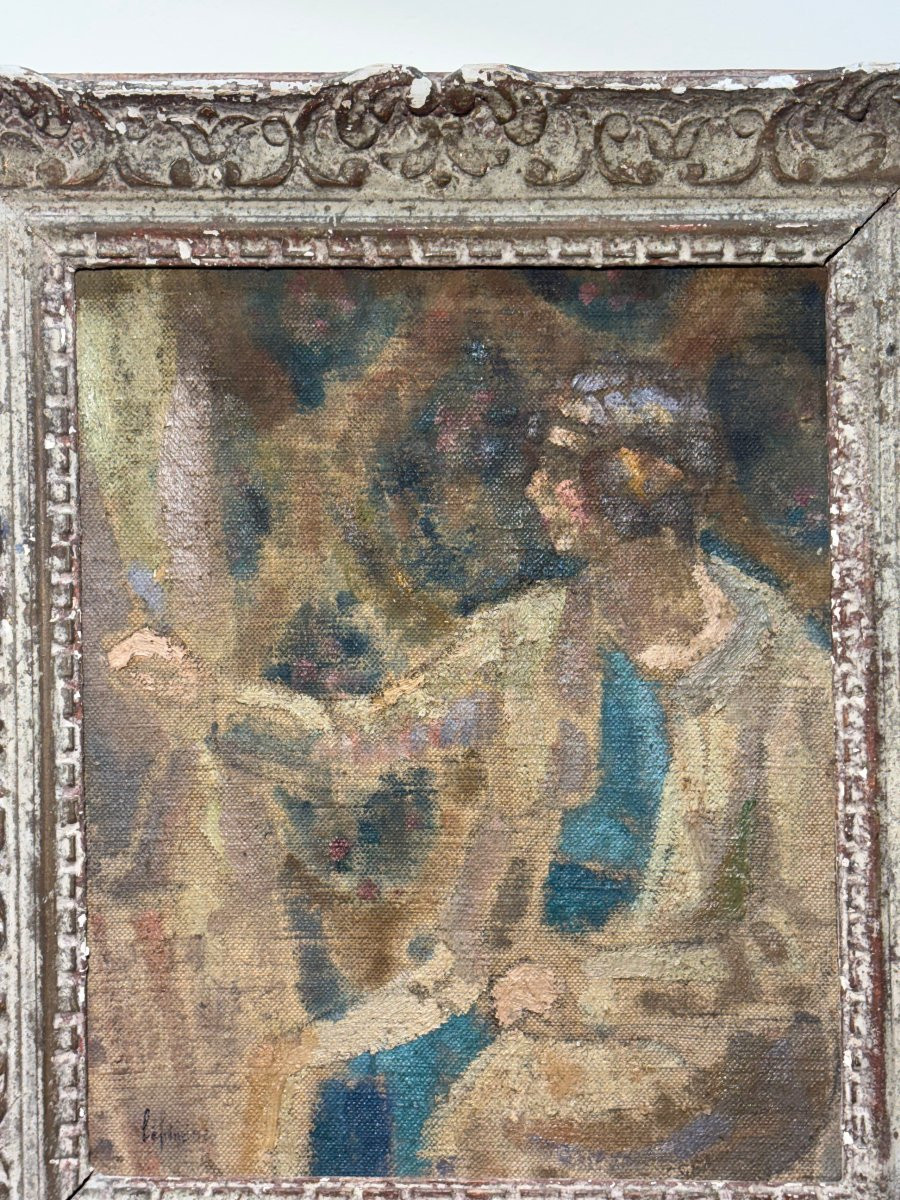
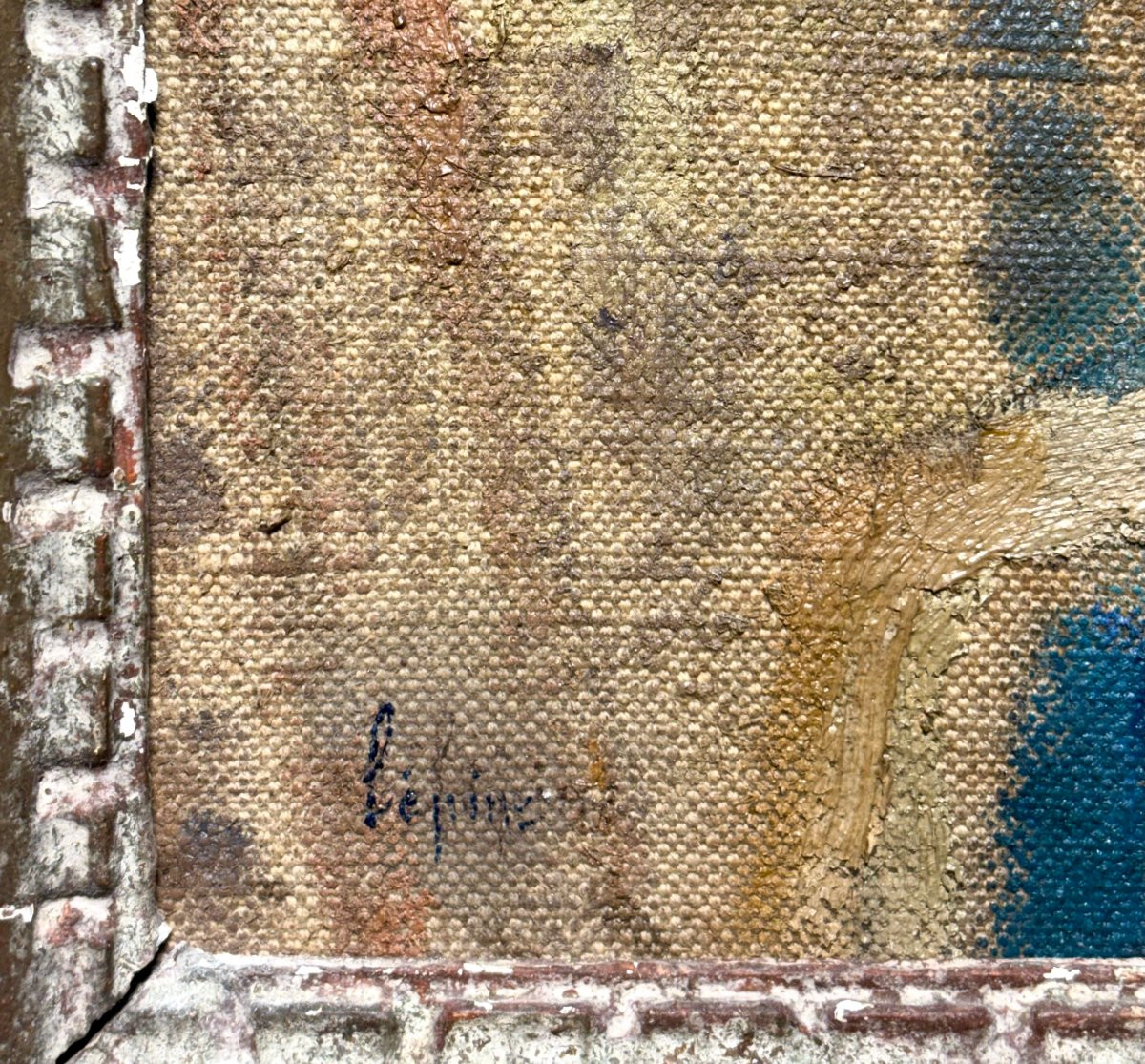
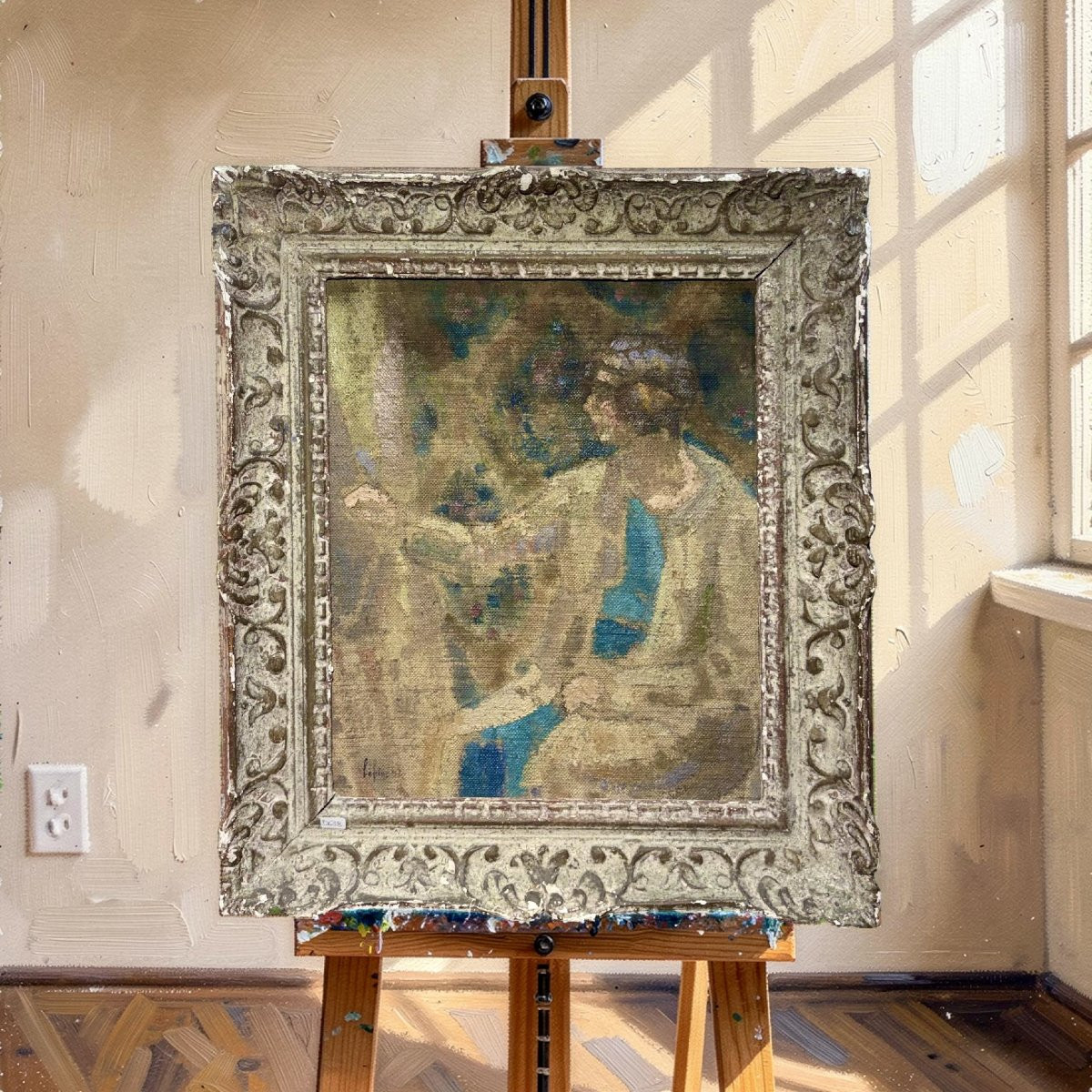
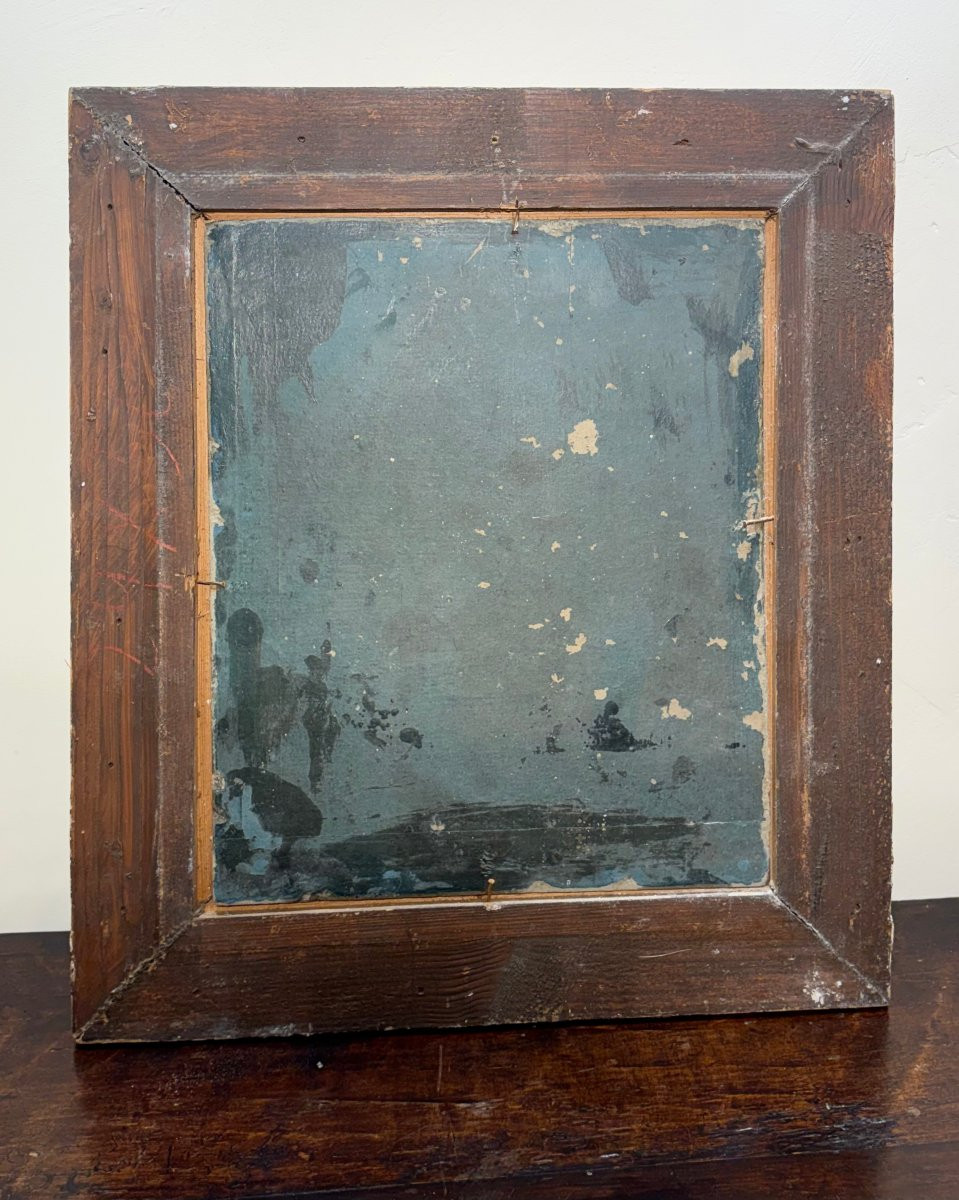
Joseph Louis François Lépine (1867–1943) “Painter in Montmartre.” Oil on canvas mounted on cardboard, signed lower left. Early 20th century, French Post-Impressionist school.
Joseph Lépine was a French Post-Impressionist painter and a master of color. Born in Rochefort, he began his studies in 1892. His teacher was Louis Cabié, a disciple of the Barbizon School in Bordeaux, who tried in vain to dissuade the young artist from turning to the Impressionist movement then in vogue in Paris. Joseph Lépine’s early paintings were immediately noticed in 1894 and exhibited by the Société des Amis des Arts de Bordeaux.
In 1897, Joseph Lépine moved to Paris, where his first works were accepted at the Salon de la Société Nationale des Beaux-Arts in 1897 and 1898. At the beginning of the 20th century, he became an associate member of the Société Nationale des Beaux-Arts and a member of the Salon des Indépendants in Paris, where he came into close contact with Gromaire, Matisse, Guérin, Dunoyer de Segonzac, and above all Paul Signac, with whom he would later become very close.
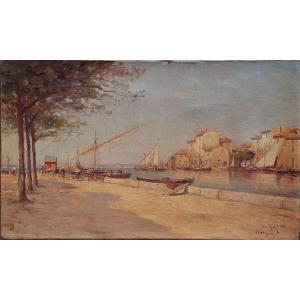
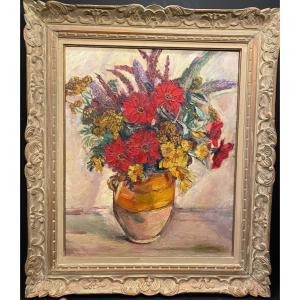
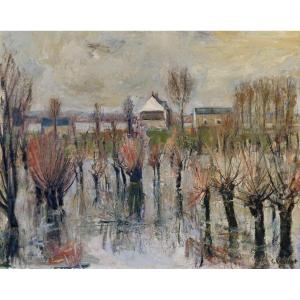
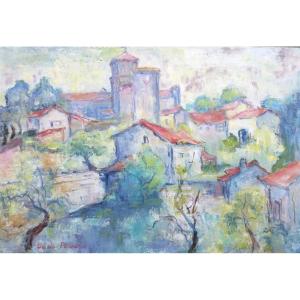
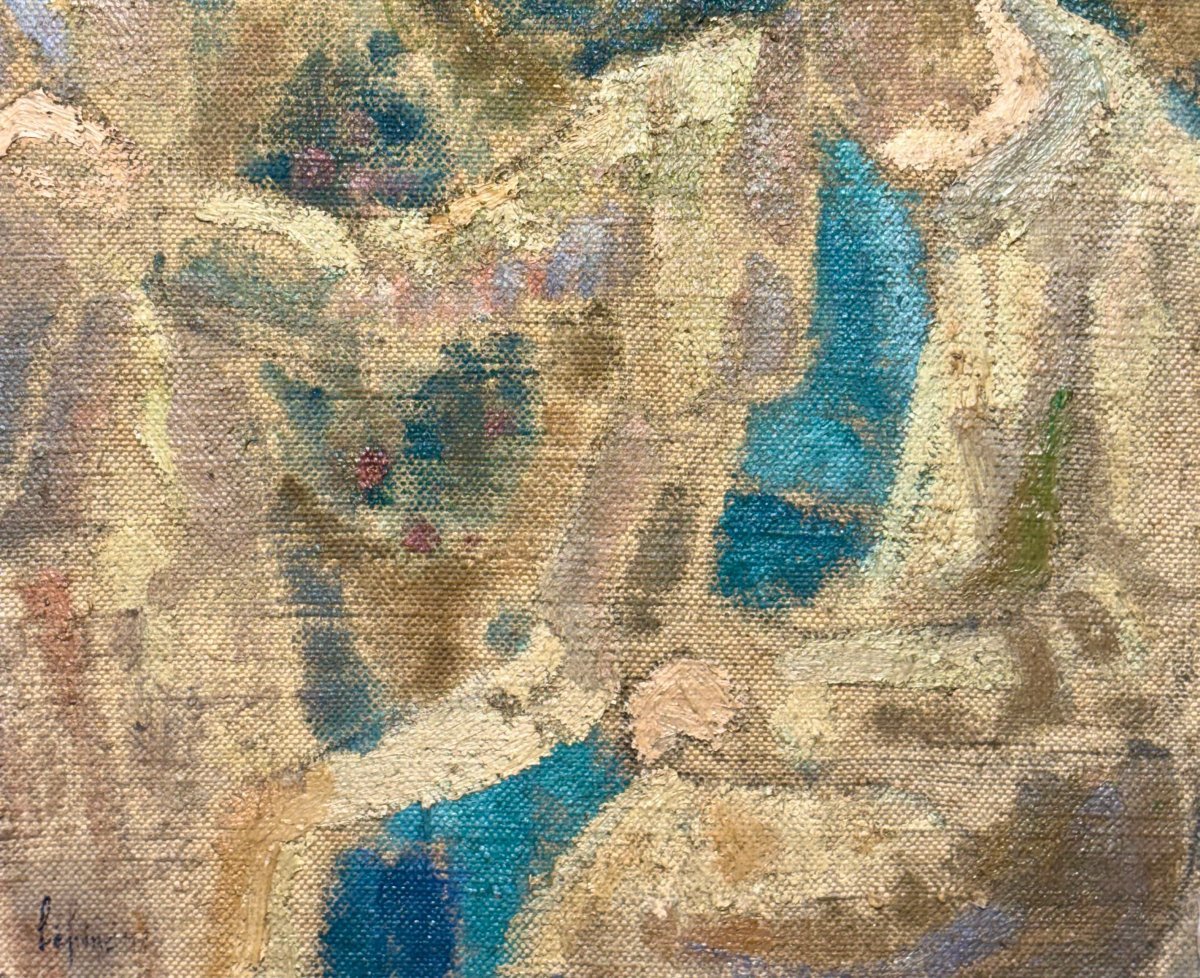
Lépine’s painting is powerful, featuring vivid colors and strong contrasts. His brushstrokes, similar to those of Gustave Loiseau, consist of broad, juxtaposed strokes. His bright yellows contrast with the shadows, whose outlines are tinged with purple, as Signac noted. His Neo-Impressionist technique of tonal division prompted the French government to purchase his first painting at the 1908 Salon des Indépendants (now at the Musée de Menton). In 1908 and 1909, he was invited to participate in the first two exhibitions of the Allied Artists’ Association at the Royal Albert Hall in London. Beginning in 1910, Joseph Lépine received numerous awards from the state and the major Parisian salons, as well as commissions from national museums. Starting in 1920, Lépine associated with Maurice Denis, and his contrasts gave way to lighter colors and fine, almost pointillist brushstrokes. World War I scattered the artist’s contacts, and Lépine continued his career with only one friend, Paul Signac. His painting became more evanescent, verging on abstraction. In 1933, success came to him in Bordeaux, where many disciples and students gathered around him, captivated by his style; it was here that the painter Anders Osterlind joined him and convinced him to return to Paris, introducing him to the Salon des Tuileries and the Galerie de Madame Bourdon, where he became a resident artist alongside Georges d’Espagnat, Othon Friesz, and Abel Bertram.
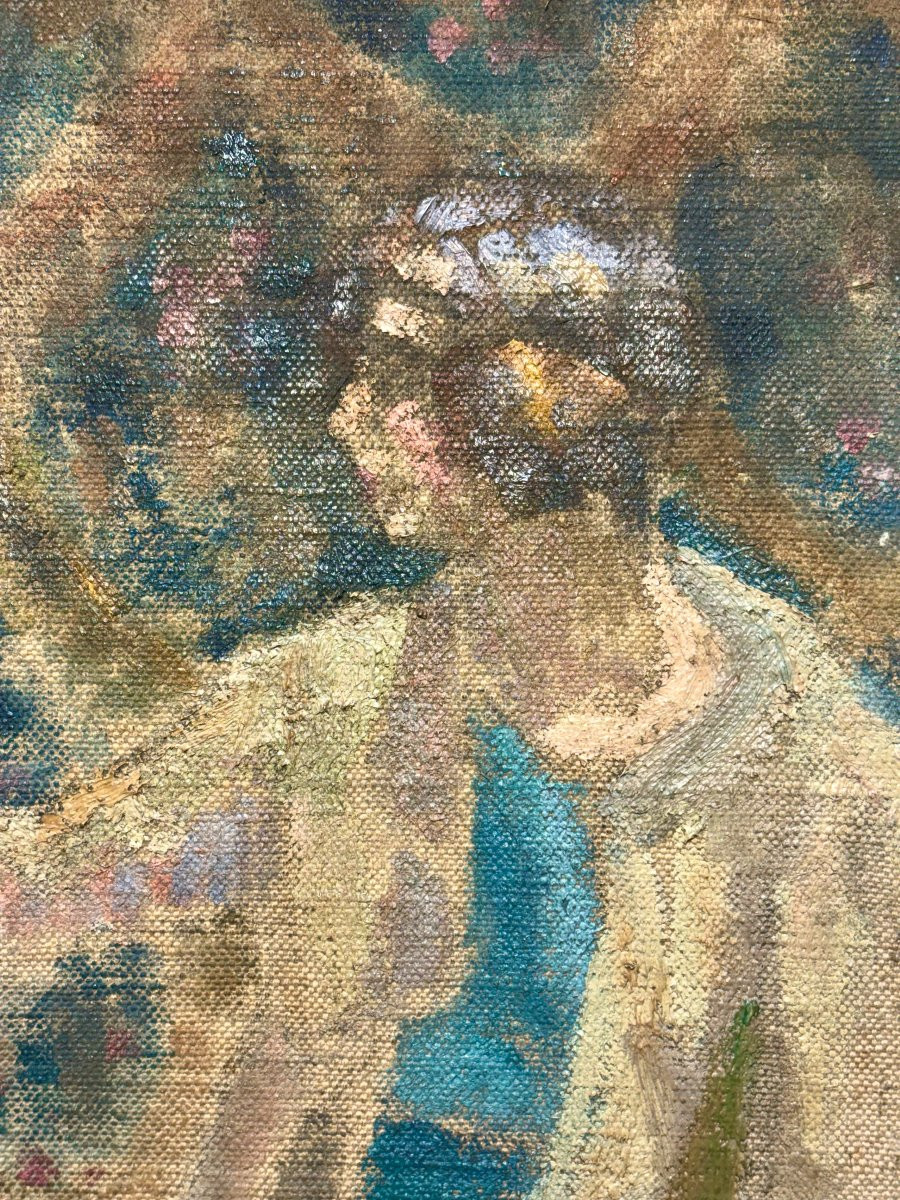
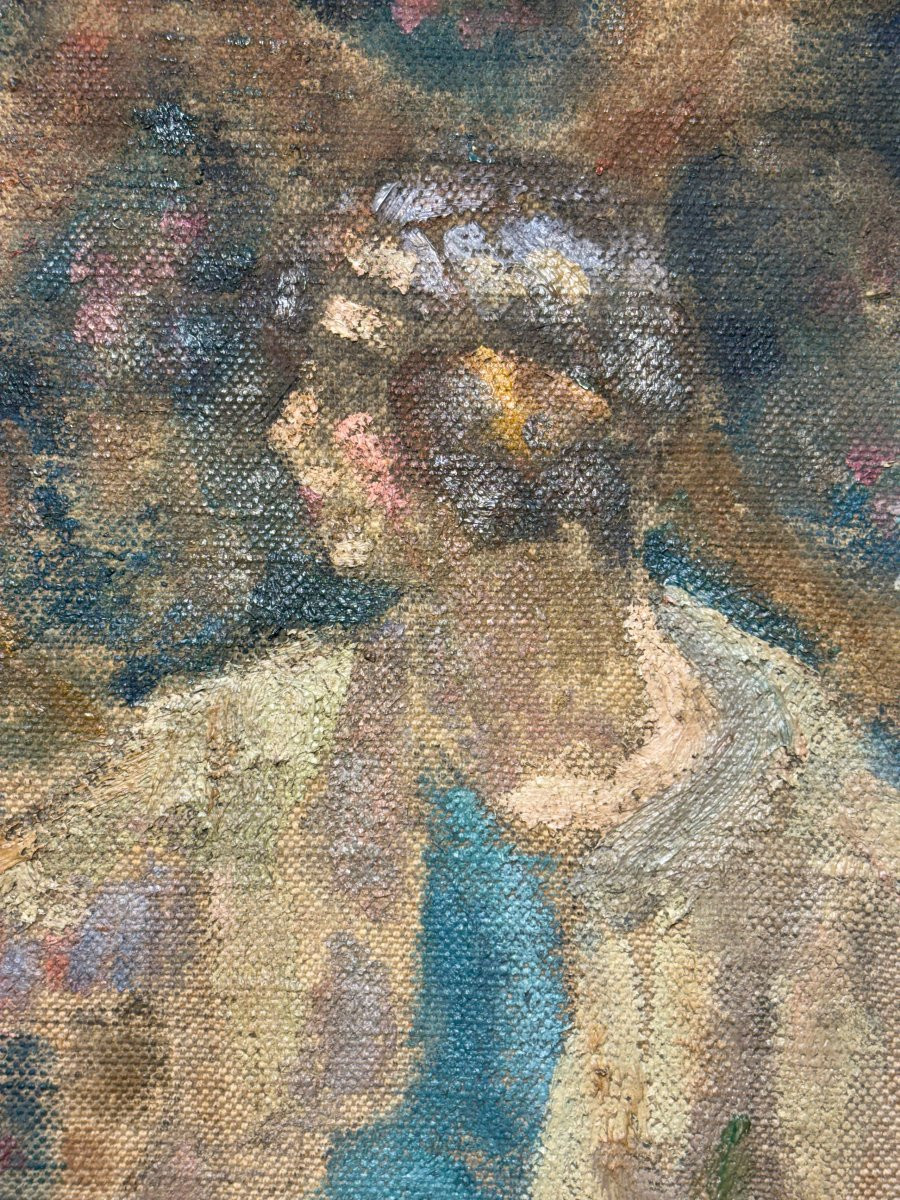
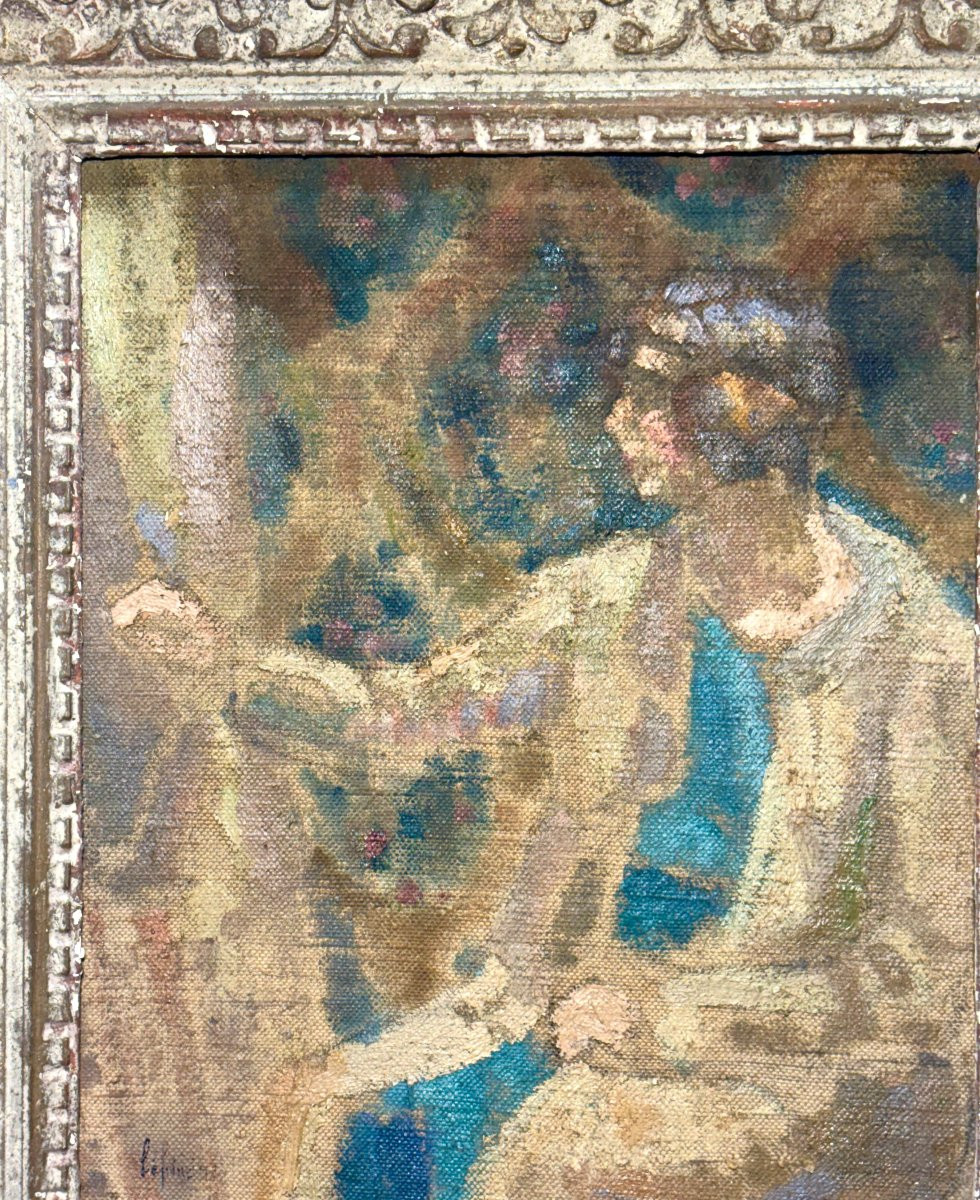
Our painting dates from his return to Paris in the 1930s and reflects a style so powerful that it still manages to blend color with evanescence. The subject depicted, a young painter at the Place du Tertre in Montmartre—perhaps one of his students—is unusual yet firmly rooted in his style.
In its splendid original Montmartre frame.
Dimensions
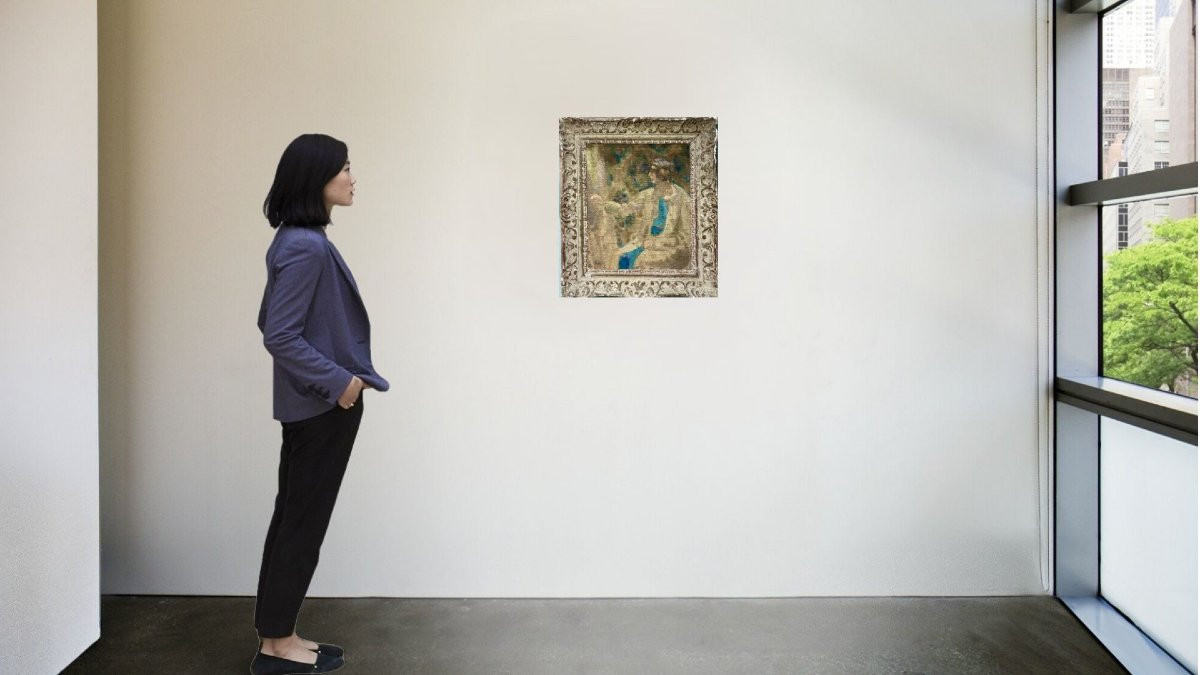
canvas 35x28.5 cm
frame 47x40 cm
+++++++++++++++++++++++++++++++++++++++++++++++++++++++++++++++++++++++++++++++++++++++++++++++++ SHIPPING VIA:
MBE via UPS - TNT - FEDEX - DHL couriers Custom-made wooden crate or
TRUSTED CARRIER
Payment methods: Bank transfer - Online credit card (including AMEX) - PayPal (+3.7%) - NO checks +++++++++++++++++++++++++++++++++++++++++++++++++++++++++++++++++++++++++++++++++++++++++++++++
Joseph Louis François Lépine (1867–1943) “Painter in Montmartre.” Oil on canvas mounted on cardboard, signed lower left. Early 20th century, French Post-Impressionist school.
Joseph Lépine was a French Post-Impressionist painter and a master of color. Born in Rochefort, he began his studies in 1892. His teacher was Louis Cabié, a disciple of the Barbizon School in Bordeaux, who tried in vain to dissuade the young artist from turning to the Impressionist movement then in vogue in Paris. Joseph Lépine’s early paintings were immediately noticed in 1894 and exhibited by the Société des Amis des Arts de Bordeaux.
In 1897, Joseph Lépine moved to Paris, where his first works were accepted at the Salon de la Société Nationale des Beaux-Arts in 1897 and 1898. At the beginning of the 20th century, he became an associate member of the Société Nationale des Beaux-Arts and a member of the Salon des Indépendants in Paris, where he came into close contact with Gromaire, Matisse, Guérin, Dunoyer de Segonzac, and above all Paul Signac, with whom he would later become very close.
Lépine’s painting is powerful, featuring vivid colors and strong contrasts. His brushstrokes, similar to those of Gustave Loiseau, consist of broad, juxtaposed strokes. His bright yellows contrast with the shadows, whose outlines are tinged with purple, as Signac noted. His Neo-Impressionist technique of tonal division prompted the French government to purchase his first painting at the 1908 Salon des Indépendants (now at the Musée de Menton). In 1908 and 1909, he was invited to participate in the first two exhibitions of the Allied Artists’ Association at the Royal Albert Hall in London. Beginning in 1910, Joseph Lépine received numerous awards from the state and the major Parisian salons, as well as commissions from national museums. Starting in 1920, Lépine associated with Maurice Denis, and his contrasts gave way to lighter colors and fine, almost pointillist brushstrokes. World War I scattered the artist’s contacts, and Lépine continued his career with only one friend, Paul Signac. His painting became more evanescent, verging on abstraction. In 1933, success came to him in Bordeaux, where many disciples and students gathered around him, captivated by his style; it was here that the painter Anders Osterlind joined him and convinced him to return to Paris, introducing him to the Salon des Tuileries and the Galerie de Madame Bourdon, where he became a resident artist alongside Georges d’Espagnat, Othon Friesz, and Abel Bertram.
Our painting dates from his return to Paris in the 1930s and reflects a style so powerful that it still manages to blend color with evanescence. The subject depicted, a young painter at the Place du Tertre in Montmartre—perhaps one of his students—is unusual yet firmly rooted in his style.
In its splendid original Montmartre frame.
Dimensions
canvas 35x28.5 cm
frame 47x40 cm
+++++++++++++++++++++++++++++++++++++++++++++++++++++++++++++++++++++++++++++++++++++++++++++++++ SHIPPING VIA:
MBE via UPS - TNT - FEDEX - DHL couriers Custom-made wooden crate or
TRUSTED CARRIER
Payment methods: Bank transfer - Online credit card (including AMEX) - PayPal (+3.7%) - NO checks +++++++++++++++++++++++++++++++++++++++++++++++++++++++++++++++++++++++++++++++++++++++++++++++
3 200 €
Period: 20th century
Style: Other Style
Condition: Excellent condition
Material: Oil painting
Width: 40
Height: 47
Reference (ID): 1753367
Availability: In stock
Print