

Henri Biva (1848–1929) "still Life With A Chinese Vase"
Artist: Henri Biva
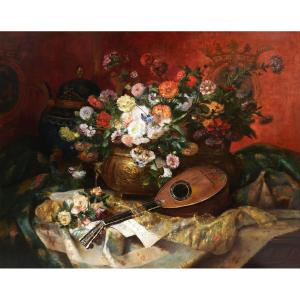
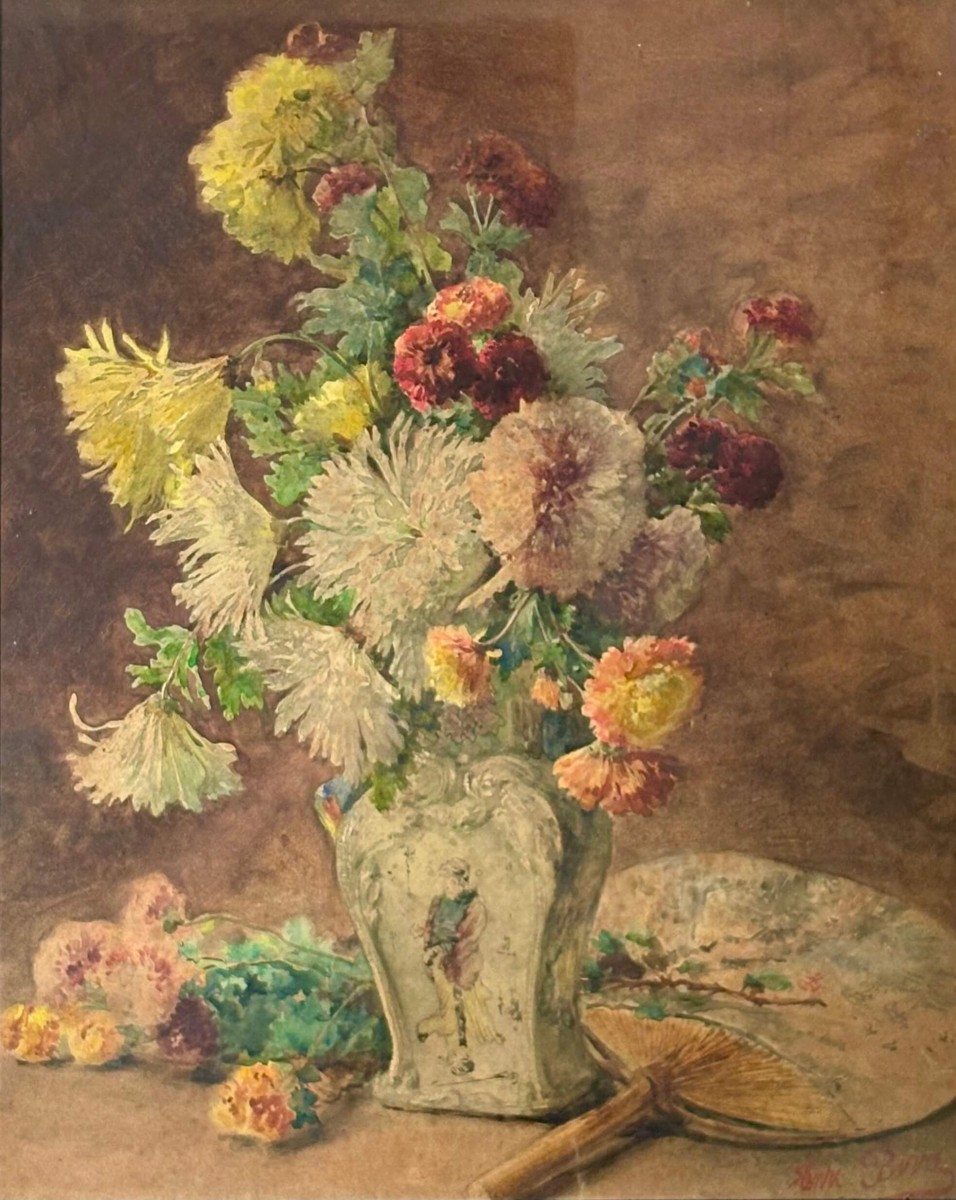
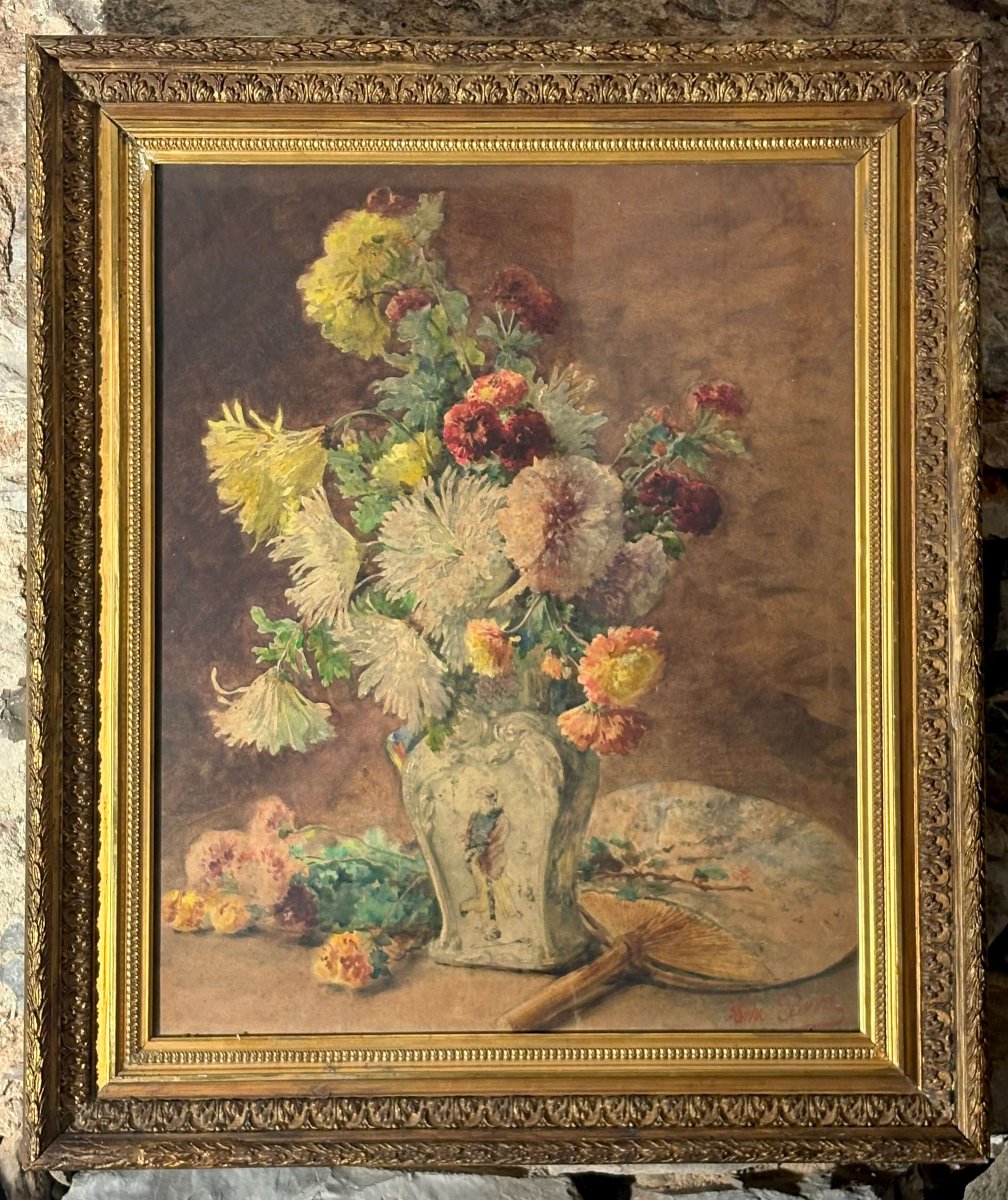
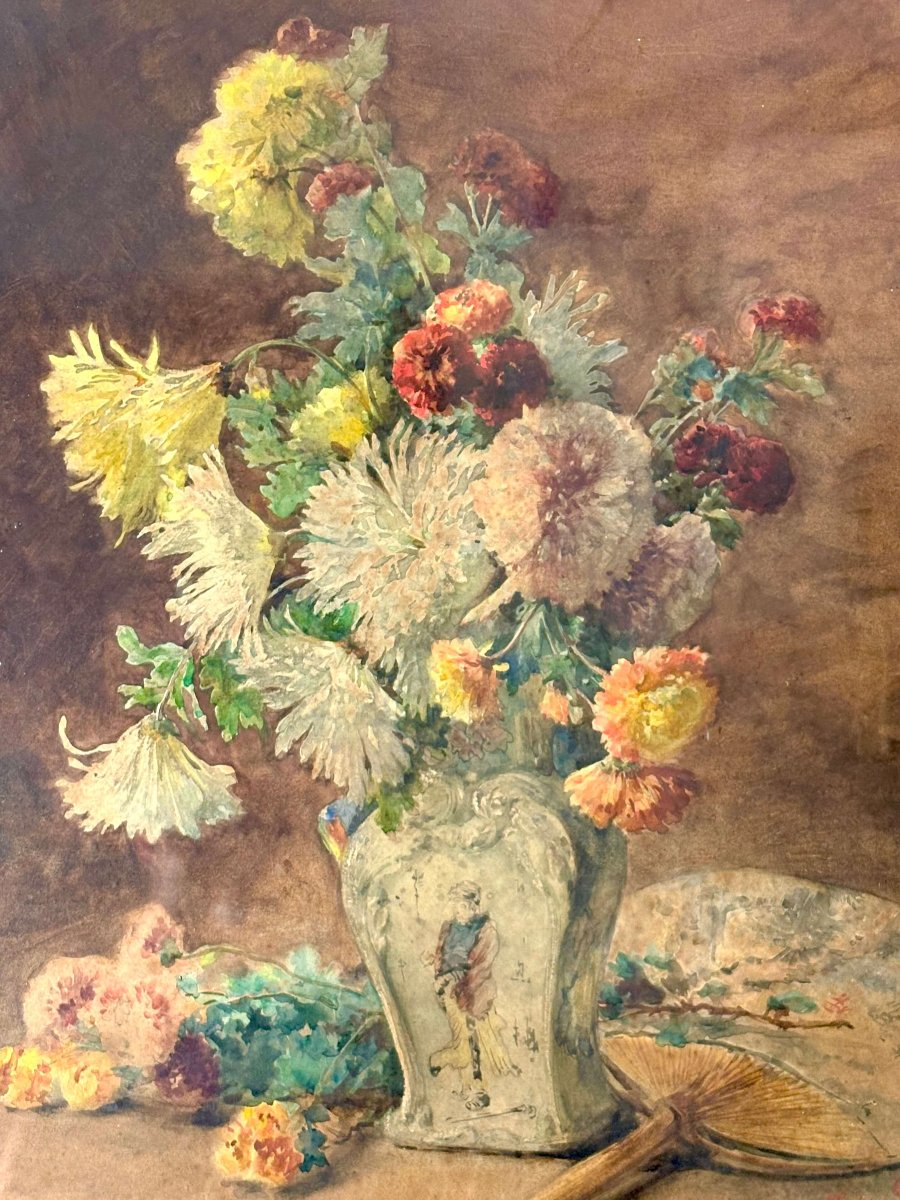
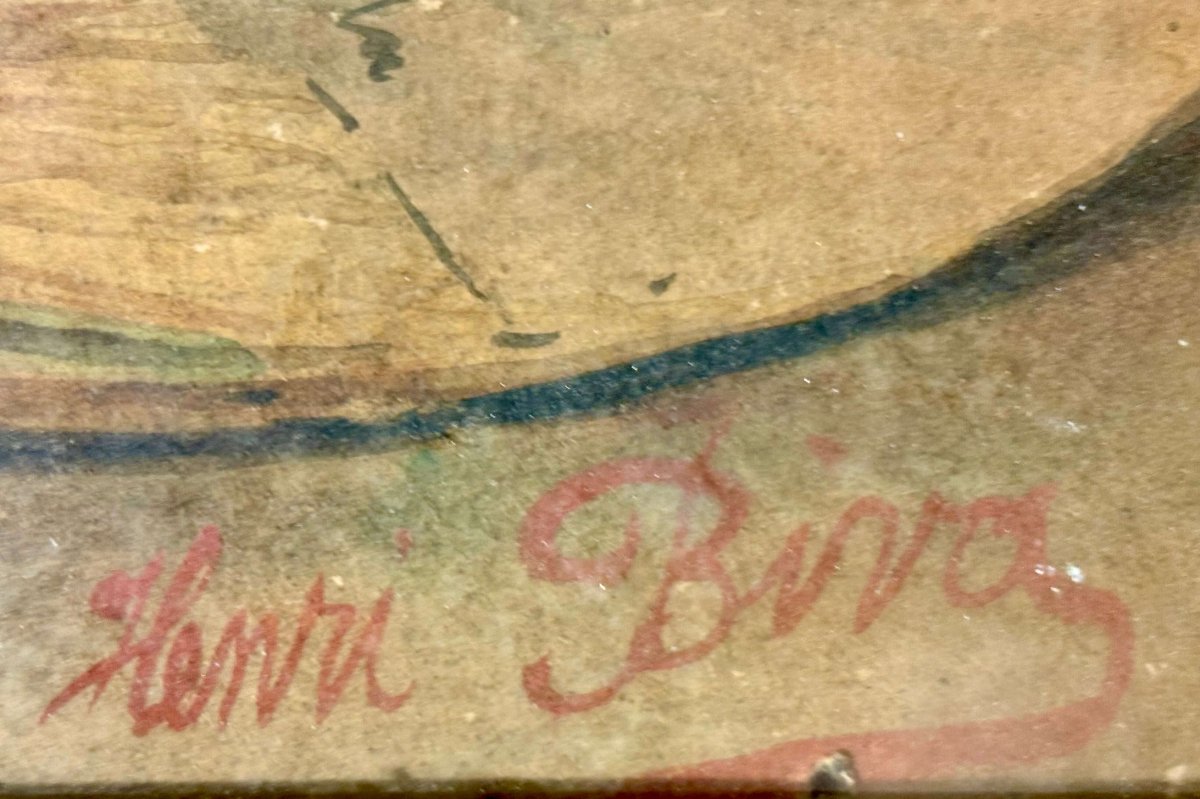
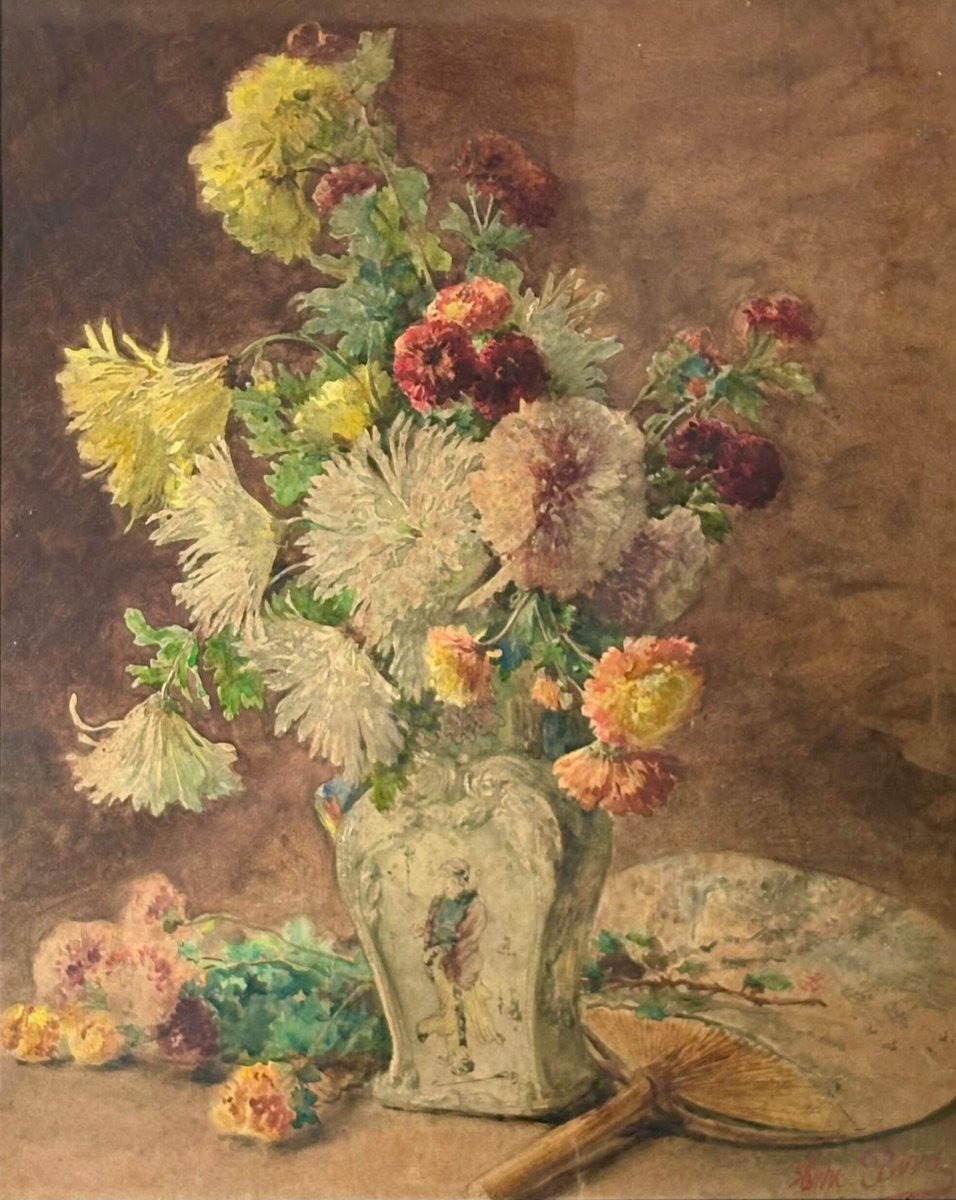
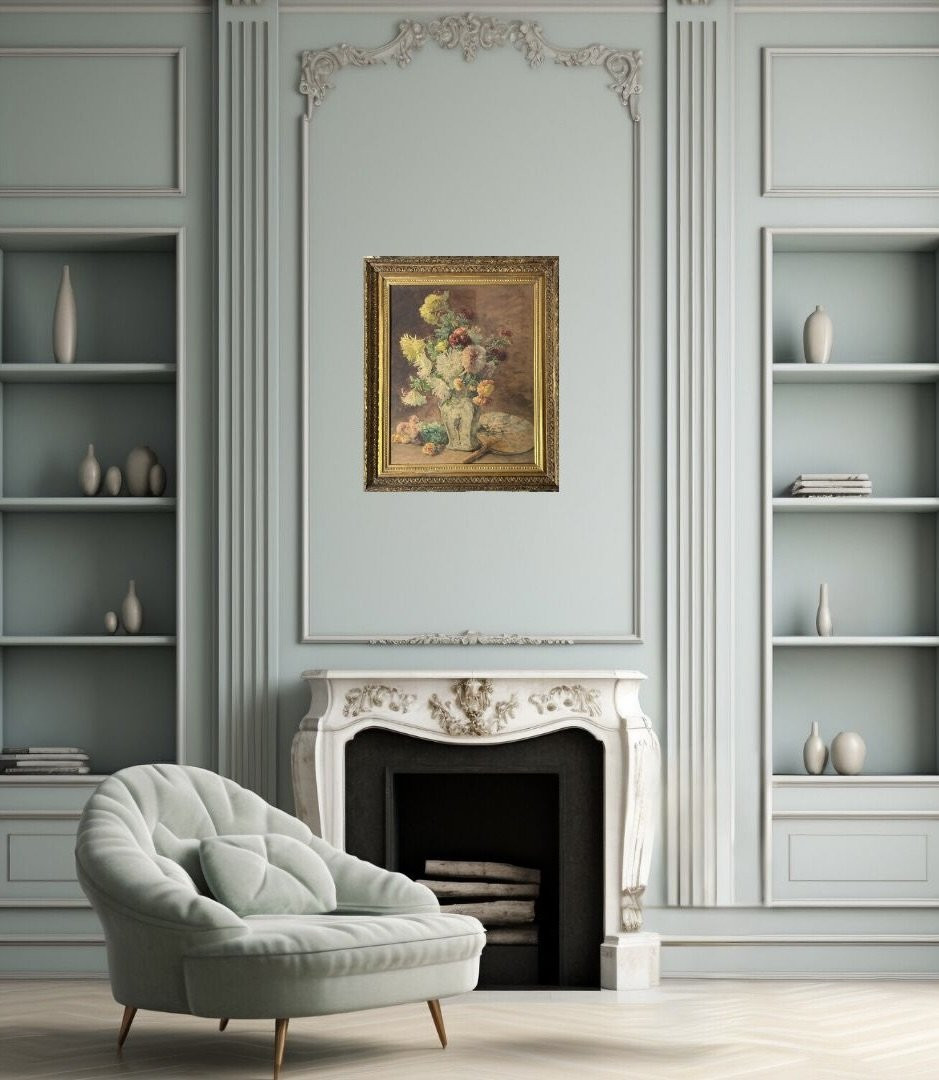
Henri Biva (1848–1929) "Still Life with a Chinese Vase" large watercolor on paper, signed lower right.
Henri Biva (Paris, January 23, 1848 – Paris, February 2, 1929) was a French landscape painter associated with the Barbizon School.
Henri Biva was born and raised in Paris in the Montmartre district at 18 Rue du Vieux Chemin, in a family of artists. It was therefore natural for him and his brother Paul (1851–1900), as well as for his son Lucien (1878–1965), to pursue a career in painting.
Henri studied at the École des Beaux-Arts, in the studios of Léon Tanzi (1846–1913) and Alexandre Nozal (1852–1929), while also attending classes taught by William Bouguereau, Jean-Joseph Benjamin-Constant, and Jules Joseph Lefebvre at the Académie Julian.
He made his debut at the 1879 "Salon" with two paintings: "Les roses du parc" and "Pavillon d'été du Château de Villeneuve-l'Étang."
Due to their distinct naturalist style—easily discernible in paintings such as "Villeneuve-l'Étang (Evening)" and "After Sunset"—Henri Biva’s works quickly gained notoriety and found their way into both private and public collections.
In 1886, Biva exhibited three works at the "Exposition Internationale de Blanc et Noir" (Louvre, Pavillon de l’Enseignement, Rue des Tuileries, Paris, March 20–April 20, 1886). He was subsequently a member of the "Société des artistes français," where he received two awards. In 1900, he also received a bronze medal at the Universal Exposition and, in the same year, upon the recommendation of the Minister of Public Instruction and Fine Arts, was awarded the rank of Knight of the Légion d’honneur. By the turn of the century, Biva had achieved considerable renown and had himself become a respected teacher.
Defining himself as a naturalist painter, one can see the influence of his teachers in the particular care with which he executed his works, both in handling light effects and in rendering the finest details. A vision and technique that place him squarely within the Barbizon School.
Biva’s style oscillates between Post-Impressionism and Realism, with a notable naturalist component. Thus, his painting is characterized by complex brushstrokes and a pure palette, imbued with natural light—the light of the very moment in which he captures the image that inspires him. Moreover, it is evident that Biva devoted the utmost attention to the effects of light and atmosphere. This preference led him toward landscapes and floral still lifes, subjects in which he excels using both oil paints and the challenging techniques of watercolor and pastel.
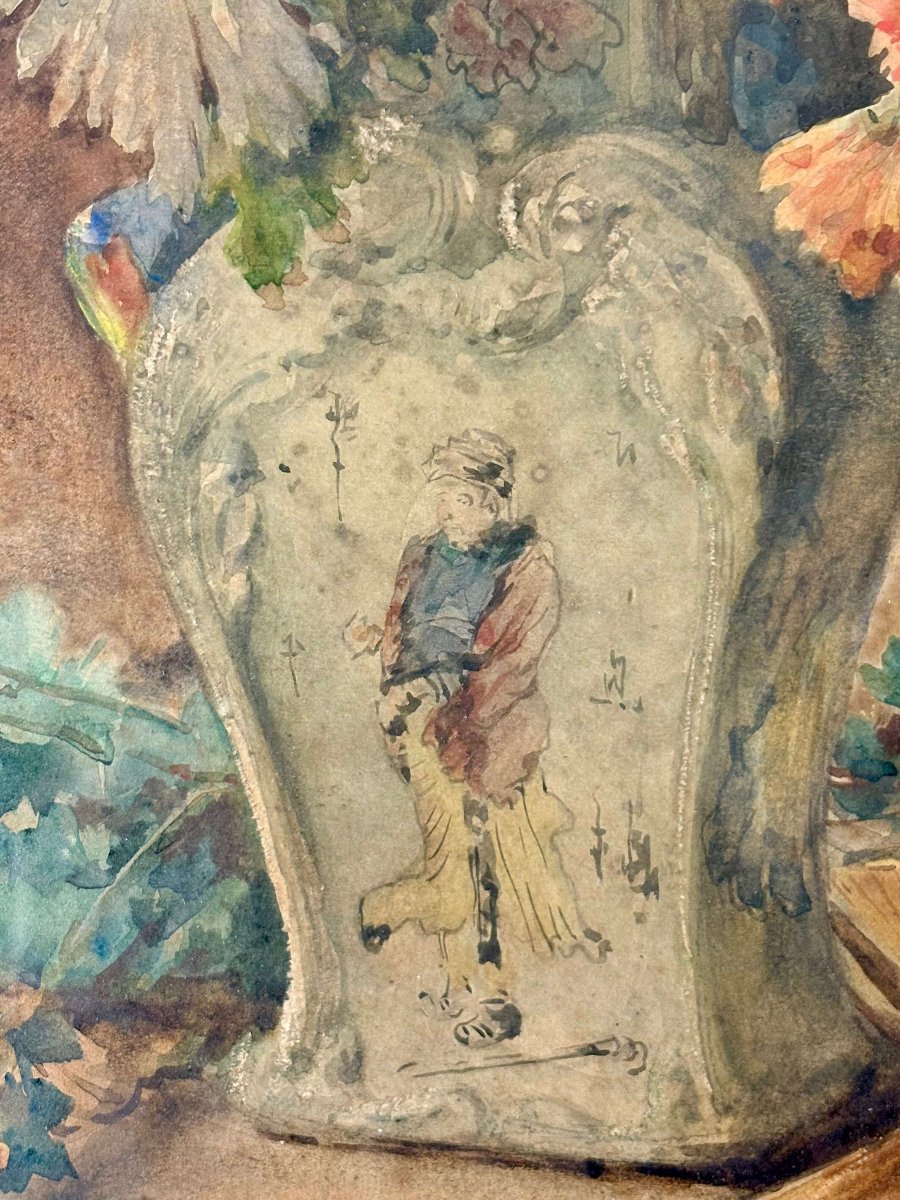
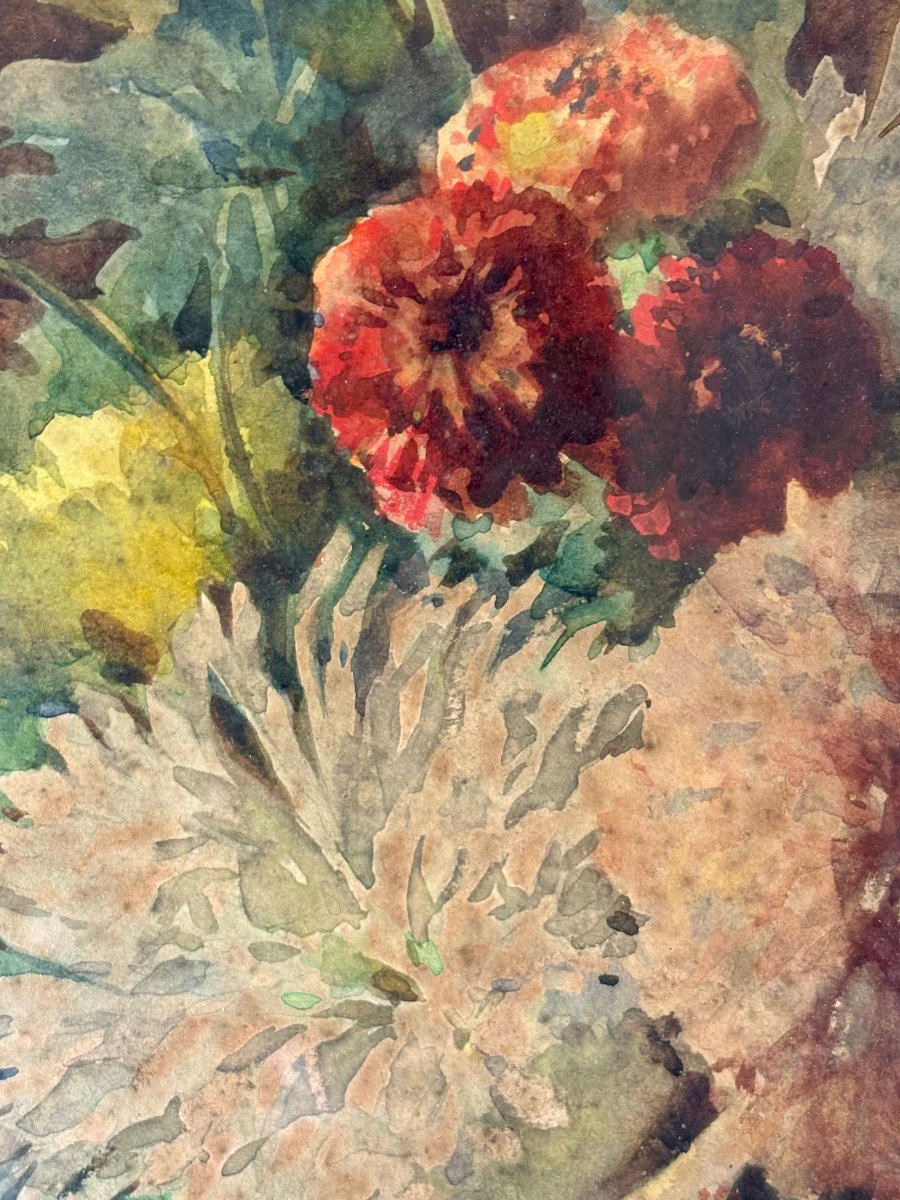
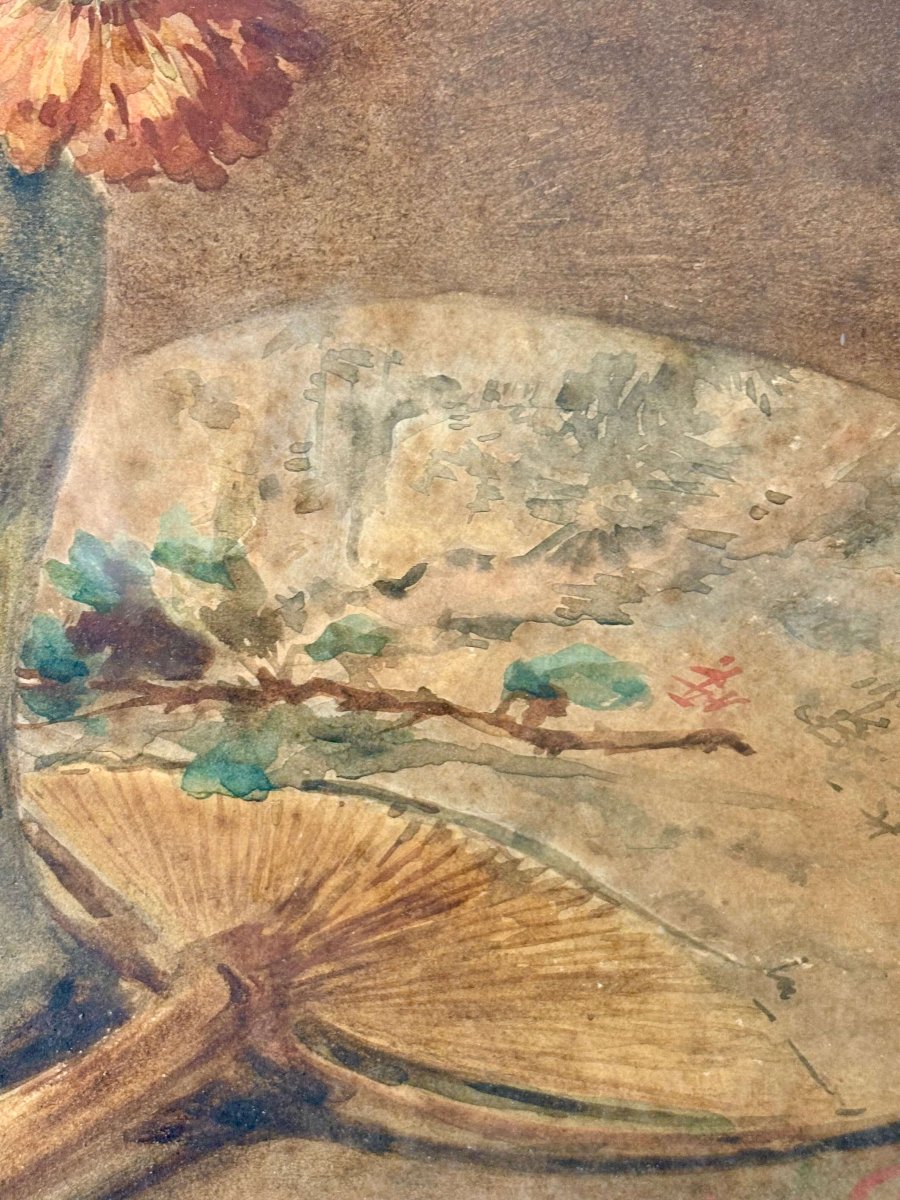
This large watercolor still retains, beneath its original glass, the freshness of its colors: a Japanese porcelain vase overflowing with a bouquet of flowers—carnations and chrysanthemums—next to which rests an oriental fan, a subject steeped in that Japonism so in vogue between the late 19th and early 20th centuries. His skill as an academic and naturalist painter is evident in the precision of the drawing as well as in the study of light, particularly the golden hues of the sunset streaming through a window to illuminate the subject.
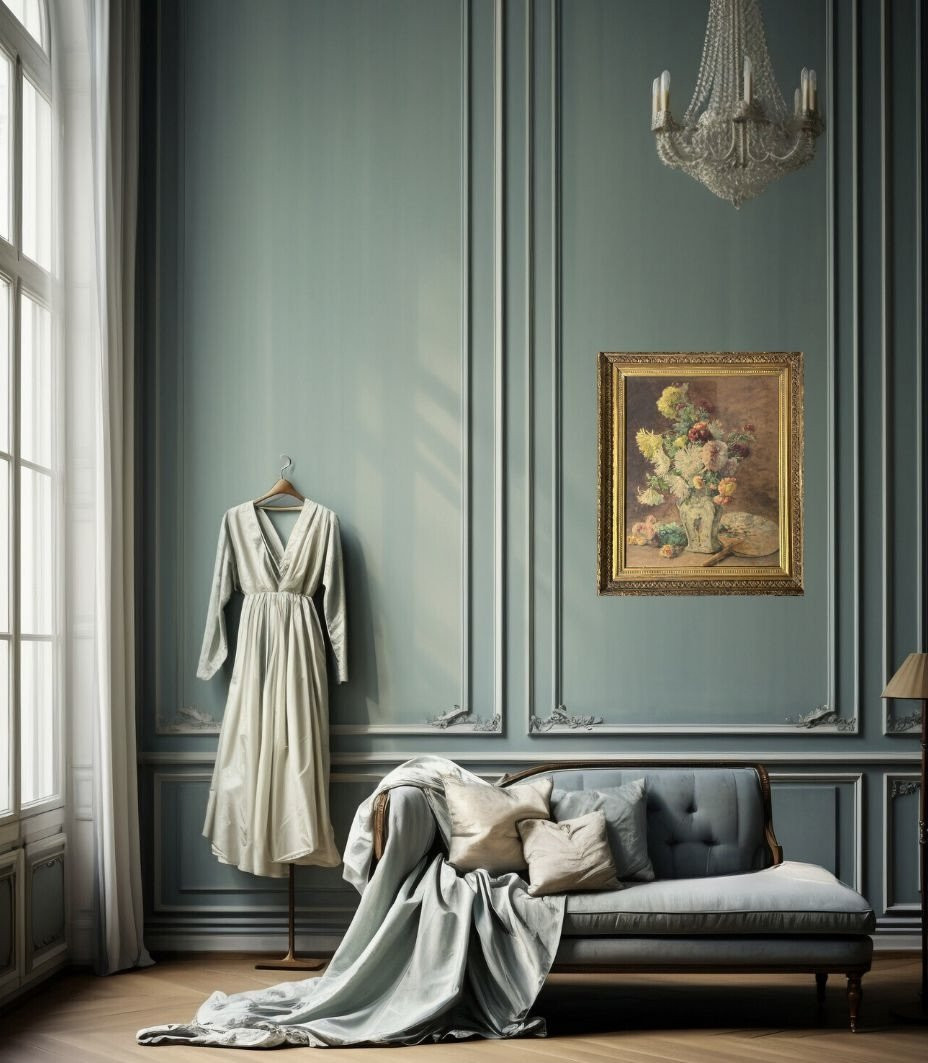
The watercolor, on paper mounted on board, shows no tears or signs of moisture. It has a contemporary wooden frame with gilded molding.
Dimensions
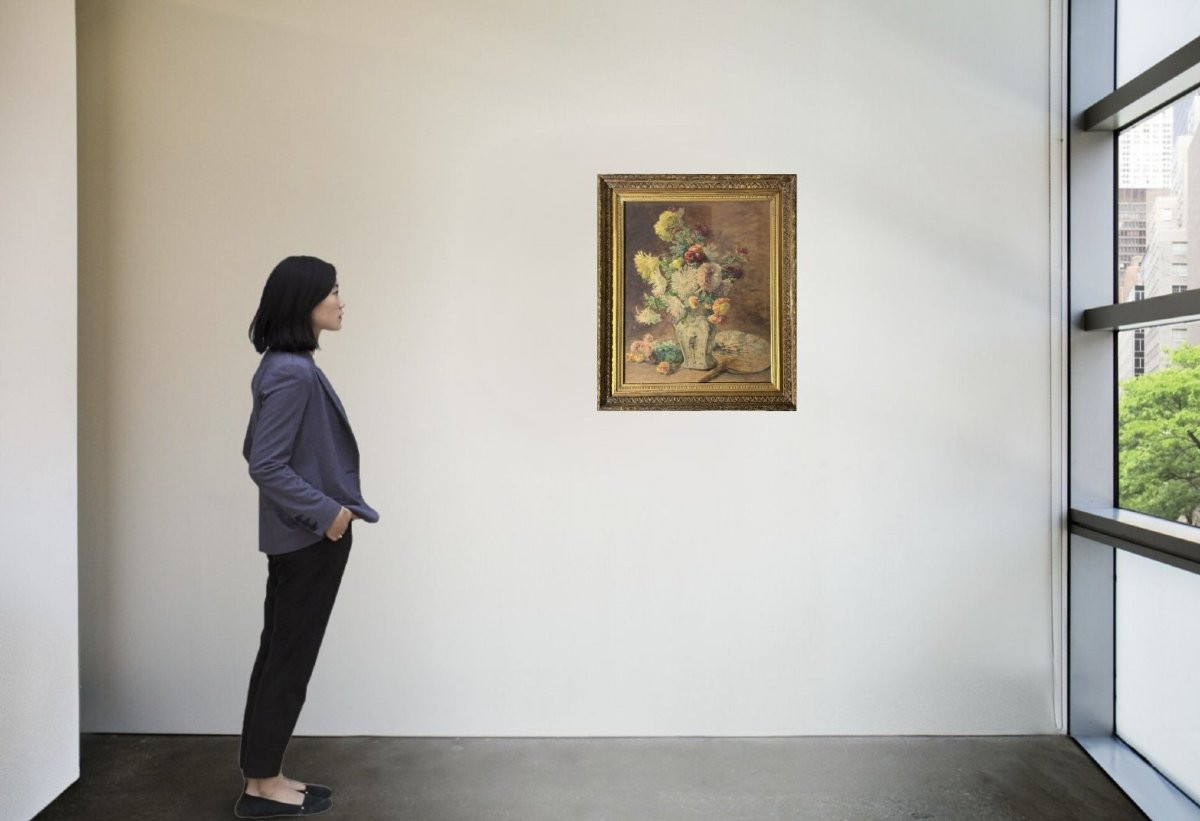
frame 80 x 67 cm
watercolor 63 x 52 cm
++++++++++++++++++++++++++++++++++++++++DELIVERY AND PAYMENT++++++++++++++++++++++++++++++++
SHIPPING VIA TRUSTED CARRIER OR MBE with UPS - TNT couriers - FEDEX - DHL CUSTOM-MADE WOODEN CRATE
Payment methods: Bank transfer - Online credit card (including AMEX) - PayPal (+3.7%) - NO checks +++++++++++++++++++++++++++++++++++++++++++++++++++++++++++++++++++++++++++++++++++++++++++++++++
Henri Biva (Paris, January 23, 1848 – Paris, February 2, 1929) was a French landscape painter associated with the Barbizon School.
Henri Biva was born and raised in Paris in the Montmartre district at 18 Rue du Vieux Chemin, in a family of artists. It was therefore natural for him and his brother Paul (1851–1900), as well as for his son Lucien (1878–1965), to pursue a career in painting.
Henri studied at the École des Beaux-Arts, in the studios of Léon Tanzi (1846–1913) and Alexandre Nozal (1852–1929), while also attending classes taught by William Bouguereau, Jean-Joseph Benjamin-Constant, and Jules Joseph Lefebvre at the Académie Julian.
He made his debut at the 1879 "Salon" with two paintings: "Les roses du parc" and "Pavillon d'été du Château de Villeneuve-l'Étang."
Due to their distinct naturalist style—easily discernible in paintings such as "Villeneuve-l'Étang (Evening)" and "After Sunset"—Henri Biva’s works quickly gained notoriety and found their way into both private and public collections.
In 1886, Biva exhibited three works at the "Exposition Internationale de Blanc et Noir" (Louvre, Pavillon de l’Enseignement, Rue des Tuileries, Paris, March 20–April 20, 1886). He was subsequently a member of the "Société des artistes français," where he received two awards. In 1900, he also received a bronze medal at the Universal Exposition and, in the same year, upon the recommendation of the Minister of Public Instruction and Fine Arts, was awarded the rank of Knight of the Légion d’honneur. By the turn of the century, Biva had achieved considerable renown and had himself become a respected teacher.
Defining himself as a naturalist painter, one can see the influence of his teachers in the particular care with which he executed his works, both in handling light effects and in rendering the finest details. A vision and technique that place him squarely within the Barbizon School.
Biva’s style oscillates between Post-Impressionism and Realism, with a notable naturalist component. Thus, his painting is characterized by complex brushstrokes and a pure palette, imbued with natural light—the light of the very moment in which he captures the image that inspires him. Moreover, it is evident that Biva devoted the utmost attention to the effects of light and atmosphere. This preference led him toward landscapes and floral still lifes, subjects in which he excels using both oil paints and the challenging techniques of watercolor and pastel.
This large watercolor still retains, beneath its original glass, the freshness of its colors: a Japanese porcelain vase overflowing with a bouquet of flowers—carnations and chrysanthemums—next to which rests an oriental fan, a subject steeped in that Japonism so in vogue between the late 19th and early 20th centuries. His skill as an academic and naturalist painter is evident in the precision of the drawing as well as in the study of light, particularly the golden hues of the sunset streaming through a window to illuminate the subject.
The watercolor, on paper mounted on board, shows no tears or signs of moisture. It has a contemporary wooden frame with gilded molding.
Dimensions
frame 80 x 67 cm
watercolor 63 x 52 cm
++++++++++++++++++++++++++++++++++++++++DELIVERY AND PAYMENT++++++++++++++++++++++++++++++++
SHIPPING VIA TRUSTED CARRIER OR MBE with UPS - TNT couriers - FEDEX - DHL CUSTOM-MADE WOODEN CRATE
Payment methods: Bank transfer - Online credit card (including AMEX) - PayPal (+3.7%) - NO checks +++++++++++++++++++++++++++++++++++++++++++++++++++++++++++++++++++++++++++++++++++++++++++++++++
2 600 €
Period: 19th century
Style: Napoleon 3rd
Condition: Excellent condition
Material: Water color
Width: 67
Height: 80
Reference (ID): 1745325
Availability: In stock
Print