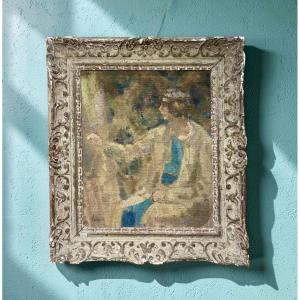



Narcisse Virgile Diaz De La Peña (1808-1876) Barbizon School "elegant In A Forest"
Artist: Diaz De La Peña Narcisse Virgile
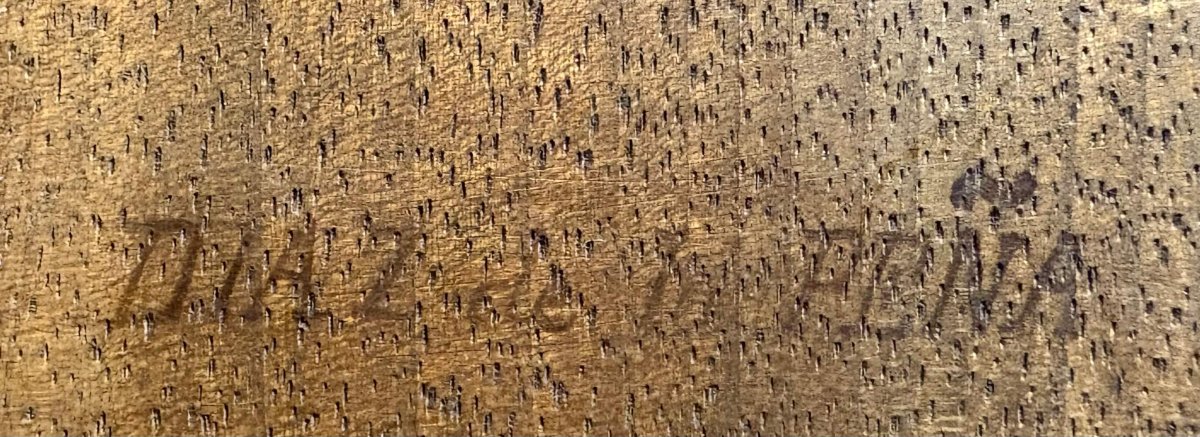
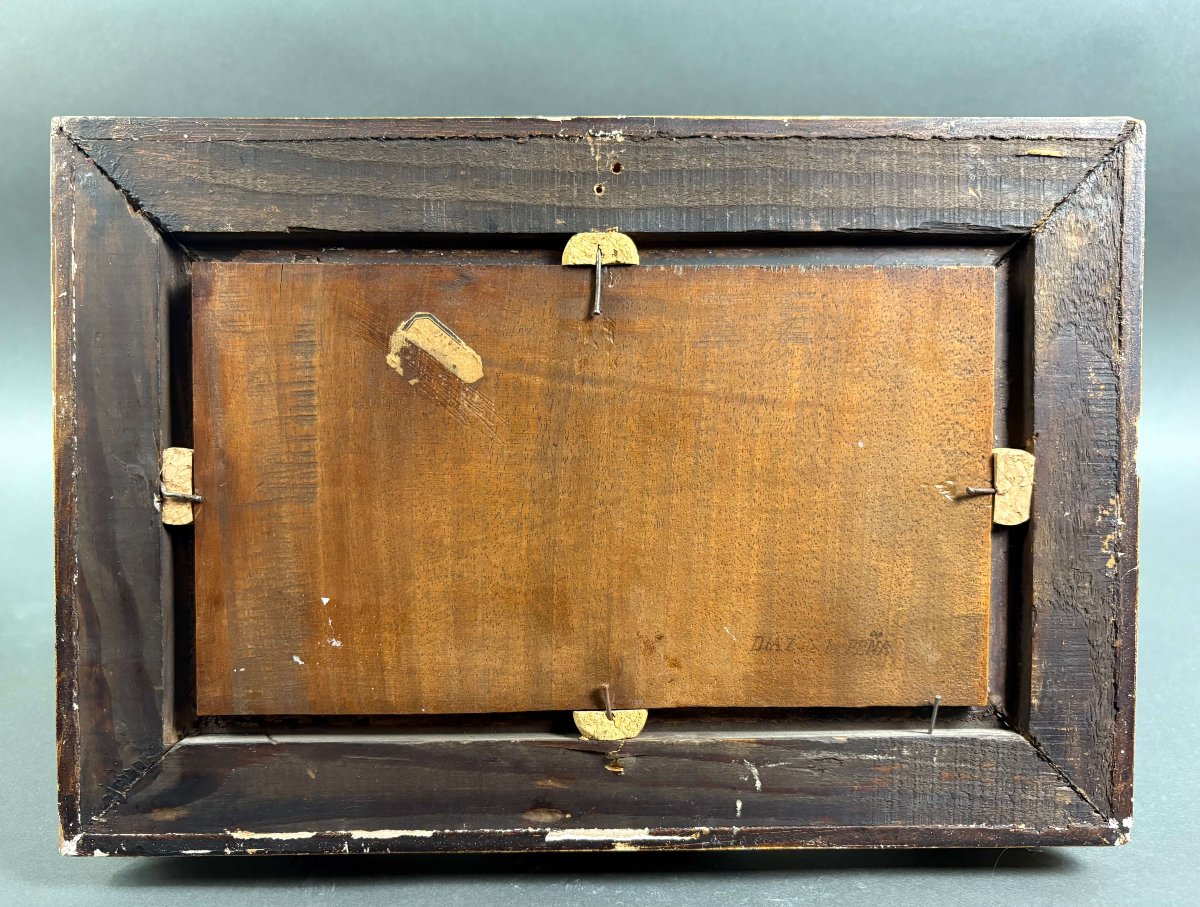
Oil on wood, signed "Díaz de la Pena" on the back. Mr. Michel Rodrigue, expert on the Barbizon School and member of the UFE (Union of French Expatriates), has confirmed the attribution of this painting to Díaz.
Dimensions:
Panel: 24.5 x 14 cm
Frame: 35 x 24 cm
The son of a Spanish exile, Narcisse Virgile Díaz de la Peña spent his youth wandering: from Bordeaux, his birthplace, to Paris, passing through England and Languedoc.
A young apprentice in a Parisian porcelain factory, he learned to paint and met the painters Jules Dupré, Raffet, and Troyon.
A self-taught artist, he tried his hand at painting the immediate surroundings of Paris before studying the Luminist painters at the Louvre: Correggio, Rembrandt, and Prud'hon. From 1831, the date of his first exhibition at the Salon, until his death, he enjoyed relatively rapid success with collectors and artists who became his friends: Théodore Rousseau, Corot, Millet, and Daumier. Illness prevented the landscape painter from experiencing the adventure of travel, and, an admirer of Hugo and Delacroix, he saw only Decamps's Orient.
In 1836 (the year of his meeting with Rousseau), he fell in love with the Fontainebleau forest, where he rediscovered most of his carefully chosen subjects. Soon, painters gathered around Rousseau, who had settled in the village of Barbizon, thus breaking with the rigid framework of academic landscape painting. This liberation preserved the dramatic exaltation of the Romantics, combining it with a profound sense of reality. The sight of a clearing or a woodland was imbued with a passion stronger than mere visual detail. Along with Rousseau and Daubigny, Diaz helped to erase the theatrical picturesqueness of grand Romantic panoramas from the landscape; even more original was his understanding of purely pictorial effect. He knew the resources of the material he wielded with a feverish brush. Like a smoldering fire, red light insinuates itself between the green masses in the thick, burning shadow. The entire canvas is imbued with a mysterious light, with "dazzling solar jewels" (Focillon). In the midst of forests and gardens, small, barely defined figures emerge—fairies, gypsies, nymphs, or elegant ladies—as if from a dream.
"Díaz's painting is a dream in an enchanted land. These forests and these voluptuous creatures are encountered only in hashish-induced visions, when one is in perfect health and happiness. It is to this fairy-tale charm that Díaz's success must be attributed." because his painting itself, or rather its execution, instilled a certain fear in the bourgeoisie, who generally preferred finished, clear, and easily understandable paintings.” In his Salon of 1846, Théophile Thoré offers us a comprehensive overview of his protégé, Narcisse Virgile Díaz de la Peña.
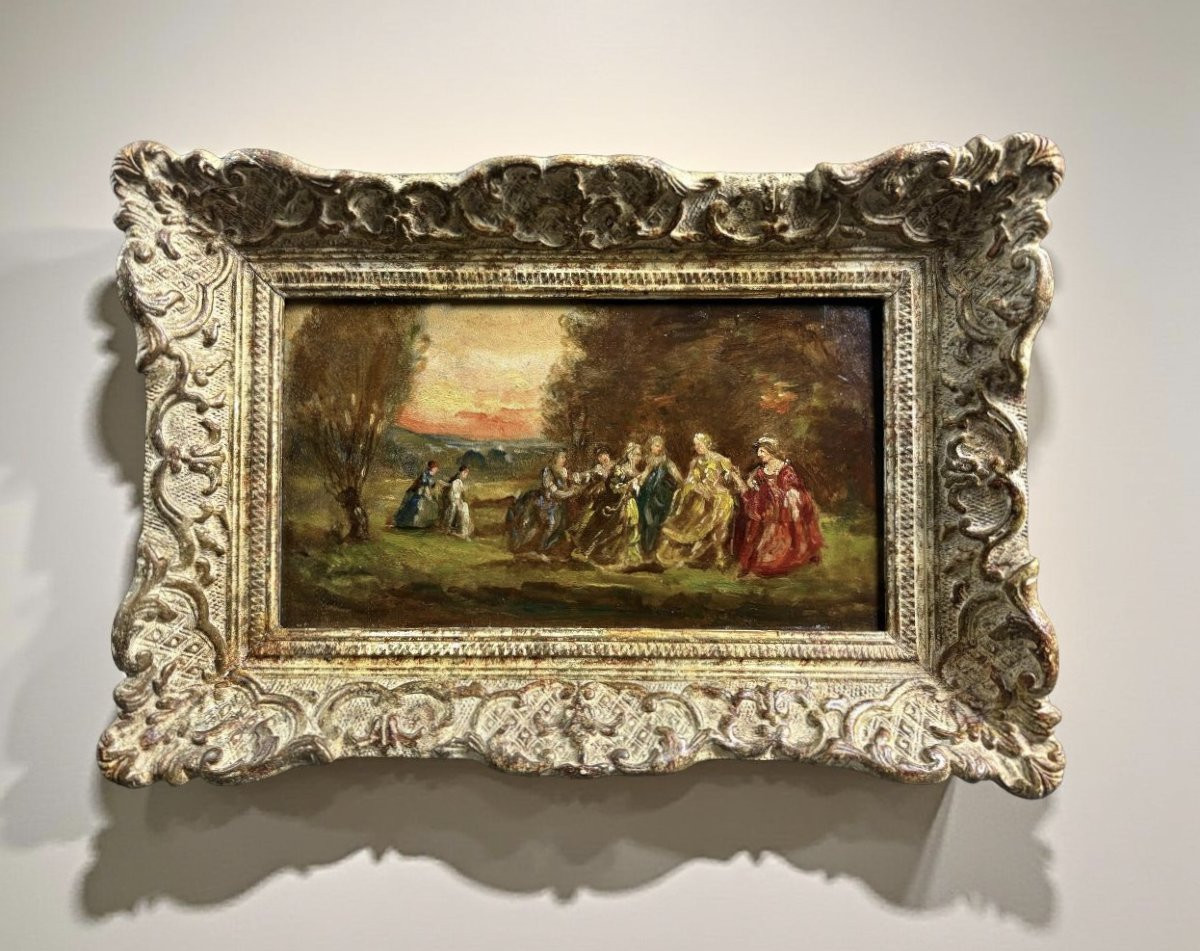
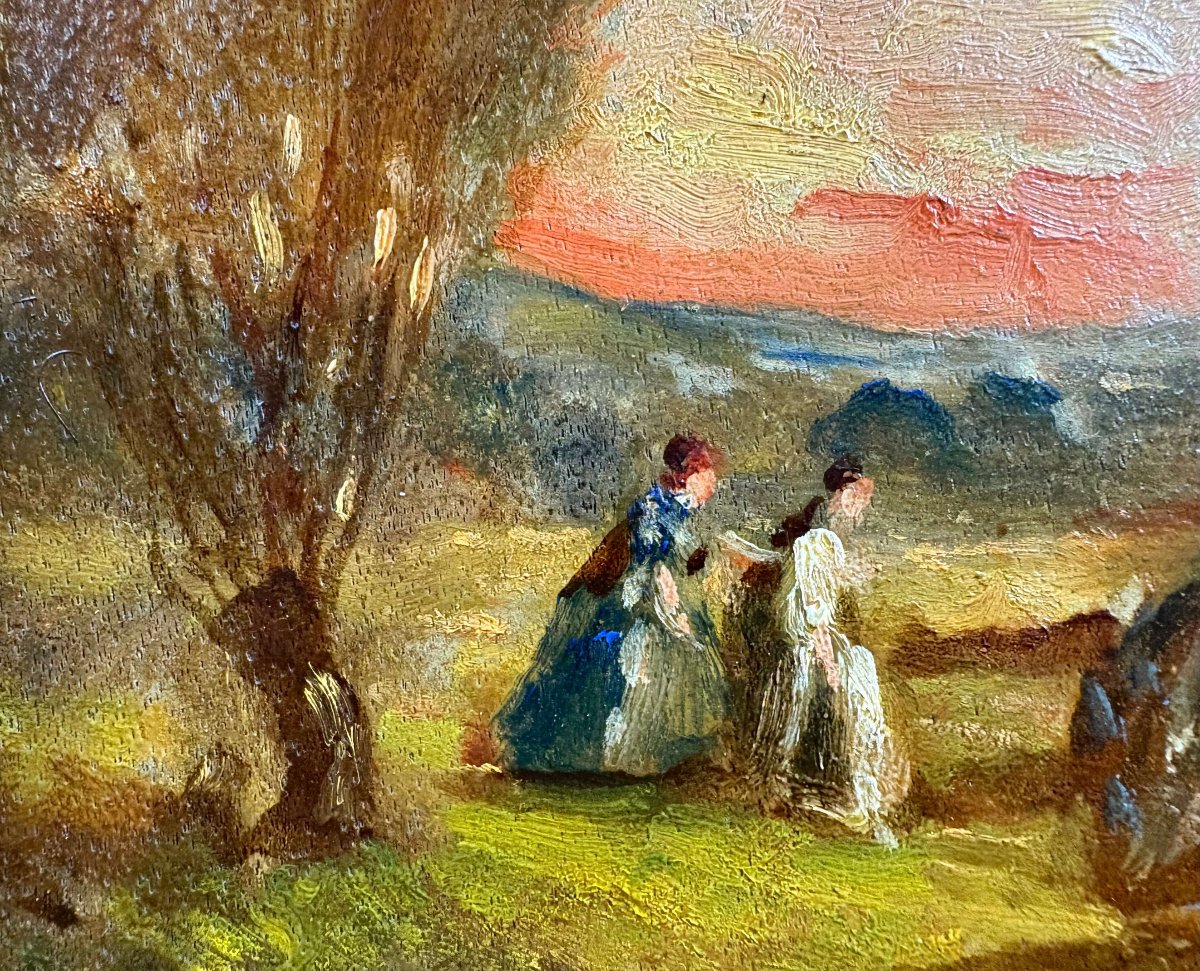
Our painting depicts a sunny garden or clearing where a group of elegant ladies, dressed in sumptuous gowns, are enjoying themselves and joking. These charming little genre scenes are part of a series of small panels that Díaz produced around the mid-19th century, which were very popular with the public and which he himself offered for sale, the “Díaz sales.” Some of them even bear the “Díaz Sale” stamp. In our case, the panel is signed on the back and, to guarantee a certain attribution, it was submitted to Michel Rodrigue, an expert on Diaz and the Barbizon School and a member of the French Union of Experts (UFE). Michel Rodrigue has examined more than 30,000 works from the Barbizon School to date.
+++++++++++++++++++++++++++++++++++++++++++++++++++++++++++++++++++++++++++++++++++++++++++++++++
EXPEDITION VIA MBE avec les coursiers UPS or DHL in a wood crate
Moyen de paiement: Virement bnacaire - Carte de crédit en ligne (aussi AMEX) - PayPal (+3,7%) - NO cheques
+++++++++++++++++++++++++++++++++++++++++++++++++++++++++++++++++++++++++++++++++++++++++++++++++
Dimensions:
Panel: 24.5 x 14 cm
Frame: 35 x 24 cm
The son of a Spanish exile, Narcisse Virgile Díaz de la Peña spent his youth wandering: from Bordeaux, his birthplace, to Paris, passing through England and Languedoc.
A young apprentice in a Parisian porcelain factory, he learned to paint and met the painters Jules Dupré, Raffet, and Troyon.
A self-taught artist, he tried his hand at painting the immediate surroundings of Paris before studying the Luminist painters at the Louvre: Correggio, Rembrandt, and Prud'hon. From 1831, the date of his first exhibition at the Salon, until his death, he enjoyed relatively rapid success with collectors and artists who became his friends: Théodore Rousseau, Corot, Millet, and Daumier. Illness prevented the landscape painter from experiencing the adventure of travel, and, an admirer of Hugo and Delacroix, he saw only Decamps's Orient.
In 1836 (the year of his meeting with Rousseau), he fell in love with the Fontainebleau forest, where he rediscovered most of his carefully chosen subjects. Soon, painters gathered around Rousseau, who had settled in the village of Barbizon, thus breaking with the rigid framework of academic landscape painting. This liberation preserved the dramatic exaltation of the Romantics, combining it with a profound sense of reality. The sight of a clearing or a woodland was imbued with a passion stronger than mere visual detail. Along with Rousseau and Daubigny, Diaz helped to erase the theatrical picturesqueness of grand Romantic panoramas from the landscape; even more original was his understanding of purely pictorial effect. He knew the resources of the material he wielded with a feverish brush. Like a smoldering fire, red light insinuates itself between the green masses in the thick, burning shadow. The entire canvas is imbued with a mysterious light, with "dazzling solar jewels" (Focillon). In the midst of forests and gardens, small, barely defined figures emerge—fairies, gypsies, nymphs, or elegant ladies—as if from a dream.
"Díaz's painting is a dream in an enchanted land. These forests and these voluptuous creatures are encountered only in hashish-induced visions, when one is in perfect health and happiness. It is to this fairy-tale charm that Díaz's success must be attributed." because his painting itself, or rather its execution, instilled a certain fear in the bourgeoisie, who generally preferred finished, clear, and easily understandable paintings.” In his Salon of 1846, Théophile Thoré offers us a comprehensive overview of his protégé, Narcisse Virgile Díaz de la Peña.
Our painting depicts a sunny garden or clearing where a group of elegant ladies, dressed in sumptuous gowns, are enjoying themselves and joking. These charming little genre scenes are part of a series of small panels that Díaz produced around the mid-19th century, which were very popular with the public and which he himself offered for sale, the “Díaz sales.” Some of them even bear the “Díaz Sale” stamp. In our case, the panel is signed on the back and, to guarantee a certain attribution, it was submitted to Michel Rodrigue, an expert on Diaz and the Barbizon School and a member of the French Union of Experts (UFE). Michel Rodrigue has examined more than 30,000 works from the Barbizon School to date.
+++++++++++++++++++++++++++++++++++++++++++++++++++++++++++++++++++++++++++++++++++++++++++++++++
EXPEDITION VIA MBE avec les coursiers UPS or DHL in a wood crate
Moyen de paiement: Virement bnacaire - Carte de crédit en ligne (aussi AMEX) - PayPal (+3,7%) - NO cheques
+++++++++++++++++++++++++++++++++++++++++++++++++++++++++++++++++++++++++++++++++++++++++++++++++
3 300 €
Period: 19th century
Style: Other Style
Condition: Excellent condition
Material: Oil painting on wood
Width: 35
Height: 24
Reference (ID): 1720030
Availability: In stock
Print