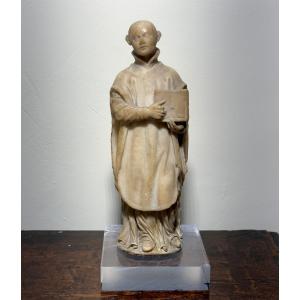


17th Italian Baroque Alabaster Sculpture Of Saint Ignatius Of Loyola
Video available here: https://youtube.com/shorts/W_UEUvJ_gn0?feature=share
More HD photos in my website: https://internationalantiques.eu/prodotto/17th-italian-baroque-alabaster-sculpture-of-saint-ignatius-of-loyola/
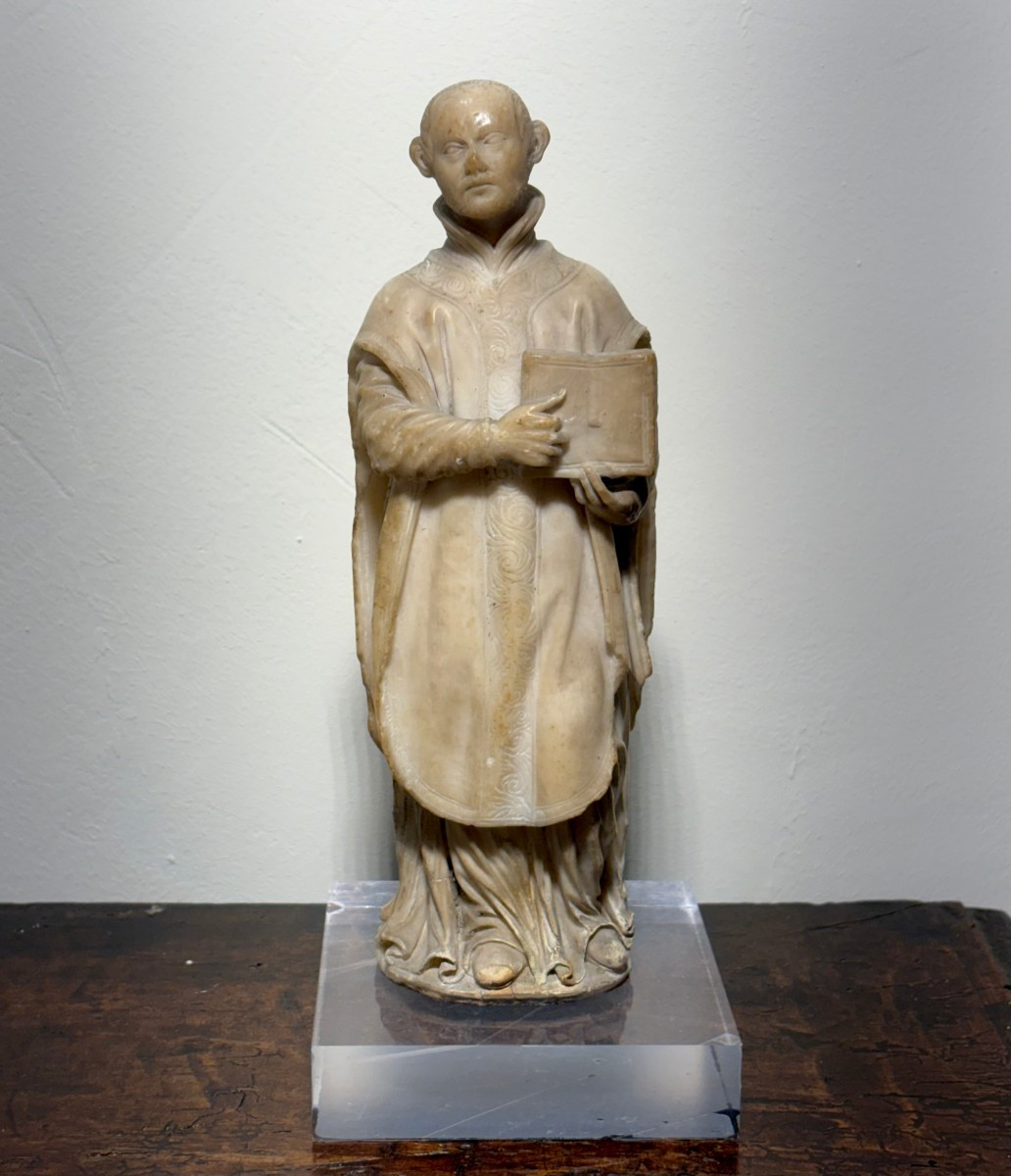
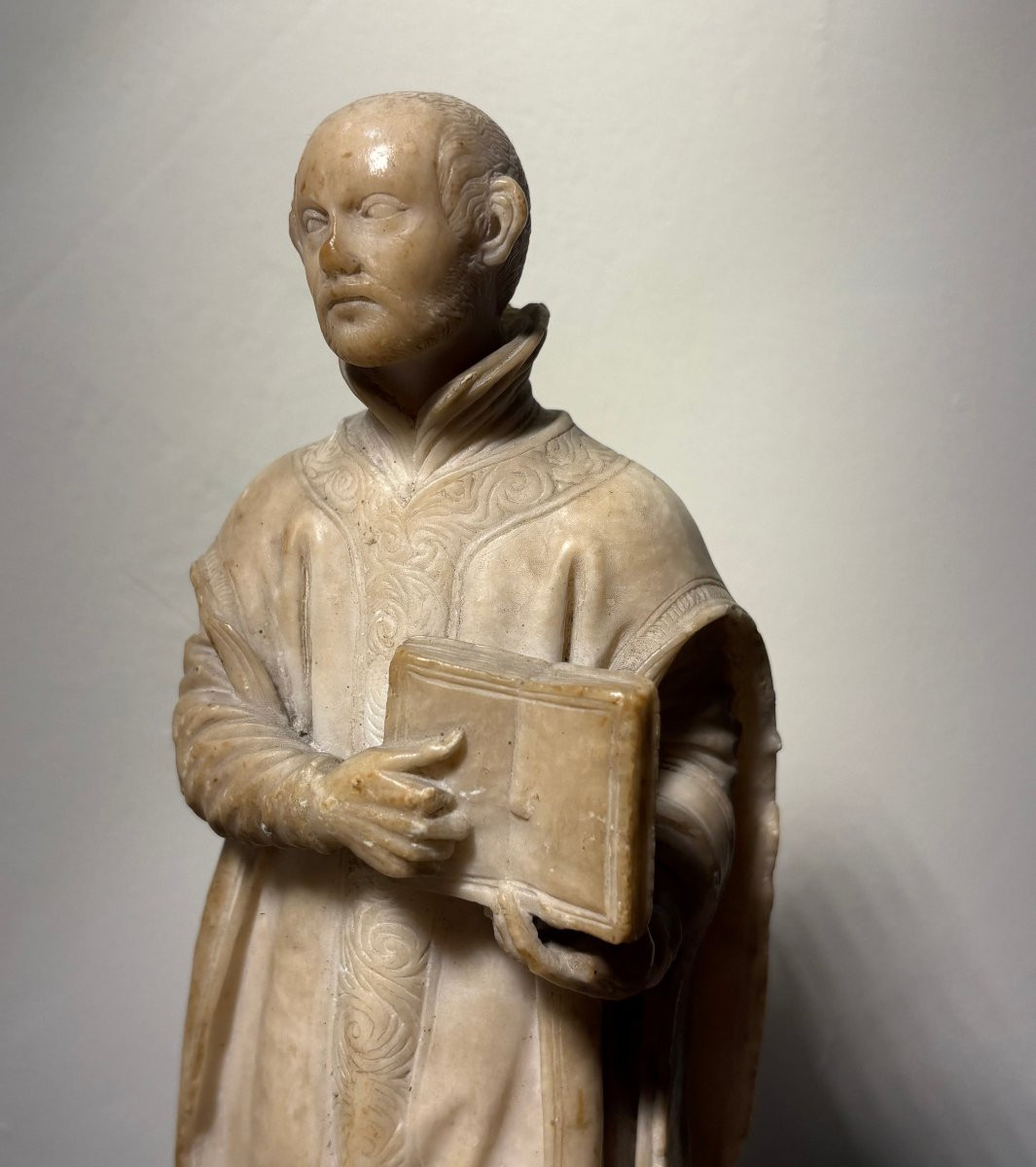
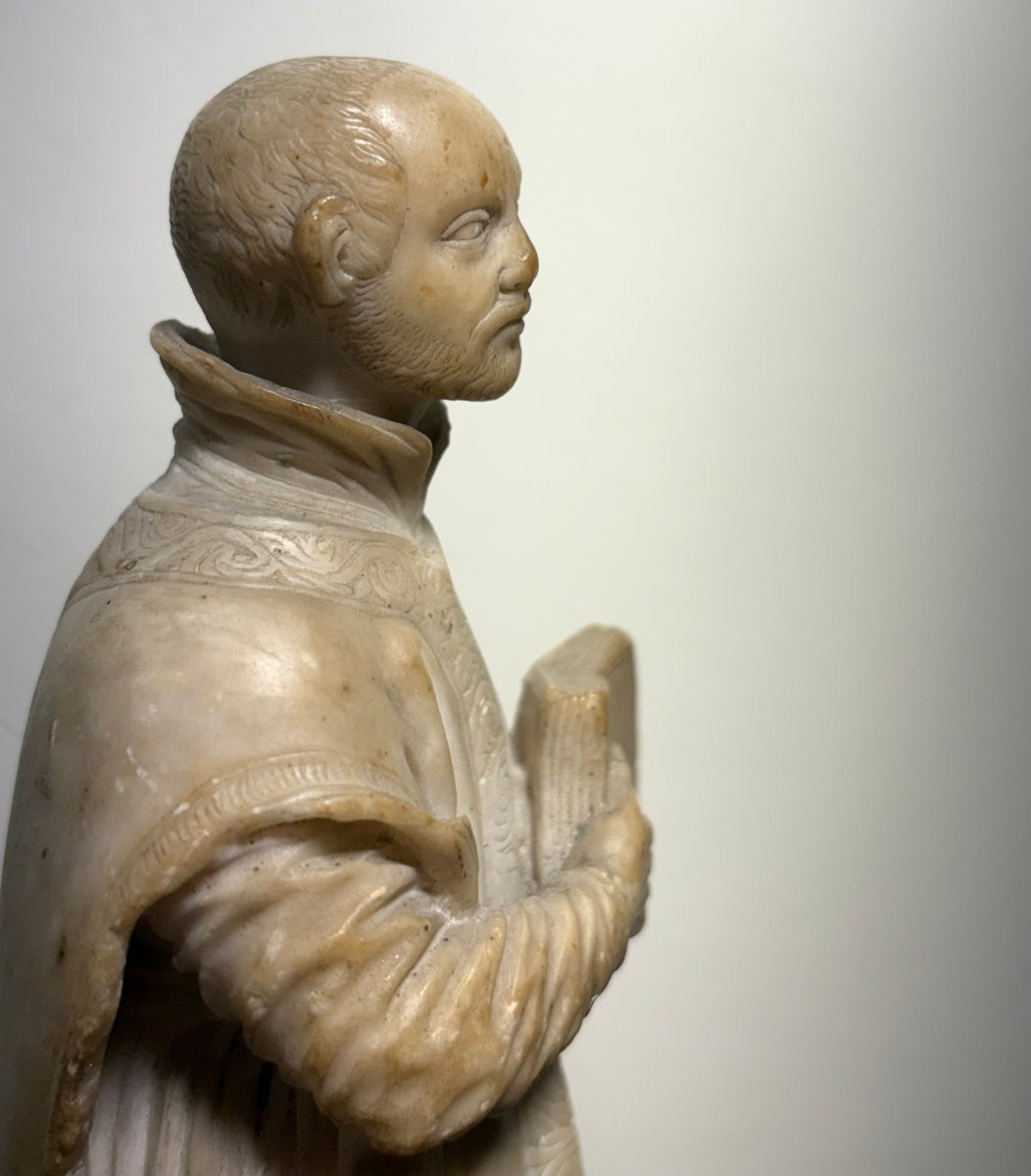
Alabaster sculpture depicting Saint Ignatius of Loyola, Italian Baroque workshop, first half of the 17th century.
Saint Ignatius of Loyola (1491–1556) was a Spanish religious figure and soldier, founder of the Society of Jesus (the Jesuits).
At age 30, Ignatius was a knight of the Royal Court of Spain. Success, fame, and honors were the values of his life. Then, during the siege of Pamplona, a cannonball seriously wounded him in the leg. He underwent two operations followed by a long convalescence, during which he began reading sacred texts, which radically changed his outlook, leading him on a profound inner journey. In 1540, he founded the Society of Jesus (approved by Pope Paul III), a religious order characterized by strict discipline, strong missionary zeal, and a strong emphasis on education.
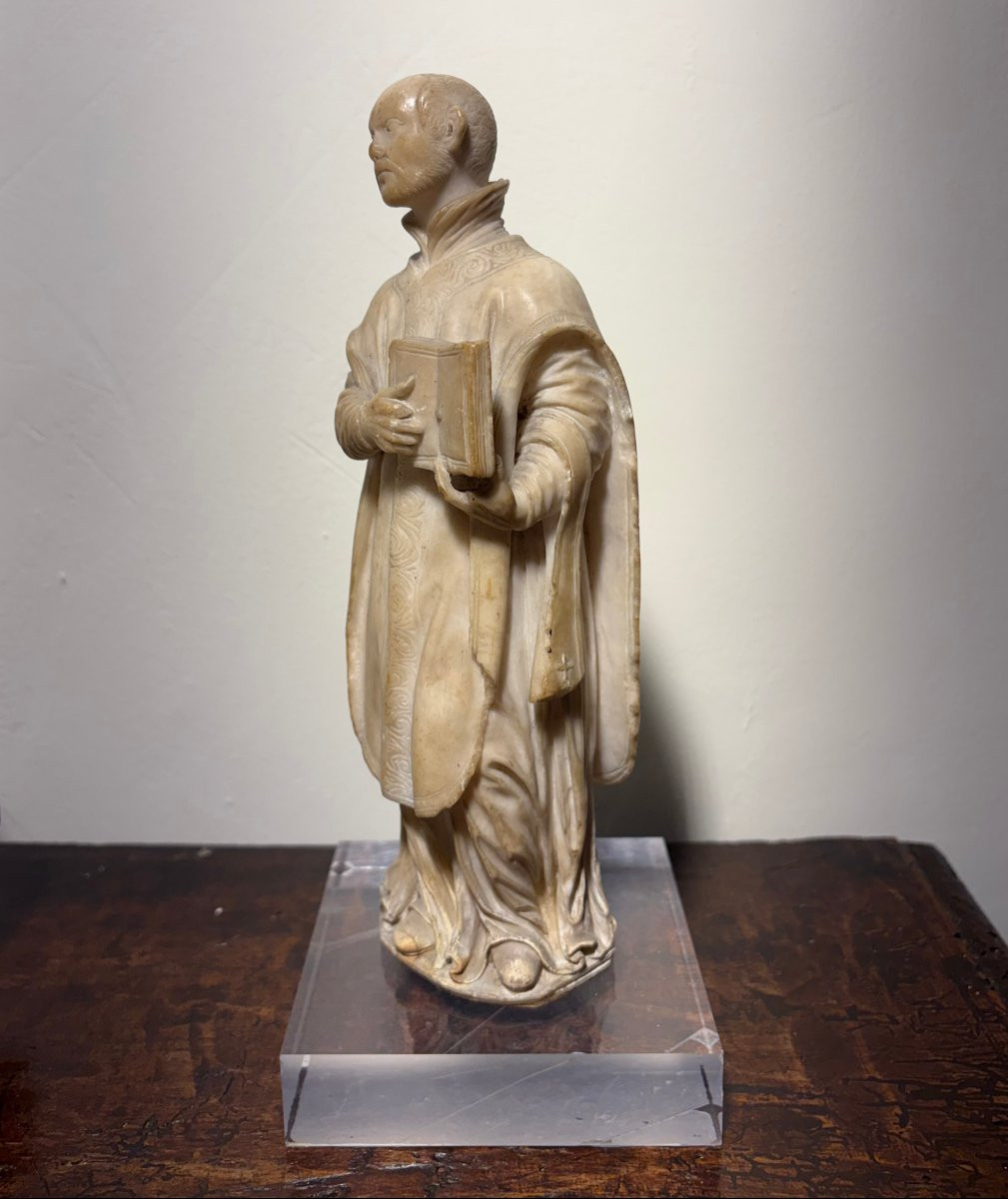
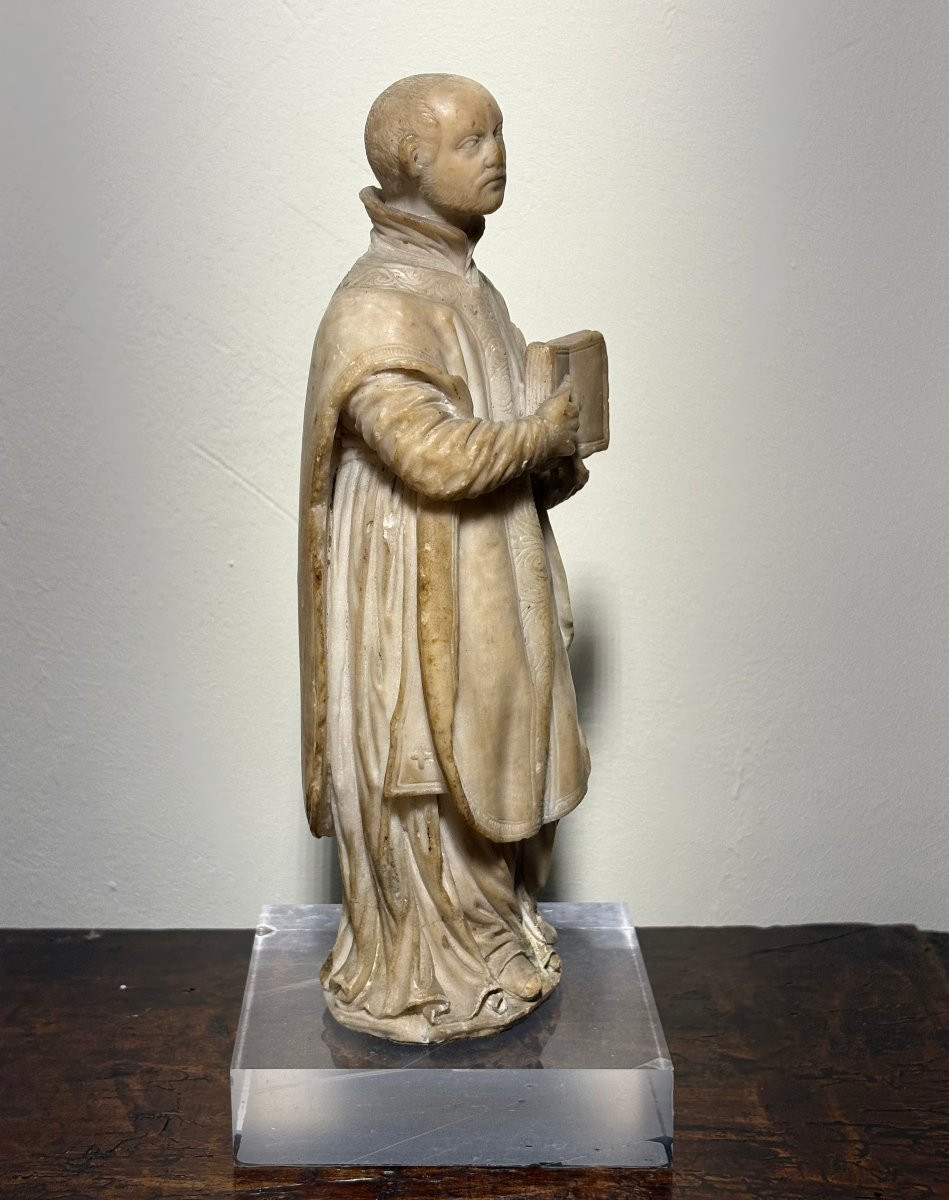
Devotion to St. Ignatius of Loyola in Italy officially began in 1622, the year of his canonization. Although the Jesuits had already been present and active since 1540, public veneration of the founder took off on a national level after the official proclamation of his sainthood by Pope Gregory XV. In fact, as early as 1609, the year of his beatification, the Society of Jesus was already engaged in the production of imagery to accelerate the canonization process as much as possible: the saint is almost always portrayed with a book, representing either the Constitutions of the Jesuit Order or the Spiritual Exercises; he typically wears a cassock with a high collar (typical of the order) and sometimes a chasuble or a cloak over it; he is often depicted with partial baldness and a short beard, based on historical portraits that sought to capture his actual features.
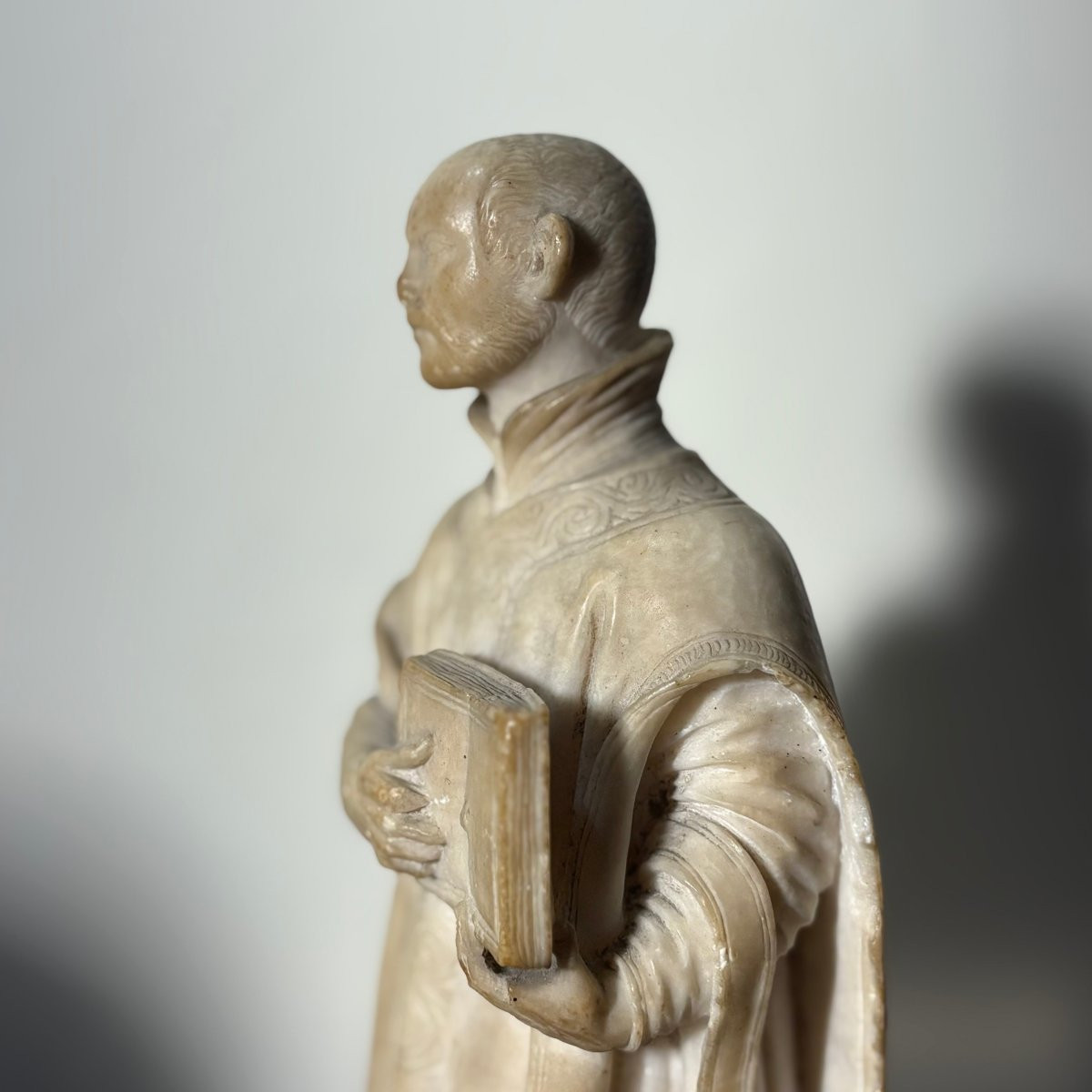
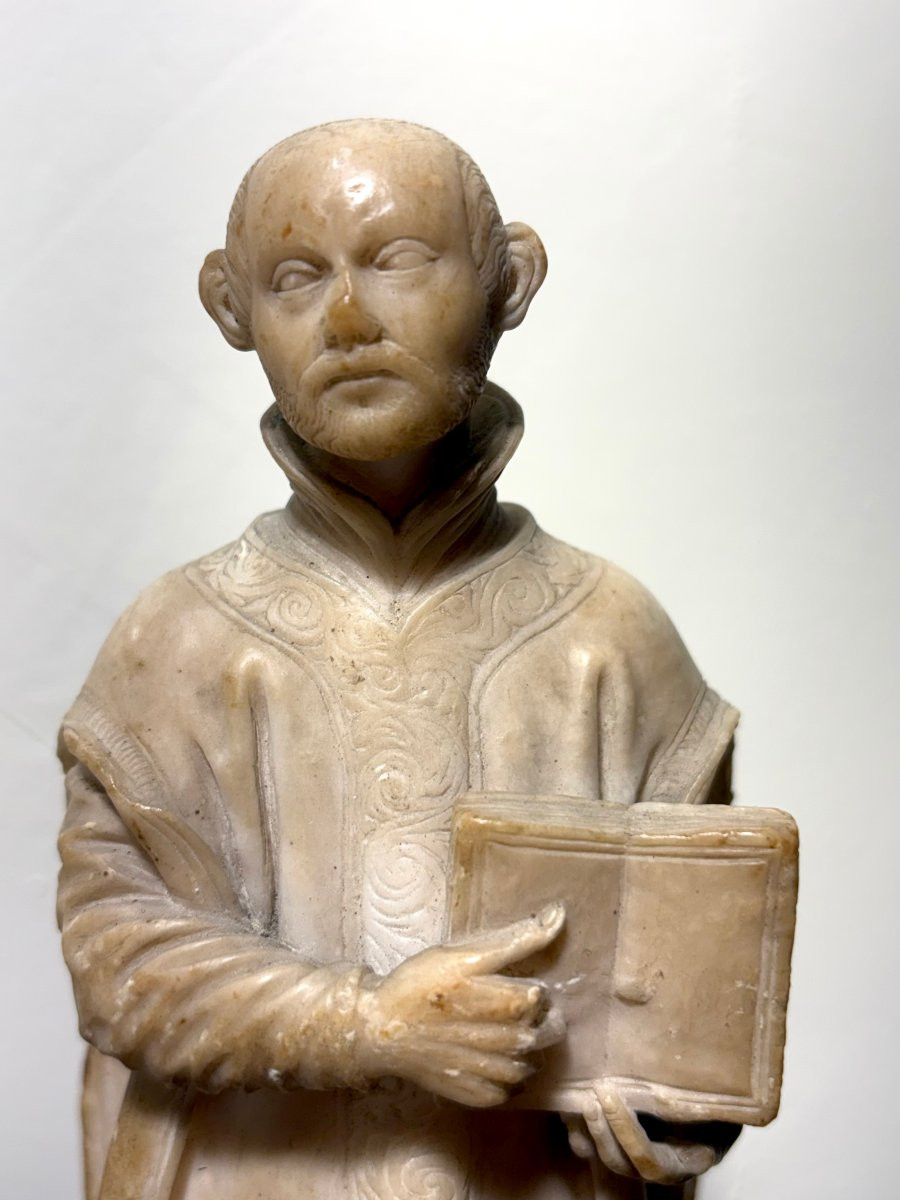
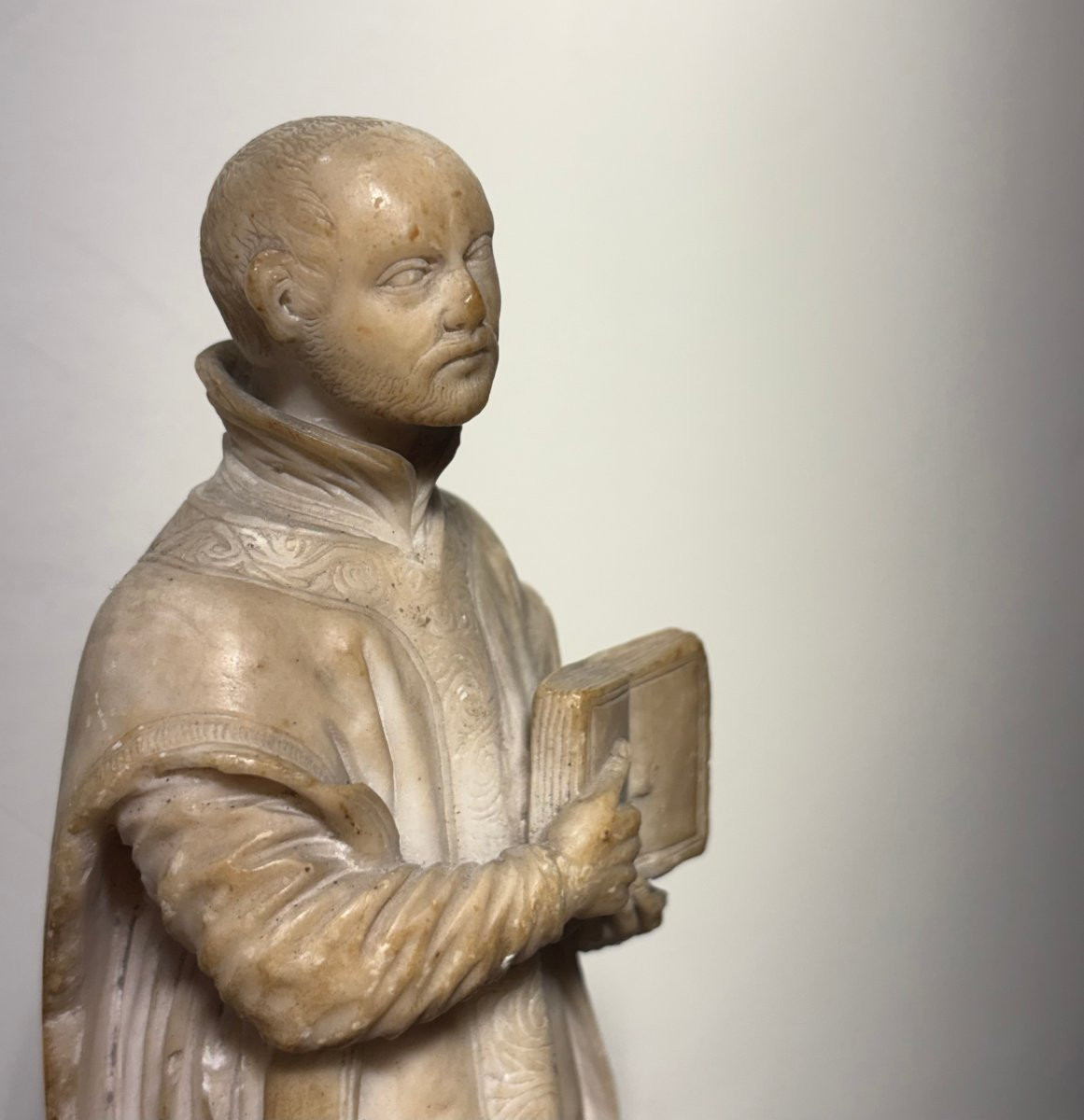
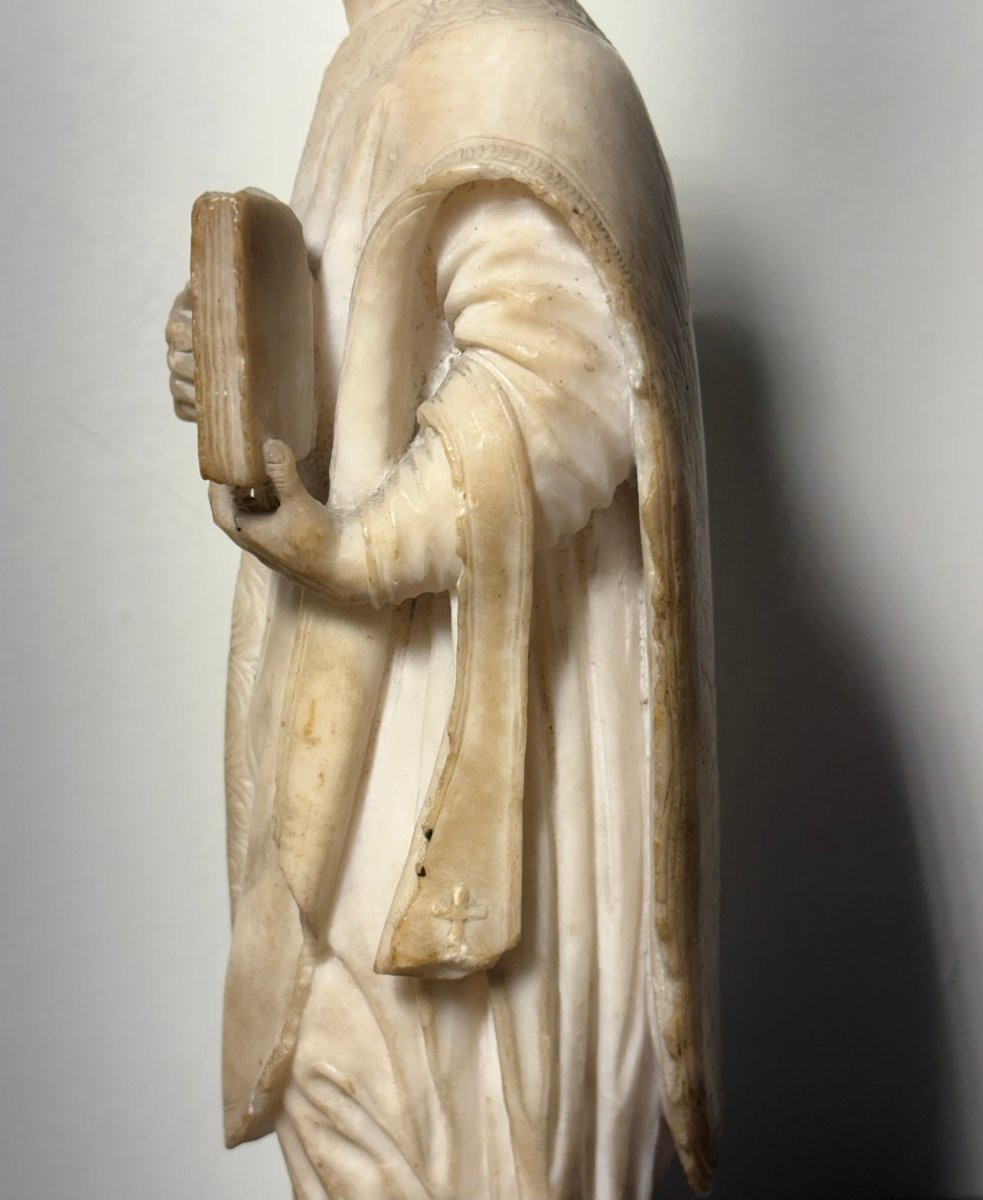
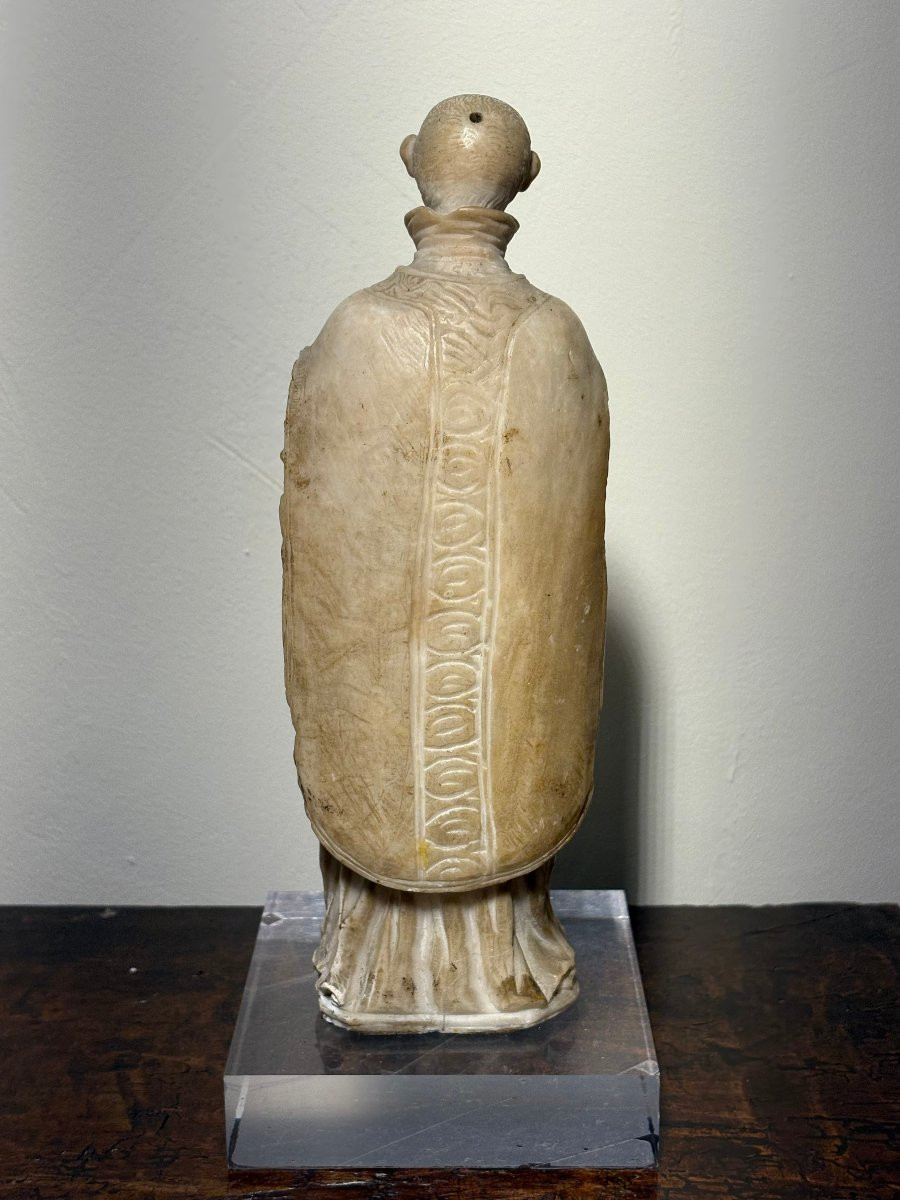
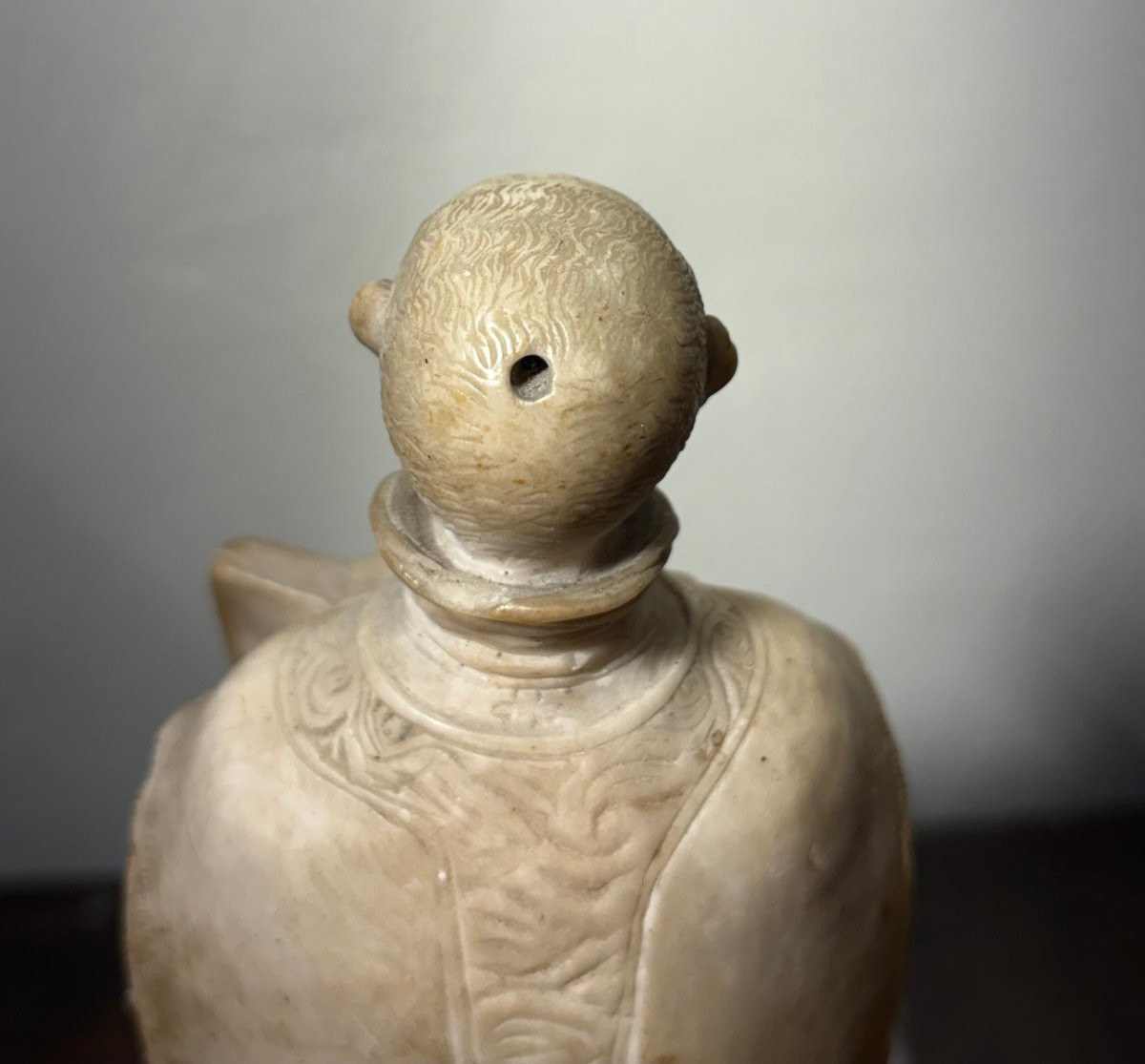
Our sculpture depicts the saint standing, with his left hand holding the book and his right pointing to it. There are no flowing drapery folds or the gestural style typical of the mature Baroque period, suggesting a date in the first half of the 17th century; instead, what stands out is the composure, the refinement, the geometric modeling of the round head from which two tiny ears emerge, the attention to every minute detail, the facial features, the beard, the hair, and the embroidery on the robe. This is undoubtedly one of those small masterpieces created for private devotion, commissioned by a wealthy and demanding devotee.
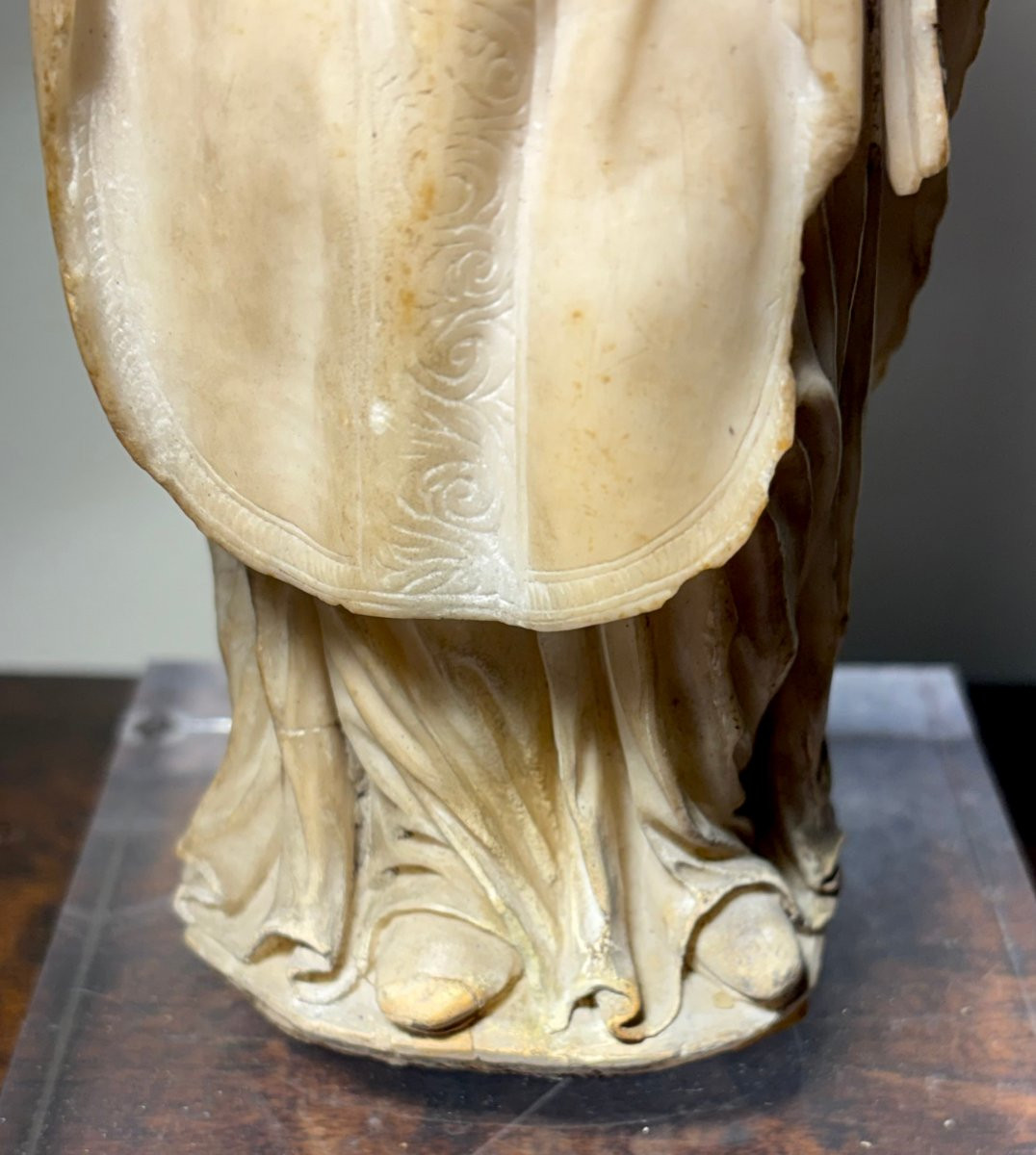
Very good condition, minor signs of age.
Dimensions
H 22.5 cm
W 8 cm
D 7 cm
More HD photos in my website: https://internationalantiques.eu/prodotto/17th-italian-baroque-alabaster-sculpture-of-saint-ignatius-of-loyola/
Alabaster sculpture depicting Saint Ignatius of Loyola, Italian Baroque workshop, first half of the 17th century.
Saint Ignatius of Loyola (1491–1556) was a Spanish religious figure and soldier, founder of the Society of Jesus (the Jesuits).
At age 30, Ignatius was a knight of the Royal Court of Spain. Success, fame, and honors were the values of his life. Then, during the siege of Pamplona, a cannonball seriously wounded him in the leg. He underwent two operations followed by a long convalescence, during which he began reading sacred texts, which radically changed his outlook, leading him on a profound inner journey. In 1540, he founded the Society of Jesus (approved by Pope Paul III), a religious order characterized by strict discipline, strong missionary zeal, and a strong emphasis on education.
Devotion to St. Ignatius of Loyola in Italy officially began in 1622, the year of his canonization. Although the Jesuits had already been present and active since 1540, public veneration of the founder took off on a national level after the official proclamation of his sainthood by Pope Gregory XV. In fact, as early as 1609, the year of his beatification, the Society of Jesus was already engaged in the production of imagery to accelerate the canonization process as much as possible: the saint is almost always portrayed with a book, representing either the Constitutions of the Jesuit Order or the Spiritual Exercises; he typically wears a cassock with a high collar (typical of the order) and sometimes a chasuble or a cloak over it; he is often depicted with partial baldness and a short beard, based on historical portraits that sought to capture his actual features.
Our sculpture depicts the saint standing, with his left hand holding the book and his right pointing to it. There are no flowing drapery folds or the gestural style typical of the mature Baroque period, suggesting a date in the first half of the 17th century; instead, what stands out is the composure, the refinement, the geometric modeling of the round head from which two tiny ears emerge, the attention to every minute detail, the facial features, the beard, the hair, and the embroidery on the robe. This is undoubtedly one of those small masterpieces created for private devotion, commissioned by a wealthy and demanding devotee.
Very good condition, minor signs of age.
Dimensions
H 22.5 cm
W 8 cm
D 7 cm
2 700 €
Period: 17th century
Style: Renaissance, Louis 13th
Condition: Excellent condition
Material: Alabaster
Width: 8
Height: 22,5
Depth: 7
Reference (ID): 1766897
Availability: In stock
Print