

Mons, 1772, Silver Chocolate Pot, Joseph Philippe Ghienne, Louis XV
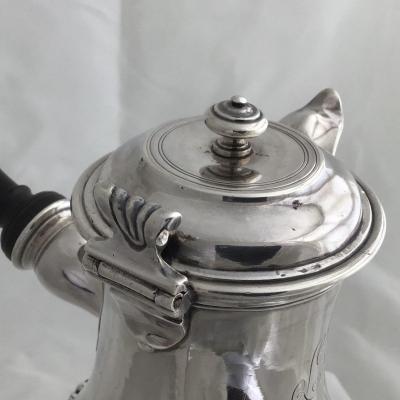
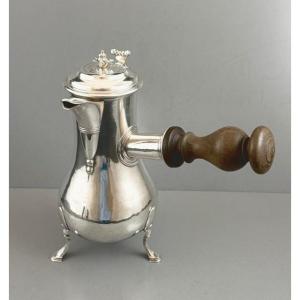
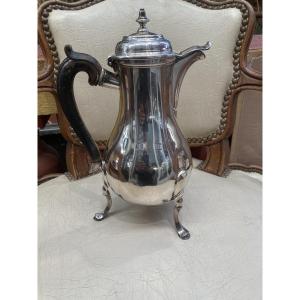
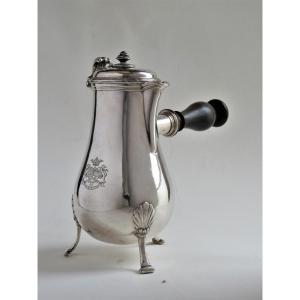
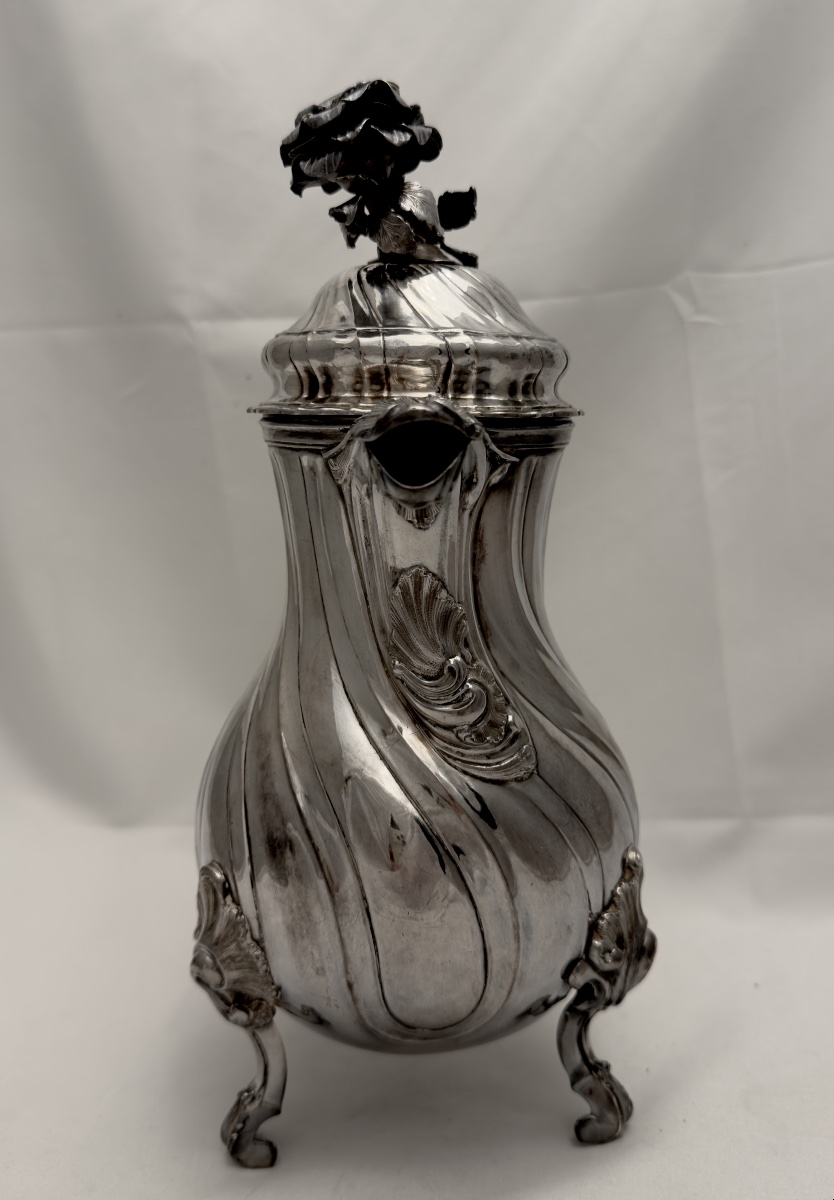
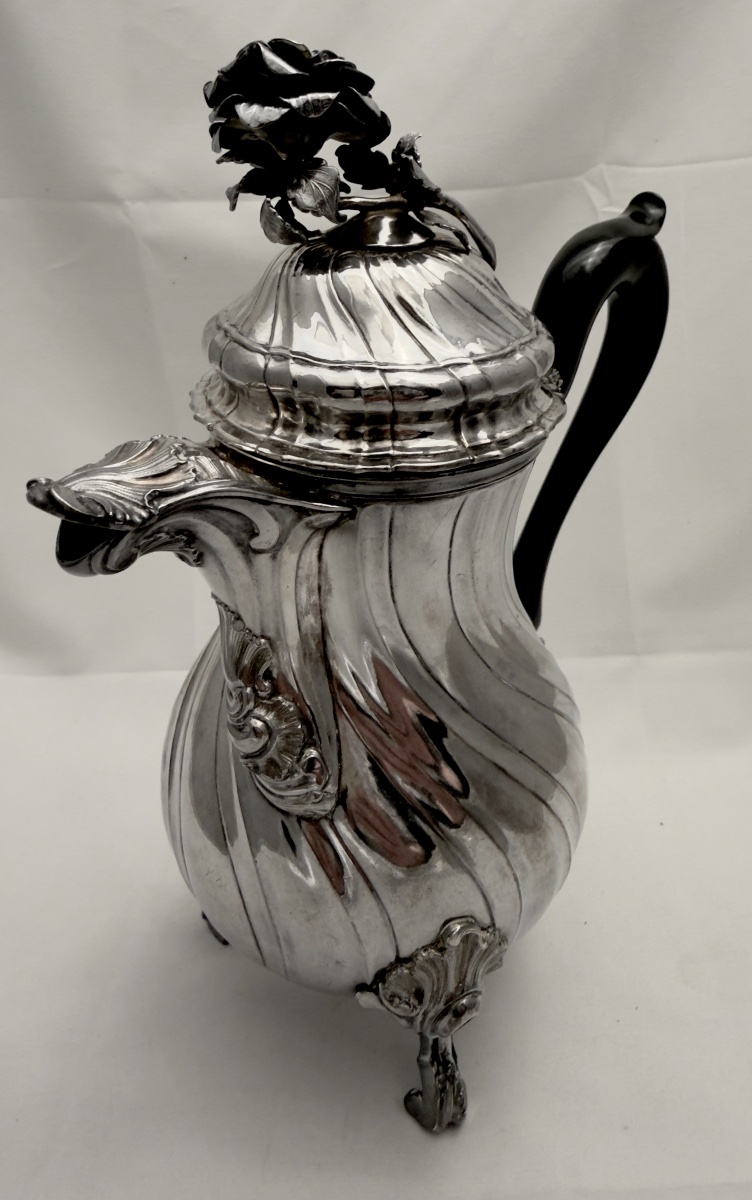
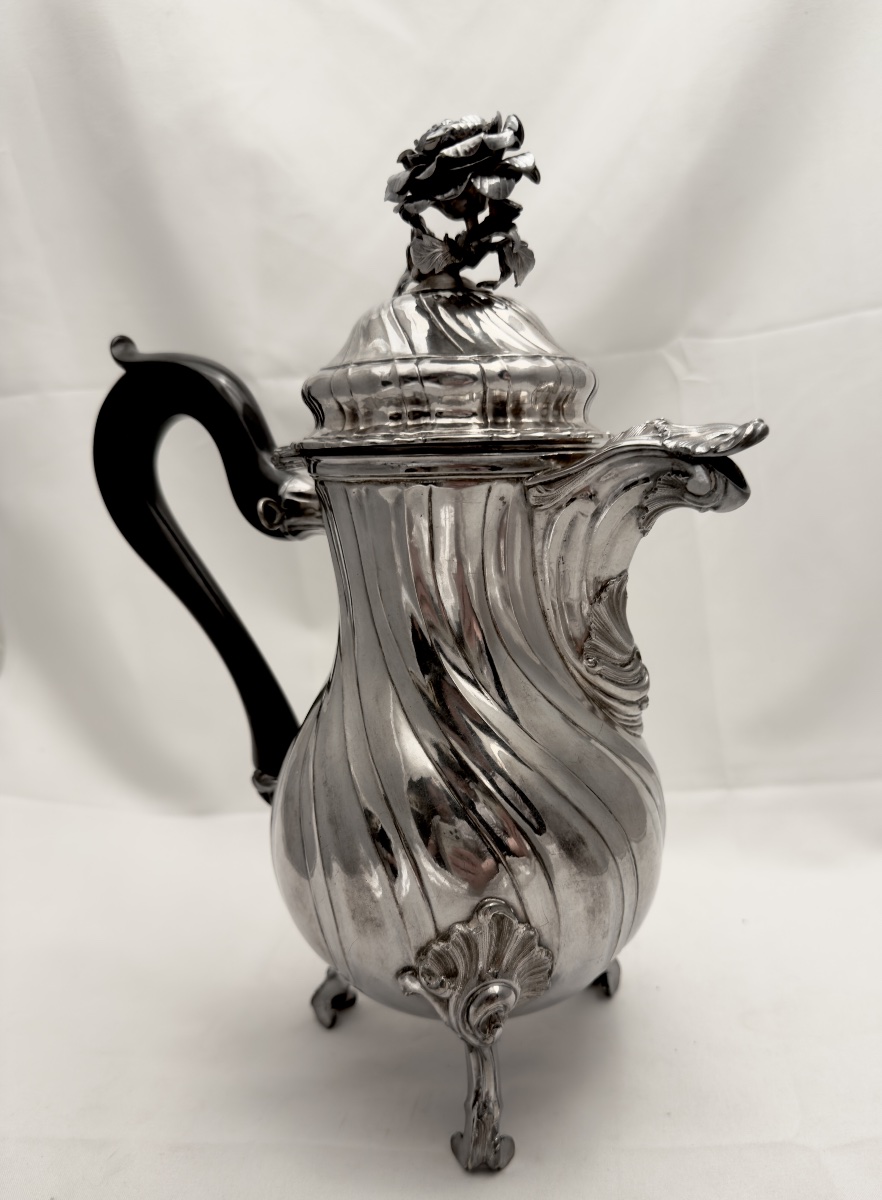
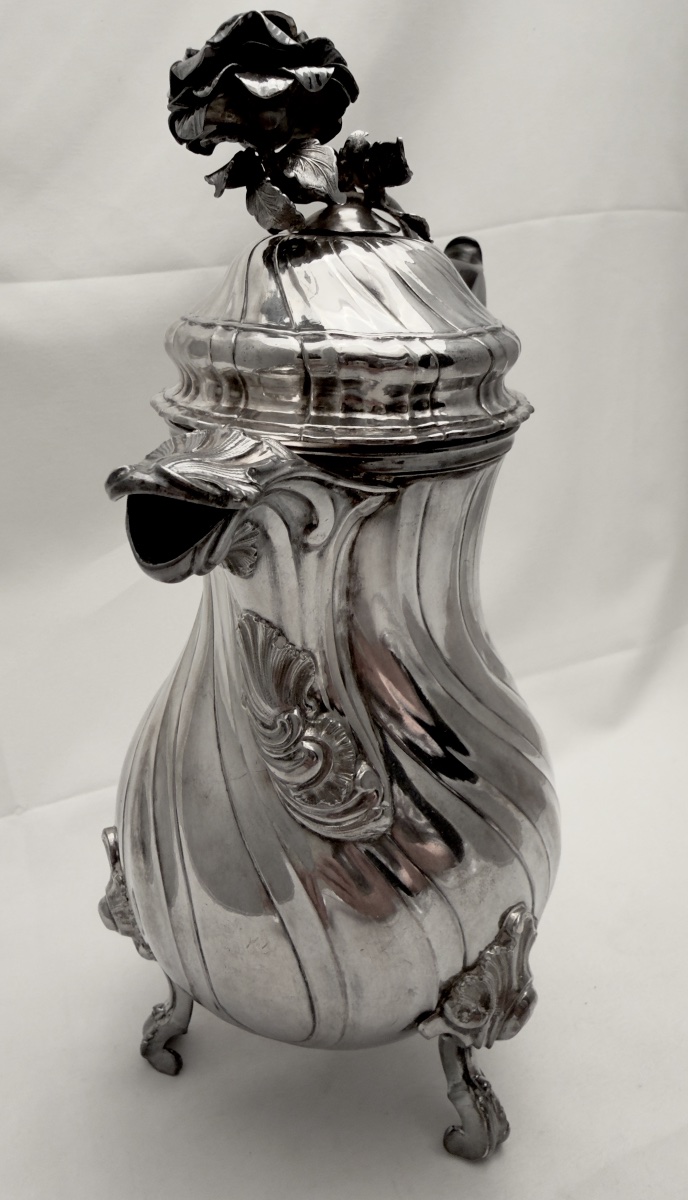
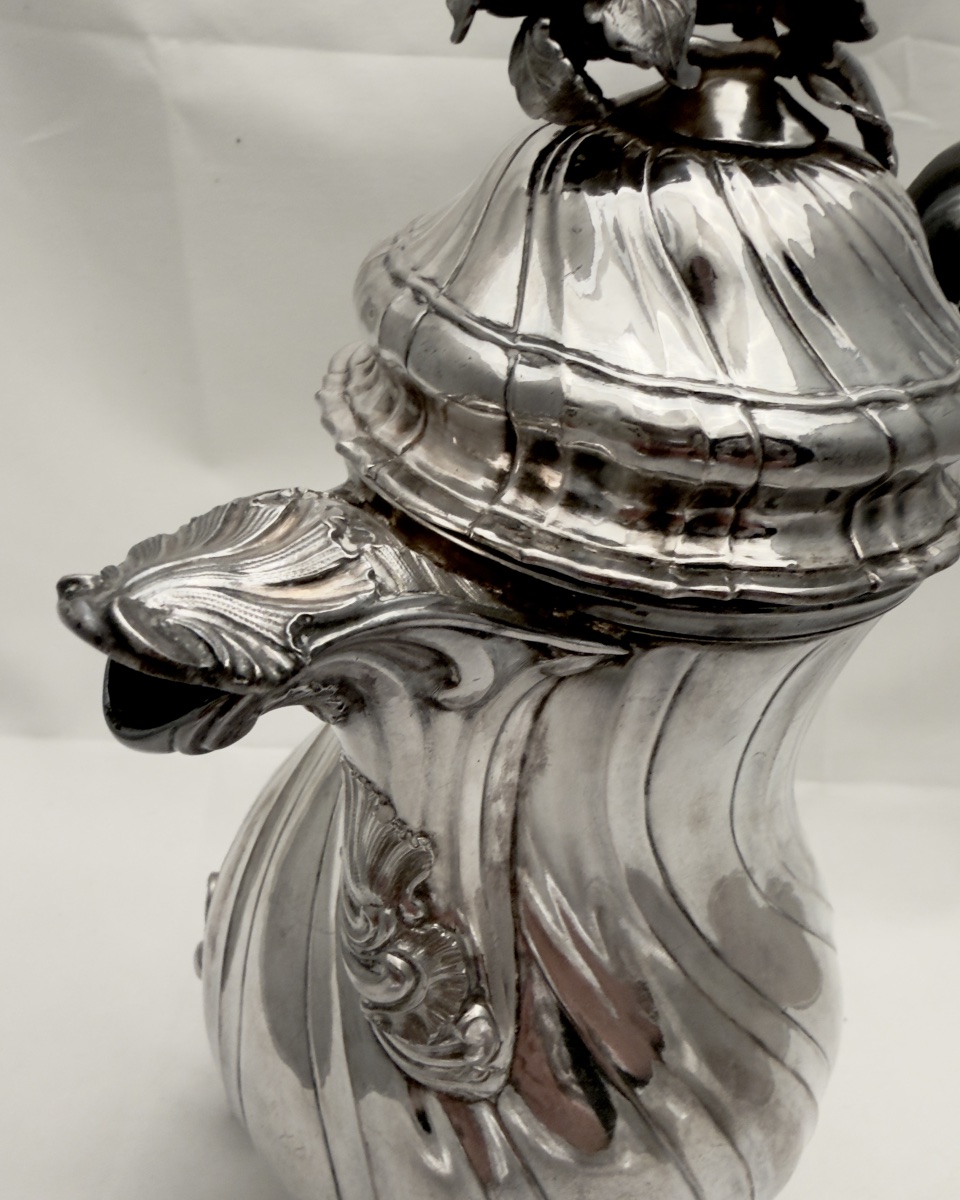
A beautiful solid-silver chocolate pot from Mons, crafted in 1772 by Joseph-Philippe Ghienne, a master silversmith in Mons.
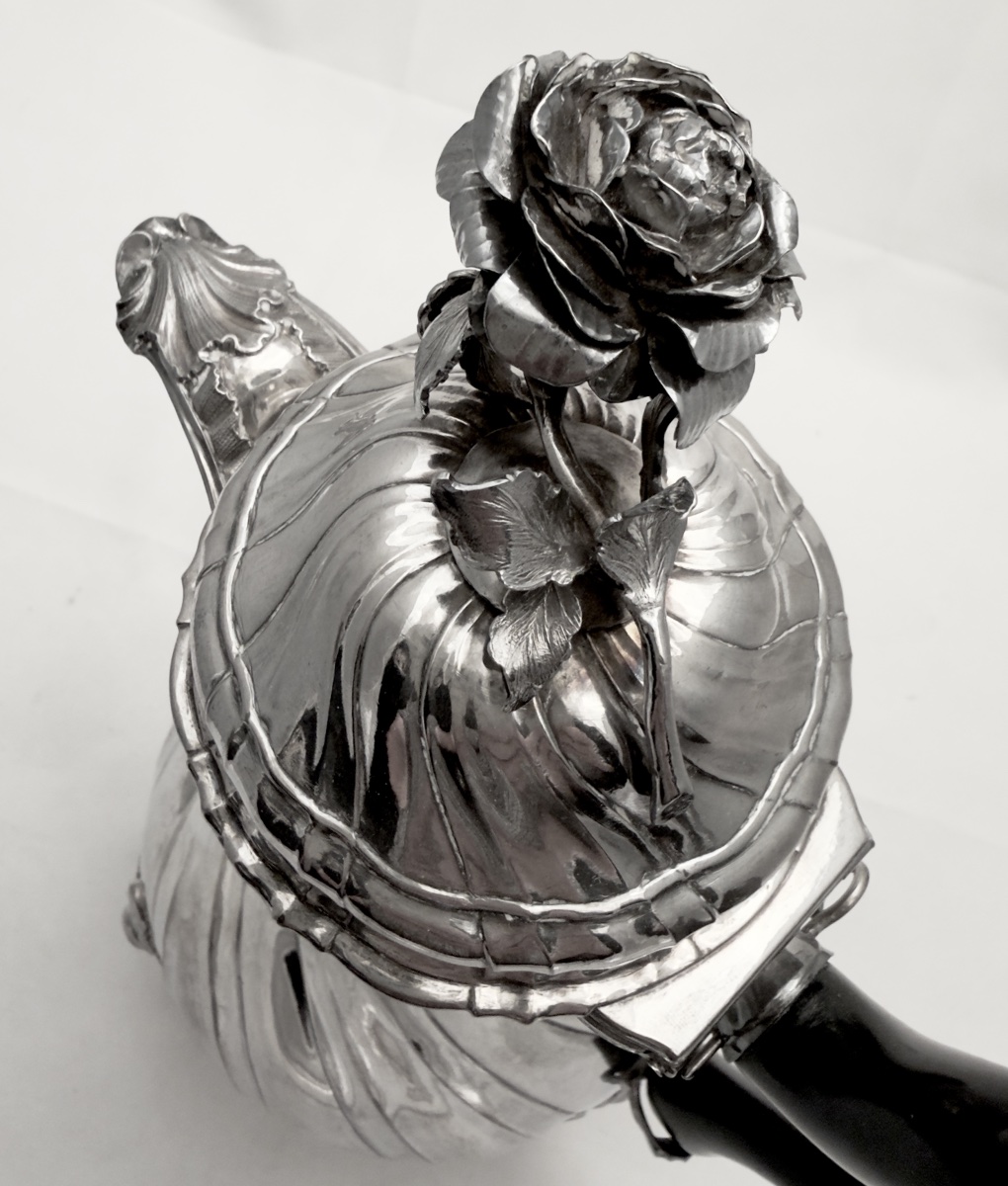
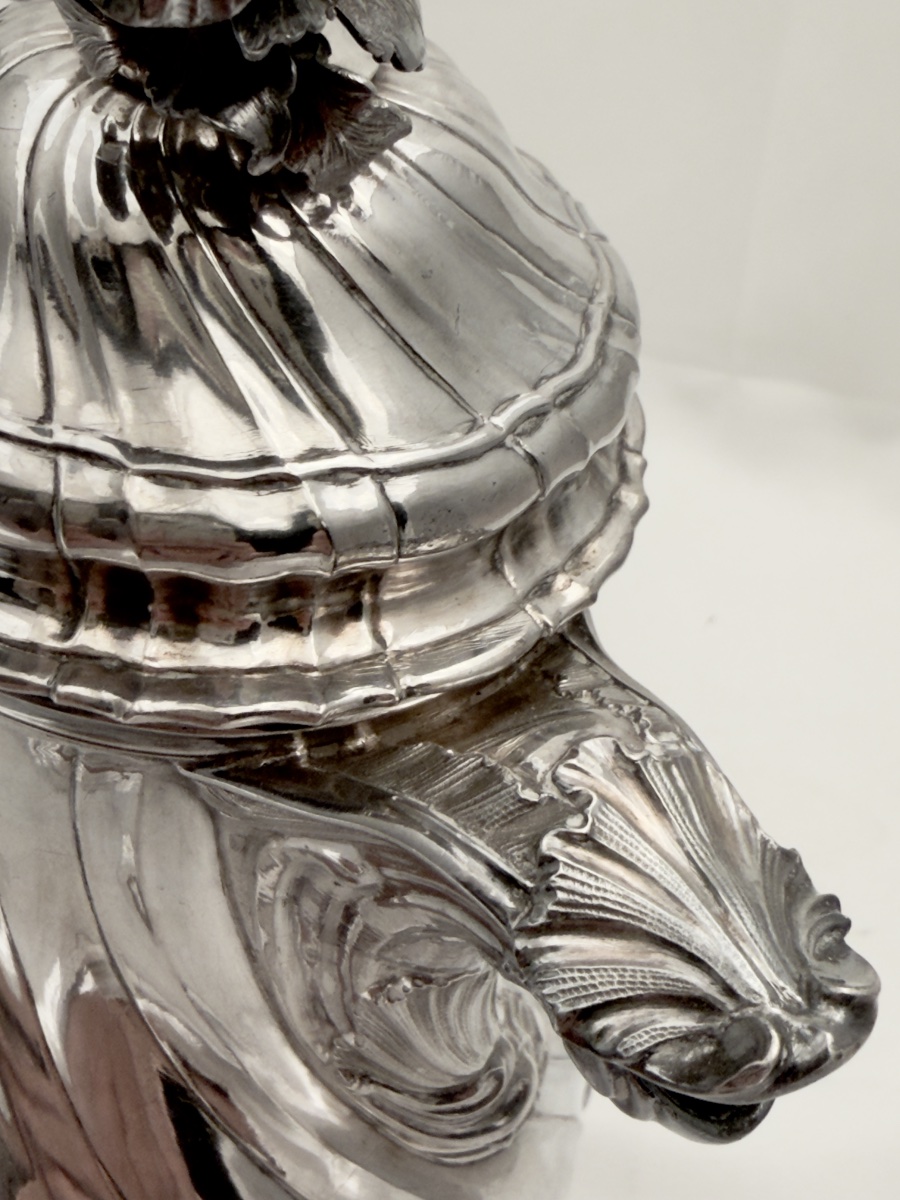
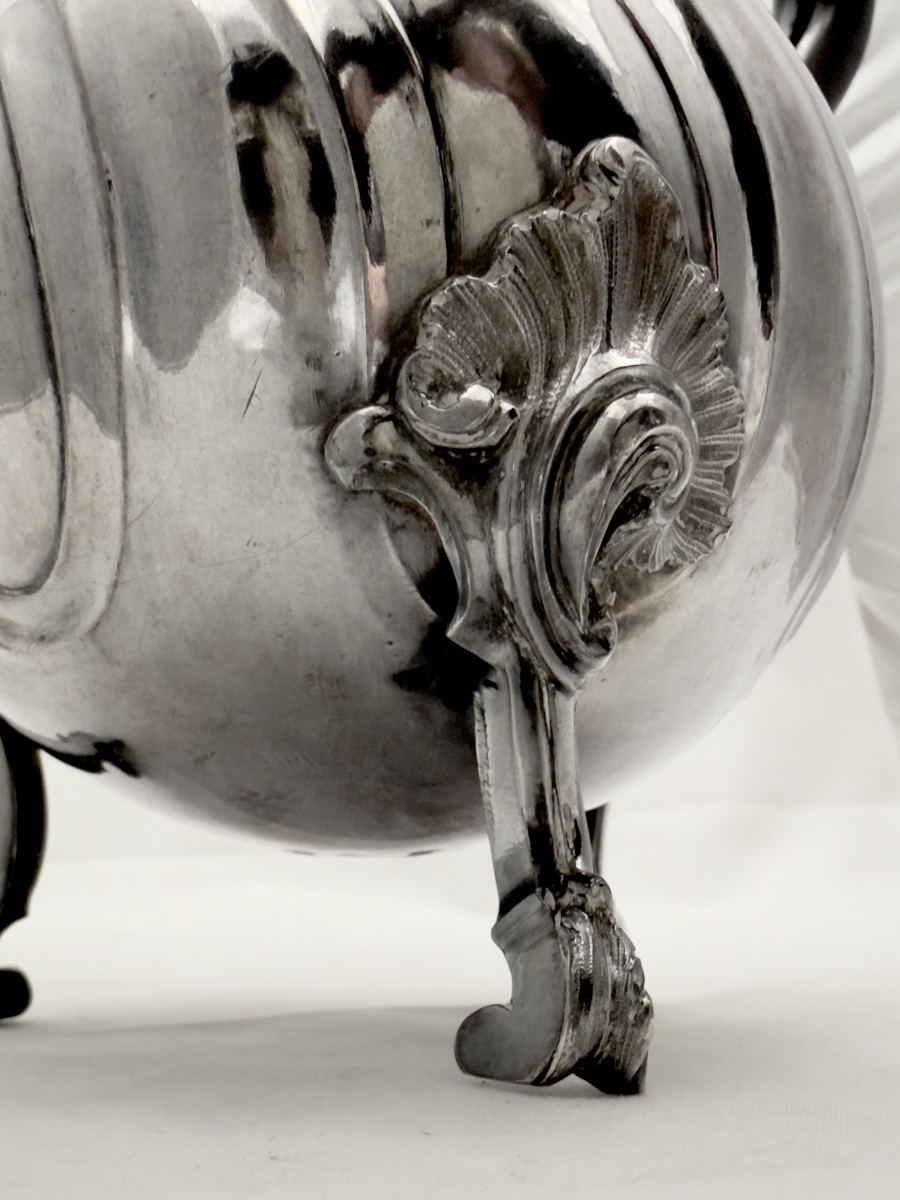
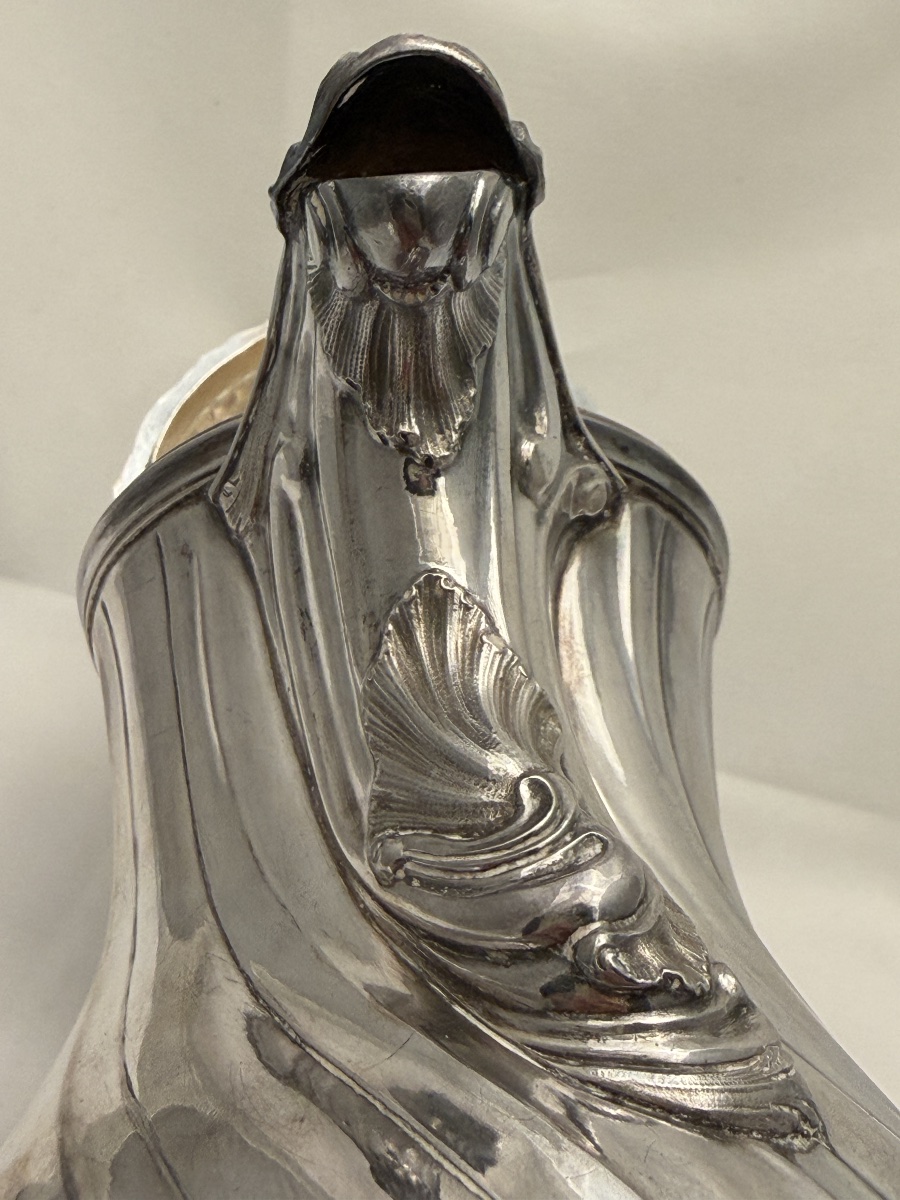
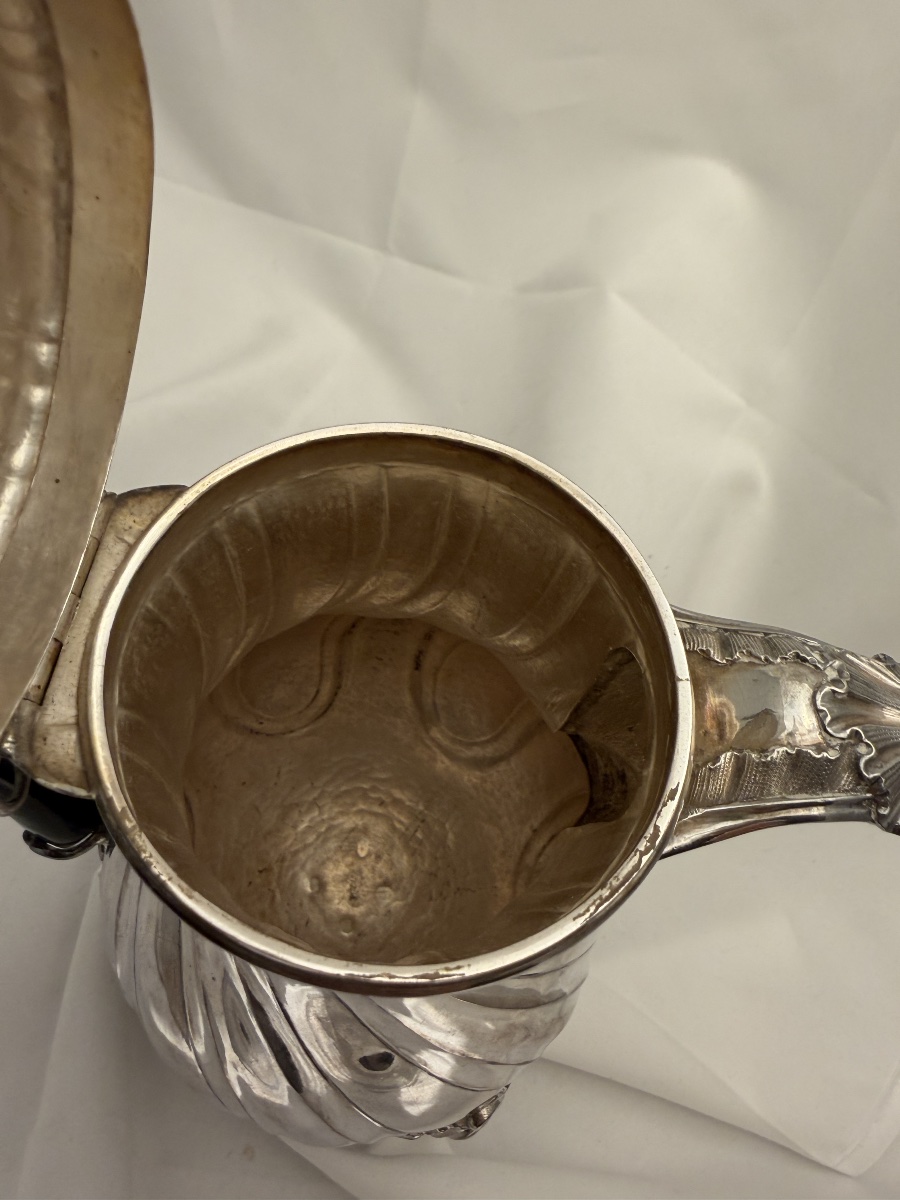
Pear-shaped, it rests on three feet with leaf-motif scrolls and features a body with curving ribs that extend onto the lid. The spout is richly decorated with rocaille, shells, and foliage and follows the scalloped curve of the body. The elegantly curved, blackened wooden handle is positioned on the opposite side from the spout.
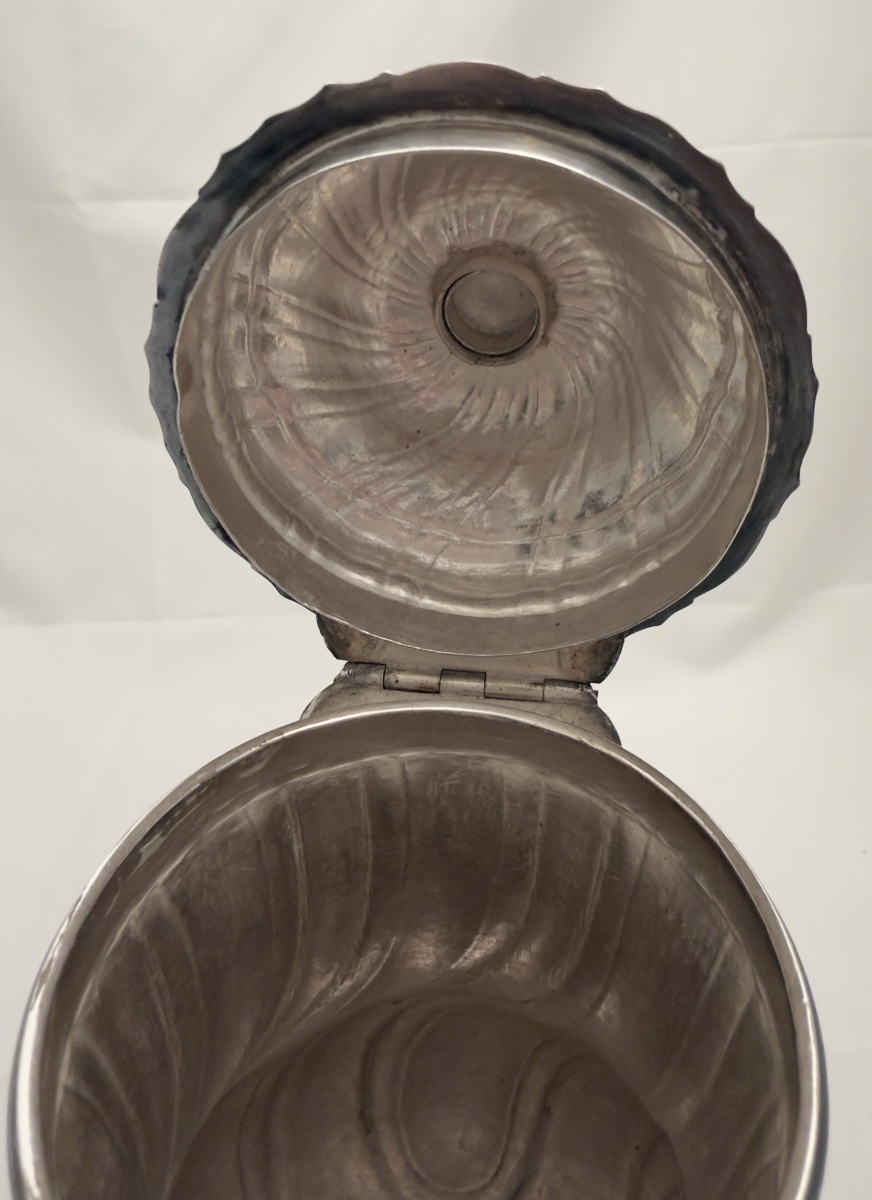
The lid is crowned with a remarkable rose, complete with its stem and natural-looking leaves, which serves as a stopper for the opening intended for the whisk. This allowed the chocolate to be stirred vigorously without uncovering the chocolate pot, in order to keep the drink hot and achieve the desired foam. This opening is one of the characteristic features that distinguishes the chocolate pot from a coffee pot.
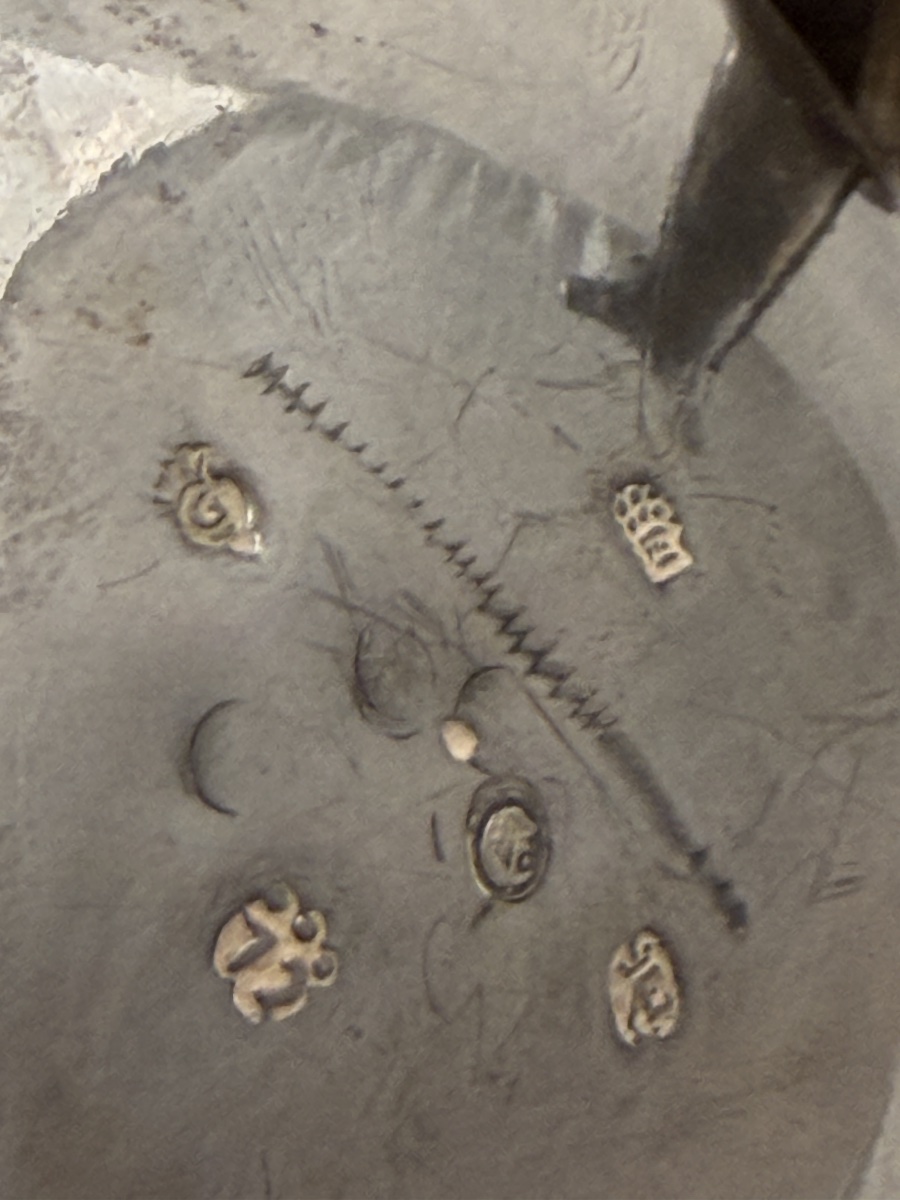
The hallmarks are stamped on the bottom and indicate that the piece was made in Mons in 1772.
Joseph-Philippe Ghienne (1722–1797) was admitted as a master goldsmith in Mons on September 16, 1751, after presenting a coffee pot as his masterpiece. He practiced his craft for nearly half a century, was appointed dean of the goldsmiths in 1775, and served in 1794 as an elected member of the Grand Council of the City of Mons. Married three times, he died in Mons on January 30, 1797.
His brother, Alexandre Ghienne, was one of the leading sculptors in Mons during the second half of the 18th century and played a direct role in the creation of several of the city’s iconic monuments.
In 1769, he created the woodcarvings for the Notre-Dame de Tongres Chapel at the Collegiate Church of Sainte-Waudru. He also worked on other sculptural elements associated with the collegiate church.
His name is best known in connection with the famous Golden Carriage of Mons. Between 1779 and 1782, Alexandre Ghienne and F.-J. Midavaine created this large processional carriage made of carved, painted, and gilded wood, intended to carry the shrine of Saint Waudru. Still housed at the collegiate church, the Car d’Or is used every year during the Trinity procession and is today one of the most famous symbols of the Doudou de Mons.
In 1780, Alexandre Ghienne also created the monumental pulpit of truth, carved from oak and partially gilded, for the Church of Saint-Nicolas-en-Havré in Mons, which is still preserved in the building.
The high regard in which he was held was evident even after the Revolution: in 1797, the administration of the department of Jemappes selected him among the artists called upon to participate in the identification and preservation of works from dissolved religious institutions. Although he ultimately declined this assignment, his selection attests to the prominent position he held at that time in Mons’s artistic circles.
Chocolate in the Southern Netherlands
In the 18th century, chocolate remained a luxury beverage. One of the earliest documented references to cocoa in the Southern Netherlands dates back to 1635, thanks to a preserved invoice from Baudeloo Abbey in Ghent. In 1679, the mayor of Zurich discovered hot chocolate in Brussels and found it such a remarkable curiosity that he brought the recipe back to Switzerland.
The chocolate consumed around 1772 was very different from our current preparations. It was not an instant powder dissolved in milk, but rather a cocoa paste made from roasted and ground beans, mixed with sugar and sometimes cinnamon, vanilla, or other spices.
A portion of this paste was mixed into a hot liquid (usually water) and then vigorously stirred using a whisk inserted through an opening in the lid. The whisk was quickly rotated between the palms to homogenize the mixture and, above all, to produce the abundant foam that was so highly prized at the time.
Since cocoa, sugar, and spices were imported and expensive commodities, chocolate remained for a long time the exclusive preserve of the aristocracy and the wealthy bourgeoisie. It is against this backdrop that we can understand the sumptuous silver chocolate pots crafted in the 18th century by the finest silversmiths of the Southern Netherlands.
Our example weighs 760 grams.
Period: 18th century
Style: Louis 15th - Transition
Condition: Excellent condition
Material: Sterling silver
Height: 26 cm
Reference (ID): 1808673
Availability: In stock