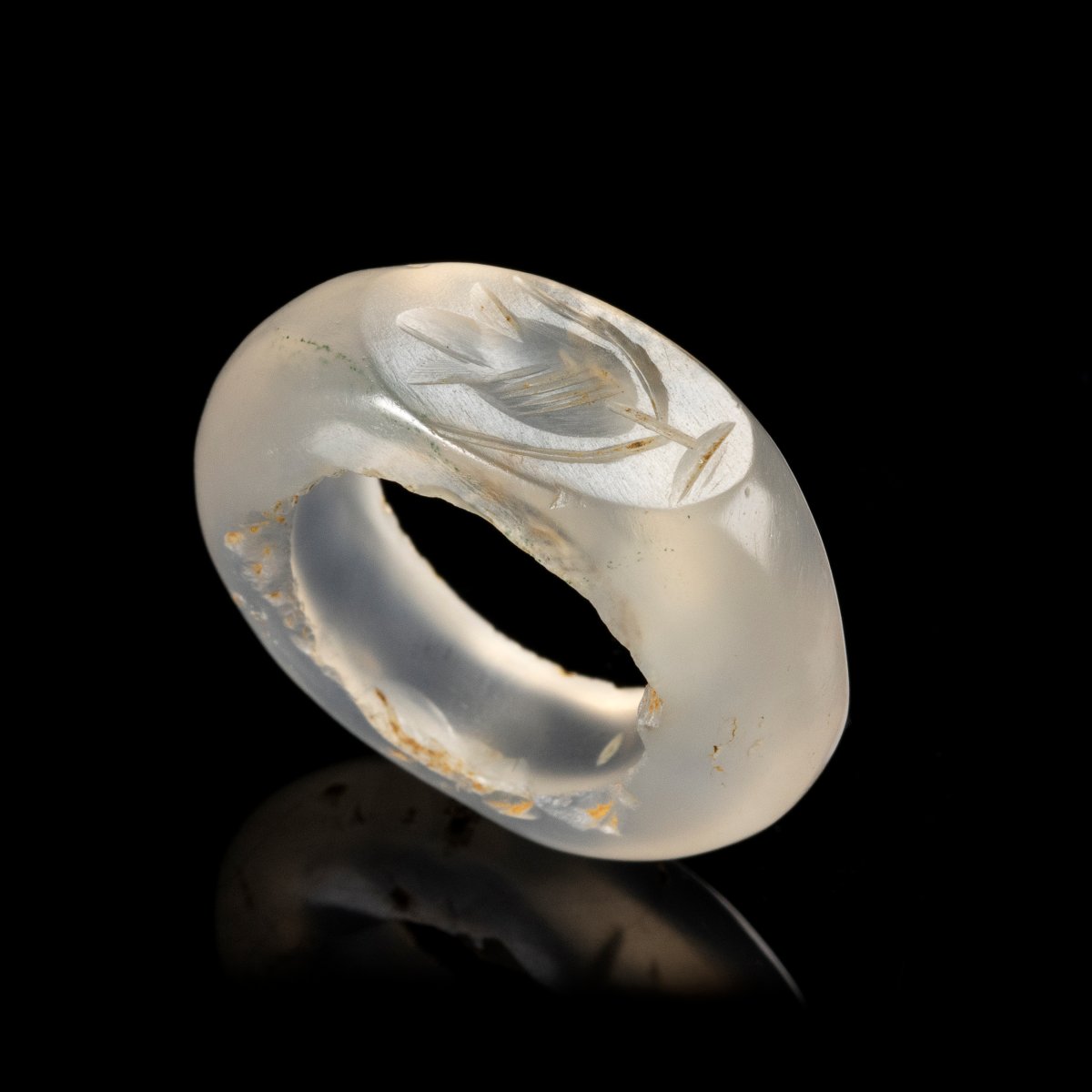
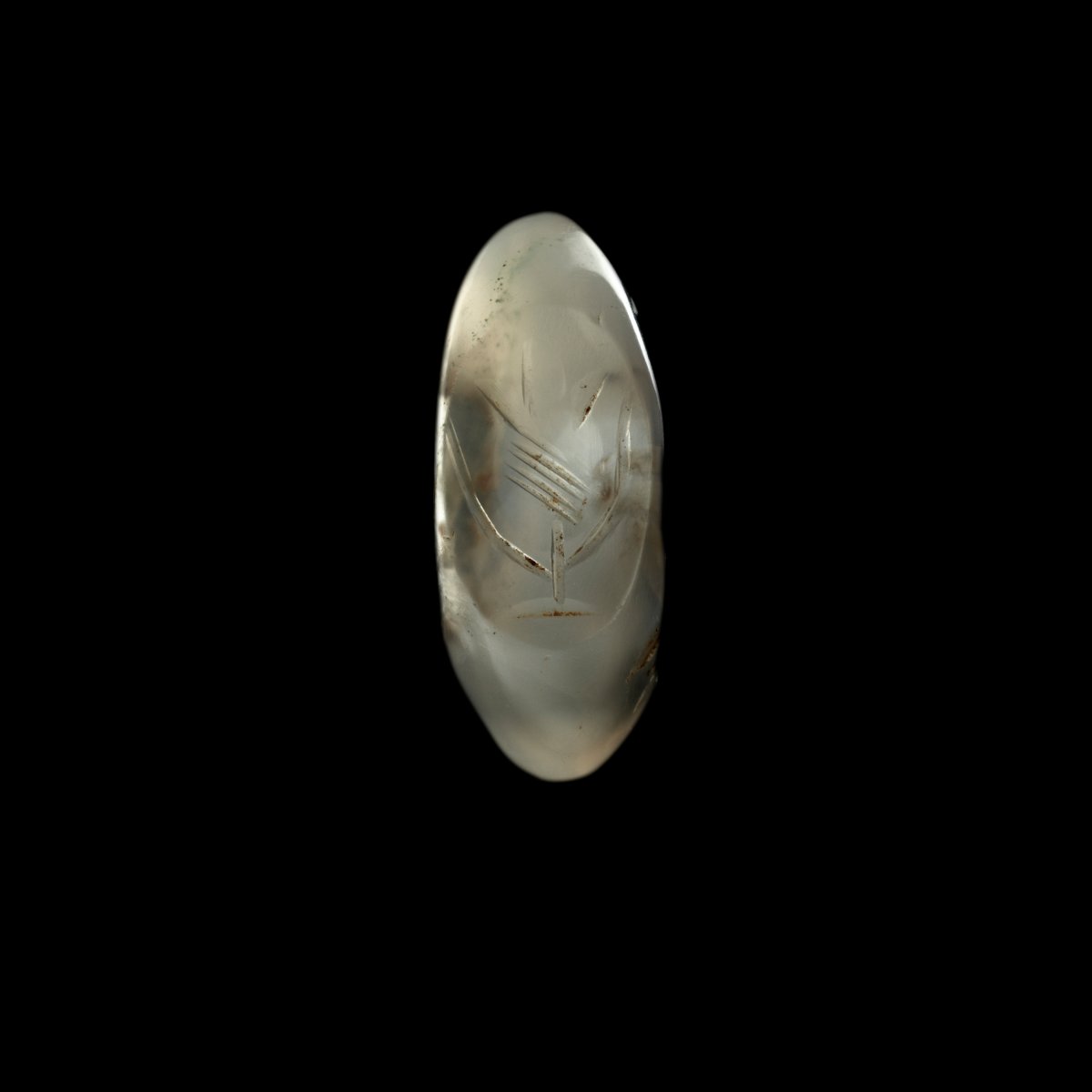


Sassanid Hololithic Signet Ring Made Of Chalcedony. Flower.
TDD 43 (US 2 / UK D)
Sassanid art, 4th–6th centuries
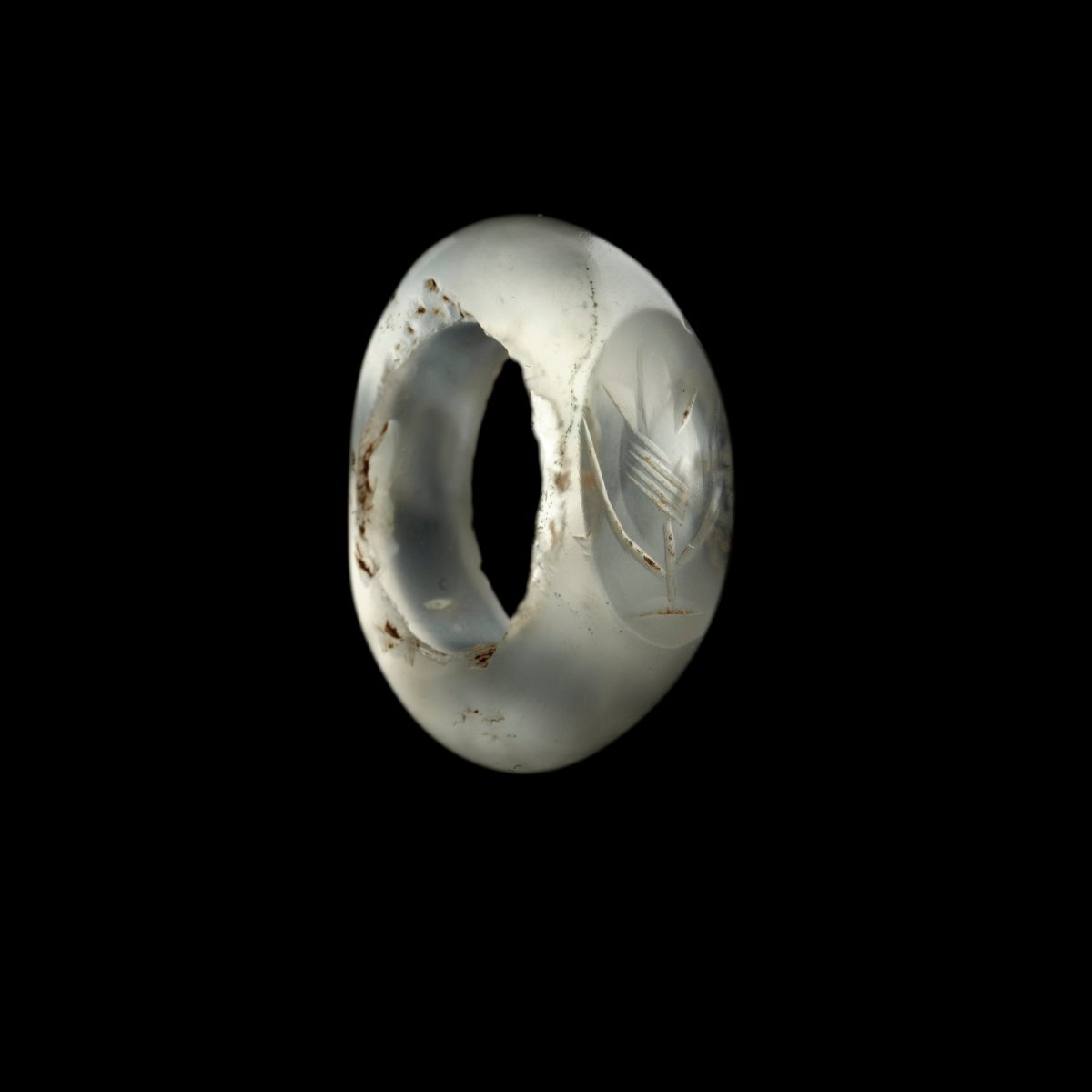
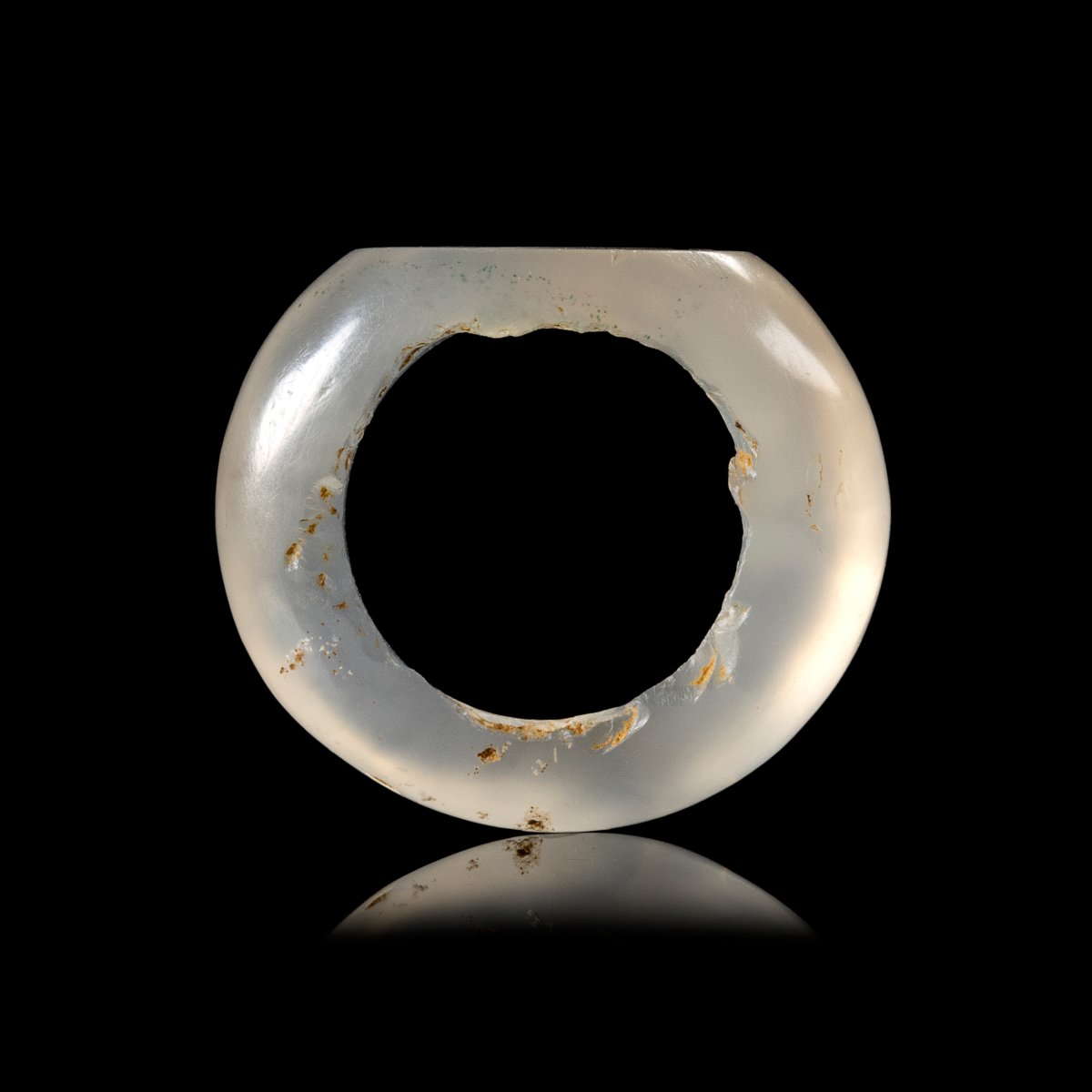
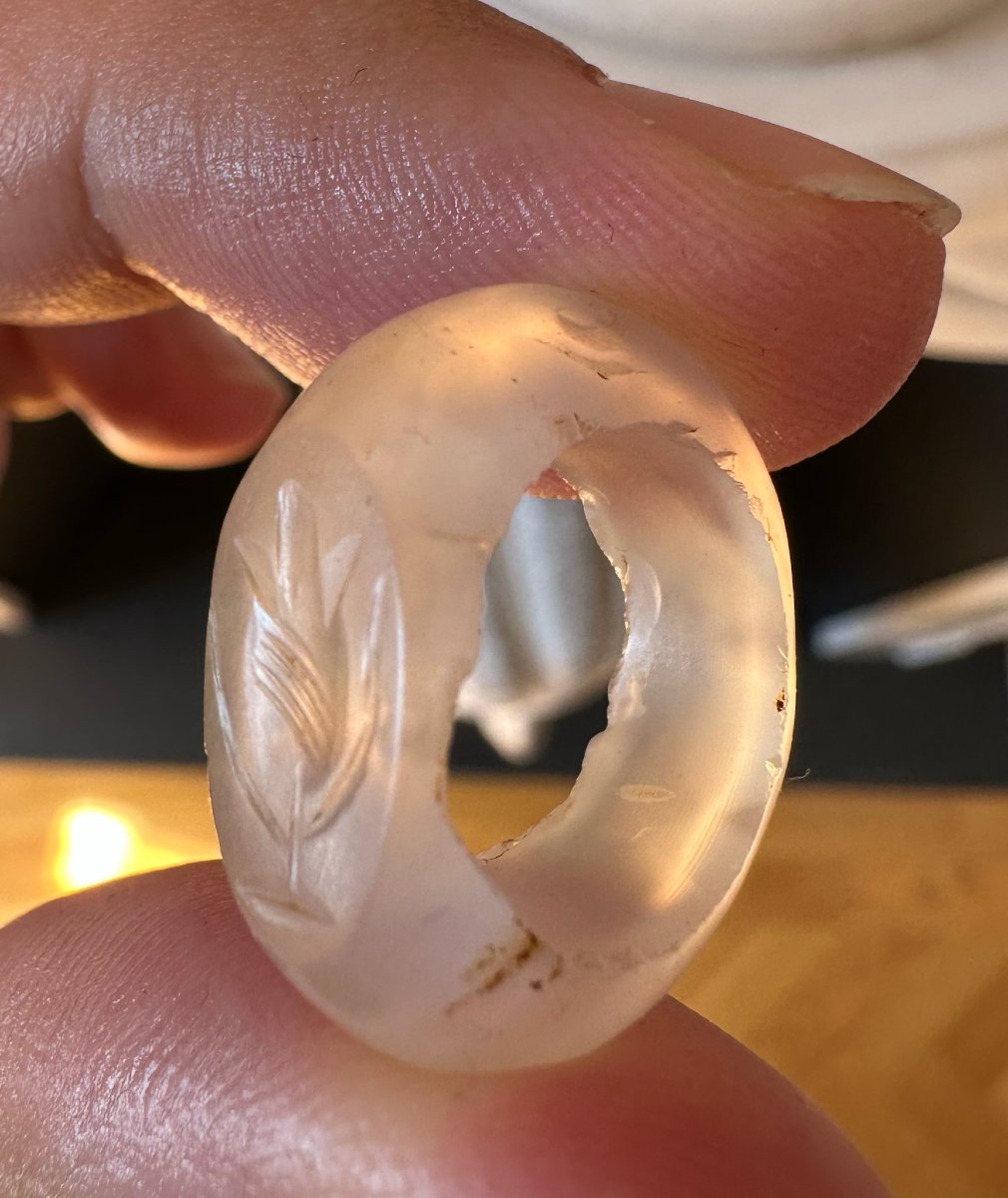
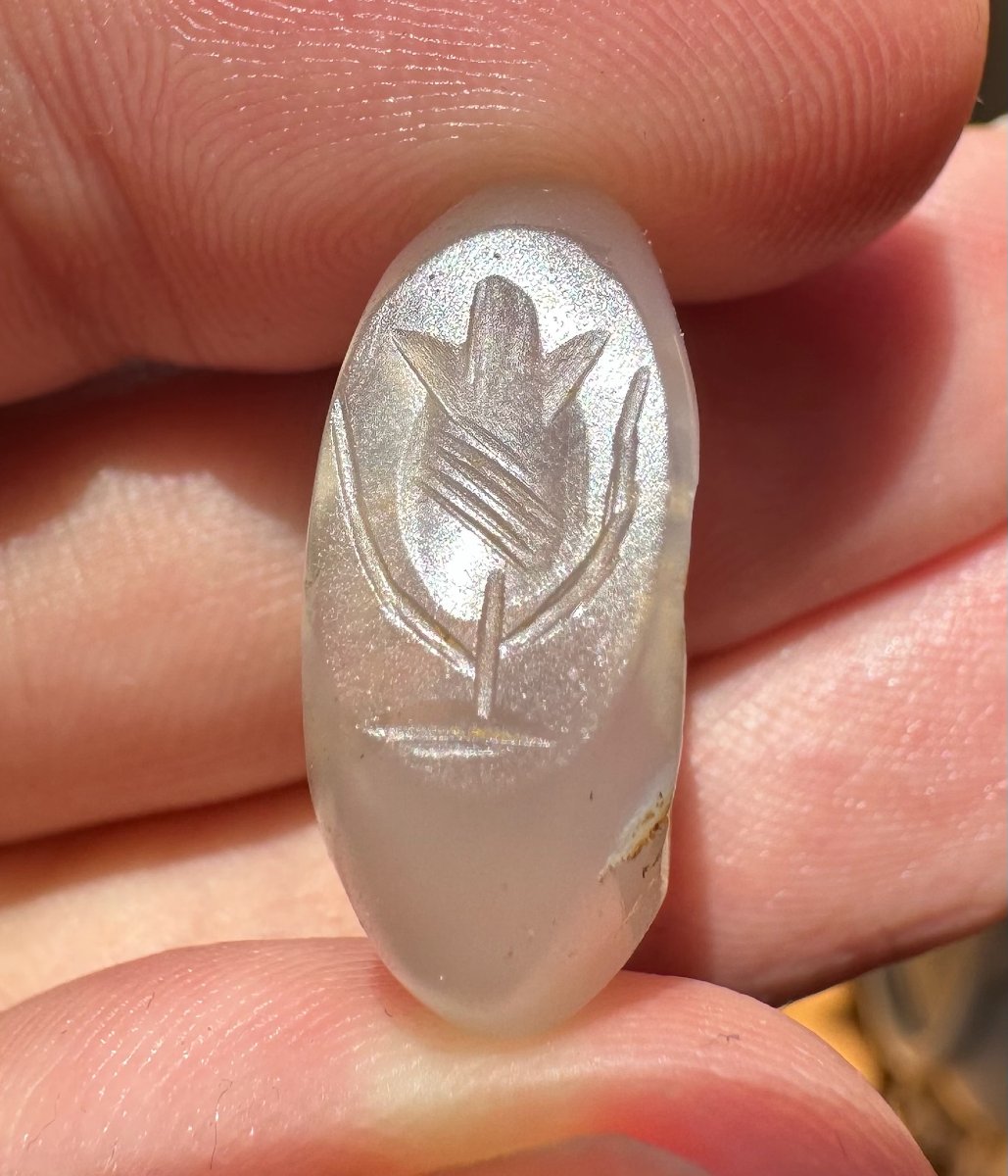
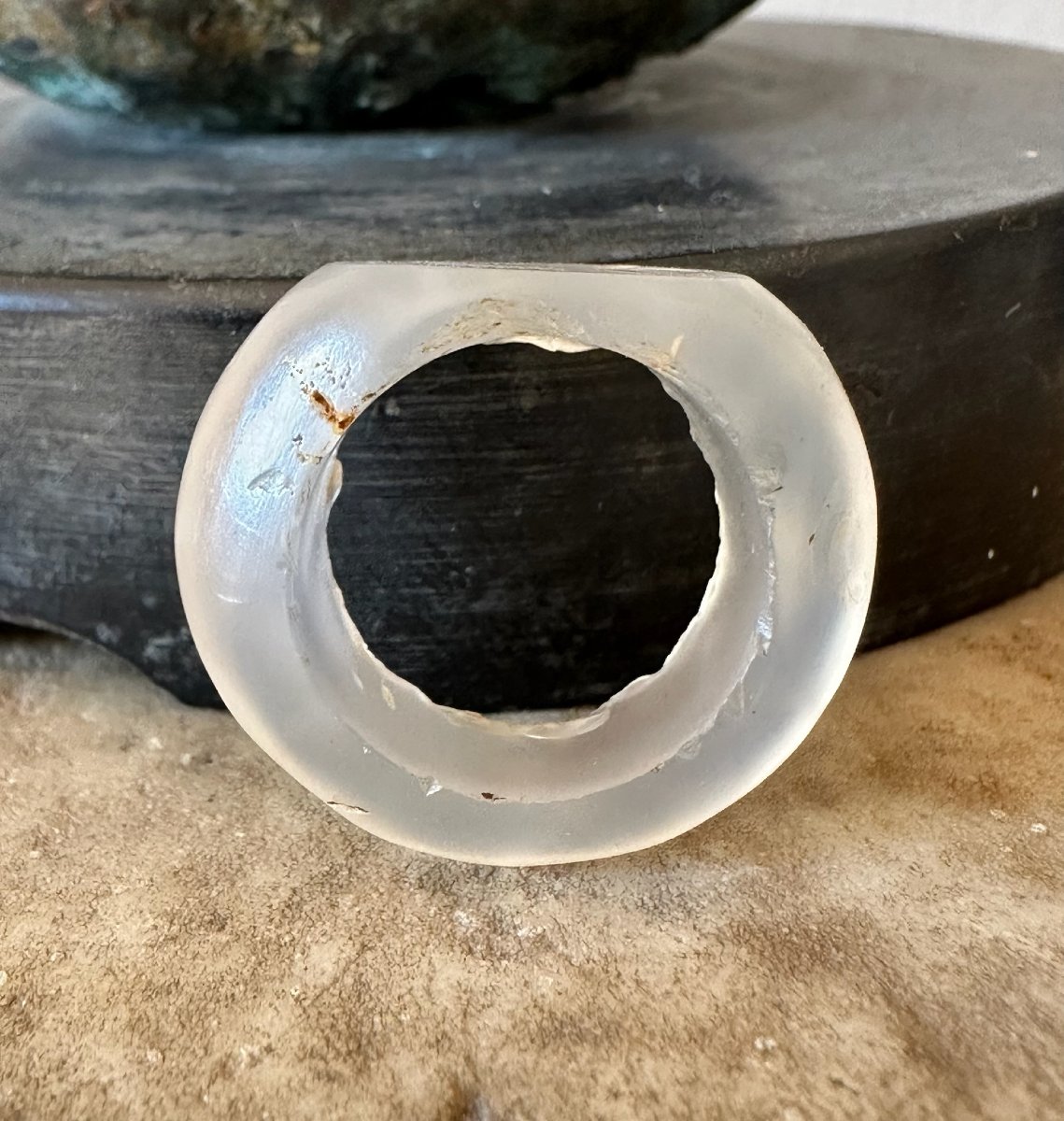
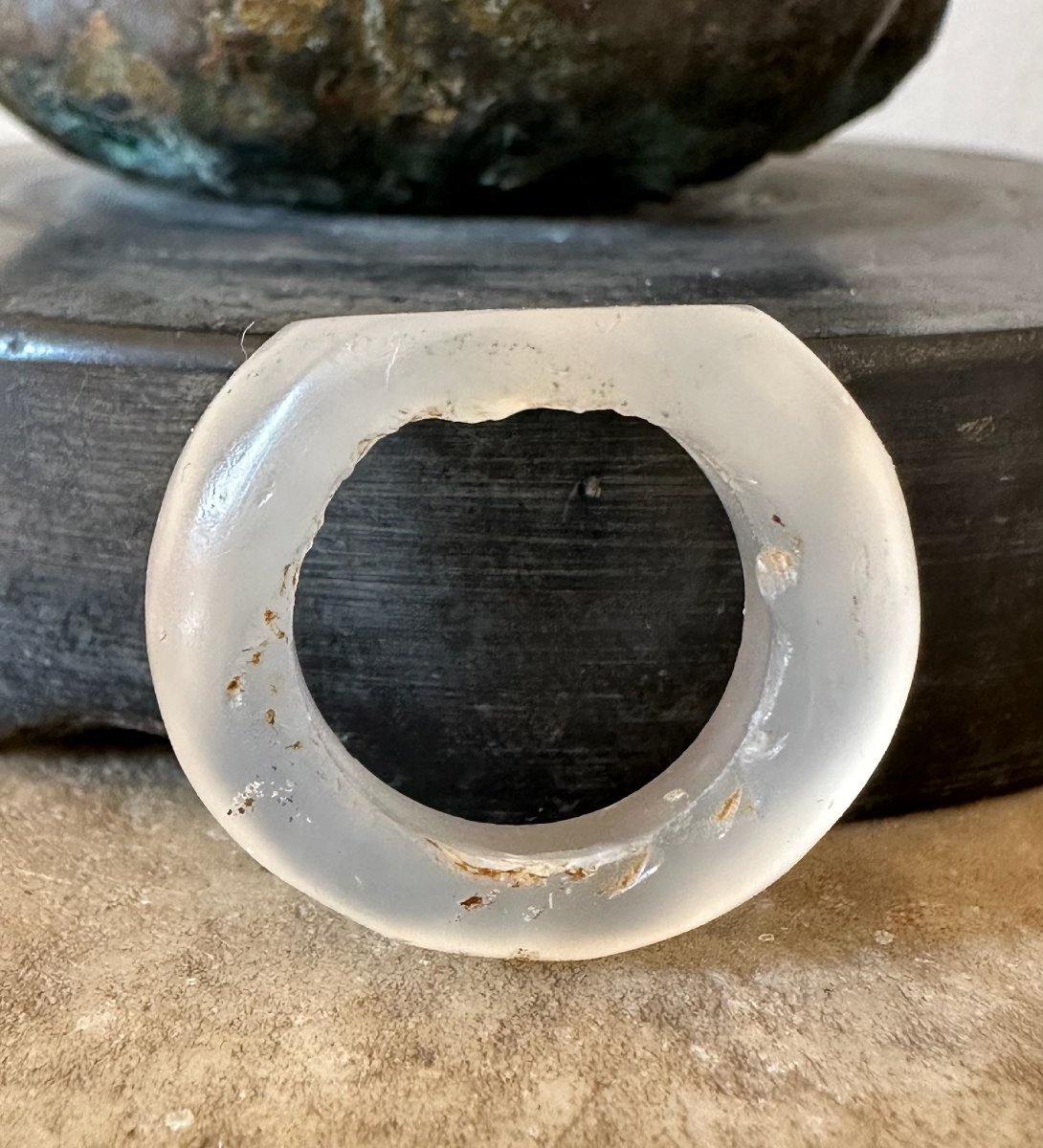
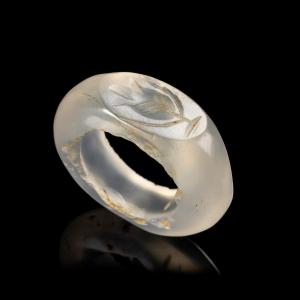
A ring carved from a single block of gray-white translucent chalcedony—a hololith— the wide, flat, domed surface engraved in intaglio with a single flower, perhaps a poppy, supported by a slender stem with two leaves. The hololith, a ring carved entirely from a single stone without any metal, is a feat of ancient gemstone craftsmanship: the band, shoulders, and seal face are all carved from the same translucent mass. This form was known in the Roman world and was prized in the Sassanid East, where chalcedony was among the most sought-after seal stones.
Typology & Iconography.
Sassanid seals most often take the form of pierced hemispheres or oval settings; the entirely hololithic ring is a rarer and more technically demanding variant. Worn as a personal seal—a mark of identity and authority in the Sassanian administration—it draws from the repertoire of isolated flowers and plants, among the most common motifs in Sassanian glyptics, where the flower is also held in the hand as a sign of reverence and blessing. An auspicious and benevolent emblem, the flower evokes blessing and the renewal of life—floral imagery that would, centuries later, find its way into the gardens and ornamentation of Islamic art.
Private English collection, acquired on the English art market in the 2000s
Sassanid art, 4th–6th centuries
A ring carved from a single block of gray-white translucent chalcedony—a hololith— the wide, flat, domed surface engraved in intaglio with a single flower, perhaps a poppy, supported by a slender stem with two leaves. The hololith, a ring carved entirely from a single stone without any metal, is a feat of ancient gemstone craftsmanship: the band, shoulders, and seal face are all carved from the same translucent mass. This form was known in the Roman world and was prized in the Sassanid East, where chalcedony was among the most sought-after seal stones.
Typology & Iconography.
Sassanid seals most often take the form of pierced hemispheres or oval settings; the entirely hololithic ring is a rarer and more technically demanding variant. Worn as a personal seal—a mark of identity and authority in the Sassanian administration—it draws from the repertoire of isolated flowers and plants, among the most common motifs in Sassanian glyptics, where the flower is also held in the hand as a sign of reverence and blessing. An auspicious and benevolent emblem, the flower evokes blessing and the renewal of life—floral imagery that would, centuries later, find its way into the gardens and ornamentation of Islamic art.
Private English collection, acquired on the English art market in the 2000s
1 200 €
Period: Before 16th century
Style: Other Style
Condition: Good condition
Reference (ID): 1807829
Availability: In stock
Print