

Late 19th/early 20th-century Gold Ring Set With A Roman Intaglio On Sardonyx. Isis And Serapis.
Intaglio 13 × 15 mm
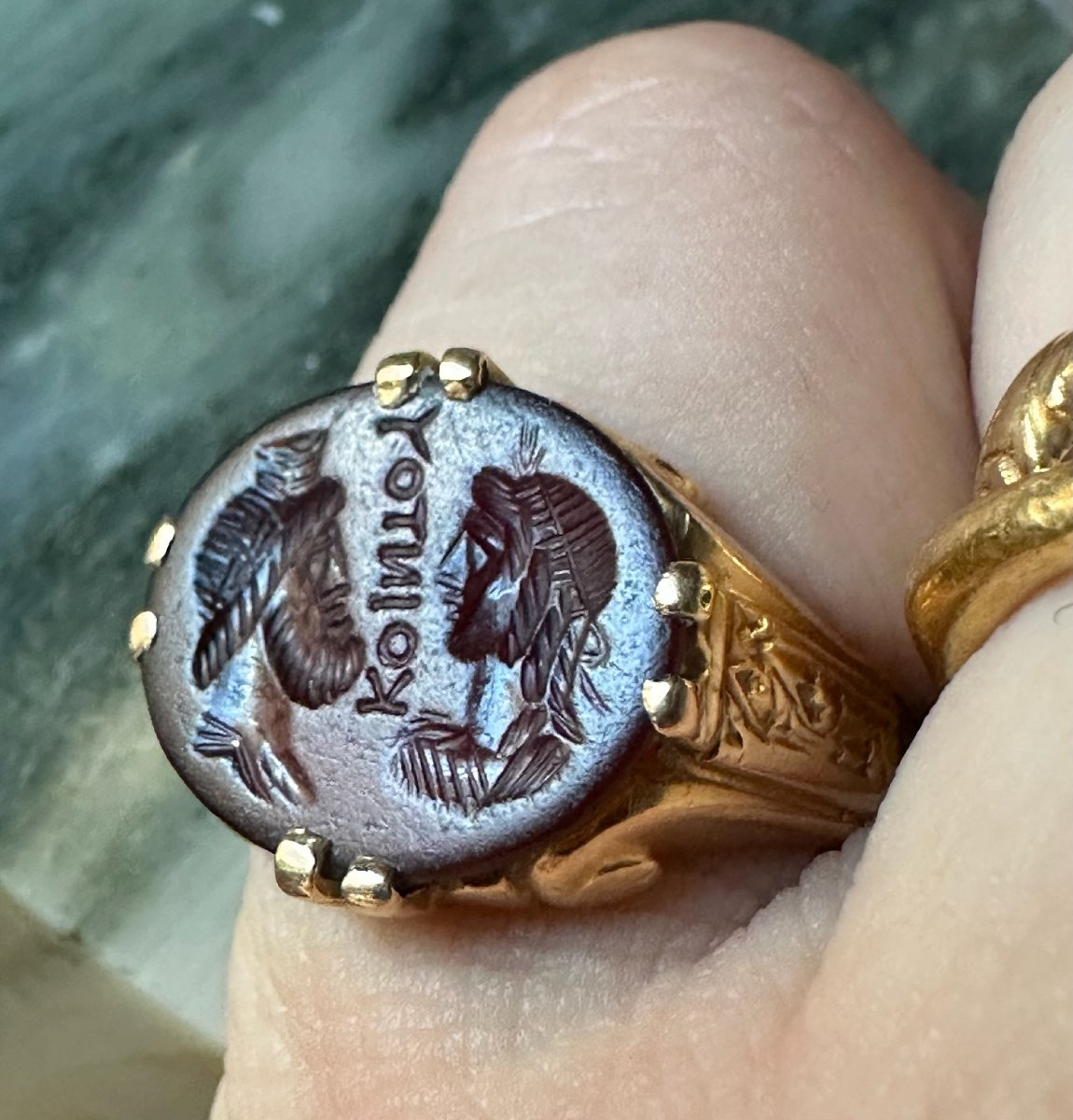
18k gold setting - US 7 · UK N½ · EU 54
Intaglio: Roman art, 2nd–3rd century
Setting: late 19th–early 20th century
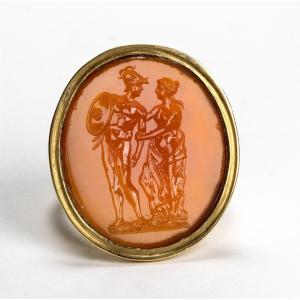
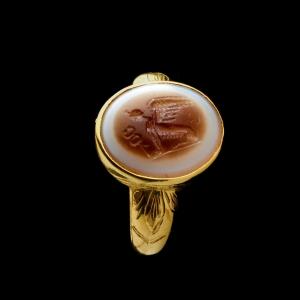
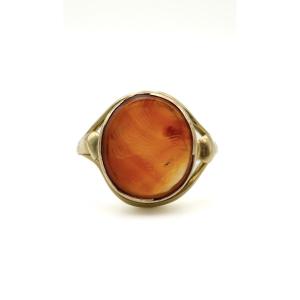
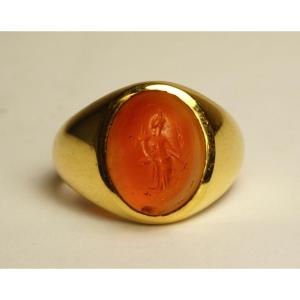
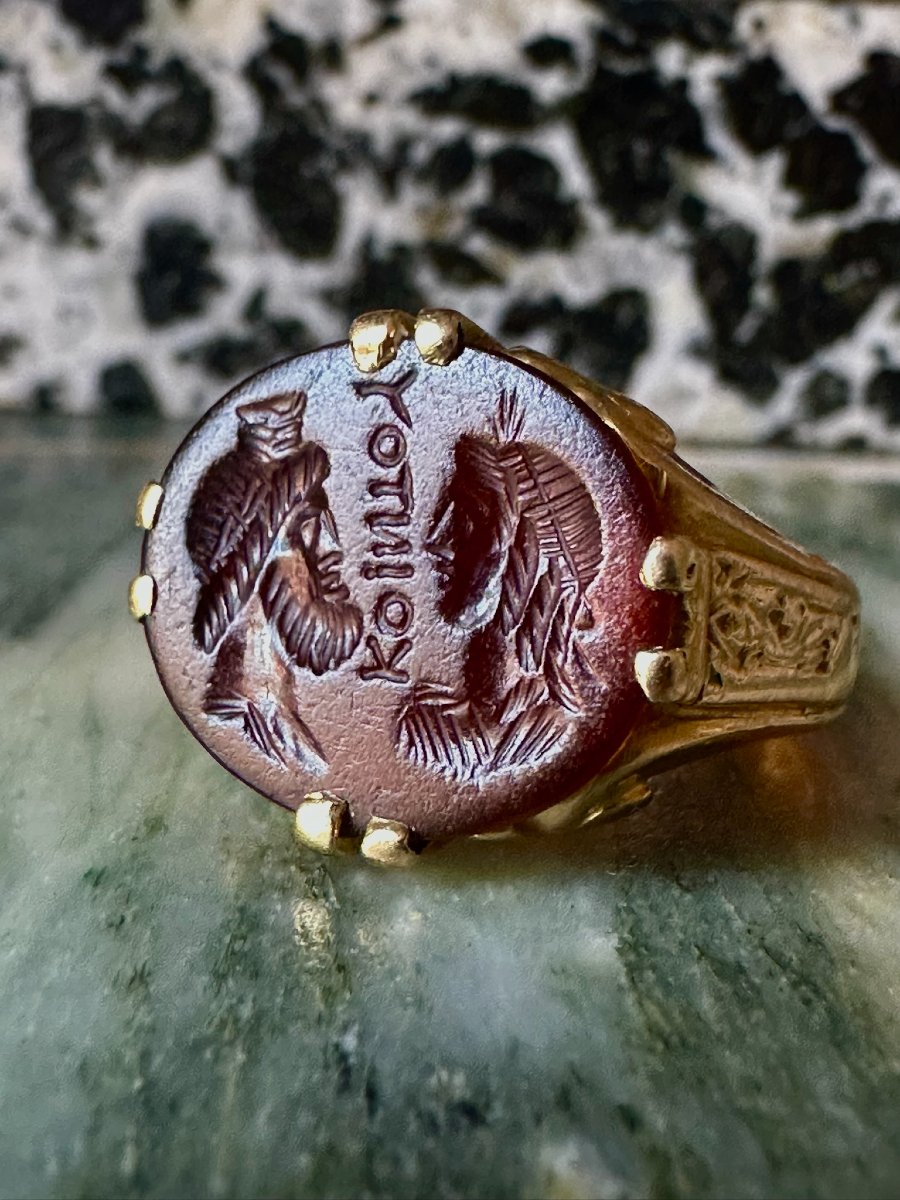
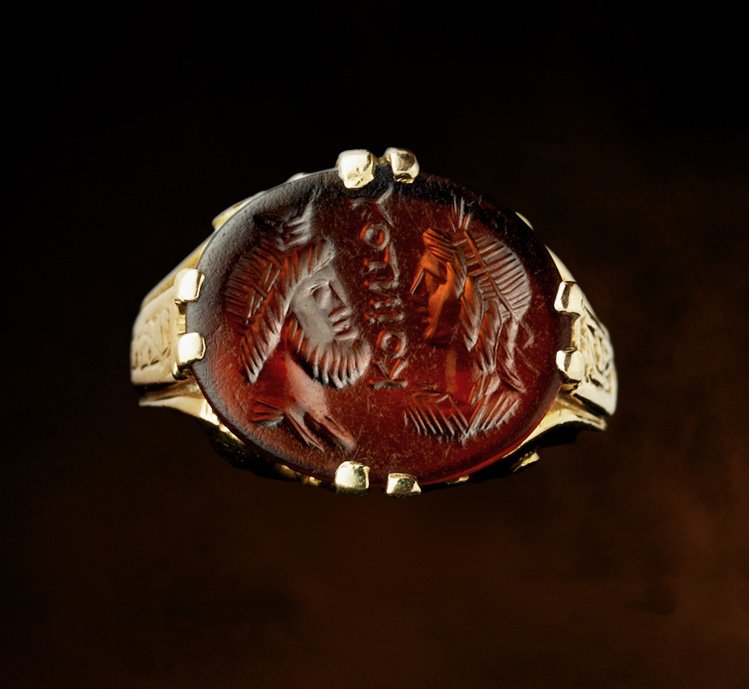
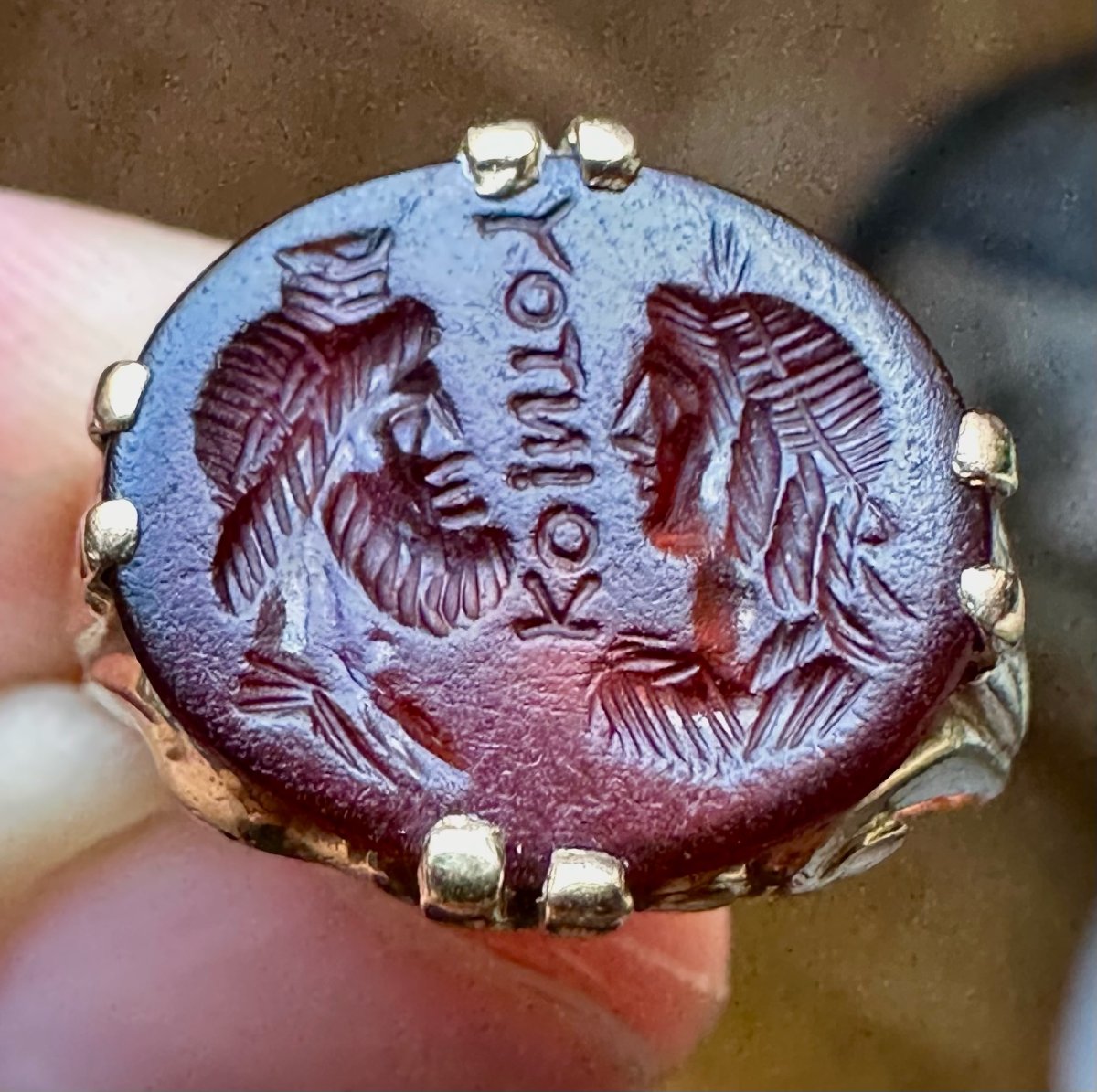
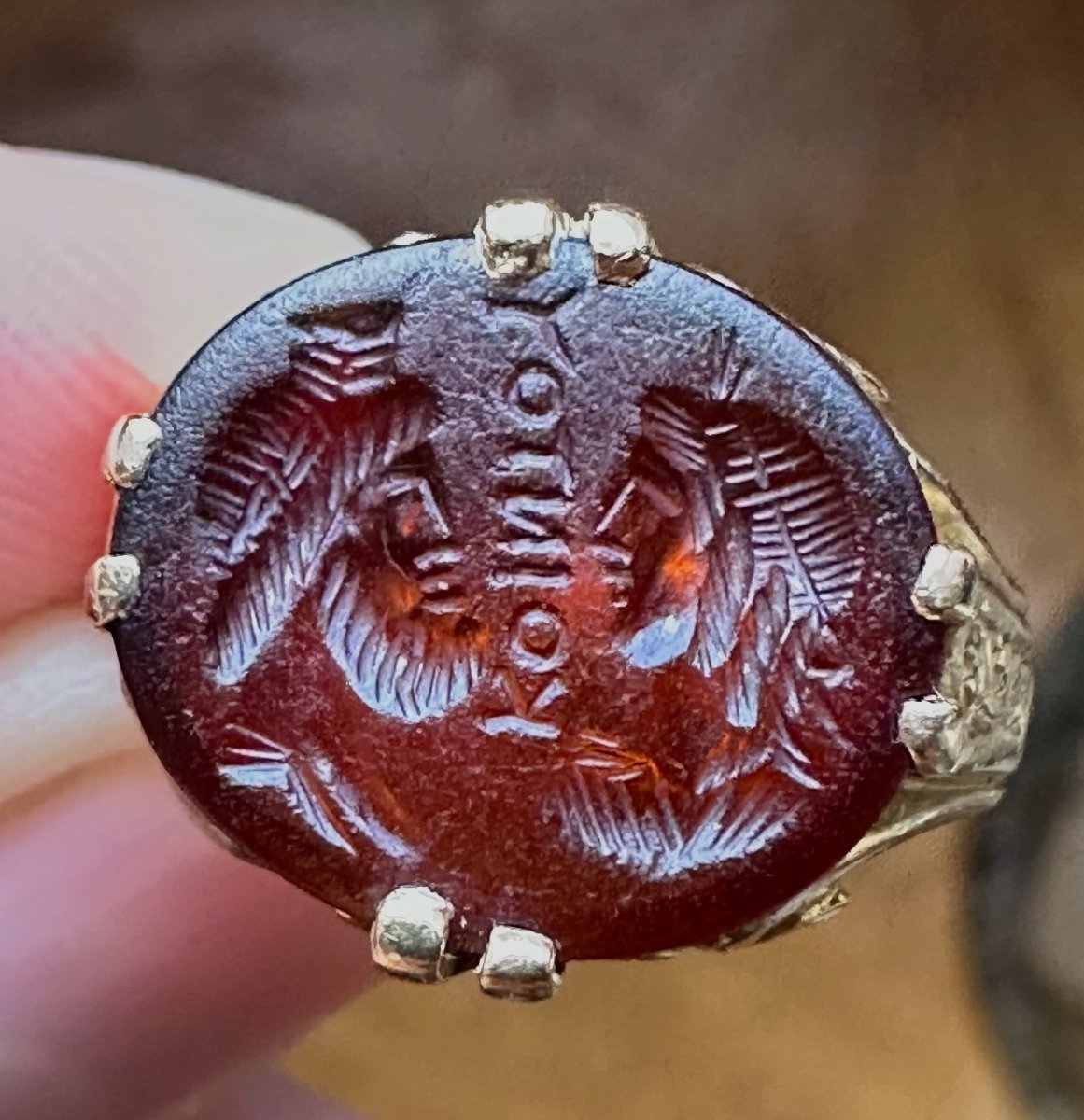
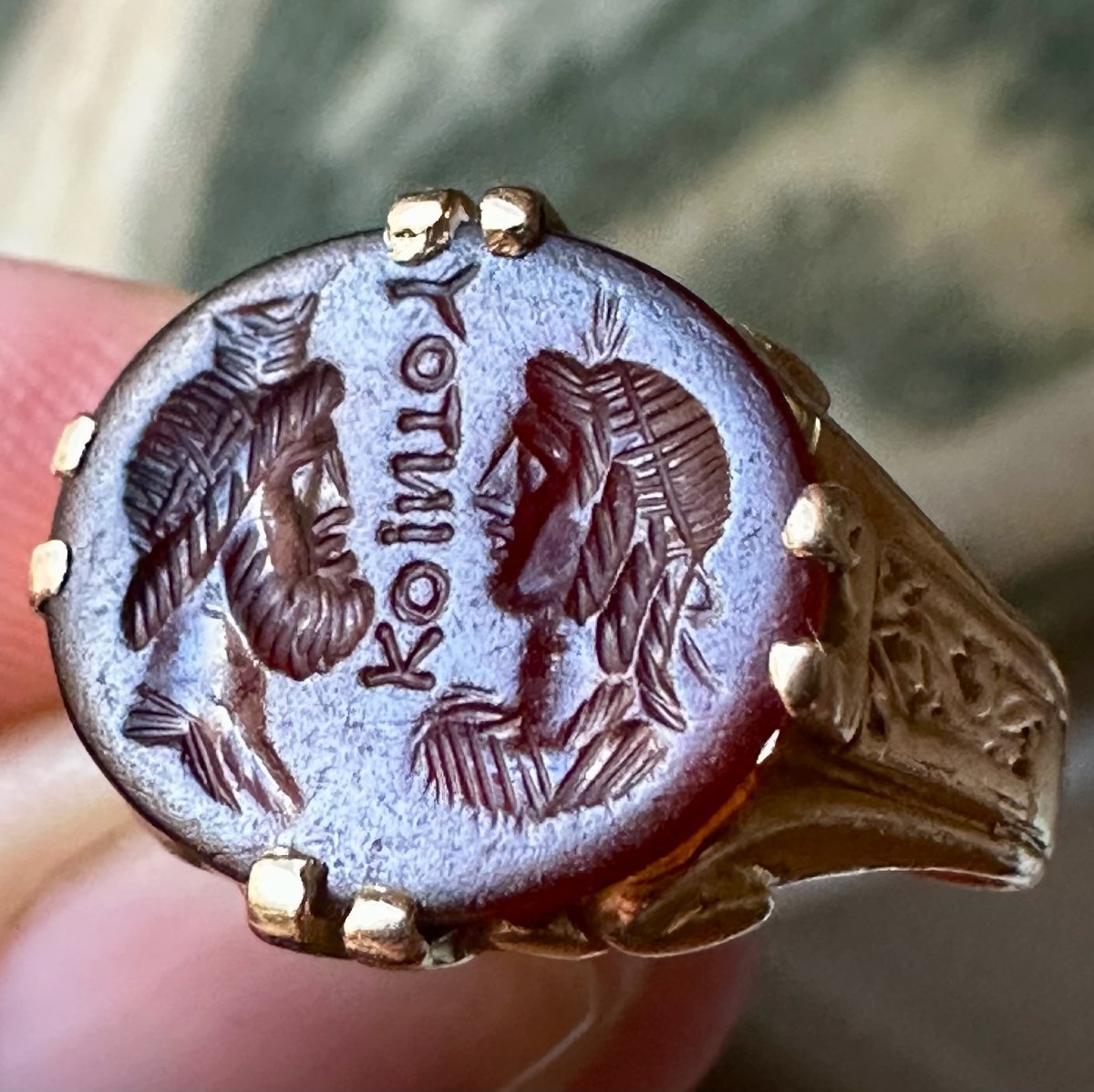
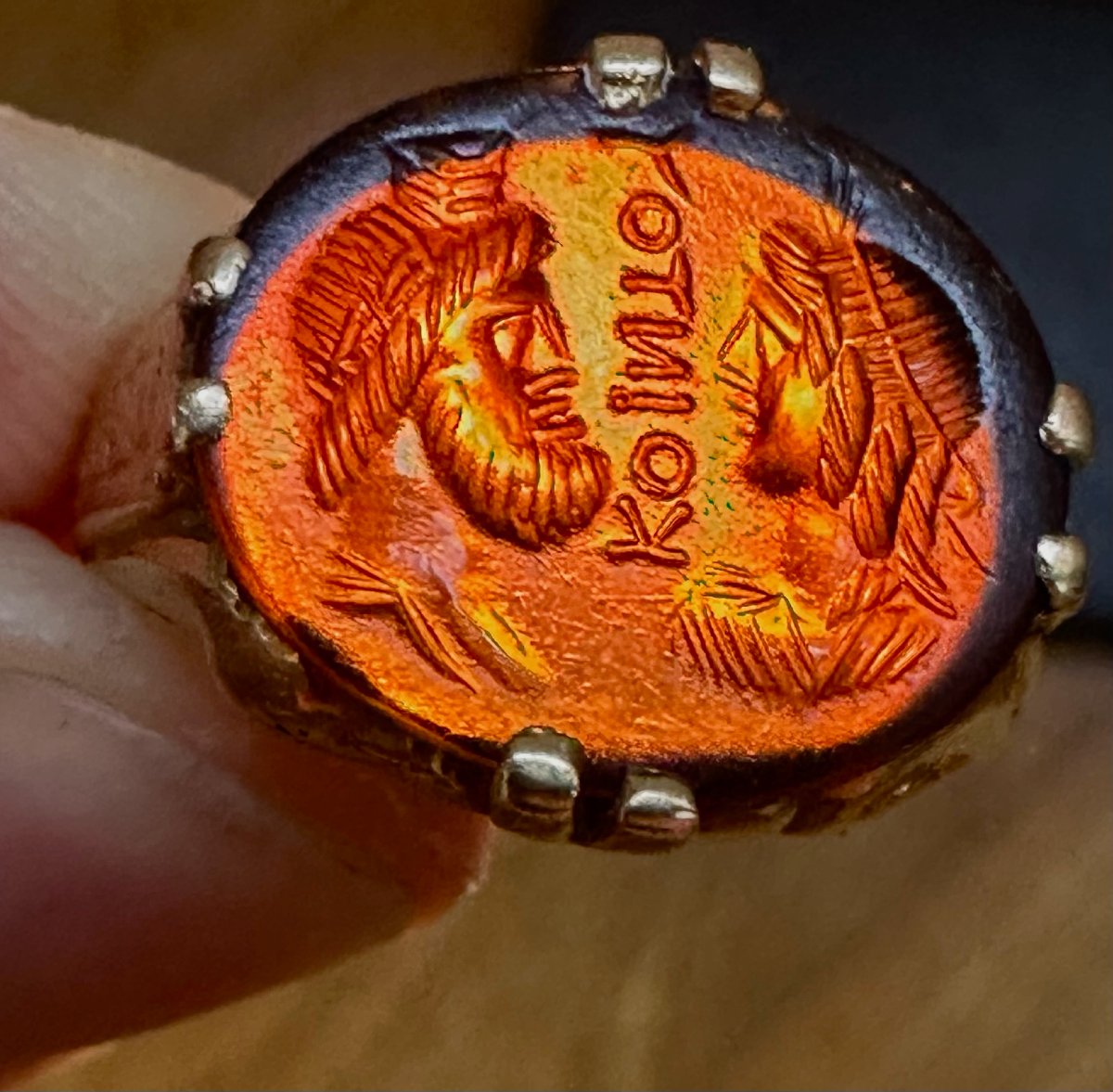
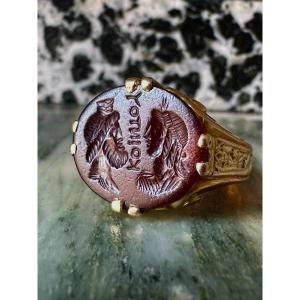
Chiseled yellow gold signet ring, with shoulders adorned with engraved foliage, set in a claw setting with an oval intaglio on a deep brown sardonyx. The stone, engraved in relief, depicts two divine busts facing each other, separated by a vertically arranged Greek inscription. On the right, a deity with a slender profile, her hair held back by a diadem and falling in curls down the nape of her neck; on the left, a second figure wearing a tall headdress, a calathos or modius. The pair is identified as Serapis and Isis, the major deities of the Greco-Egyptian pantheon.
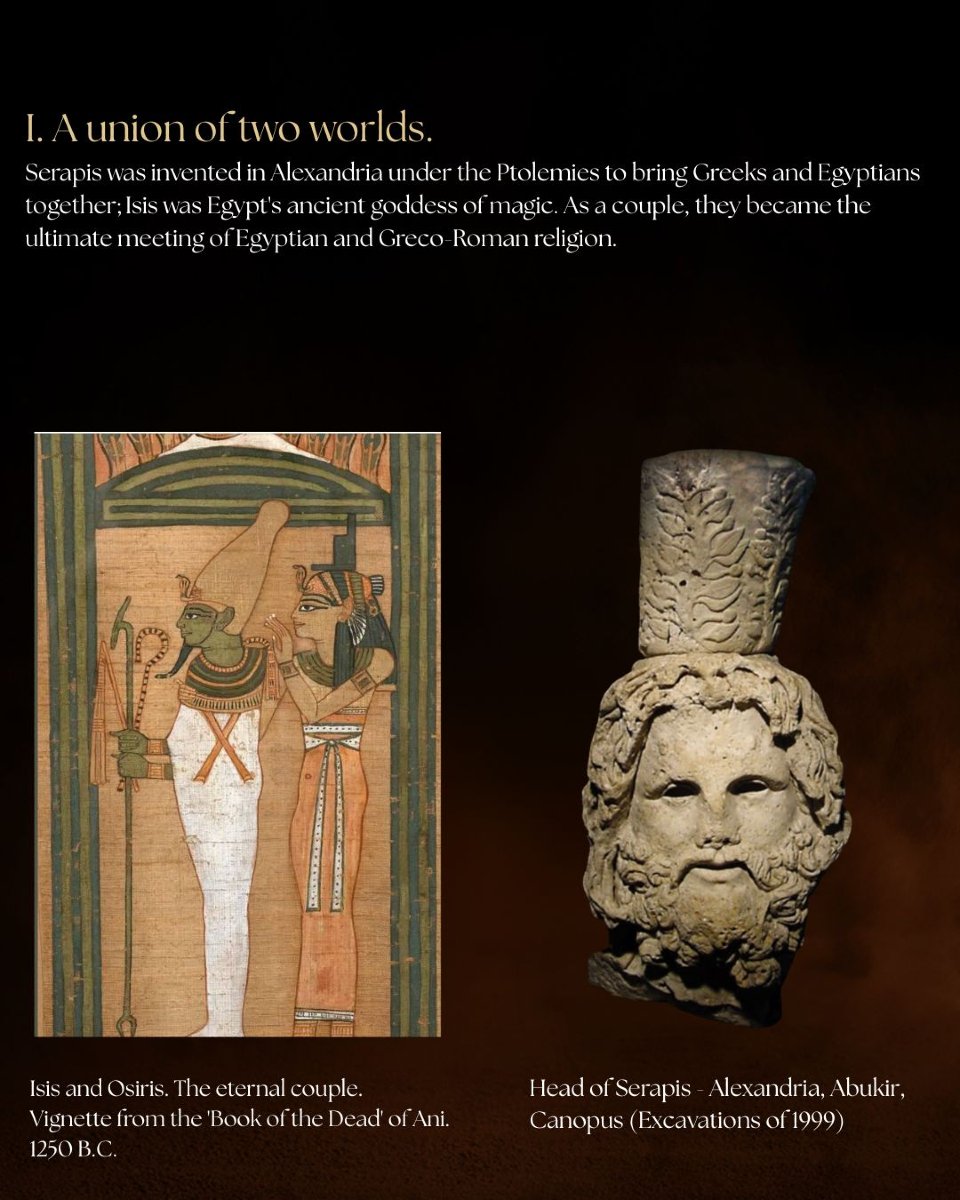
Serapis, a syncretic god created during the Ptolemaic period, combines Osiris and Apis with the traits of Zeus-Hades; wearing the modius, a grain measure, he presides over fertility, healing, and the underworld. Isis, his consort, goddess of magic and universal protection, presides over a cult that, during the first two centuries of our era, spread throughout the Roman Empire, from Egypt to Britain. Depicted as facing busts, they represent the protective couple, bestowers of prosperity and salvation—a common motif on Alexandrian intaglios and coins.
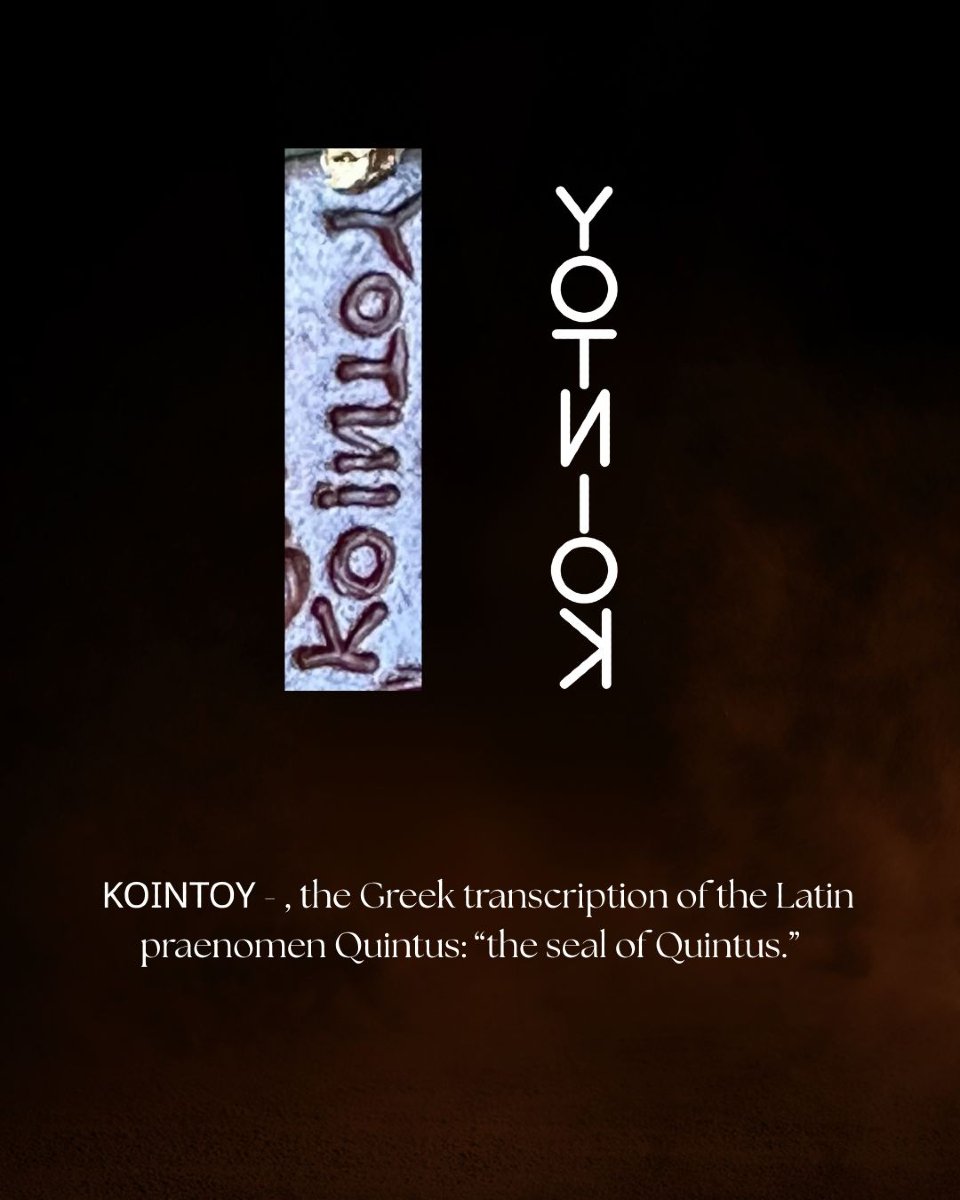
Between the two profiles runs a Greek inscription in capital letters, ΚΟΙΝΤΟΥ, engraved in retrograde script so that it would appear upright in the wax impression. This is the genitive form of Κόιντος, the Greek transcription of the Latin first name Quintus: “(seal) of Quintus.” In the Roman East, those with Latin names wrote them this way in Greek characters. The stone thus served as a personal seal for a certain Quintus, while placing him under the protection of the divine couple.
On Serapian gems, the usual inscription is a devotional acclamation—ΕΙΣ ΖΕΥΣ ΣΑΡΑΠΙΣ (“One Zeus-Sarapis”) or Ἵλεως τῷ φοροῦντι (“auspicious to the wearer”). Here, however, the inscription is a proper name in the genitive case: the stone is part of a personal seal placed under the protection of the divine couple, rather than a purely votive amulet.
Unrelated to the stone: this same name, Hellenized as Κόιντος, is that of the poet Quintus of Smyrna, author of the *Posthomerica* (3rd century A.D.). A simple case of homonymy.
18k gold setting - US 7 · UK N½ · EU 54
Intaglio: Roman art, 2nd–3rd century
Setting: late 19th–early 20th century
Chiseled yellow gold signet ring, with shoulders adorned with engraved foliage, set in a claw setting with an oval intaglio on a deep brown sardonyx. The stone, engraved in relief, depicts two divine busts facing each other, separated by a vertically arranged Greek inscription. On the right, a deity with a slender profile, her hair held back by a diadem and falling in curls down the nape of her neck; on the left, a second figure wearing a tall headdress, a calathos or modius. The pair is identified as Serapis and Isis, the major deities of the Greco-Egyptian pantheon.
Serapis, a syncretic god created during the Ptolemaic period, combines Osiris and Apis with the traits of Zeus-Hades; wearing the modius, a grain measure, he presides over fertility, healing, and the underworld. Isis, his consort, goddess of magic and universal protection, presides over a cult that, during the first two centuries of our era, spread throughout the Roman Empire, from Egypt to Britain. Depicted as facing busts, they represent the protective couple, bestowers of prosperity and salvation—a common motif on Alexandrian intaglios and coins.
Between the two profiles runs a Greek inscription in capital letters, ΚΟΙΝΤΟΥ, engraved in retrograde script so that it would appear upright in the wax impression. This is the genitive form of Κόιντος, the Greek transcription of the Latin first name Quintus: “(seal) of Quintus.” In the Roman East, those with Latin names wrote them this way in Greek characters. The stone thus served as a personal seal for a certain Quintus, while placing him under the protection of the divine couple.
On Serapian gems, the usual inscription is a devotional acclamation—ΕΙΣ ΖΕΥΣ ΣΑΡΑΠΙΣ (“One Zeus-Sarapis”) or Ἵλεως τῷ φοροῦντι (“auspicious to the wearer”). Here, however, the inscription is a proper name in the genitive case: the stone is part of a personal seal placed under the protection of the divine couple, rather than a purely votive amulet.
Unrelated to the stone: this same name, Hellenized as Κόιντος, is that of the poet Quintus of Smyrna, author of the *Posthomerica* (3rd century A.D.). A simple case of homonymy.
3 600 €
Period: 19th century
Style: Rome and Antic Greece
Condition: Excellent condition
Material: Gold
Reference (ID): 1802732
Availability: In stock
Print