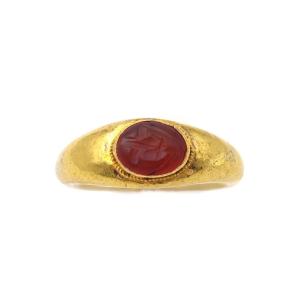


A Modern Gold Ring Set With A Roman Carnelian Intaglio. Sow.
Intaglio: 1.2 x 1.6 cm (0 ¹/₂ x 0 ⁵/₈ inches)
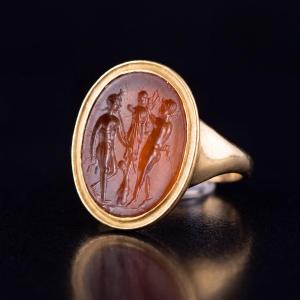
Mounting: gold (18 ct - 22 ct rim); TDD 54 (US 63/4 - modifiable); gross weight 6.85 g
Roman art, 2nd century
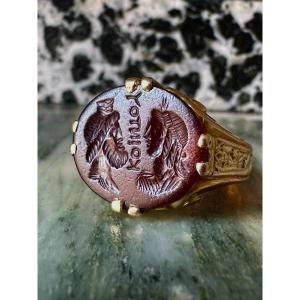
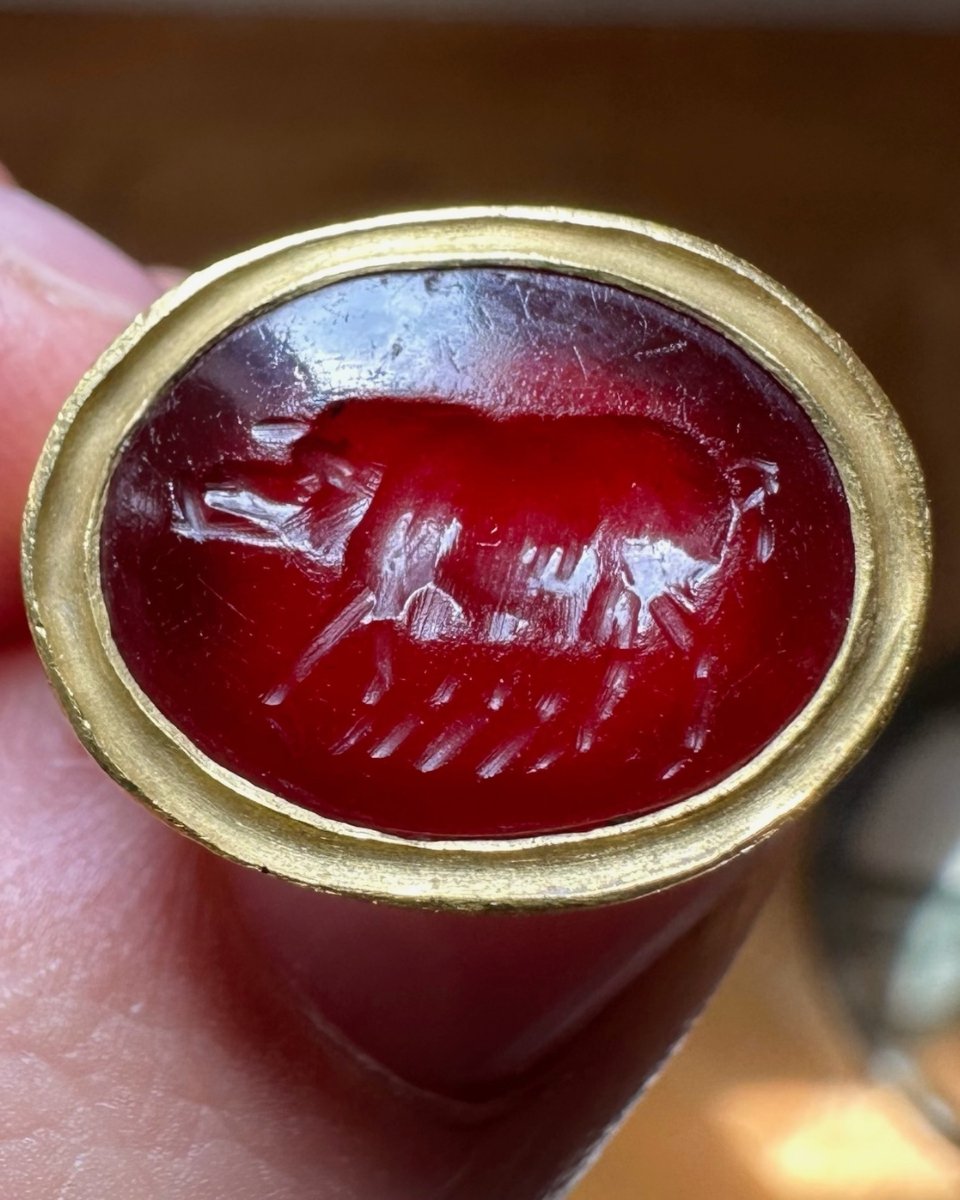
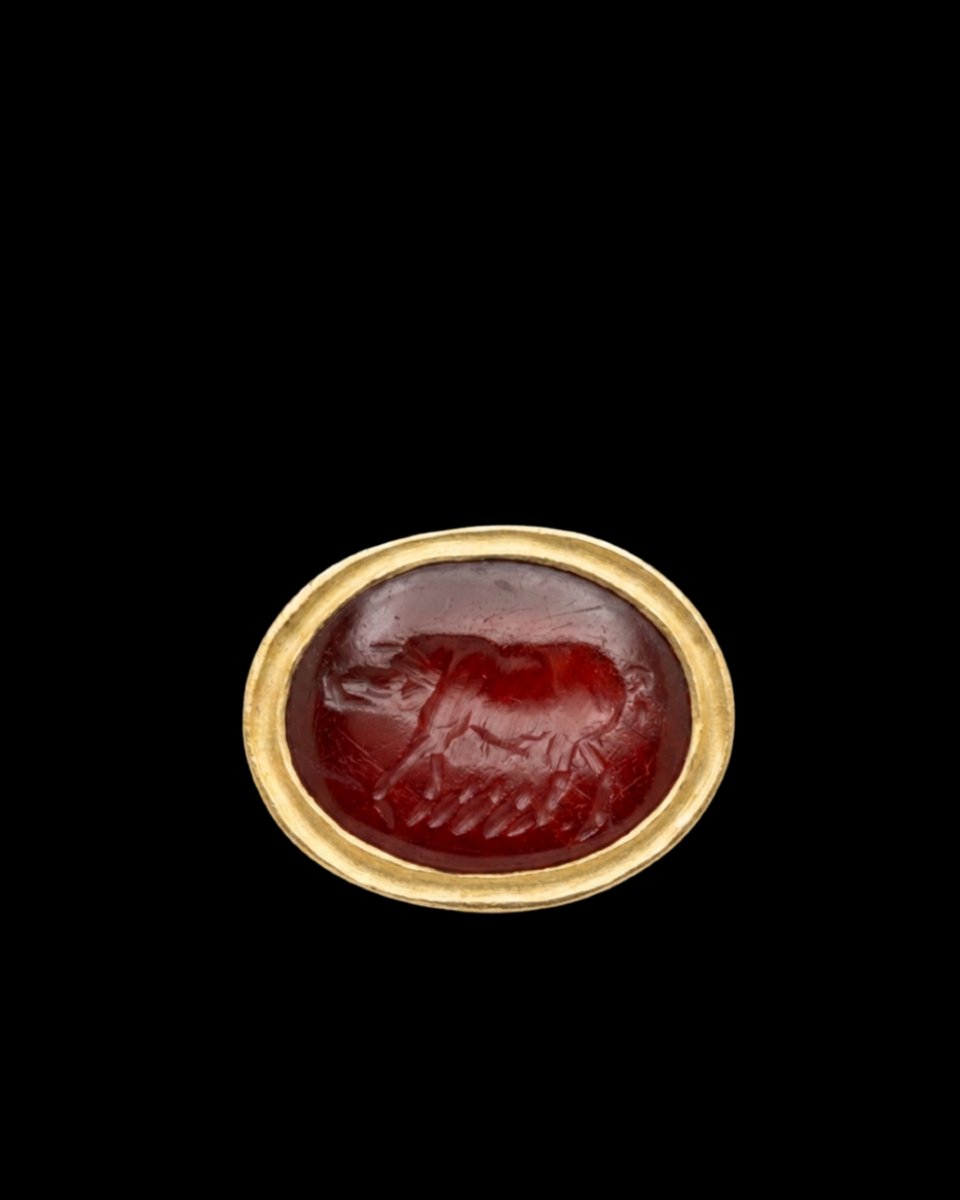
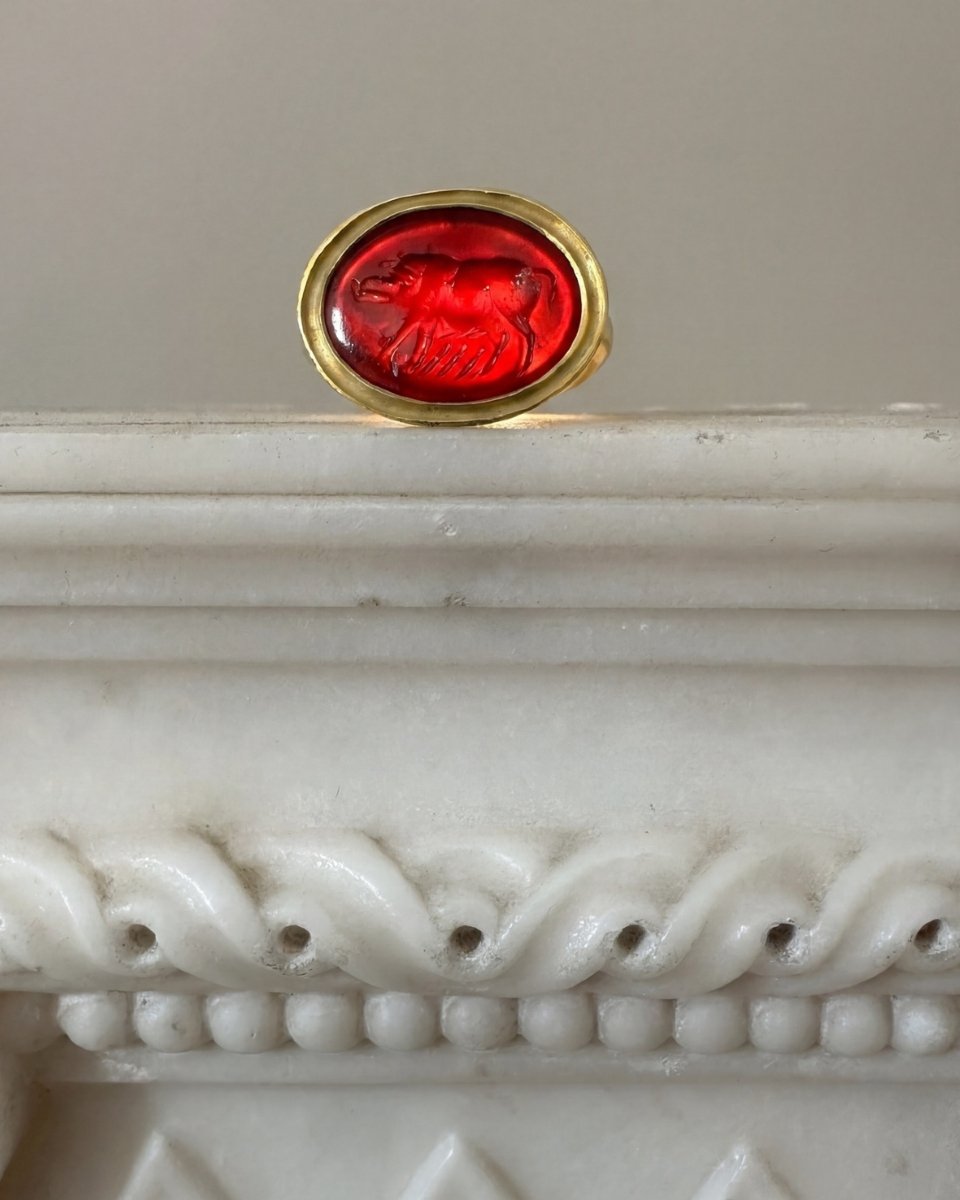
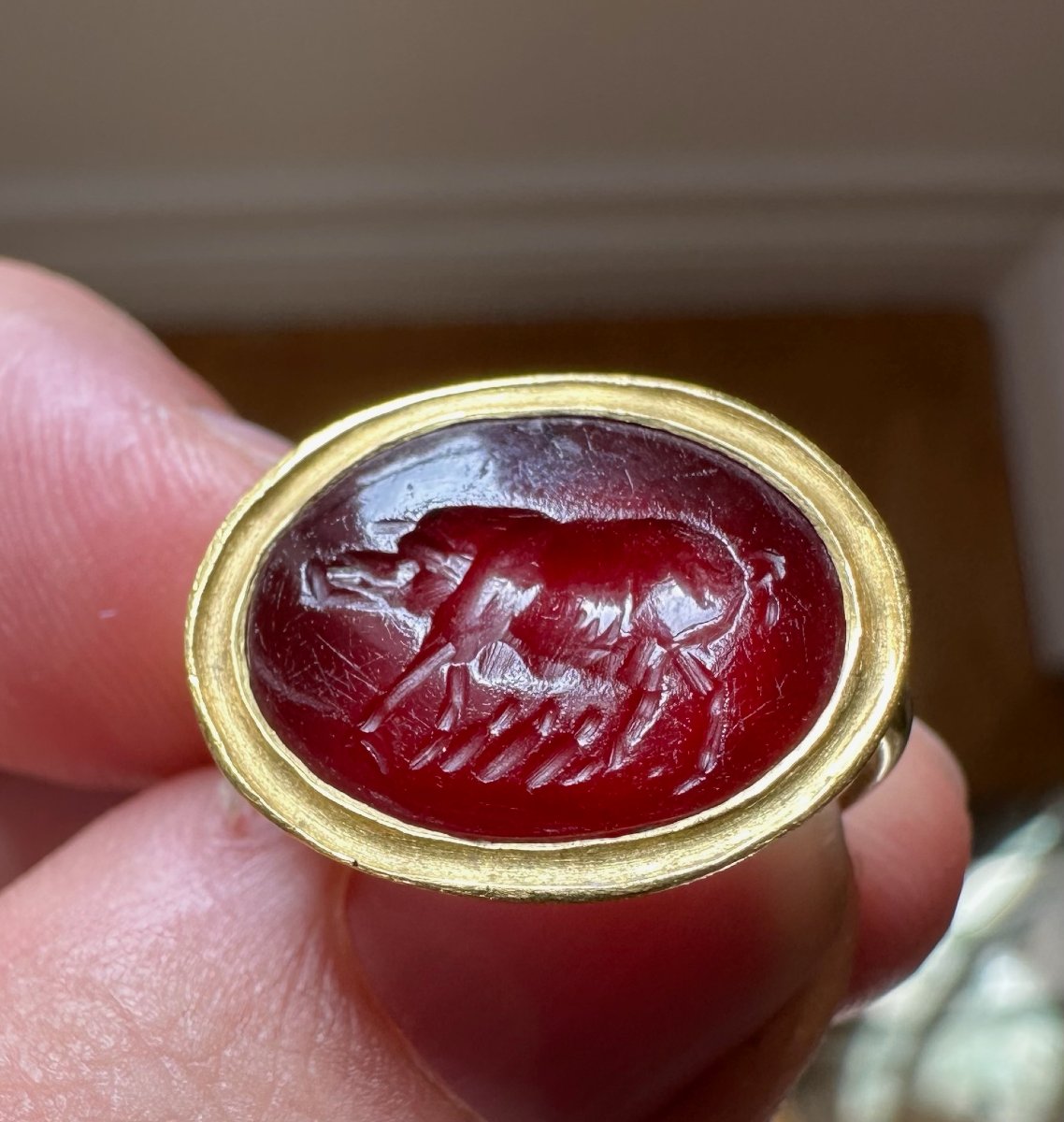
Roman intaglio finely engraved on carnelian, depicting a sow in profile to the left, nursing her piglets. The composition, sober and confident, captures the mother's reclining posture and the cluster of suckling young in a few sure cuts of the burin - characteristic of the engraver's hand in the High-Empire.
The motif of the sow with piglets carries one of the most significant iconographic charges of Roman glyptics. It refers directly to the prodigy of Lavinium, recounted by Virgil in Book VIII of the Aeneid: landing in Latium, Aeneas discovers under a holm oak a white sow suckling thirty piglets - a divine omen heralding the foundation of Alba the Long thirty years later and, three centuries later, the birth of Rome itself. Engraved on coins, votive altars and personal seals from the end of the Republic, the motif accompanied the Romans' living memory of their origins.
Worn as an intaglio seal, it conferred on its bearer a discreet but unequivocal civic identity, inscribing everyday acts of authentication within the framework of the City's founding mythology.
The intaglio is set in a modern gold mount with a polished oval bezel and tapered shoulders.
Mounting: gold (18 ct - 22 ct rim); TDD 54 (US 63/4 - modifiable); gross weight 6.85 g
Roman art, 2nd century
Roman intaglio finely engraved on carnelian, depicting a sow in profile to the left, nursing her piglets. The composition, sober and confident, captures the mother's reclining posture and the cluster of suckling young in a few sure cuts of the burin - characteristic of the engraver's hand in the High-Empire.
The motif of the sow with piglets carries one of the most significant iconographic charges of Roman glyptics. It refers directly to the prodigy of Lavinium, recounted by Virgil in Book VIII of the Aeneid: landing in Latium, Aeneas discovers under a holm oak a white sow suckling thirty piglets - a divine omen heralding the foundation of Alba the Long thirty years later and, three centuries later, the birth of Rome itself. Engraved on coins, votive altars and personal seals from the end of the Republic, the motif accompanied the Romans' living memory of their origins.
Worn as an intaglio seal, it conferred on its bearer a discreet but unequivocal civic identity, inscribing everyday acts of authentication within the framework of the City's founding mythology.
The intaglio is set in a modern gold mount with a polished oval bezel and tapered shoulders.
2 300 €
Period: Before 16th century
Style: Rome and Antic Greece
Condition: Good condition
Material: Gold
Reference (ID): 1770467
Availability: In stock
Print