


Grand Tour Intaglio On Carnelian Of A Young Faun Seated Before An Ithyphallic Hermes Of Pan
Material : Carnelian
Era : XVIIIᵉ century (Grand Tour)
Diameter : 16 mm
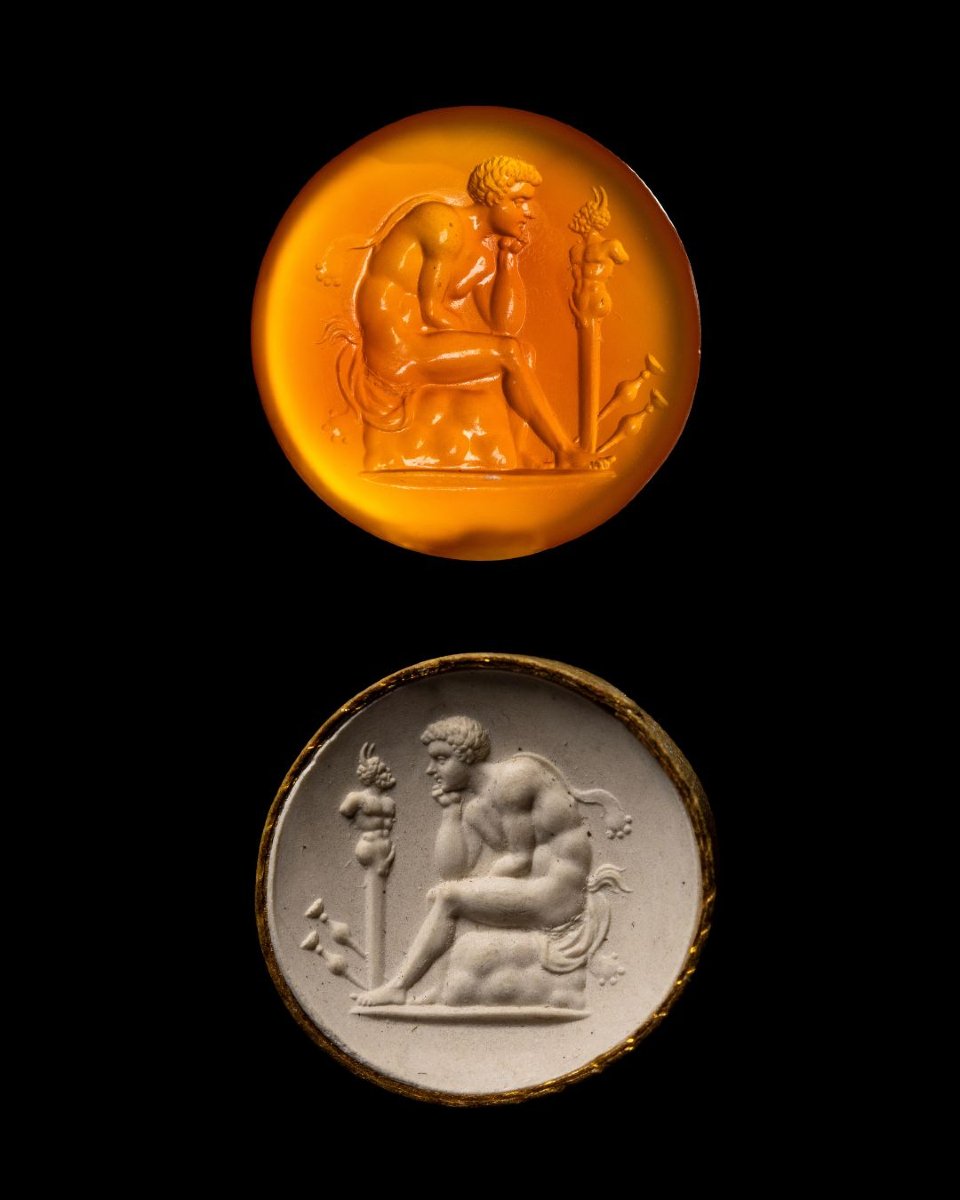
Note : Accompanied by its original plaster print
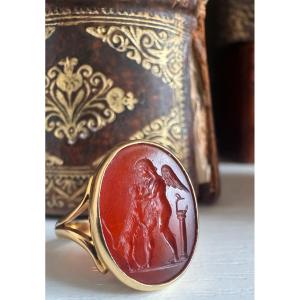
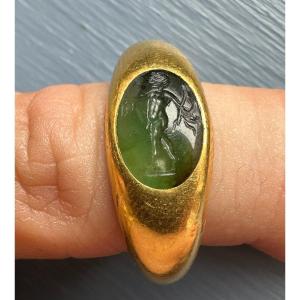
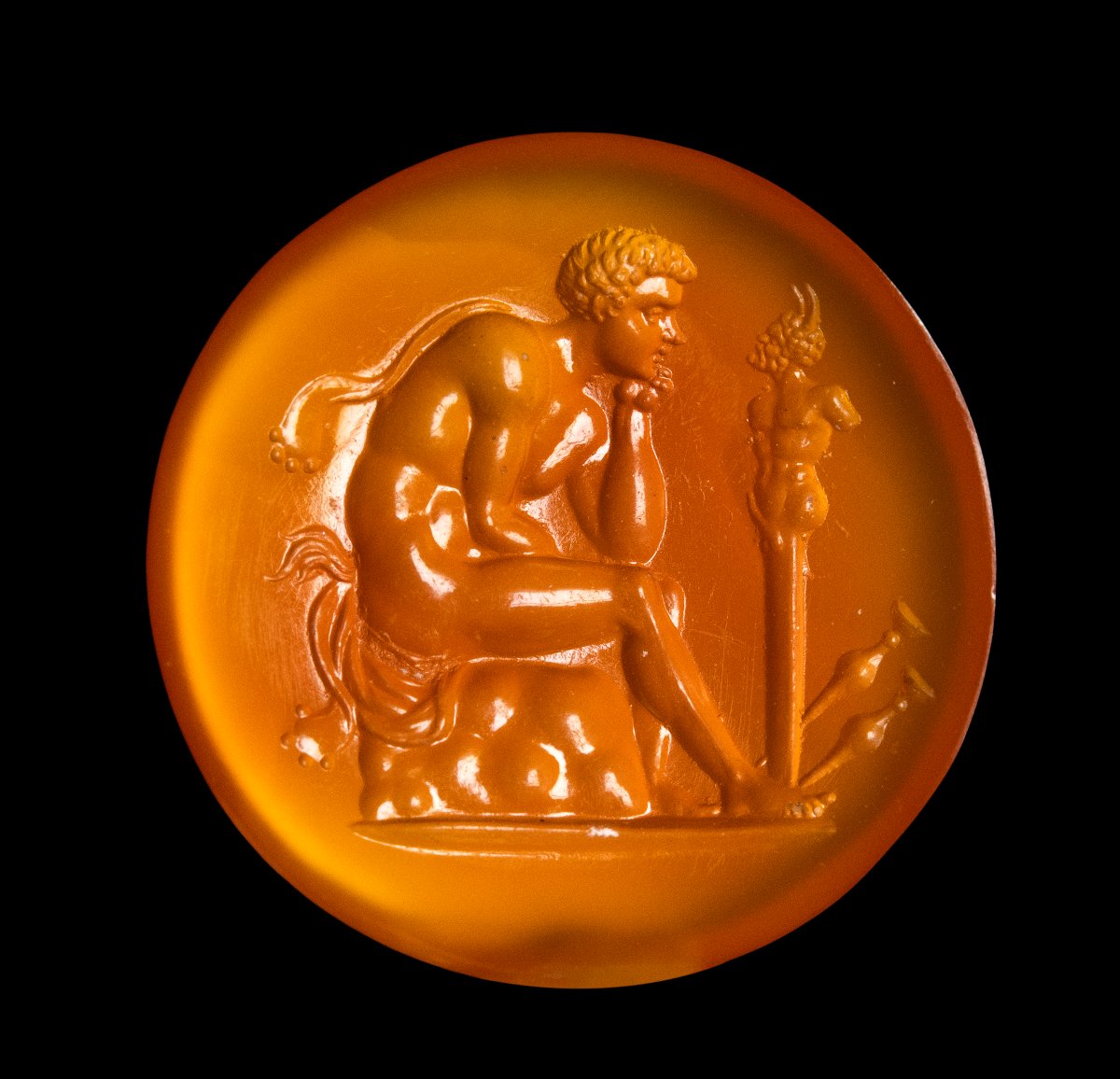
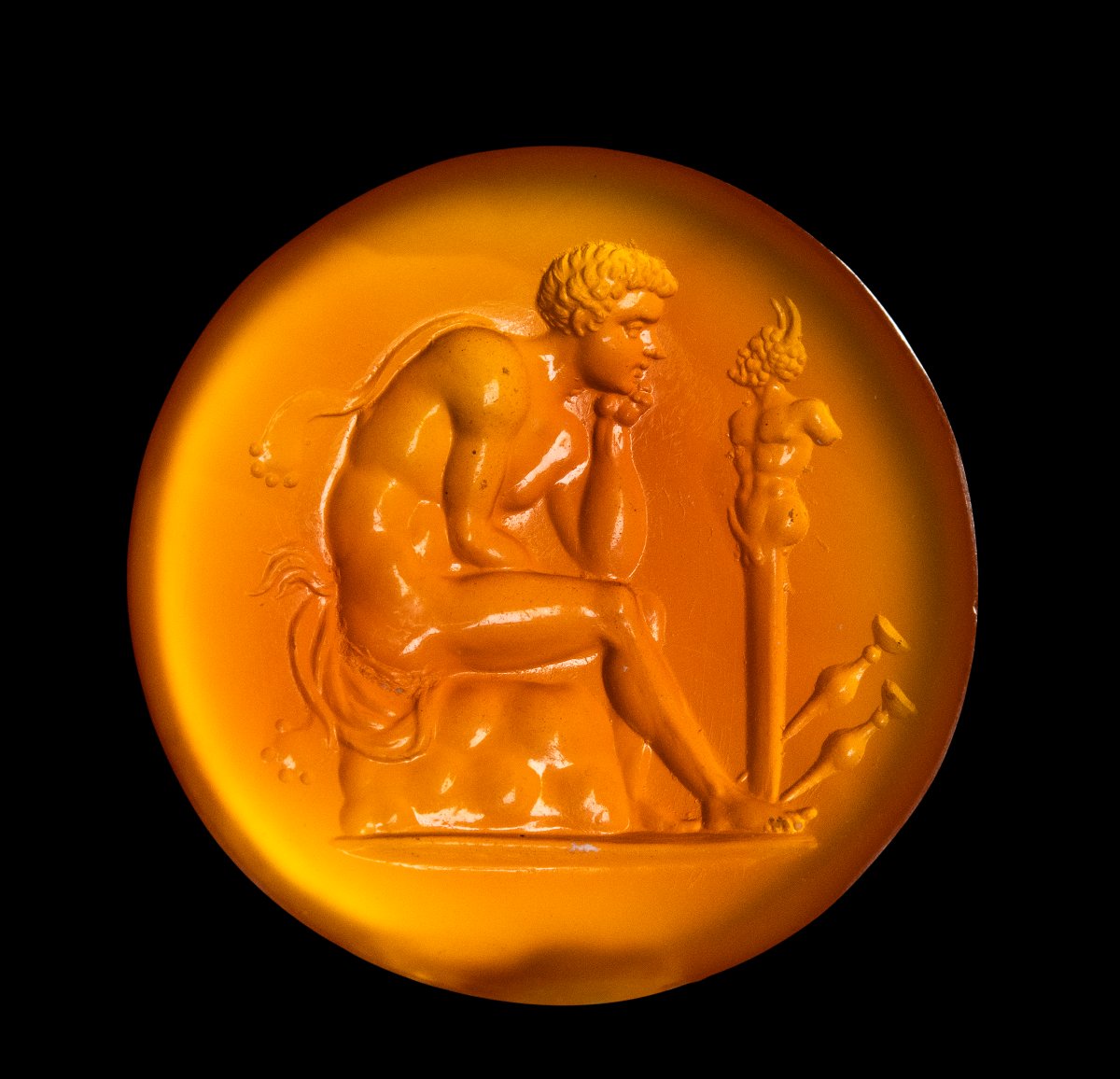
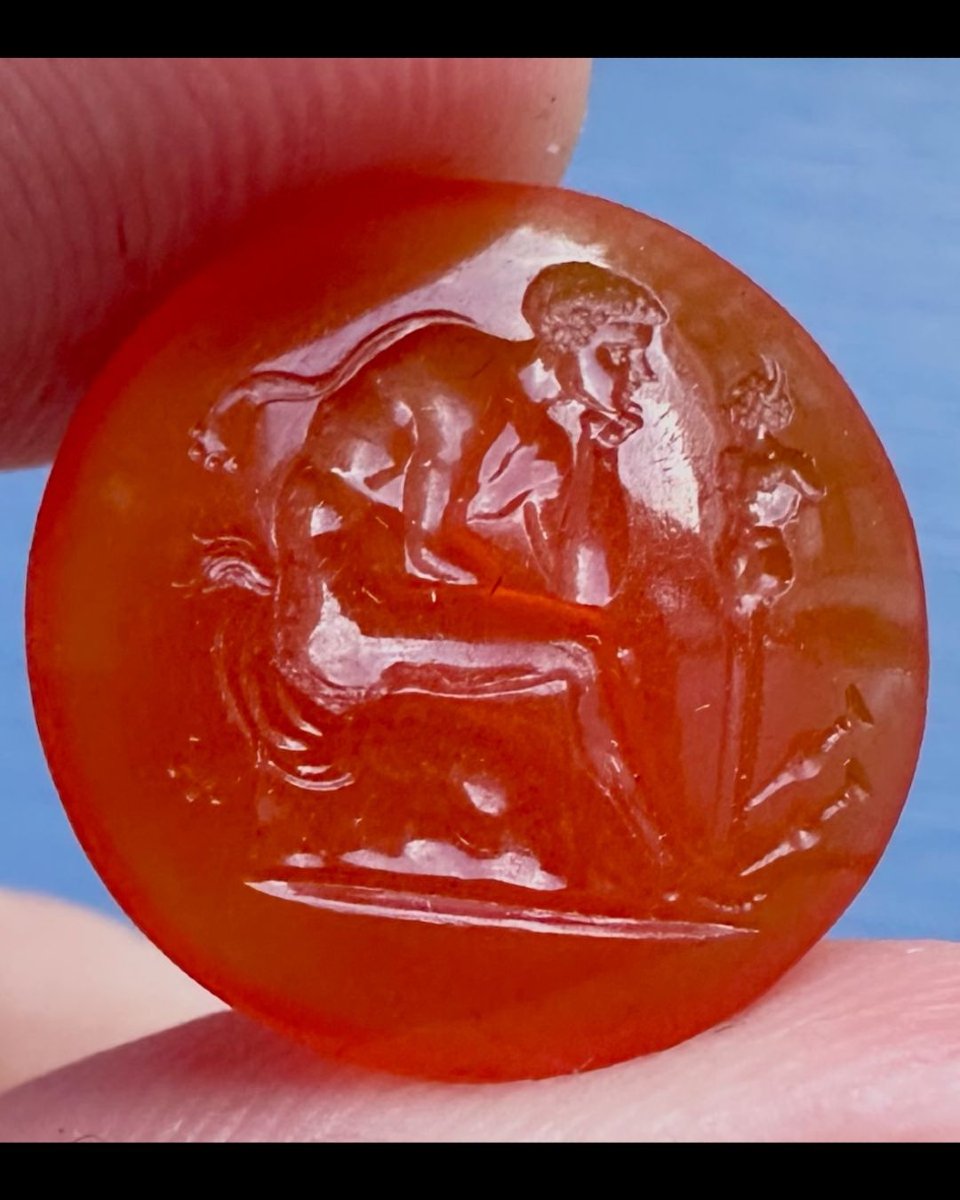
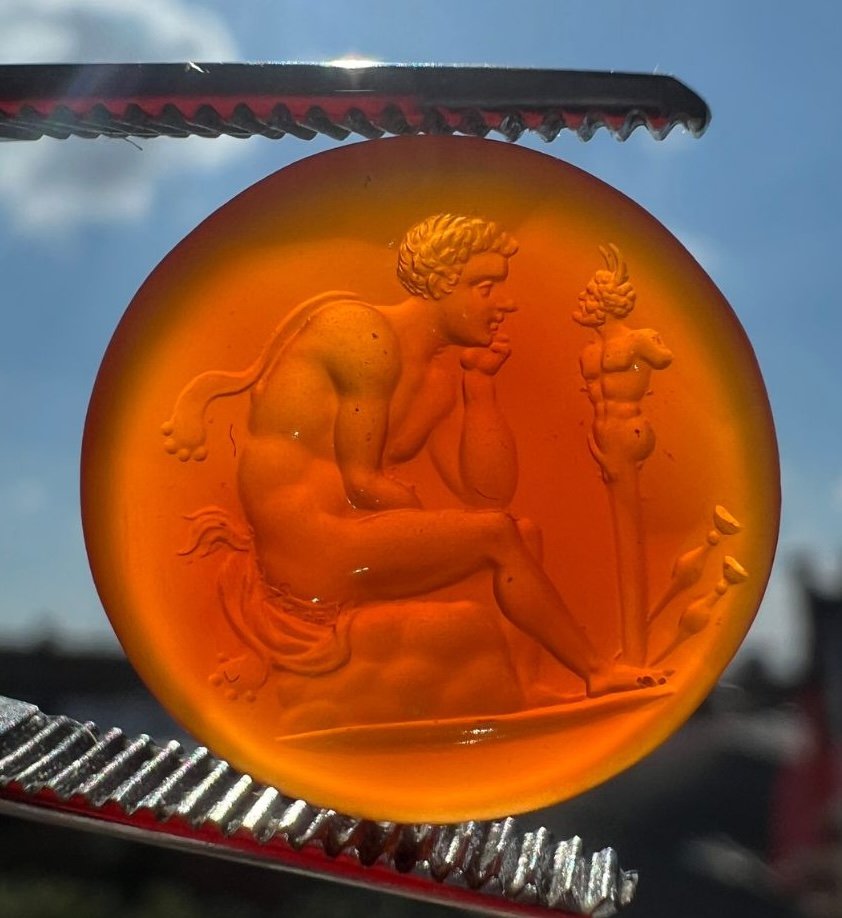
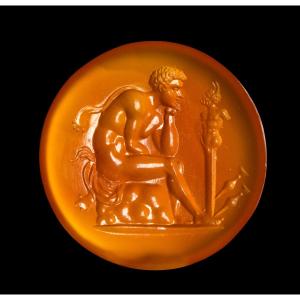
The circular carnelian, in a warm honey-orange hue, is engraved with a graceful young Faun (Faunus) seated on a rock in a pensive attitude, chin resting on his hand, an animal remains (nebris) brought under him. In front of him stands a hermaphrodite pillar topped by an ithyphallic figure of Pan; at its foot, double flutes (tibiae) are stuck into the ground - emblems of pastoral music and the Dionysian, bucolic world.
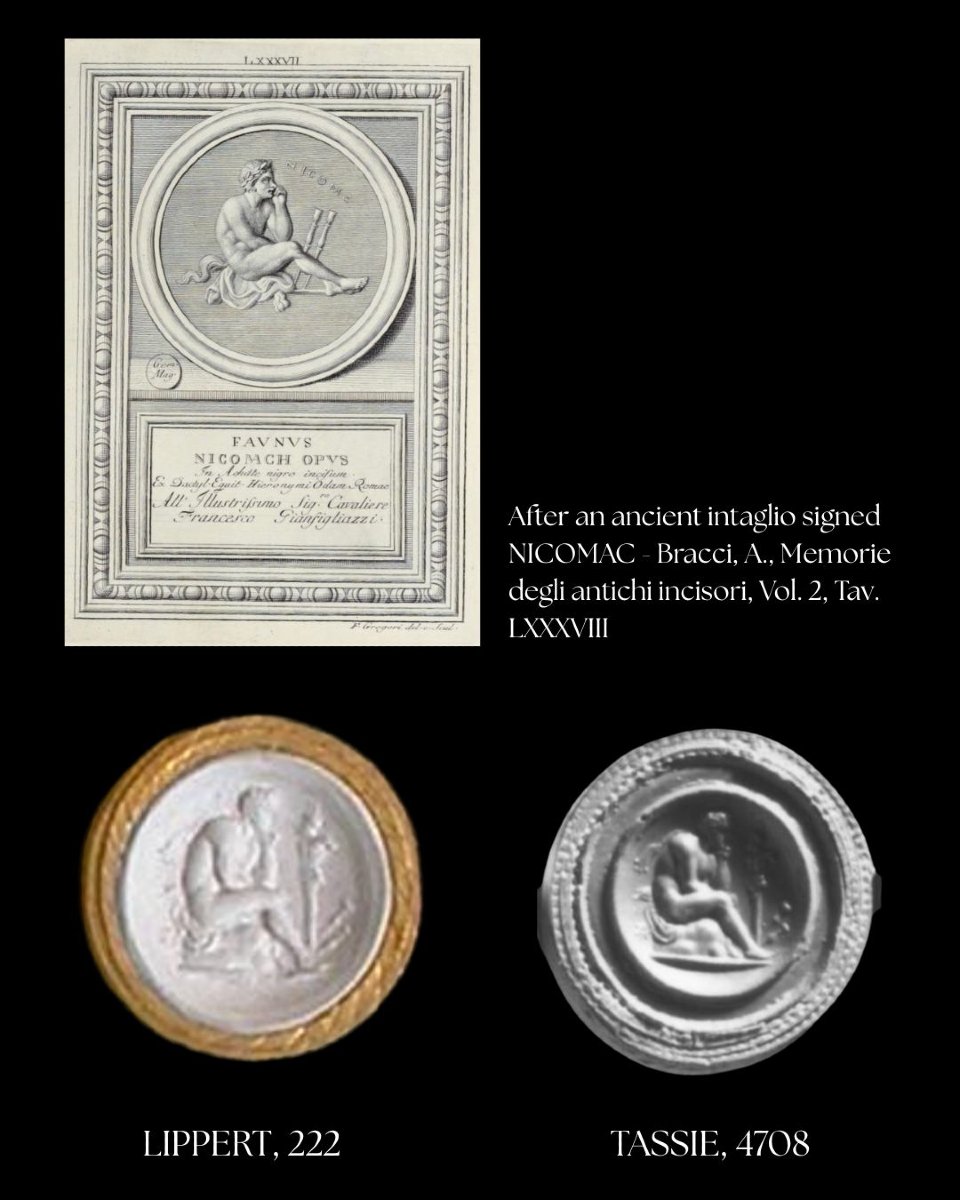
The seated, pensive Faun takes its cue from a famous antique prototype: the gem signed by the engraver Nikomachos (ΝΙCOMAC), cut on black agate and published by Domenico Augusto Bracci among the works of the Old Masters. The present intaglio is a variant of the complete composition - the Faun associated with a Pan hermes and double flutes - recorded by Philipp Daniel Lippert and in the Tassie collection. It is a fine culmination of the glyptic art of the XVIIIᵉ century, in the antiquarian taste of the Grand Tour, when engravers renewed the famous gems of antiquity for the benefit of cultivated collectors.
References
For the seated Faun, cf. D. A. Bracci, Memorie degli antichi incisori, II, Florence, 1786, pl. LXXXVII (gem signed Nikomachos, black agate, formerly cabinet Odam, Rome). For the composition with Pan's hermes, cf. P. D. Lippert, Dactyliotheca, no. 222 (onyx, former Wazdorff collection), and R. E. Raspe, A Descriptive Catalogue of ... Engraved Gems ... cast ... by James Tassie, London, 1791, no. 4708.
Era : XVIIIᵉ century (Grand Tour)
Diameter : 16 mm
Note : Accompanied by its original plaster print
The circular carnelian, in a warm honey-orange hue, is engraved with a graceful young Faun (Faunus) seated on a rock in a pensive attitude, chin resting on his hand, an animal remains (nebris) brought under him. In front of him stands a hermaphrodite pillar topped by an ithyphallic figure of Pan; at its foot, double flutes (tibiae) are stuck into the ground - emblems of pastoral music and the Dionysian, bucolic world.
The seated, pensive Faun takes its cue from a famous antique prototype: the gem signed by the engraver Nikomachos (ΝΙCOMAC), cut on black agate and published by Domenico Augusto Bracci among the works of the Old Masters. The present intaglio is a variant of the complete composition - the Faun associated with a Pan hermes and double flutes - recorded by Philipp Daniel Lippert and in the Tassie collection. It is a fine culmination of the glyptic art of the XVIIIᵉ century, in the antiquarian taste of the Grand Tour, when engravers renewed the famous gems of antiquity for the benefit of cultivated collectors.
References
For the seated Faun, cf. D. A. Bracci, Memorie degli antichi incisori, II, Florence, 1786, pl. LXXXVII (gem signed Nikomachos, black agate, formerly cabinet Odam, Rome). For the composition with Pan's hermes, cf. P. D. Lippert, Dactyliotheca, no. 222 (onyx, former Wazdorff collection), and R. E. Raspe, A Descriptive Catalogue of ... Engraved Gems ... cast ... by James Tassie, London, 1791, no. 4708.
9 800 €
Period: 18th century
Style: Rome and Antic Greece
Condition: Perfect condition
Reference (ID): 1772486
Availability: In stock
Print