

Roman Ring Made Of Gold And Green Chalcedony. Satyr With Dionysian Attributes.
Intaglio 6 × 9 mm;
TDD EU/FR 45½ - Weight 3.96 g.
Roman art, circa 1st century
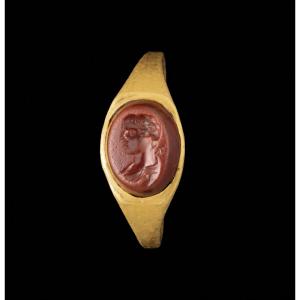
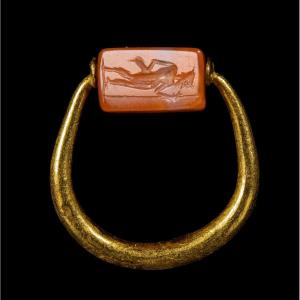
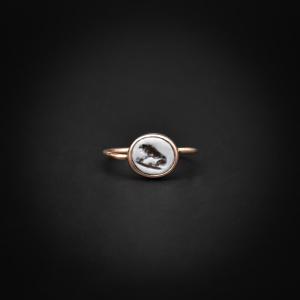
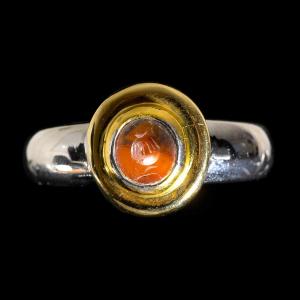
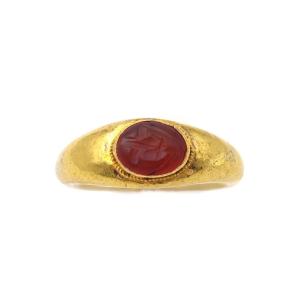
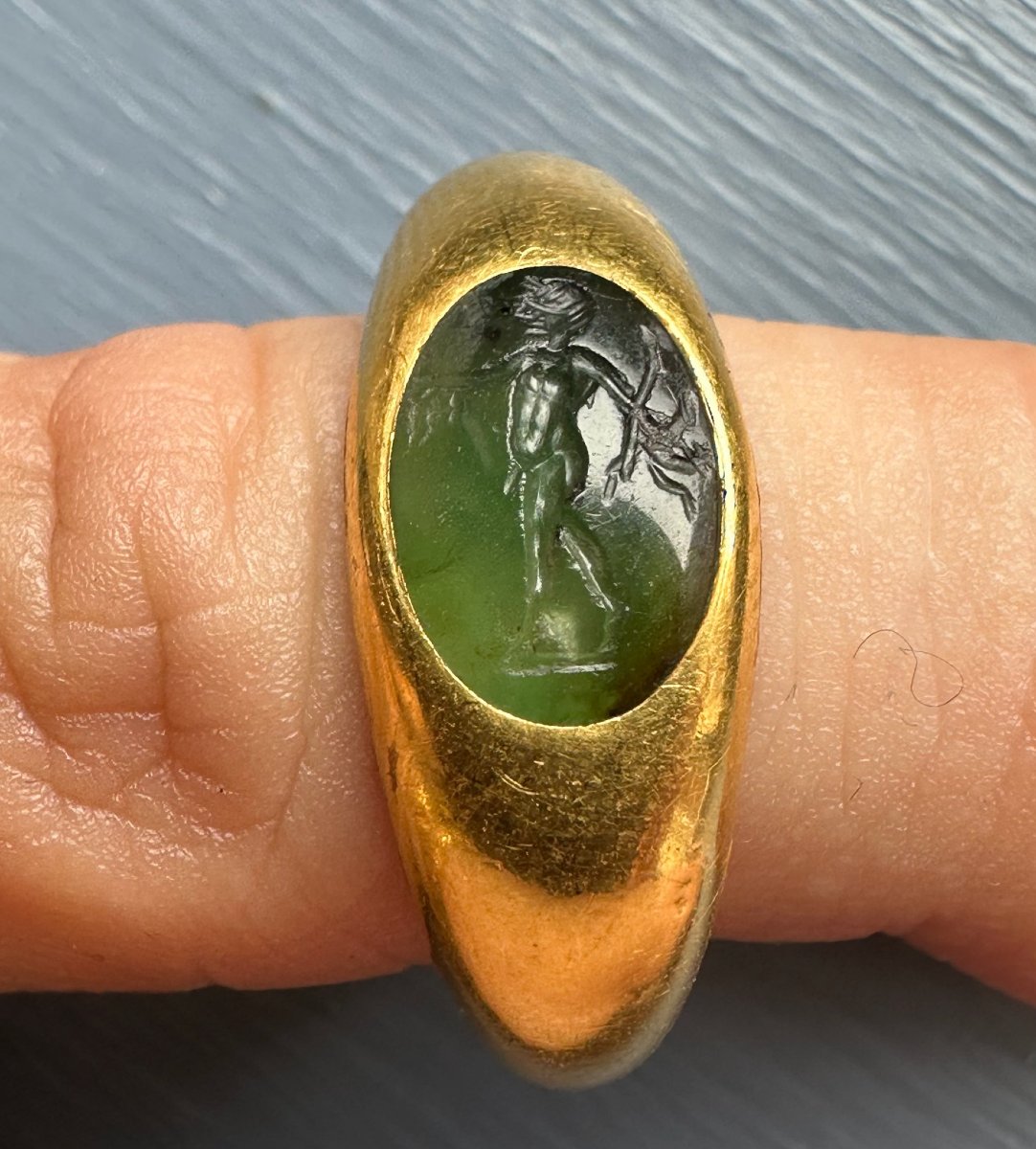
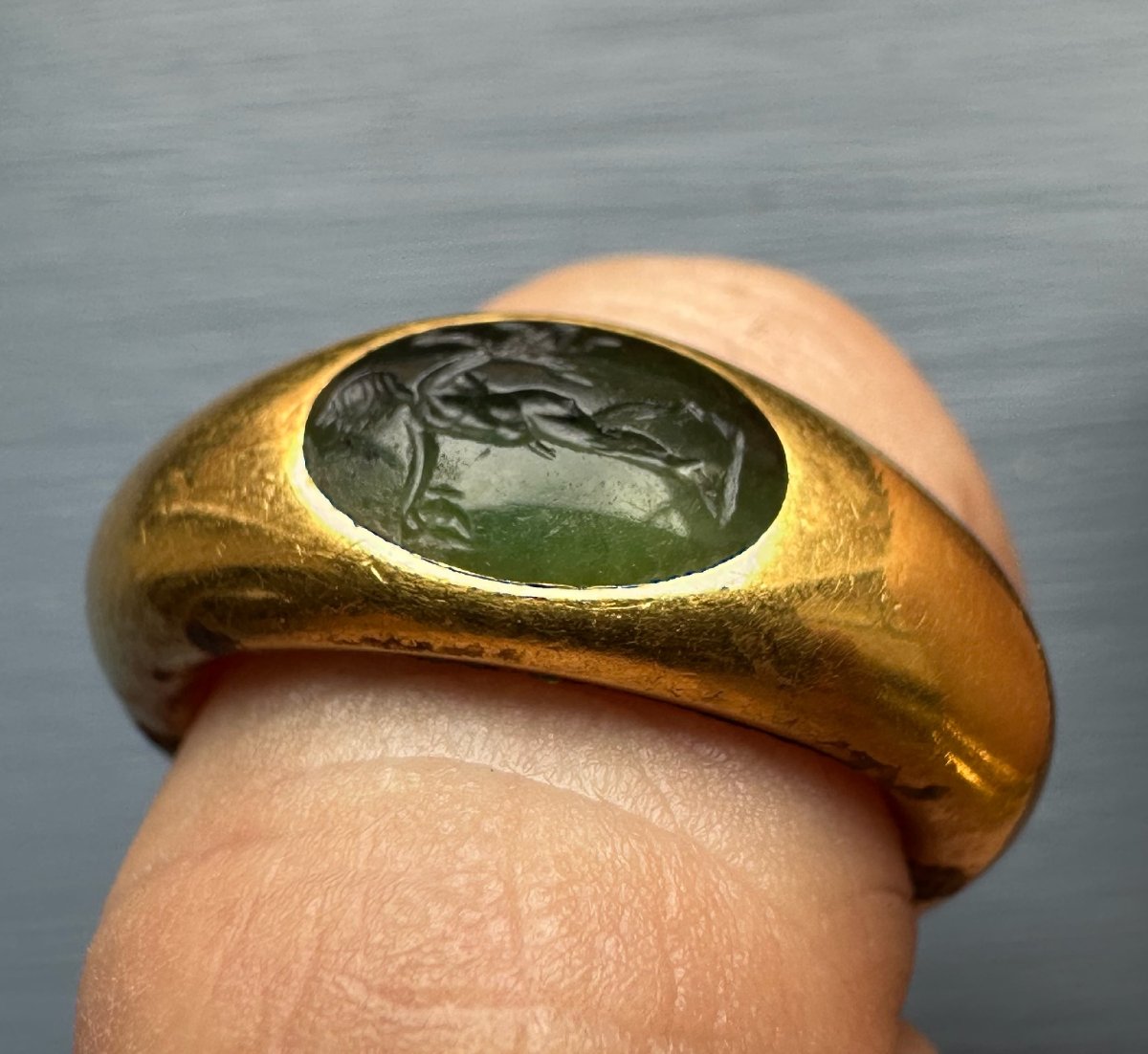
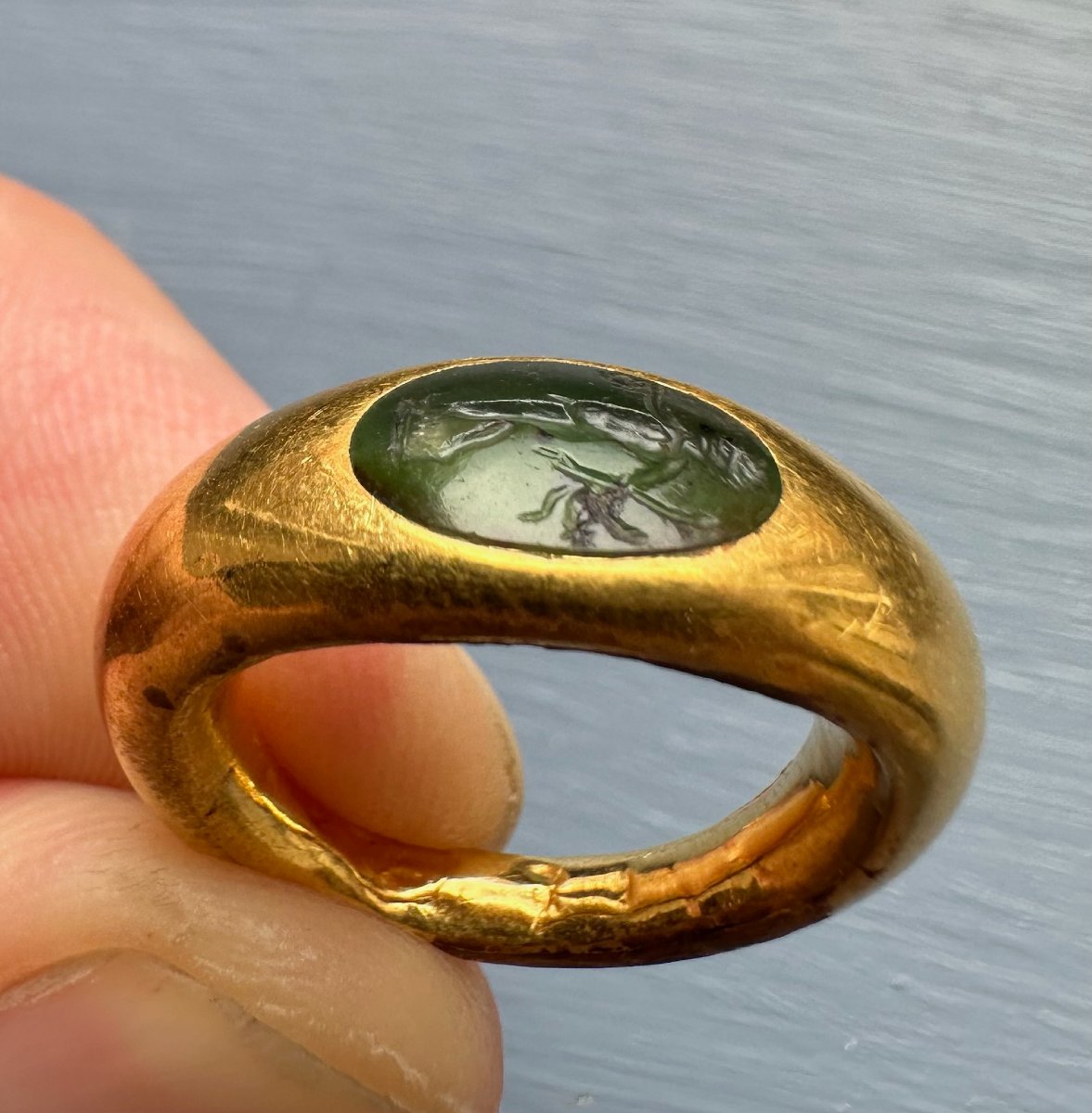
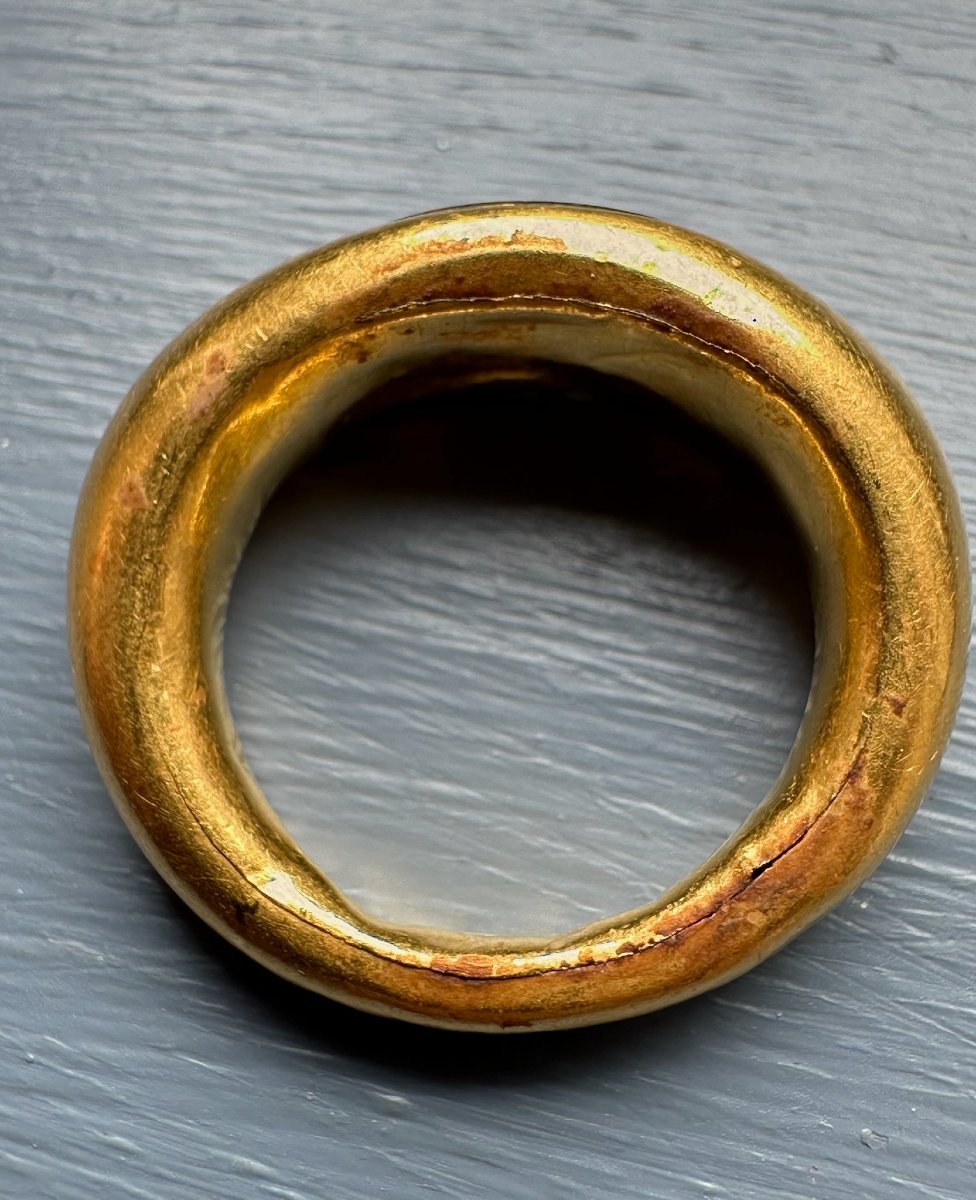
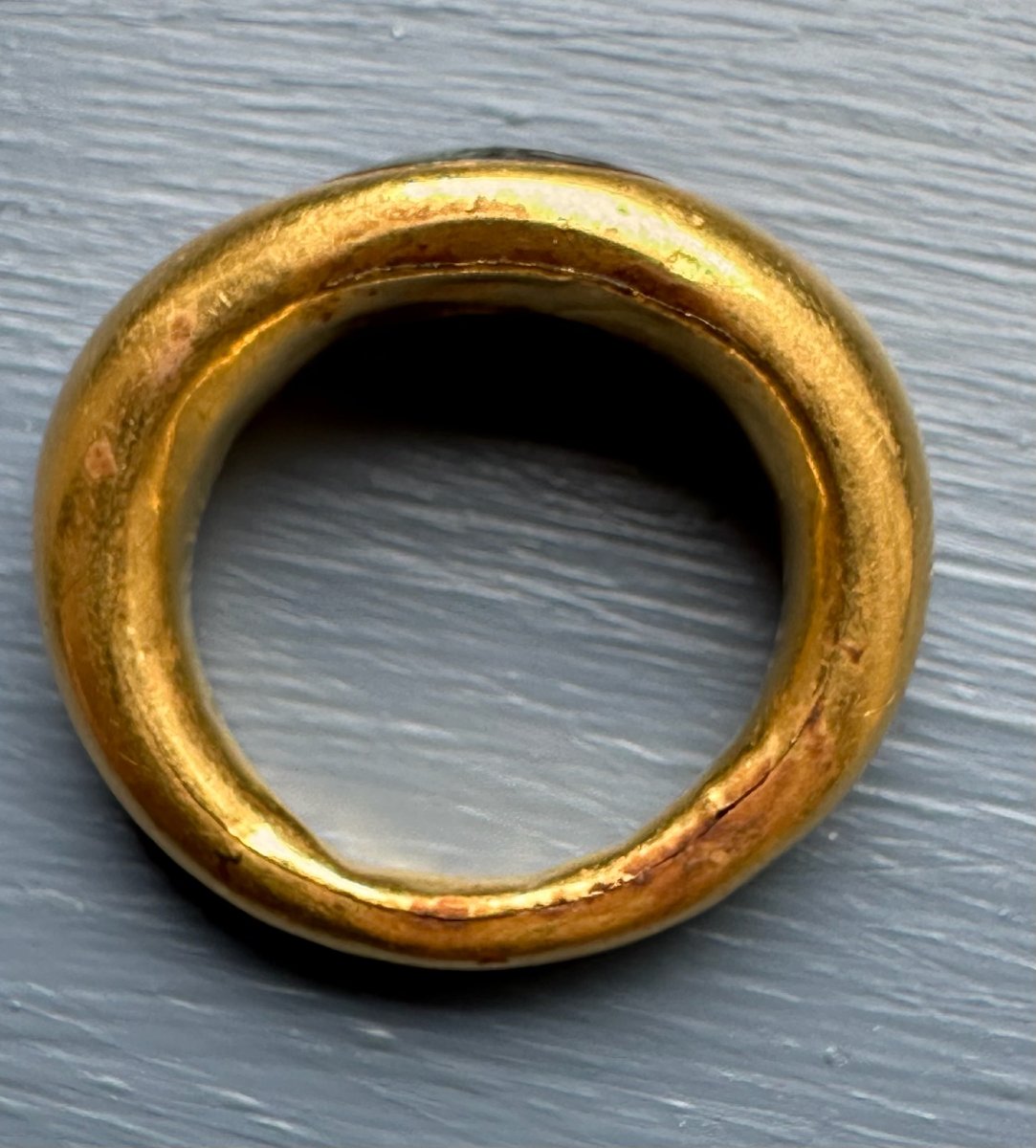
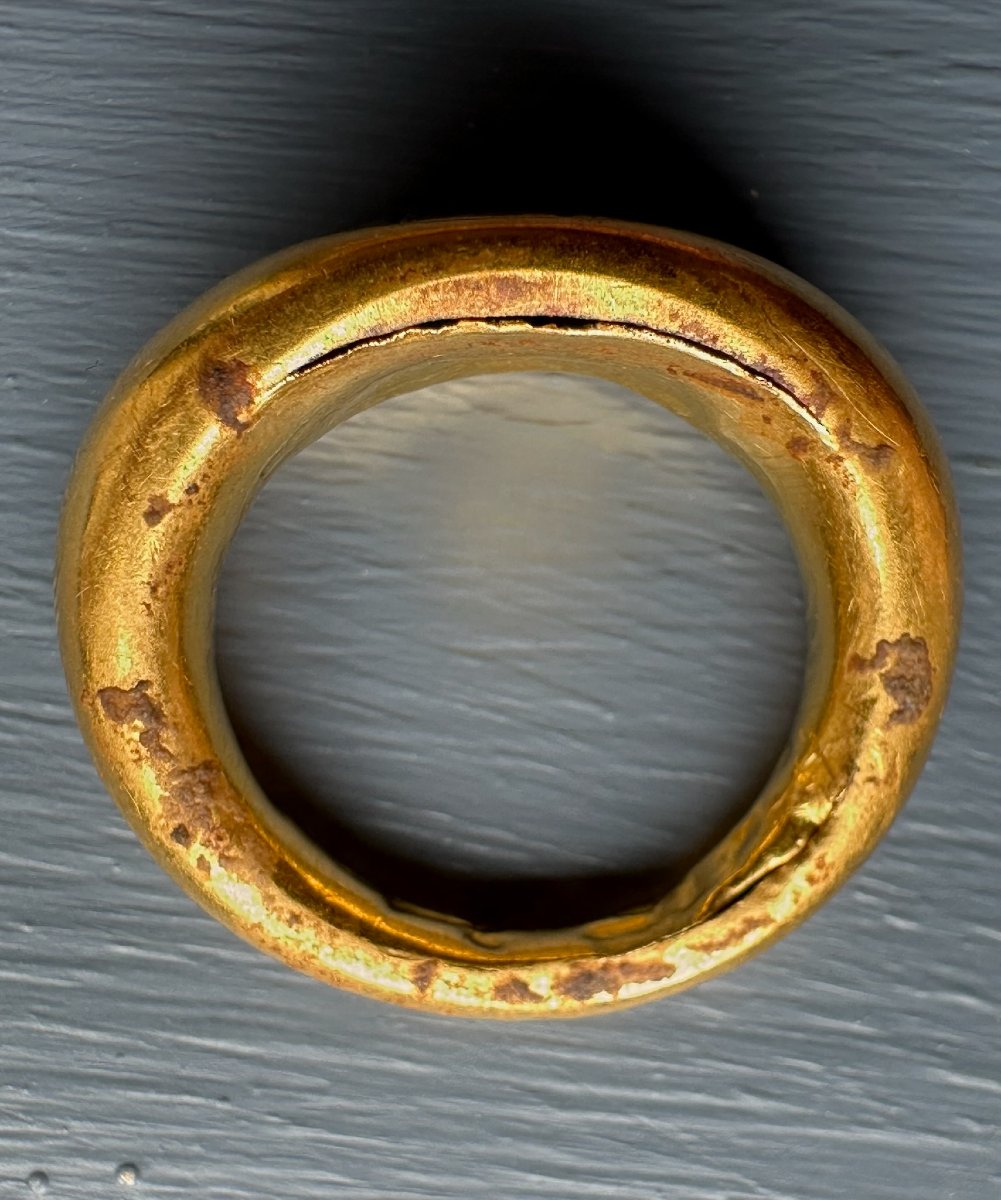
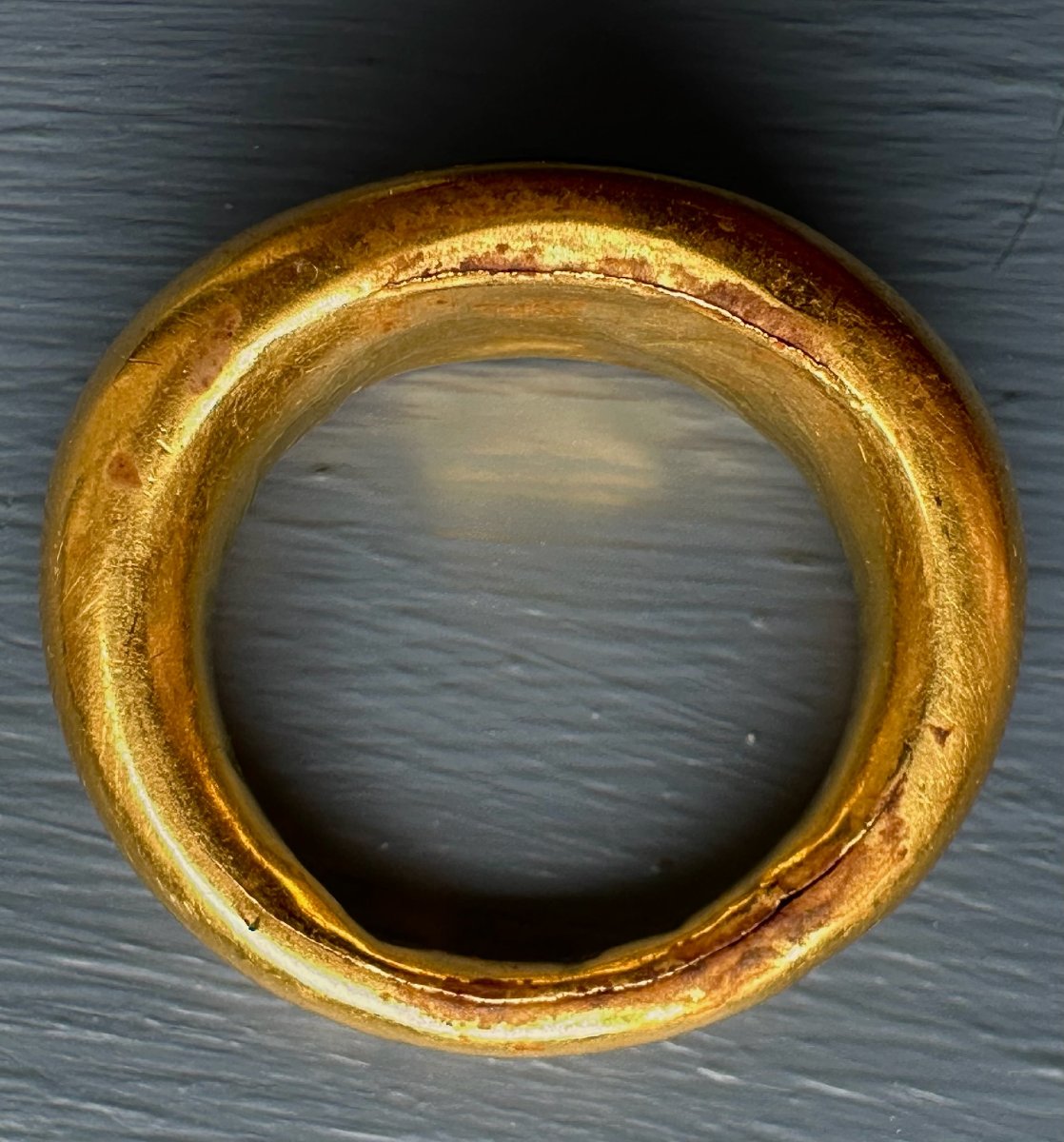
Roman hollow gold ring, with a domed bezel set with a green chalcedony intaglio depicting a satyr with Dionysian attributes. The ring, with its full and continuous curve, belongs to a classic type of Roman jewelry from the early Empire: the gold, worked into a sheet over a hollow core, gives the ring its generous volume despite its modest weight.
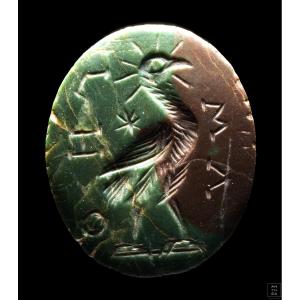
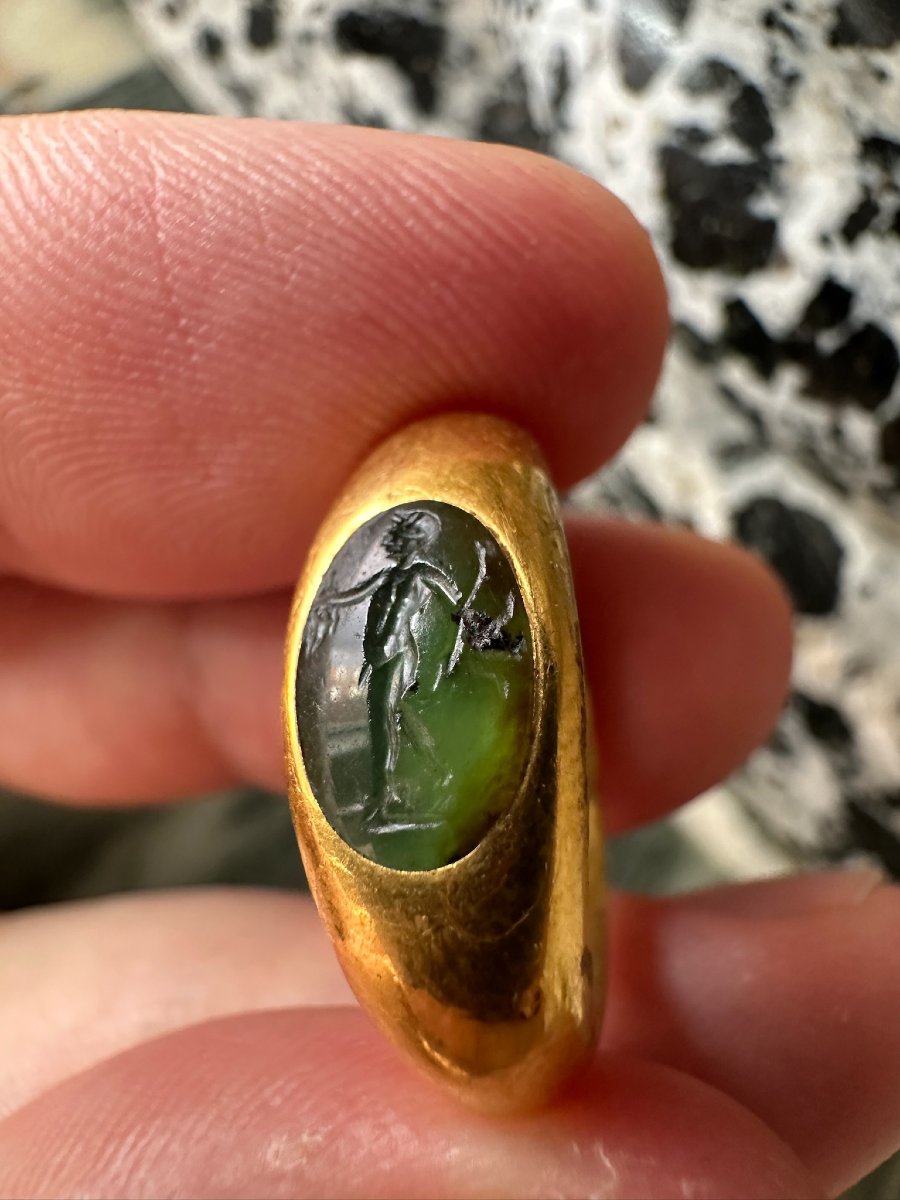
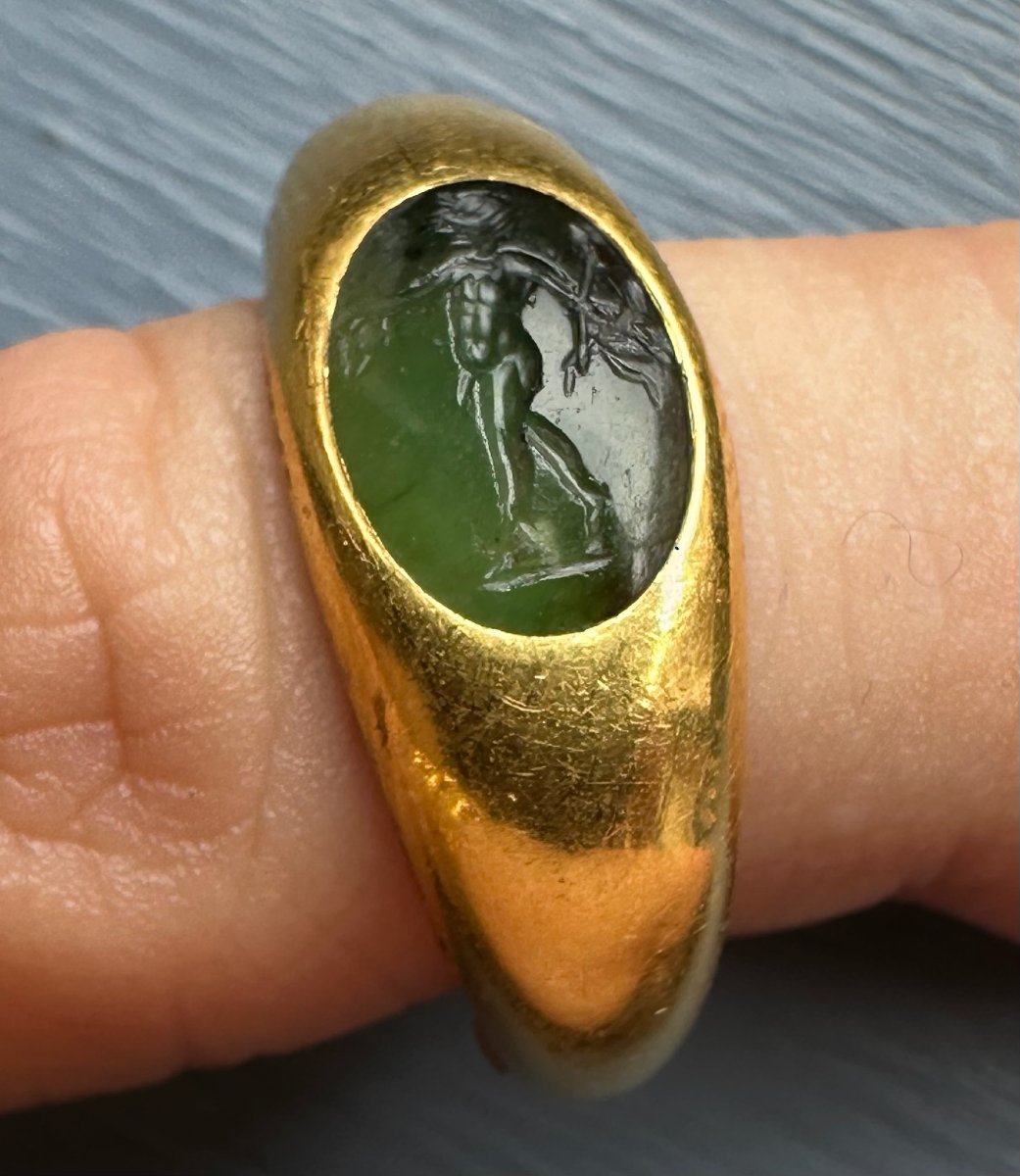
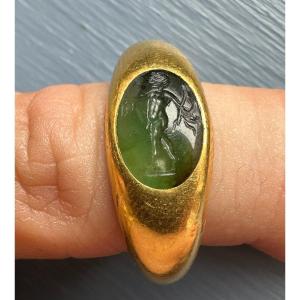
The intaglio depicts a naked satyr standing in a three-quarter view of the body and a profile view of the head, in a dynamic pose. In one hand he holds the pedum—the pastoral staff of Dionysus’s companions—and in the other an animal (a rabbit?), a common game animal in the Bacchic procession.
The Stone
Green chalcedony, translucent and deeply hued, was prized by Roman engravers of the 1st century. The choice of stone and its color echo the subject depicted here: the green reflects the wild nature and vegetation of the Dionysian world, of which the satyr is a inhabitant.
Iconography
The satyr, a half-man, half-beast creature of Dionysus’s retinue, embodies the vitality of the wild and the intoxication of the thiasos. The pedum and the game held in his hand refer to hunting and pastoral life, recurring themes in Bacchic imagery. A highly popular subject in Roman seal engraving, it transformed the ring into a talisman of vitality and abundance.
TDD EU/FR 45½ - Weight 3.96 g.
Roman art, circa 1st century
Roman hollow gold ring, with a domed bezel set with a green chalcedony intaglio depicting a satyr with Dionysian attributes. The ring, with its full and continuous curve, belongs to a classic type of Roman jewelry from the early Empire: the gold, worked into a sheet over a hollow core, gives the ring its generous volume despite its modest weight.
The intaglio depicts a naked satyr standing in a three-quarter view of the body and a profile view of the head, in a dynamic pose. In one hand he holds the pedum—the pastoral staff of Dionysus’s companions—and in the other an animal (a rabbit?), a common game animal in the Bacchic procession.
The Stone
Green chalcedony, translucent and deeply hued, was prized by Roman engravers of the 1st century. The choice of stone and its color echo the subject depicted here: the green reflects the wild nature and vegetation of the Dionysian world, of which the satyr is a inhabitant.
Iconography
The satyr, a half-man, half-beast creature of Dionysus’s retinue, embodies the vitality of the wild and the intoxication of the thiasos. The pedum and the game held in his hand refer to hunting and pastoral life, recurring themes in Bacchic imagery. A highly popular subject in Roman seal engraving, it transformed the ring into a talisman of vitality and abundance.
2 900 €
Period: Before 16th century
Style: Rome and Antic Greece
Condition: Good condition
Material: Gold
Reference (ID): 1800121
Availability: In stock
Print