THIS OBJECT WAS SOLD
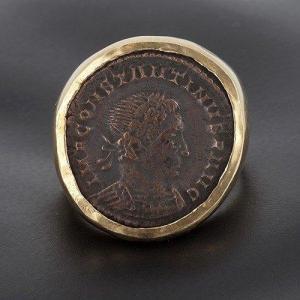
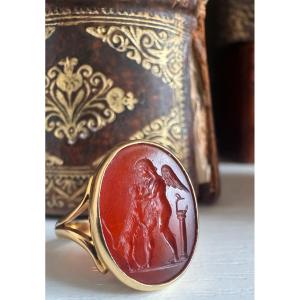
A 22-karat Solid Gold Ring Set With A Large Roman Intaglio On Chalcedony. Jupiter And Mars.


Chalcedony intaglio - 22-carat setting
Intaglio 13 × 17 mm; EU TDD 57; Weight 12.31 g.
Intaglio: Roman art, 2nd–3rd century
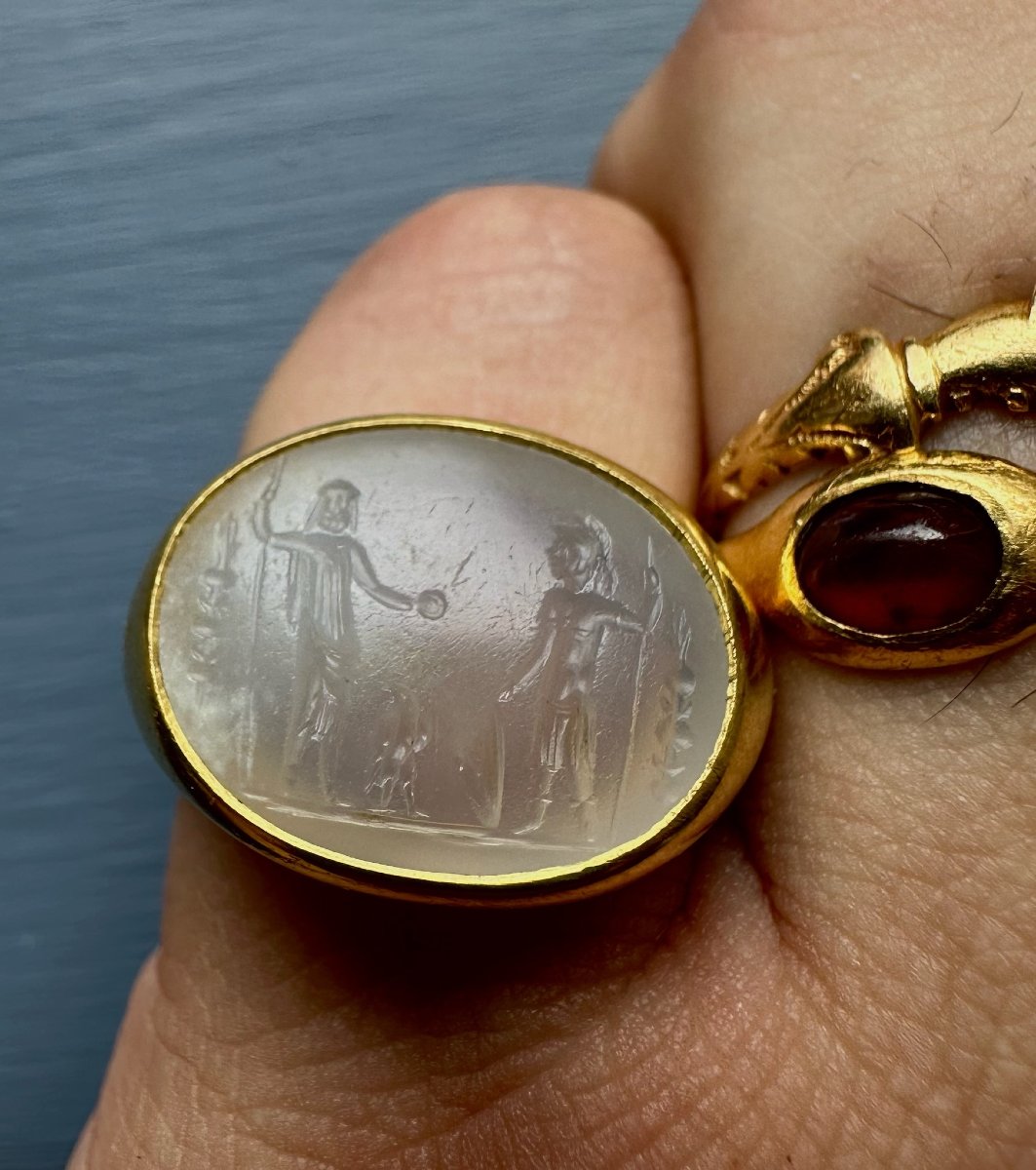
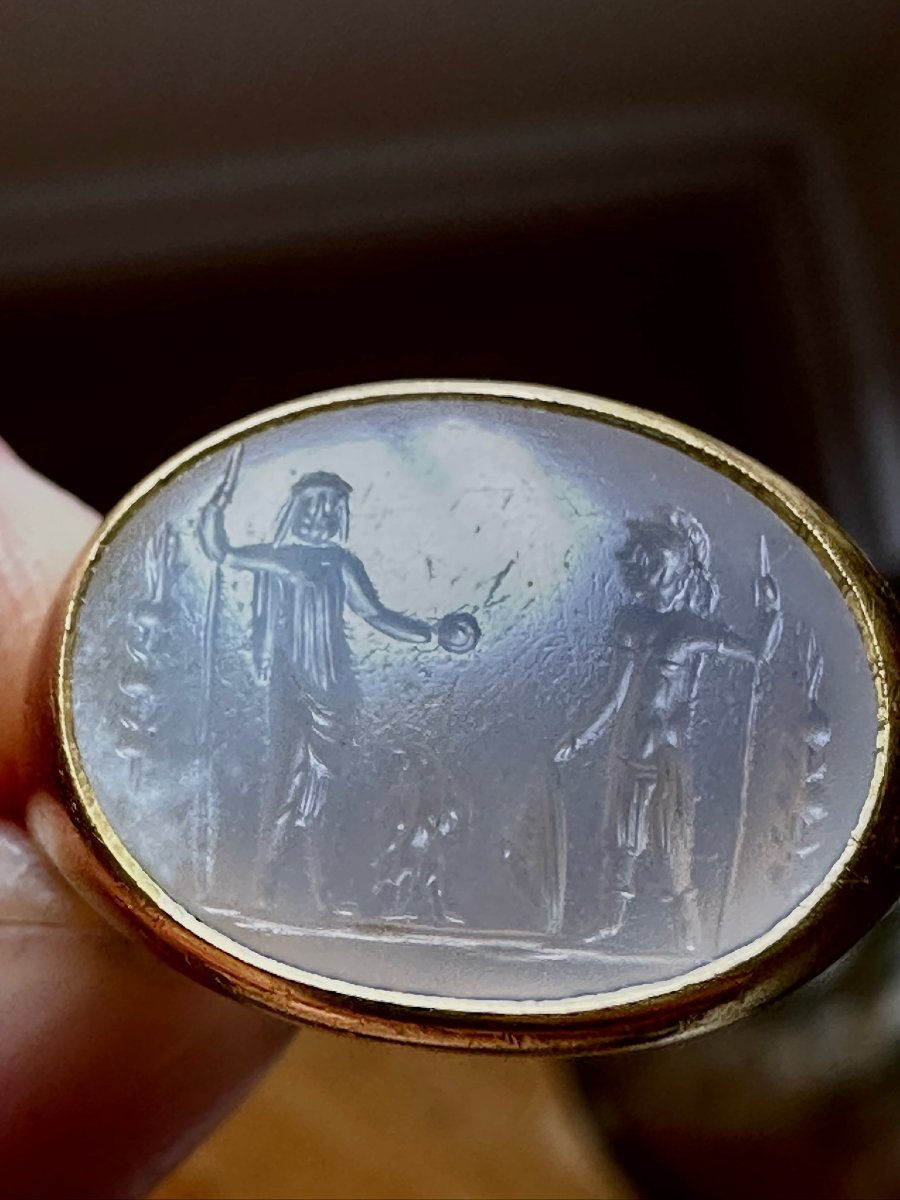
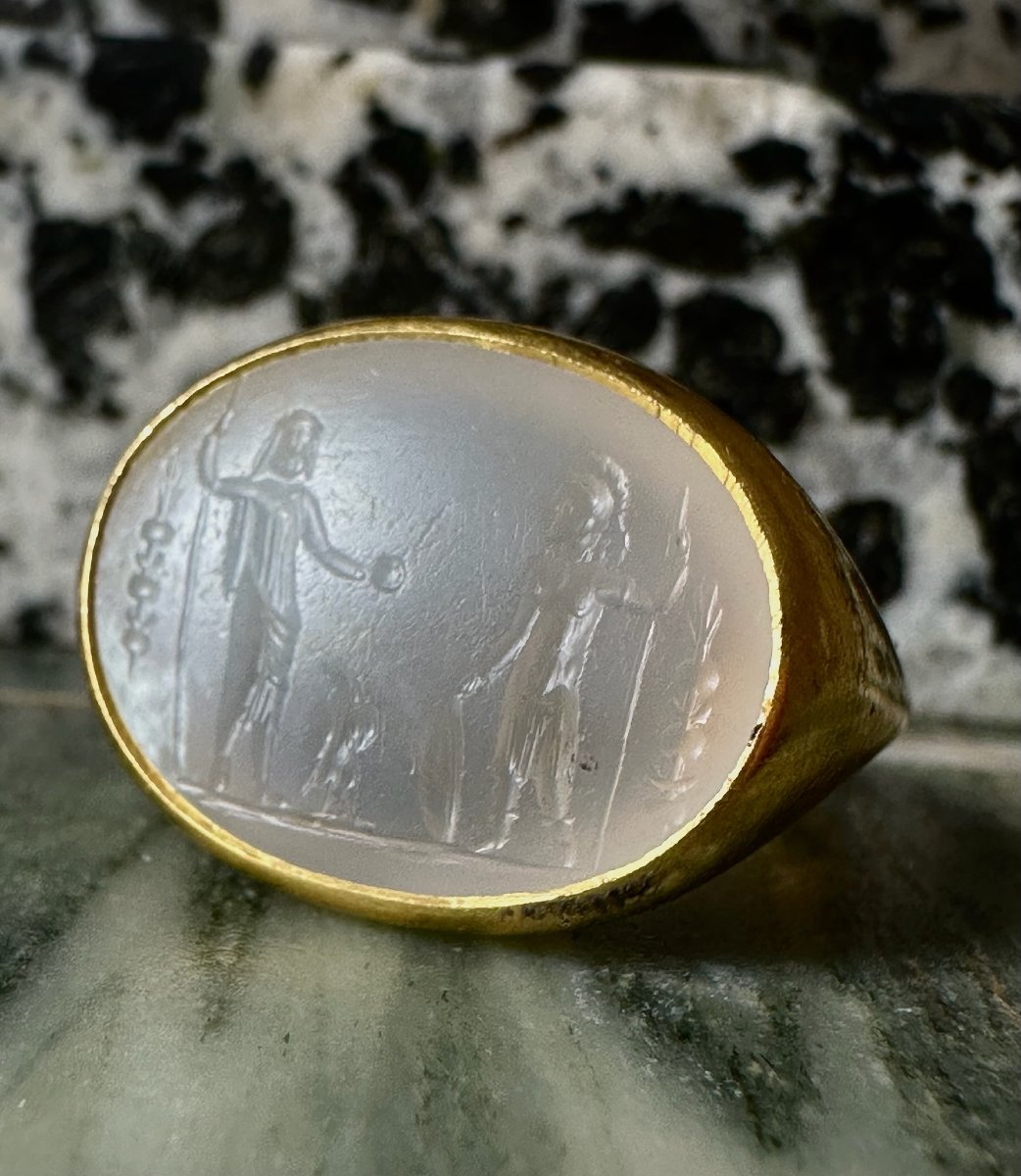
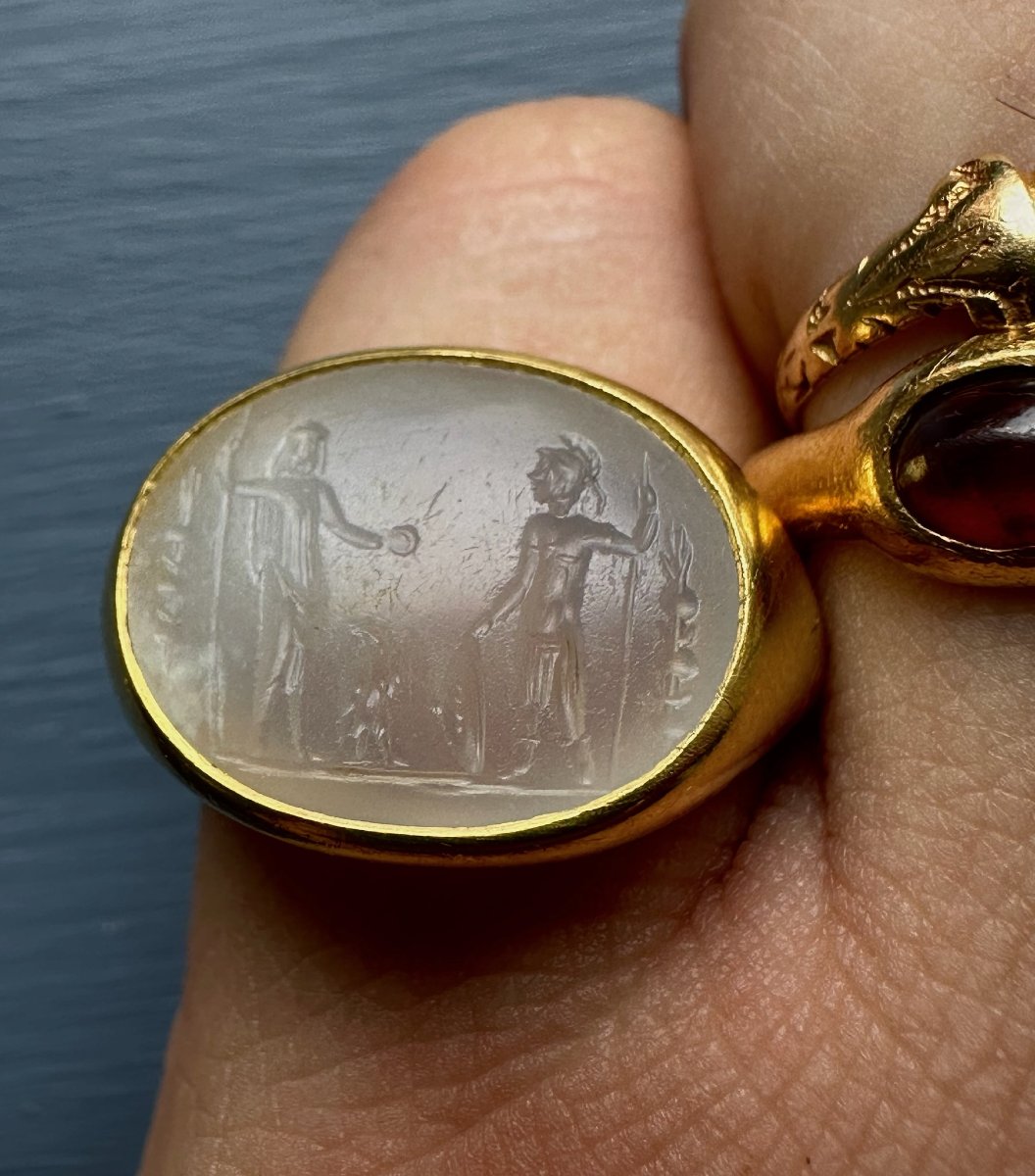
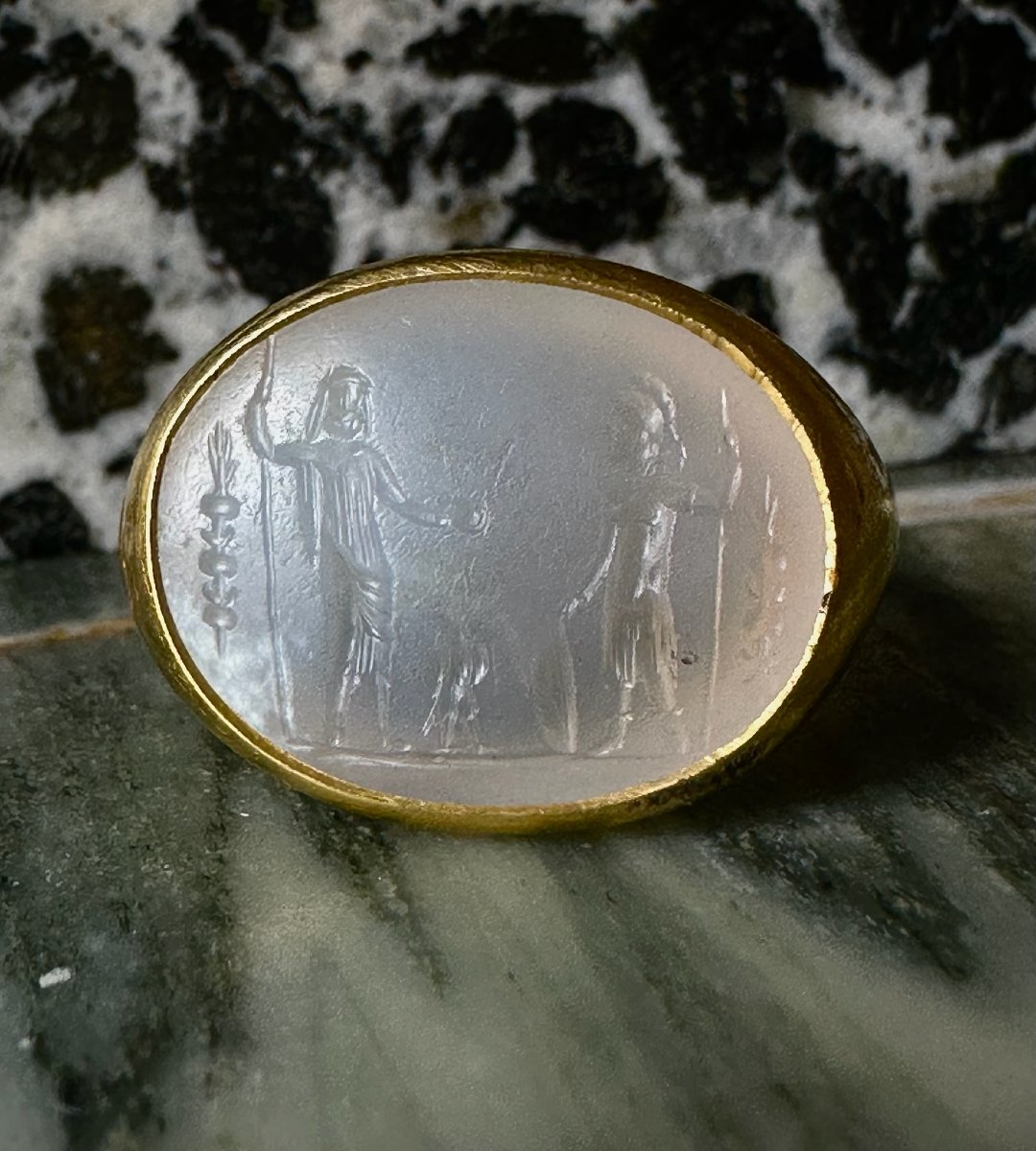
Important Roman chalcedony intaglio depicting Jupiter and Mars, mounted on a 22-karat gold ring with an oval bezel set in a closed setting. The stone, a beautifully cut, milky, and translucent piece, features a two-figure composition of remarkable clarity—an allegory of Roman military supremacy.
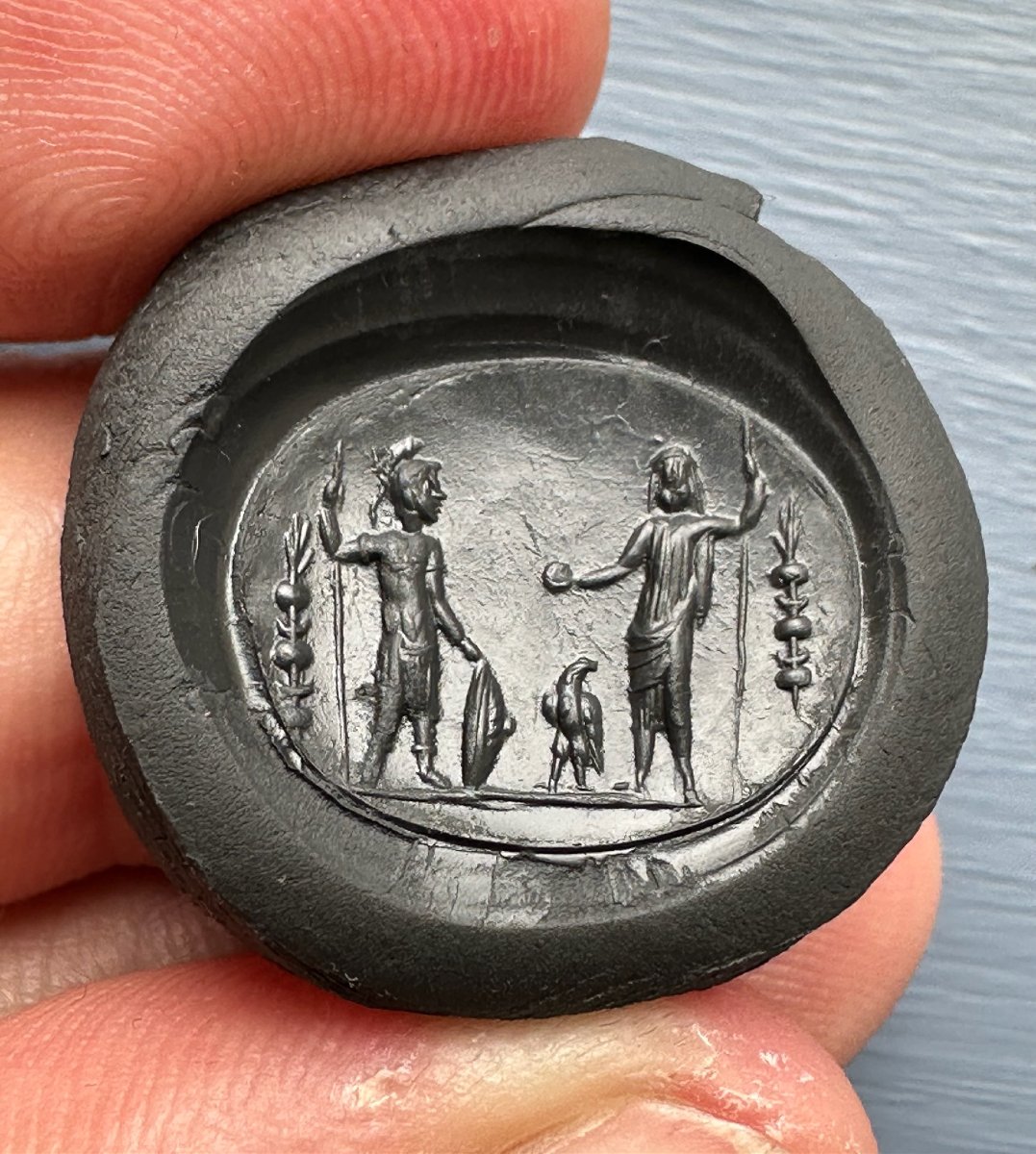
Mars stands wearing a helmet, his spear raised, his hand resting on his shield. Facing him, the draped Jupiter holds the scepter and extends the patera; at his feet lies the eagle, his bird. The two deities are flanked by military standards (signa) composed of superimposed crescent moons and topped with hands (manus), the insignia of the Roman maniples. The entire composition rests on a baseline. The engraving, precise and airy, arranges the figures and standards with the balance of a coin’s reverse.
Iconography
The meeting of Jupiter, guarantor of sovereign order, and Mars, god of war, amidst the legionary standards, forms an allegory of military supremacy placed under divine protection. Jupiter’s outstretched hand sanctifies the scene—a libation and pact between the power of the gods and the strength of arms—while the eagle, an attribute of Jupiter and emblem of the legions, serves as the link between the two registers.
The Standards
This type of standard featuring an open hand and a lunule refers to the signa militaria of the Roman legions. The hand, made of bronze or silver at the top of the shaft, represented loyalty and divine protection; it also alluded to the military oath (sacramentum) that bound the soldier to his legion. It was often paired with the lunule and decorative phalerae-style discs, arranged in a stack along the shaft. The lunule, for its part, was a symbol of good luck.
Comparanda
Detail of a Roman marble bas-relief depicting the standard consisting of lunulae, phalerae, and a hand, 3rd century, Chiesa di San Marcello al Corso, Rome.
Intaglio 13 × 17 mm; EU TDD 57; Weight 12.31 g.
Intaglio: Roman art, 2nd–3rd century
Important Roman chalcedony intaglio depicting Jupiter and Mars, mounted on a 22-karat gold ring with an oval bezel set in a closed setting. The stone, a beautifully cut, milky, and translucent piece, features a two-figure composition of remarkable clarity—an allegory of Roman military supremacy.
Mars stands wearing a helmet, his spear raised, his hand resting on his shield. Facing him, the draped Jupiter holds the scepter and extends the patera; at his feet lies the eagle, his bird. The two deities are flanked by military standards (signa) composed of superimposed crescent moons and topped with hands (manus), the insignia of the Roman maniples. The entire composition rests on a baseline. The engraving, precise and airy, arranges the figures and standards with the balance of a coin’s reverse.
Iconography
The meeting of Jupiter, guarantor of sovereign order, and Mars, god of war, amidst the legionary standards, forms an allegory of military supremacy placed under divine protection. Jupiter’s outstretched hand sanctifies the scene—a libation and pact between the power of the gods and the strength of arms—while the eagle, an attribute of Jupiter and emblem of the legions, serves as the link between the two registers.
The Standards
This type of standard featuring an open hand and a lunule refers to the signa militaria of the Roman legions. The hand, made of bronze or silver at the top of the shaft, represented loyalty and divine protection; it also alluded to the military oath (sacramentum) that bound the soldier to his legion. It was often paired with the lunule and decorative phalerae-style discs, arranged in a stack along the shaft. The lunule, for its part, was a symbol of good luck.
Comparanda
Detail of a Roman marble bas-relief depicting the standard consisting of lunulae, phalerae, and a hand, 3rd century, Chiesa di San Marcello al Corso, Rome.
Explore similar pieces and discover your ideal find:
rings