


Pair Of Brigadier General's Epaulets In Accordance With The Regulations Of 1 Vendémiaire, Year XII (september 24, 1
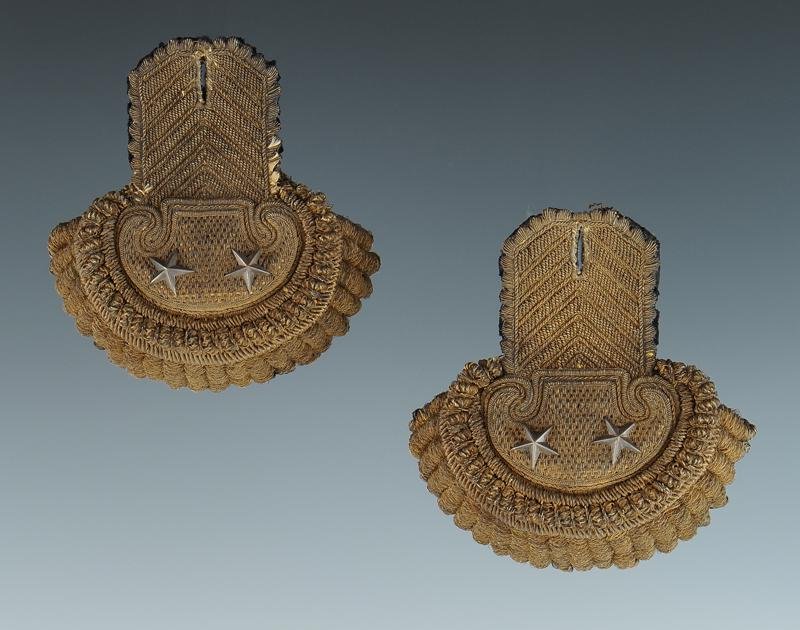
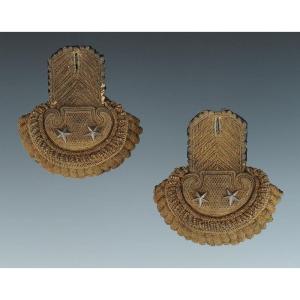
PAIR OF BRIGADIER GENERAL'S EPaulettes in accordance with the regulations of 1 Vendémiaire, Year XII (September 24, 1803), First Empire. 33618(8727)
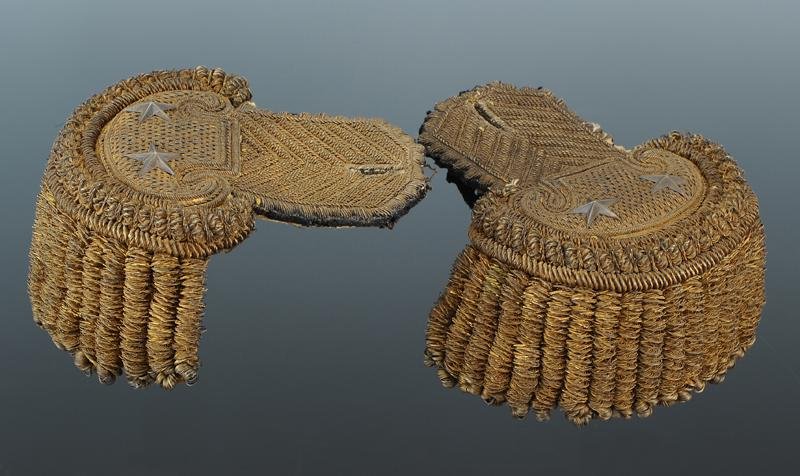
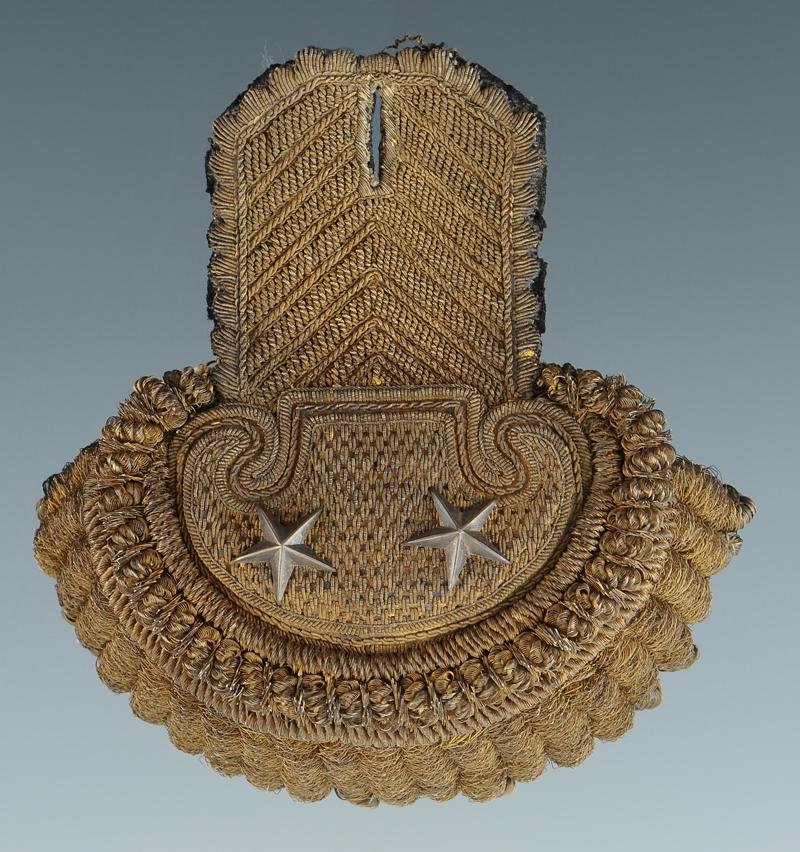
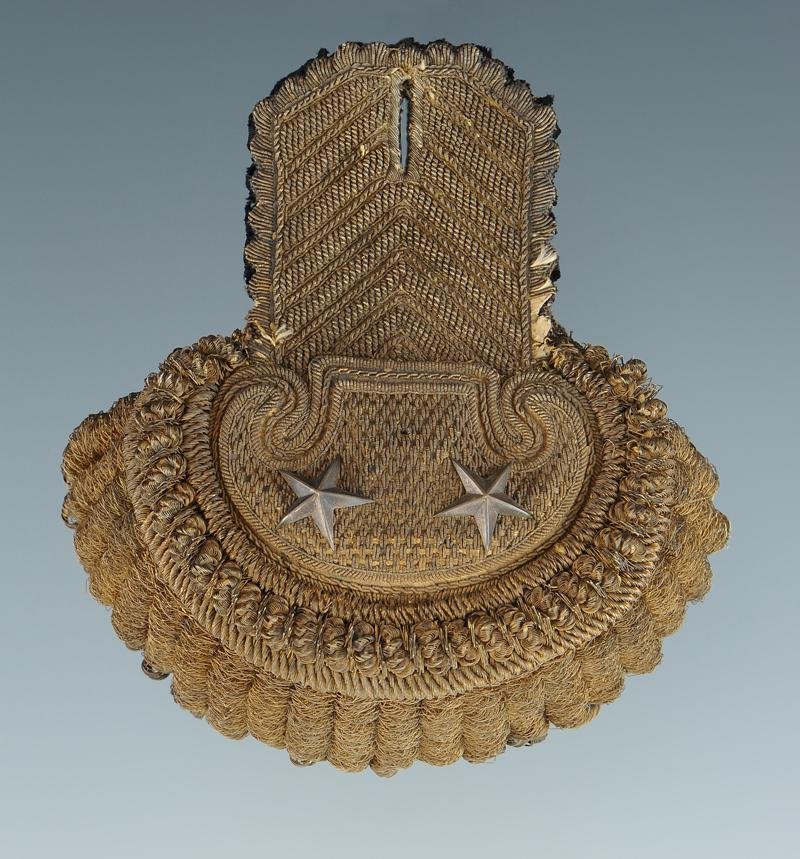
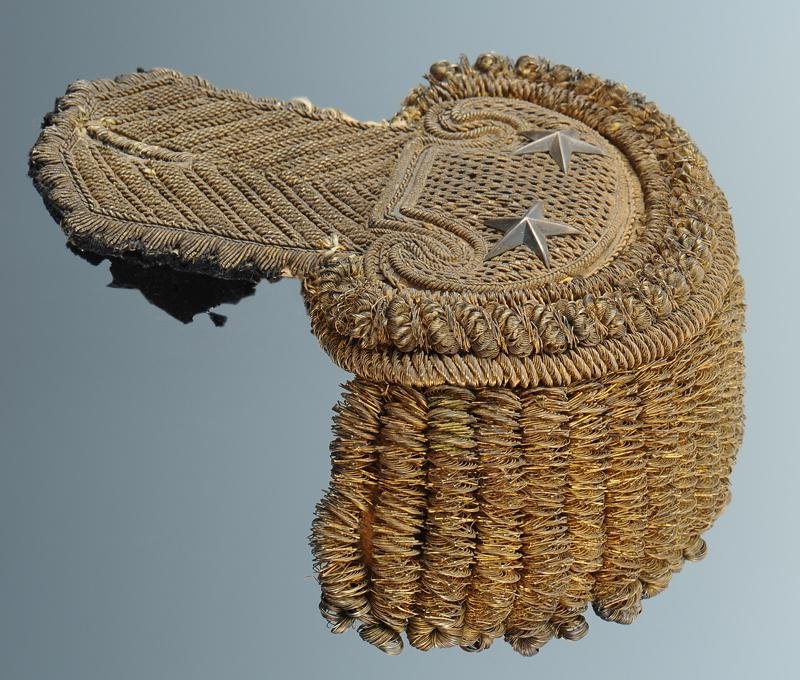
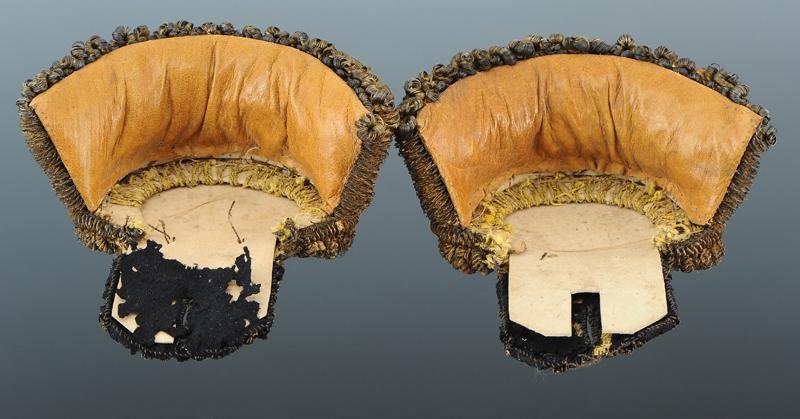
Embroidered with twisted scrollwork and gold sequins. The body is embroidered with a design featuring a V-shaped braided trim, edged with a scalloped border on dark blue, almost black, woolen fabric; coat of arms decorated with a shield embroidered with godrons and adorned with two clasped stamped silver stars, Ø 2.2 cm. The outline of this escutcheon consists of two large twisted cords: one made of matte and shiny spun cord, alternately coiled, and the other similar but of slightly smaller diameter. Fringes arranged in three rows of thick twists known as “spinach seeds,” reinforced at the fringes with an ochre leather welt. Body made of cardboard lined with dark blue, almost black cloth.
Length of the body without the shield: 7.27 cm.
Length of the body with the shield: 12.5 cm.
Length of the body with both swivels: 14.8 cm.
Width of the body: 7 cm.
Width of the shield and the three swivels: 12.2 cm.
Total height of the body and fringes: 6.5 cm.
Originally, these epaulets were intended for a major general; the location of the third star is still visible. It appears that this third star was removed intentionally, as there are no signs of it having been torn off, and this element is missing from both epaulets. During the Empire, and particularly during the Russian Campaign, there are accounts stating that upon a general’s death, his clothing was resold to other general officers to raise money for his widow.
France.
First Empire.
Good condition; the third star is missing from each epaulette, as is the original blue cloth lining.
Bibliography:
“Regulations on the Uniforms of Generals and Staff Officers of the Armies...” was adopted on the 1st of Vendémiaire, Year XII (September 24, 1803), and published in the official military journal of 1803, illustrated with twelve engraved plates.
Regarding general officers of all ranks, the regulations stipulate: “The badge, made of gilded and chiseled metal, depicting a trophy of arms in relief...”.
Embroidered with twisted scrollwork and gold sequins. The body is embroidered with a design featuring a V-shaped braided trim, edged with a scalloped border on dark blue, almost black, woolen fabric; coat of arms decorated with a shield embroidered with godrons and adorned with two clasped stamped silver stars, Ø 2.2 cm. The outline of this escutcheon consists of two large twisted cords: one made of matte and shiny spun cord, alternately coiled, and the other similar but of slightly smaller diameter. Fringes arranged in three rows of thick twists known as “spinach seeds,” reinforced at the fringes with an ochre leather welt. Body made of cardboard lined with dark blue, almost black cloth.
Length of the body without the shield: 7.27 cm.
Length of the body with the shield: 12.5 cm.
Length of the body with both swivels: 14.8 cm.
Width of the body: 7 cm.
Width of the shield and the three swivels: 12.2 cm.
Total height of the body and fringes: 6.5 cm.
Originally, these epaulets were intended for a major general; the location of the third star is still visible. It appears that this third star was removed intentionally, as there are no signs of it having been torn off, and this element is missing from both epaulets. During the Empire, and particularly during the Russian Campaign, there are accounts stating that upon a general’s death, his clothing was resold to other general officers to raise money for his widow.
France.
First Empire.
Good condition; the third star is missing from each epaulette, as is the original blue cloth lining.
Bibliography:
“Regulations on the Uniforms of Generals and Staff Officers of the Armies...” was adopted on the 1st of Vendémiaire, Year XII (September 24, 1803), and published in the official military journal of 1803, illustrated with twelve engraved plates.
Regarding general officers of all ranks, the regulations stipulate: “The badge, made of gilded and chiseled metal, depicting a trophy of arms in relief...”.
5 500 €
Period: 19th century
Style: Consulat, Empire
Condition: Excellent condition
Reference (ID): 1797759
Availability: In stock
Print