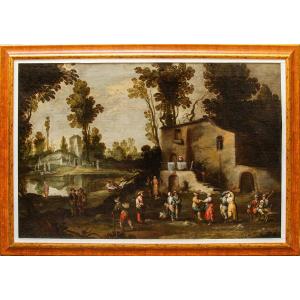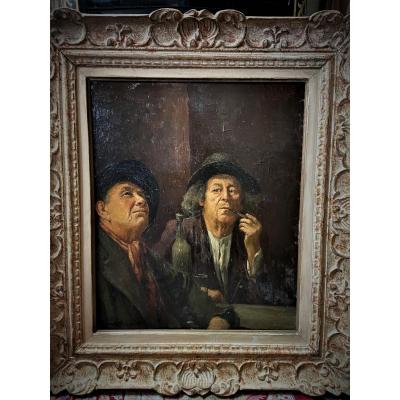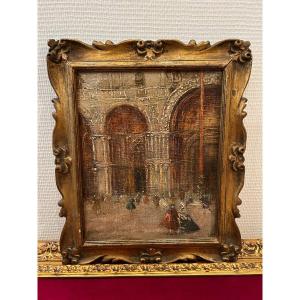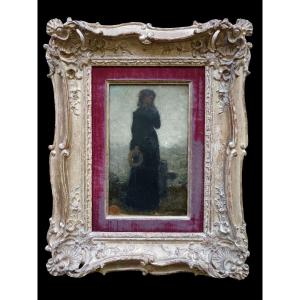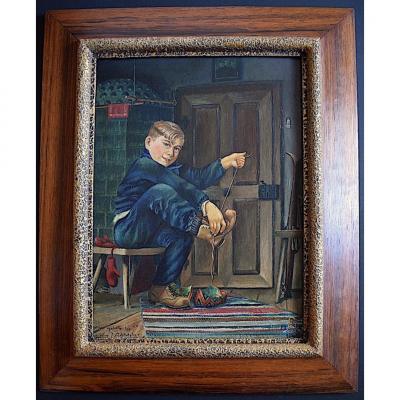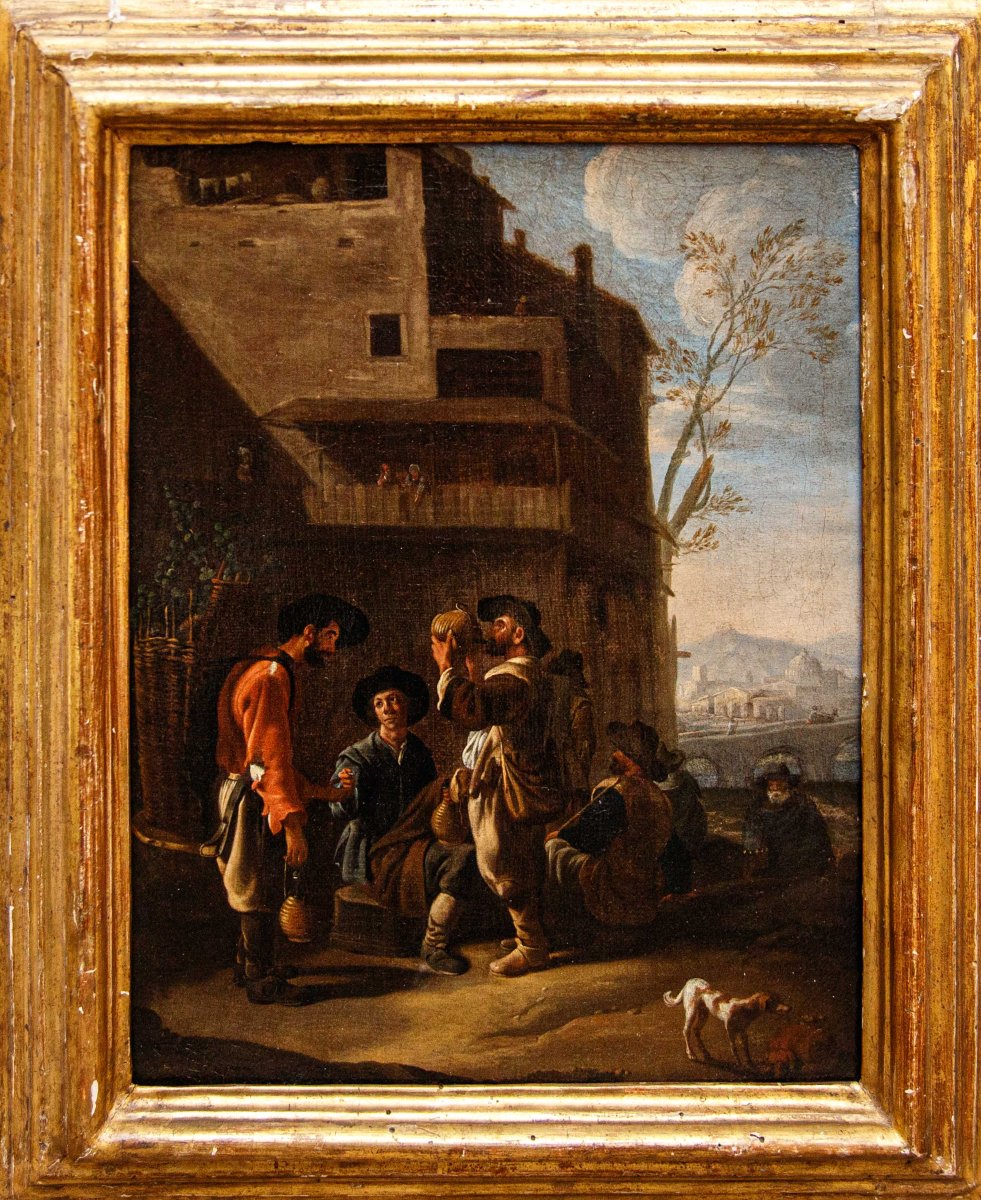
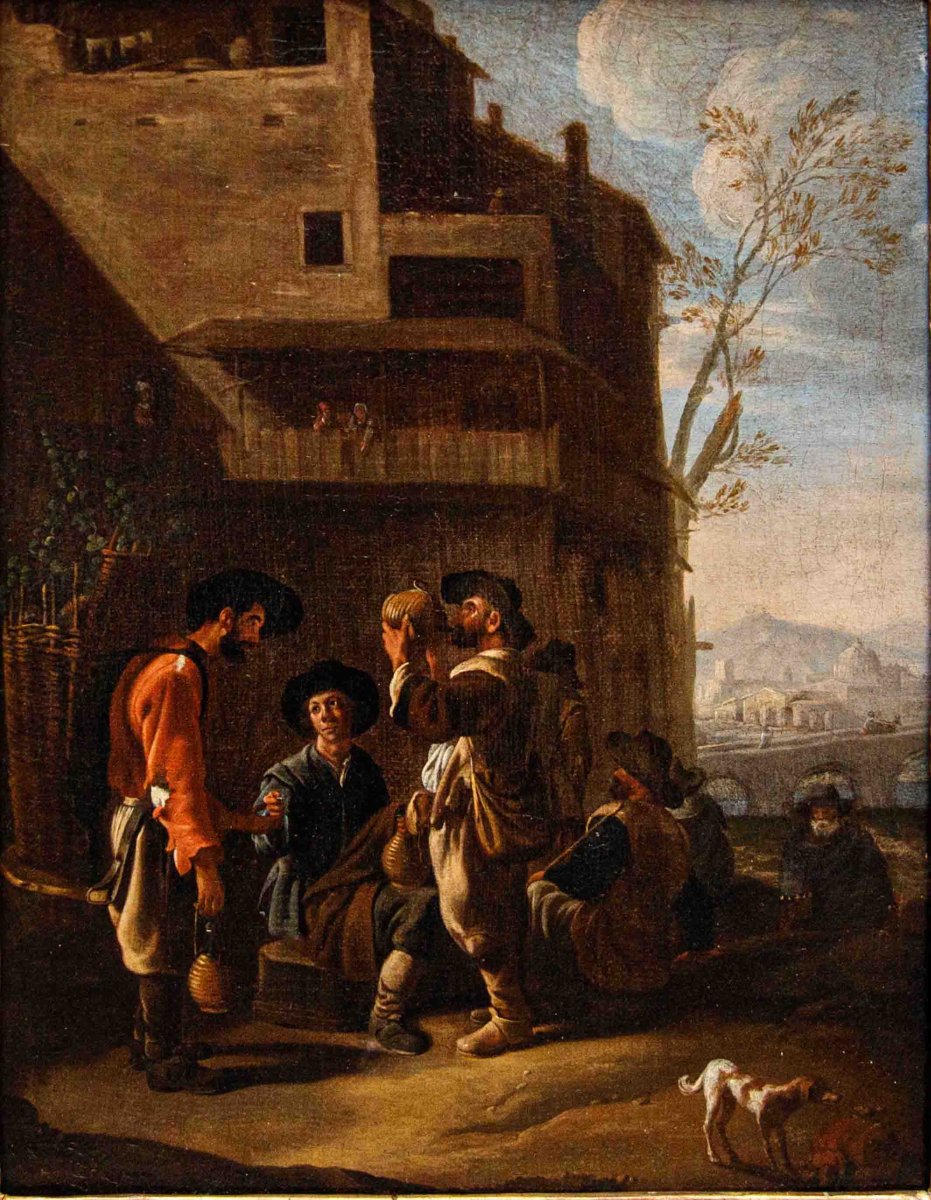
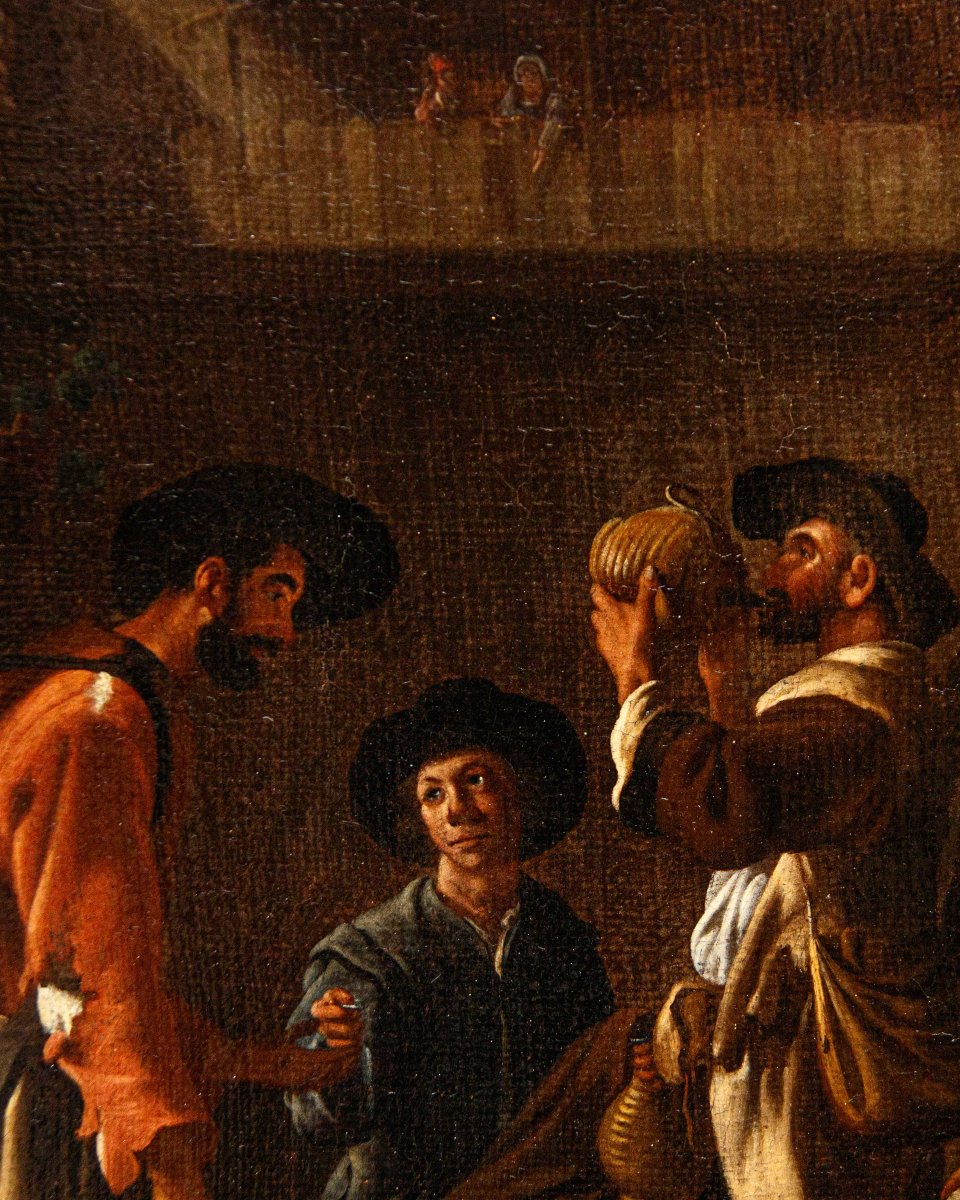
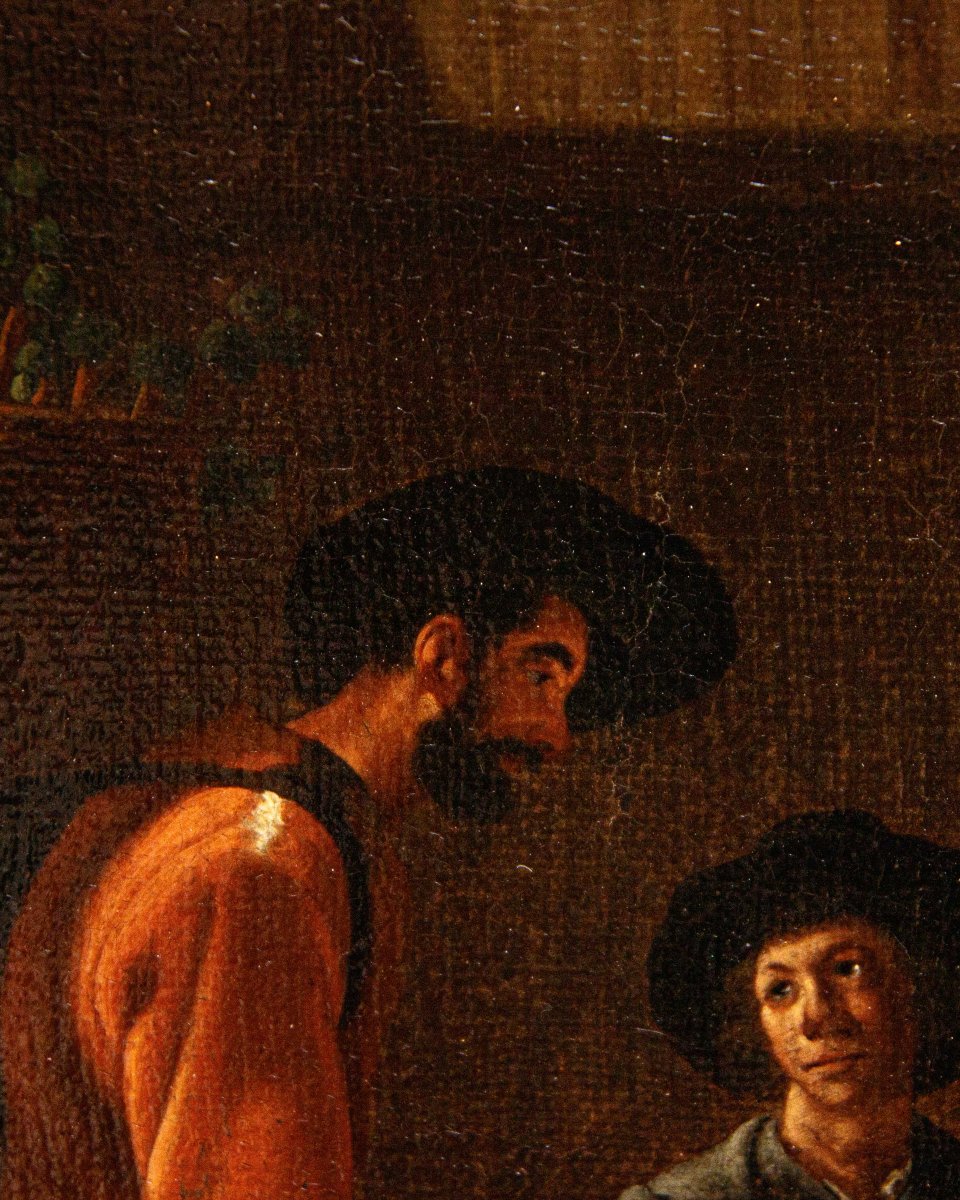
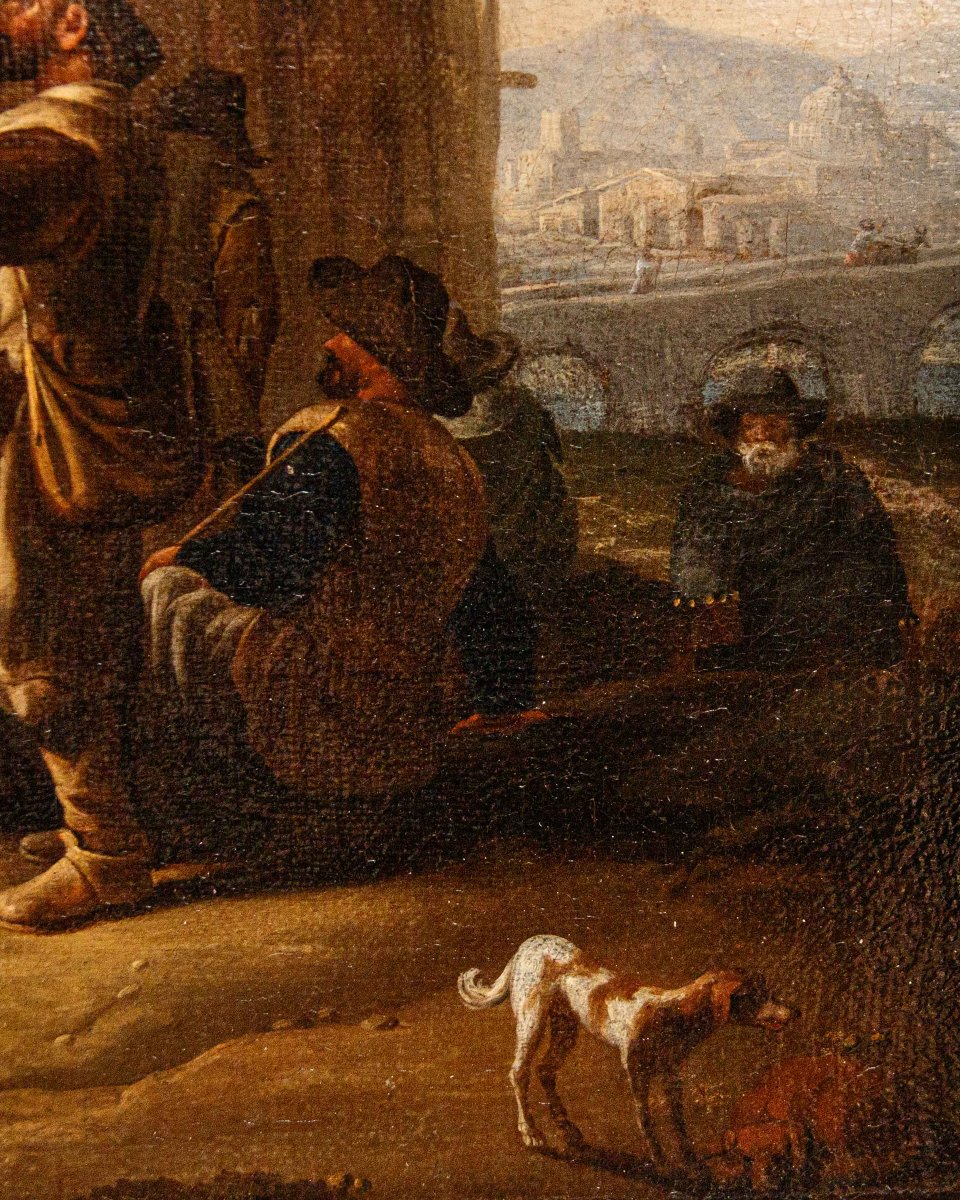
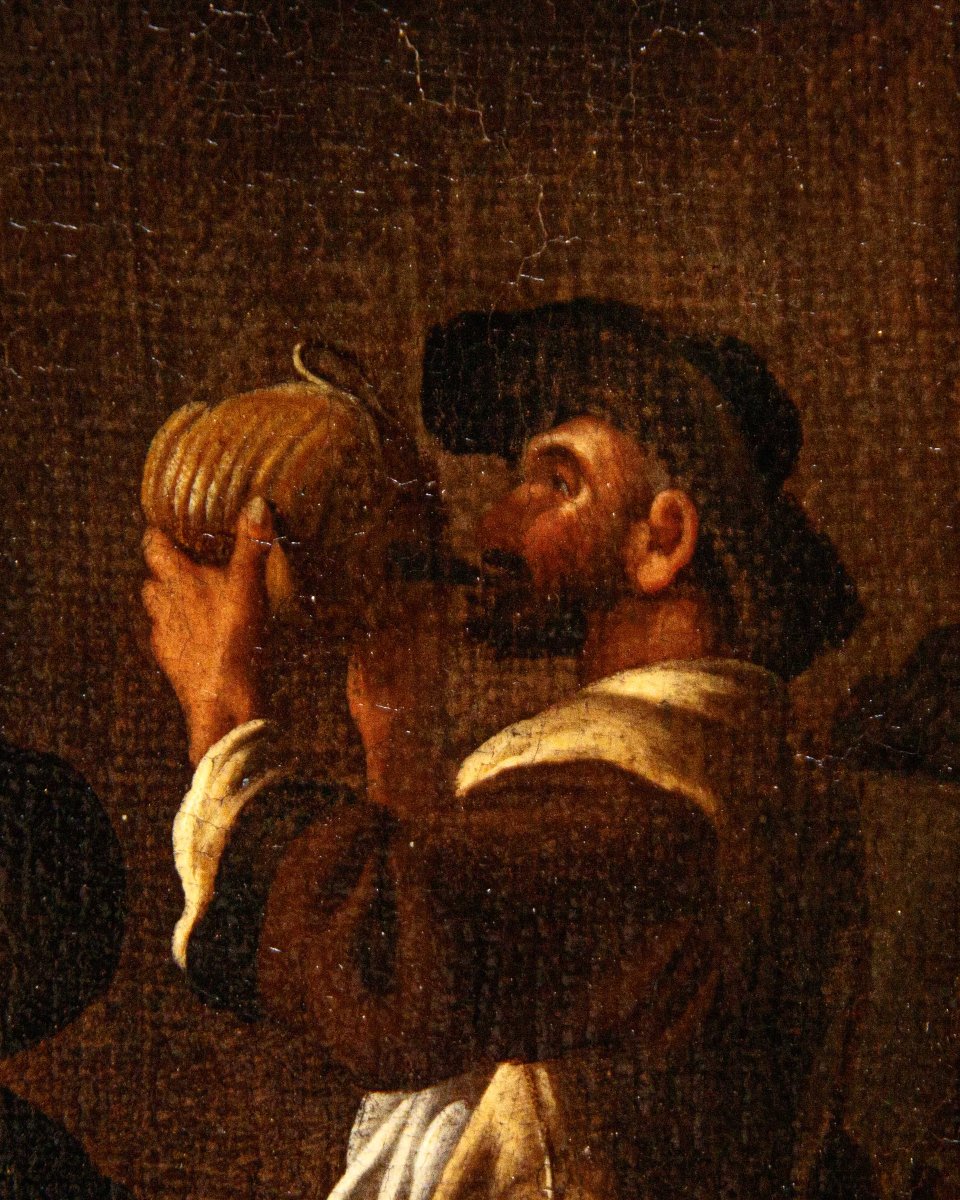
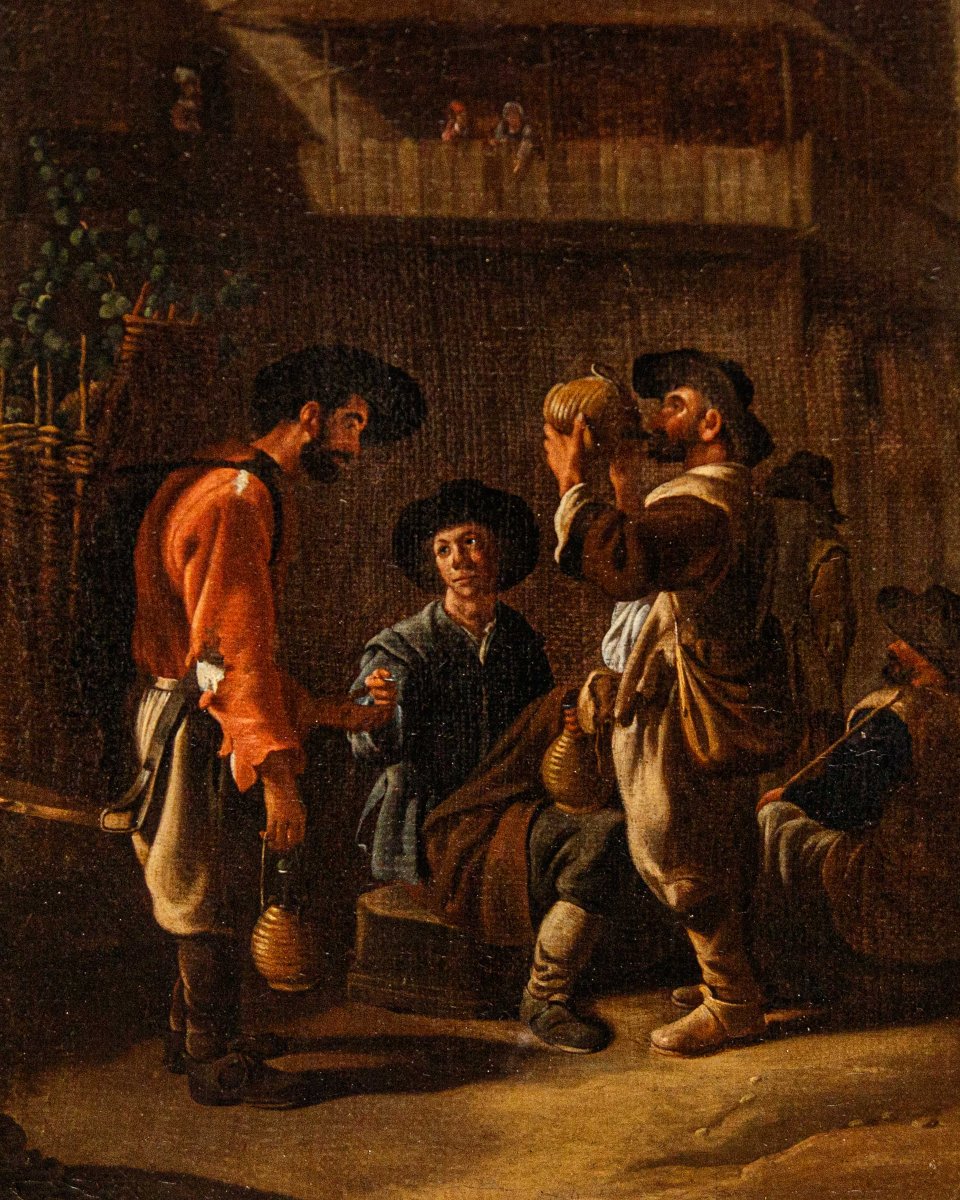
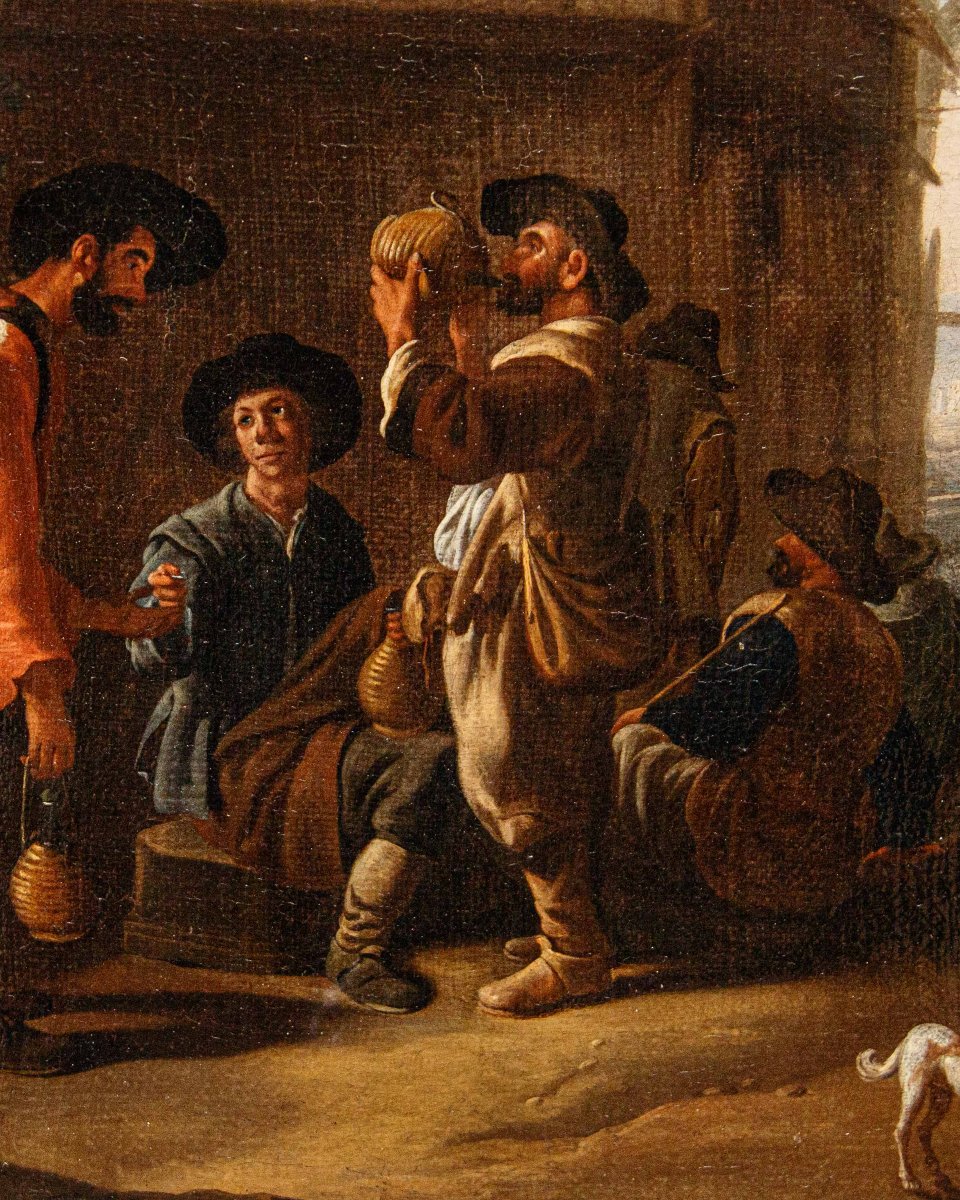
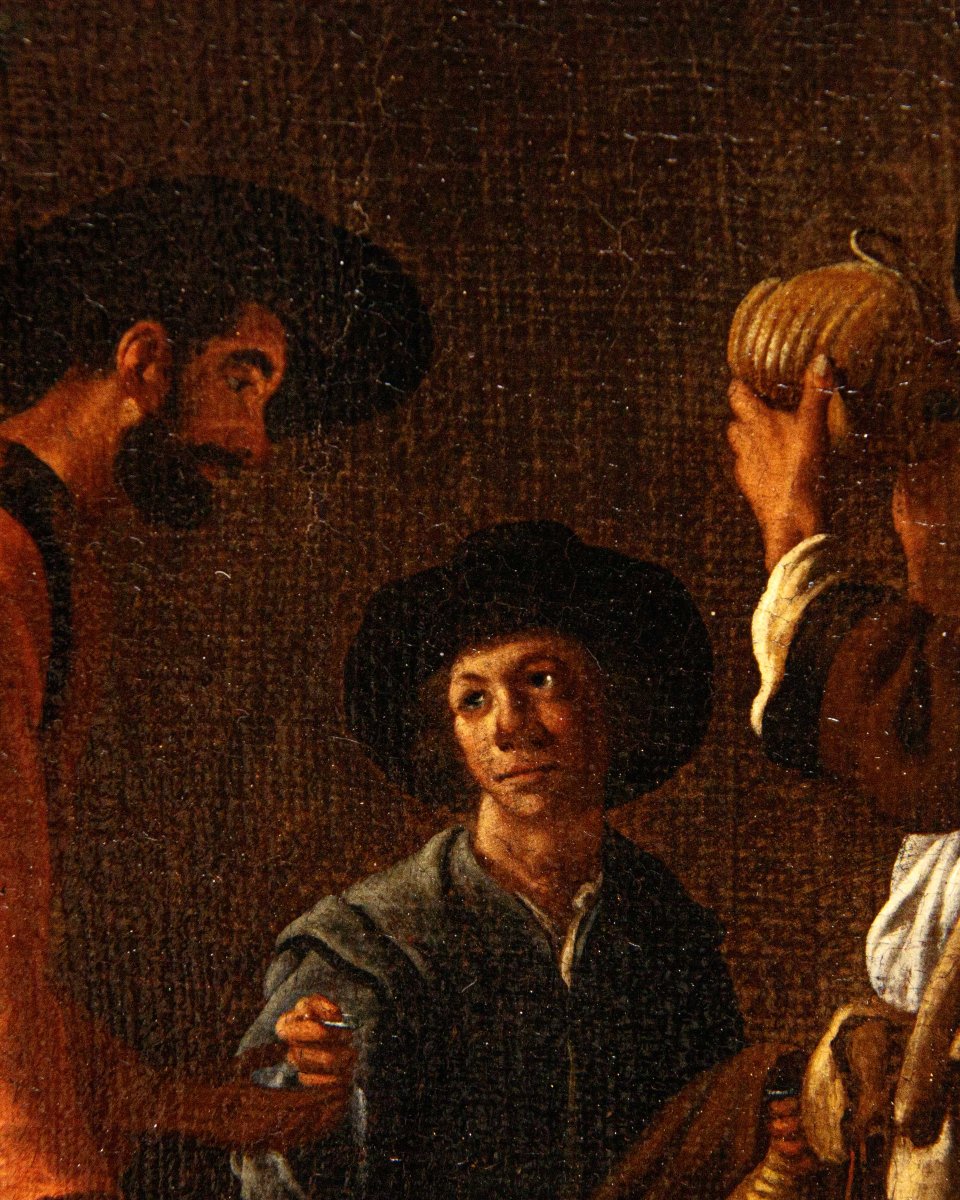
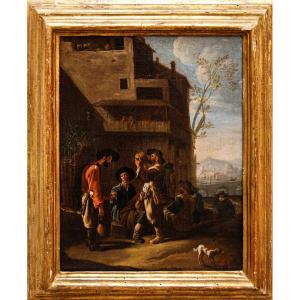


Johannes Lingelbach, Sometimes Also Known As Jan (1622–1674), Scene With Drinkers
Johannes Lingelbach, sometimes also known as Jan (Frankfurt am Main, October 10, 1622 – Amsterdam, November 1674)
Scene with Drinkers
Oil on canvas, 44 x 34 cm
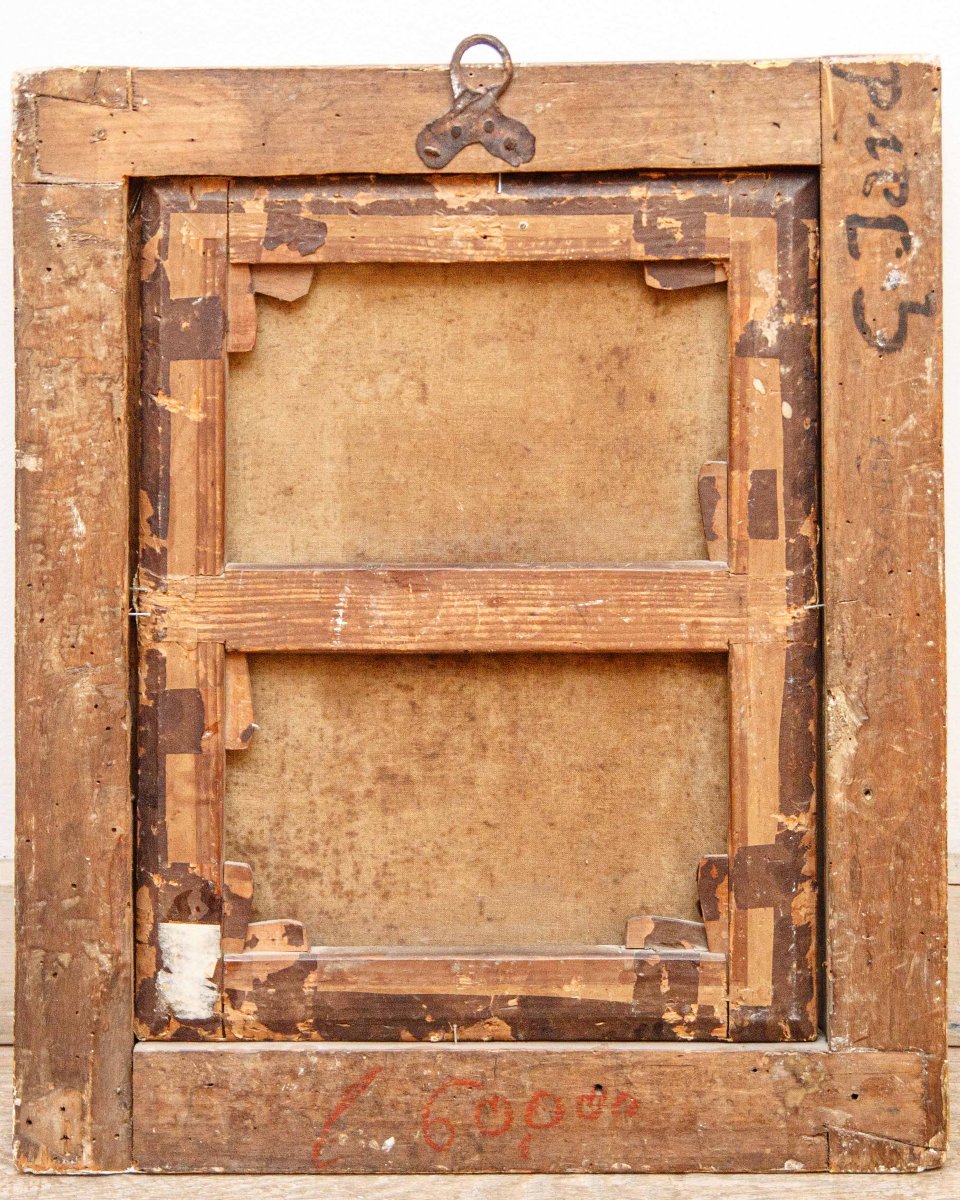
With frame, 54 x 44 cm
The painting in question is a prime example of the genre painting that flourished in Rome during the 17th century, created by Northern European artists collectively known as the Bamboccianti. The work, attributable to Johannes Lingelbach (1622–1674), one of the most important members of the second generation of this group, captures a snapshot of Roman working-class life with a keen and non-idealized eye.
Born in 1622 in Frankfurt am Main, he moved with his family to Amsterdam in 1634, where his father David had decided to establish the small business he owned. Johannes, determined to devote himself to painting, began his training in the Dutch city before moving to Paris in 1642 and then to Rome in 1644. Upon returning to Amsterdam in 1653, he married and launched his artistic career, forming a close friendship particularly with the painter Jürgen Ovens, a promising pupil of Rembrandt. He is also known to have collaborated extensively with the renowned landscape painters Meindert Hobbema and Jan van der Heyden. He died in Amsterdam in 1674.
Lingelbach’s painting was particularly influenced by the art of the “bamboccianti,” whom he had met and spent time with during his extended stay in Rome; some of his works, very close in style and subject matter to those of these painters, were long attributed to Pieter van Laer, the leader of the school. His expansive vistas were initially influenced by the landscapes of the Dutch painter Philips Wouwerman, while in Italy he was in close contact with Viviano Codazzi, as evidenced by the German painter’s numerous architectural capriccios, which closely resemble the work of the Bergamo artist.
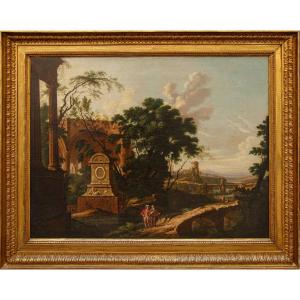
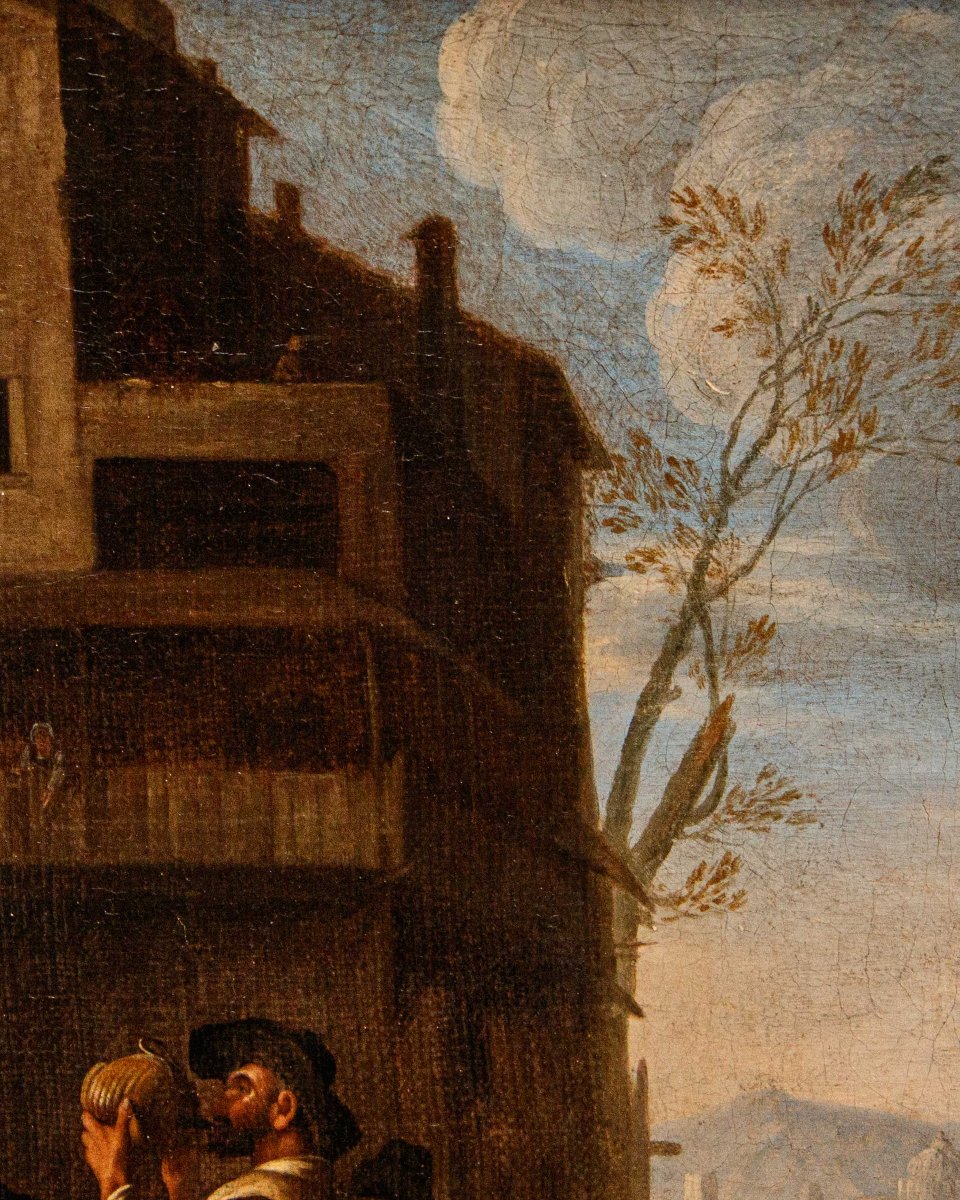
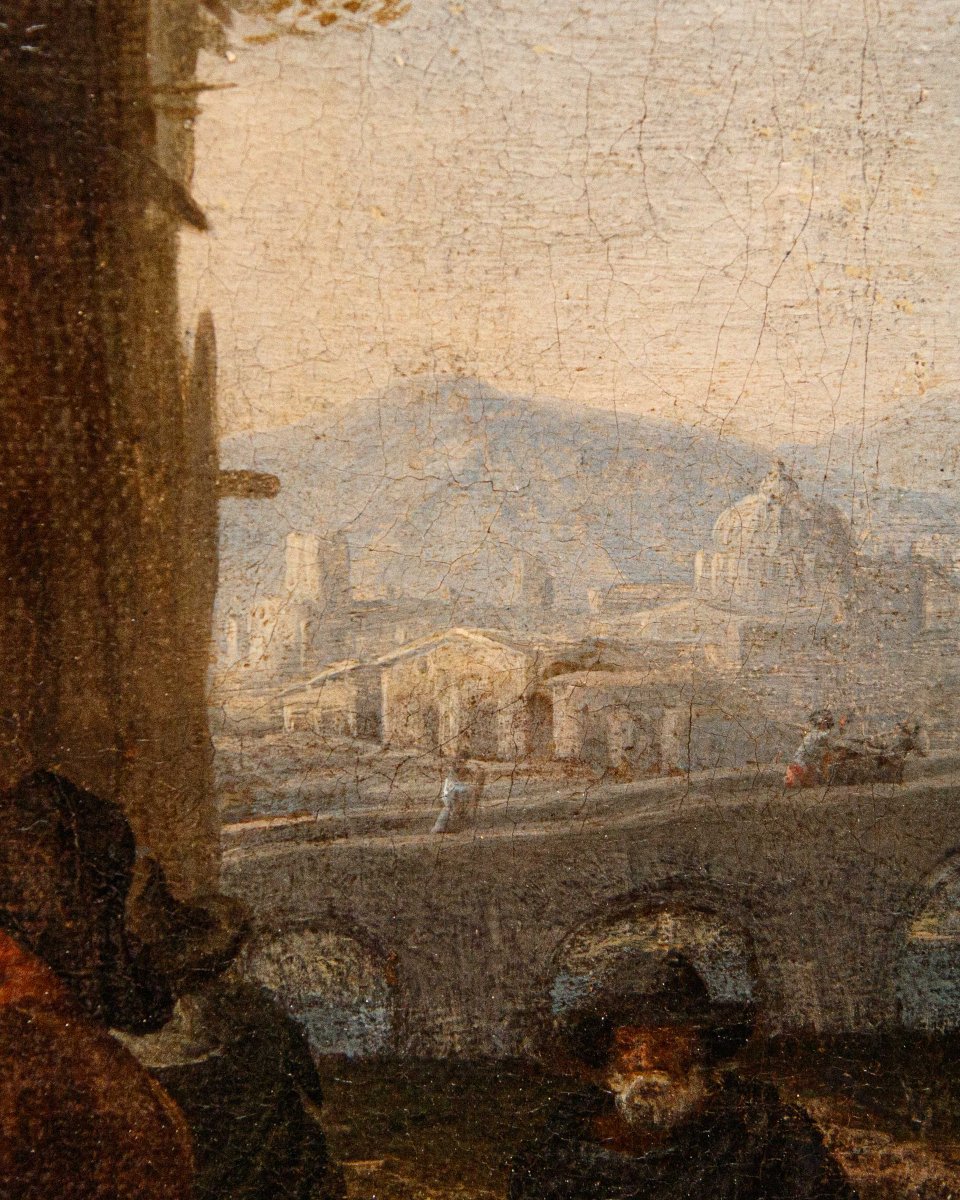
This painting can be attributed, in terms of style and subject matter, to the art of the “bamboccianti.” In the figures and their rendering of light, as well as in the setting of the scene—between ancient walls and an Italianate landscape—the painting bears clear similarities to the works produced by Northern European artists based in Rome during the 17th century.
The Bamboccianti were an influential and controversial group of artists, predominantly Dutch and Flemish, who worked in Rome beginning in the 1620s, introducing a radically innovative style of genre painting. The name derives from the nickname “Il Bamboccio” given to the group’s leader, Pieter van Laer (1599–c. 1642). Their artistic revolution consisted of abandoning the lofty subjects of history, mythology, and religion—favored by Roman academic art—to focus on the candid and anecdotal depiction of everyday life. Their paintings, known as “bambocciate,” depicted figures from the lower classes such as beggars, street vendors, soldiers on leave, peasants, and wayfarers.
This scene can be linked to a painting of the same subject, with minor variations, published several times in the RKD under the name Johannes Lingelbach.
Period: 17th century
Style: Other Style
Condition: Good condition
Material: Oil painting
Width: 34
Height: 44
Reference (ID): 1797382
Availability: In stock