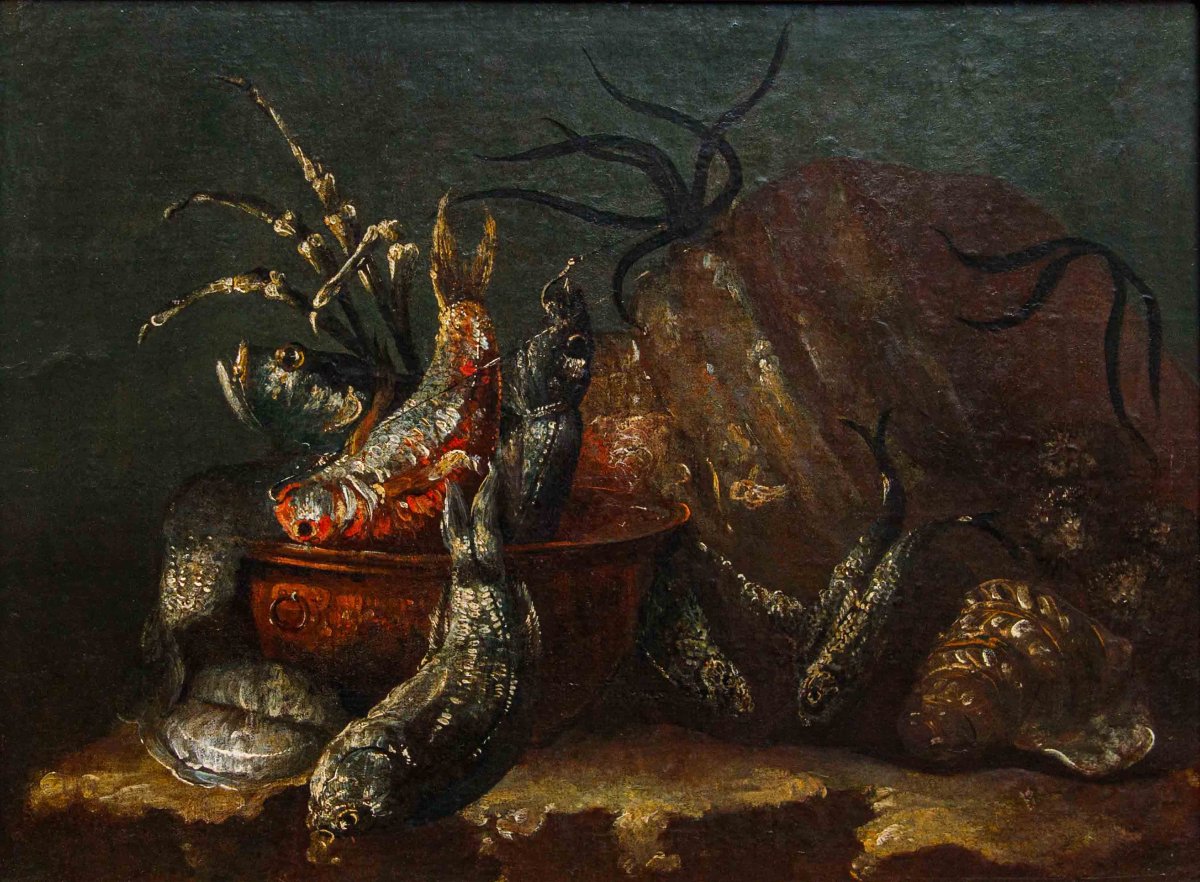



Neapolitan School, 17th Century, Still Lifes With Fish
Neapolitan School, 17th century
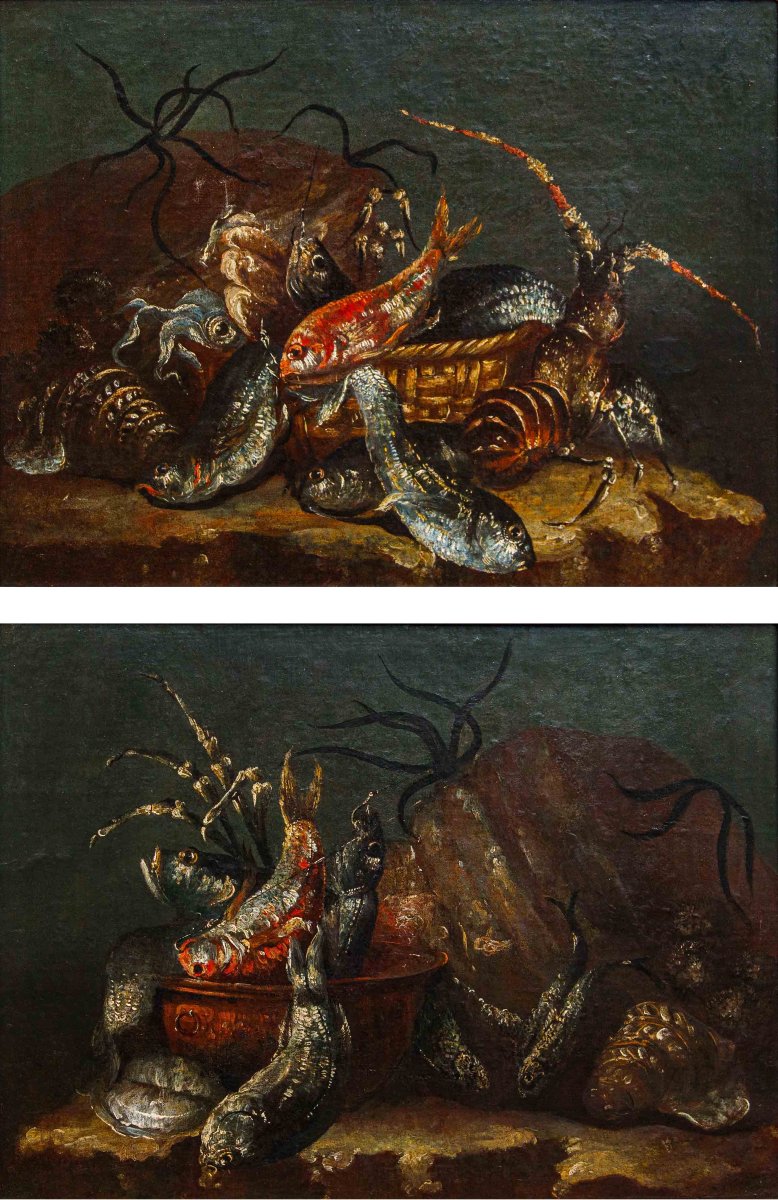
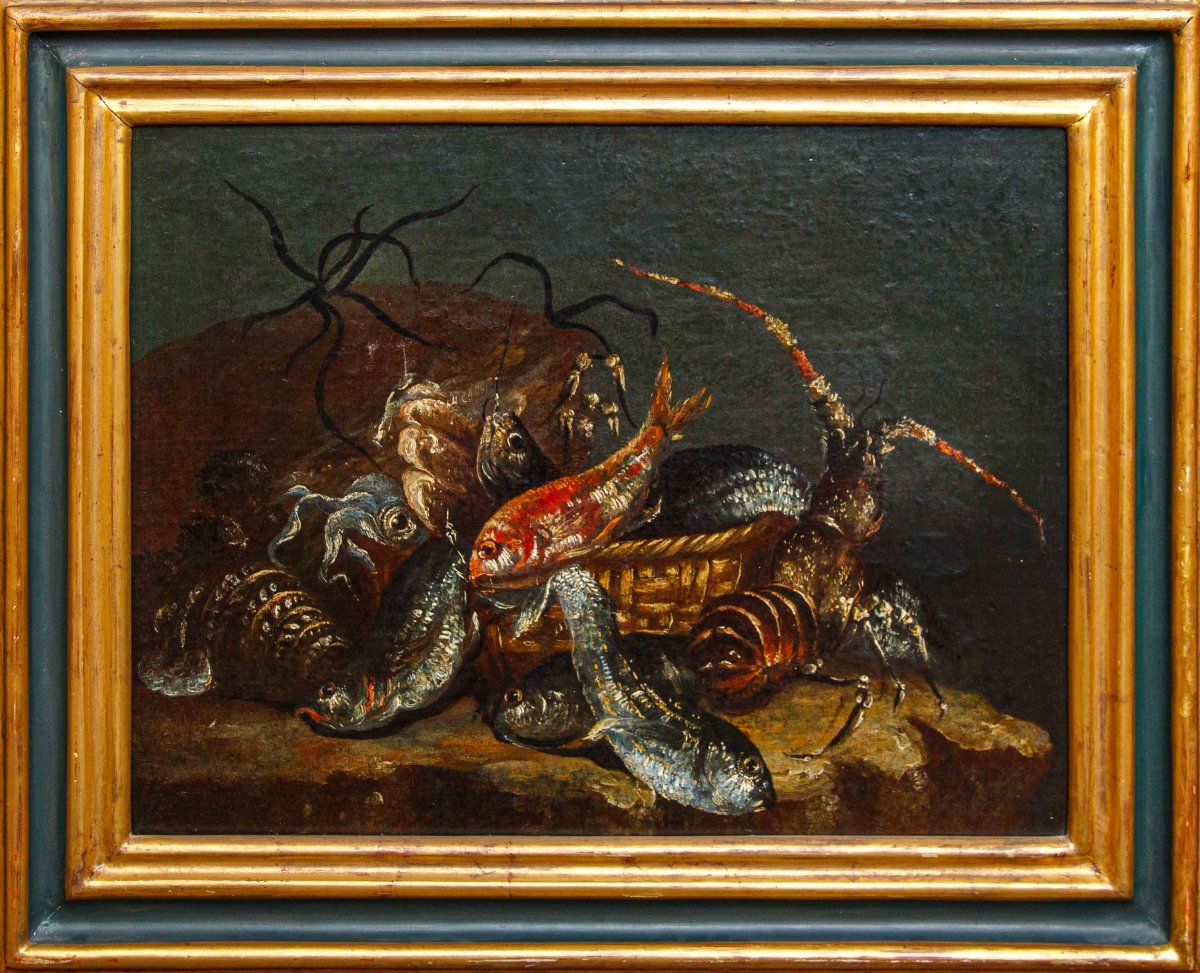
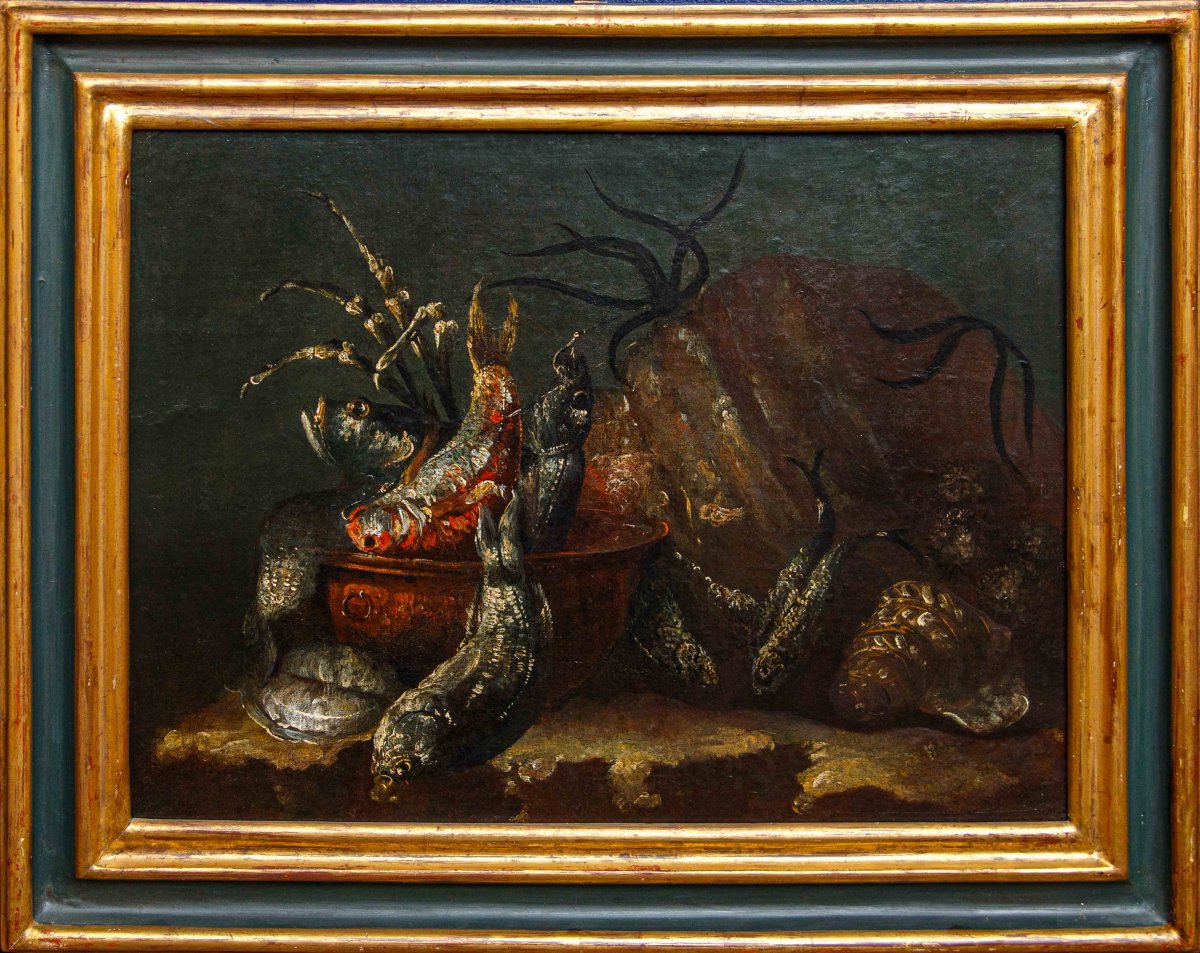
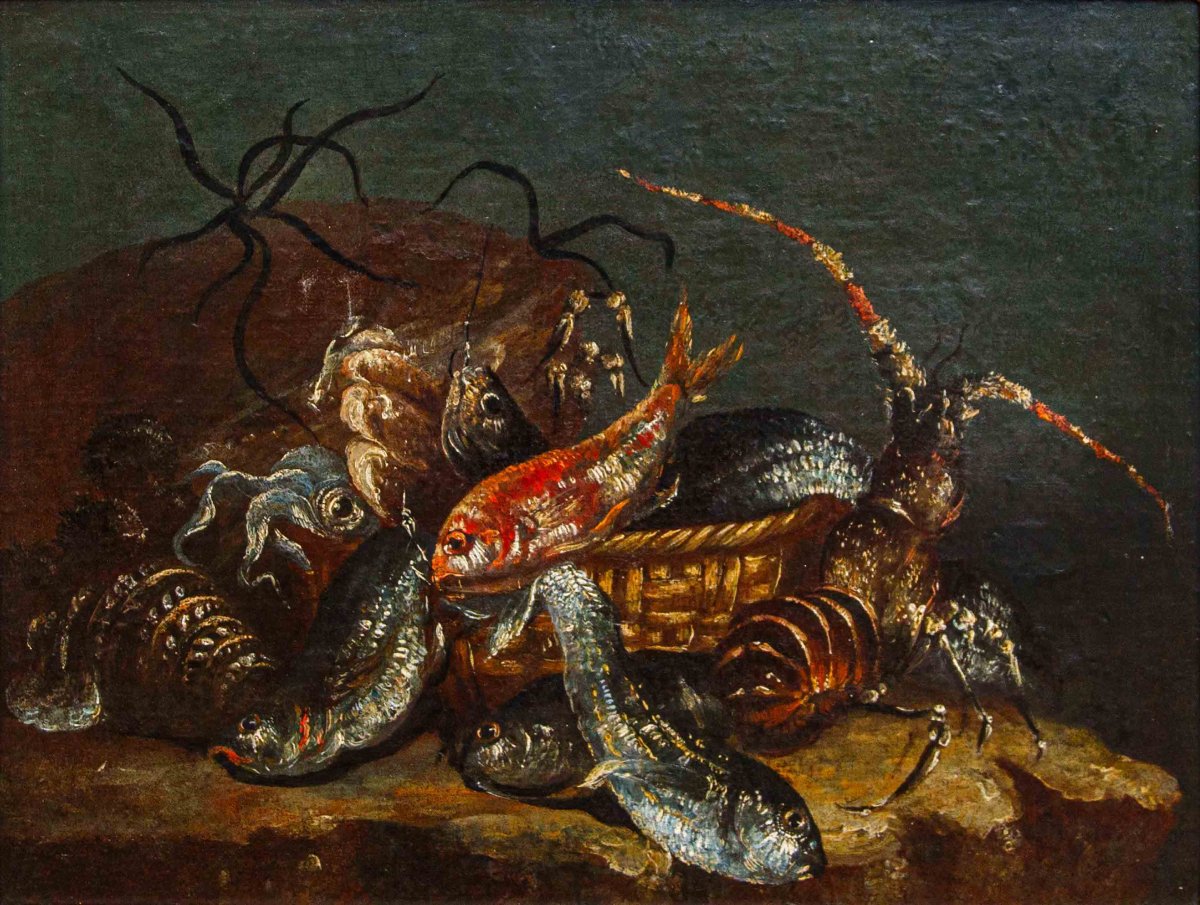
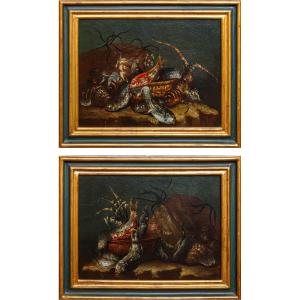
Still Life with Fish
(2) Oil on canvas, 46 x 62 cm
With frame, 65 x 80 cm
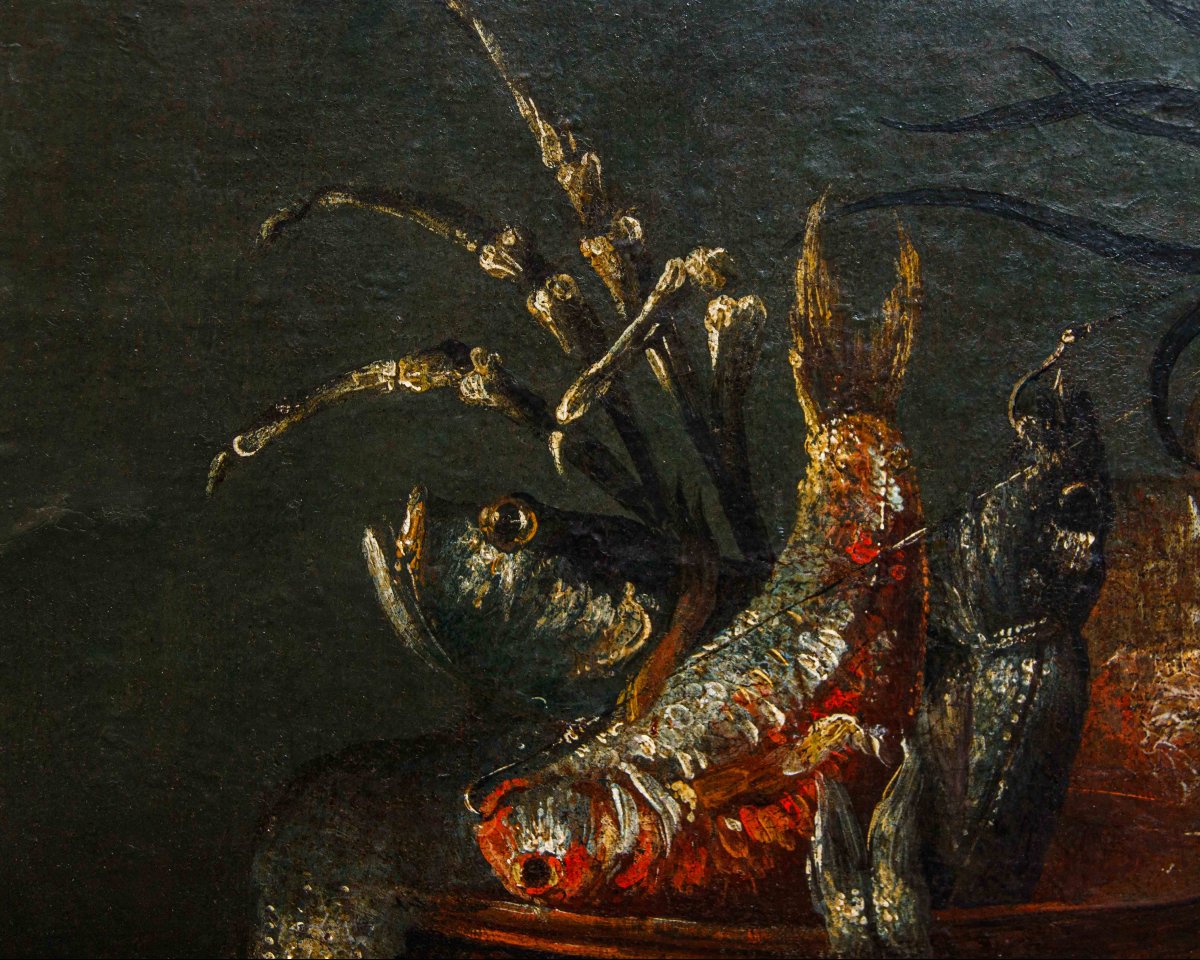
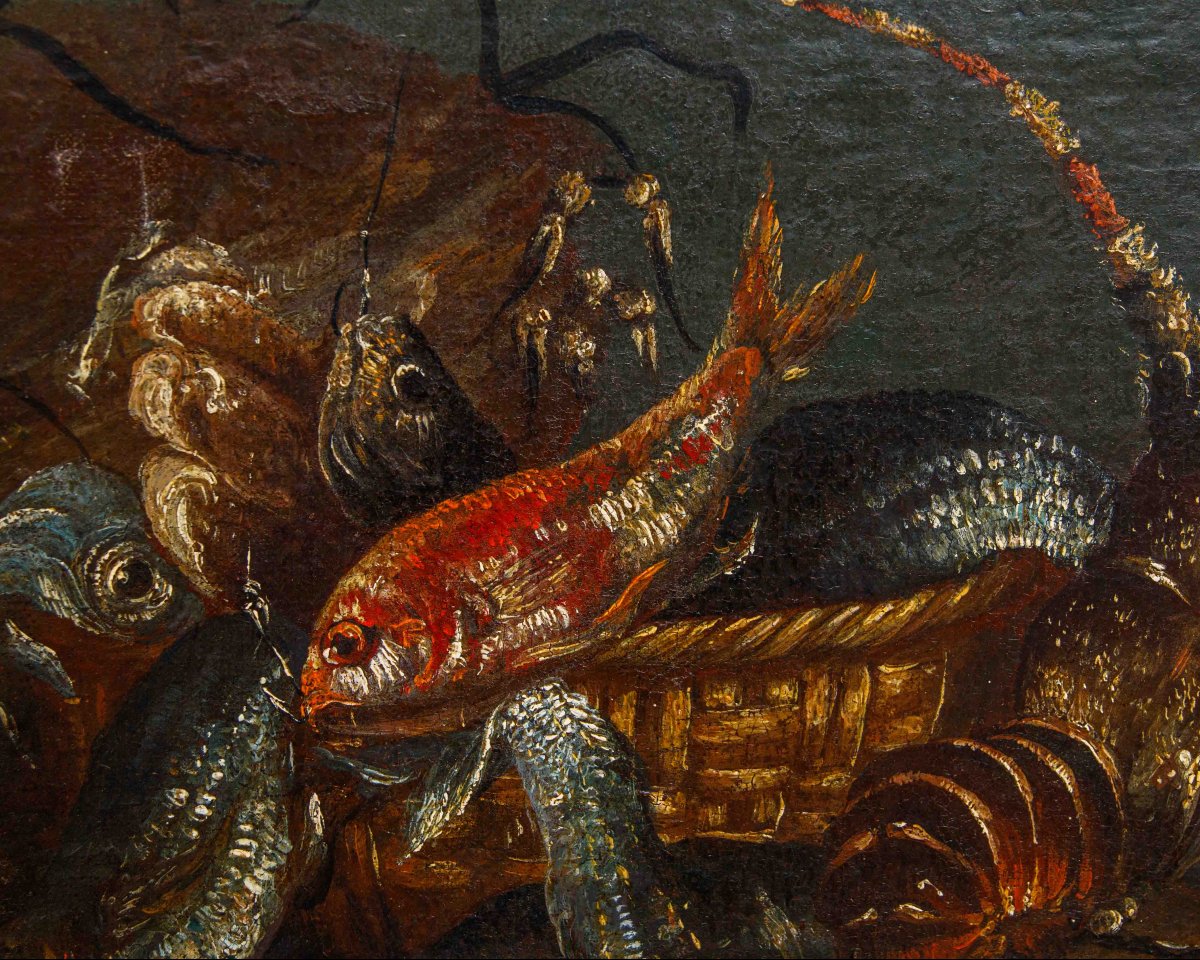
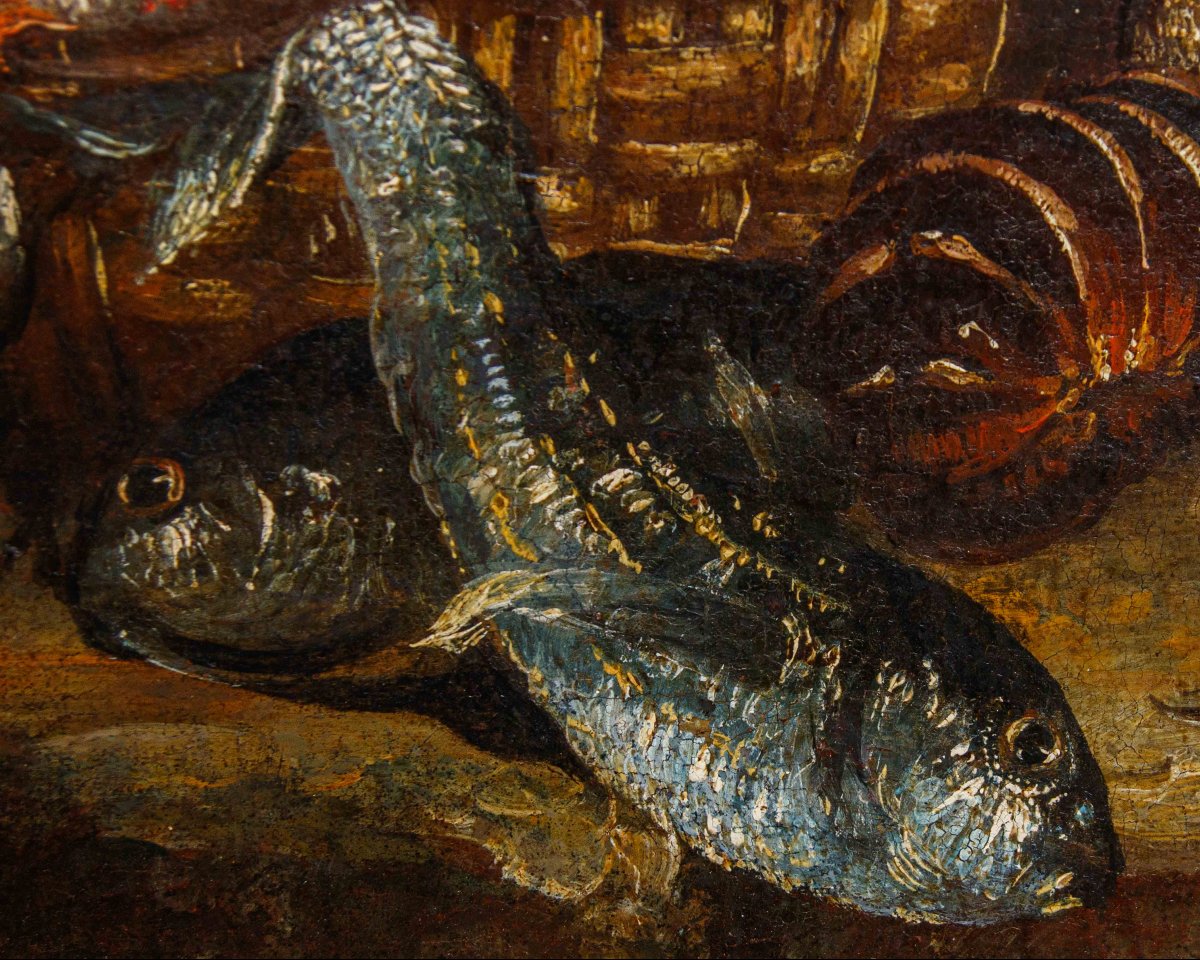
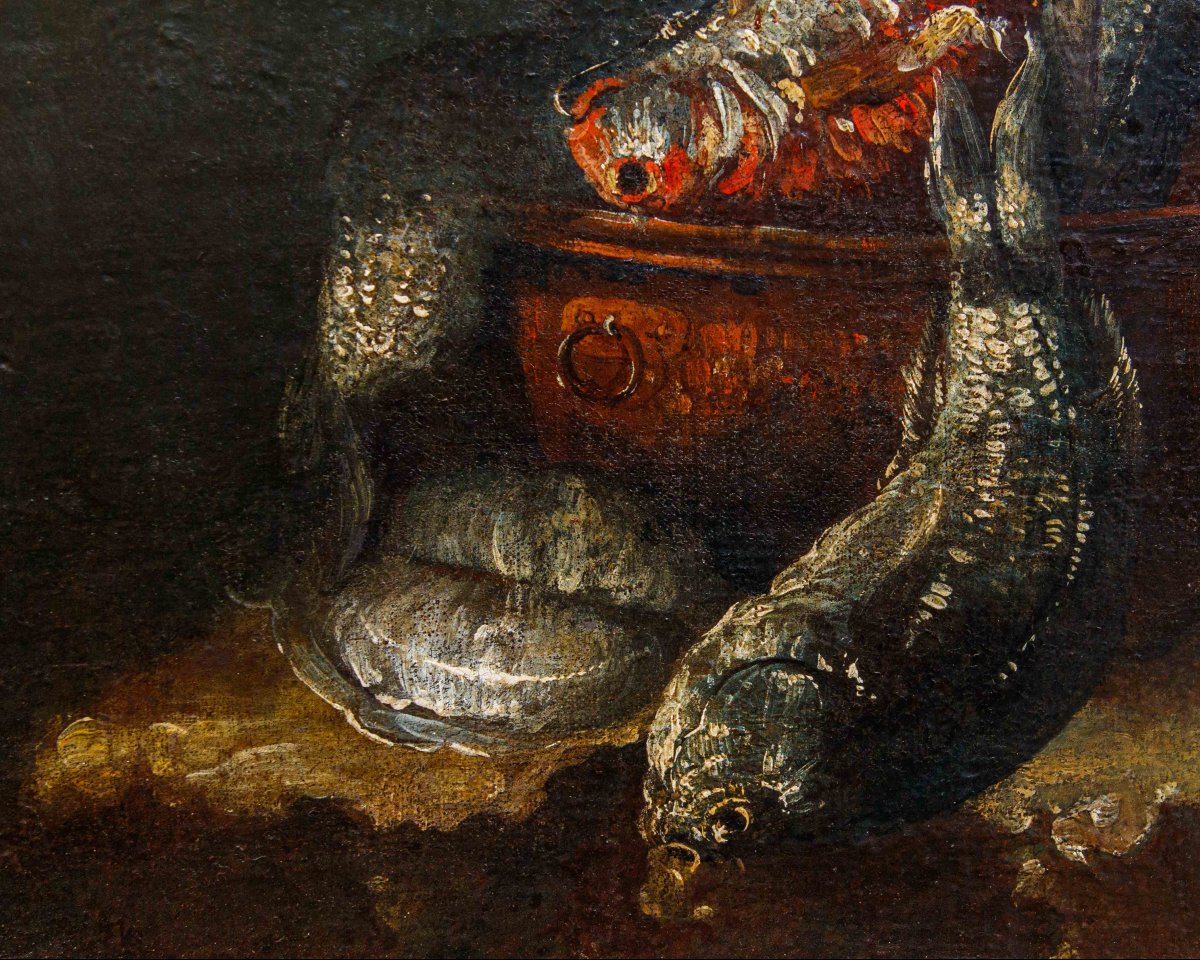
The luminosity and lively composition characterize the quality of the pair of still lifes under consideration and lead to an attribution to the prolific and long-standing Recco workshop. Fish of various shapes and colors, crustaceans, and corals—depicted with expert realism—stand out dramatically against a dark background with few distinguishing features, demonstrating the artistic quality of the painter responsible for executing the two canvases. The rich and opulent composition fits perfectly within the tradition of Neapolitan still life, which flourished particularly during the seventeenth century and originated in the Recco family workshop, of which Giuseppe and Elena were the most prominent representatives. With lively realism and a skillful use of light, the anonymous artist working in the Recco workshop depicts the silvery and gray-blue reflections of the scales, the wriggling twists of their bodies, the distinctive pinkish hue of the fins and gills, combined with the sparkling vitality of the freshly caught prey that exudes the dampness of the sea—these are his hallmarks.
The birth of still life in Italy is linked to the revolutionary genius of Caravaggio, who, with his explosive declaration “that it was as much effort for him to paint a figure as a still life,” shattered that *principium distinctionis* that had relegated genre painting—considered a less noble activity—to a sort of ghetto. In the early seventeenth century, in fact, it was an ironclad rule that the importance of a painting was commensurate with the subject depicted. The idea underlying the concept of beauty in a work of art was that of classical aesthetics, which was based on metaphysical models—unattainable archetypes of objective reality.
The long period during which still life, though accepted, was considered a minor genre by academic circles has influenced our understanding, because for centuries it was kept on the margins of scholarship and museums. Loved only by a class of private collectors, it suffered severely from the dispersal and fragmentation of many collections, caused by the extinction of noble families, by clumsy divisions of inheritance following the abolition of primogeniture, and by simple economic decline that forced owners to reluctantly sell family heirlooms.
The earliest origins of Neapolitan still life stubbornly continue to elude even the most meticulous investigations, just as they largely eluded De Dominici himself, one of the leading experts on the Neapolitan developments of the genre, who began his chapter on the subject with the discussion already underway, speaking of Luca Forte and Porpora and candidly admitting that he lacked sufficient information on the earliest masters.
Period: 17th century
Style: Other Style
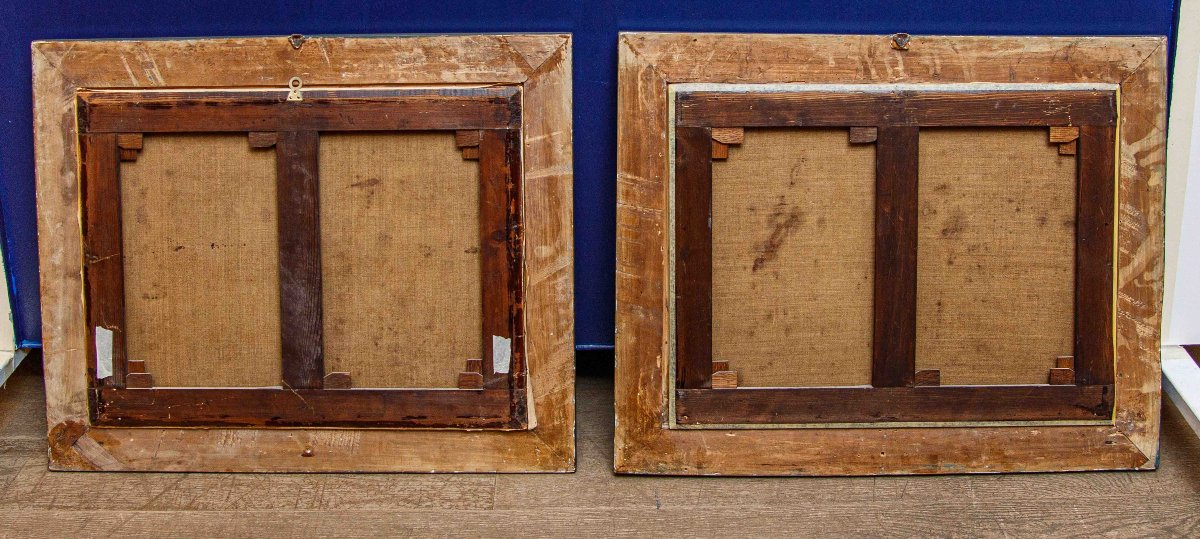
Condition: Good condition
Material: Oil painting
Width: 62
Height: 46
Reference (ID): 1831272
Availability: In stock