

Carel Van Falens (antwerp, 1683 – Paris, 1733), Genre Scene
Carel van Falens (Antwerp, 1683 – Paris, 1733)
Genre Scene
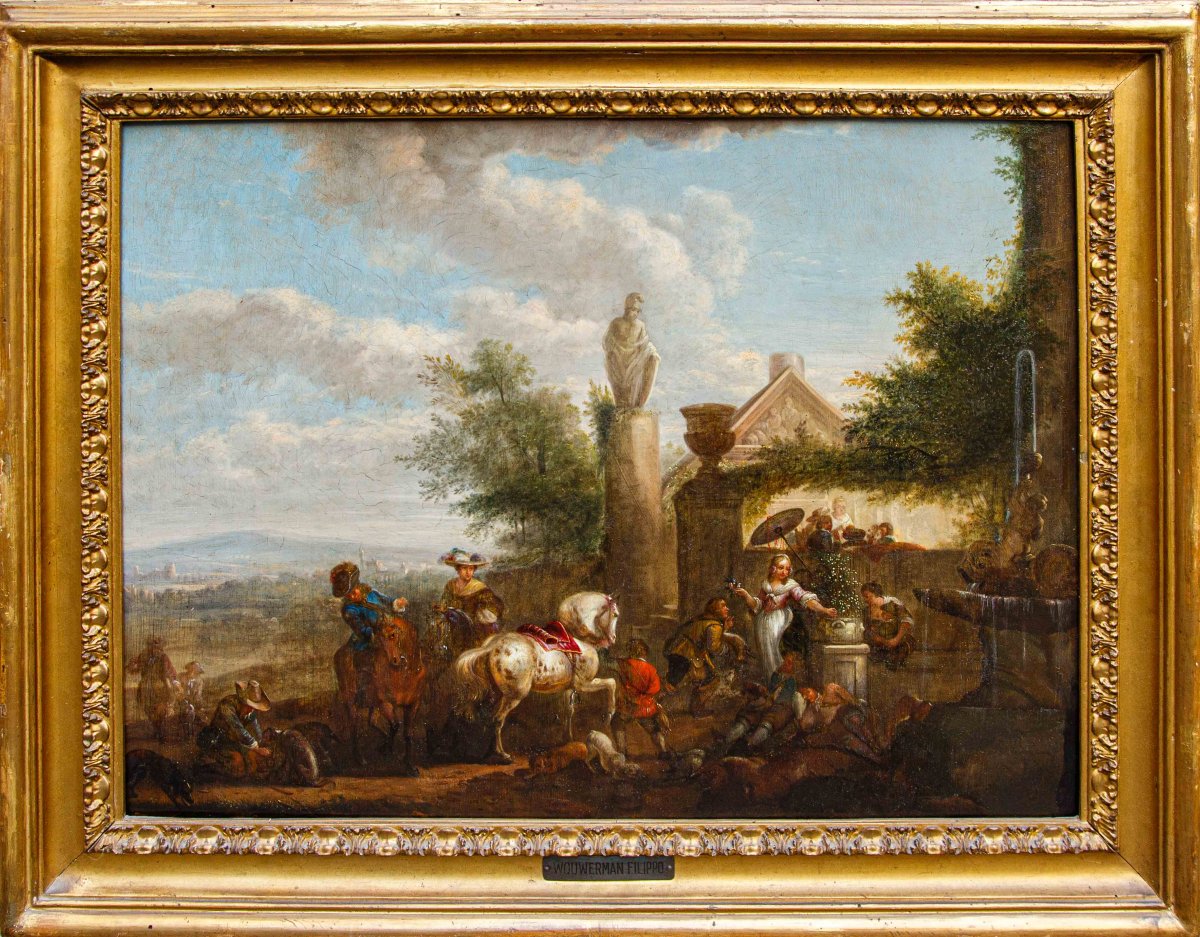
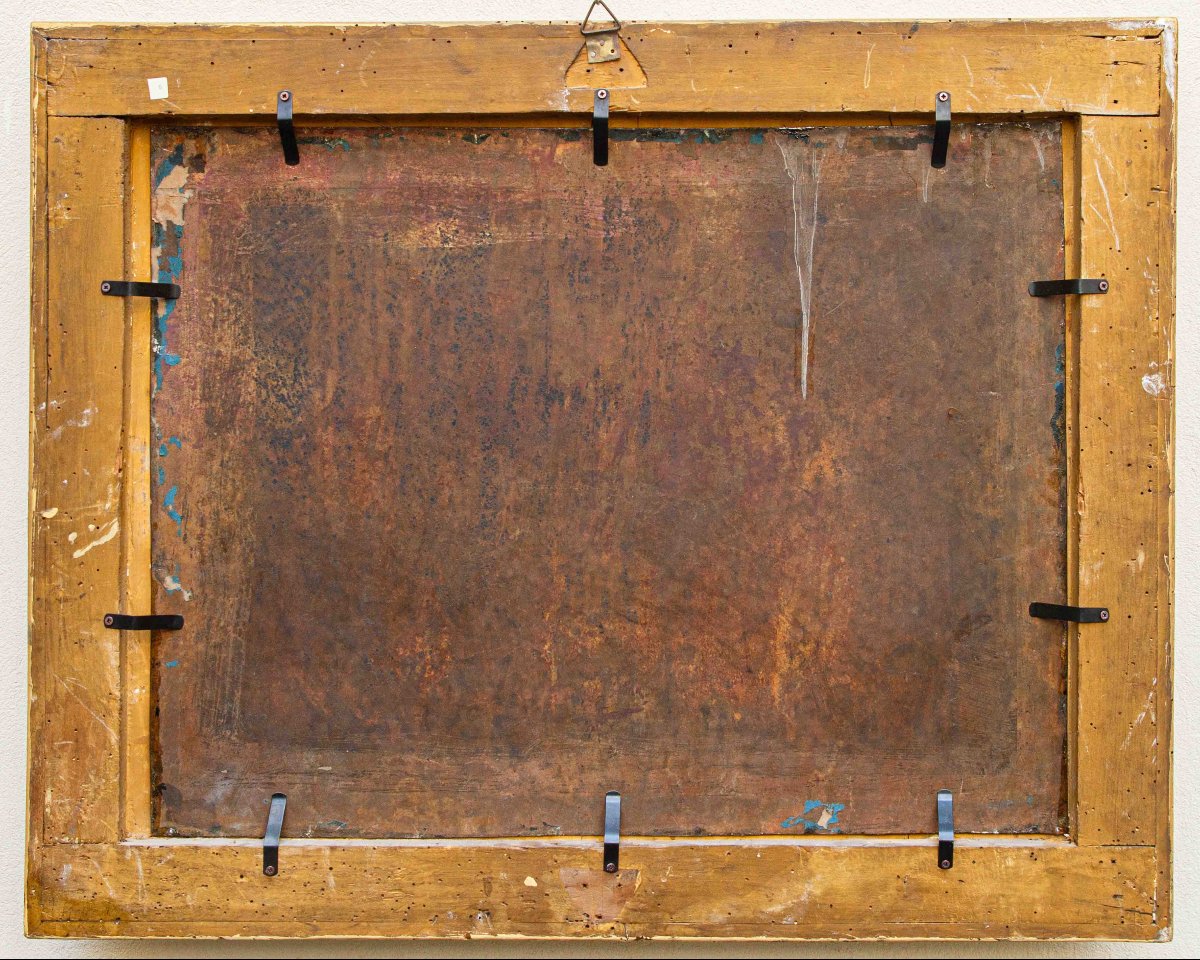
Oil on copper, 48.5 x 63 cm
With frame, 62 x 78 cm
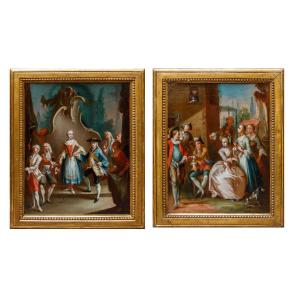
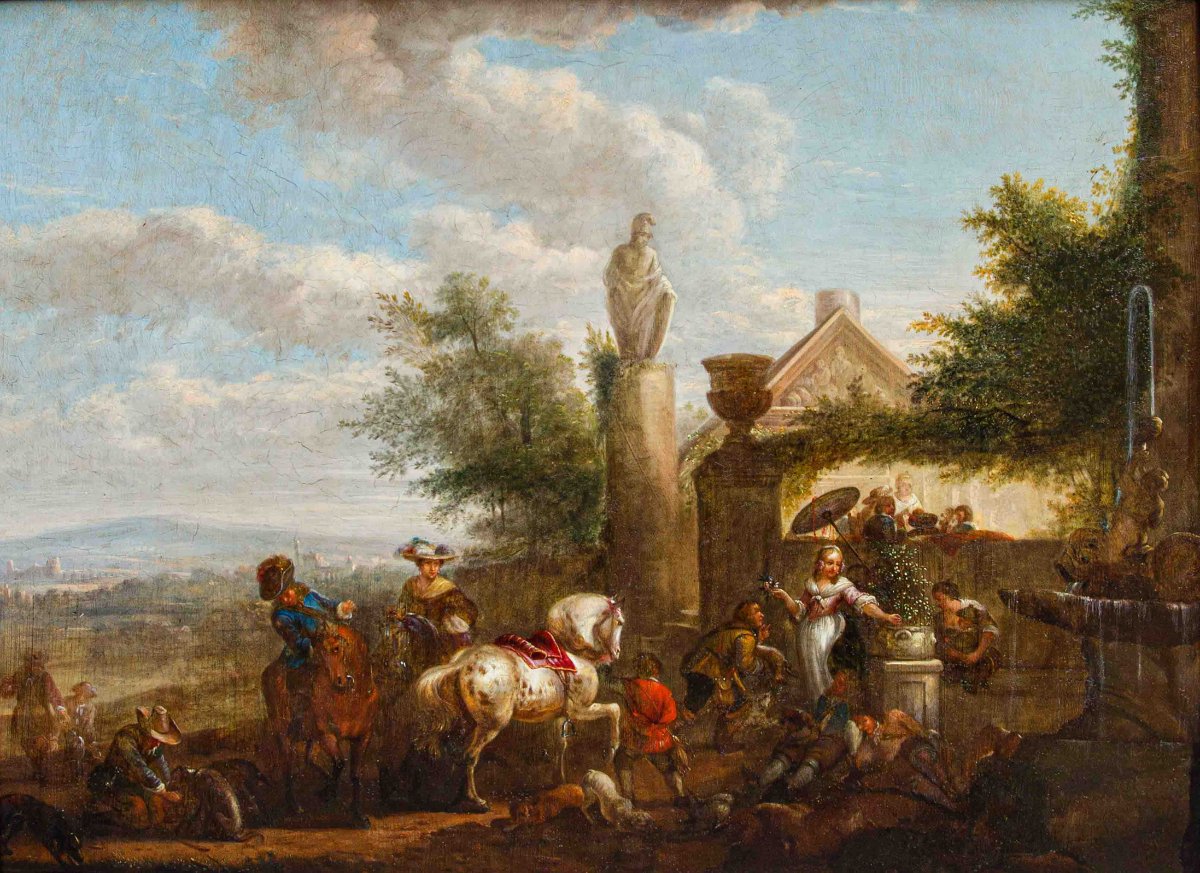
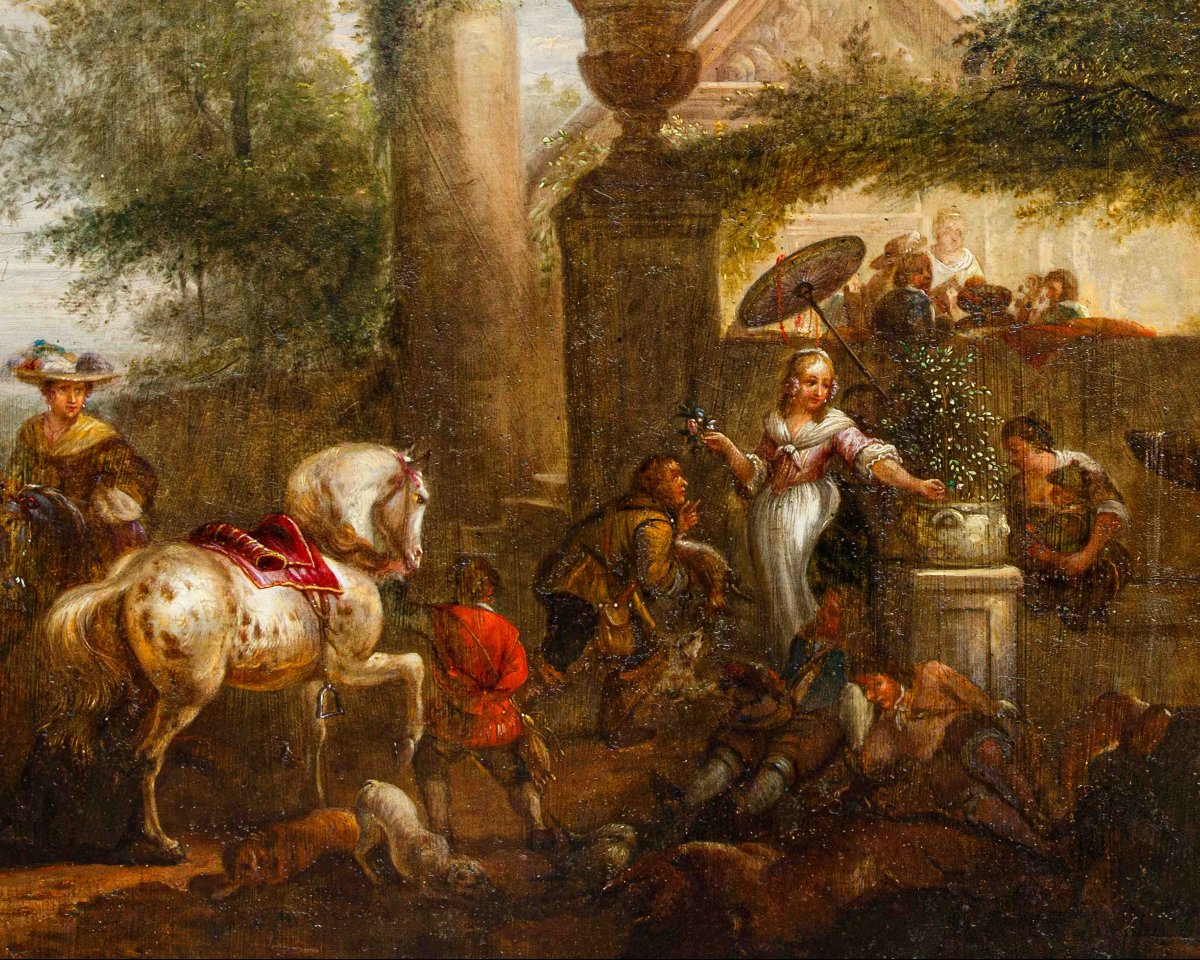
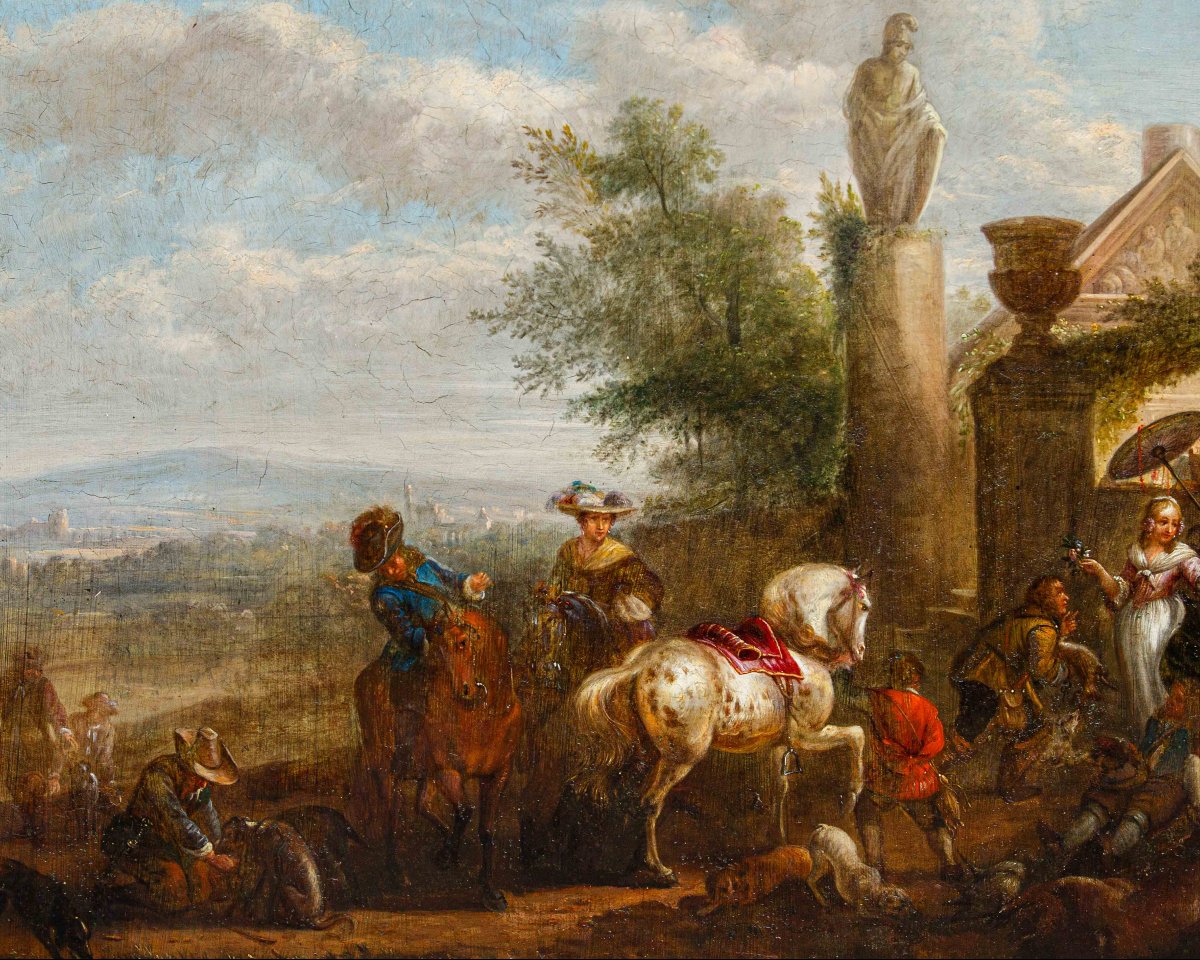
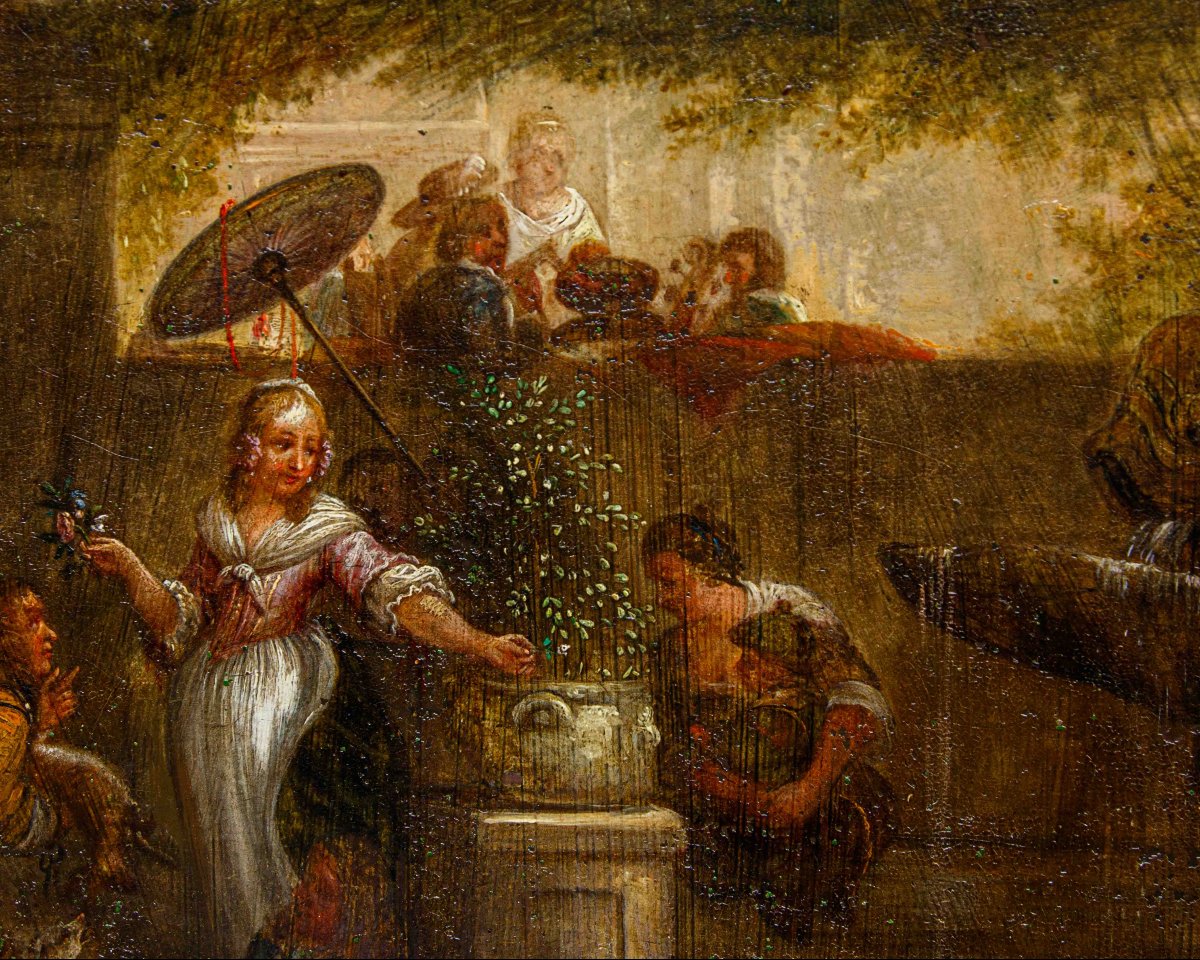
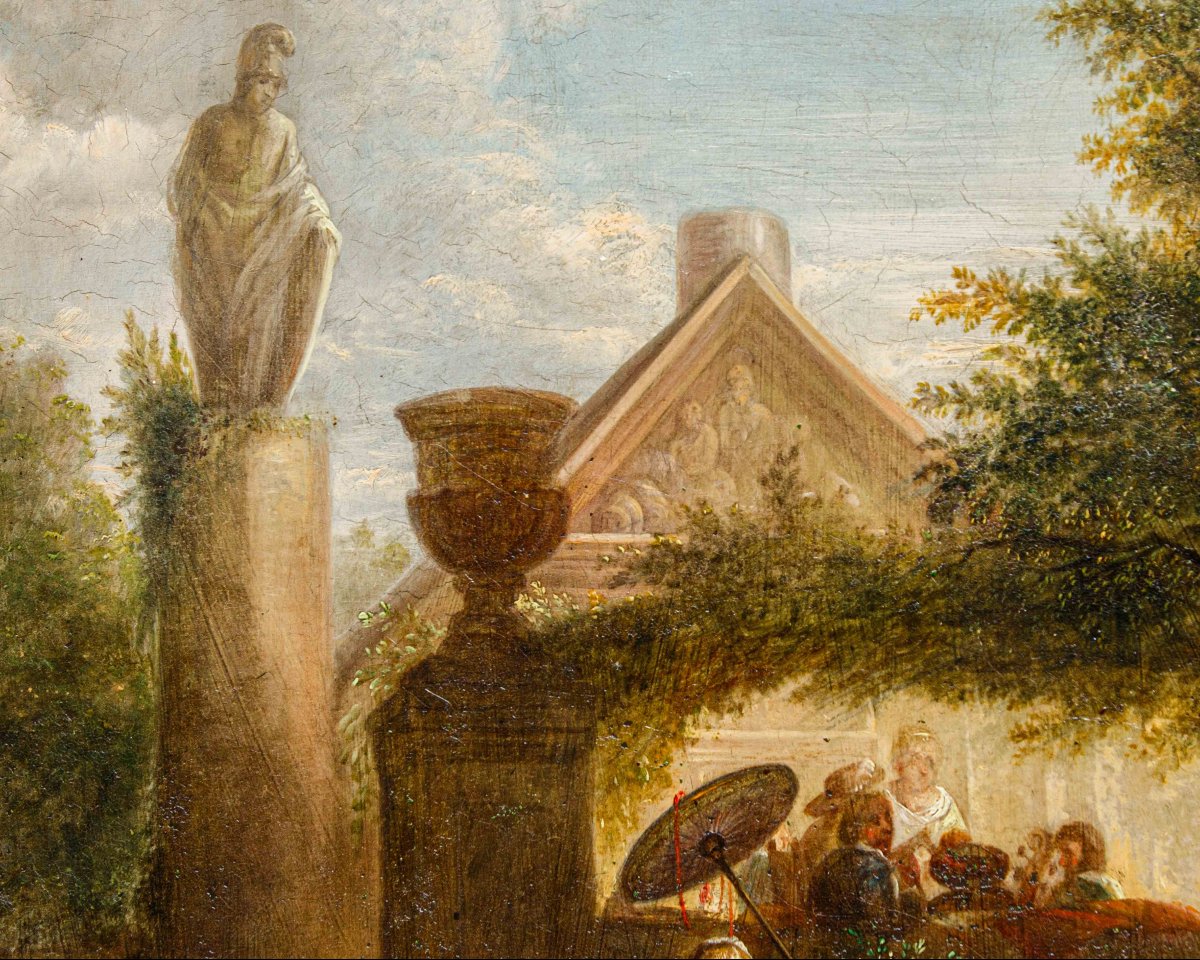
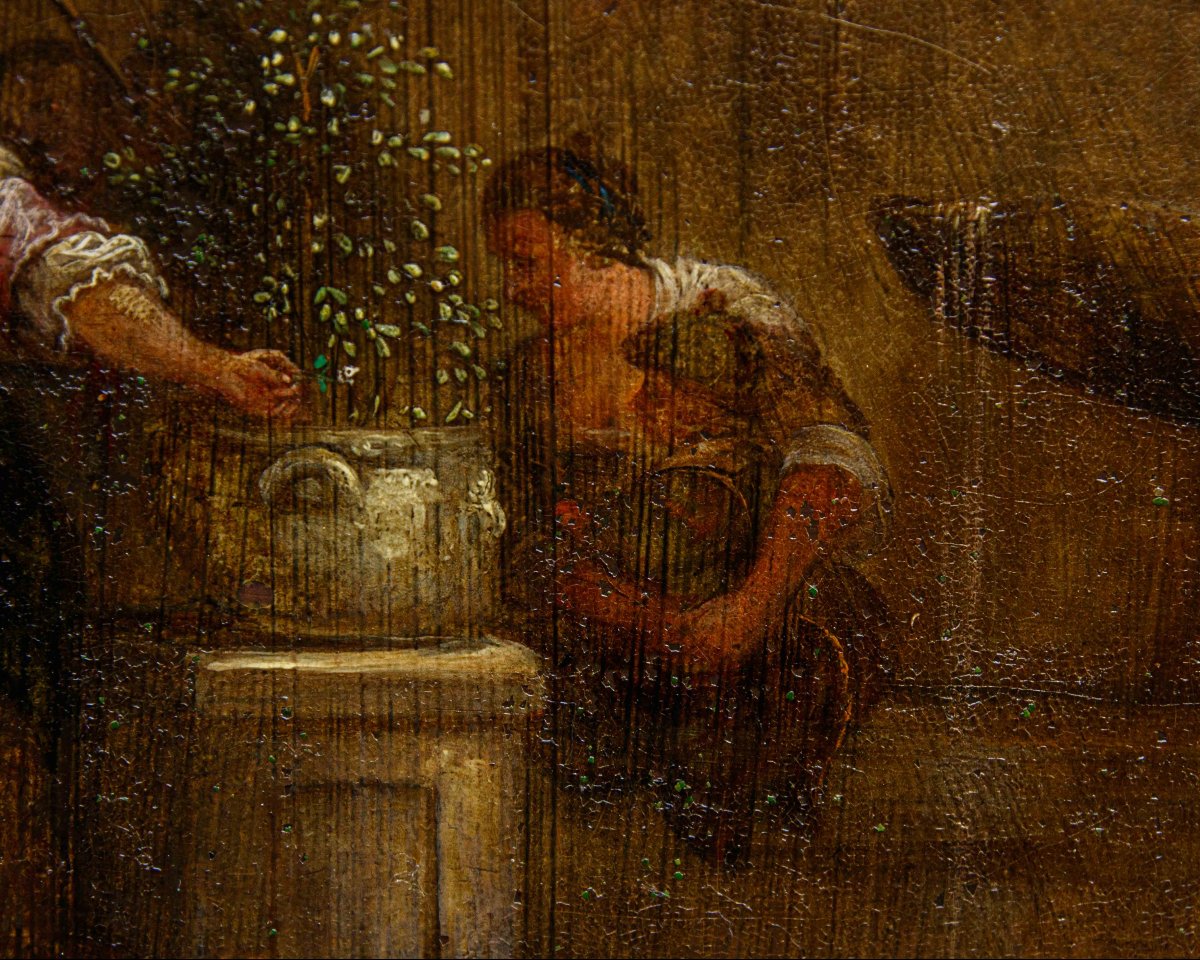
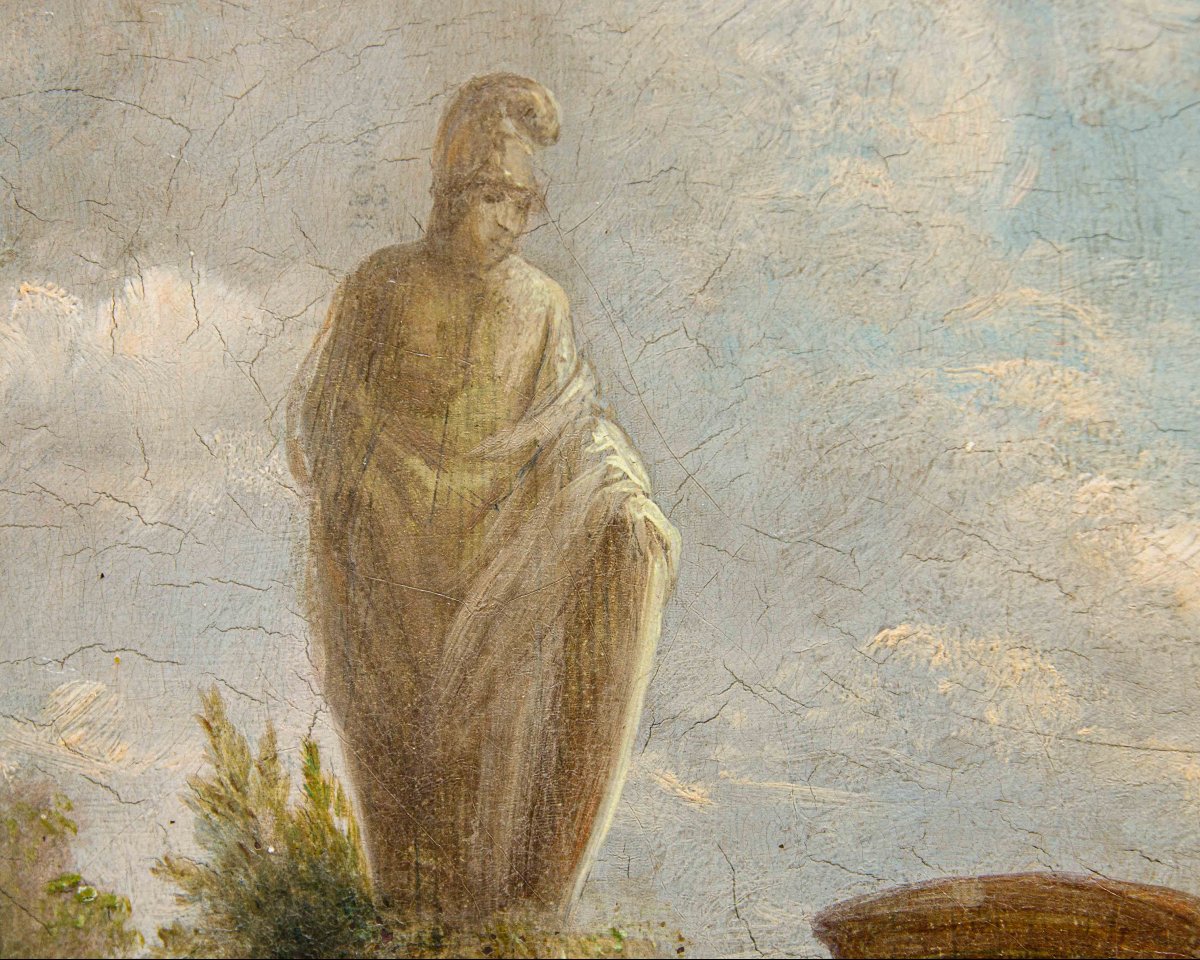
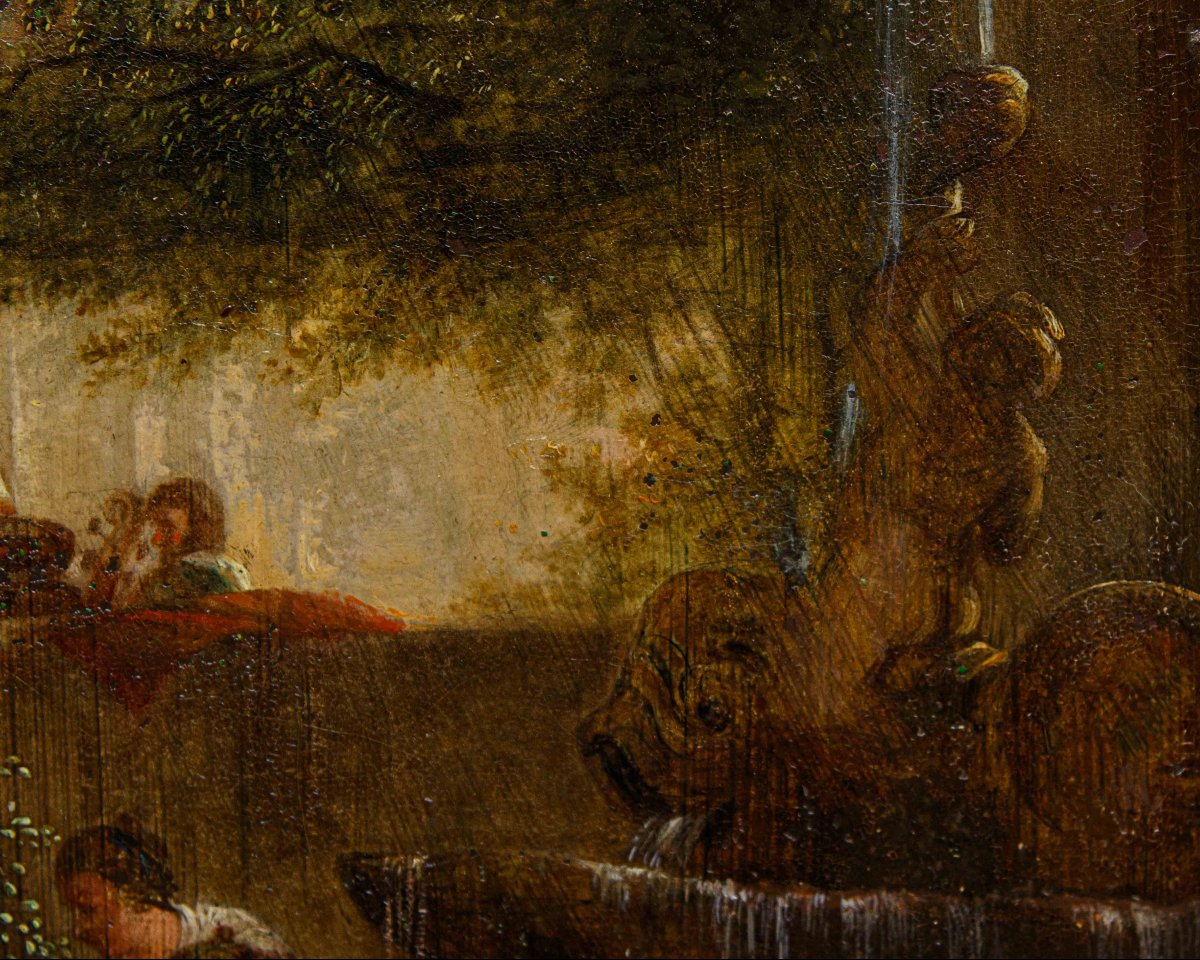
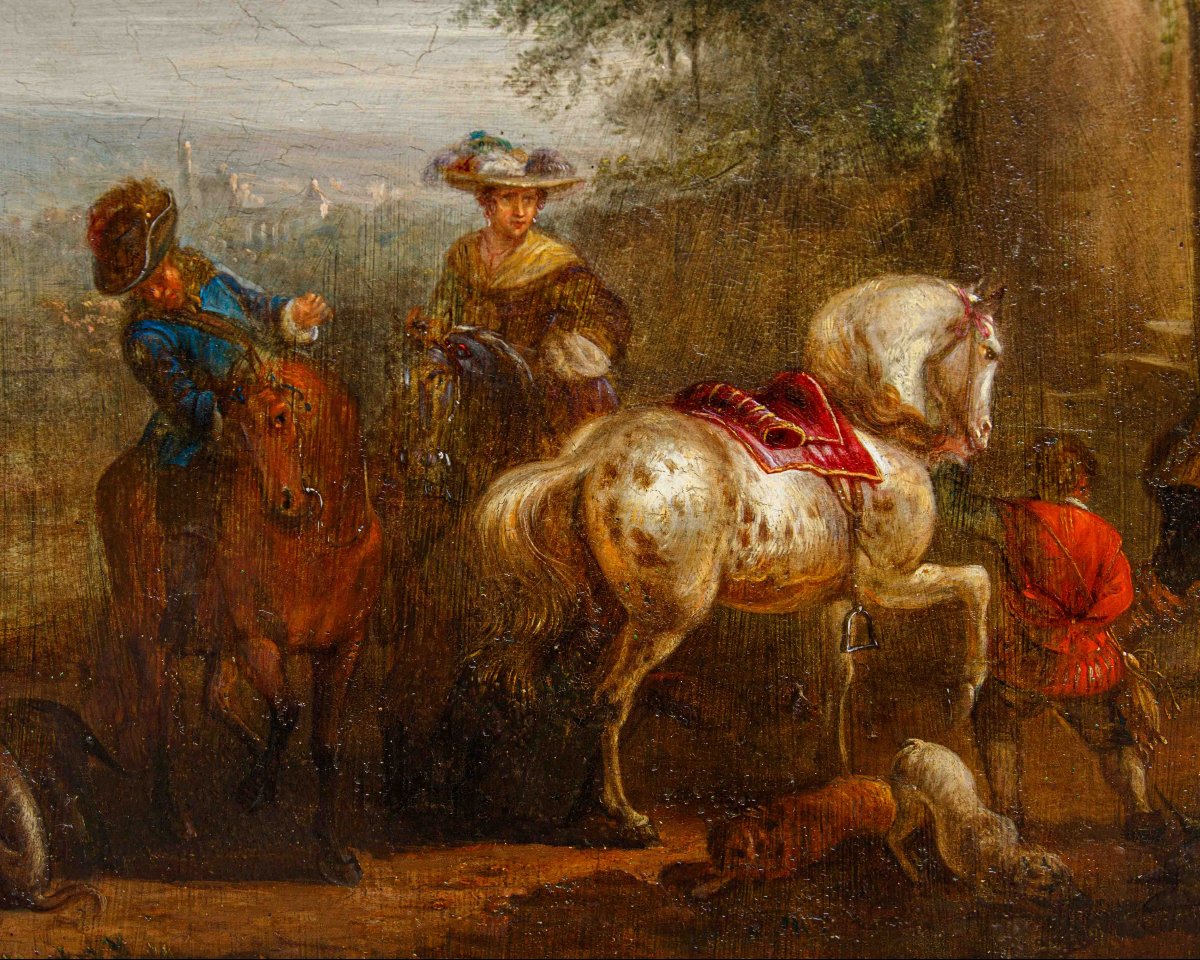
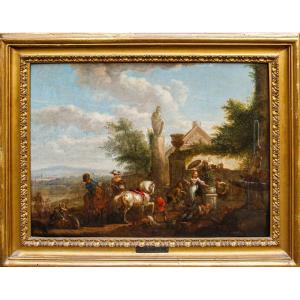
Characterized by an extraordinary freshness of execution, the painting stands out as an authoritative example of Northern genre painting, celebrating that harmonious blend of the elegance of courtly scenes and the descriptive precision reserved for nature and the animal world. The composition centers on a monumental Baroque fountain, flanked by a garden terrace with classical-style sculptures, where elegant ladies and gentlemen are gathered.
The history of attribution for this painting is complex and fascinating, reflecting the evolution of art-historical studies on collecting and the dynamics of European workshops between the 17th and 18th centuries. The painting was originally attributed to Philips Wouwerman, the celebrated Haarlem master and undisputed authority on equestrian scenes and animated landscapes of the Dutch Golden Age. In fact, the work displays such a close adherence to Wouwerman’s style that it justified an initial critical reception linked to his name, further fueled by the presence of faint remnants of a monogram in the lower left corner intended to confirm the Dutch master’s authorship. Subsequently, archival documents recorded an attempt to reattribute the work to the Austrian painter August Querfurt—another artist strongly influenced by Wouwerman’s style—before modern scholarship arrived at the correct and definitive identification of the Flemish master Carel van Falen
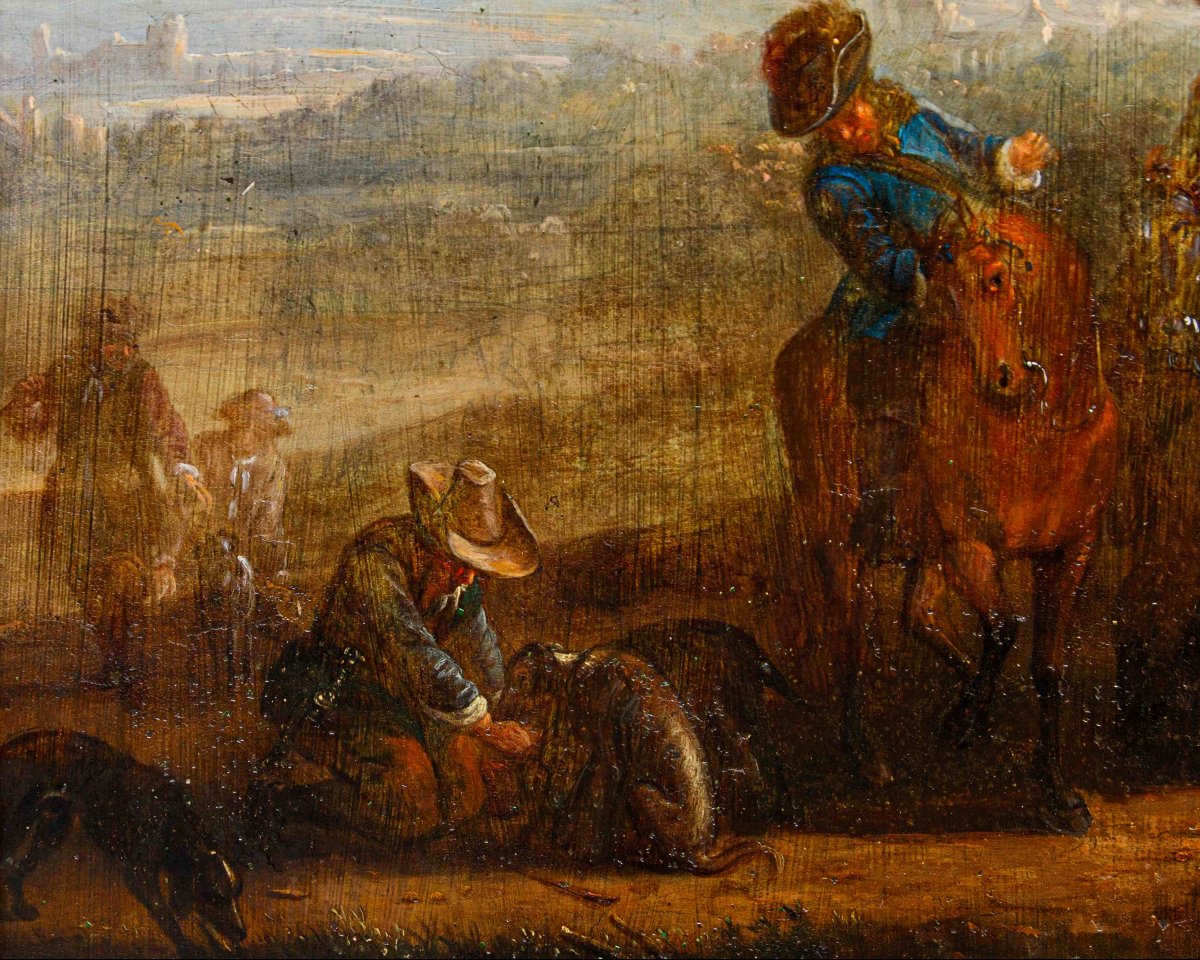
Born in Antwerp in 1683, Carel van Falens trained at the local Guild of Saint Luke under the guidance of Constantijn Francken. He spent most of his career in France, where he moved and achieved extraordinary success. During the Regency, the Duke of Orléans entrusted him with the restoration of important paintings in his collection, and in 1724, King Louis XV appointed him Peintre ordinaire du roi, cementing his prestige with admission to the prestigious Académie royale in 1726 and even granting him residence in the Louvre, where he died in 1733. Van Falens specialized precisely in the revival and cultured reinterpretation of hunting scenes, military encampments, and riders’ rest stops in Wouwerman’s immensely popular style. The stylistic similarity was such that, historically, many of van Falens’s works have been mistaken for authentic works by Wouwerman or, conversely, paintings by less talented imitators have been erroneously attributed to the Flemish master. In the specific case of this copperplate, the technical skill and brilliance of the execution place the work among the finest examples of van Falens’s output; he was able to emulate the master from Haarlem while infusing his work with that grace and lightness typical of the 18th century that ensured his success at the Parisian court.
The painting’s exceptional historical and critical significance is firmly supported by bibliographic and archival sources. Scholars link this work to a specific entry in Cornelis Hofstede de Groot’s famous catalog raisonné (Verzeichnis der Werke der hervorragendsten holländischen Maler des XVII. Jahrhunderts, Volume II, no. 713, page 475). That text lists a painting identical in composition but executed on panel and measuring 47.5 x 65 cm, historically documented in 1834 as part of the prestigious collection of the Duchess of Berry. The close compositional resemblance between the former Berry panel and this copperplate attests to the high degree of refinement and the success of the inventive formula devised by van Falens. The now-lost archival record—which was registered with the RKD in The Hague—also bears the stamp of the 1963 bequest from Professor Dr. Gijsbert Jan Hoogewerff, a distinguished Dutch art historian and expert on artistic relations between Northern Europe and Italy. The fact that the work—or its study documentation—passed through Hoogewerff’s authoritative collection in Rome not only confirms its authenticity and high documentary value, but also places the painting within a critical context of the twentieth century of the very highest order, confirming this copperplate as a fundamental piece in understanding the reception and dissemination of “Wouwerman-style” genre painting in major European collections.
Period: 17th century
Style: Other Style
Condition: Good condition
Material: Oil painting on copper
Width: 63
Height: 48,5
Reference (ID): 1837320
Availability: In stock