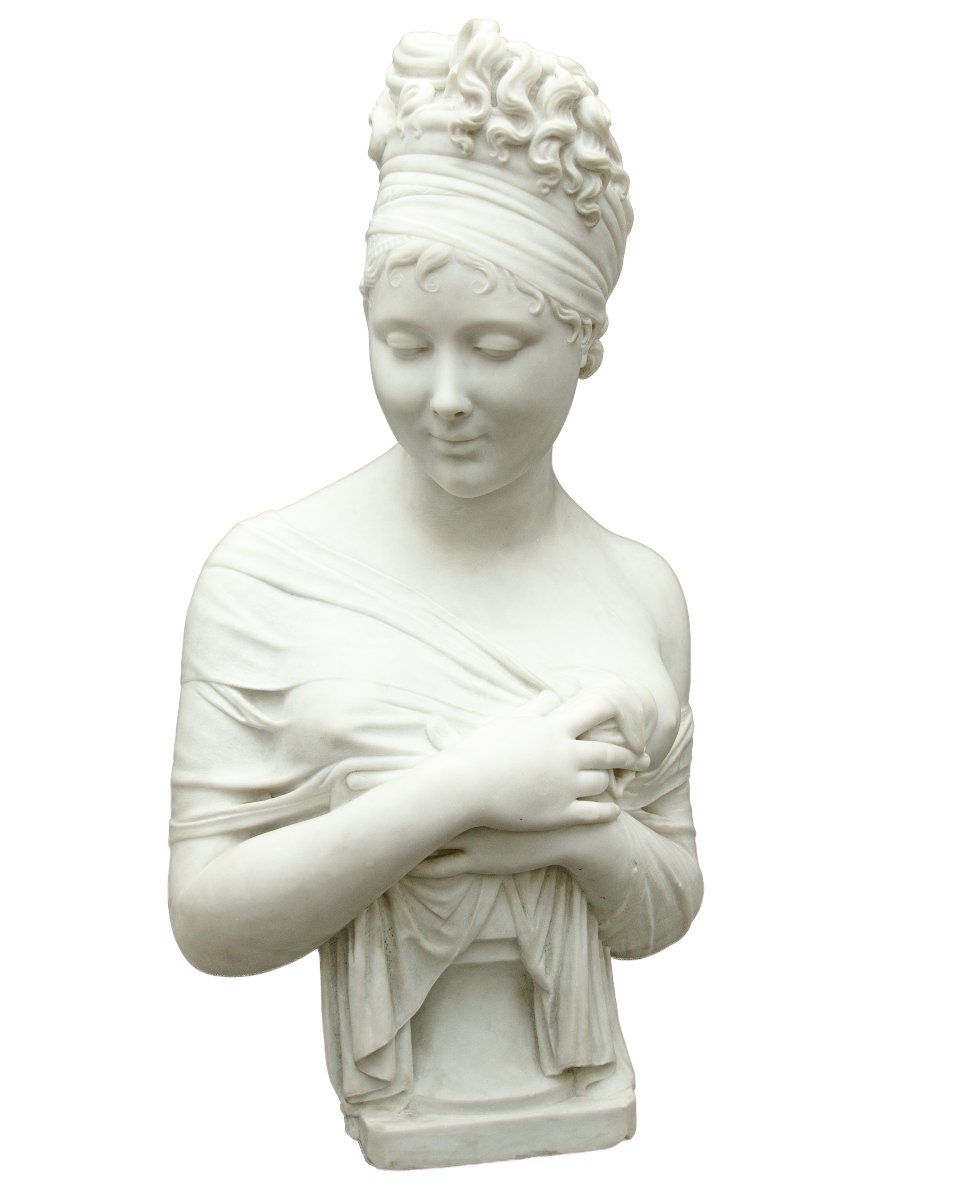
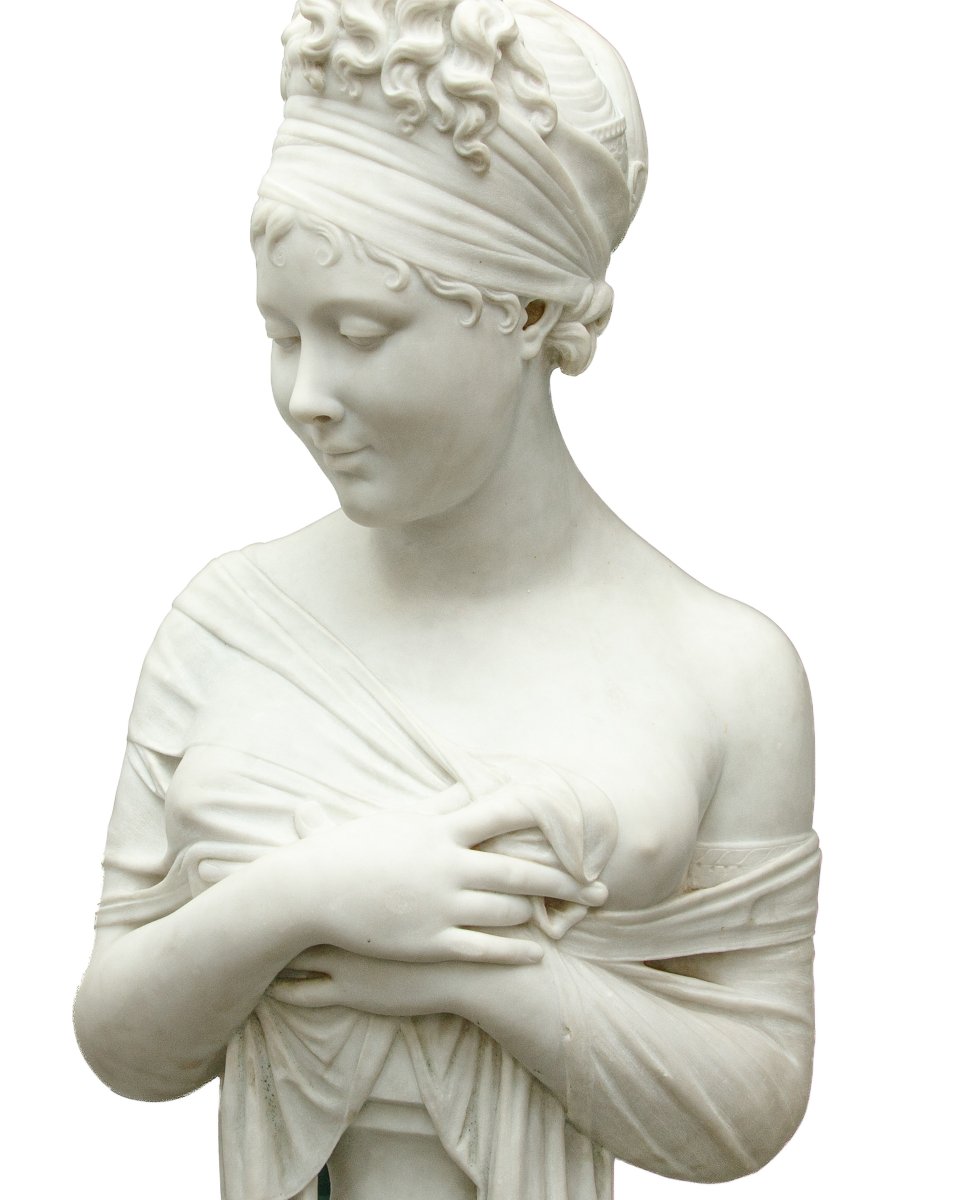
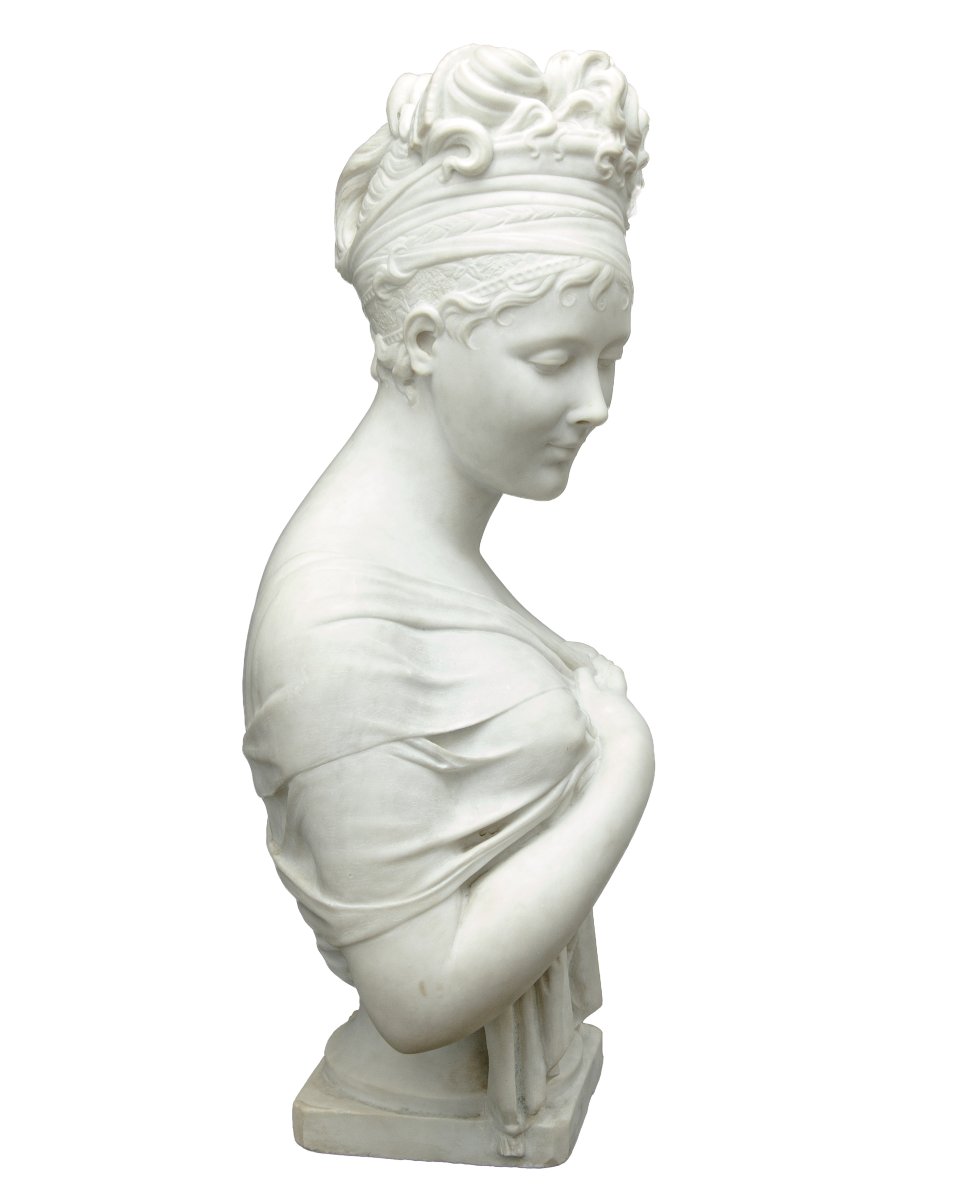
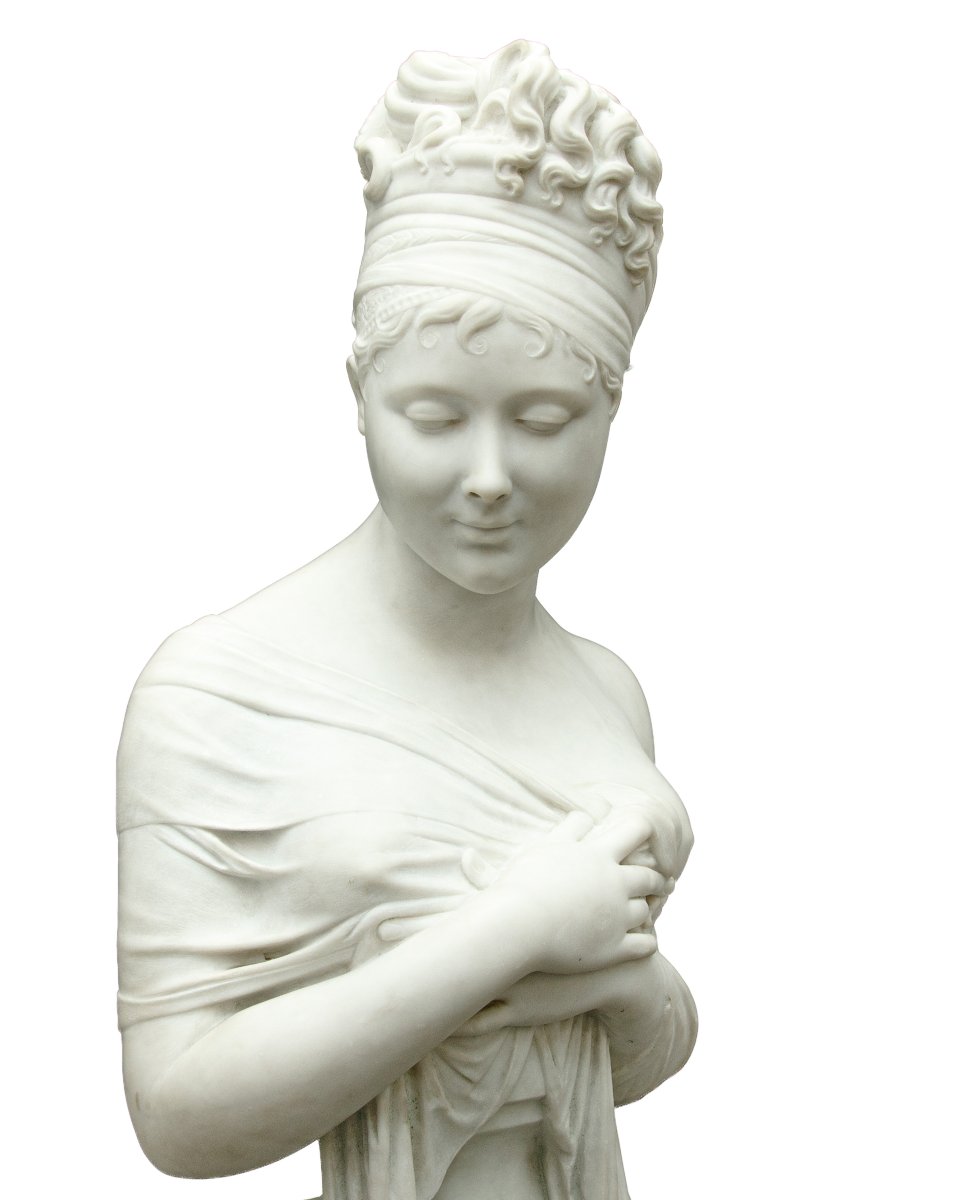
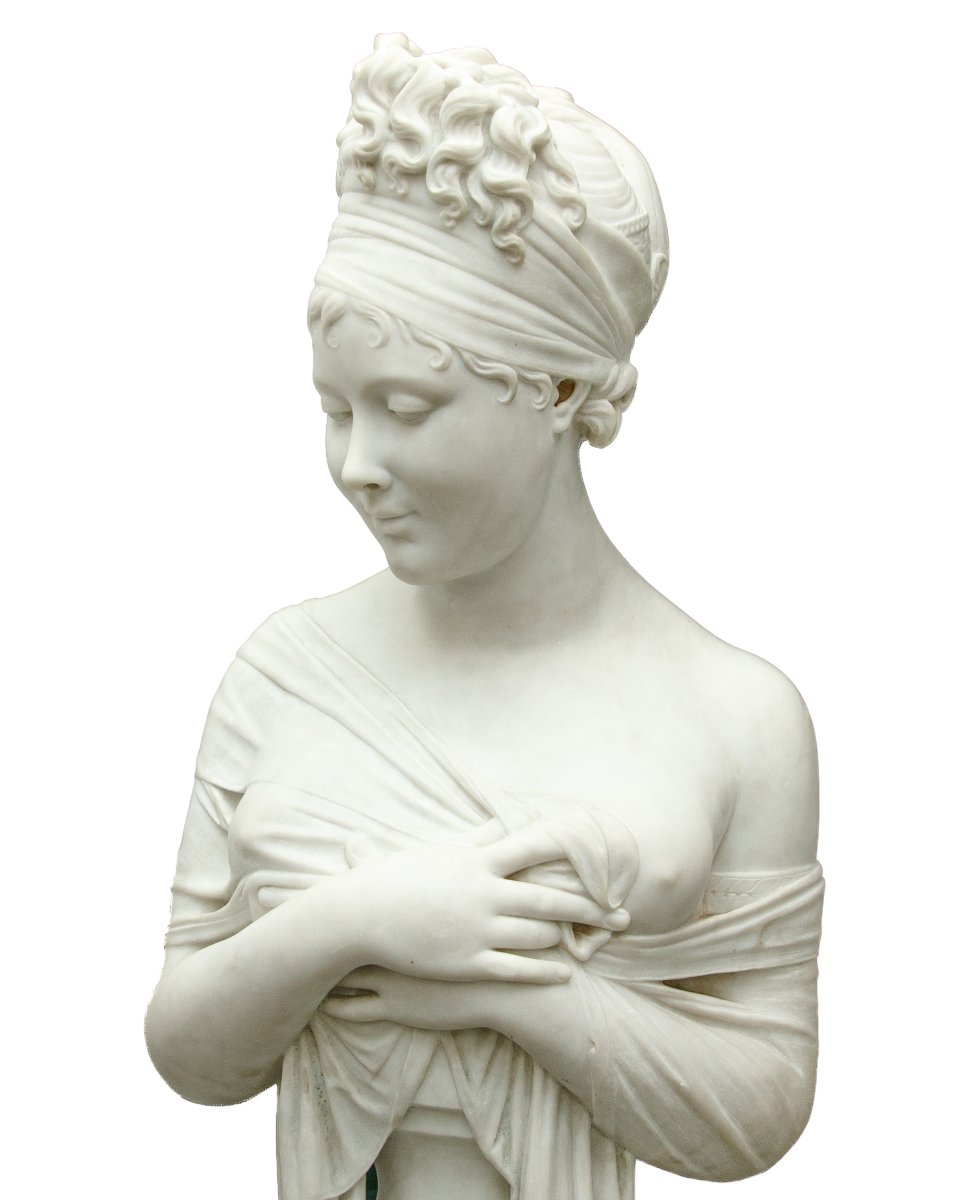


19th Century, By Joseph Chinard (lyon, 1756–1813), Bust Of Madame Recamier
19th century, by Joseph Chinard (Lyon, 1756–1813)
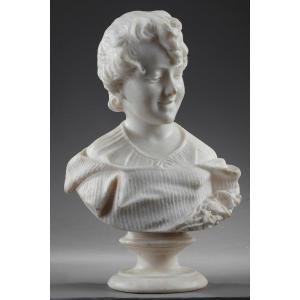
Bust of Madame Récamier
Marble, 64 x 35 x 23 cm
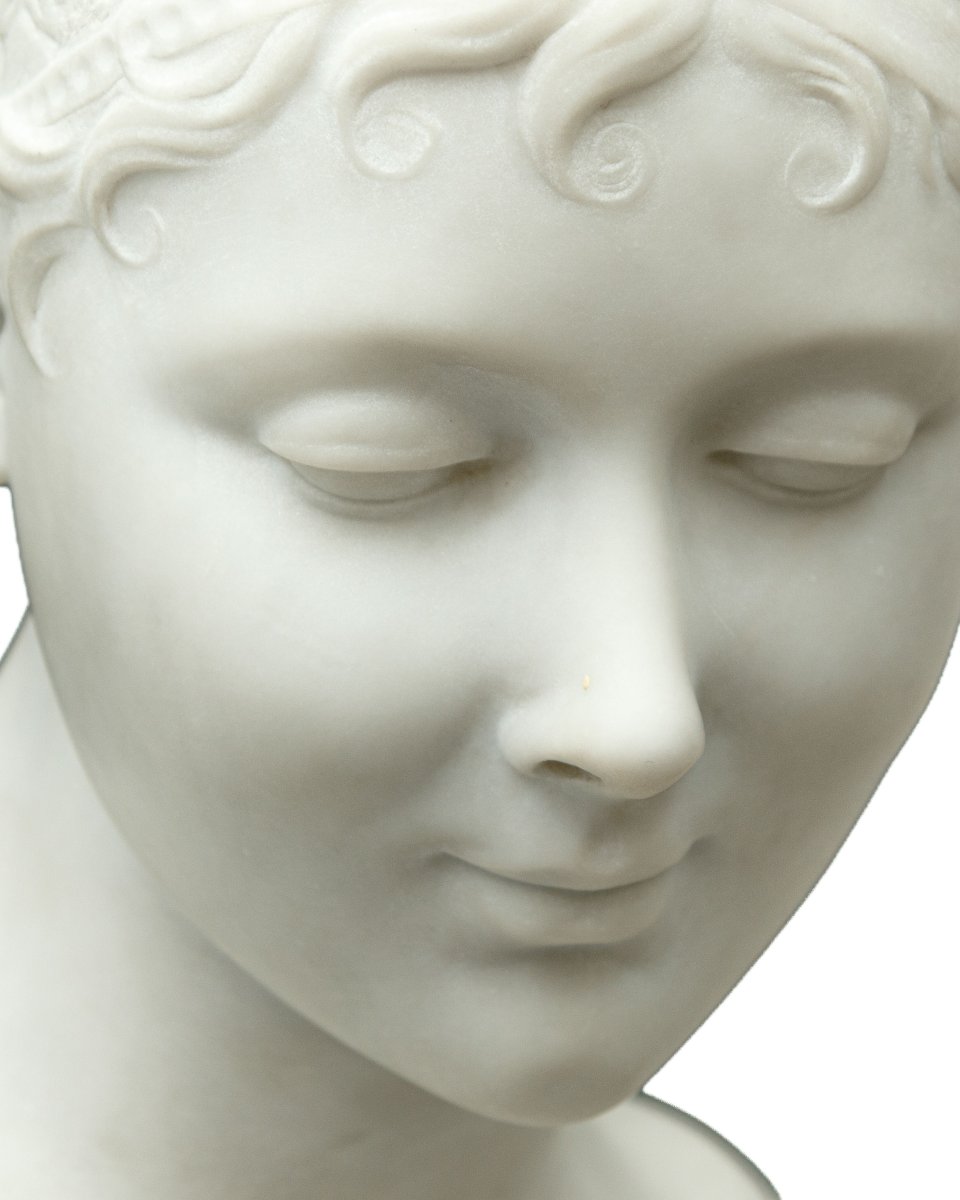
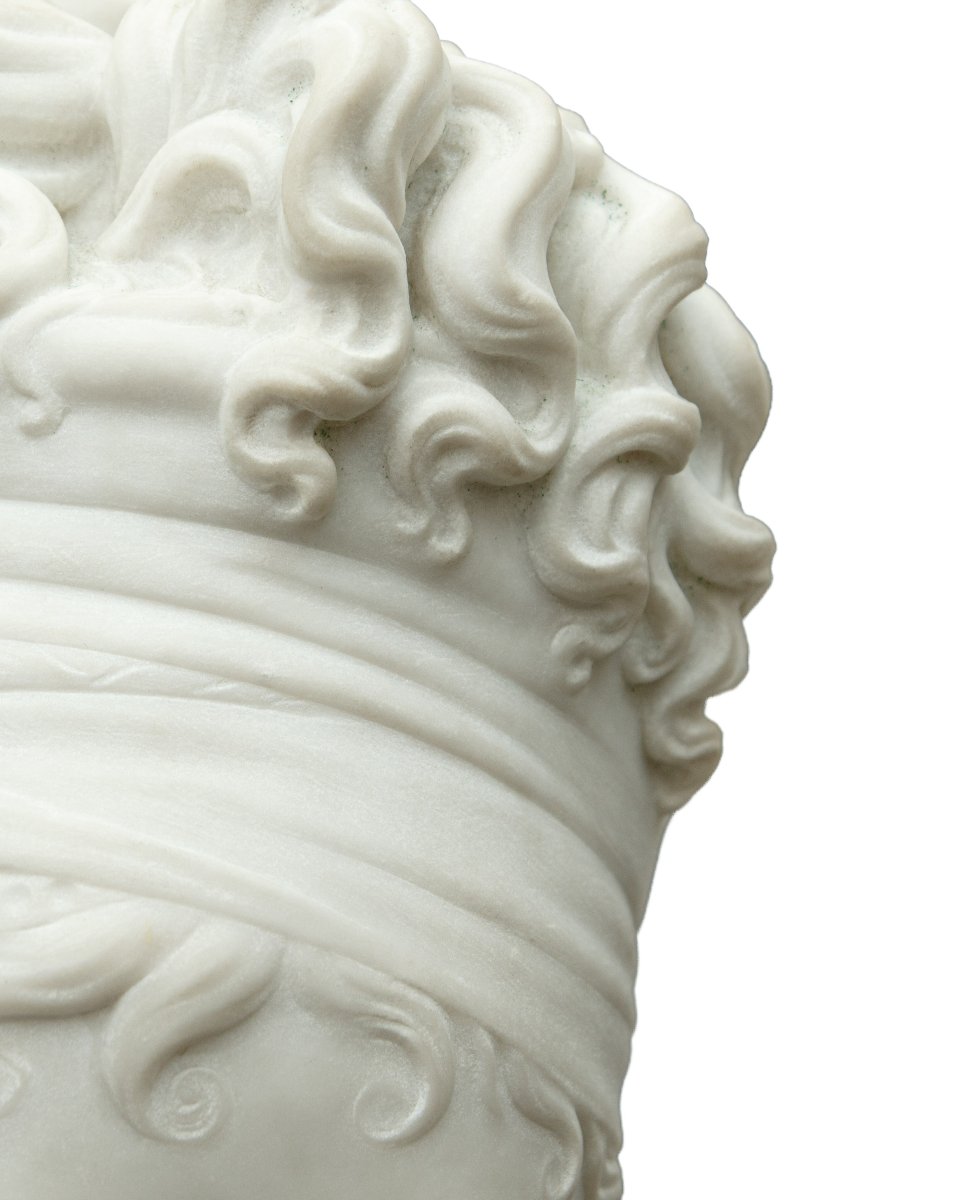
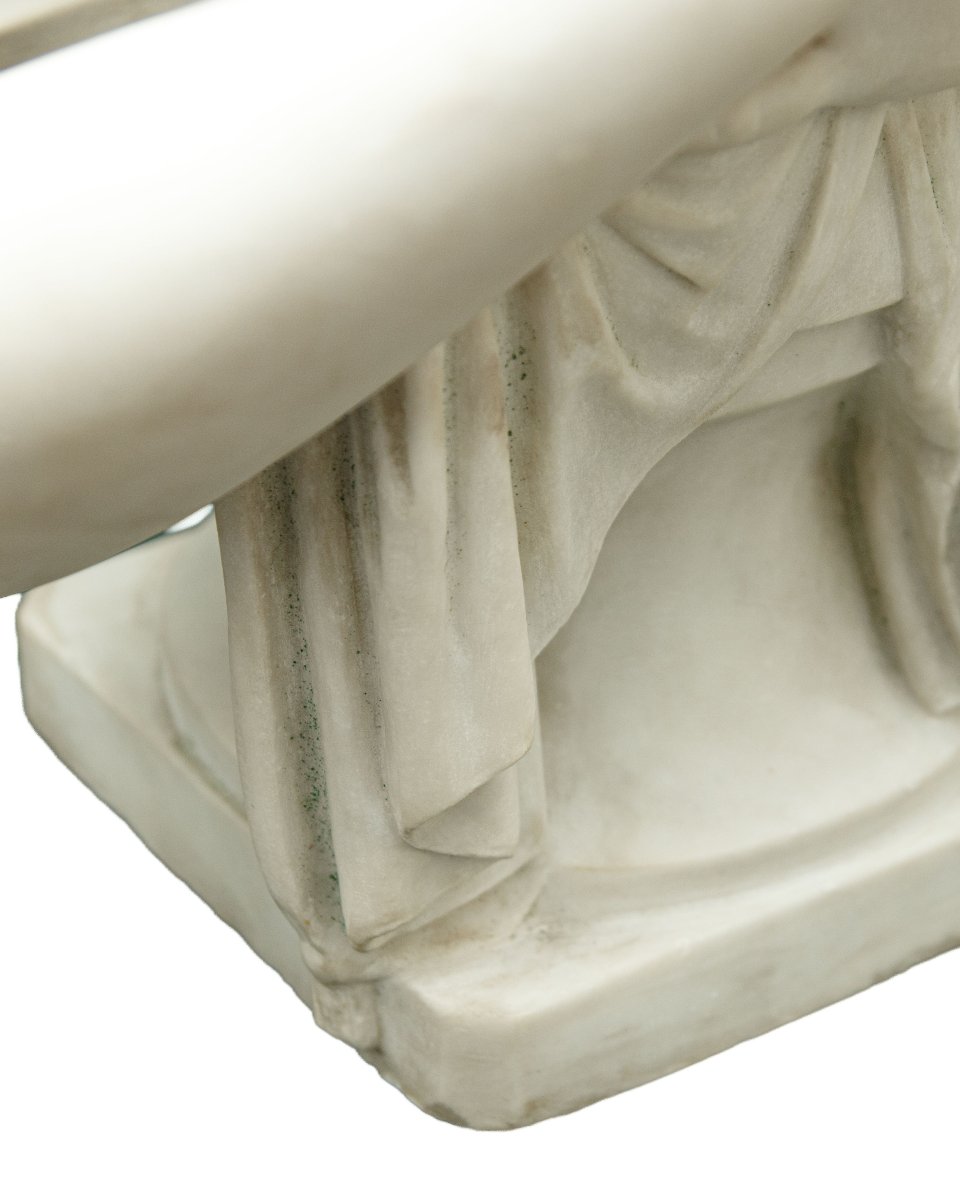
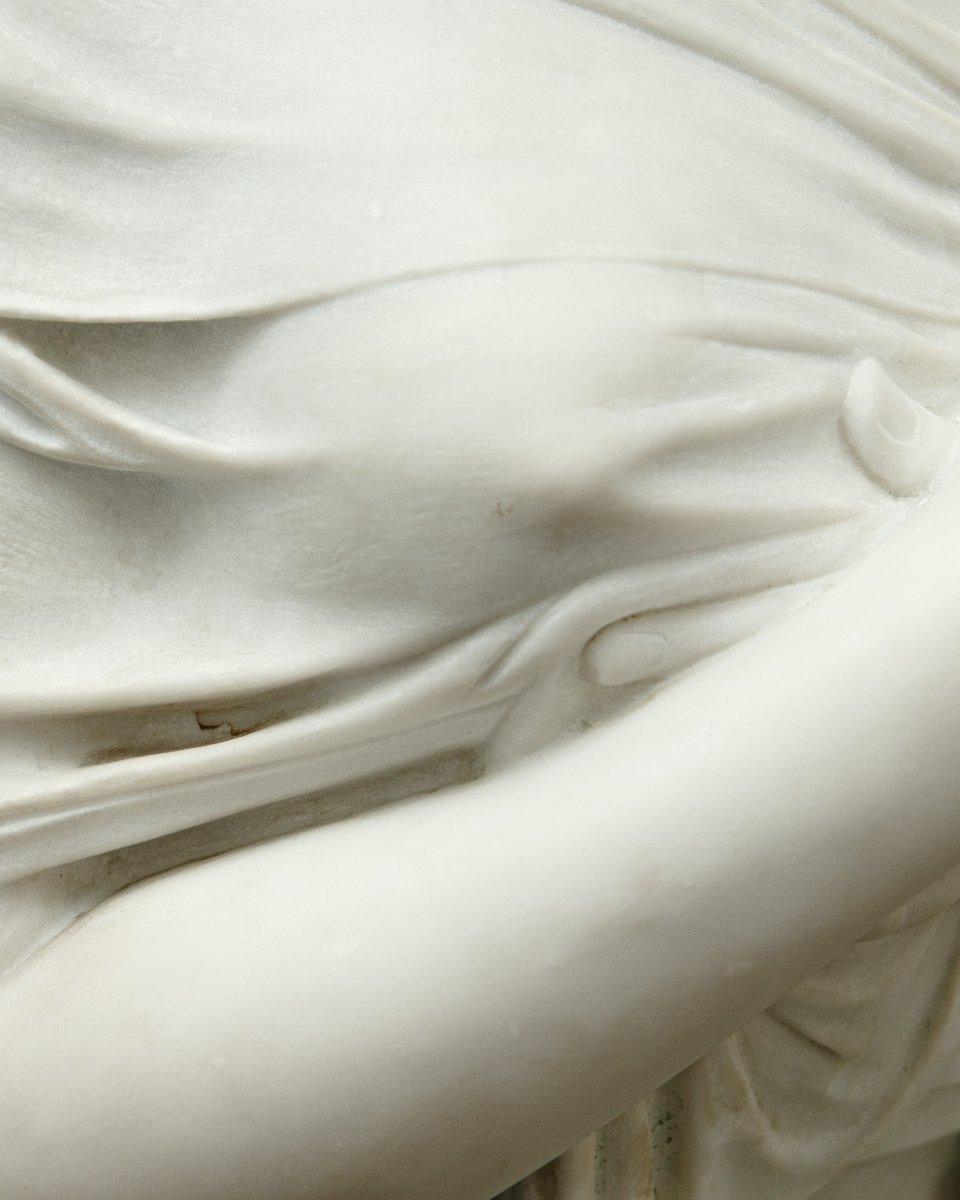
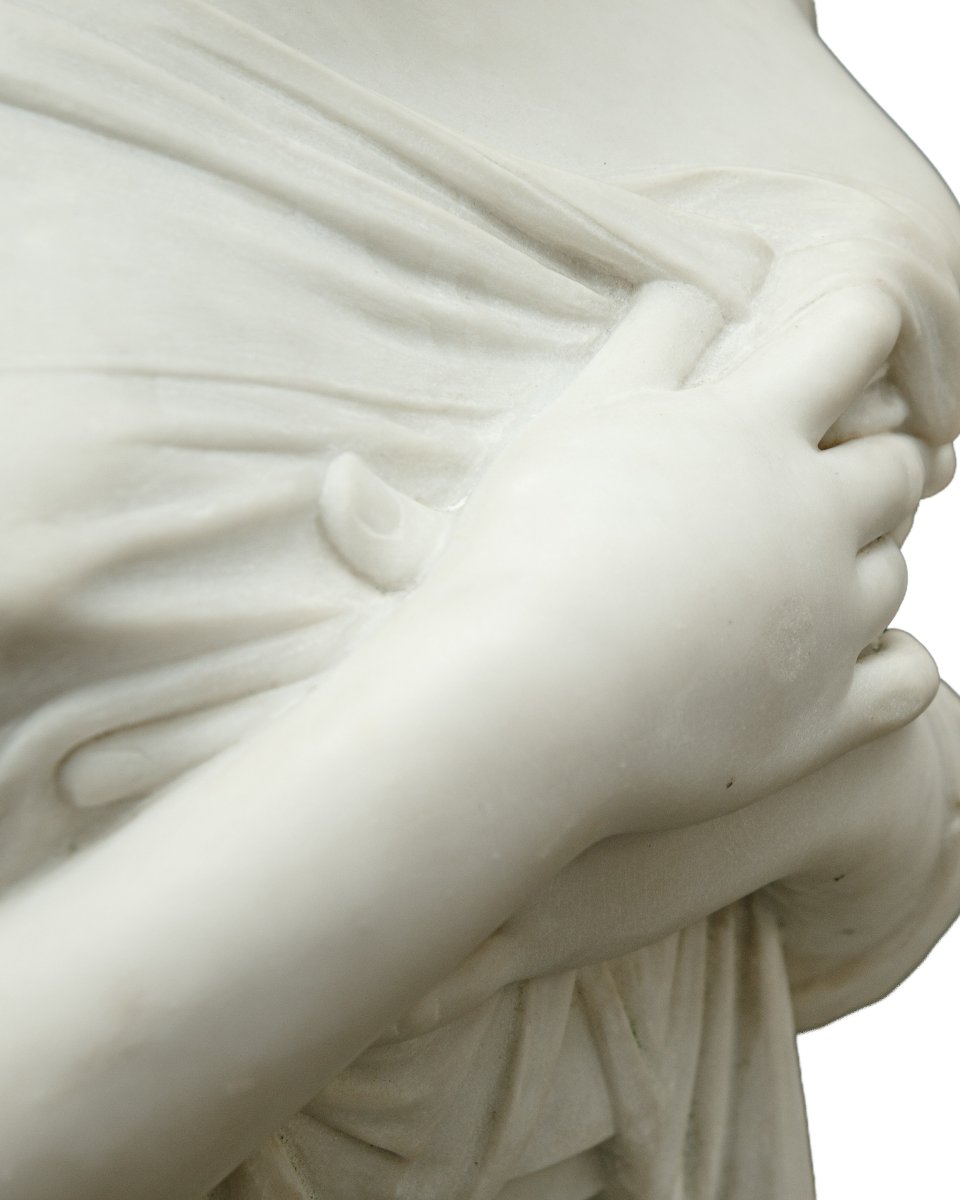
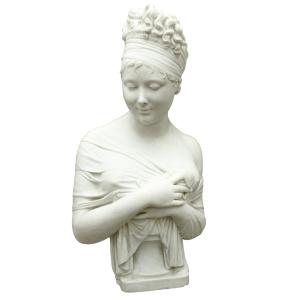
The sculpture depicts the bust of Jeanne Françoise Julie Adélaïde Bernard, better known as Juliette Récamier or Madame Récamier (Lyon, December 3, 1777 – Paris, May 11, 1849), a famous French salon hostess during the Directoire and the First Empire. Juliette’s family belonged to the bourgeoisie of Lyon: her father, Jean Bernard, was a royal official. Appointed director of finance, he moved to Paris with his family in 1786. Juliette’s mother, on the other hand, an heiress with a substantial dowry, was a sophisticated and intelligent woman. Madame Récamier’s salon soon became a gathering place for high society, while also drawing in the highest echelons of power. Juliette’s extraordinary beauty and charm earned her a large following of admirers. This refined lady was among the first to adopt the “Greek style” in fashion—simple dresses made of semi-transparent muslin—and played a significant role in popularizing the taste for antiquity, later known as the Empire style. A friend of Madame de Staël and later, during the Empire, a friend and companion of Chateaubriand, she was a key figure in the opposition to Napoleon Bonaparte’s regime, thanks to her cultural salon, which served as a political and intellectual hub. Because of her political views, she was eventually exiled from Paris. After staying in Châlons-en-Champagne from September 1811 to June 1812 and then in Lyon, she visited Italy. She was able to return to the French capital only after the fall of the Empire in 1815, where she continued to host the era’s most prominent figures. Juliette is portrayed shyly lowering her gaze and holding a veil over her chest with both hands, covering her breasts in a gesture of great modesty and reserve. A faint smile plays on her lips, and her wavy hair is held in place by a headband in a high updo. The work is based on a model created by the French sculptor Joseph Chinard (Lyon, February 12, 1756 – June 20, 1813). After receiving his early training in Lyon—as a painter at the École Royale de Dessin and as a sculptor in a local workshop— Chinard traveled to Rome between 1784 and 1787, where he won a prize from the Academy of San Luca for his terracotta sculpture *Perseus and Andromeda*. He created the marble sculpture of Juliette Récamier—now housed at the Musée des Beaux-Arts in Lyon—during his stay in Paris between 1801 and 1802. A terracotta version of the work also exists, now housed at the Getty Museum in Los Angeles. Chinard’s works can in fact be admired today in the most important museum collections, including the Metropolitan Museum of Art and the National Gallery of Art in Washington, D.C., in addition to the two institutions mentioned above.
Period: 19th century
Style: Other Style
Condition: Good condition
Material: Marble
Width: 35
Height: 64
Depth: 23
Reference (ID): 1826394
Availability: In stock