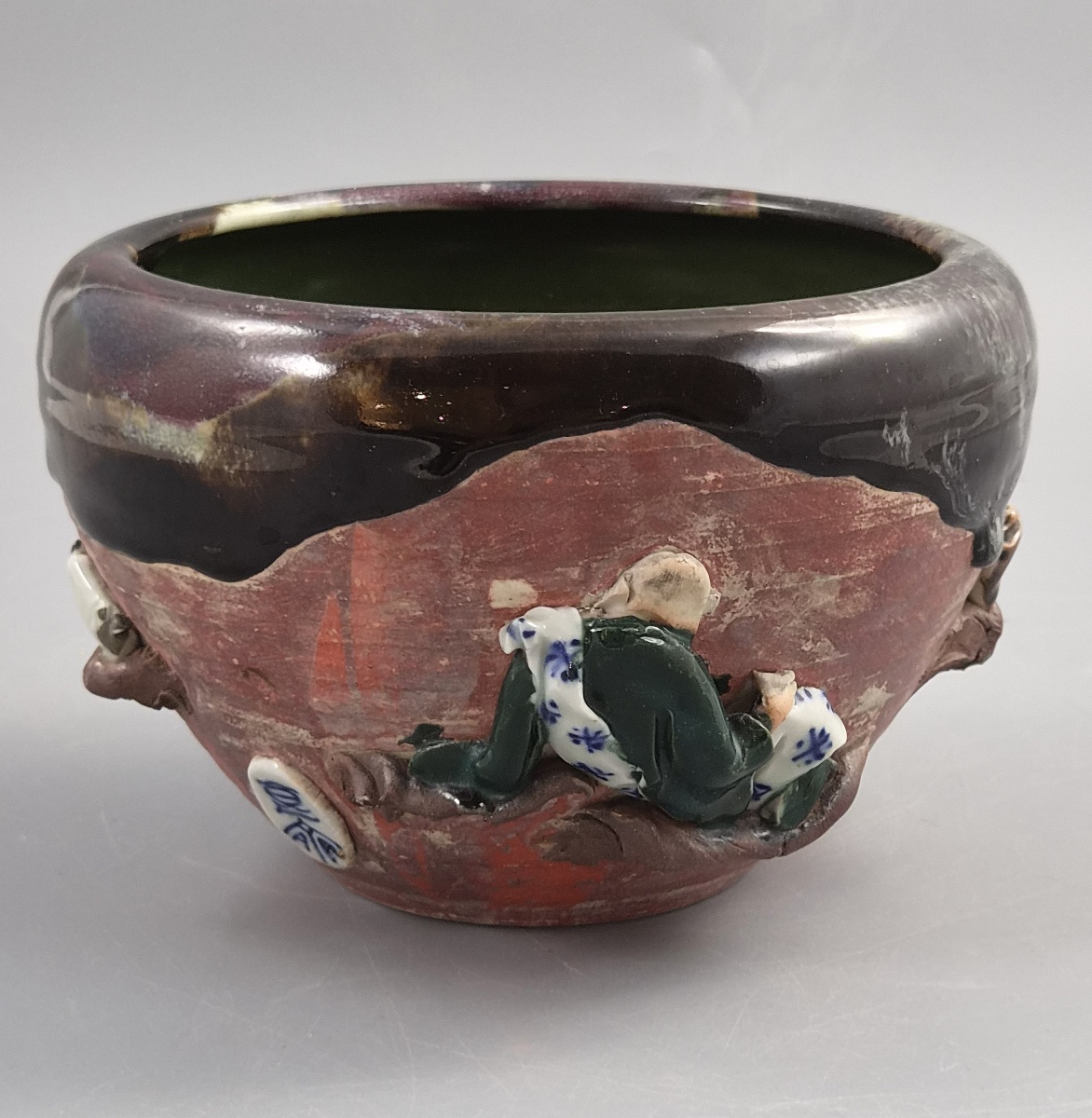
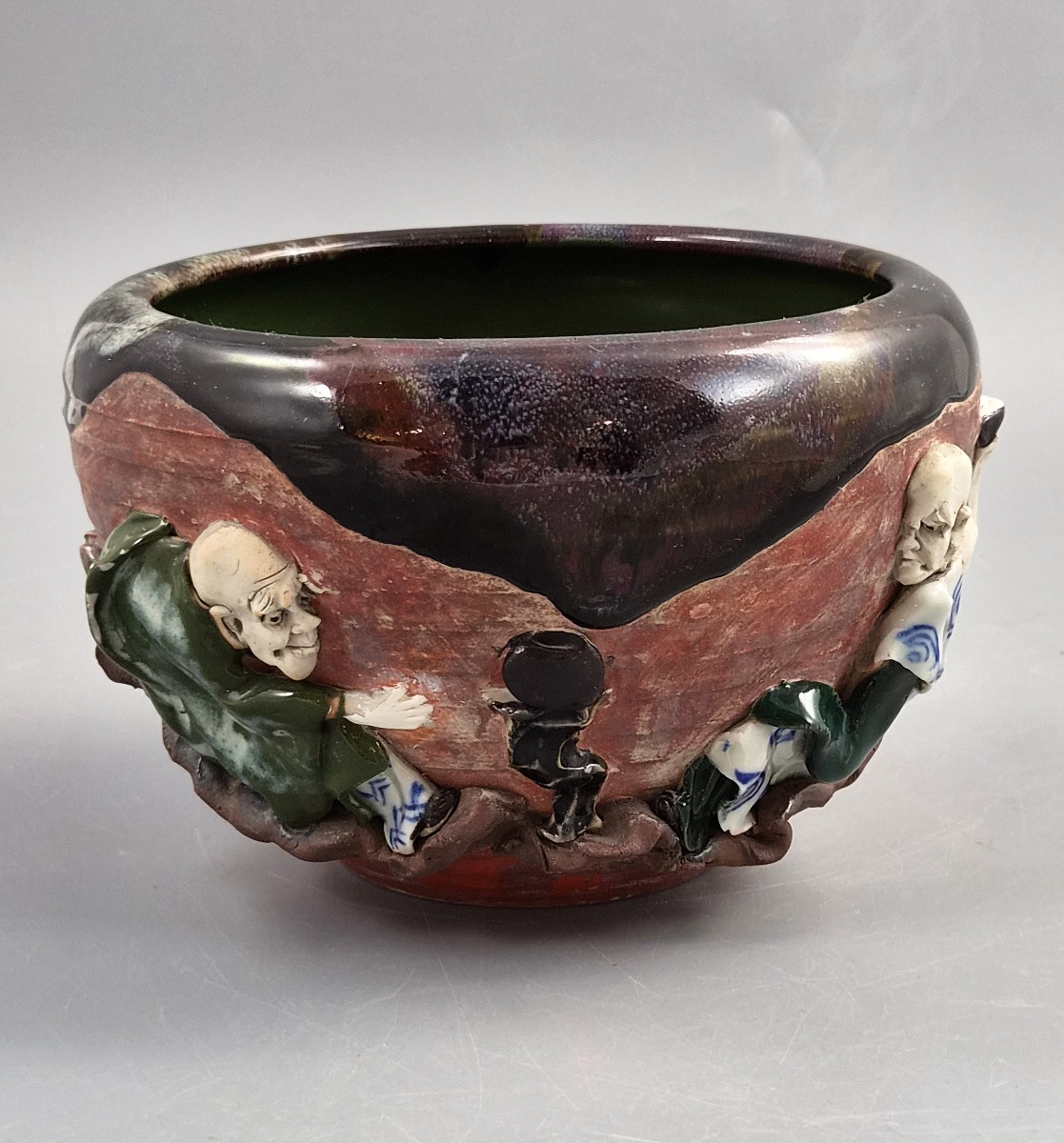
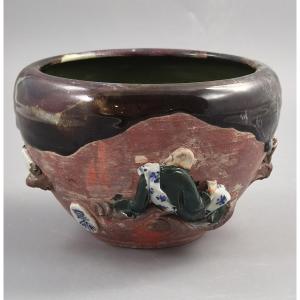


Japanese Sumida Gawa Bowl Signed Inoue Ryōsai, Figures In Relief, Meiji–taishō C.1900
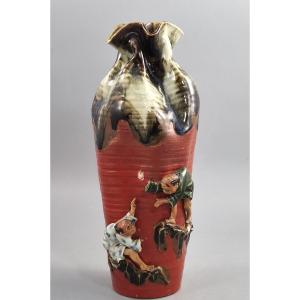
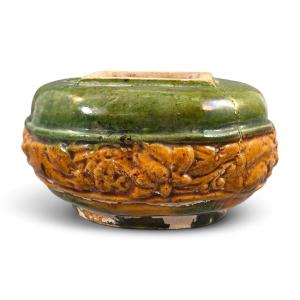
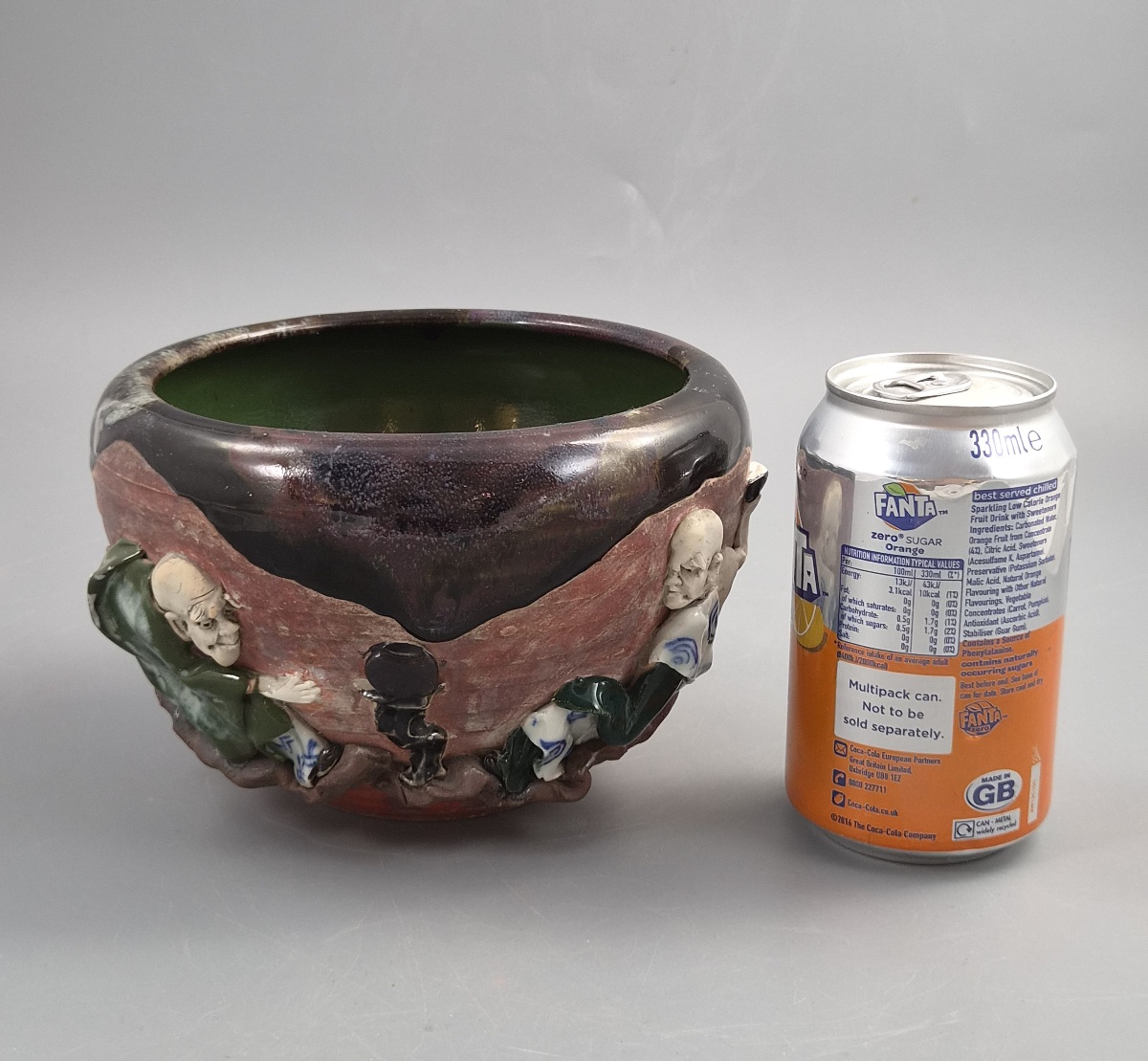
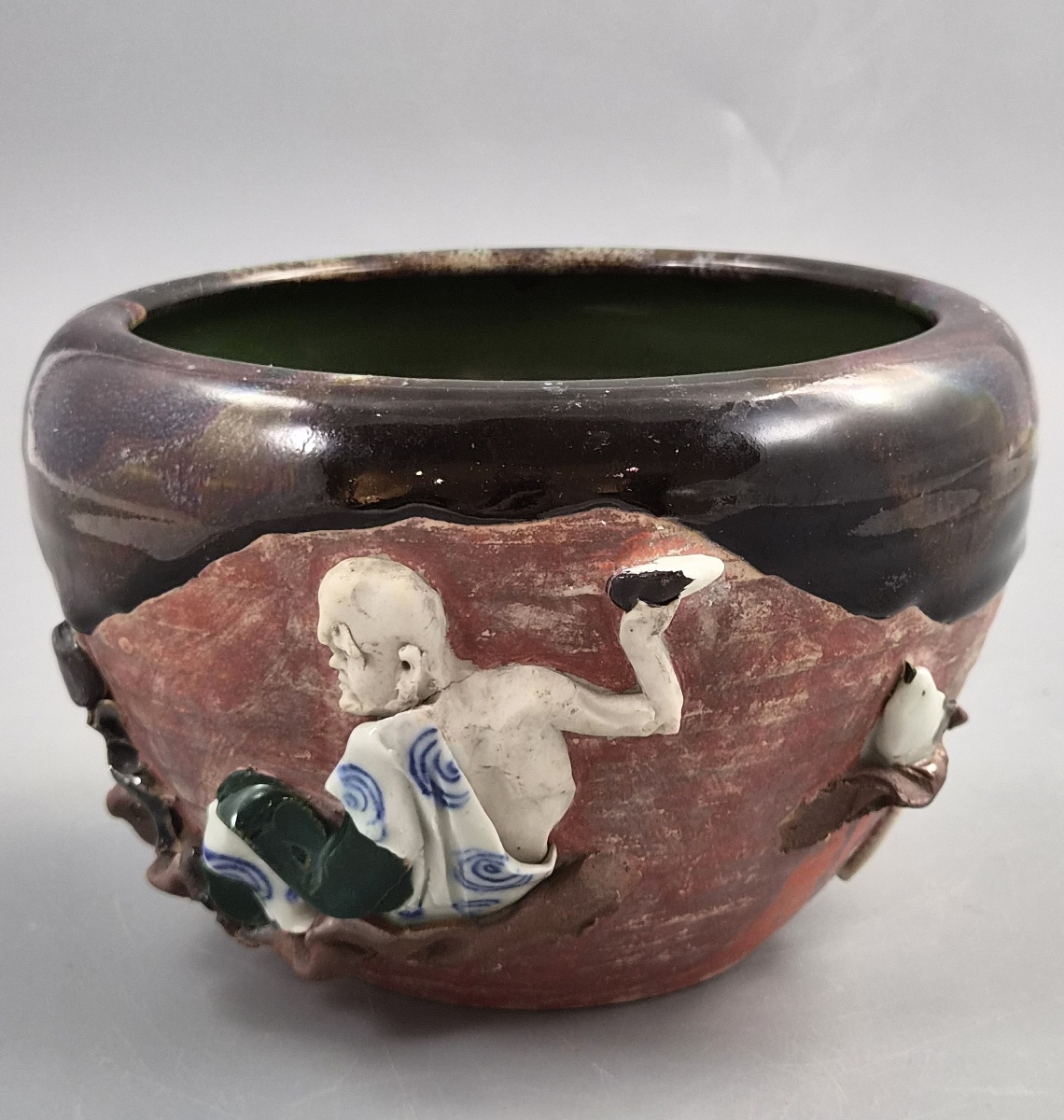
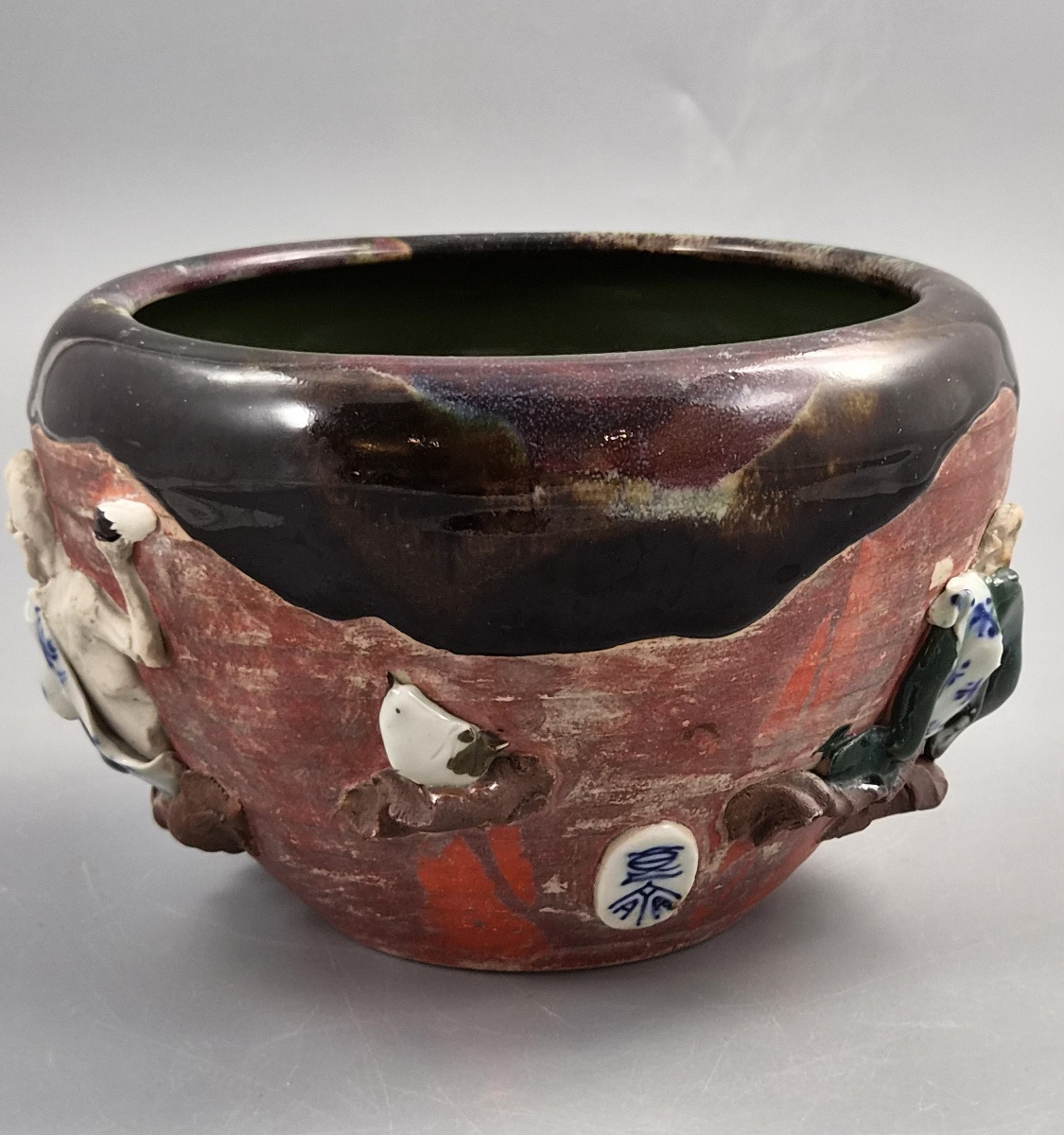
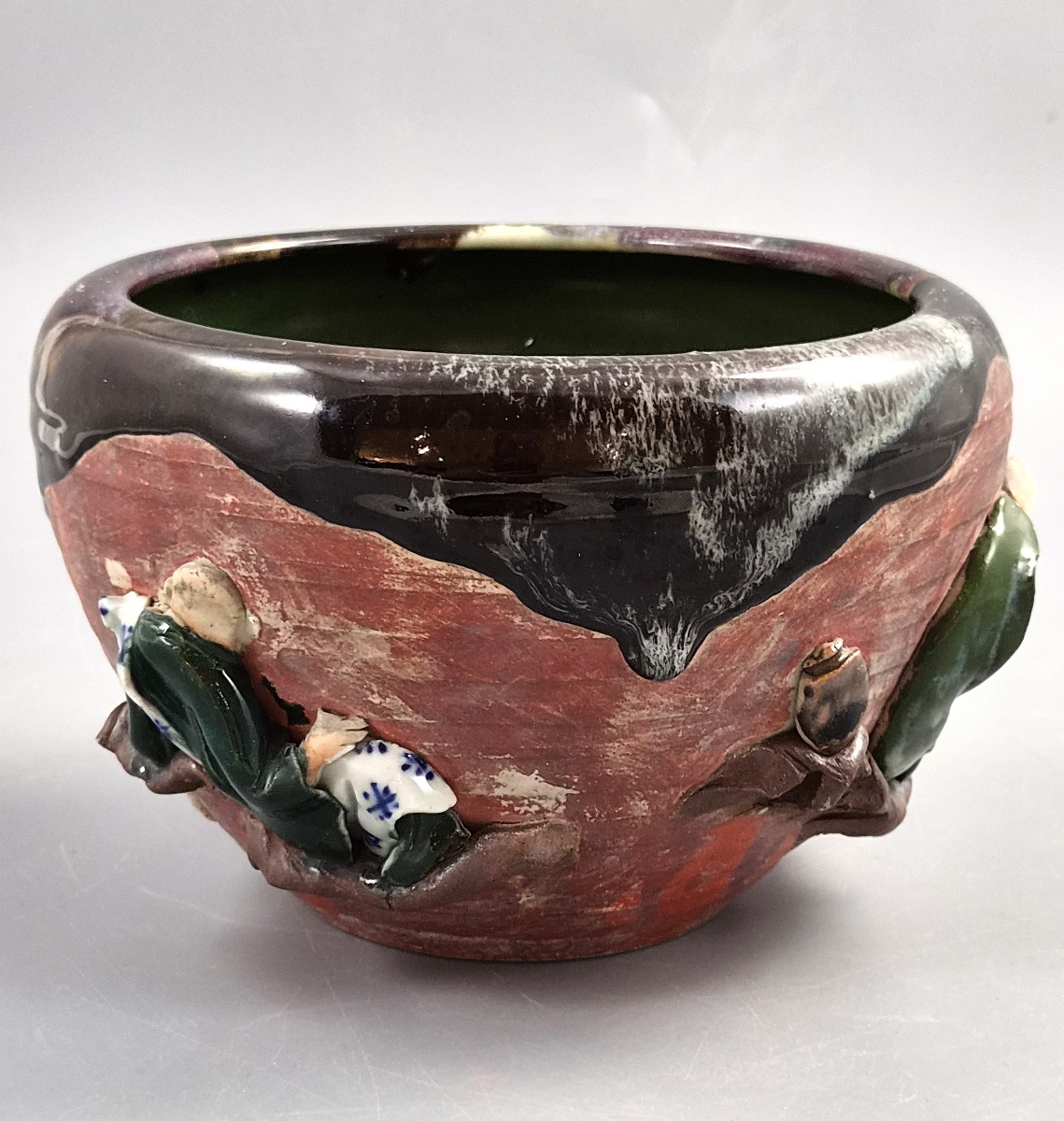
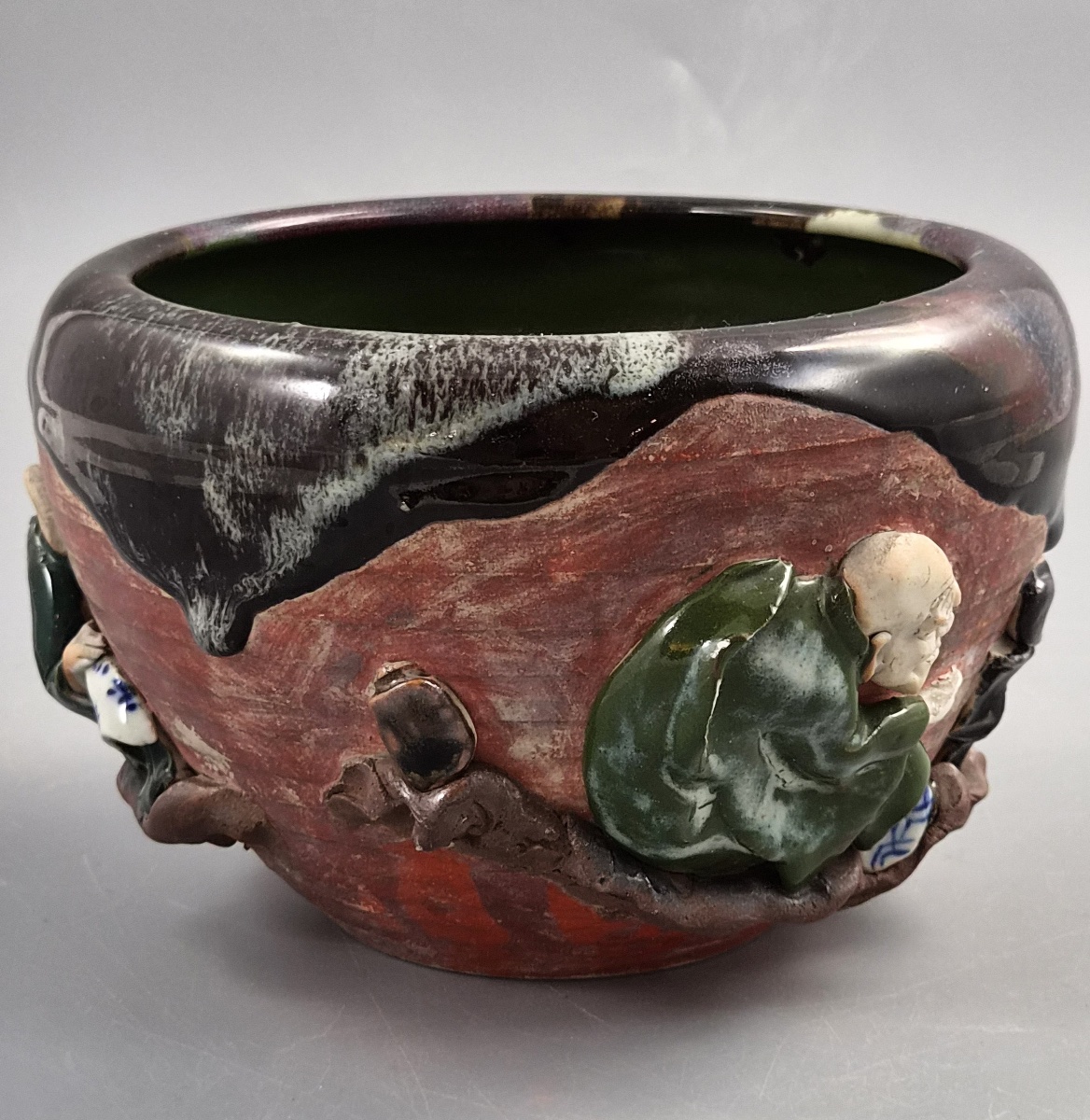
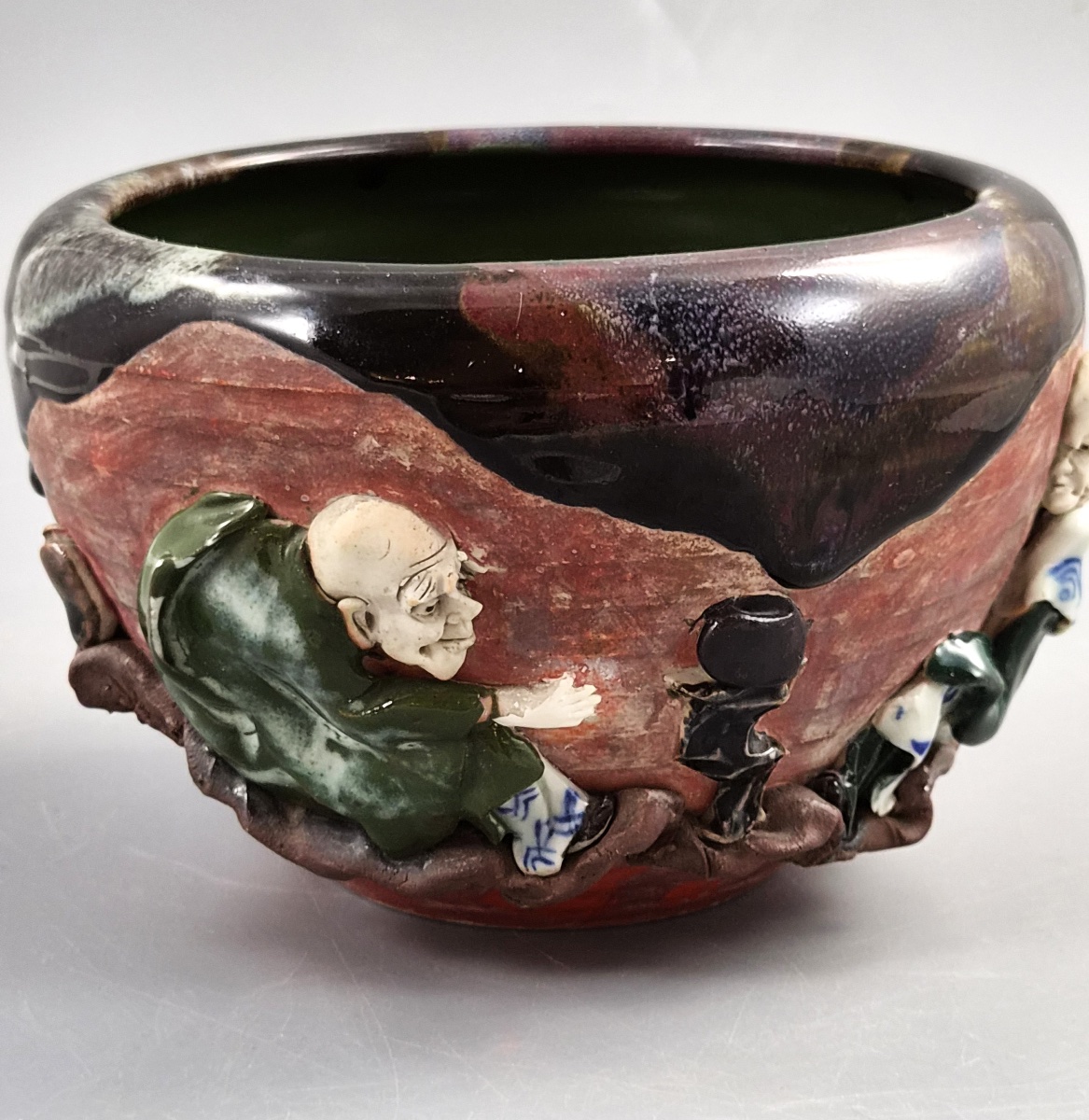
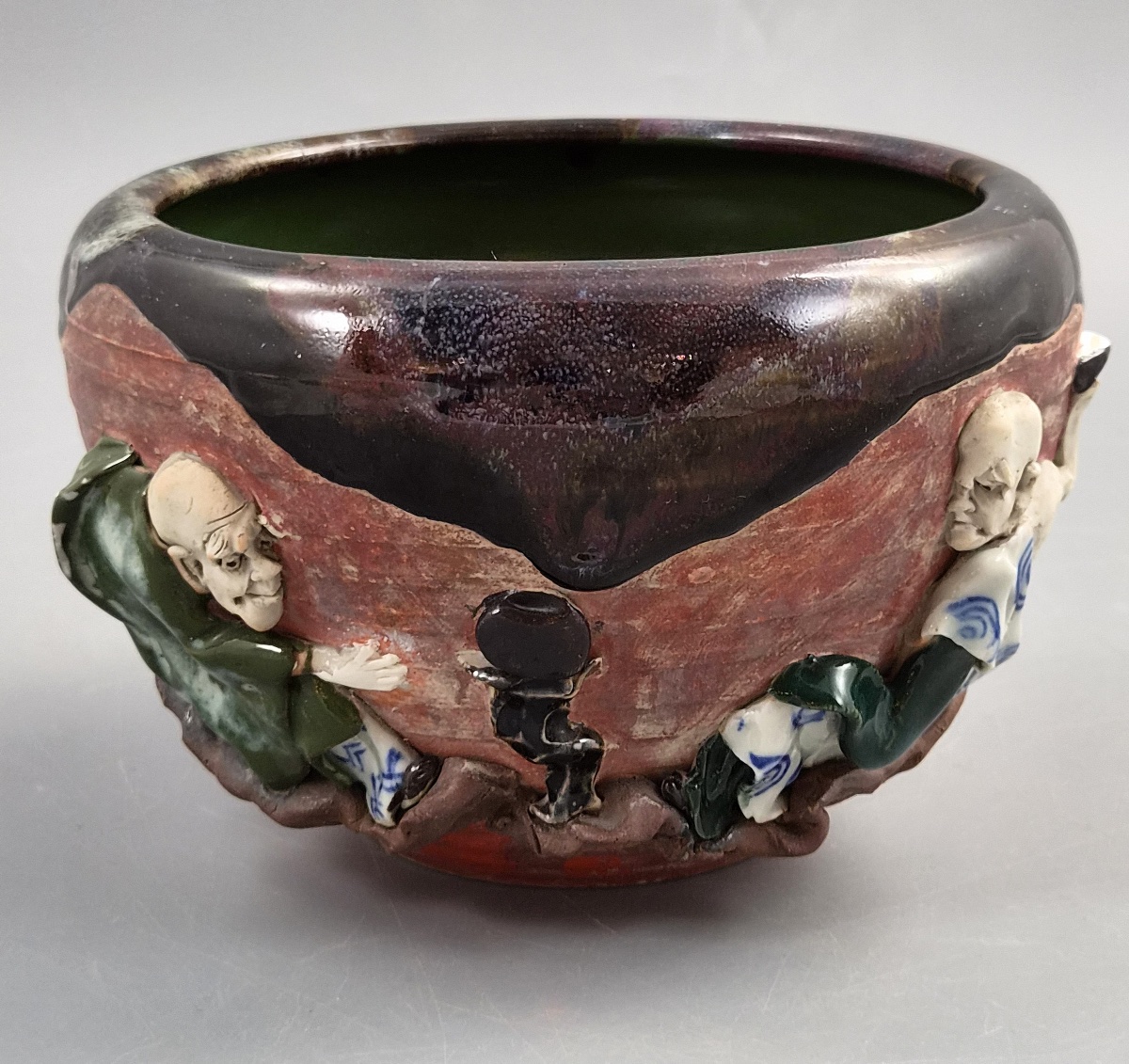
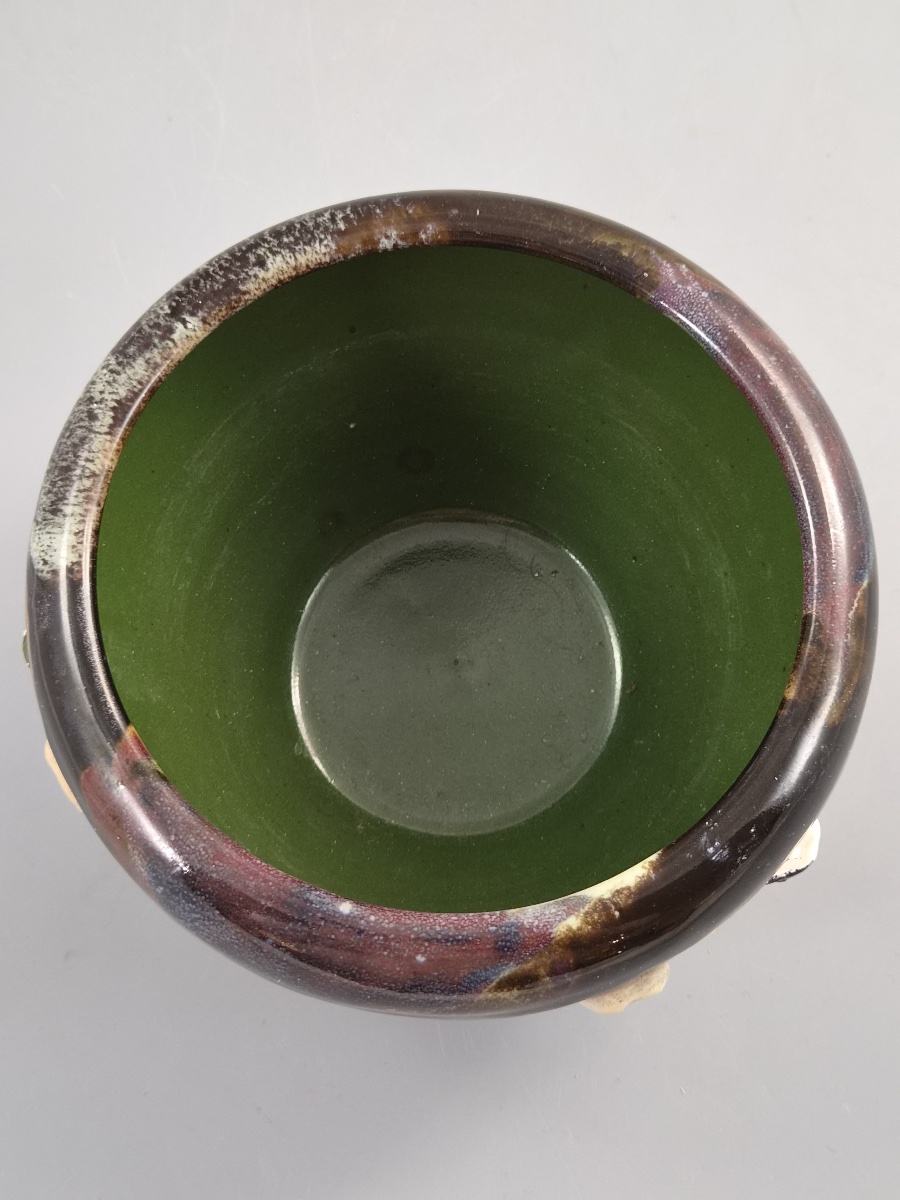
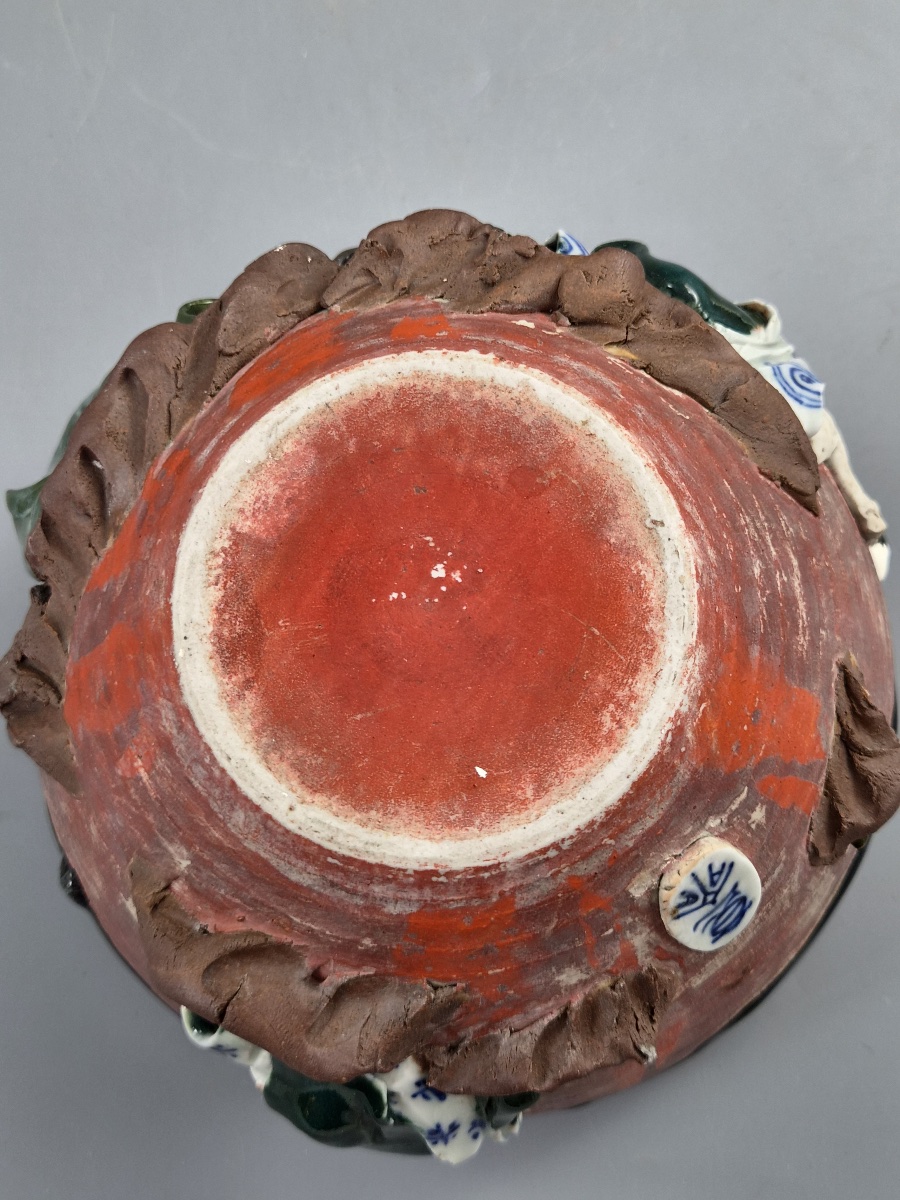
A hand-thrown Japanese Sumida Gawa (Sumida-yaki) bowl signed Ryōsai, dating to the late Meiji–Taishō period, circa 1900–1920. The low-fired earthenware body is of deep rounded form on a narrow foot, thrown with visible horizontal ribbing and finished in a warm brick-red slip ground of dry, brushed texture, the interior glazed in a smooth matte olive-green.
The everted rim and upper body are sheathed in a lustrous flambé glaze of deep aubergine-black shot with oxblood, blue and cream mottling, descending in an undulating curtain over the red ground in the manner of Chinese Shiwan (Shekwan) wares.
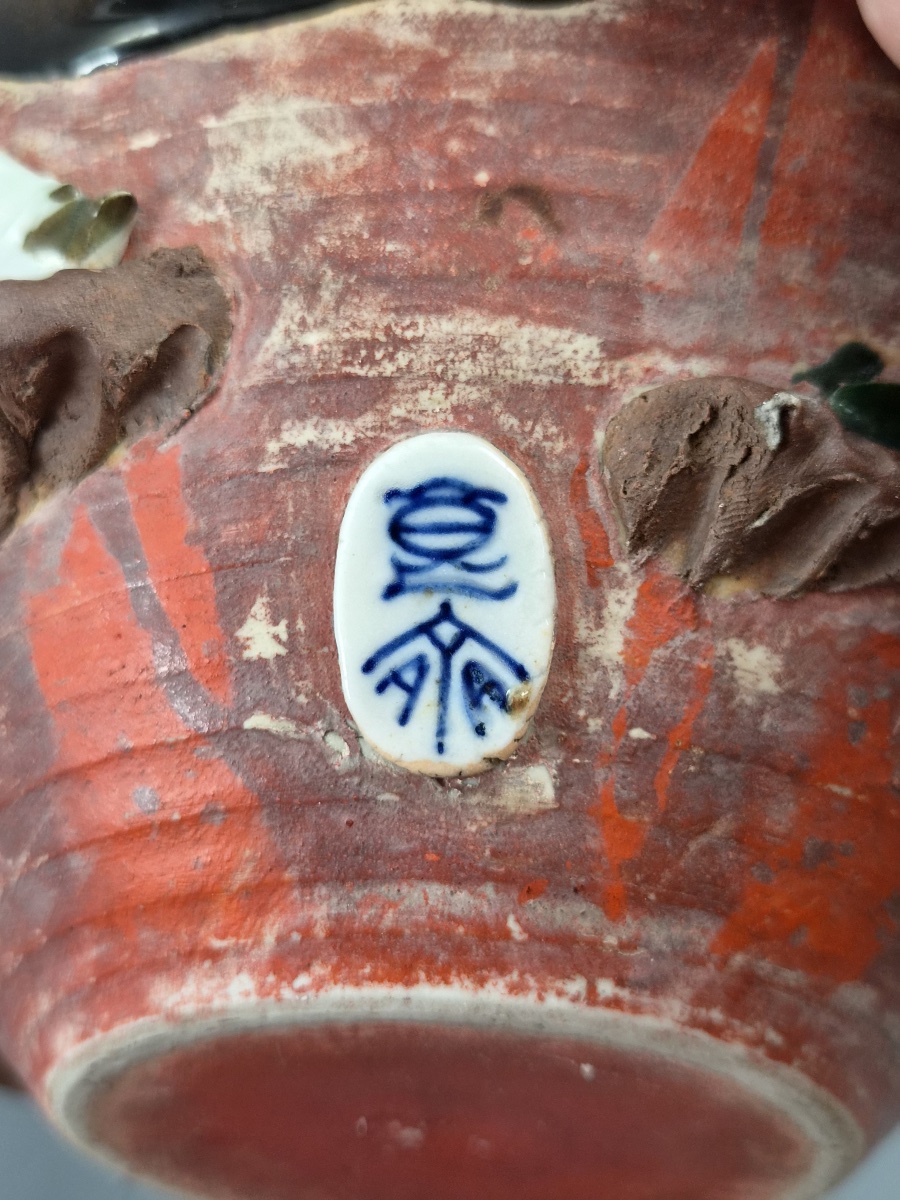
Applied and modelled in high relief around the exterior is an animated narrative group of figures clambering over applied rockwork — an elder in a green-glazed robe reaching toward a dark jar, further robed figures in white with underglaze-blue decoration, their expressive bisque faces finely detailed — a composition encircling the whole vessel. The lower body bears an applied oval white porcelain cartouche painted in underglaze blue, signed Ryōsai (良斎) and attributed to Inoue Ryōsai. The bowl measures 11.5 cm in height and 17 cm in diameter, and weighs 891 g. In good antique condition with minor losses and honest age-related wear consistent with period use. Please carefully regard all photos as they make an integral part of the listing, and reach out if there are any questions.
Period: 20th century
Style: Asian art
Condition: Good condition
Reference (ID): 1795344
Availability: In stock