

çal-zeyve Rug, 115 X 155 Cm, Hand-knotted Wool From Anatolia, Turkey, Late 18th Century–19th Century
Artist: Art Anatolien
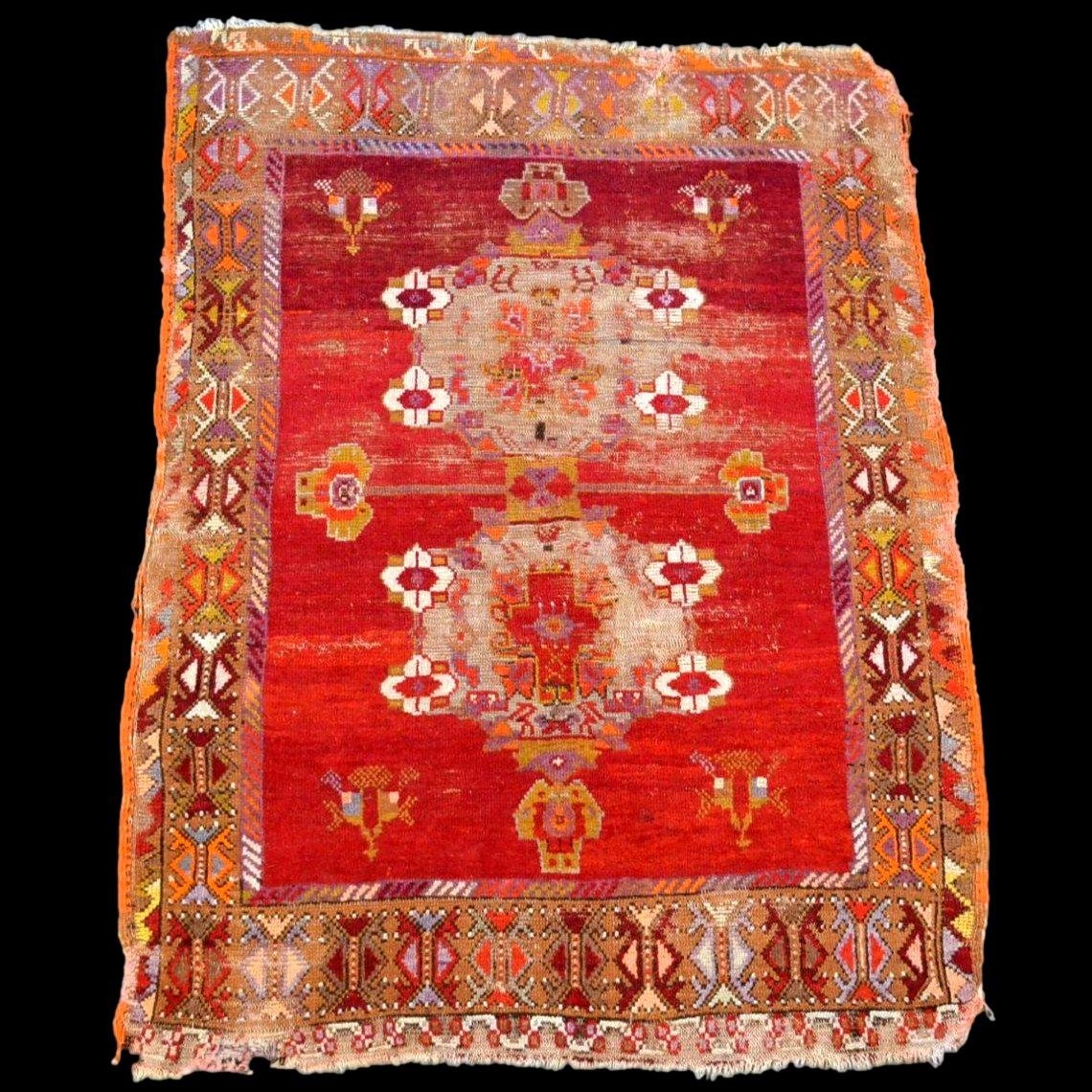
Antique Çal-Zeyve rug, Anatolia, Turkey, 115 x 155 cm, wool, late 18th century, early 19th century
Artist: Village of Zeyve
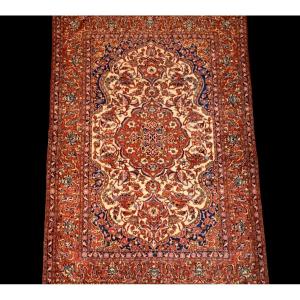
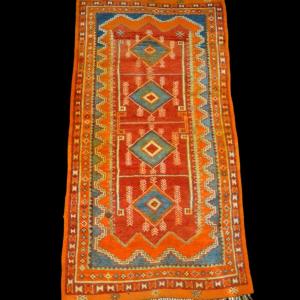
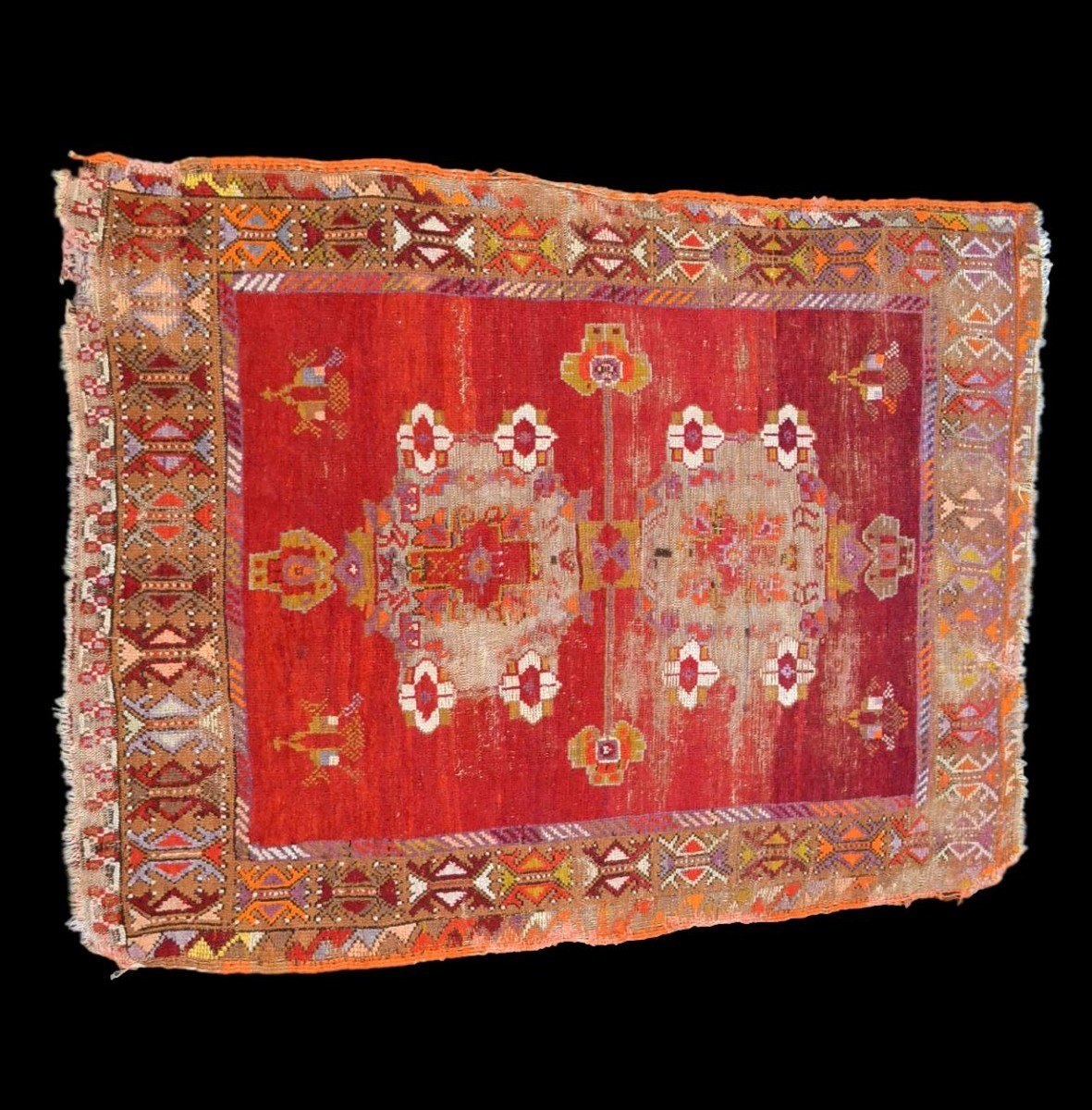
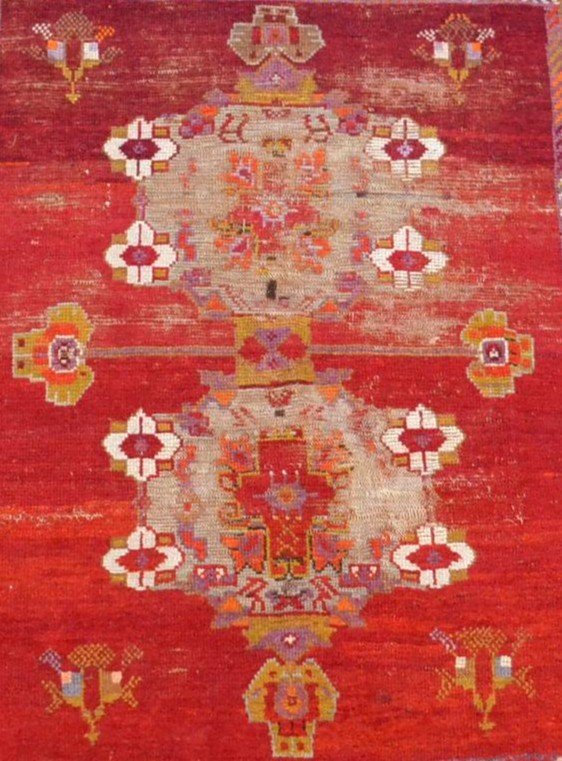
Hand-knotted wool Çal-Zeyve rug in the Turkish knot style.
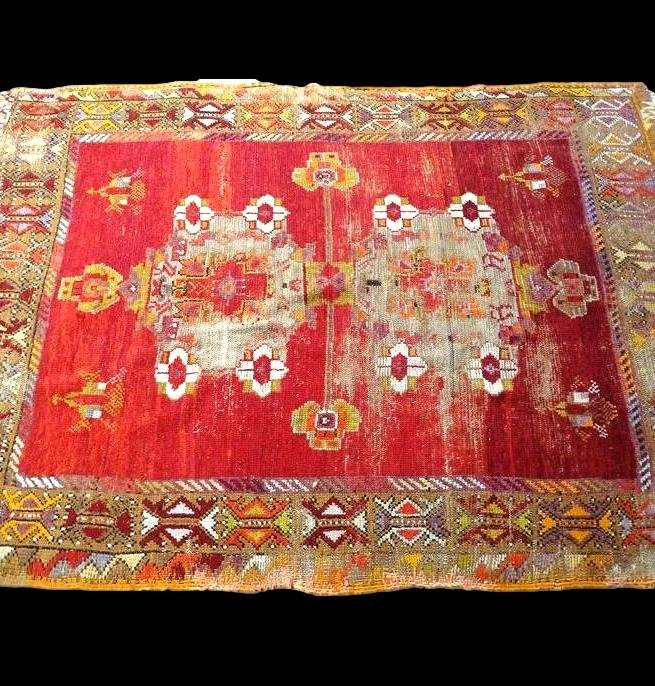
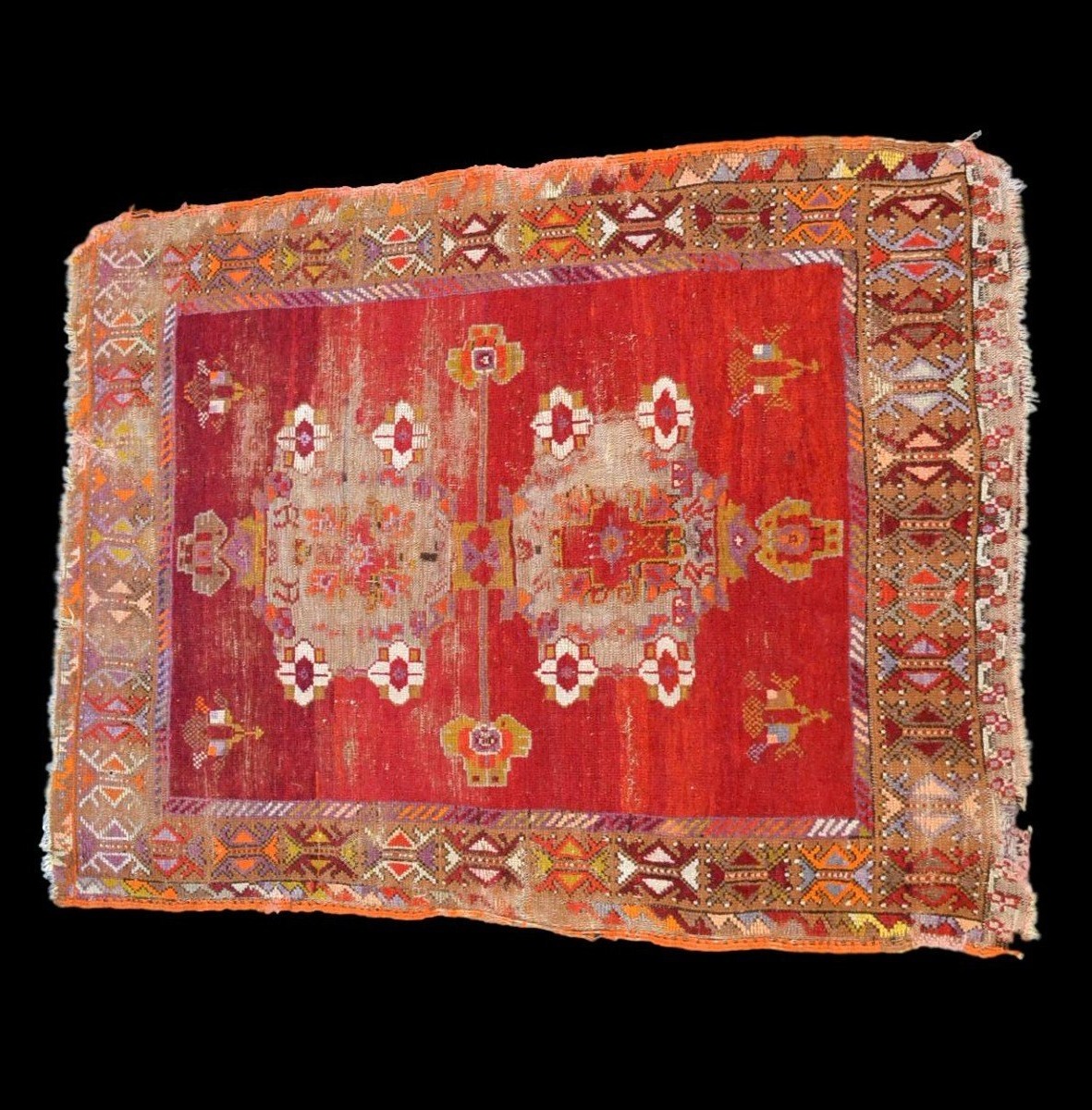
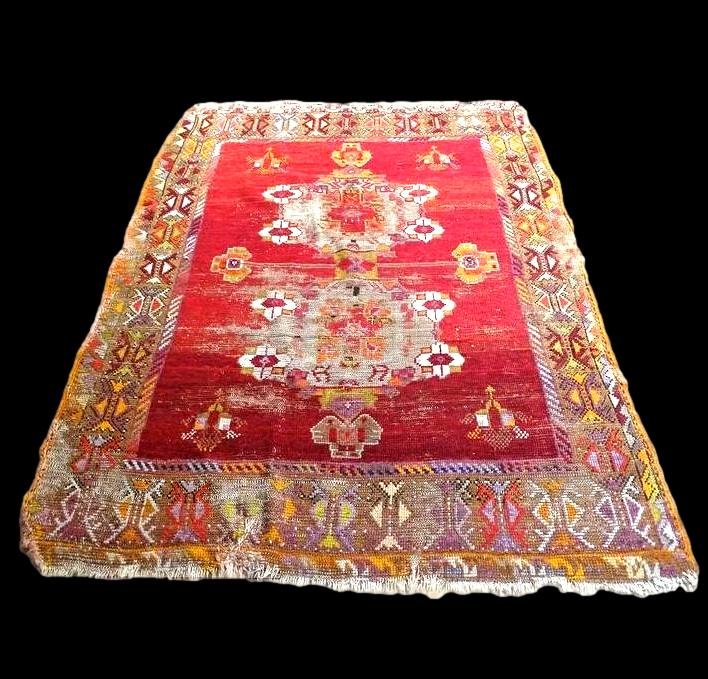
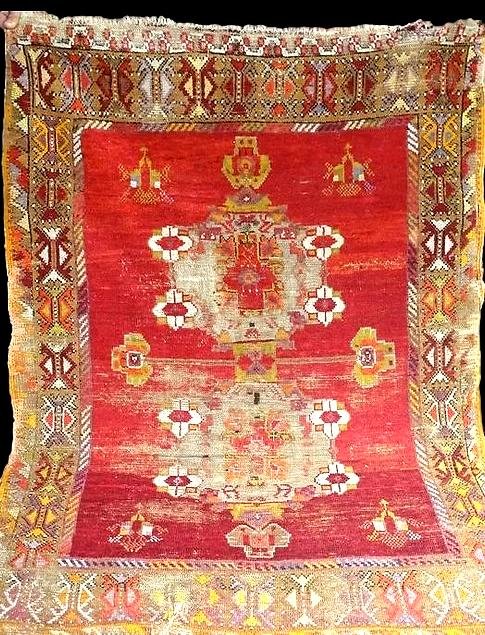
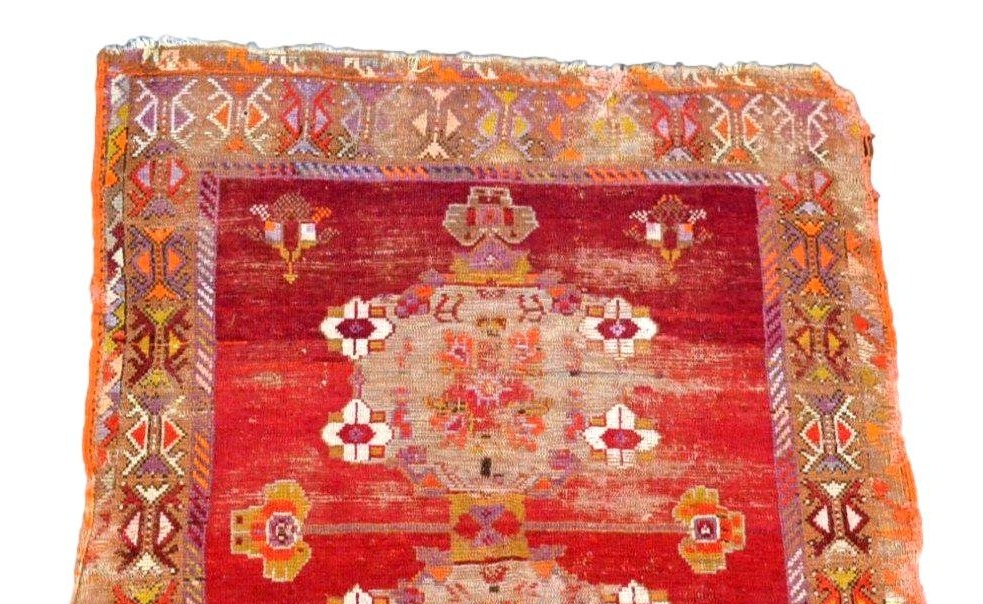
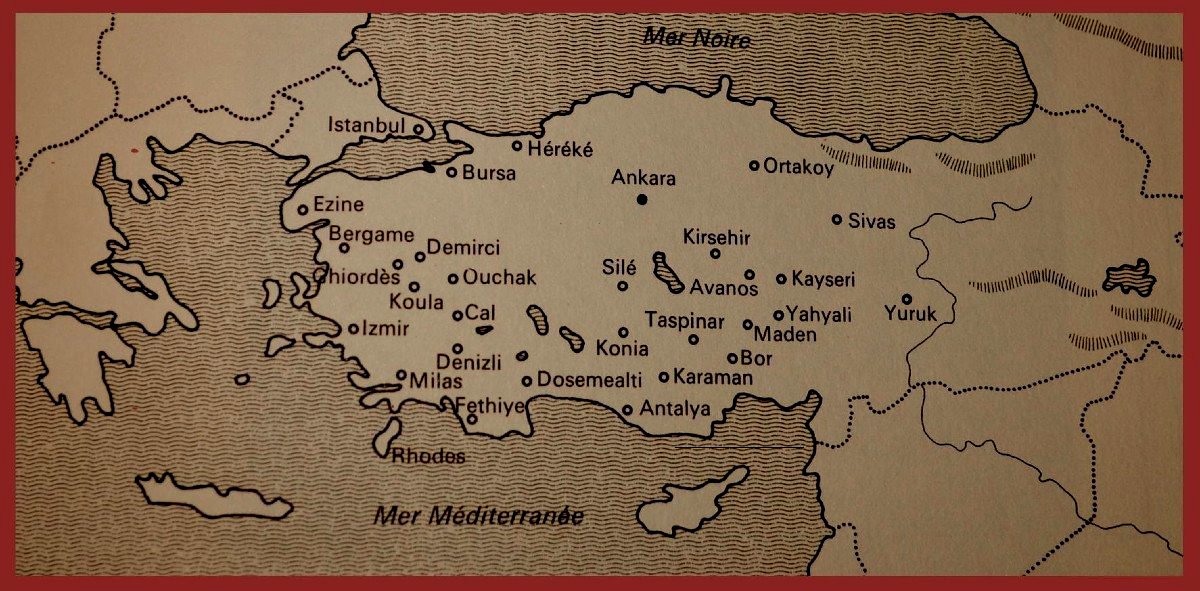
Featuring two medallions and floral motifs, originating from Anatolia, Turkey, formerly part of the Ottoman Empire.
This piece dates from the second half of the 18th century to the first half of the 19th.
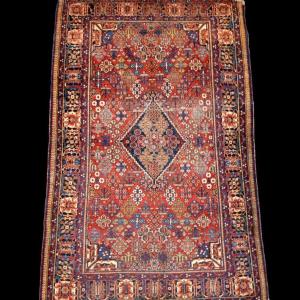
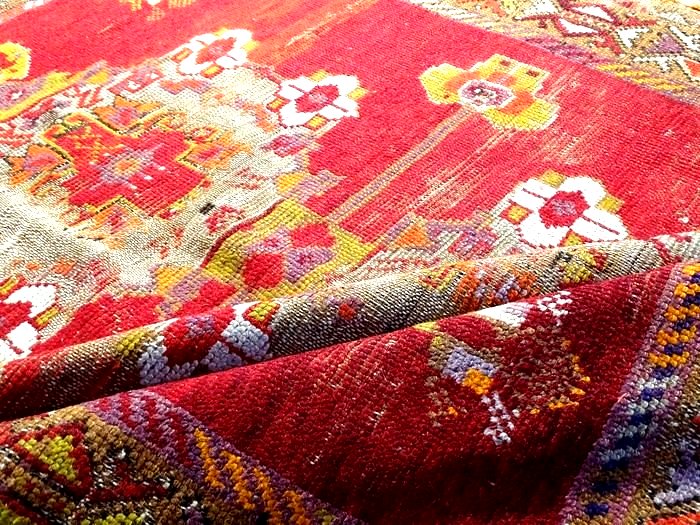
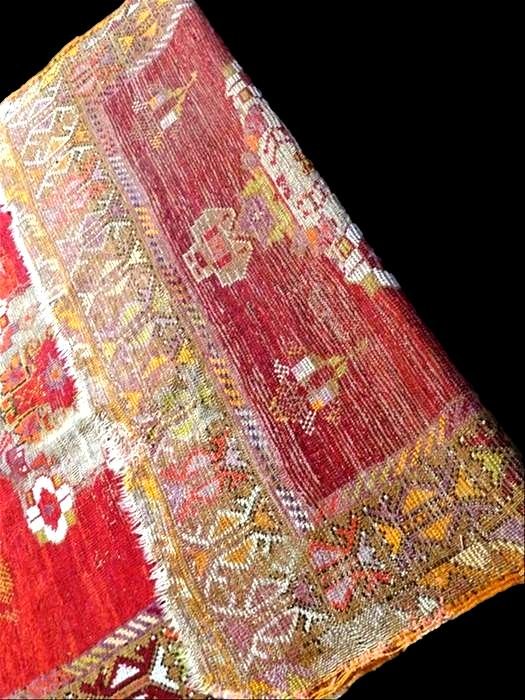
With bold colors—vibrant red, curry yellow, orange, sky blue, buff, burgundy, rust, mauve, ivory, ..... a palette representative of the incredible diversity of shades found in Anatolian rugs, such as Yürük and Kirsehir....
Needless to say, the colors are of natural origin.
This rug is like a ray of sunshine; the effect is created by the combination of the luminous red background paired with a chamomile hue, verging on golden yellow or even nesprun.
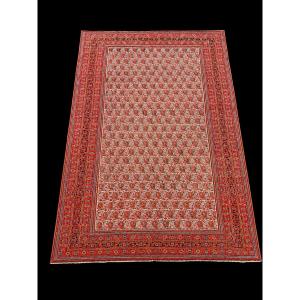
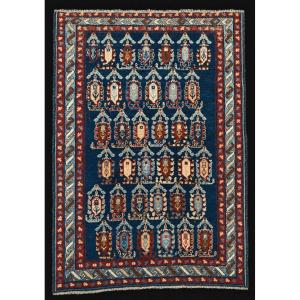
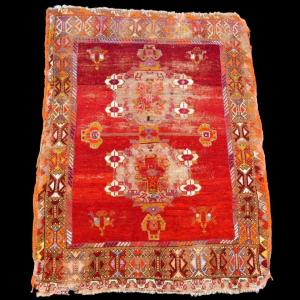
Leaf-and-flower motifs, typical of Anatolian rugs, are arranged across the field.
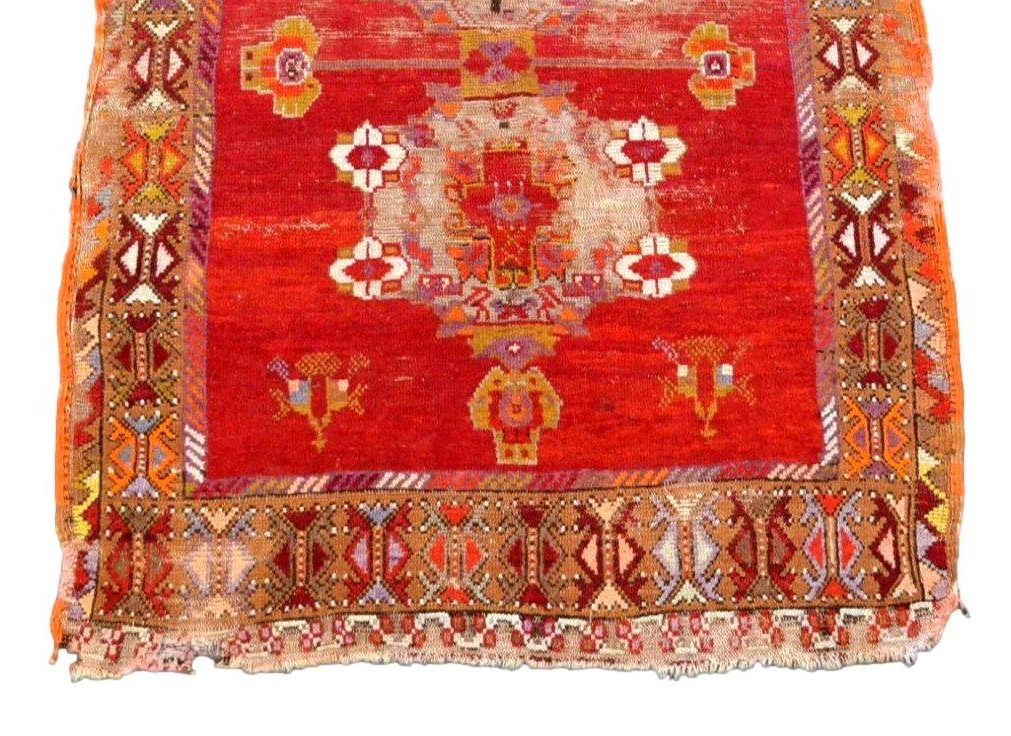
Our design features two medallions: one marked by a large red cross in the center on a gray background, and the other by a flower, both surrounded by four stylized, architectural flowers.
This decoration is found on numerous examples of Eastern Christian and even Buddhist art:
For example, the Etchmiadzin Cathedral in Armenia.
We find exactly the same type of design on the Vasudhârâ mandala from Nepal, dated 1400.
The cross motif is a resurgence from Eastern Christian carpets.
Long ago (even if some dispute these ideas), carpet weaving was the craft of the Christian Armenian populations, hence the widespread use of the cross on Turkish and Caucasian carpets, particularly on Transylvanian ones.
These motifs are also found on many Gashghai and Baluchi rugs from Persia, Iran, and Iranian Azerbaijan.
Çal-zeyve carpets are made of wool over wool or on a fine cotton weft with a short, very dense pile.
These regional carpets were previously more geometric in design and evolved to feature yellow arabesques and scrolls on a red background, forming sequences of loops and interlacing patterns.
Note the changes in wool color across the field of the rug, shifting from blood red to vermilion and orange-red.
It is on this type of rug that an innovation first appeared: the medallion, which the Turks borrowed from Persian weavers.
The medallion appeared in the sixteenth century on these Anatolian carpets.
Indeed, the Ottoman Empire occupied Persia during this period, and trade was extensive.
The çal-zeyve, Uşak, dazkiri.... "resemble" a type of carpet painted by the Venetian artist
Lorenzo Lotto (1480–1557) and the German painter Hans Holbein (1497–1543).
These were the Turkish rugs that were laid on tables and balconies and hung on walls during that era.
These rugs were exported to major European hotels during the 19th century.
In fact, “Turkish rugs” enjoyed a great reputation and were considered far superior to Persian rugs.
It was not until the late 19th century that Western merchants, particularly Americans and Germans, revived the popularity of Persian rugs.
Our piece features remarkable color nuances and is in good condition considering its age; the bright red field and its highly intricate and colorful border beautifully highlight the yellows, mauves, and other colors.
The richness of the border—a source of vitality on the exterior, echoing the style of the classic Caucasian border known as “the running dog”—combined with the typically Anatolian design of the field, makes this a true work of art.
Each decorative element represents tribal symbolism deeply rooted in the history and origins of the regions, villages, and places where these rugs were created, making each rug a unique piece.
In summary, this artifact of Anatolian culture is a prime example of the authentic “çal” type.
A carpet rich in colors and patterns, far ahead of its time compared to modern and contemporary Western art.
This richness and complexity can also be found in antique Moroccan carpets!
This carpet has been professionally and eco-friendly cleaned.
Dimensions: Width: 115 cm (45") x Length: 155 cm (61")
FREE SHIPPING TO FRANCE, just like all our other rugs!!!
FR 0€ / EUR 25€ / WORLD 50€
For any inquiries, please feel free to contact me at:
06 13 36 09 30 or at winsteinprovence@gmail.com
You’ll find a wide selection of Persian, Anatolian, and Caucasian rugs on our website.
www.winsteinprovence.com
Artist: Village of Zeyve
Hand-knotted wool Çal-Zeyve rug in the Turkish knot style.
Featuring two medallions and floral motifs, originating from Anatolia, Turkey, formerly part of the Ottoman Empire.
This piece dates from the second half of the 18th century to the first half of the 19th.
With bold colors—vibrant red, curry yellow, orange, sky blue, buff, burgundy, rust, mauve, ivory, ..... a palette representative of the incredible diversity of shades found in Anatolian rugs, such as Yürük and Kirsehir....
Needless to say, the colors are of natural origin.
This rug is like a ray of sunshine; the effect is created by the combination of the luminous red background paired with a chamomile hue, verging on golden yellow or even nesprun.
Leaf-and-flower motifs, typical of Anatolian rugs, are arranged across the field.
Our design features two medallions: one marked by a large red cross in the center on a gray background, and the other by a flower, both surrounded by four stylized, architectural flowers.
This decoration is found on numerous examples of Eastern Christian and even Buddhist art:
For example, the Etchmiadzin Cathedral in Armenia.
We find exactly the same type of design on the Vasudhârâ mandala from Nepal, dated 1400.
The cross motif is a resurgence from Eastern Christian carpets.
Long ago (even if some dispute these ideas), carpet weaving was the craft of the Christian Armenian populations, hence the widespread use of the cross on Turkish and Caucasian carpets, particularly on Transylvanian ones.
These motifs are also found on many Gashghai and Baluchi rugs from Persia, Iran, and Iranian Azerbaijan.
Çal-zeyve carpets are made of wool over wool or on a fine cotton weft with a short, very dense pile.
These regional carpets were previously more geometric in design and evolved to feature yellow arabesques and scrolls on a red background, forming sequences of loops and interlacing patterns.
Note the changes in wool color across the field of the rug, shifting from blood red to vermilion and orange-red.
It is on this type of rug that an innovation first appeared: the medallion, which the Turks borrowed from Persian weavers.
The medallion appeared in the sixteenth century on these Anatolian carpets.
Indeed, the Ottoman Empire occupied Persia during this period, and trade was extensive.
The çal-zeyve, Uşak, dazkiri.... "resemble" a type of carpet painted by the Venetian artist
Lorenzo Lotto (1480–1557) and the German painter Hans Holbein (1497–1543).
These were the Turkish rugs that were laid on tables and balconies and hung on walls during that era.
These rugs were exported to major European hotels during the 19th century.
In fact, “Turkish rugs” enjoyed a great reputation and were considered far superior to Persian rugs.
It was not until the late 19th century that Western merchants, particularly Americans and Germans, revived the popularity of Persian rugs.
Our piece features remarkable color nuances and is in good condition considering its age; the bright red field and its highly intricate and colorful border beautifully highlight the yellows, mauves, and other colors.
The richness of the border—a source of vitality on the exterior, echoing the style of the classic Caucasian border known as “the running dog”—combined with the typically Anatolian design of the field, makes this a true work of art.
Each decorative element represents tribal symbolism deeply rooted in the history and origins of the regions, villages, and places where these rugs were created, making each rug a unique piece.
In summary, this artifact of Anatolian culture is a prime example of the authentic “çal” type.
A carpet rich in colors and patterns, far ahead of its time compared to modern and contemporary Western art.
This richness and complexity can also be found in antique Moroccan carpets!
This carpet has been professionally and eco-friendly cleaned.
Dimensions: Width: 115 cm (45") x Length: 155 cm (61")
FREE SHIPPING TO FRANCE, just like all our other rugs!!!
FR 0€ / EUR 25€ / WORLD 50€
For any inquiries, please feel free to contact me at:
06 13 36 09 30 or at winsteinprovence@gmail.com
You’ll find a wide selection of Persian, Anatolian, and Caucasian rugs on our website.
www.winsteinprovence.com
2 350 €
Period: 18th century
Style: Orientalism
Condition: En l'etat
Material: Wool
Length: 155 cm - 61"
Width: 115 cm - 45"
Reference (ID): 1789705
Availability: In stock
Print