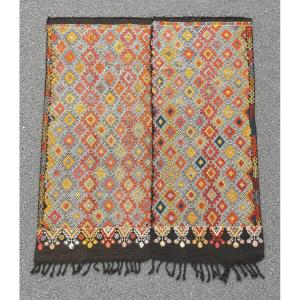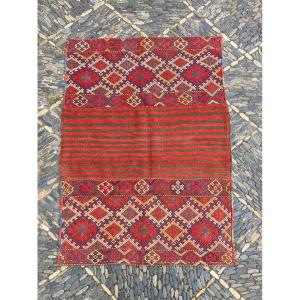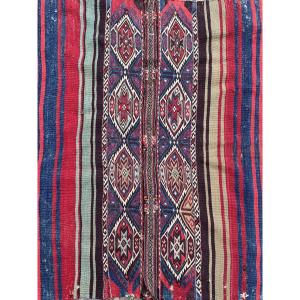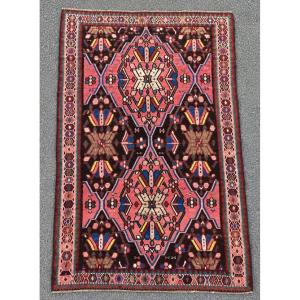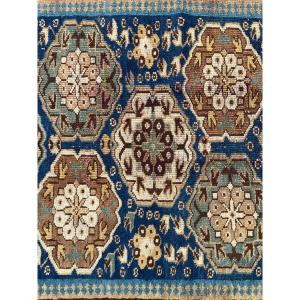
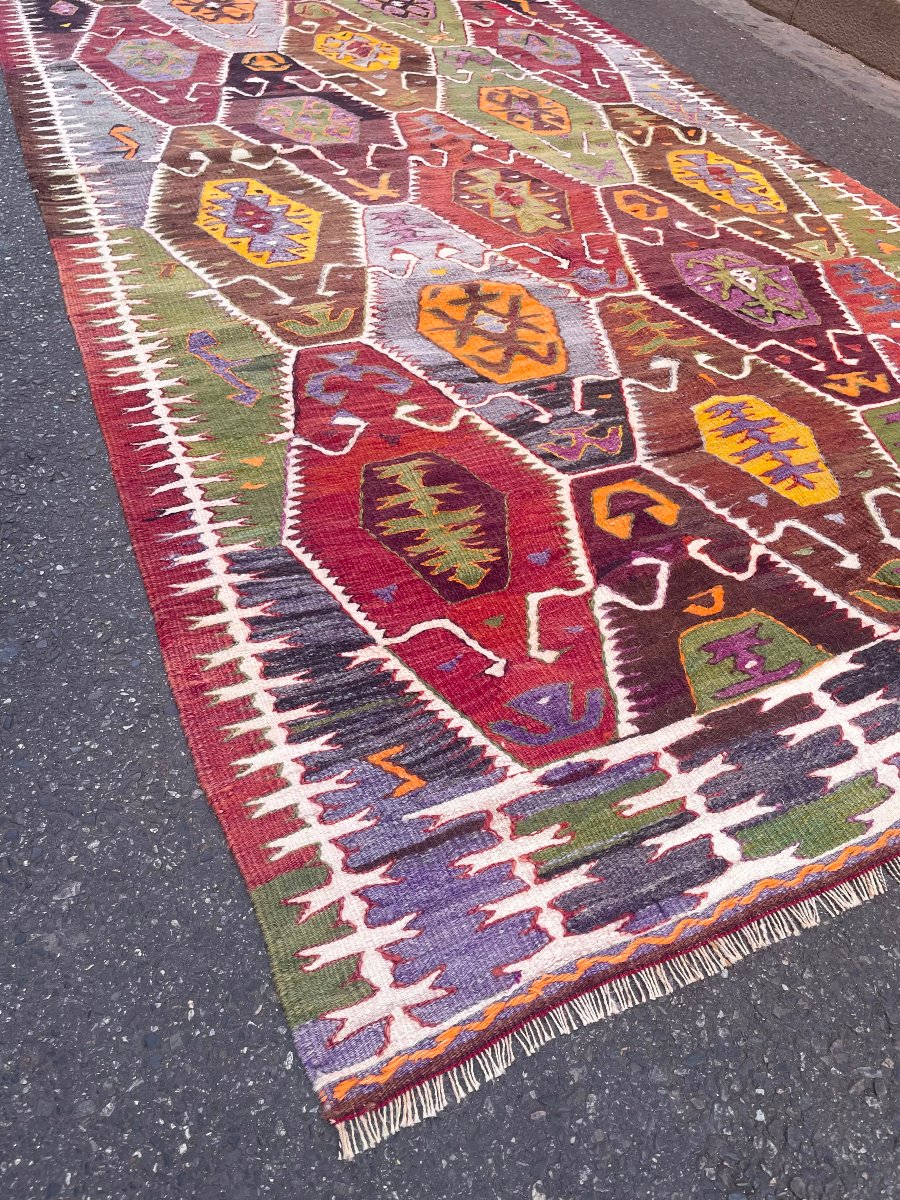



Kilim Barak - Anatolia. Circa 1960. 280 X 150 Cm
Barak kilims are impossible to classify.
To my knowledge, very few antique pieces are known to exist from this region of Antalya, located in southwestern Anatolia. The oldest date to the early 20th century.
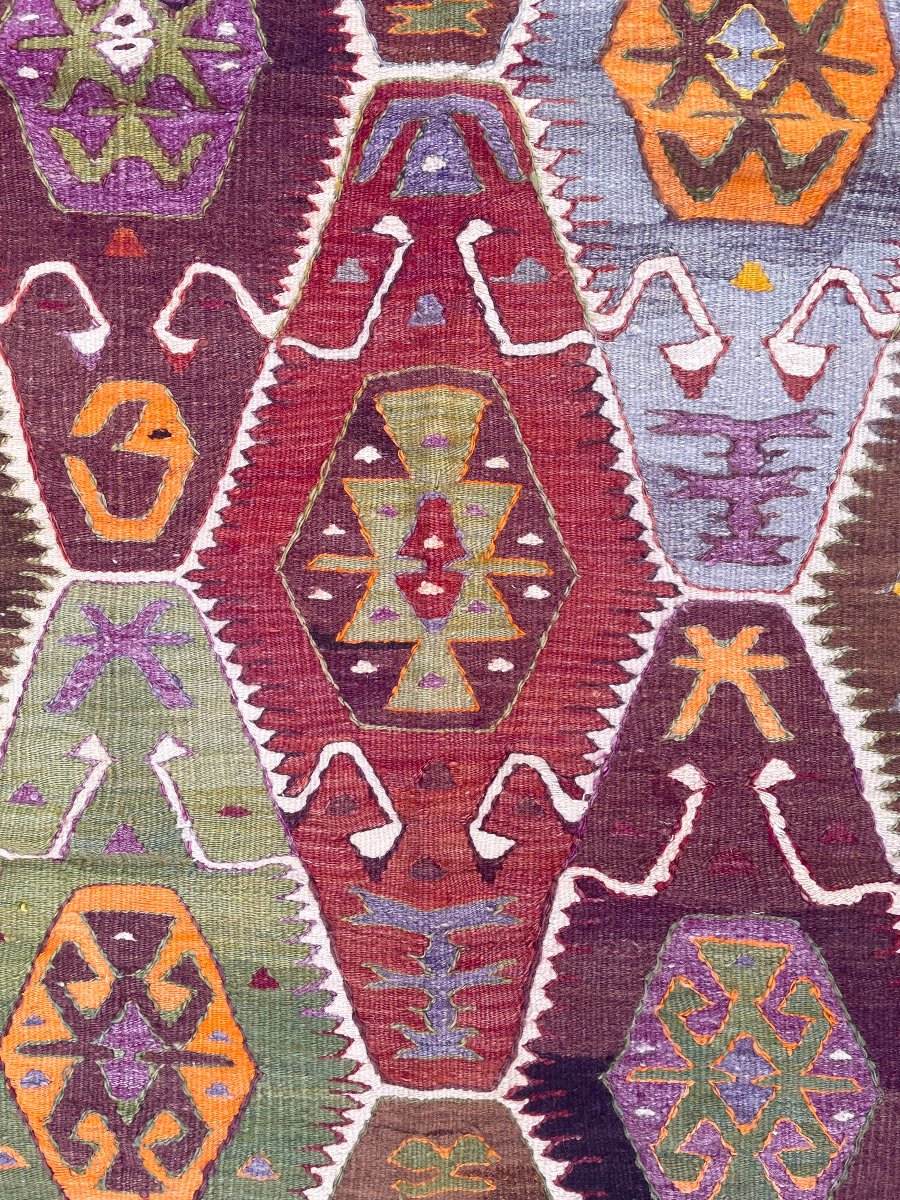
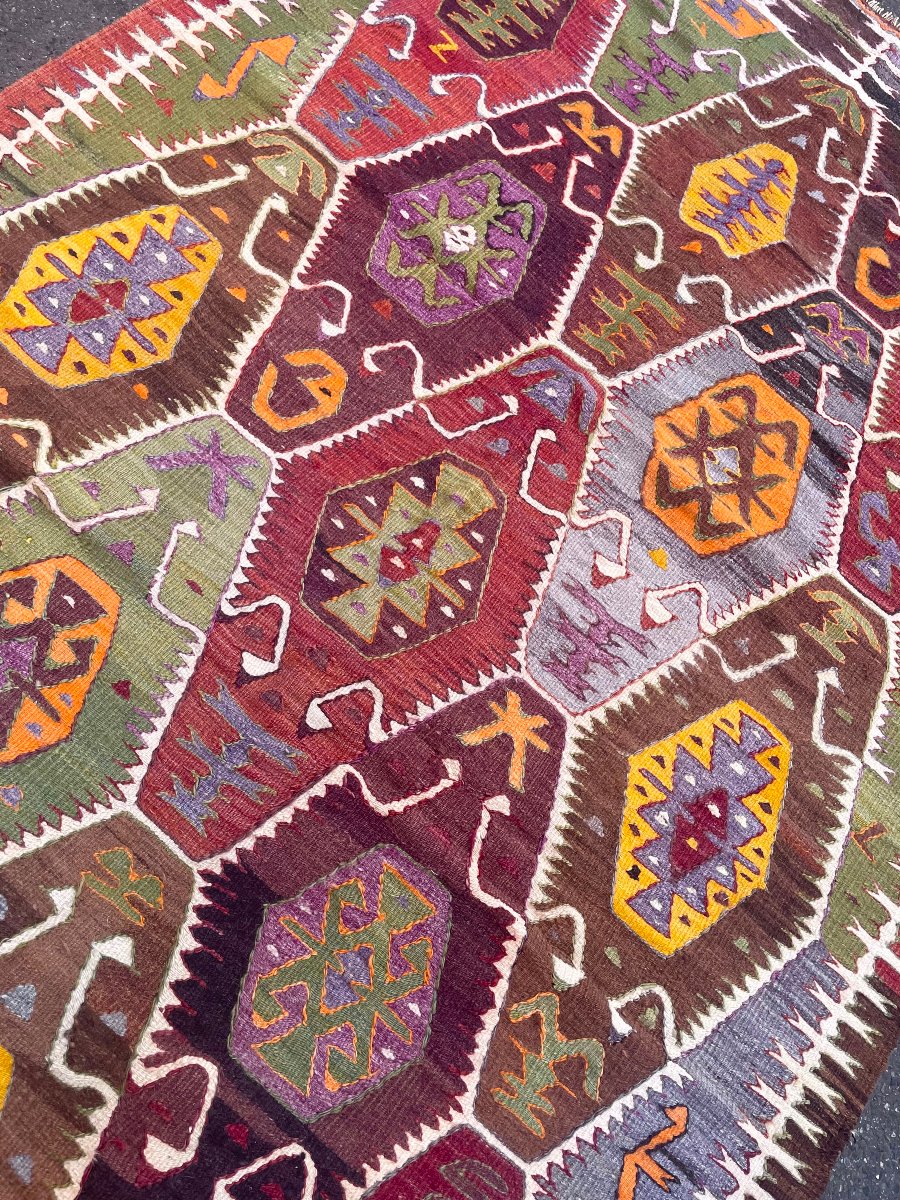
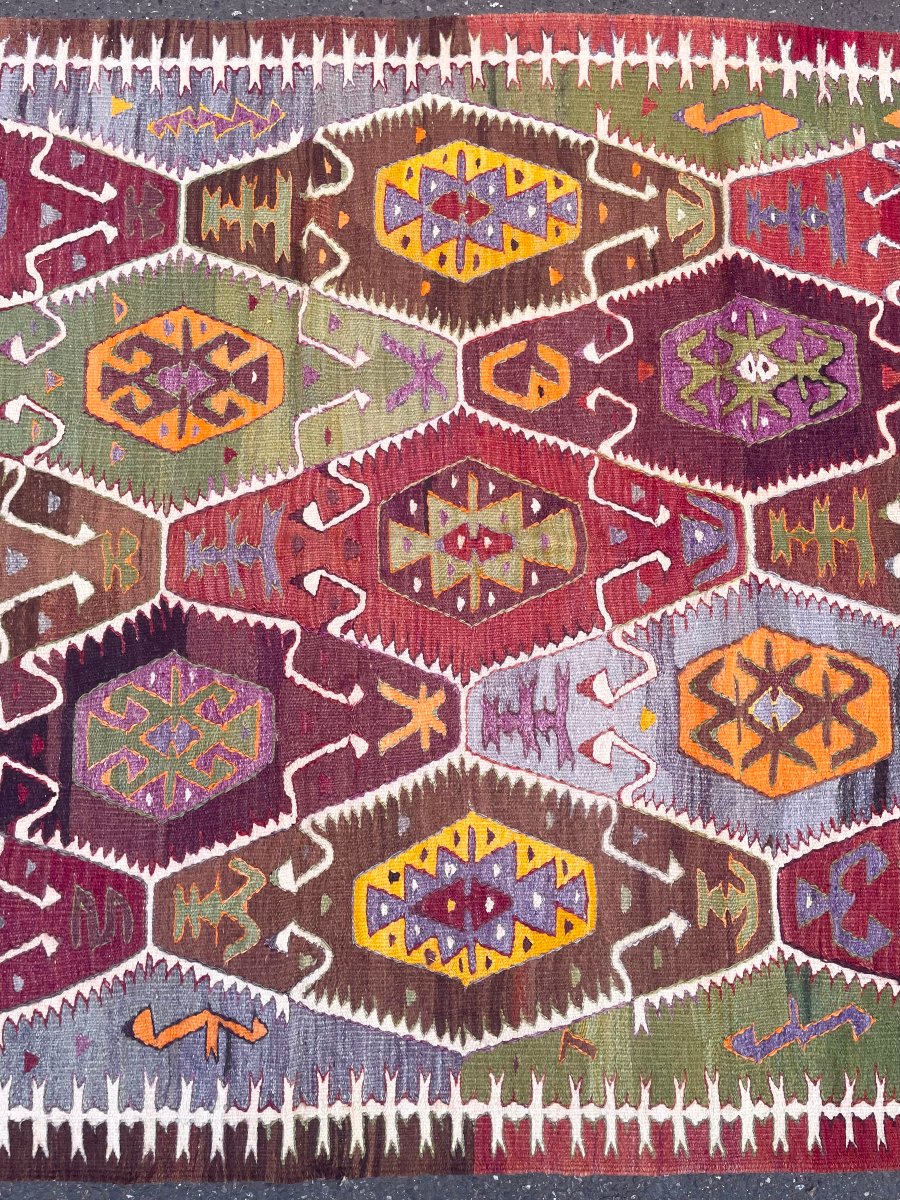
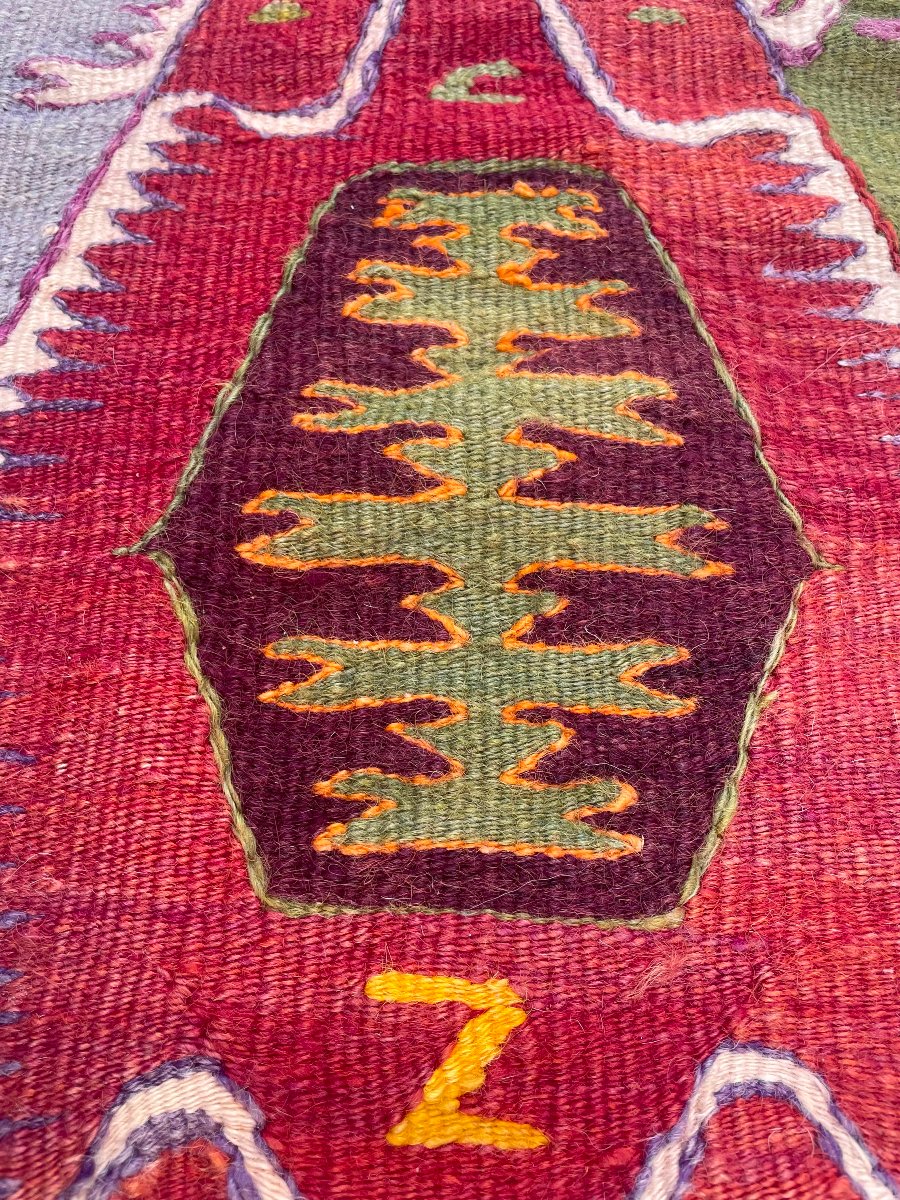
Yet the appeal of these pieces—their beauty and uniqueness—lies precisely in the choice and harmony of their colors. It is simply extraordinary. In this particular piece, one is instantly captivated by the softness of the hues as well as the variations in intensity of each. This is what is known as “Abrash.” It is a technique that involves using different shades of a single color. Only plant-based dyes allow for this stylized effect. During the wool-dyeing process, the weaver removes a certain amount of wool from the pot at the start of boiling and continues to do so until the end. This creates a gradual gradient ranging from lightest to darkest; small balls of yarn are formed and hung at the top of the loom. During weaving, the weaver then selects weft threads of varying intensity. Skill, creativity, and a touch of chance all come into play.
You’d recognize a Barak kilim anywhere. The use of repeated patterns across the surface, their diagonal placement, and their sizes are all distinctive features.
The Mother Goddess motif is omnipresent across the entire surface, evoking femininity. Can you see it?
Barak kilims are extraordinary; they move us as much as they captivate us. They are true works of art, like a gigantic watercolor to be placed on the floor.
Their graphic design and highly decorative nature set them apart from the masses.
By extension, I would say that this Barak kilim is not a kilim—much less a rug—and that we are not merchants either. It is a sensory universe, a vibrant surface full of subtlety.
Circa 1960
Perfect condition
Dimensions: 280 x 150 cm
Laurent
Beauty of Kilims
To my knowledge, very few antique pieces are known to exist from this region of Antalya, located in southwestern Anatolia. The oldest date to the early 20th century.
Yet the appeal of these pieces—their beauty and uniqueness—lies precisely in the choice and harmony of their colors. It is simply extraordinary. In this particular piece, one is instantly captivated by the softness of the hues as well as the variations in intensity of each. This is what is known as “Abrash.” It is a technique that involves using different shades of a single color. Only plant-based dyes allow for this stylized effect. During the wool-dyeing process, the weaver removes a certain amount of wool from the pot at the start of boiling and continues to do so until the end. This creates a gradual gradient ranging from lightest to darkest; small balls of yarn are formed and hung at the top of the loom. During weaving, the weaver then selects weft threads of varying intensity. Skill, creativity, and a touch of chance all come into play.
You’d recognize a Barak kilim anywhere. The use of repeated patterns across the surface, their diagonal placement, and their sizes are all distinctive features.
The Mother Goddess motif is omnipresent across the entire surface, evoking femininity. Can you see it?
Barak kilims are extraordinary; they move us as much as they captivate us. They are true works of art, like a gigantic watercolor to be placed on the floor.
Their graphic design and highly decorative nature set them apart from the masses.
By extension, I would say that this Barak kilim is not a kilim—much less a rug—and that we are not merchants either. It is a sensory universe, a vibrant surface full of subtlety.
Circa 1960
Perfect condition
Dimensions: 280 x 150 cm
Laurent
Beauty of Kilims
1 200 €
Period: 20th century
Style: Orientalism
Condition: Excellent condition
Material: Wool
Length: 280 cm
Width: 150 cm
Reference (ID): 1788771
Availability: In stock
Print