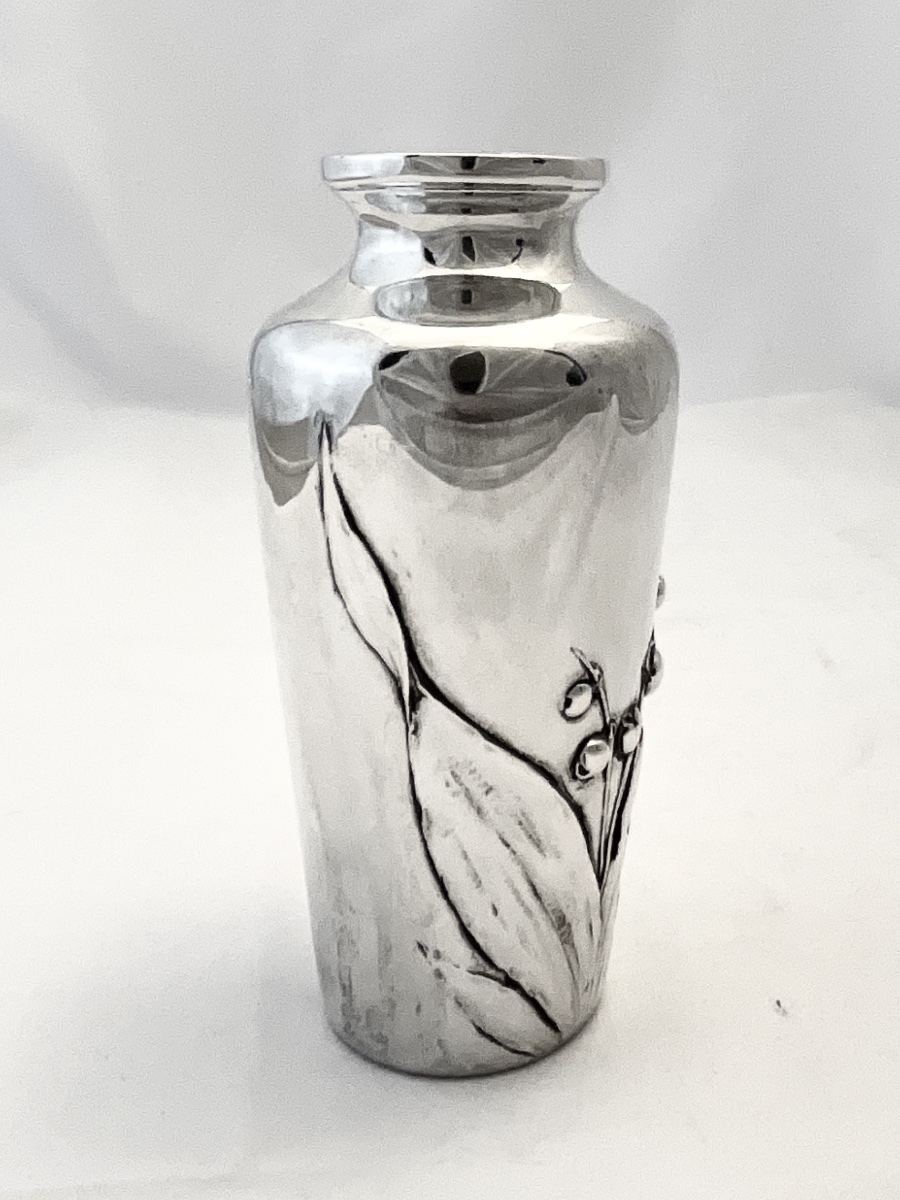
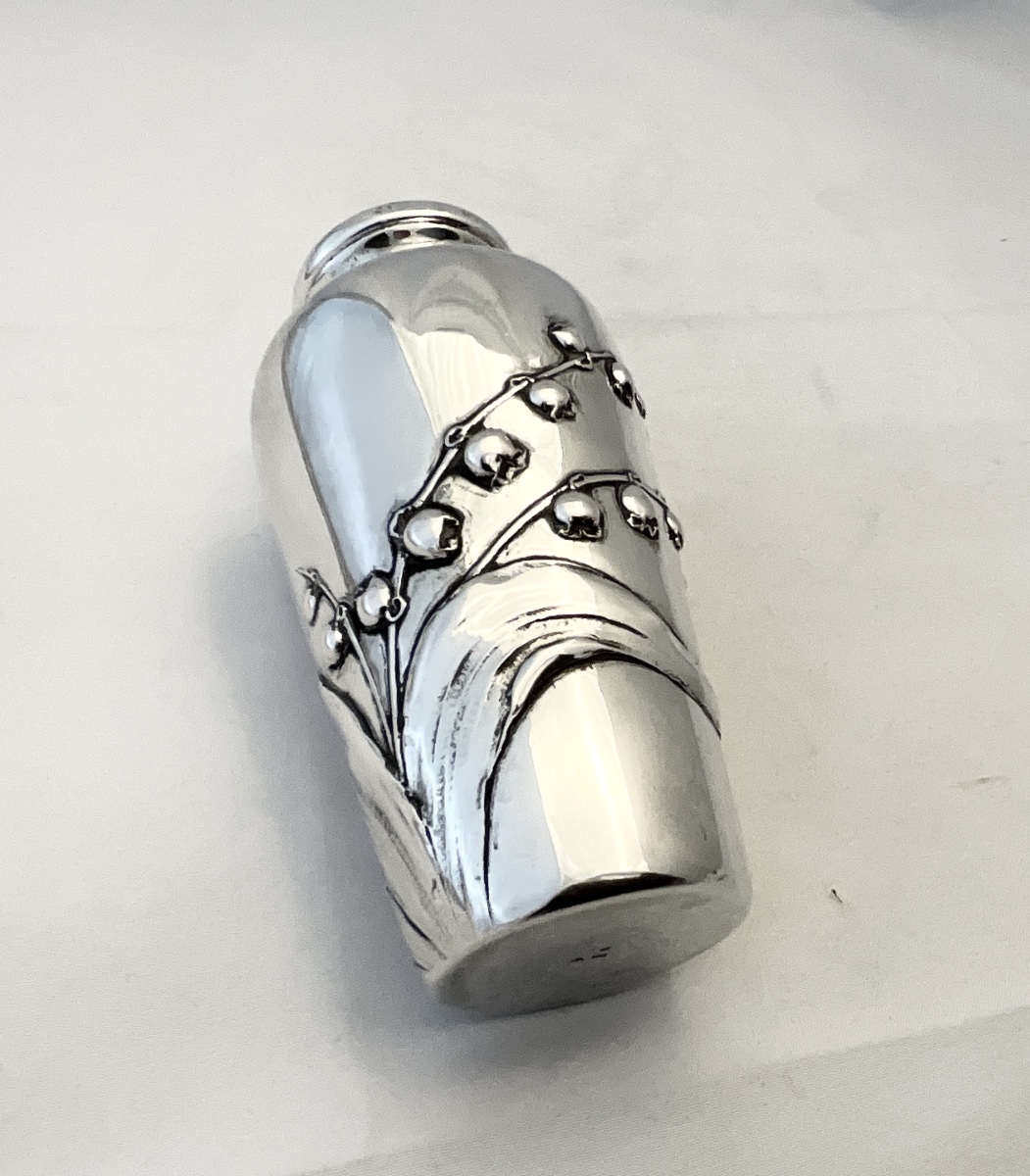
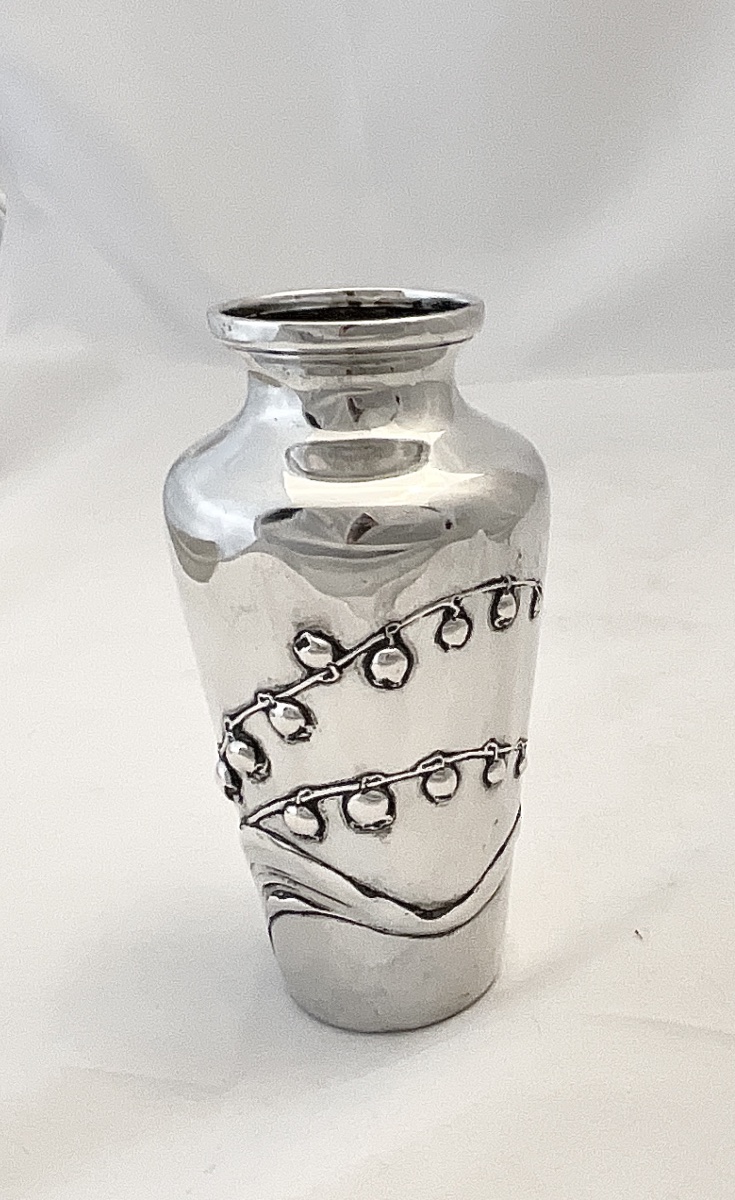
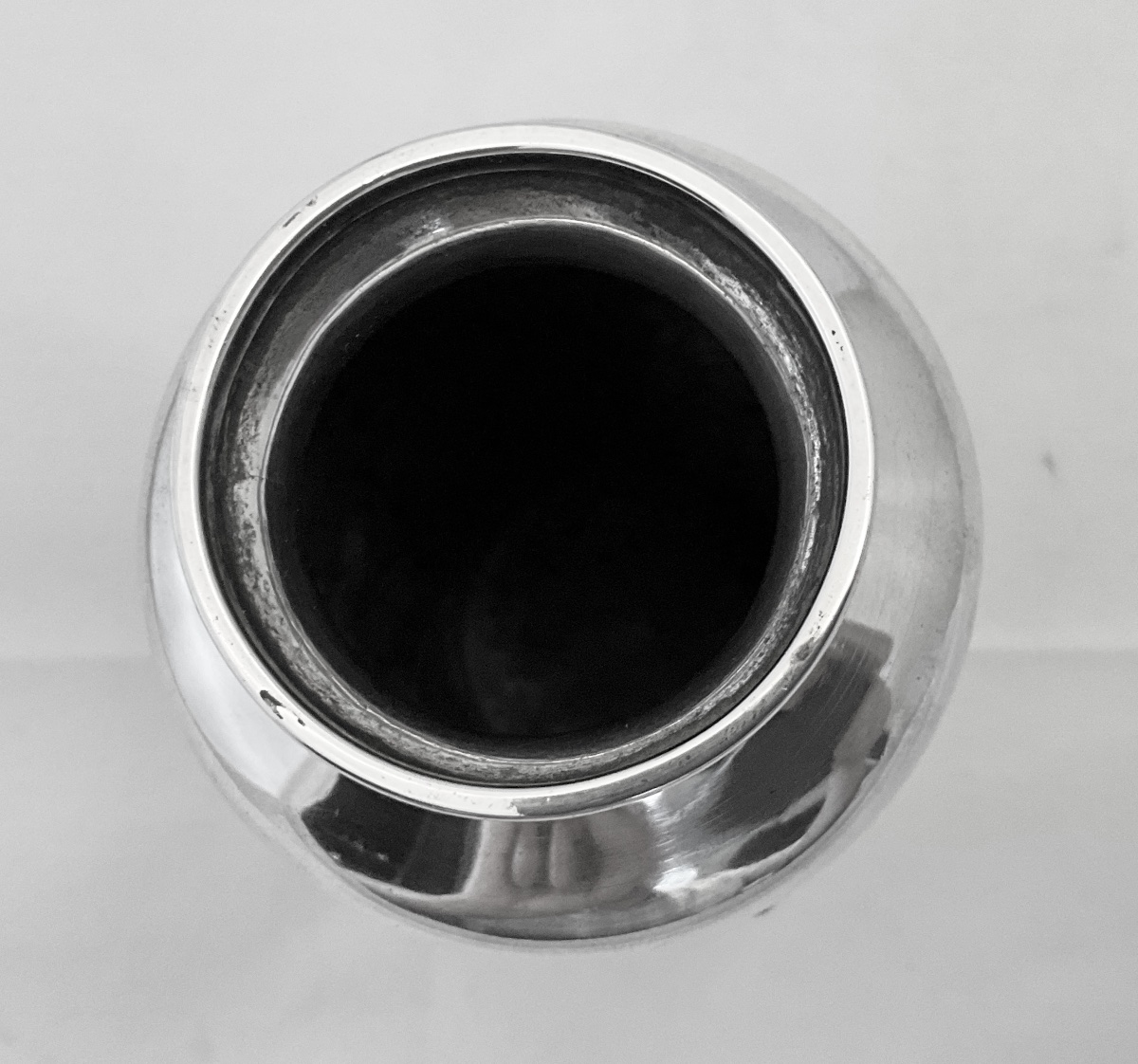
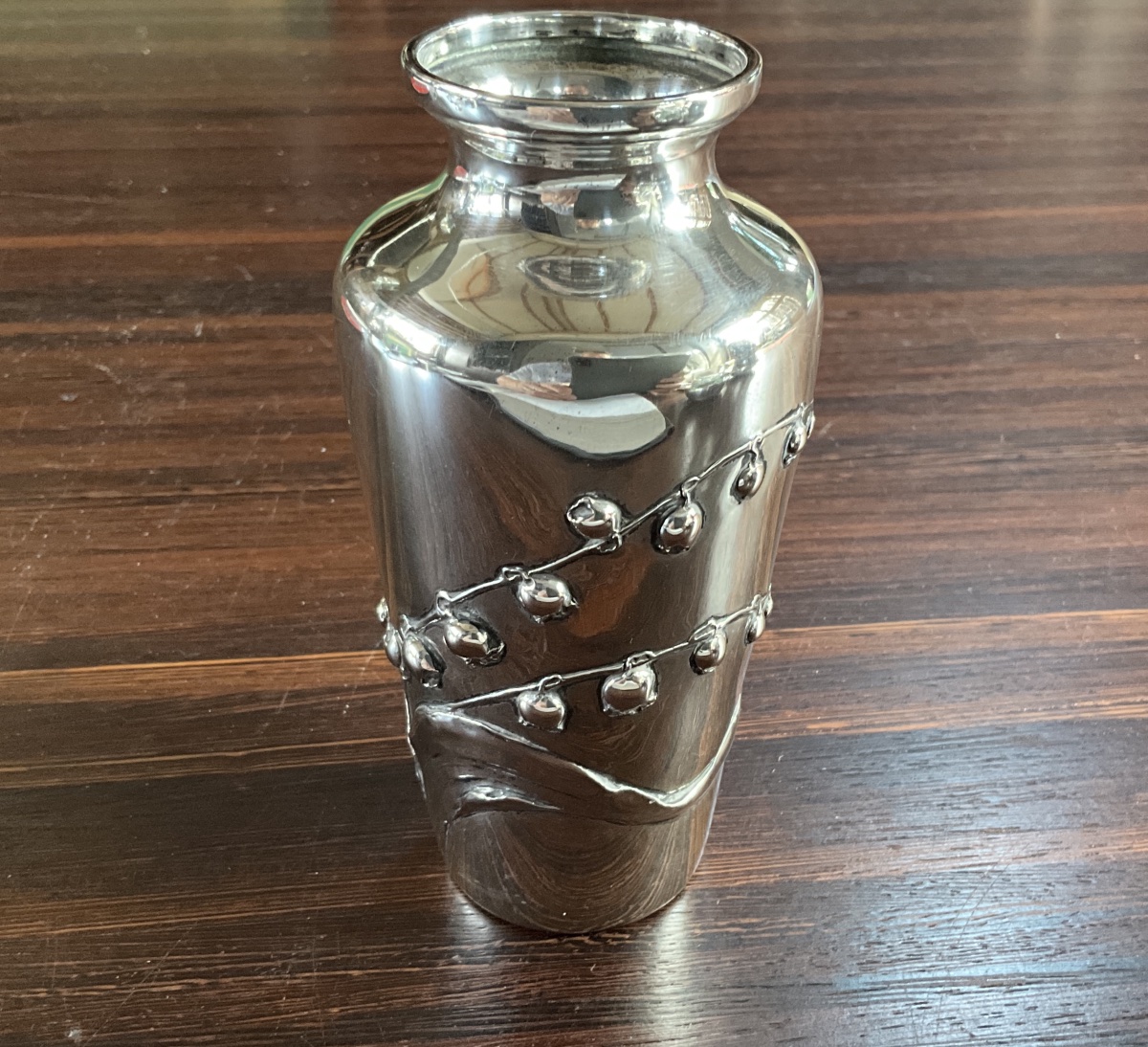


Philippe Wolfers, Brussels, Circa 1890–1900, Solid Silver, Art Nouveau, Vase
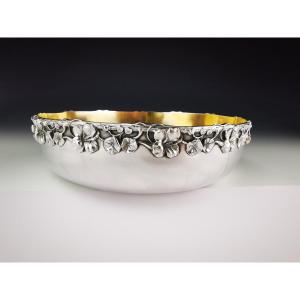
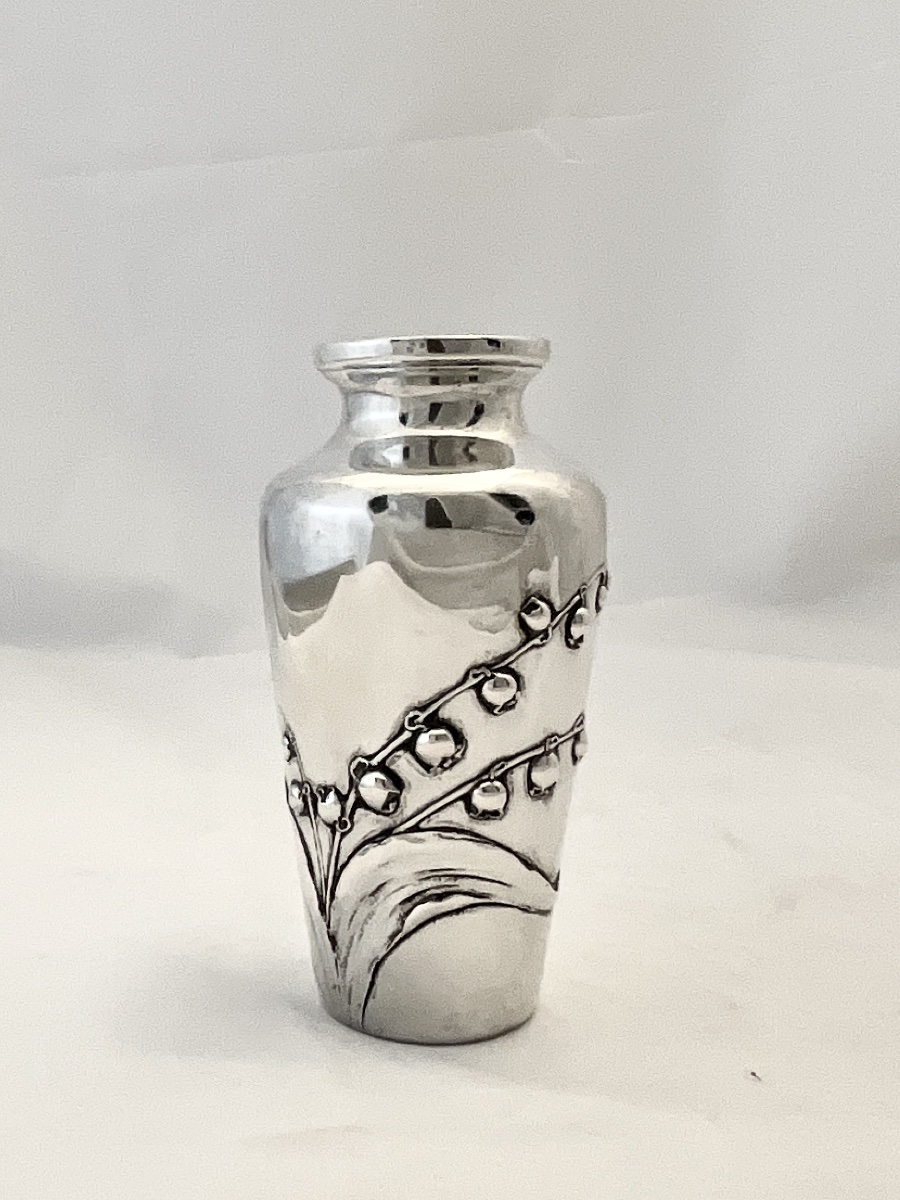
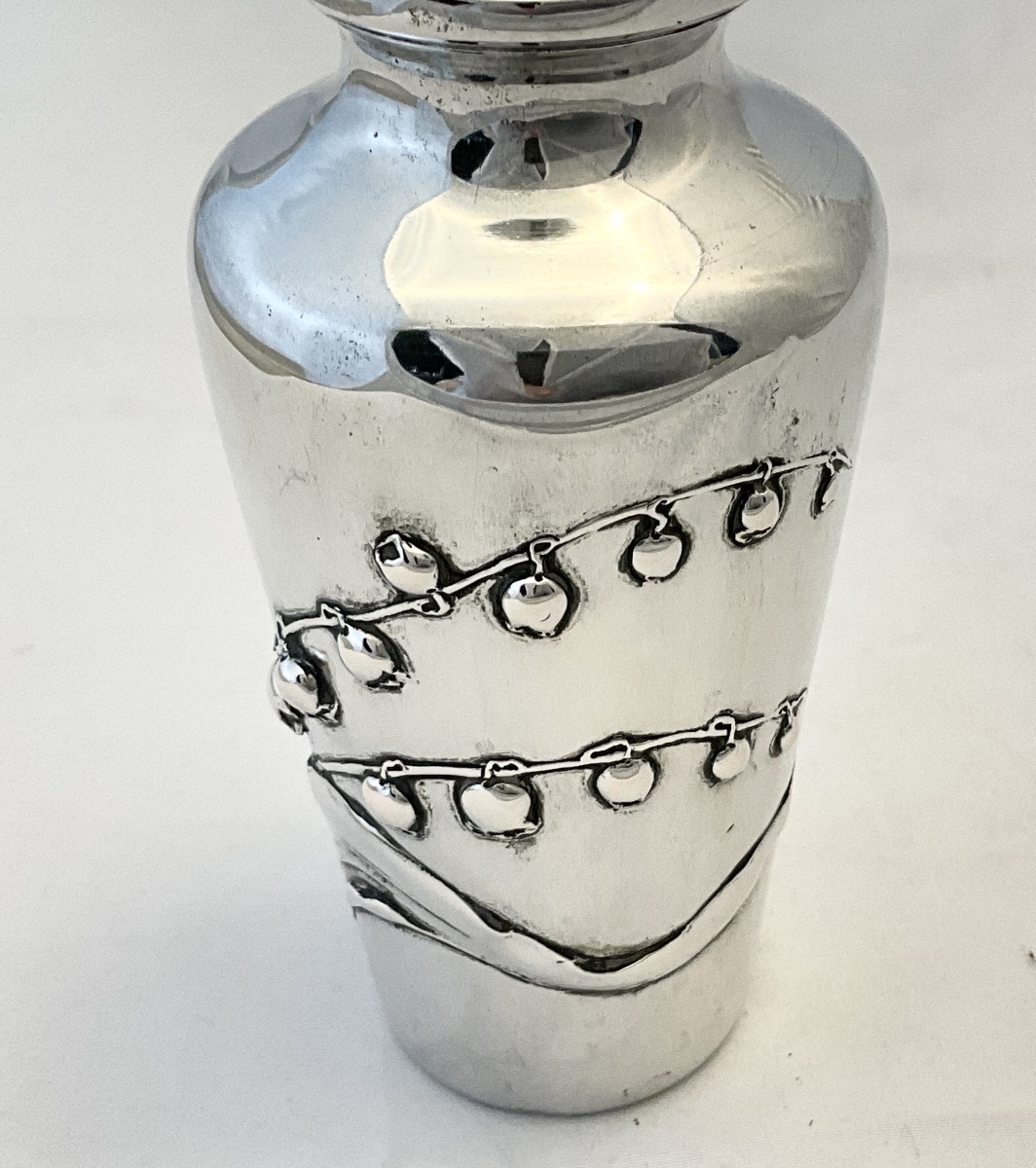
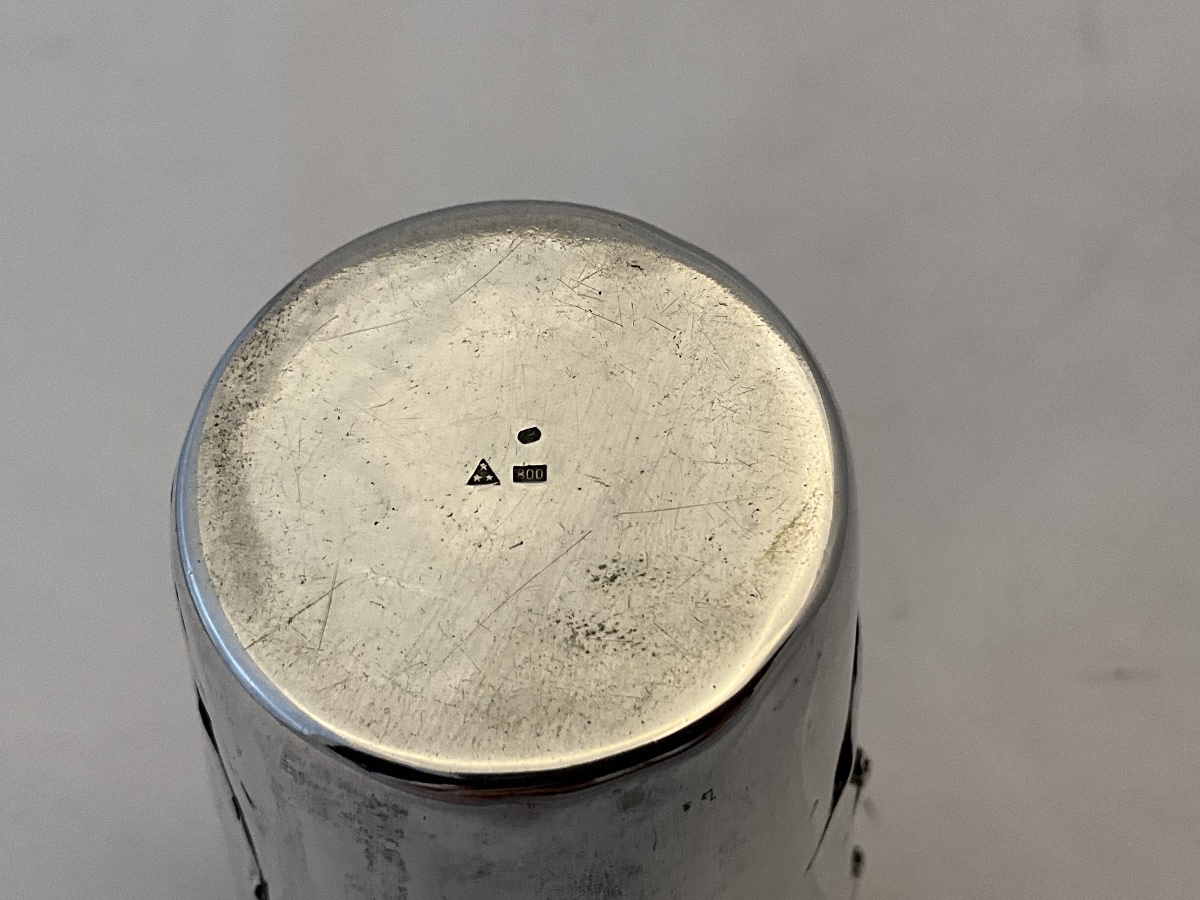
Exceptionally rare and magnificent Art Nouveau flower vase, decorated with lily-of-the-valley motifs and crafted in solid 800-grade silver by Philippe Wolfers, the foremost Belgian silversmith of his time. Probably designed to hold a delicate bouquet of lily of the valley, this elegant vase would make an ideal gift for one’s beloved on the morning of May Day.
In Philippe Wolfers’s work, Art Nouveau initially developed from a free and asymmetrical naturalism, directly inspired by plant and animal forms, towards a more stylised, symmetrical and controlled artistic language. From the late 1890s onwards, natural motifs were no longer merely reproduced with fidelity: they were arranged into more geometric and decorative compositions. This evolution gave rise to a more accomplished and sophisticated form of Art Nouveau, but also a more artificial one, in which the spontaneity of nature gradually gave way to rhythm, balance and a skilful interplay of lines and materials.
Our vase is an example of Philippe Wolfers’s early style, inspired by a free naturalism and by the contemporary fashion for Japanese art.
It weighs 200 grams.
For those wishing to learn more about the artist, I have written a brief biographical text below.
Philippe Wolfers
Philippe Wolfers was a Belgian silversmith, jeweller, sculptor, medallist and decorative artist. He was born in Brussels on 16 April 1858 and died there on 13 December 1929. A major figure of Belgian Art Nouveau, he is particularly celebrated for his nature-inspired jewellery, in which he combined precious metals, gemstones, ivory and enamel.
Born into an important family of Brussels silversmiths, Philippe Wolfers was the son of Louis Wolfers, who managed the family firm Wolfers Frères. He joined the company as an apprentice in 1875, while also studying sculpture at the Royal Academy of Fine Arts in Brussels under the sculptor Isidore De Rudder. This dual artistic and technical training helps explain the sculptural quality that would later characterise his jewellery and decorative objects.
Following his father’s death in 1892, Philippe Wolfers took over the artistic direction of the family firm together with his brothers Max and Robert. During the 1890s, his work evolved under the influence of naturalism, Symbolism and Japanese art. He drew his motifs from the plant and animal worlds: orchids, wisteria, swans, peacocks, dragonflies and fantastic creatures were transformed in his hands into jewels with fluid and dynamic forms.
Between the late 1890s and 1907, Wolfers created an exceptional series of jewels bearing the inscription “Ex. unique”, an abbreviation of exemplaire unique, meaning “unique piece.” These works were not conceived merely as accessories, but as true miniature sculptures intended for exhibitions and collectors. Approximately 130 pieces are believed to have been produced, although many were later dismantled so that their precious stones and metals could be reused. This explains their extreme rarity today.
Among his most famous creations is the Méduse pendant, made in 1898 from gold, enamel, ivory, opal and diamonds. Both precious and unsettling, this spectacular work is regarded as one of the masterpieces of Symbolist jewellery and an icon of Belgian Art Nouveau. The Dragonfly pendant, created at the beginning of the twentieth century, also became one of the emblematic works of the Wolfers firm.
Philippe Wolfers’s activity was not limited to jewellery. He also created sculptures, medals, silverware, vases, furniture and objects in glass, crystal, ceramics, bronze and marble. This versatility has sometimes earned him the nickname “the Belgian René Lalique,” although his artistic language possessed a distinctive identity of its own, closely connected with Symbolism and the decorative arts of Brussels.
The prestige of the Wolfers firm is also associated with the architect Victor Horta, who designed its new premises on Rue d’Arenberg in Brussels. Opened in 1912, the shop brought together architecture, furniture and the display of objects in a coherent artistic ensemble. Its interior has since been reconstructed at the Art & History Museum in Brussels, where numerous works by Philippe Wolfers and the family firm are exhibited.
From the 1910s onwards, Wolfers’s creations gradually adopted more geometric and restrained lines, anticipating Art Deco. This development reached its culmination at the 1925 International Exhibition of Modern Decorative and Industrial Arts in Paris, for which he designed a complete decorative ensemble.
Philippe Wolfers died in 1929, leaving behind a body of work situated at the crossroads of sculpture, jewellery and design. Through his technical mastery, Symbolist imagination and ability to transform precious materials into living forms, he remains one of the greatest representatives of Belgian Art Nouveau. His works are now held in several public and private collections, notably at the Art & History Museum in Brussels and in the collection of the King Baudouin Foundation.
Period: 19th century
Style: Art Nouveau
Condition: Excellent condition
Material: Sterling silver
Diameter: du fond 5 cm
Height: 12,5 cm
Reference (ID): 1786954
Availability: In stock