

Antique Japanese Imari Sugar Bowl, Hichozan Fukagawa, Meiji Period
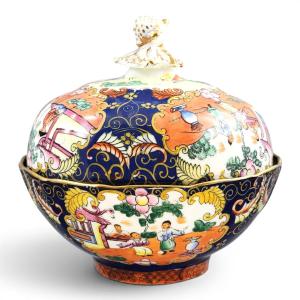
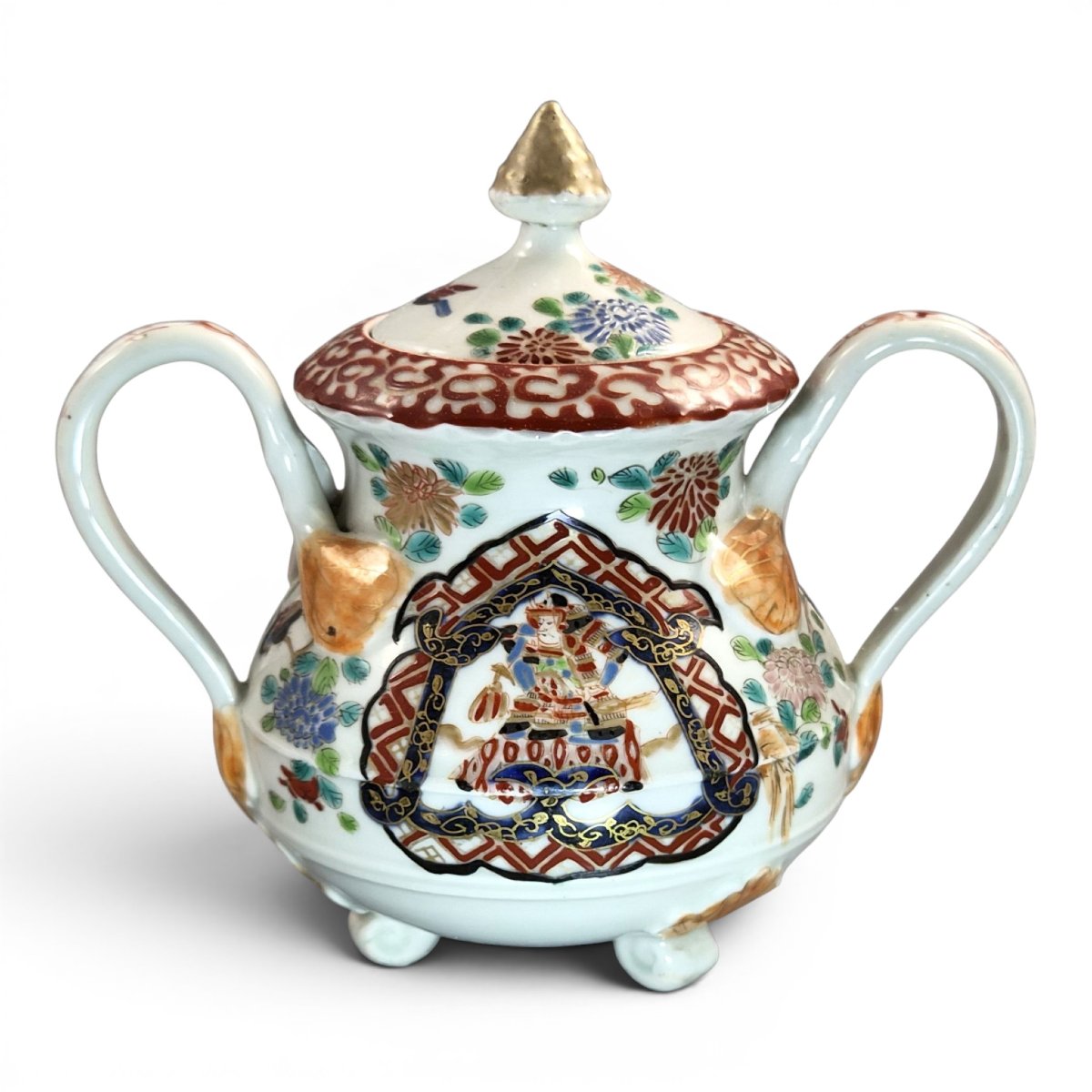
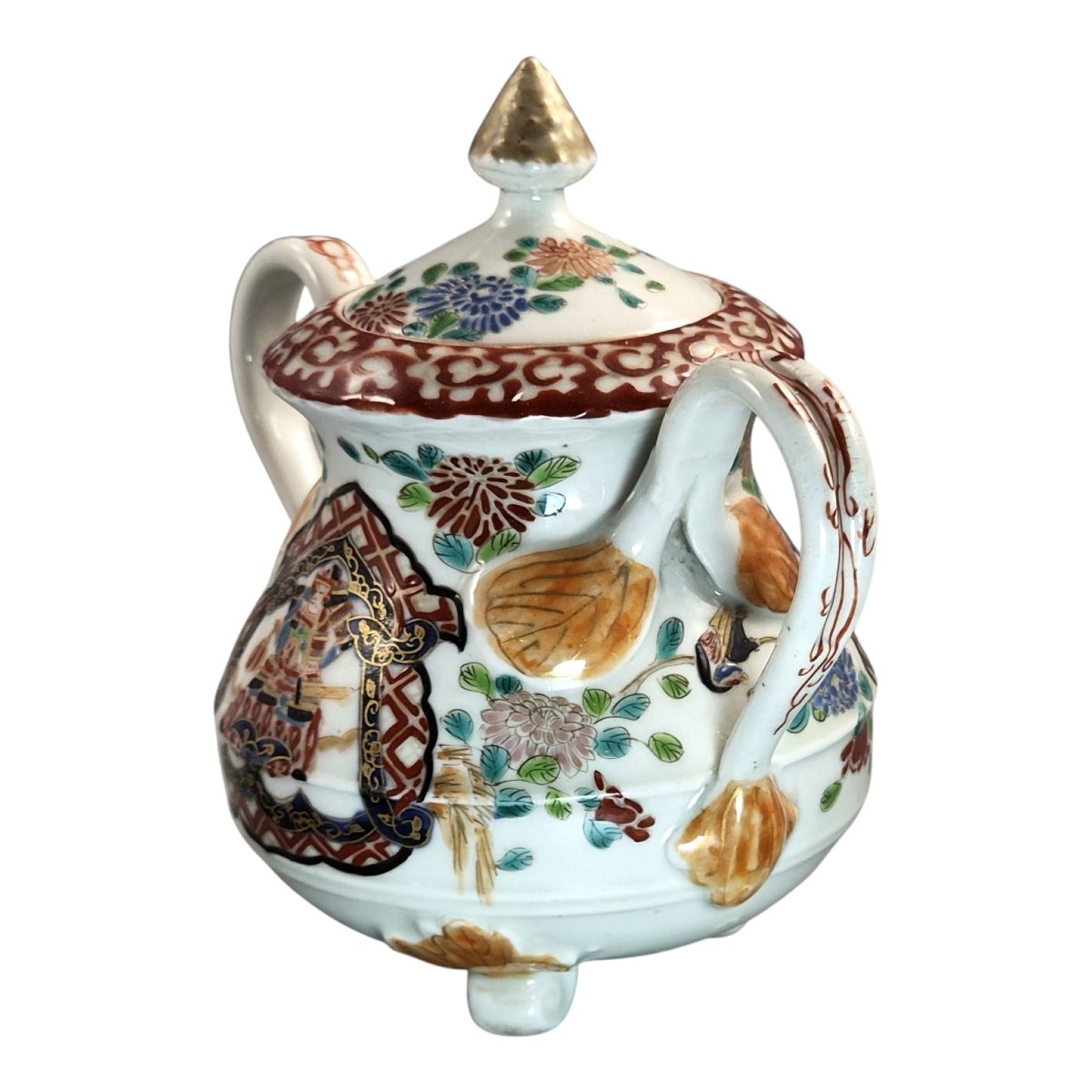
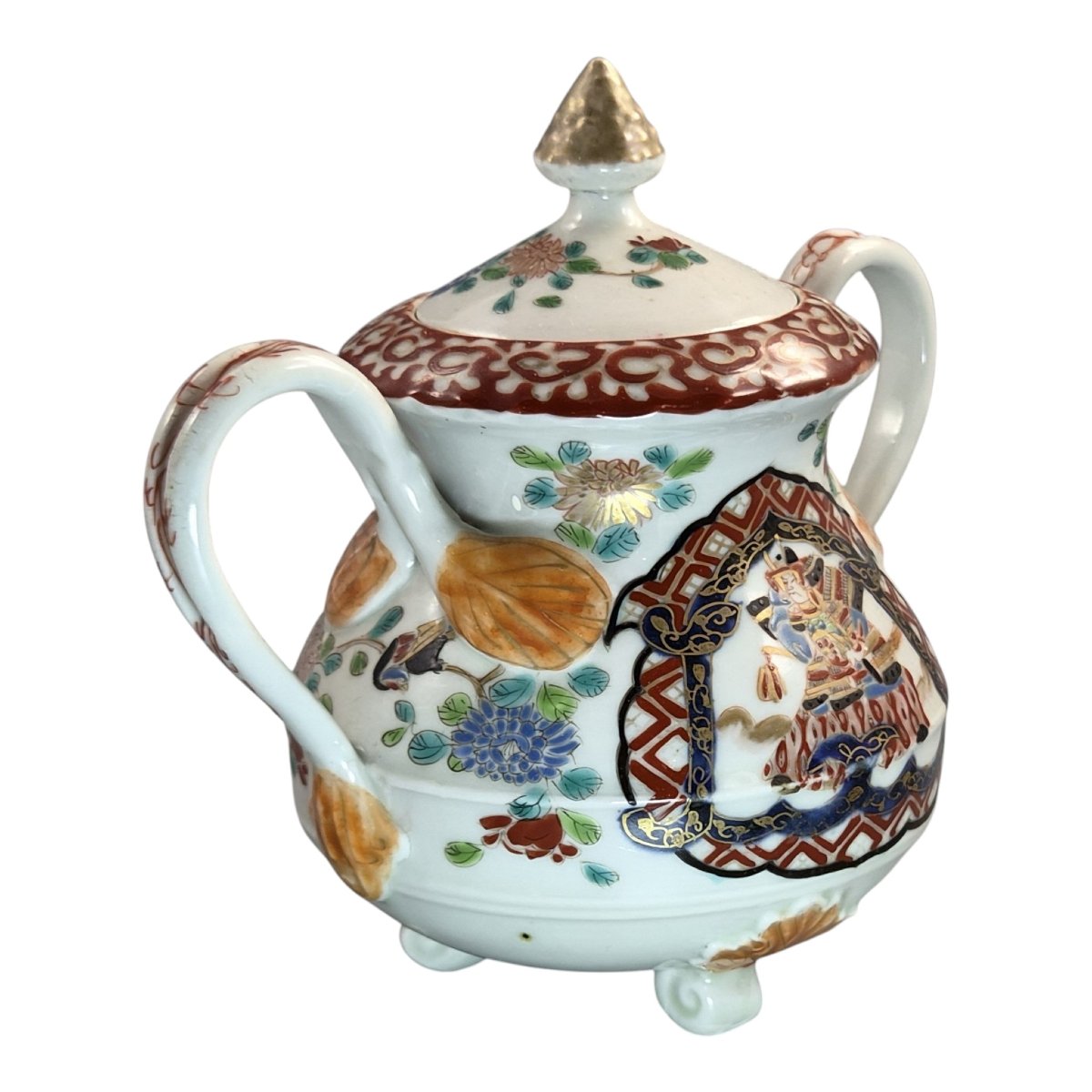
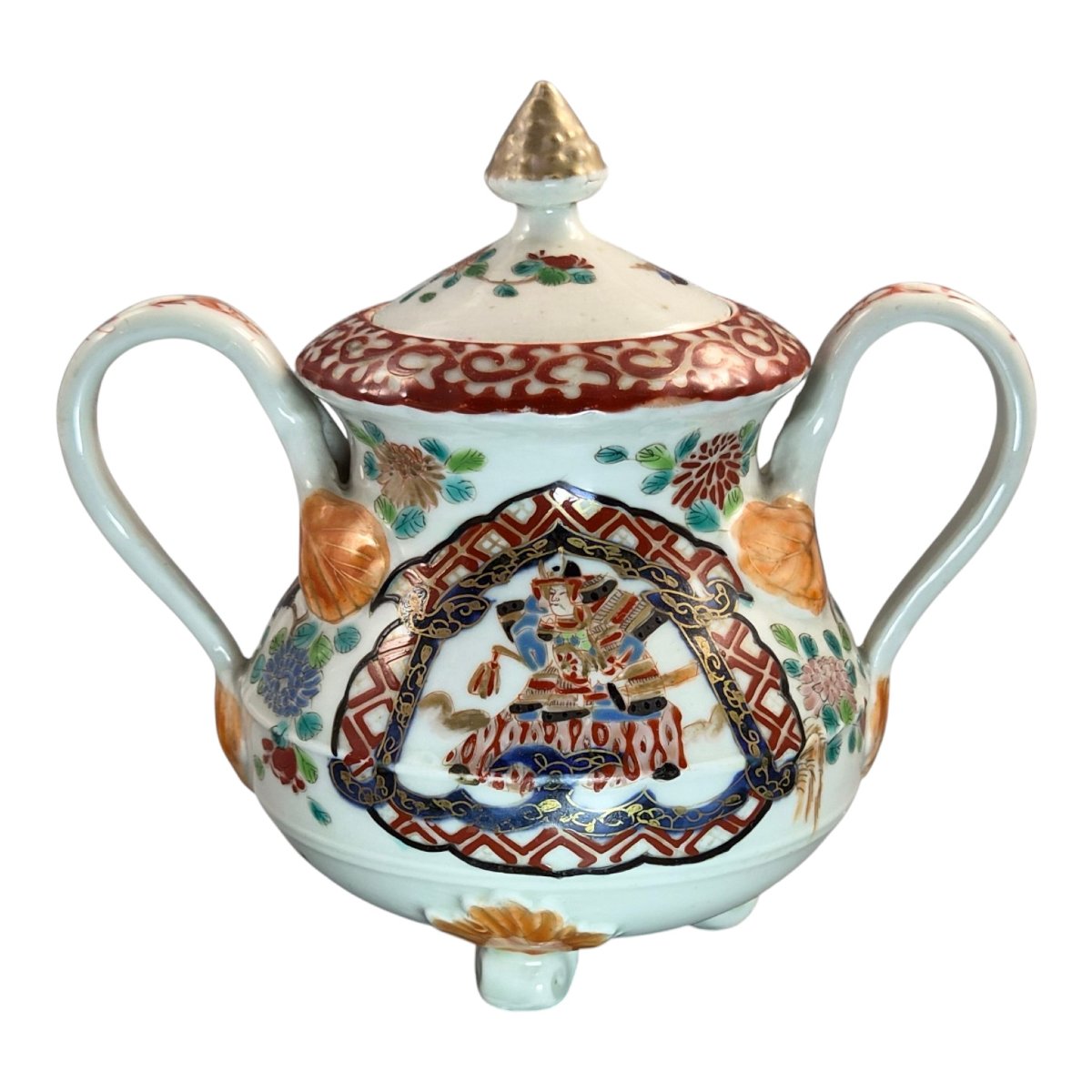
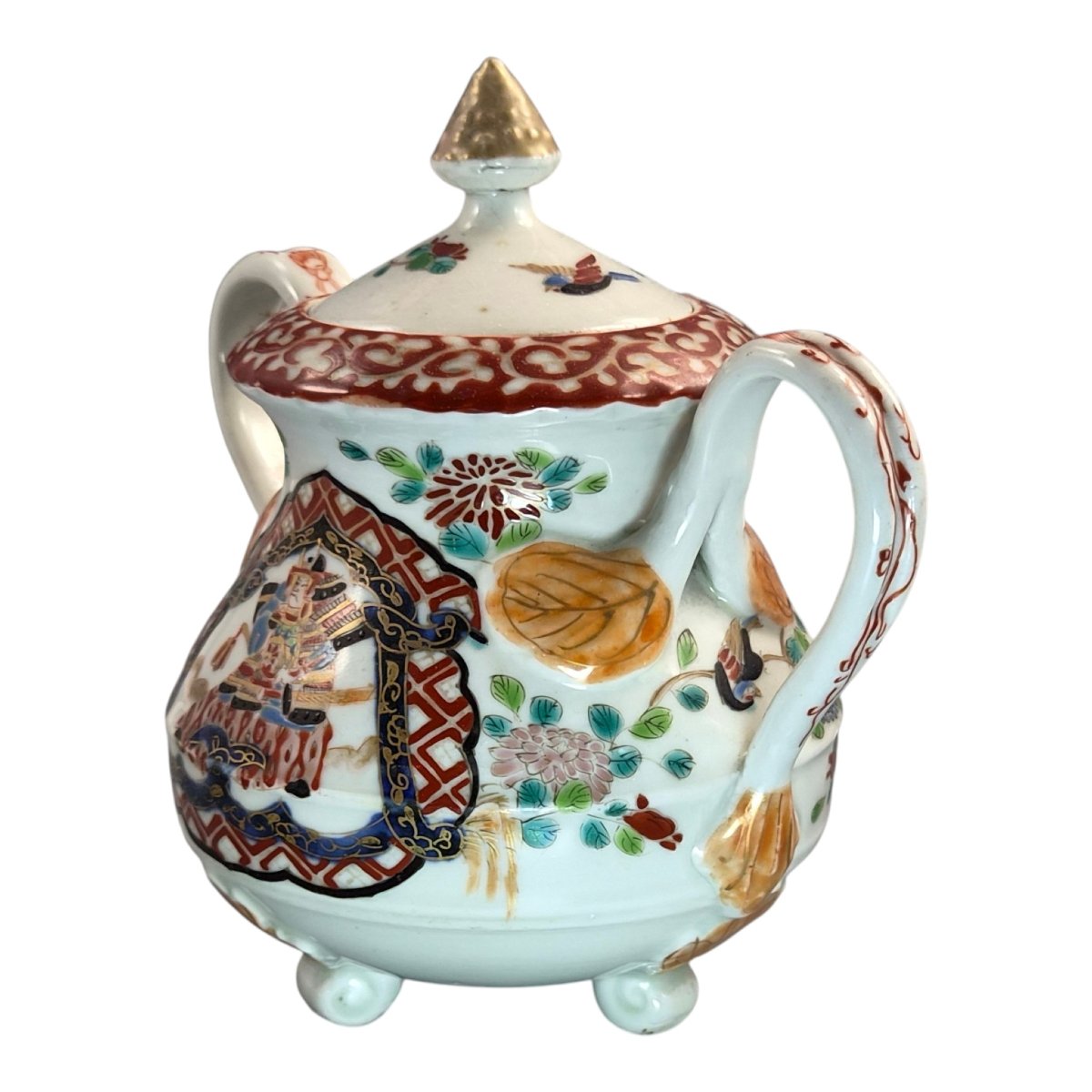
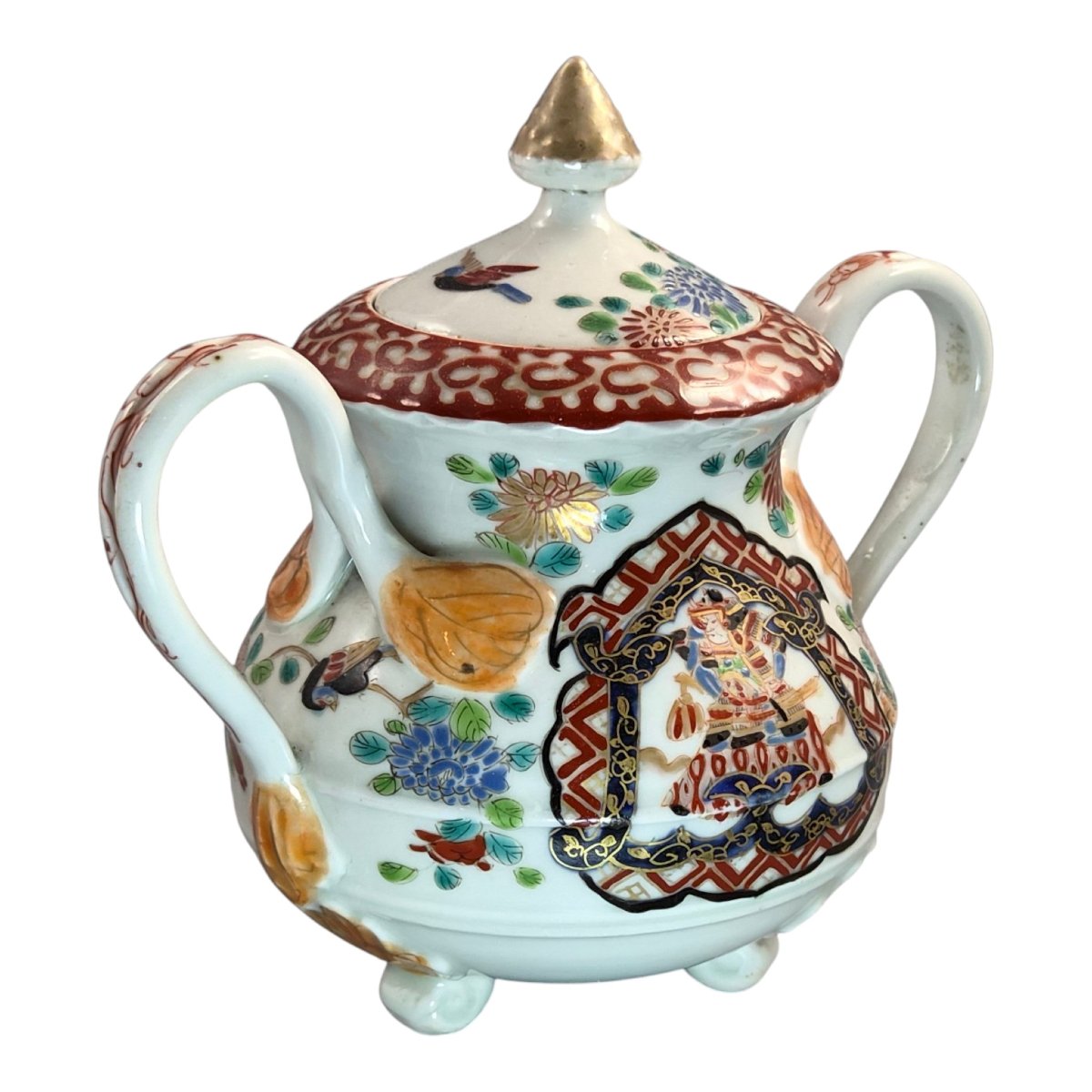
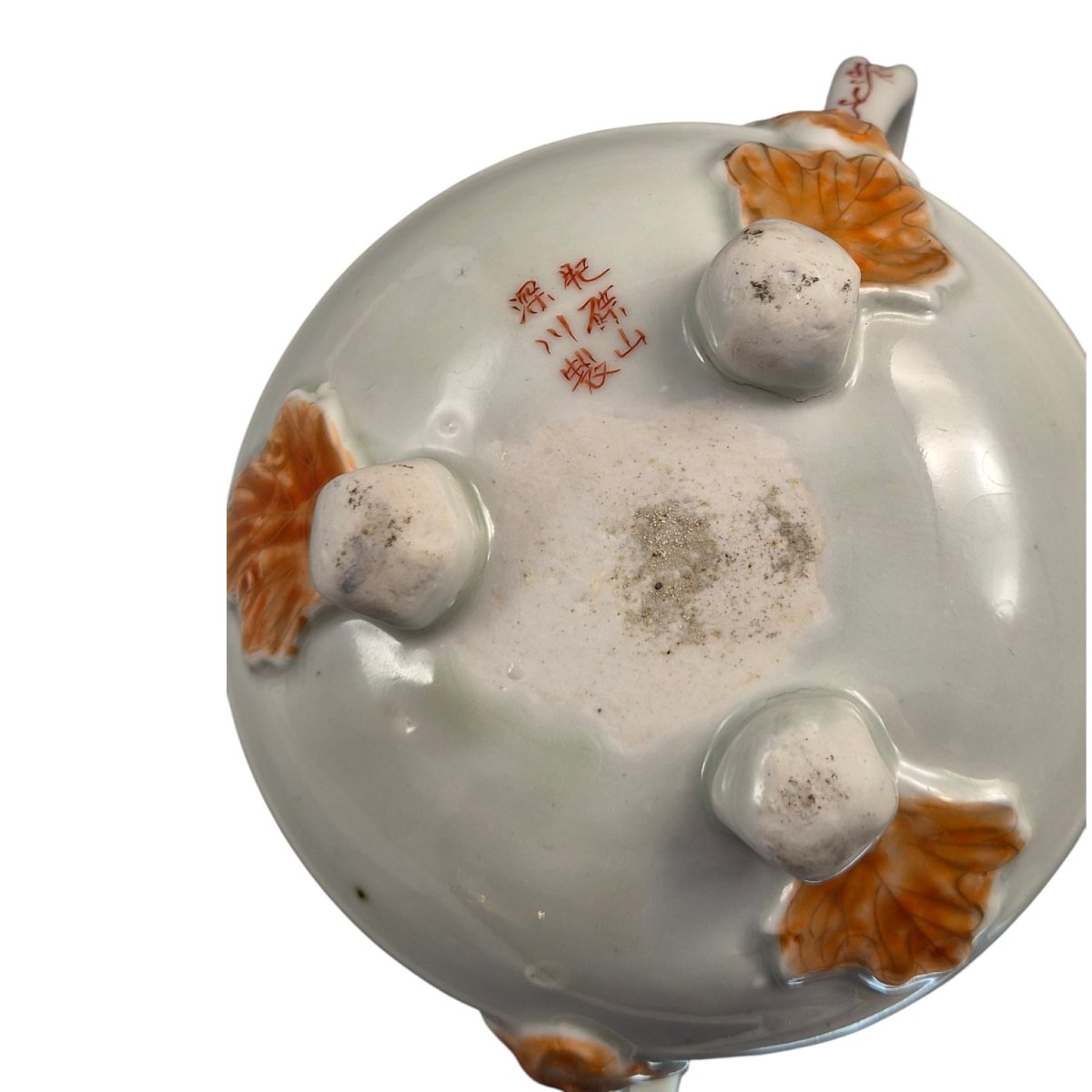
A richly decorated Japanese Imari porcelain sugar bowl and cover dating to the early Meiji period, circa 1870–1880. Produced in the Arita region, the piece bears the rare Hichozan Fukagawa mark associated with the workshop of Eizaemon Fukagawa before the later Fukagawa Seiji factory.
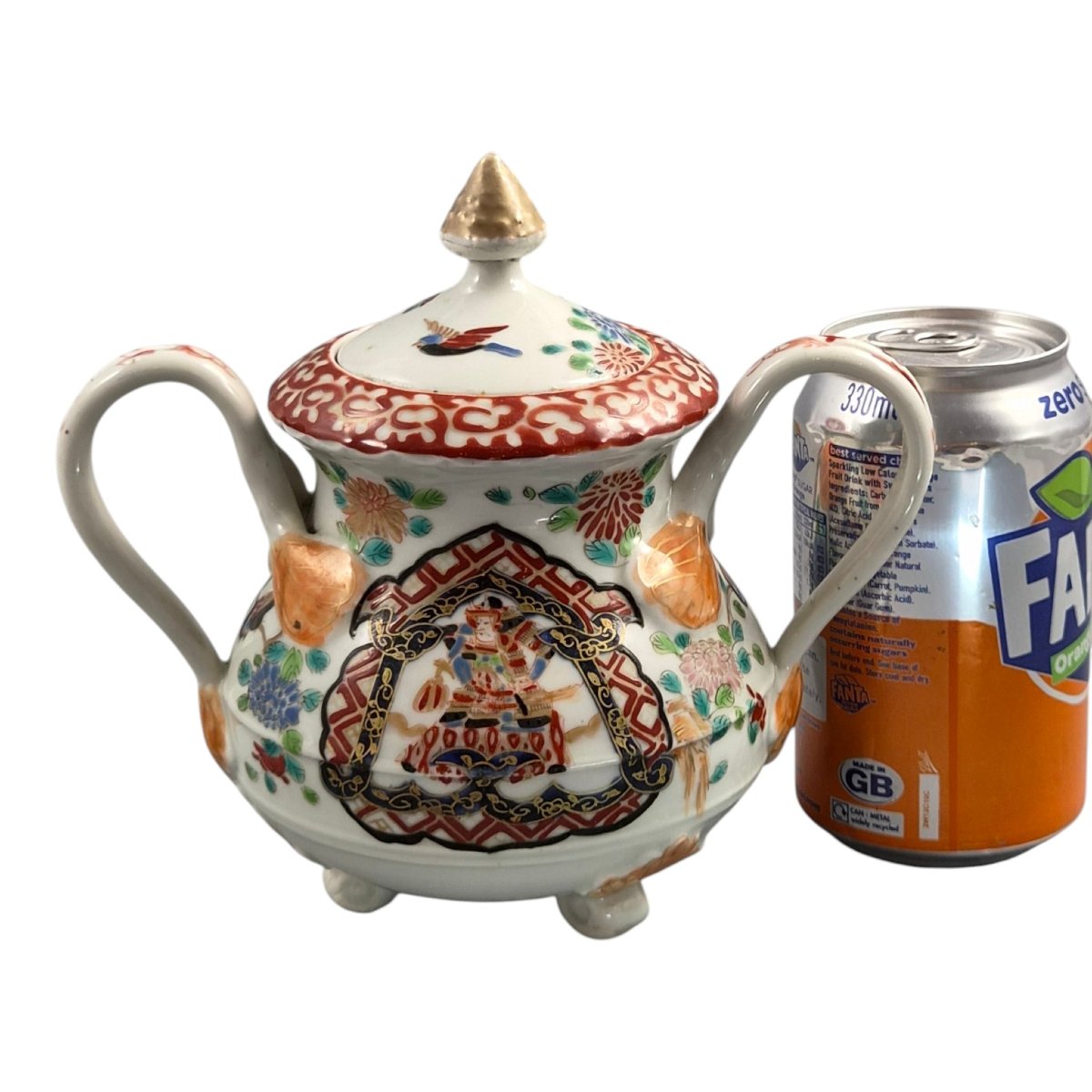
The form, raised on three feet with large scroll handles and a domed cover, was designed for Western tea services during the great export period of Japanese porcelain. The decoration combines cobalt blue, iron-red enamels, green highlights and generous gilding in the classic Imari palette. Applied gilt leaves and a pointed gilded finial add a sculptural quality unusual for ordinary table wares.
The central reserve depicts a samurai warrior in traditional armour seated upon a folding campaign chair, surrounded by geometric ornament and floral scrollwork characteristic of late Ko-Imari export porcelain. Chrysanthemums and peonies symbolise nobility and longevity, while a small bird painted on the cover provides an elegant asymmetrical accent.
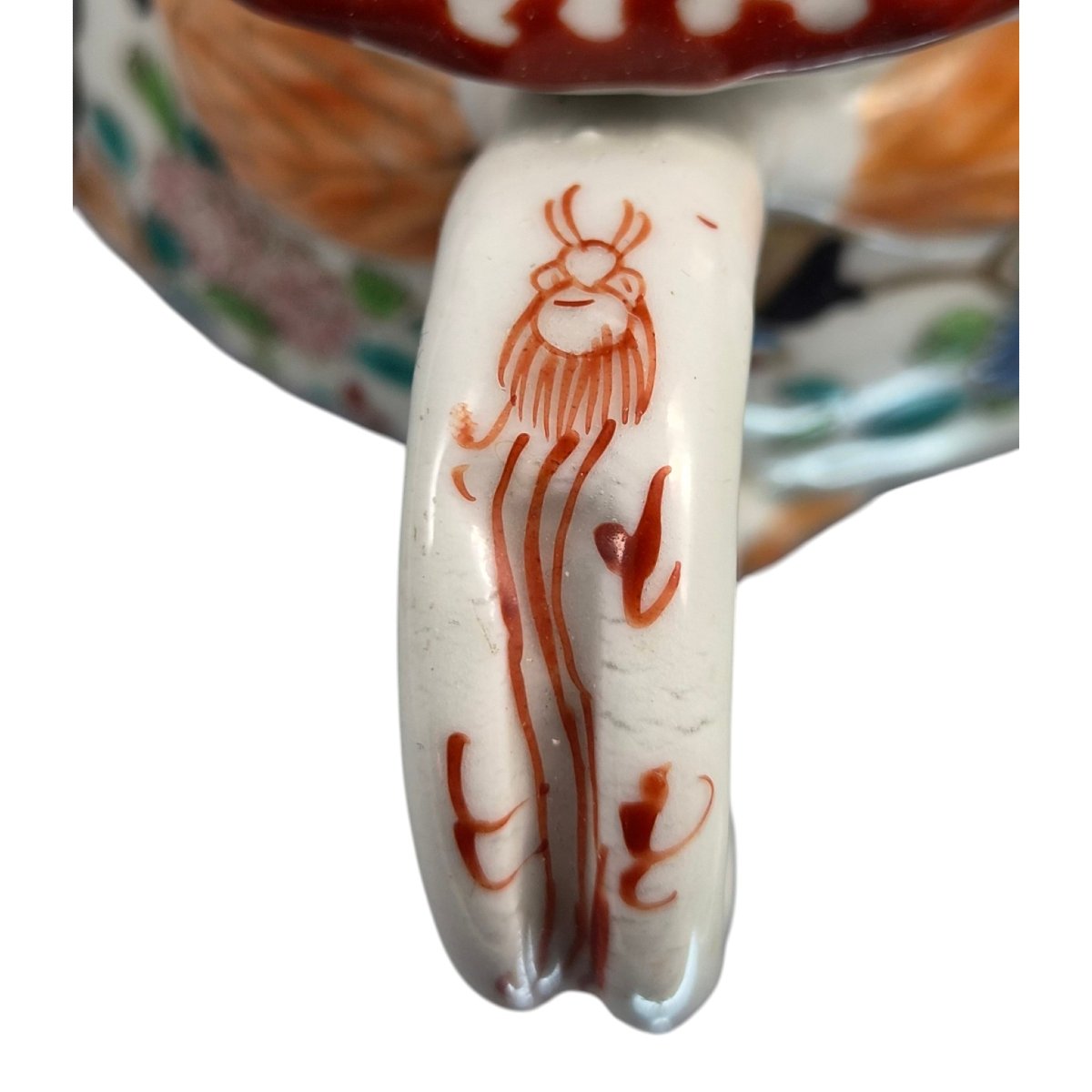
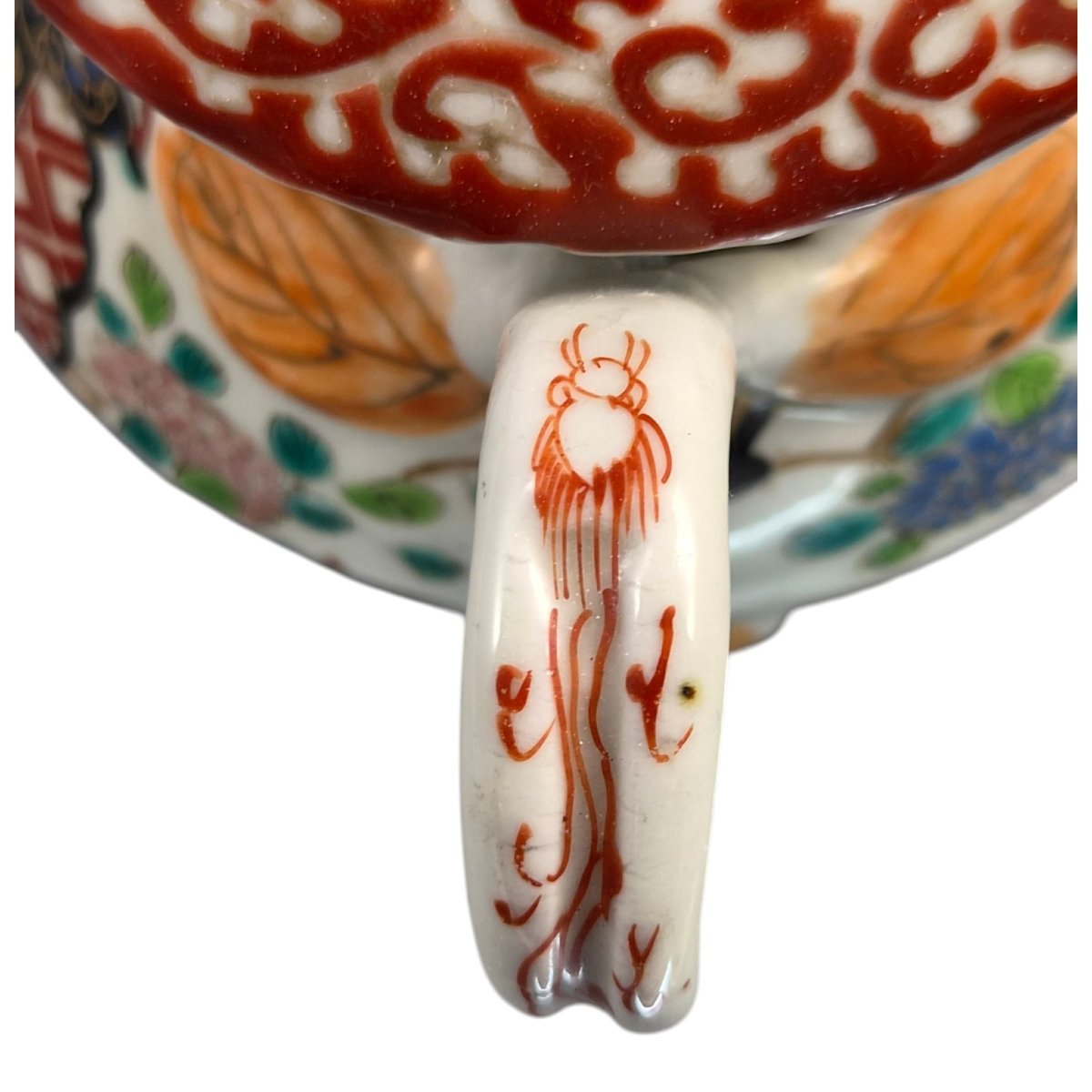
The underside bears the iron-red mark 肥蝶山 深川製 (“Hichozan Fukagawa sei”). The Fukagawa workshops later became internationally recognised through Koransha, founded in Arita in 1875 and awarded at the Philadelphia and Paris world exhibitions.
Dimensions:
Height: 18 cm
Width: 18.5 cm
Depth: 13 cm
Weight: 546 g
Condition:
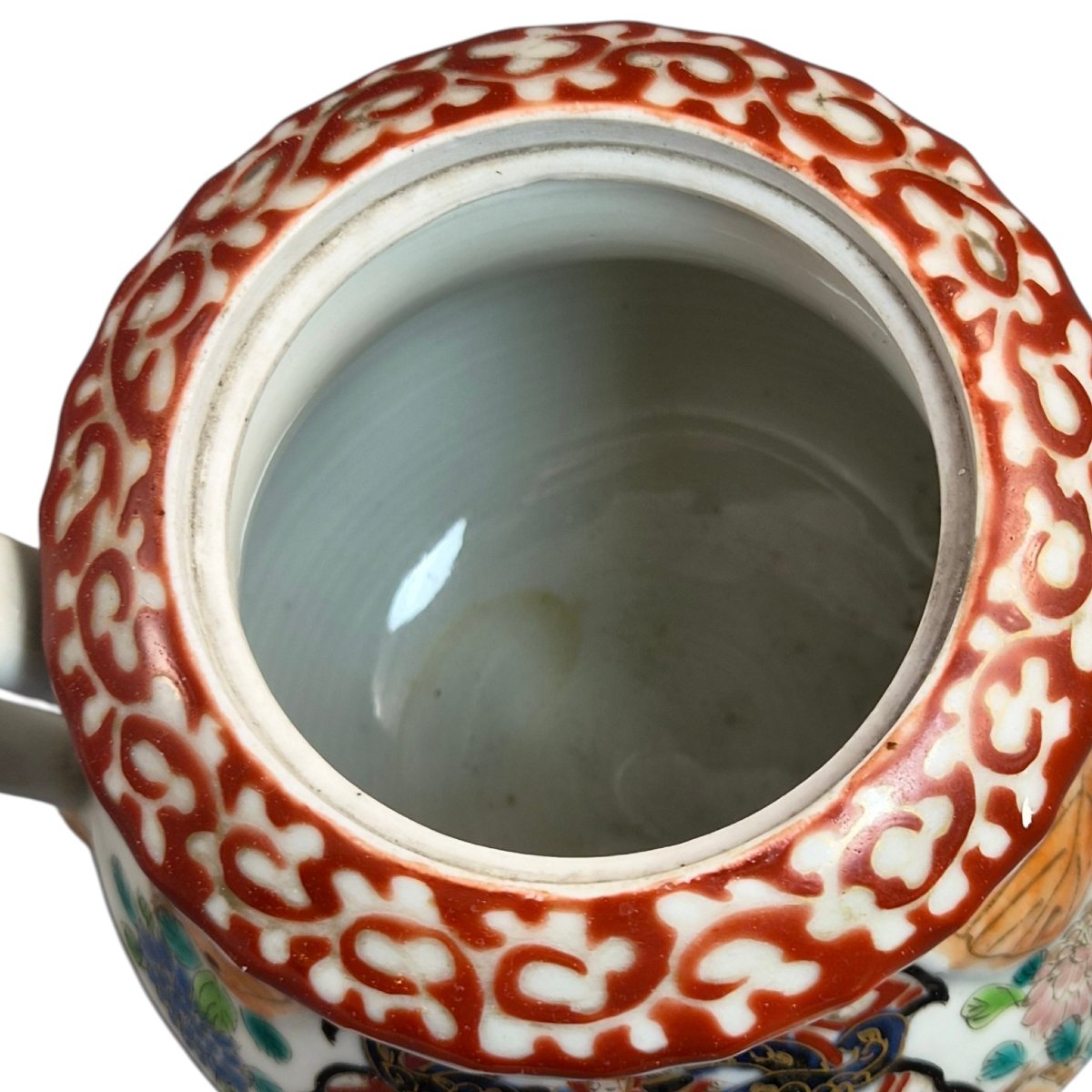
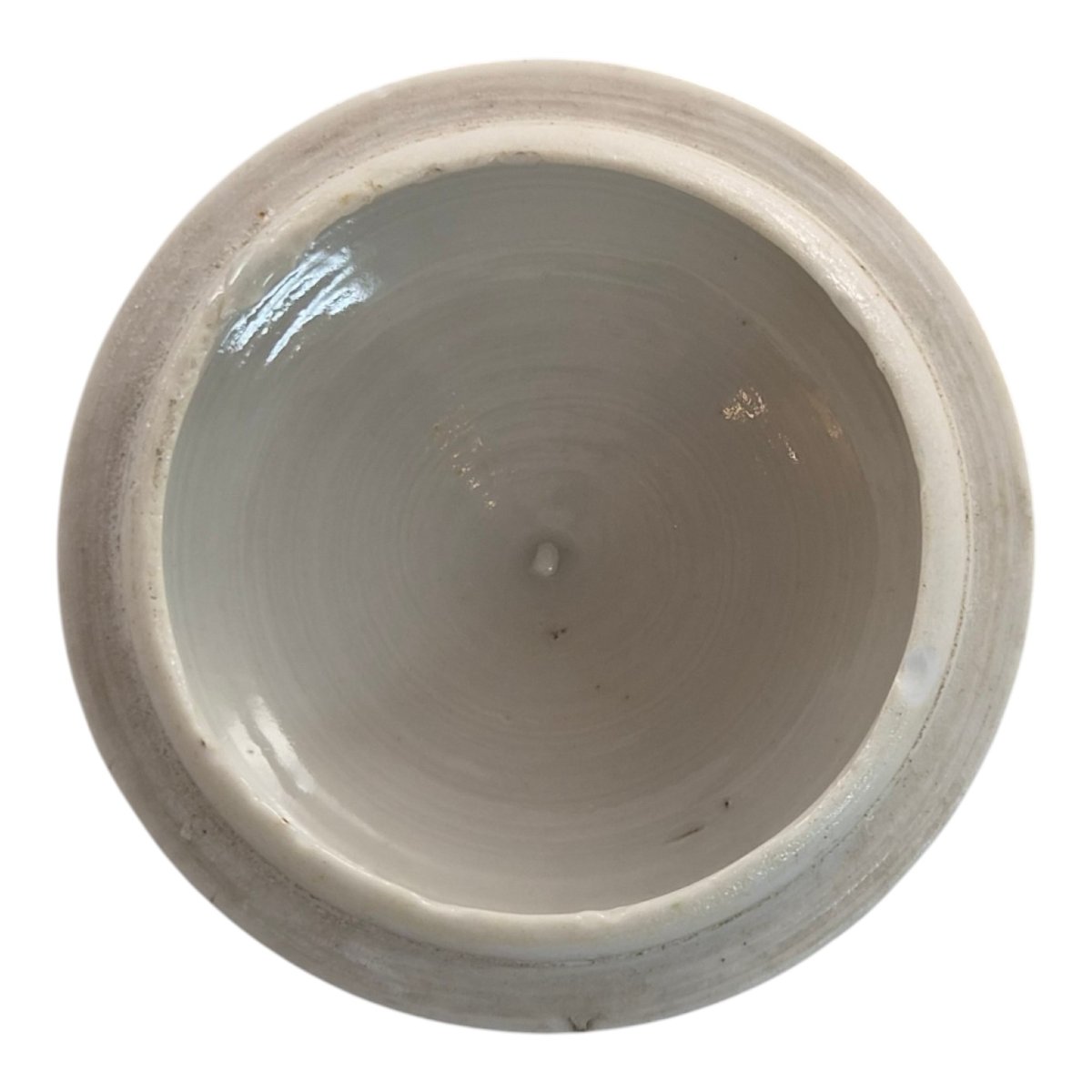
Excellent antique condition with no cracks, chips, repairs or paint losses.
Please study the accompanying photographs carefully as they form an integral part of this description. If you have any questions, we will be happy to answer them. The item will be shipped with full tracking and insurance. It is important to note that shipping costs include labour, packaging and postage.
Period: 19th century
Style: Asian art
Condition: Perfect condition
Material: Ceramic
Length: 18.5 cm
Width: 13 cm
Height: 18 cm
Reference (ID): 1768417
Availability: In stock