
Wartime
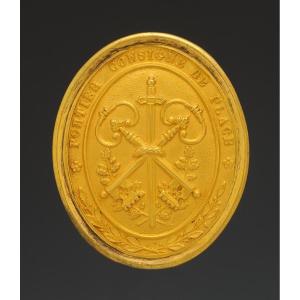
WAR "PORTIER CONSIGNE DE PLACE" PLAQUE, Restoration - Monarchie de Juillet. 33831
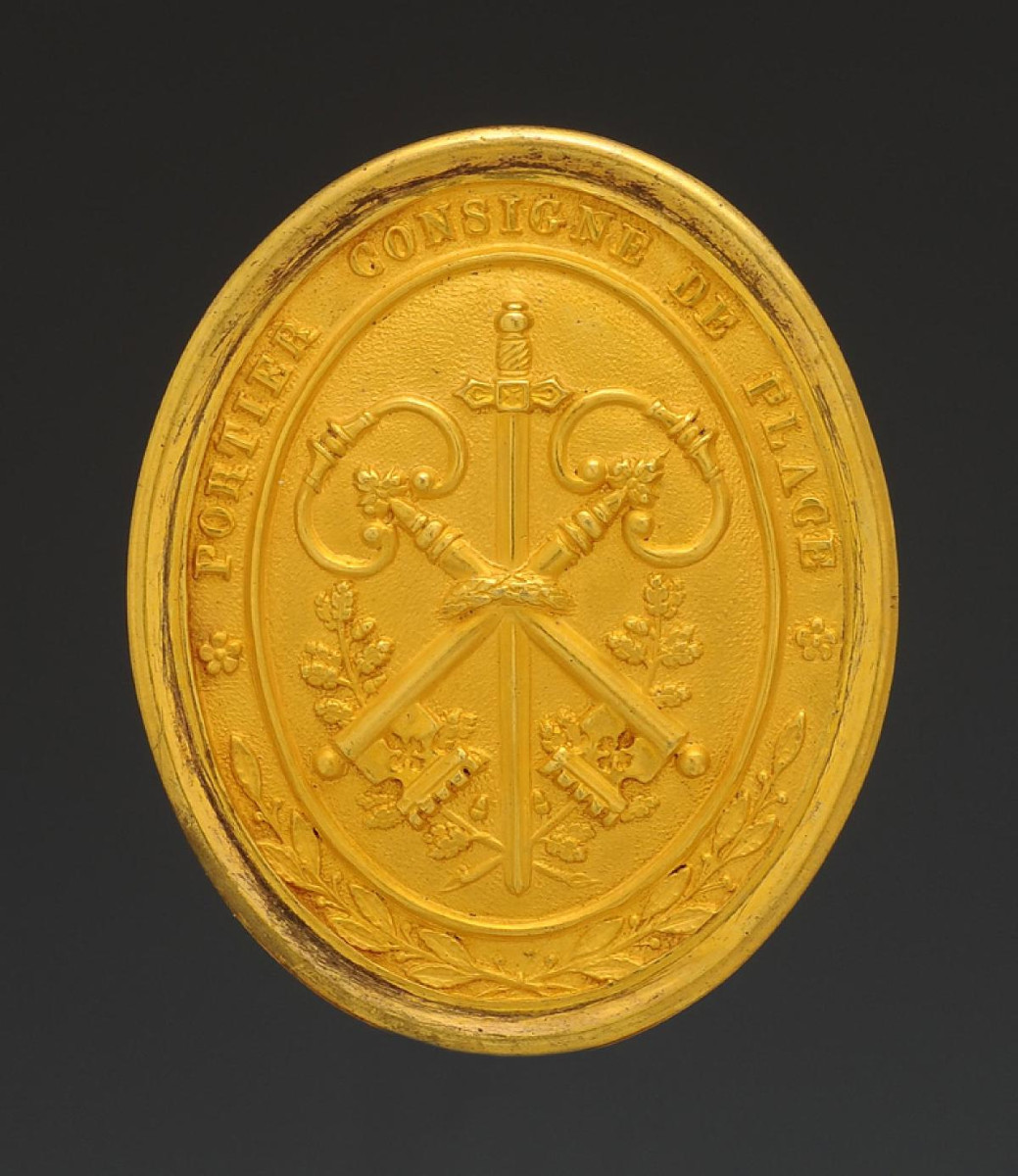
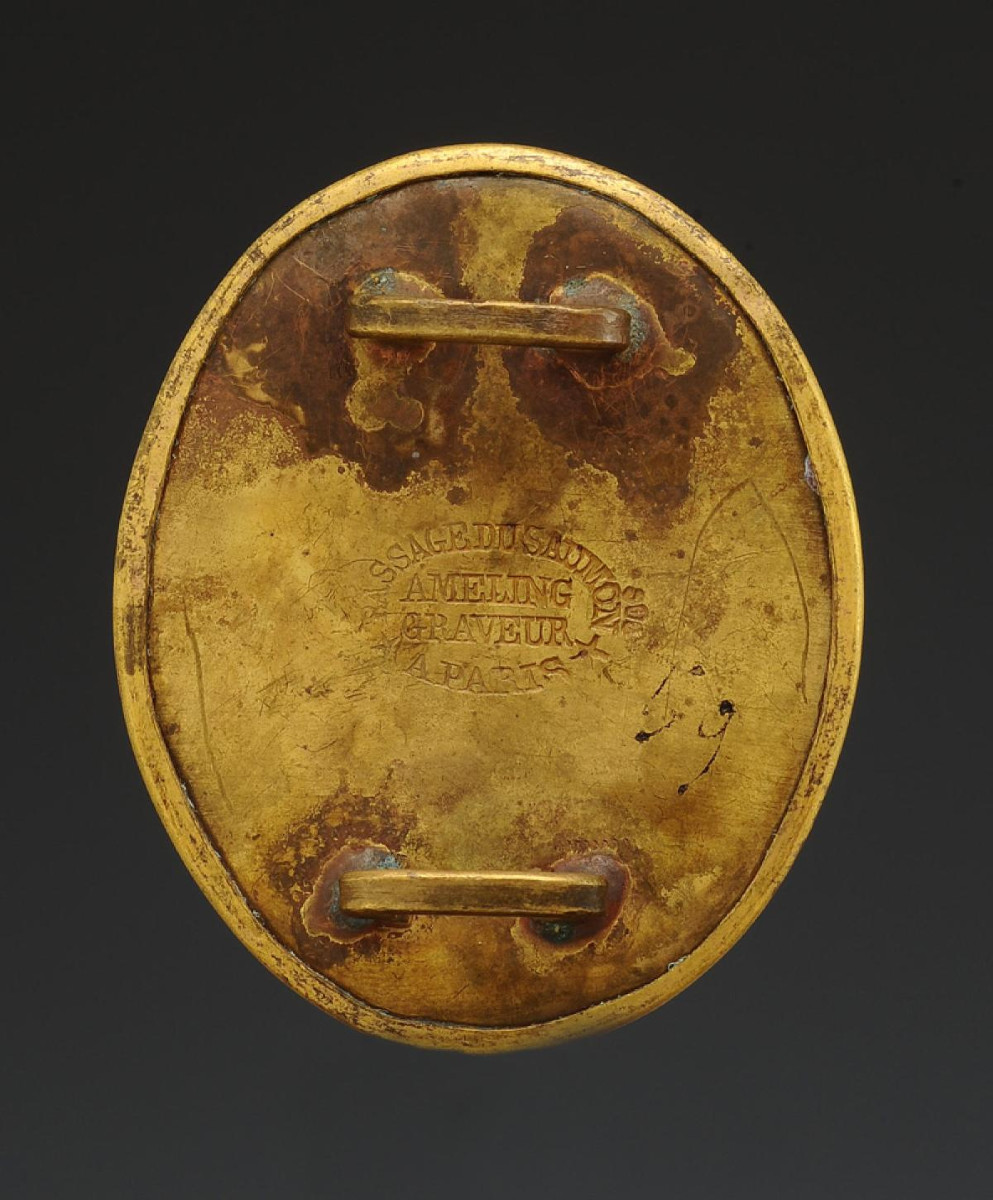
In stamped and gilded brass of oval form: H 5.5 cm, width 4.6 cm, with the edge folded over a brass plate marked "AMELING GRAVEUR PASSAGE DU SAUMON A PARIS". It depicts two brocaded keys on a sword with two oak branches, exterior molding inscribed "PORTIER CONSIGNE DE PLACE".
Complete with its two brass rear mounting tabs.
France.
Restoration - Monarchie de Juillet.
Perfect condition.
HISTORICAL BACKGROUND:
The position of (wartime) doorman often fell to a retired or disabled non-commissioned officer, on a par with the battery keeper and, exceptionally, an ordinary civilian.
He was in charge of the exits and gates, and their keys, of the work he was assigned to. His name comes from the old name "contre-portier", the man who held the keys to a stronghold in the Middle Ages. During the 19th century, it seems that this character was provided with a shoulder harness plate, so that he could be recognized. It also seems that, in some cases, he was required to fill in a book with the names of people passing through the accesses under his charge.
The commission is the formalization of the charge entrusted to a person for a given activity or job. Here, the Minister of War gave the commission of porter or consigne de place de guerre to citizen François Chanquierre, appointed to the position of consigne de la porte de France Grand Givet de la place de Charlemont et Givet, on 15 nivôse an V. In cities of war, the gates were manned by men called consigne or portier-consigne, responsible for writing down the names of foreigners entering and leaving the city.
In practice, the commission was another form of permission, as the revolution had come and gone, and the state could no longer grant permissions to citizens who had become free, so another word had to be used to define the same thing, and this was commission. Later, with the succession of régies, the word permission was used again: workers had to request permission for a job, and when it was granted, they were awarded a medal or a trade plate confirming the permission they had obtained. Coachmen were subject to this system, and one day in the late 1820s, their permission to work was replaced by a driver's license. Permit being shorthand for license: to this day, we still ask for permission to drive when we take our license.
Source: LA POSTE AUX CHEVAUX.
In stamped and gilded brass of oval form: H 5.5 cm, width 4.6 cm, with the edge folded over a brass plate marked "AMELING GRAVEUR PASSAGE DU SAUMON A PARIS". It depicts two brocaded keys on a sword with two oak branches, exterior molding inscribed "PORTIER CONSIGNE DE PLACE".
Complete with its two brass rear mounting tabs.
France.
Restoration - Monarchie de Juillet.
Perfect condition.
HISTORICAL BACKGROUND:
The position of (wartime) doorman often fell to a retired or disabled non-commissioned officer, on a par with the battery keeper and, exceptionally, an ordinary civilian.
He was in charge of the exits and gates, and their keys, of the work he was assigned to. His name comes from the old name "contre-portier", the man who held the keys to a stronghold in the Middle Ages. During the 19th century, it seems that this character was provided with a shoulder harness plate, so that he could be recognized. It also seems that, in some cases, he was required to fill in a book with the names of people passing through the accesses under his charge.
The commission is the formalization of the charge entrusted to a person for a given activity or job. Here, the Minister of War gave the commission of porter or consigne de place de guerre to citizen François Chanquierre, appointed to the position of consigne de la porte de France Grand Givet de la place de Charlemont et Givet, on 15 nivôse an V. In cities of war, the gates were manned by men called consigne or portier-consigne, responsible for writing down the names of foreigners entering and leaving the city.
In practice, the commission was another form of permission, as the revolution had come and gone, and the state could no longer grant permissions to citizens who had become free, so another word had to be used to define the same thing, and this was commission. Later, with the succession of régies, the word permission was used again: workers had to request permission for a job, and when it was granted, they were awarded a medal or a trade plate confirming the permission they had obtained. Coachmen were subject to this system, and one day in the late 1820s, their permission to work was replaced by a driver's license. Permit being shorthand for license: to this day, we still ask for permission to drive when we take our license.
Source: LA POSTE AUX CHEVAUX.
550 €
Period: 19th century
Style: Louis Philippe, Charles 10th
Condition: Perfect condition
Reference (ID): 1761506
Availability: In stock
Print