
Orazio Grevenbroeck (milan 1676 - 1739 Naples), Attributed To
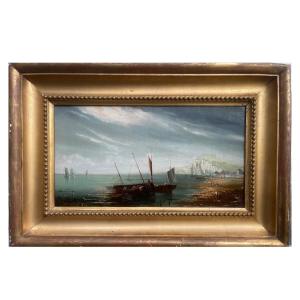
Probably painted in Naples
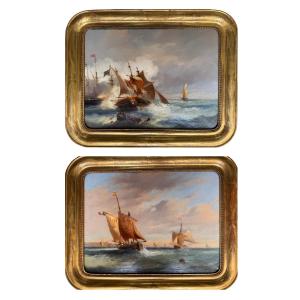
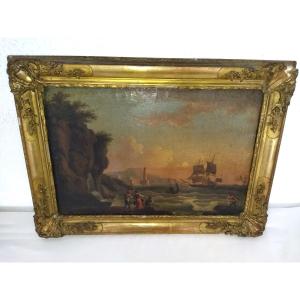
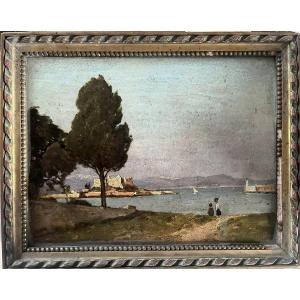
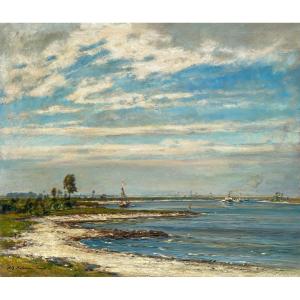
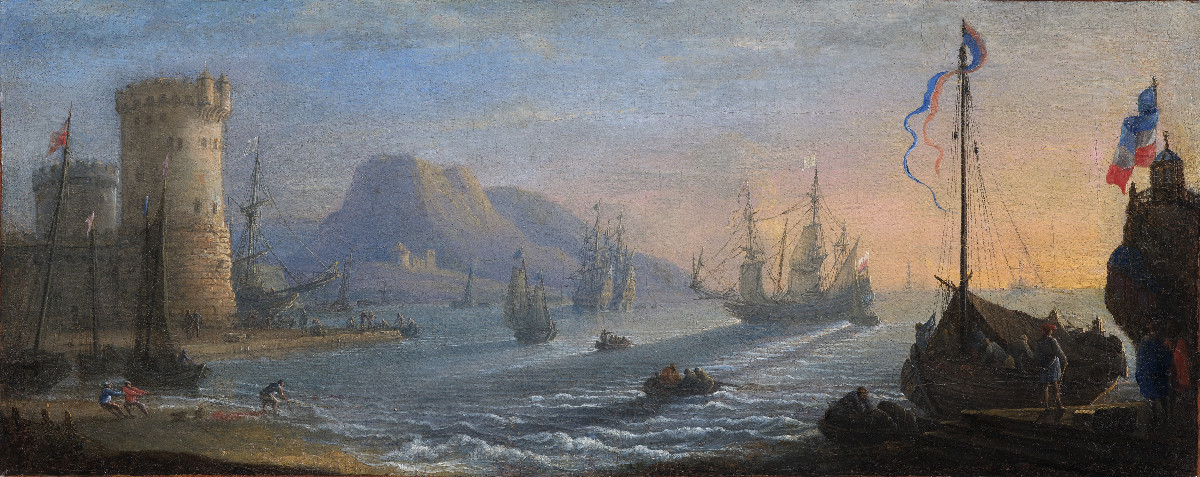
Mediterranean harbor scene alive with ships and figures
Oil on canvas, 13 x 31.5 cm
PROVENANCE
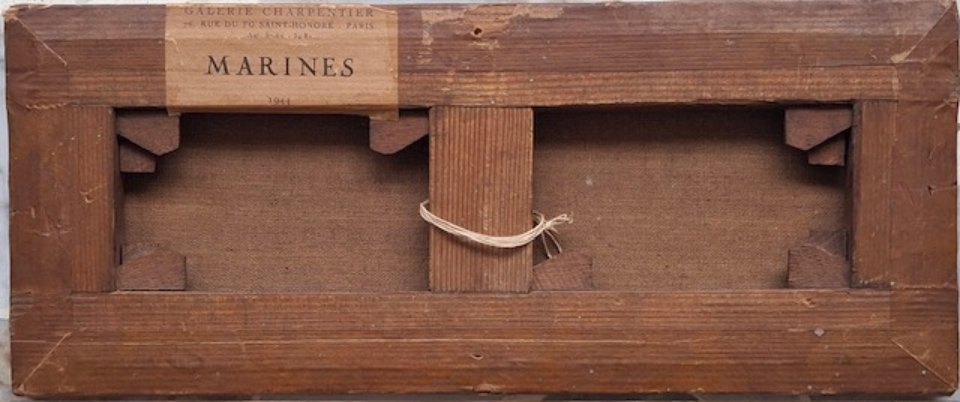
- Paris, Galerie Charpentier, L'exposition Marines, 1944, probably no. 182;
- Private collection until October 2025.
Orazio Grevenbroeck painter of seascapes and snowscapes of Flemish origin, active in Milan
and Naples at the end of the Baroque period. Born into a northern Italian family, he combined the precision and
luminosity of the Flemish landscape tradition with the grandeur and theatricality of Italian vedutisti. His
work lies at the fascinating crossroads of fantasy and topography, fusing
architectural invention and striking atmospheric effects, reflections of Nordic naturalism and the warm
tonal sensibility of Southern Italy. The artist is best known for his capricci - imaginary
landscapes and harbor scenes peopled with towers, ruins and figures, evoking both
the spirit of Antiquity and the dynamism of the Baroque period. Active mainly in Naples, he frequented
a circle of artists such as Niccolò Casissa, Antonio Joli and Leonardo Coccorante, who specialized in
similar picturesque and theatrical compositions. His common choice of copper as a support
relates him more closely to the Flemish tradition, allowing him meticulous precision and subtle
chromatic brilliance. Little is documented about his training, but Grevenbroeck's works
suggest an influence from Roman and Neapolitan traditions. His treatment of light demonstrates
a refined mastery of atmospheric perspective. His paintings were much sought-after by
Grand Tour collectors, who admired his talent for combining architectural fantasy, evocative
geography and the poetry of the Italian coast.
The wish expressed by Thomas Bodkin in his 1934 article, "Orazio and the others Grevenbroeck",
that a major study be dedicated to this dynasty of painters of Flemish origin, has not been
realized. So, for Charles Leopold and his entire tribe, described by Bodkin as a "nomadic, mysterious and talented family", we have to make do with incomplete biographical information.
Charles-Léopold, born in Milan, certainly at the very end of the 17th century or the very beginning of the next, and
died in Naples in the late 1750s, is said to be the son of painter Orazio Grevenbroeck, himself born in 1678 and
son of Jan I, known to have stayed in Rome in 1667 and a member of the Dordrecht Guild in 1695.
Alessandro de Grevenbroeck, also a painter, is said to be Orazio's brother; a Jan II de Grevenbroeck,
always in the painting business, is present in Venice in the second half of the 18th century.
In May 1734, the Mercure de France states that the Grevenbroecks are "from a noble and
distinguished family in Holland who owned large estates there.
THE WORK
Our painting is known from an engraving by Jean Morin that repeats our composition in
reverse order (Jean Morin, after Plattenberg, Amsterdam, Rijksmuseum, Inv. RP-P-1951-865). One
might wonder about the engraver's identification of the painter, since nothing resembles Plattenberg, either
in the engraving or in our painting
We are in the presence of a particularly meticulous work by Orazio Grevenbroeck,
the artist is known for this type of seascape with a reduced and repetitive format in his corpus, see Orazio
Grevenbroeck, Mediterranean Harbour Scene with figure, oil on copper, 17.5 x 35 cm, Sotheby's
London, 04/26/2004, lot 60 .
Mediterranean harbor scene alive with ships and figures
Oil on canvas, 13 x 31.5 cm
PROVENANCE
- Paris, Galerie Charpentier, L'exposition Marines, 1944, probably no. 182;
- Private collection until October 2025.
Orazio Grevenbroeck painter of seascapes and snowscapes of Flemish origin, active in Milan
and Naples at the end of the Baroque period. Born into a northern Italian family, he combined the precision and
luminosity of the Flemish landscape tradition with the grandeur and theatricality of Italian vedutisti. His
work lies at the fascinating crossroads of fantasy and topography, fusing
architectural invention and striking atmospheric effects, reflections of Nordic naturalism and the warm
tonal sensibility of Southern Italy. The artist is best known for his capricci - imaginary
landscapes and harbor scenes peopled with towers, ruins and figures, evoking both
the spirit of Antiquity and the dynamism of the Baroque period. Active mainly in Naples, he frequented
a circle of artists such as Niccolò Casissa, Antonio Joli and Leonardo Coccorante, who specialized in
similar picturesque and theatrical compositions. His common choice of copper as a support
relates him more closely to the Flemish tradition, allowing him meticulous precision and subtle
chromatic brilliance. Little is documented about his training, but Grevenbroeck's works
suggest an influence from Roman and Neapolitan traditions. His treatment of light demonstrates
a refined mastery of atmospheric perspective. His paintings were much sought-after by
Grand Tour collectors, who admired his talent for combining architectural fantasy, evocative
geography and the poetry of the Italian coast.
The wish expressed by Thomas Bodkin in his 1934 article, "Orazio and the others Grevenbroeck",
that a major study be dedicated to this dynasty of painters of Flemish origin, has not been
realized. So, for Charles Leopold and his entire tribe, described by Bodkin as a "nomadic, mysterious and talented family", we have to make do with incomplete biographical information.
Charles-Léopold, born in Milan, certainly at the very end of the 17th century or the very beginning of the next, and
died in Naples in the late 1750s, is said to be the son of painter Orazio Grevenbroeck, himself born in 1678 and
son of Jan I, known to have stayed in Rome in 1667 and a member of the Dordrecht Guild in 1695.
Alessandro de Grevenbroeck, also a painter, is said to be Orazio's brother; a Jan II de Grevenbroeck,
always in the painting business, is present in Venice in the second half of the 18th century.
In May 1734, the Mercure de France states that the Grevenbroecks are "from a noble and
distinguished family in Holland who owned large estates there.
THE WORK
Our painting is known from an engraving by Jean Morin that repeats our composition in
reverse order (Jean Morin, after Plattenberg, Amsterdam, Rijksmuseum, Inv. RP-P-1951-865). One
might wonder about the engraver's identification of the painter, since nothing resembles Plattenberg, either
in the engraving or in our painting
We are in the presence of a particularly meticulous work by Orazio Grevenbroeck,
the artist is known for this type of seascape with a reduced and repetitive format in his corpus, see Orazio
Grevenbroeck, Mediterranean Harbour Scene with figure, oil on copper, 17.5 x 35 cm, Sotheby's
London, 04/26/2004, lot 60 .
5 800 €
Period: 18th century
Style: Other Style
Condition: Good condition
Reference (ID): 1752429
Availability: In stock
Print